Lenny.com
Explore
Create
ActivitiesNewMathEnglish Language ArtsScience & EngineeringSocial StudiesGlobal LanguagesHealth & Physical EducationSpecial EducationCounseling & Life SkillsArts & CreativityESL
Lenny.com
Lenny.com
Explore
Create
ActivitiesNewMathEnglish Language ArtsScience & EngineeringSocial StudiesGlobal LanguagesHealth & Physical EducationSpecial EducationCounseling & Life SkillsArts & CreativityESL
Lenny.com
Lenny.com

Solutions

Lenny for EducatorsLenny for SchoolsLenny for Districts

Product

ExploreSign inCreateSupportAbout

Resources

Getting startedMTSS Acceleration Program

Newsletters

School Funding Newsletter

© 2026 Lenny Learning Inc.

TermsPrivacyAccessibility
LinkedInInstagramX
Lenny
English Language ArtsPhonics & Reading FoundationsLetter IdentificationLearn Letters A-ZLowercase and Uppercase LettersConsonants and VowelsLetter-Sound AssociationsLetter-Sound Associations: LowercaseLetter-Sound Associations: UppercaseBeginning and Ending SoundsRhymingBlending And SegmentingShort VowelsShort Vowel SoundsConsonant BlendsConsonant DigraphsBlends, Digraphs, and TrigraphsDigraphs, Blends, and Silent LettersLong Vowel SoundsLong Vowel PatternsShort and Long VowelsShort and Long Vowel PatternsSilent EVowel SoundsVowel TeamsR-Controlled VowelsDiphthongs: Oi, Oy, Ou, OwVariant VowelsVariant, Diphthong, And R Vowel PatternsSoft G And CSight WordsIrregular WordsWord RecognitionSyllablesSyllable TypesTwo-Syllable WordsMultisyllabic WordsPhoneme ManipulationDecodable TextsVocabularyAction WordsQuestion WordsNouns and AdjectivesClassify WordsCompound WordsSynonyms and AntonymsHomophonesHomophones and HomonymsShades of MeaningContext CluesPrefixes and SuffixesGreek and Latin RootsAnalogiesIdioms and AdagesForeign Words and ExpressionsWord Choice and UsageReference SkillsReading ComprehensionRead-Along Literary TextsRead-Along Informational TextsReality vs. FictionStory ElementsCharacterSequenceMain IdeaCause And EffectCompare And ContrastReading StrategiesText StructureAuthor's PurposeAuthor's Purpose And ToneAuthor's PerspectivePoint Of ViewThemeInference And ThemeInference And AnalysisPoetry ElementsLiterary DevicesAnalyzing LiteratureAnalyzing Informational TextsComparing TextsAudience, Purpose, And ToneBusiness DocumentsNovel StudyNonfiction Book StudyGrammar & MechanicsSentencesNounsVerbsAdjectivesPronounsCapitalizationPunctuationContractionsConjunctionsPrepositionsArticlesAdjectives And AdverbsVerb TypesVerb TensePronouns And AntecedentsPronoun TypesSubject-Verb AgreementDirect And Indirect ObjectsSentences, Fragments, And Run-OnsPhrases And ClausesCommasSemicolons, Colons, And CommasDashes, Hyphens, And EllipsesSpellingAbbreviationsFormattingVerb Tense And MoodMisplaced ModifiersWritingDescriptive DetailsCreative WritingOpinion WritingTopic SentencesOrganizing WritingLinking WordsSentence VarietyIntroductions And ConclusionsPersuasive And Opinion WritingExpository WritingPersuasive StrategiesDeveloping And Supporting ArgumentsTopic Sentences And Thesis StatementsSummarizingResearch SkillsEditing And RevisingActive And Passive Voice=Writing Clearly And ConciselyDebate & Public SpeakingPublic Speaking BasicsPersuasive TechniquesClaims and EvidenceTypes of ArgumentsReasoning TypesLogical FallaciesTopic ResearchOrganizing EvidenceDebate Speech OrganizationAttacking and Defending ArgumentsClash and EngagementImpact CalculusQuestioning and Cross-ExaminationCritical ThinkingInformal LogicFormal LogicInductive Reasoning

Rooted Words Curriculum

A comprehensive, evidence-based morphology curriculum systematically teaching Latin roots, Greek combining forms, and prefix assimilation through word matrices, morpheme sums, and contextual decoding.

Mmelissa.white
Latin Root Foundations

Introduces foundational Latin bound roots including struct, tract, and rupt with explicit instruction on morpheme boundaries, word sums, and morphological matrices.

Greek Scientific Systems

Investigates Greek combining forms commonly found in academic and scientific terminology with explicit instruction on multi-base compounding and meaning synthesis.

Chameleon Prefix Mastery

Explores phonological assimilation and orthographic shifts in Latin prefixes, equipping students to decode complex academic words through systematic prefix analysis.

Rooted Words Curriculum

A comprehensive, evidence-based morphology curriculum systematically teaching Latin roots, Greek combining forms, and prefix assimilation through word matrices, morpheme sums, and contextual decoding.

Mmelissa.white
banca
rupt

3. The legal dispute was ___________________________ over several years as both sides continued to draw out negotiations.

Root clue: Built on prefix pro- (forward) + Latin tract (pulled/drawn).

4. The lively discussion ended ___________________________ when the fire alarm sounded without warning.

Root clue: Built on prefix ab- (away/off) + Latin rupt (burst/broken).

D

Synthesize & Create

Compose two original academic sentences using at least one word from the struct family and one word from the tract or rupt family. Circle the base roots in your writing.

Sentence 1 (Feature a word containing struct):

Sentence 2 (Feature a word containing tract or rupt):

Rooted Words Morphology • Lesson 1 Page 2 of 2

"Marine biologists utilized a precision chronometer and a seabed seismograph to record seismic vibrations in real time."

chronometer

chron (time) + meter (measure) = instrument measuring precise time.

seismograph

seismo (earthquake) + graph (record) = instrument recording ground tremors.

Ready to analyze complex scientific passages in the Greek Etymology Investigator Worksheet!

(4) biofilms
(5) synchronous
(6) geographic

1. Deconstruct the term geochronological:

Identify the three Greek roots and state what the field of study investigates.

2. Explain the difference between a bathymeter and a chronometer:

Use the base meanings of bathy- (deep) and chron- (time) in your explanation.

D

Morphology Engineering Challenge

Imagine you have invented a new scientific instrument that automatically tracks and records biological life forms living under the earth over extended periods of time.

Your Coined Scientific Name:

Morpheme Formula (e.g. bio + geo + ...):

Justify how your morpheme combination communicates the device's function:

Rooted Words Morphology • Lesson 2 Page 2 of 2

Heuristic

1

Spot Twin Letters

Look for twin consonants near syllable 1 (cc, ff, ll, mm, pp, rr, ss, tt).

2

Restore Base Prefix

Revert the chameleon back to its parent form (ad-, in-, con-, sub-).

3

Synthesize Meaning

Combine the original prefix meaning with the root to unlock the definition.

Next: Complete your Chameleon Rules Reference Guide & Practice Matrix!

Morphological Mastery

B

Predicting Assimilation Shifts

Combine each parent prefix with the given root. Apply the assimilation rule to spell the word correctly, then explain why the spelling shifted.

1. con- + labor (work) + -ate Target Shift

Word:

Reason:

2. in- + mature (ripe) Target Shift

Word:

Reason:

3. ad- + parent (visible) Target Shift

Word:

Reason:

C

Academic Context Analysis

"The researchers found an (1) irrepressible curiosity among students when scientific concepts were presented clearly. However, poor data formatting created an (2) illusion of conflicting results until the team worked to (3) assimilate their findings into a cohesive report."

irrepressible

Parent prefix + base:

illusion

Parent prefix + base:

assimilate

Parent prefix + base:

D

Double-Letter Diagnostic Routine

Step 1: Do I see twin consonants near the start of the word (e.g., rr, ll, mm, pp, cc)?

Step 2: Does the first consonant belong to a chameleon prefix (ad-, con-, in-, sub-)?

Step 3: Does peeling off that prefix reveal a recognizable base root or stem?
Rooted Words Morphology • Lesson 3 Page 2 of 2

You might also like

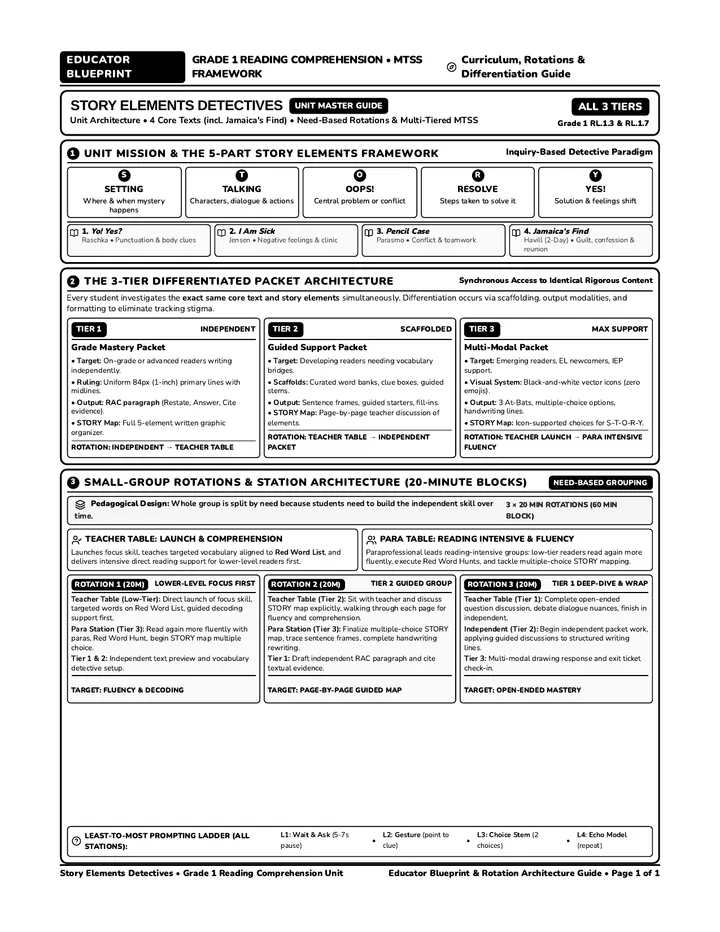
Unit Architecture Overview Guide

Story Elements Detectives

A Grade 1 reading comprehension unit teaching students how to identify character feelings, actions, dialogue, and problems using the STORY elements framework with multi-tiered differentiated packets and paraprofessional guides.

JE

jenn edwards

86
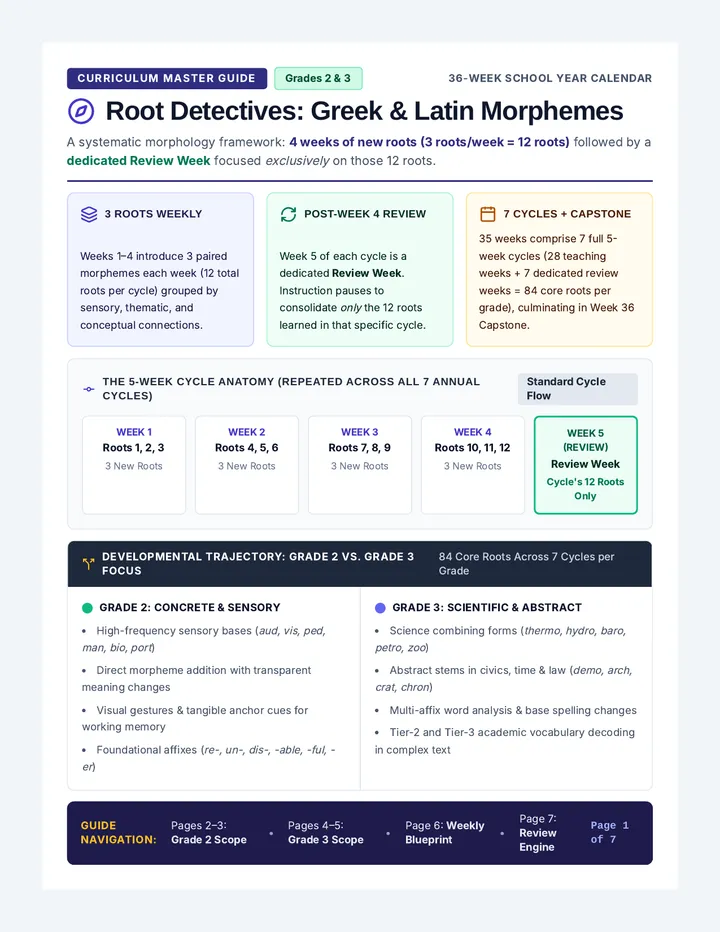
Root Detectives Curriculum Guide

Root Detectives Curriculum

A comprehensive full-year Greek and Latin roots morphology program for Grades 2 and 3, featuring 3 roots per week, 5-week cycles with dedicated review weeks, and targeted 20-point diagnostic assessments.

J

JENNIFER.SOBOLESKI

5
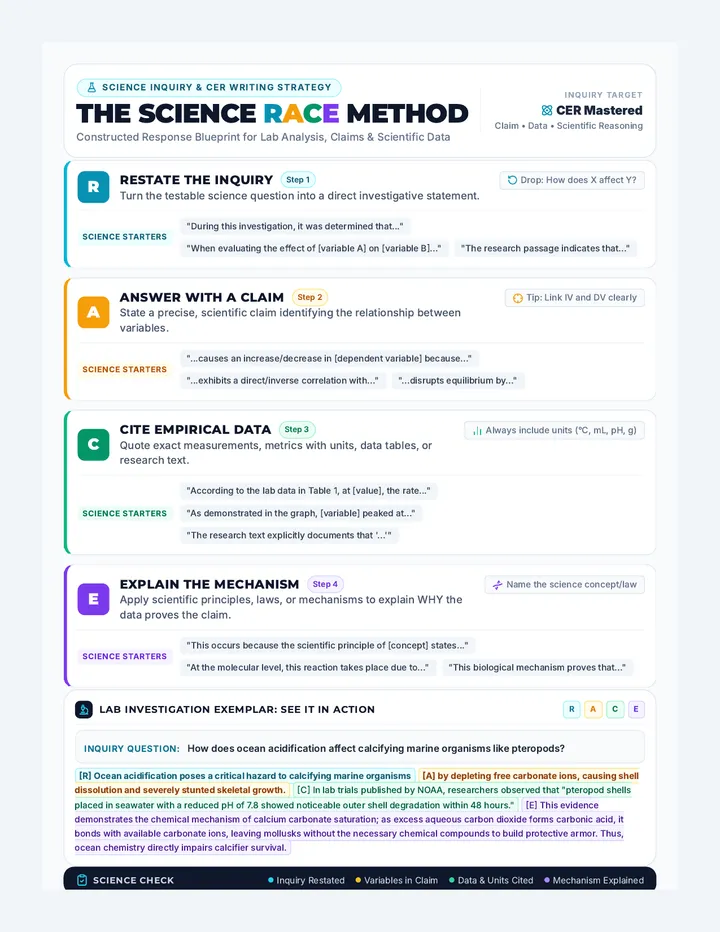
RACE Science Writing Poster

RACE Science Writing Poster

A dynamic, science-themed classroom anchor chart poster detailing the RACE writing strategy for scientific inquiries, lab reports, and CER constructed responses, complete with data citation guidance, scientific reasoning stems, and an ocean chemistry exemplar.

K

KATIE.CADLE

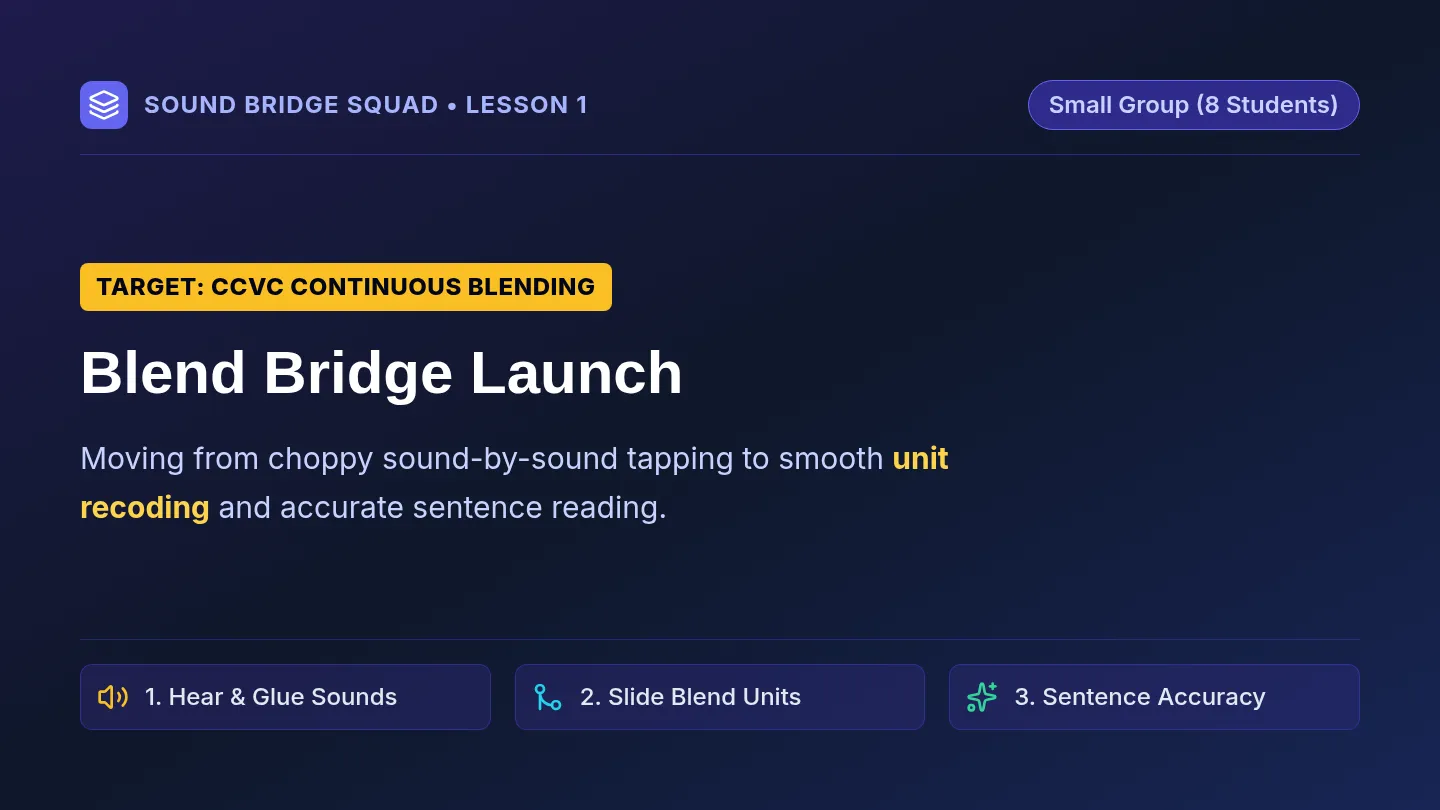
Blend Bridge Slides

Sound Bridge Squad

A 3-stage decoding and recoding intervention sequence for emerging readers. Students progress from consonant blends (CCVC) to digraphs and CVCe silent-e patterns, shifting from choppy letter-by-letter sounding to fluid unit recoding and sentence accuracy.

Lenny Avatar
Lenny
9
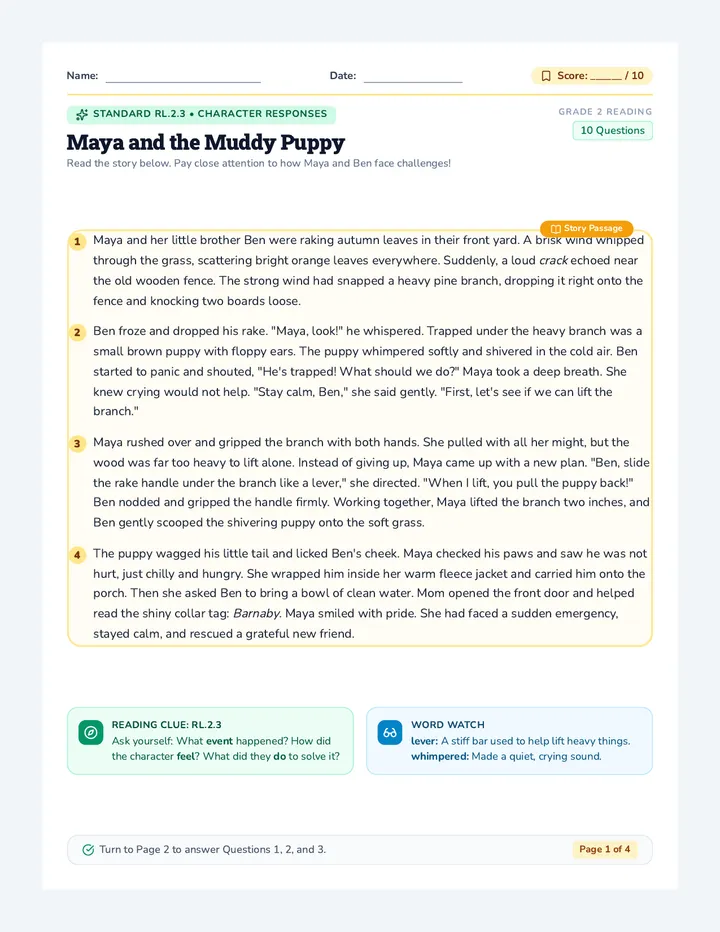
Muddy Puppy Reading Worksheet

Muddy Puppy Adventure

A Grade 2 reading comprehension lesson focused on standard RL.2.3, examining how characters respond to major events and challenges. Features a high-interest rescue narrative, aligned text-dependent comprehension questions, and an annotated educator answer key with rationale and common misconceptions.

S

Squiretak

2
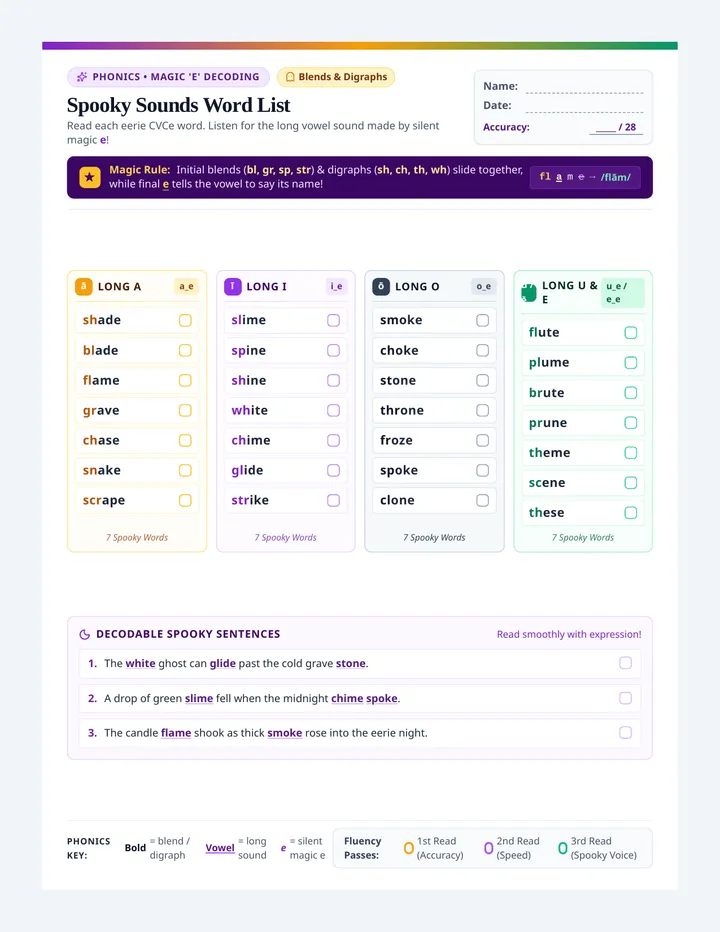
Spooky Sounds Word List

Spooky Sounds Word List

A Halloween-themed decodable CVCe word list featuring blends and digraphs across long vowel families (a_e, i_e, o_e, u_e, e_e), complete with decodable practice sentences and a fluency tracking checklist.

SW

Stephanie Wooten

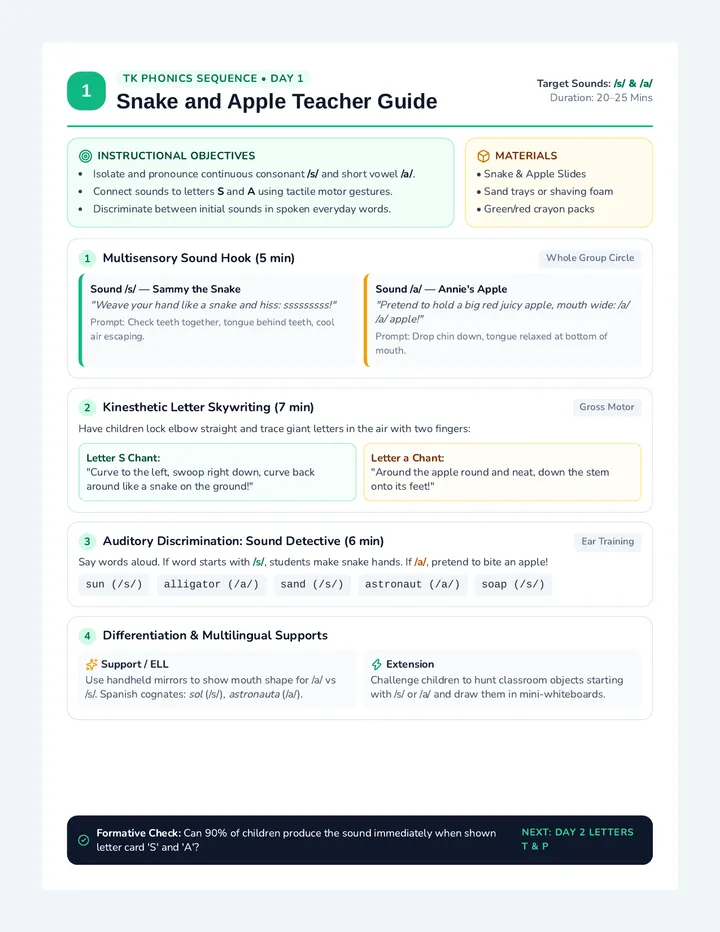
Snake Apple Teacher Guide

SATPIN Sound Safari

A multi-day early literacy sequence designed for Transitional Kindergarten to master SATPIN letter sounds and foundational oral and print blending. Students explore multisensory sound cues, gross-motor arm blending, and hands-on word building with decodable CVC words.

LG

Lindsey Griffin

12
Curious George Tier 1 Worksheet

Curious George Detectives

A Grade 1 reading comprehension lesson on H.A. Rey's Curious George focusing on character mental state (what characters think inside their heads), actions, dialogue clues, curiosity vs. trouble, and problem-solving.

JE

jenn edwards

11
Curious George Tier 3 Fluency Reader

Curious George Tier 3 Fluency Reader

A standalone 1-page Tier 3 maximum support fluency reader for H.A. Rey's Curious George, styled in ABC Print font (Nunito) with text-aligned preview boxes for Character Names (George, The Man), Red Words (the, is, on, was), and Word Parts (-oon, -ight, -ed, -ing), paired with 1:1 finger tracking dots and red sight words.

JE

jenn edwards

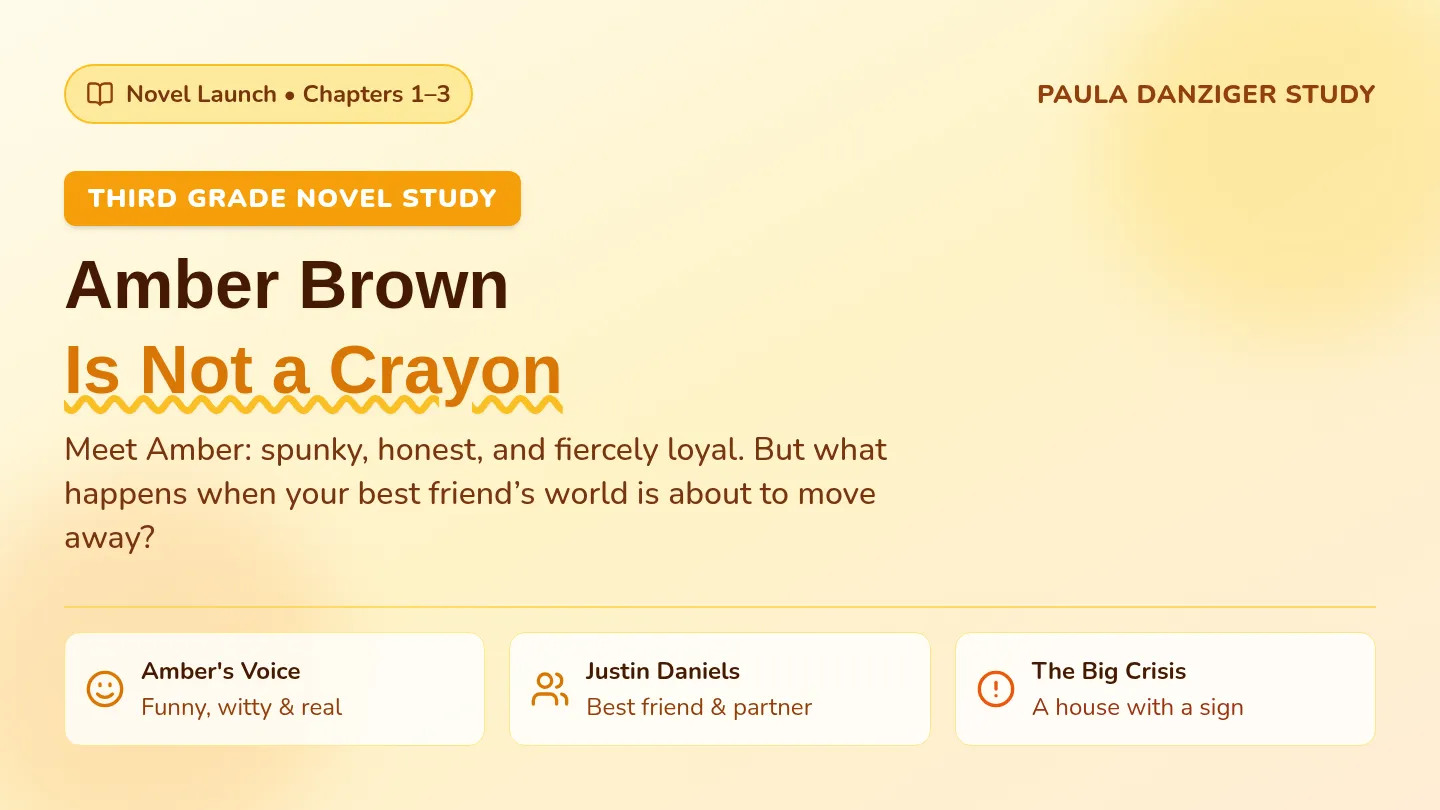
Friendship Launch Slides

Amber Brown Adventures

A comprehensive novel study sequence for Paula Danziger's *Amber Brown Is Not a Crayon*, guiding 3rd-grade readers through character dynamics, emotional conflict, and bittersweet farewells. Students explore perspective, figurative language, theme, and creative expression across the entire book.

Lenny Avatar
Lenny
7
Extraordinary Egg Tier 1 Worksheet

Extraordinary Egg Detectives

A Grade 1 reading comprehension lesson on Leo Lionni's An Extraordinary Egg focusing on character mental state (what characters think inside their heads), actions, dialogue clues, humorous misunderstandings, and cross-species friendship.

JE

jenn edwards

11
Curious George Tier 2 Decodable Reader

Curious George Tier 2 Decodable Reader

A standalone 1-page Tier 2 decodable reader for H.A. Rey's Curious George, styled in ABC Print font (Nunito) with preview boxes for Character Names (George, Africa, Firemen), Red Words (thought, said, could, their), and Word Parts (-oon, -ight, -ed, -ing), plus decodable slashes, boxed sounds, and underlined suffixes.

JE

jenn edwards