Oersted Discovery Slides Lesson 1
Oersted's Spark
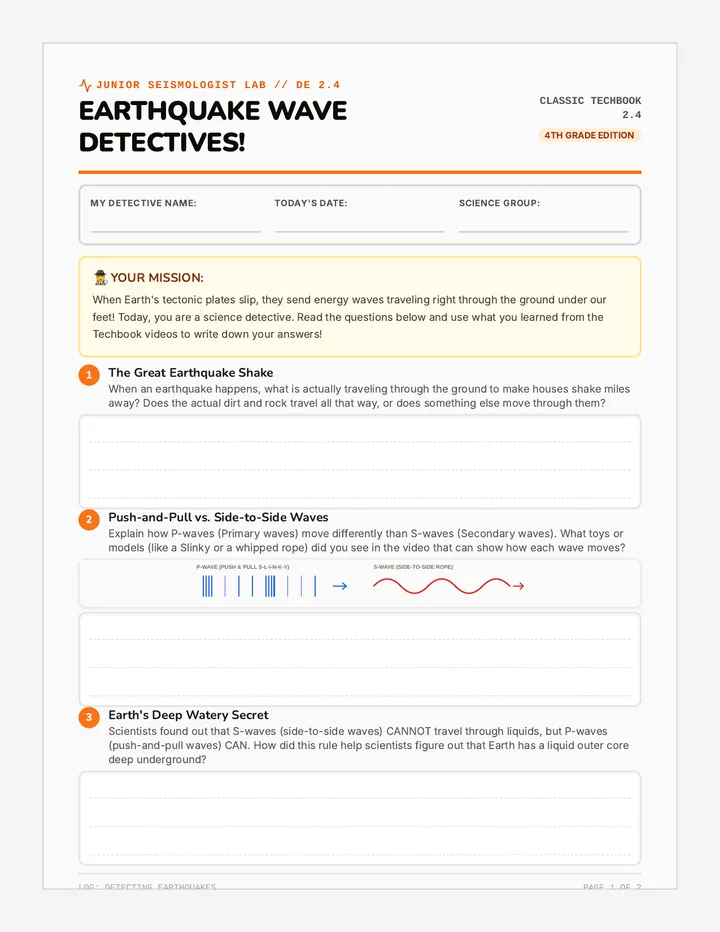
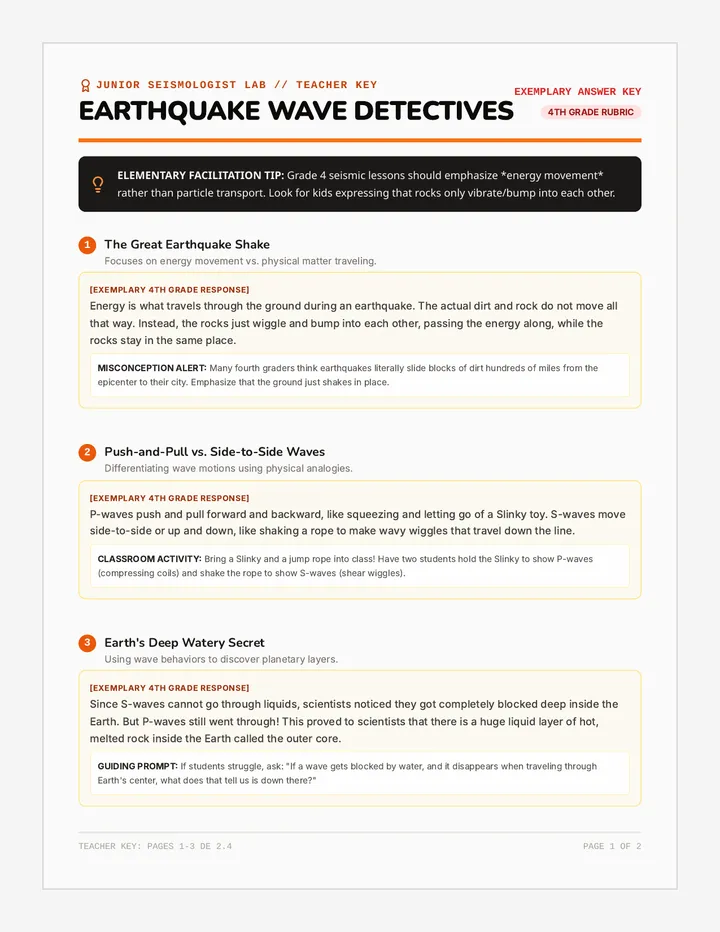
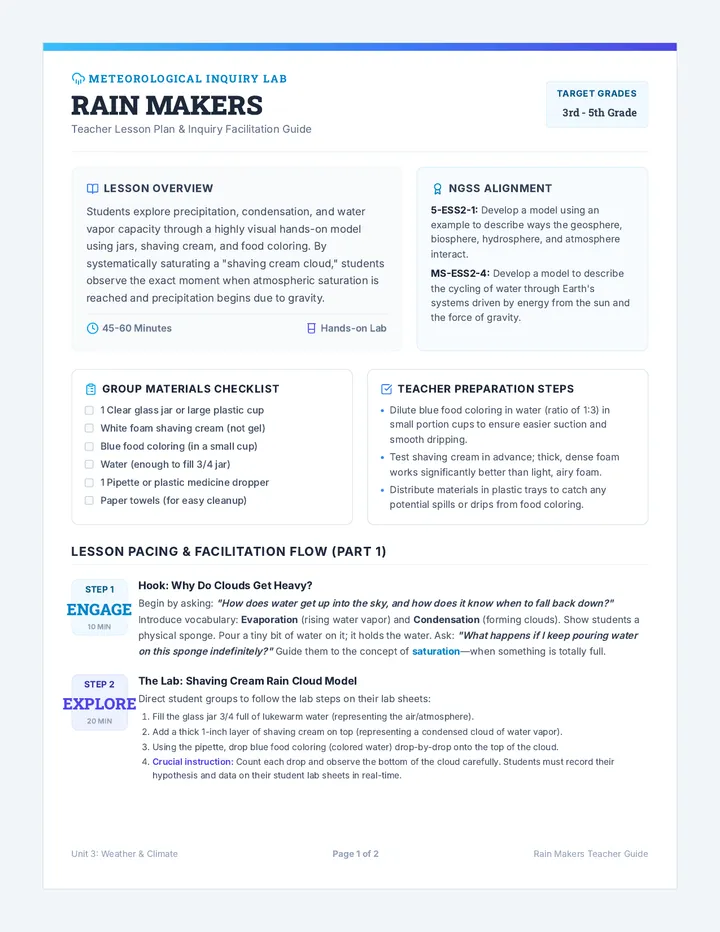
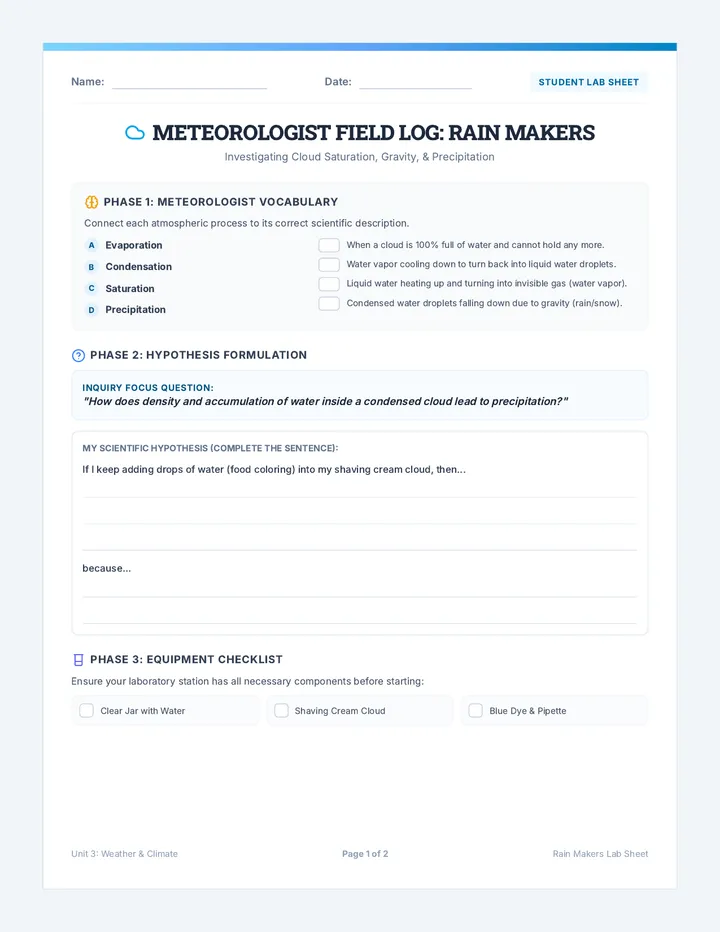
The Secret Link Between Electricity and Magnetism
The Hook
Can a battery and a wire make a compass needle move...
Without Touching It?
A Lucky Mistake
Historical context
"In 1820, a Danish scientist named Hans Christian Oersted was giving a lecture. He accidentally placed a wire carrying electricity near a compass..."
He noticed the needle flicked to the side. The electricity was "pushing" the compass!
[Scientist Portrait Placeholder]
Hans Christian Oersted (1777-1851)
The Hidden Connection
Electricity
Moving charges create an invisible field around them.
Magnetism
This invisible field exerts force on magnetic materials.
Electromagnetism: The union of these two forces!
Your Challenge
Can you prove Oersted right? Setup your station:
1 Lay the compass flat on your desk.
2 Hold a wire directly over the needle.
3 Connect the wire to the battery... Briefly!
Safety Protocol
Wires can get HOT when connected to a battery. Only touch the wire to the battery for 1-2 seconds at a time.
Oersted Discovery Lab Sheet Compass Kick Lab
Mission 01: The Electricity-Magnetism Link
Agent:
Date:
The Setup
Equipment
1x D-Cell Battery
1x Copper Wire
1x Compass
Safety Warning
Do not keep the wire connected to the battery for more than 2 seconds. The wire and battery will get very hot! This is called a "short circuit."
Field Prediction
What do you think will happen to the compass needle when you connect the wire to the battery?
Observations
Trial A: Battery Disconnected
Draw the position of the needle
Trial B: Battery Connected
Draw the position of the needle
Mission Report
1. Describe exactly what happened to the needle the moment the circuit was completed:
2. Did the wire have to touch the compass to make the needle move? What does this tell you about the force coming from the wire?
3. Claim: Electricity and Magnetism are related. Use your evidence from today to support this claim:
Oersted Discovery Teacher Guide Teacher Guide
Lesson 1: Oersted Discovery
4th Grade Physics
Learning Objective
Students will demonstrate that an electric current creates a magnetic field by observing the deflection of a compass needle when a circuit is closed.
Materials per Group
1x D-Cell Battery
1x Insulated Copper Wire (6-12")
1x Small Compass
Sandpaper (to strip wire ends)
Key Safety Note
"Short-circuiting" the battery causes the wire and battery to heat up quickly. Instruct students to only make contact for 1-2 seconds. Use battery holders if available to reduce direct contact with hot terminals.
The Discovery Walkthrough
1
The Alignment:
Students must align the wire parallel to the compass needle when it is at rest (pointing North). If the wire is perpendicular, the deflection is much harder to see.
2
The Contact:
Hold one end of the wire to the positive terminal. Tap the other end to the negative terminal. Observe the needle's "kick."
3
The Reversal:
Flip the battery. Notice the needle kicks in the opposite direction! This proves that the direction of electricity affects the direction of the magnetic field.
Troubleshooting & Misconceptions
"It's not moving!" Check if the battery is dead or if the wire insulation is fully stripped at the ends. Ensure the wire is directly above the needle.
"Is the wire a magnet?" Students might think copper is magnetic. Have them test the wire with the compass without the battery to show it doesn't attract the needle on its own.
Building the Magnet Slides Lesson 2
Magnet Maker
Building Your First Electromagnet
Your Workbench
🔩
The Core
A large iron nail. This will become the magnet.
🧶
The Coil
Copper wire. This carries the electricity.
🔋
The Power
A battery. This provides the "push" for current.
Phase 1: The Build
01
Leave a Tail
Leave about 4 inches of wire hanging before you start wrapping.
02
The Tight Wrap
Wrap the wire tightly around the nail. Don't overlap! Just keep them neat.
Wrap it UP!
The Spark of Life
Touch the stripped ends of your wire to the battery terminals.
Test it now!
Only for 2 seconds!
Is it working?
The Pick-Up Test
Try to pick up a small pile of paperclips. Does it act like a magnet?
The "Off" Test
While the nail is holding clips, let go of one wire end. What happens?
Building the Magnet Workshop Sheet Magnet Maker Workshop
Engineering Log // Station A
NAME: _________________
DATE: _________________
The Blueprint
Technical Drawing Area
Label the parts of your magnet in the drawing:
Build Specifications
Estimated number of wraps:
________ wraps
Wrapping Style:
Neat & Tight
Loose & Messy
Performance Testing
Test 1: The Strength Test
How many paperclips can your magnet pick up at once?
Test 2: The Control Test
Pick up a clip. Then, disconnect the battery. What happens immediately?
Engineering Conclusion:
Why is this type of magnet more useful for a scrapyard crane than a normal permanent magnet?
Coil Power Test Slides Lesson 3
Coil Count
Testing the Strength of Your Design
The Fair Test
In science, we only change ONE THING at a time. This is called a variable.
The Change
The number of wraps (coils) around the nail.
Stay the Same
• The Battery (Use the same one!)
• The Nail (Keep your core!)
• The Paperclips (Same size!)
The Big Guess
"If I increase the number of coils, the magnet will..."
Pick up MORE clips?
Pick up FEWER clips?
The Lab Plan
10
Test with 10 wraps. Record your data.
20
Test with 20 wraps. Record your data.
30
Test with 30 wraps. Record your data.
The Science Behind It
Every loop of wire adds a tiny bit more magnetic force.
More Loops = More Fields = More Power!
1 Field Line
2 Field Lines
3 Field Lines
Coil Count Lab Report Coil Count Report
Experimental Physics // Lab 03
Researcher:
Lab Date:
The Hypothesis
"If I increase the number of wire coils on my magnet, I predict the number of paperclips it can lift will..."
Increase
Decrease
Stay the Same
The Evidence
Independent Variable (Coils) Dependent Variable (Clips Lifted) 10 Wraps 20 Wraps 30 Wraps
Data Visualization
20 15 10 5 0
Number of Clips Lifted
10 Coils
20 Coils
30 Coils
Scientific Conclusion
Based on your graph, write a rule that explains the relationship between coils and magnetic strength:
Battery Boost Test Slides Lesson 4
Battery Boost
Testing the Power of the Source
The New Variable
Last time, we changed the Coils.
Today, we change the Voltage.
More batteries = More "push" for the electricity.
Control
1 Battery
Test
2 Batteries
Connecting in Series
1
Point the Positive (+) end of Battery A towards the Negative (-) end of Battery B.
2
They act like one big, powerful battery!
1.5V
1.5V
3.0 Volts!
Thermal Danger!
Double the batteries means MUCH MORE HEAT.
Touch the wire for LESS THAN ONE SECOND. Just long enough to see if it grabs a clip!
Predictions?
"If we double the battery power, will the magnet be twice as strong, or just a little bit stronger?"
📈
Double Strength
📊
Slight Boost
🔥
No Change / Just Hot
Battery Boost Lab Sheet Power Up Protocol
Experimental Physics // Lab 04
Researcher:
Current Hypothesis
Today, we are keeping the coils the same (use 20 wraps). We are doubling the batteries.
"I predict that doubling the batteries will make the magnet..."
Exactly twice as strong.
Only a little bit stronger.
No stronger at all.
The Power Test
Setup A
1 Battery
Paperclips Lifted:
??
Setup B
2 Batteries
Paperclips Lifted:
??
Data Analysis
1. Comparing Setup A and B: By how many paperclips did the strength increase?
2. Based on your results, if you wanted to build the strongest magnet possible, what combination of coils and batteries would you use?
Note: Make sure your battery connections are tight! A loose connection acts like a dead battery.
Magnet Smackdown Slides Final Lesson
Magnet Smackdown
Permanent vs. Electromagnets
Permanent
VS
Electromagnet
Nature's Power
Permanent Magnets:
Always ON. Never needs a battery.
Reliable and constant strength.
Can't be turned off. Can't change strength.
🧲
Great for Fridges!
Engineer's Choice
Electromagnets:
Adjustable! Can be turned OFF.
Strength can be changed with coils/batteries.
Needs a power source. Can get hot!
🏗️
Great for Cranes!
Which One Would You Use?
Scrapyard Crane
Needs to pick up a car, then drop it later.
Electromagnet
Compass Needle
Needs to point North 24/7 without a battery.
Permanent
Hospital MRI
Needs an EXTREMELY strong field that can stop in an emergency.
Electromagnet
The ON / OFF Power
This is the greatest advantage of electromagnetism. It allows humans to CONTROL magnetism for the first time in history!
Magnet Match Up Venn Diagram Magnet Match-Up
Comparative Analysis // Final Mission
Scientist:
Instructions
Sort the properties from the Word Bank below into the correct sections of the Venn Diagram. Where do they belong?
Always ON
Can be turned OFF
Attracts Paperclips
Needs a battery
Has a North/South pole
Used in MRI machines
Strength can change
Made of metal
Natural rock (Magnetite)
Pushes and Pulls
Used on refrigerators
Created by electricity
Permanent
Electromagnet
Both
The Ultimate Choice
If you were building a trap to catch a metal robot, which type of magnet would you use and WHY?
Magnet Mastery Exit Ticket Unit 04: Physics
Magnet Mastery
End of Sequence Assessment
1 The Vocabulary
A. CORE
B. COIL
C. CIRCUIT
D. VARIABLE
___ The path for electricity
___ The factor you change in a test
___ The metal center of the magnet
___ The wire wrapped around the core
2 The Science
If you want to make an electromagnet Stronger, what should you do?
Take away some wire coils.
Switch to a smaller battery.
Add more wire coils or more batteries.
Turn the battery around.
Design Challenge
Imagine you are building an electric doorbell. Does it need a permanent magnet or an electromagnet? Explain why using the words current and force.
NAME: ____________________
SCORE: ___ / 10