Ecosystem Model Guide 5th Grade 3D Habitat Project
Ecosystem Model Guide
Turn your animal research into a 3D habitat model!
Name:
Date:
My Animal:
Ecosystem:
Project Expectations
Use Your Research: Every plant, animal, landform, and weather detail must match your animal research project.Build in 3D: Build your model inside a shoebox or on a sturdy piece of cardboard. Use 3D objects—not just flat drawings.Biotic & Abiotic Parts: Include accurate abiotic (non-living) features and put a neat, easy-to-read label on every biotic (living) part.Neat Work: Glue or tape all pieces down tight, do your neatest work, and write your name on the back or bottom.
What Your Model Needs
Biotic Parts (Living)
Build in 3D & add a label
Your Animal: Make it the star of your model and put it in a natural spot.
3+ Native Plants (Producers): Trees, grass, bushes, kelp, or cacti that grow there.
2+ Other Animals (Consumers): Neighbors, prey, or predators from the same habitat.
1+ Decomposer: Mushrooms, worms, or beetles that break down dead plants and animals.
Abiotic Parts (Non-Living)
Builds the habitat
Ground & Landforms: Dirt, sand, rocks, hills, snow, or ocean floor.
Water: A river, pond, watering hole, ocean, ice, or rain.
Animal Shelter: A cave, burrow, nest, hollow log, coral hole, or den.
Sky & Weather: Sun, clouds, and sky colors that fit the climate.
How to Label Biotic (Living) Parts
Make small flag labels by taping paper strips to toothpicks, or use neat paper tags. Each label needs: (1) Name of the living thing and (2) Its job (Producer, Consumer, or Decomposer ). Example: Acacia Tree — Producer
Follow These 5 Steps in Order
Step-by-Step Build Directions
1
Check Your Research & Make a Plan
Look back at your animal research project. On your Habitat Build Checklist , write down your ecosystem, weather, shelter, 3+ plants, 2+ other animals, and 1+ decomposer before you get your supplies.
2
Build the Sky & Ground (Abiotic)
Cover the inside walls of your box with paper or paint to show the sky and weather. Next, cover the floor with ground (sand, dirt, pebbles, cotton snow, or blue water) and add rocks or hills.
3
Add Shelter & Native Plants (Producers)
Build your animal's shelter (burrow, nest, cave, or den) and glue it down tight. Then make at least 3 native plants out of folded paper, pipe cleaners, clay, or real twigs so they stand up in 3D.
4
Add Your Animal, Neighbors & Decomposer
Make your researched animal the star of the model. Then add at least 2 other animals (prey, predators, or neighbors) and 1 decomposer (like mushrooms on a log, worms, or beetles).
5
Label Every Living Thing & Do a Final Check
Put a neat toothpick flag or paper tag on every biotic (living) part with its Name and Job (Producer, Consumer, or Decomposer). Give your box a gentle wiggle to make sure nothing falls, then finish your Habitat Build Checklist .
Helpful Craft Supplies
Shoebox or cardboard base • Construction paper • Clay or playdough • Pipe cleaners & pom-poms • Twigs, pebbles, or sand • Toothpicks & index cards (for labels) • Glue, tape, and scissors
Builder Tip
Put taller trees and hills toward the back of your box and smaller plants, water, and your animal toward the front so every label is easy to read!
Habitat Build Checklist 5th Grade Student Checklist
Habitat Build Checklist
Name:
Date:
My Animal:
Ecosystem:
1. Quick Plan from My Research
Weather & Climate:
Animal's Shelter:
Water Source:
2. Biotic Parts (Living) & Labels
Check both boxes for each row!
What You Need
What I Built (Write Name)
Built 3D
Labeled*
My Researched Animal
|
| Native Plant 1 (Producer) | |
|
|
| Native Plant 2 (Producer) | |
|
|
| Native Plant 3 (Producer) | |
|
|
| Other Animal 1 (Consumer) | |
|
|
| Other Animal 2 (Consumer) | |
|
|
| Decomposer (Fungi/Worm) | |
|
|
*Every label needs the Name of the living thing and its Job (Producer, Consumer, or Decomposer).
3. Abiotic Parts (Non-Living)
Sky & weather fit the habitat
Ground cover & rocks/hills added
Water source is included
Animal shelter is built in 3D
4. Final Quality Check
Everything is 3D & glued tight
Labels are neat & spelled right
Matches my animal research
My name is on the model
Ready to Share!
Teacher Check:
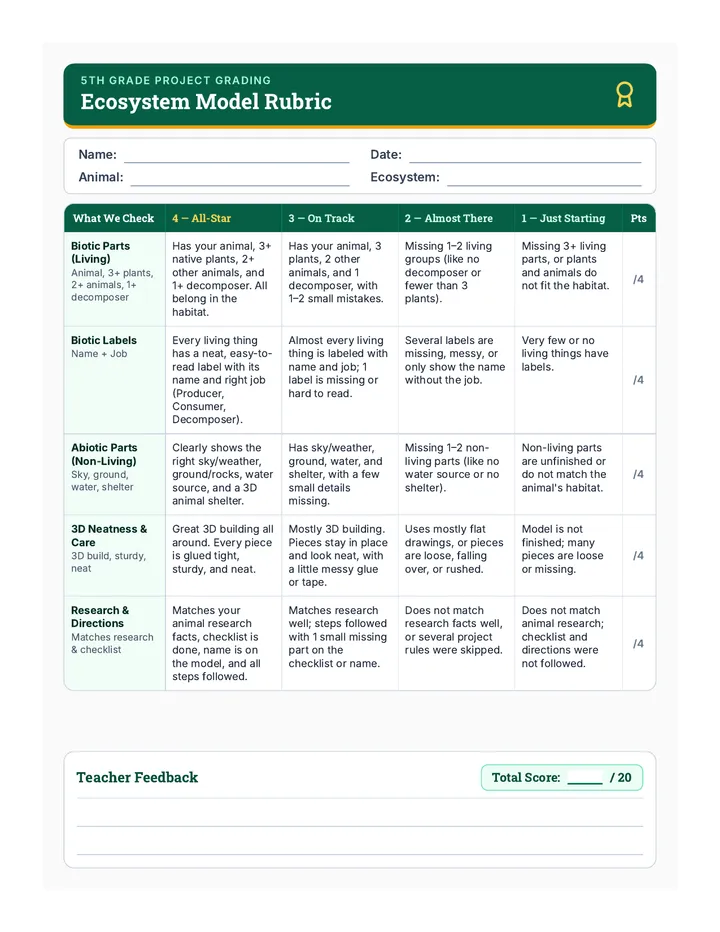
Ecosystem Model Rubric 5th Grade Project Grading
Ecosystem Model Rubric
Name:
Date:
Animal:
Ecosystem:
| What We Check |
4 — All-Star
|
3 — On Track
|
2 — Almost There
|
1 — Just Starting
| Pts |
| --- | --- | --- | --- | --- | --- |
| Biotic Parts (Living)
Animal, 3+ plants, 2+ animals, 1+ decomposer
| Has your animal, 3+ native plants, 2+ other animals, and 1+ decomposer. All belong in the habitat. | Has your animal, 3 plants, 2 other animals, and 1 decomposer, with 1–2 small mistakes. | Missing 1–2 living groups (like no decomposer or fewer than 3 plants). | Missing 3+ living parts, or plants and animals do not fit the habitat. | /4 |
| Biotic Labels
Name + Job
| Every living thing has a neat, easy-to-read label with its name and right job (Producer, Consumer, Decomposer). | Almost every living thing is labeled with name and job; 1 label is missing or hard to read. | Several labels are missing, messy, or only show the name without the job. | Very few or no living things have labels. | /4 |
| Abiotic Parts (Non-Living)
Sky, ground, water, shelter
| Clearly shows the right sky/weather, ground/rocks, water source, and a 3D animal shelter. | Has sky/weather, ground, water, and shelter, with a few small details missing. | Missing 1–2 non-living parts (like no water source or no shelter). | Non-living parts are unfinished or do not match the animal's habitat. | /4 |
| 3D Neatness & Care
3D build, sturdy, neat
| Great 3D building all around. Every piece is glued tight, sturdy, and neat. | Mostly 3D building. Pieces stay in place and look neat, with a little messy glue or tape. | Uses mostly flat drawings, or pieces are loose, falling over, or rushed. | Model is not finished; many pieces are loose or missing. | /4 |
| Research & Directions
Matches research & checklist
| Matches your animal research facts, checklist is done, name is on the model, and all steps followed. | Matches research well; steps followed with 1 small missing part on the checklist or name. | Does not match research facts well, or several project rules were skipped. | Does not match animal research; checklist and directions were not followed. | /4 |
Teacher Feedback
Total Score:
/ 20
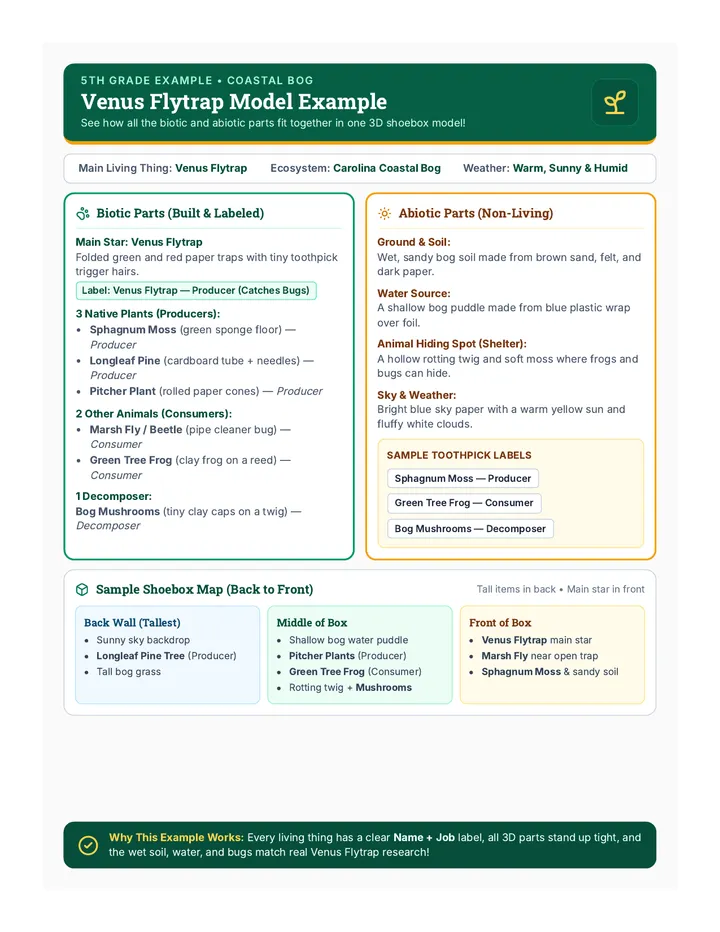
Venus Flytrap Model Example 5th Grade Example • Coastal Bog
Venus Flytrap Model Example
See how all the biotic and abiotic parts fit together in one 3D shoebox model!
Main Living Thing: Venus Flytrap
Ecosystem: Carolina Coastal Bog
Weather: Warm, Sunny & Humid
Biotic Parts (Built & Labeled)
Main Star: Venus Flytrap
Folded green and red paper traps with tiny toothpick trigger hairs.
Label: Venus Flytrap — Producer (Catches Bugs)
3 Native Plants (Producers):
Sphagnum Moss (green sponge floor) — Producer Longleaf Pine (cardboard tube + needles) — Producer Pitcher Plant (rolled paper cones) — Producer
2 Other Animals (Consumers):
Marsh Fly / Beetle (pipe cleaner bug) — Consumer Green Tree Frog (clay frog on a reed) — Consumer
1 Decomposer:
Bog Mushrooms (tiny clay caps on a twig) — Decomposer
Abiotic Parts (Non-Living)
Ground & Soil:
Wet, sandy bog soil made from brown sand, felt, and dark paper.
Water Source:
A shallow bog puddle made from blue plastic wrap over foil.
Animal Hiding Spot (Shelter):
A hollow rotting twig and soft moss where frogs and bugs can hide.
Sky & Weather:
Bright blue sky paper with a warm yellow sun and fluffy white clouds.
Sample Toothpick Labels
Sphagnum Moss — Producer Green Tree Frog — Consumer Bog Mushrooms — Decomposer
Sample Shoebox Map (Back to Front)
Tall items in back • Main star in front
Back Wall (Tallest)
Sunny sky backdrop
Longleaf Pine Tree (Producer)Tall bog grass
Middle of Box
Shallow bog water puddle
Pitcher Plants (Producer)Green Tree Frog (Consumer)Rotting twig + Mushrooms
Front of Box
Venus Flytrap main starMarsh Fly near open trapSphagnum Moss & sandy soil
Why This Example Works: Every living thing has a clear Name + Job label, all 3D parts stand up tight, and the wet soil, water, and bugs match real Venus Flytrap research!