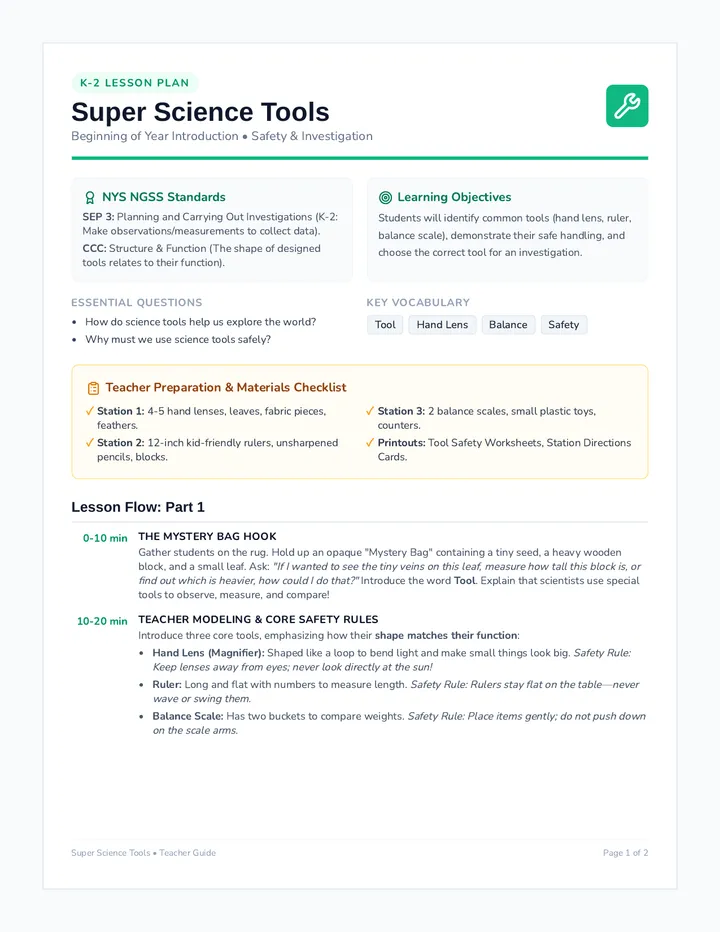
An introductory lesson for early elementary students (grades K-2) on safely identifying and using scientific tools like hand lenses, rulers, and balances, aligned with New York State Next Generation Science Standards (NYS NGSS).
An introductory launch unit for fifth-grade science establishing safety norms, physical notebooks, and the Claim-Evidence-Reasoning (CER) writing framework.
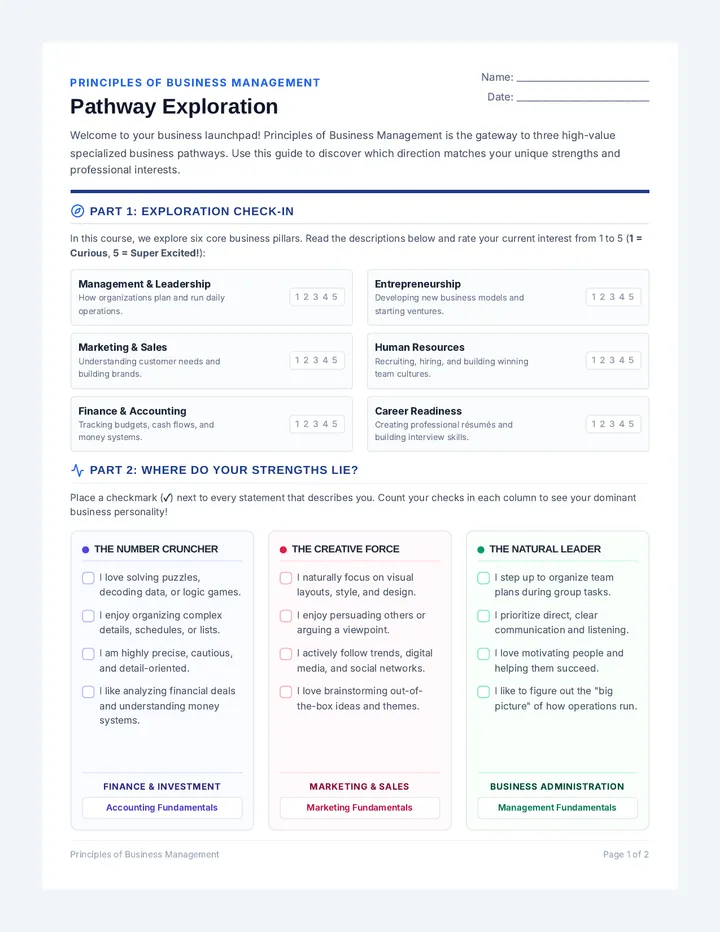
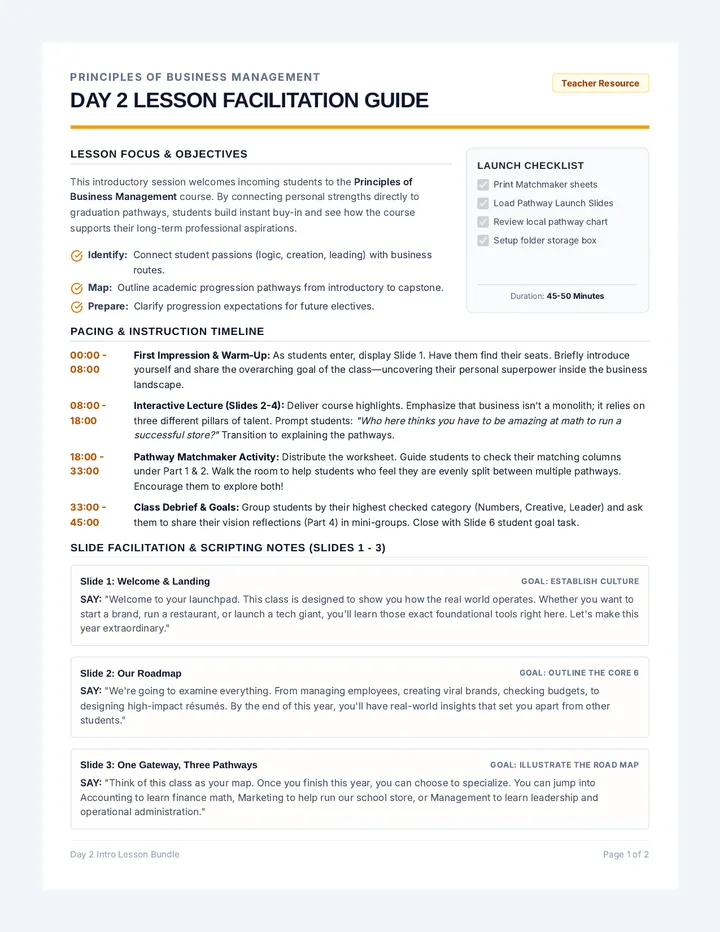
An introductory lesson designed to welcome incoming students to Principles of Business Management, mapping out future academic pathways and helping them identify their unique business strengths.
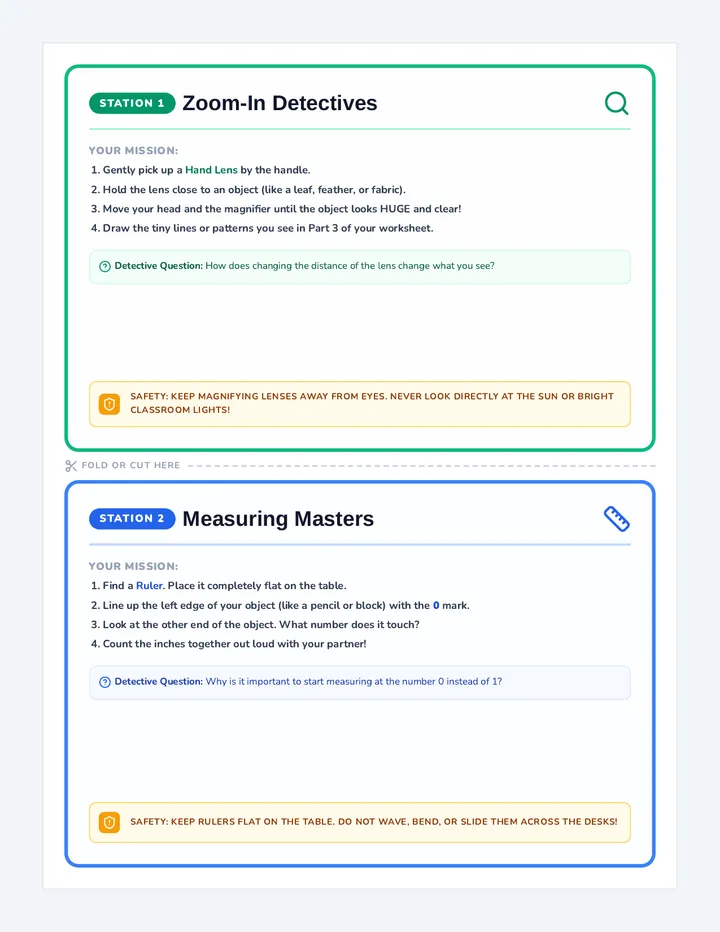
A 2-page printable set of 4 horizontal, classroom-ready science station cards with easy-to-follow instructions, safety rules, and observation prompts for K-2 students.
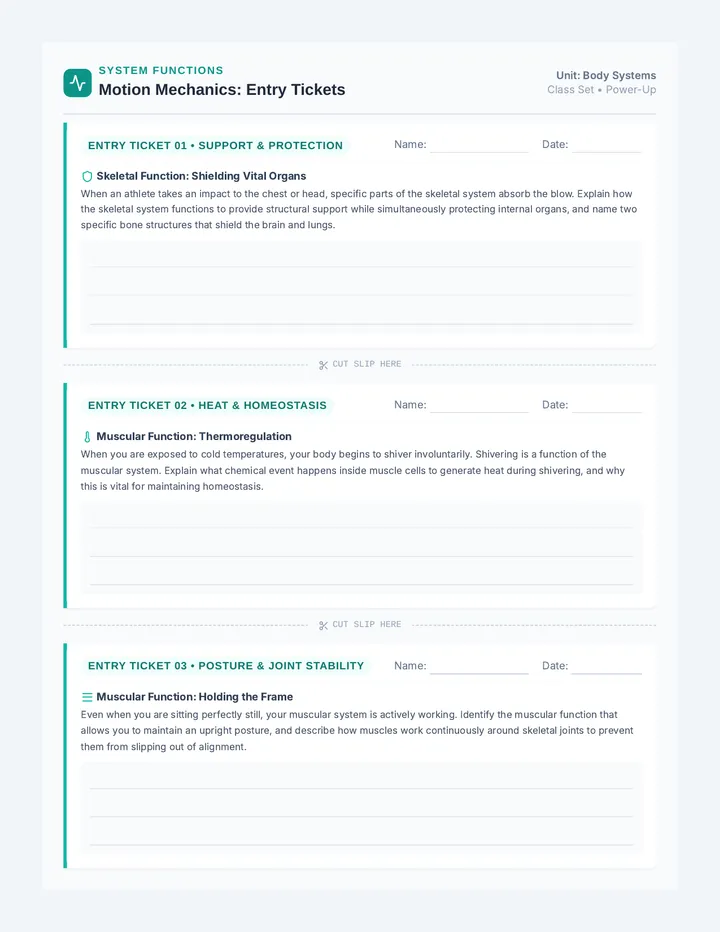
A comprehensive unit focusing on the physiological functions, real-world mechanics, and interactions of major human body systems.
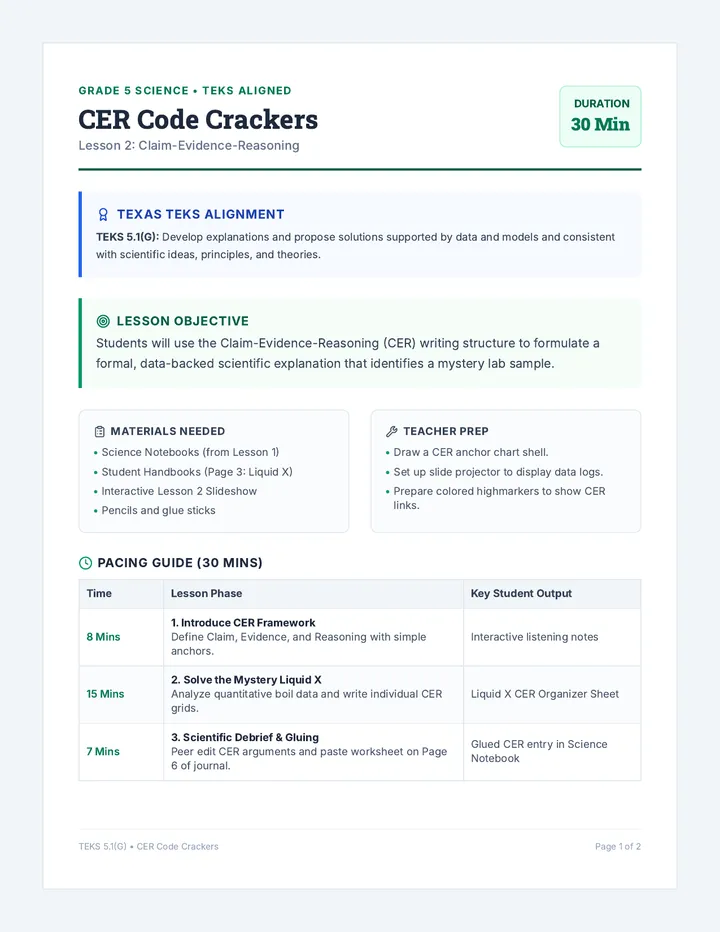
A 30-minute TEKS-aligned lesson introducing the Claim-Evidence-Reasoning (CER) framework through a collaborative scientific mystery investigation.
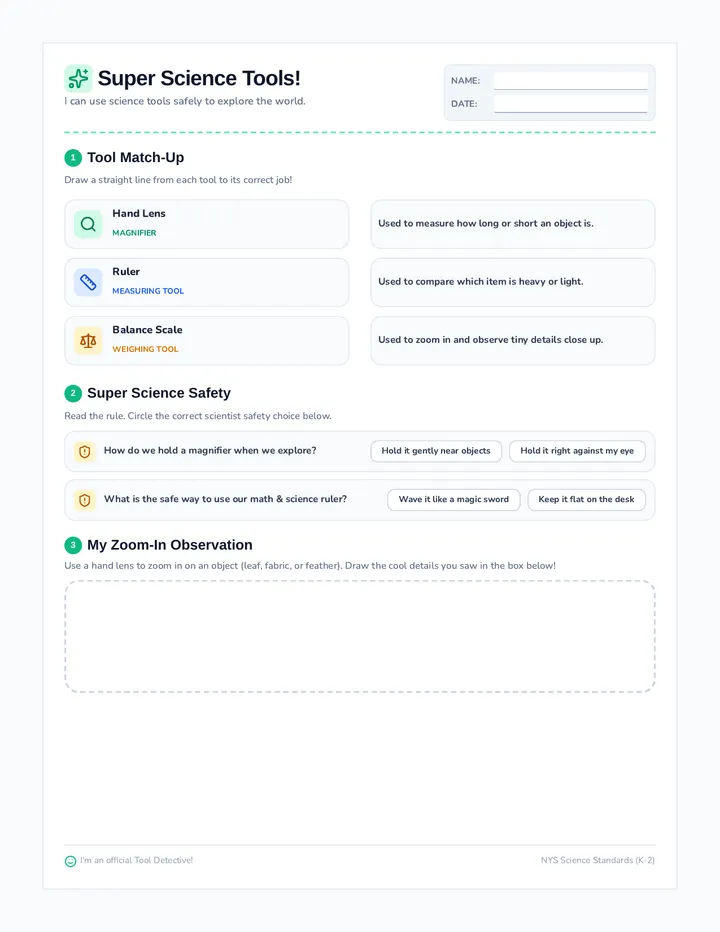
A student safety and exploration worksheet for early elementary students (K-2) to practice identifying science tools, recognizing safety rules, and drawing hands-on observations.
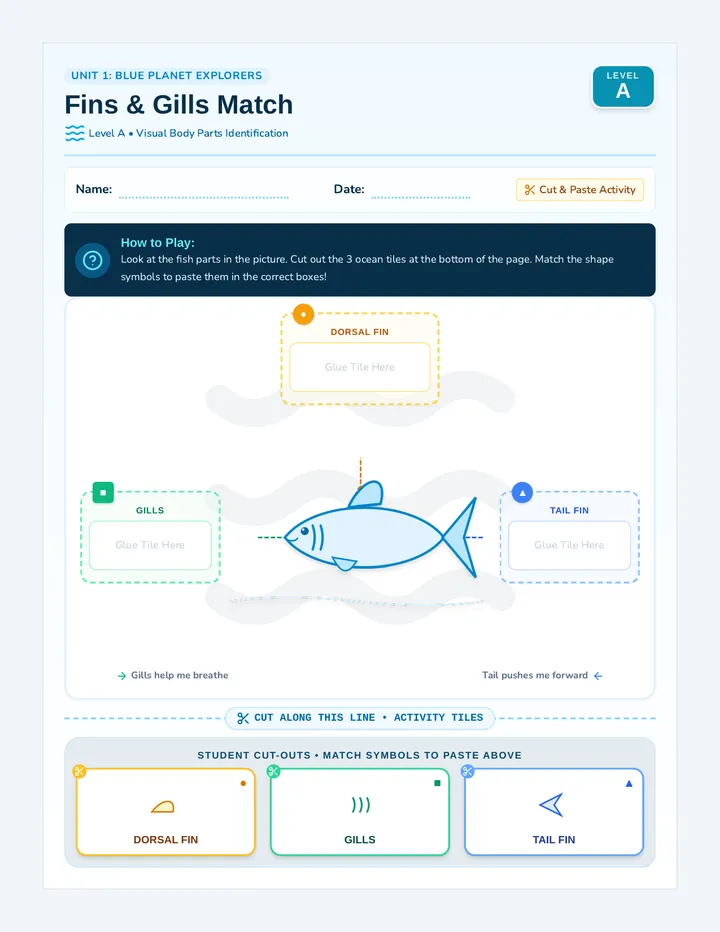
An interactive, highly visual early science unit exploring ocean animal physical traits, body parts, sizes, and diets. Features dual-level (Low/Visual and Medium/Reading) printable cut-and-paste worksheets for diverse learners.
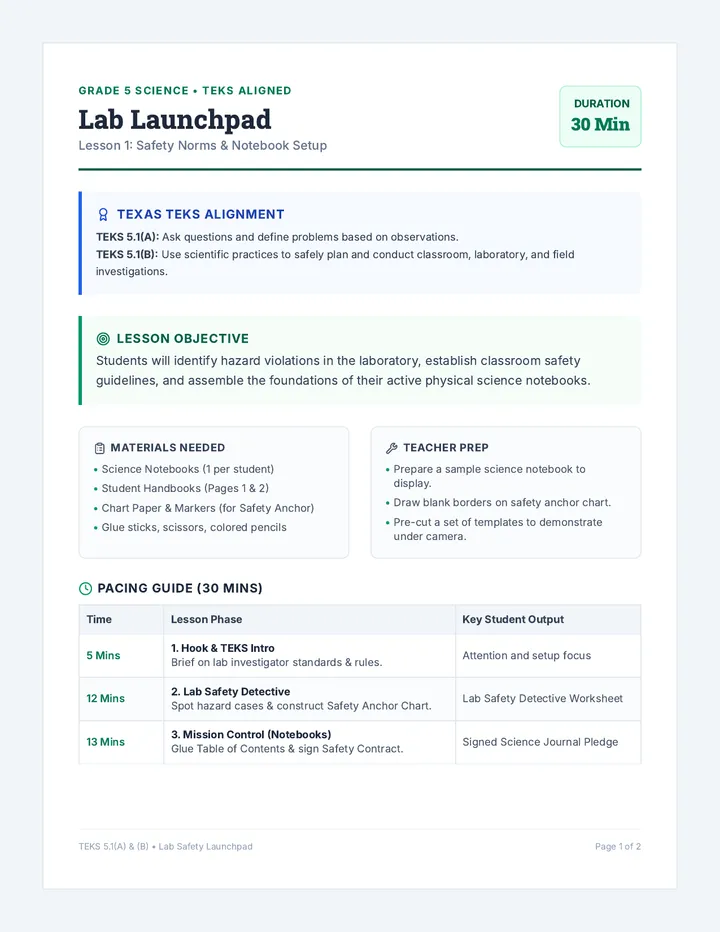
A 30-minute TEKS-aligned introductory lesson for fifth graders establishing laboratory safety protocols and configuring their science notebooks.
A comprehensive, 2-page printable lesson plan for teachers introducing science tools to K-2 students, including NYS NGSS standards, materials checklists, safety guidelines, hook activities, station procedures, and assessment questions.
A game design and mathematics sequence where students deconstruct and build idle game mechanics, loop design, and exponential growth formulas.
A hands-on, highly engaging science lesson exploring how ecologists study animal scat (poop) to understand wildlife diets, behaviors, and ecosystems. Students will learn to identify animal diets based on physical characteristics of scat.
A professional teacher facilitation guide and lesson plan outlining instructional pacing, discussion prompts, student misconceptions, and activities for Day 2 of Principles of Business Management.