An introductory lesson designed to welcome incoming students to Principles of Business Management, mapping out future academic pathways and helping them identify their unique business strengths.
An introductory launch unit for fifth-grade science establishing safety norms, physical notebooks, and the Claim-Evidence-Reasoning (CER) writing framework.
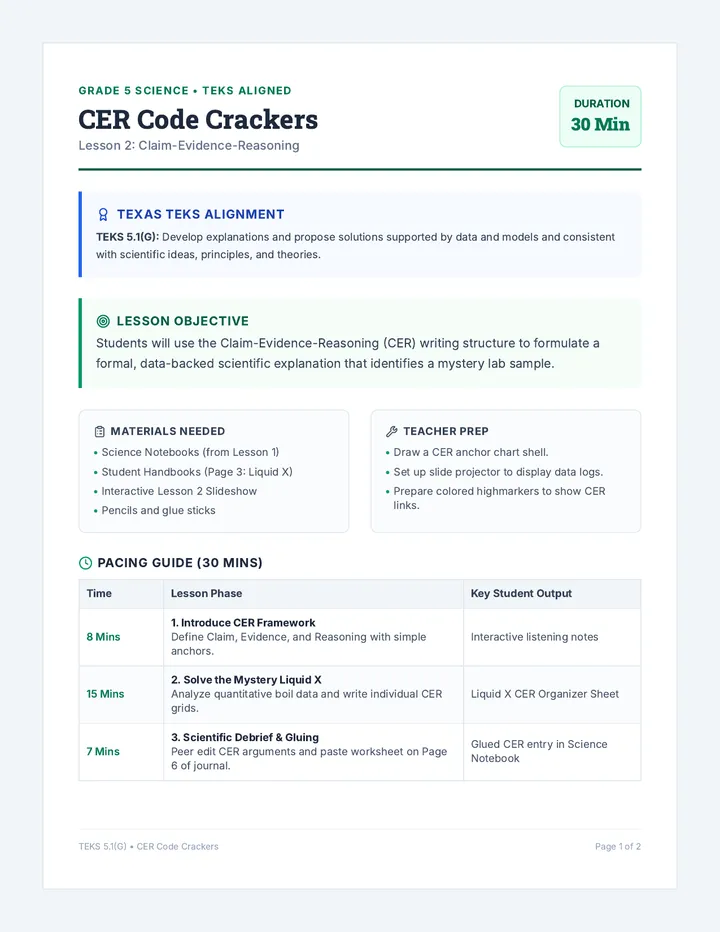
A 30-minute TEKS-aligned lesson introducing the Claim-Evidence-Reasoning (CER) framework through a collaborative scientific mystery investigation.
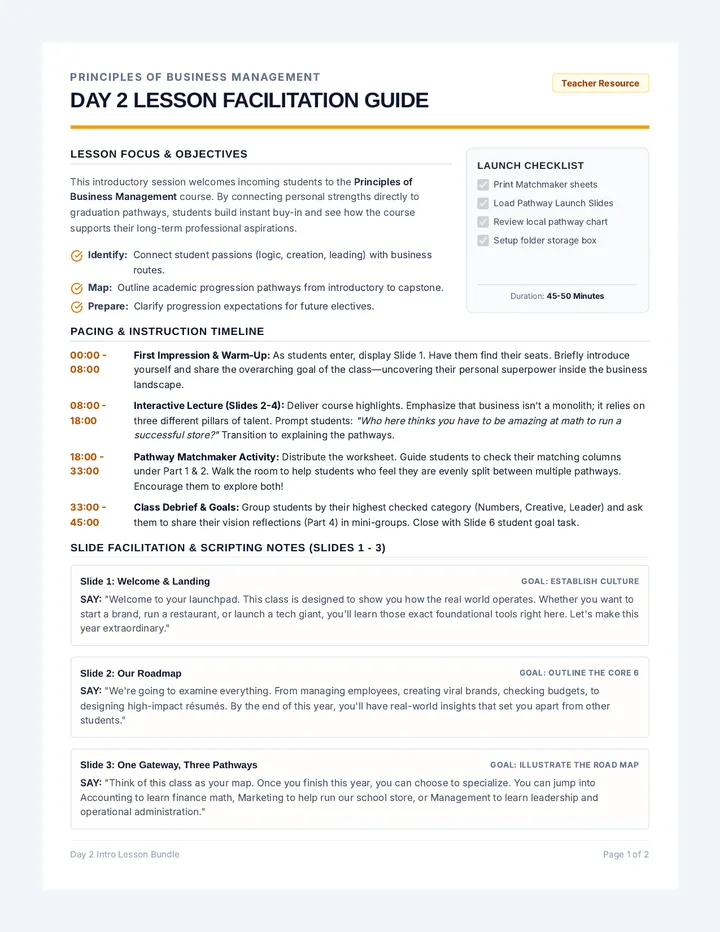
A professional teacher facilitation guide and lesson plan outlining instructional pacing, discussion prompts, student misconceptions, and activities for Day 2 of Principles of Business Management.
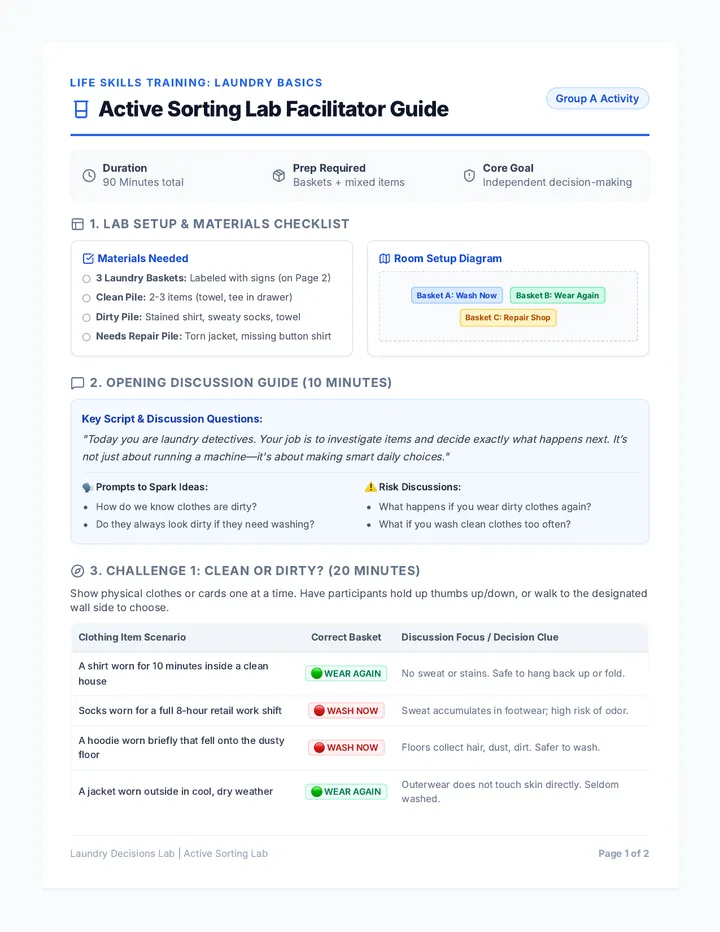
A comprehensive life skills sequence designed to teach independent laundry decision-making, sorting, and problem-solving. It includes a hands-on active lab lesson for physical sorting practice and a visually engaging scenario-based slide presentation lesson for classroom discussion.
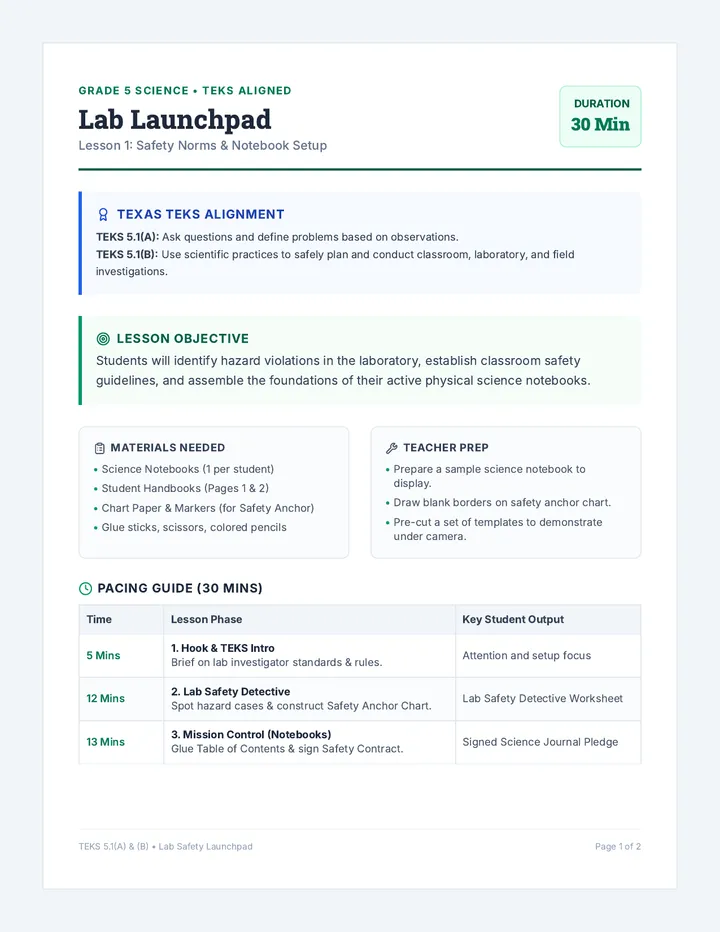
A 30-minute TEKS-aligned introductory lesson for fifth graders establishing laboratory safety protocols and configuring their science notebooks.
A visual slide presentation designed to welcome incoming students to Principles of Business Management, introducing course objectives, professional pathways, and alignment of personal strengths to future electives.
A comprehensive 4-month semester curriculum (September-December) designed to empower students with essential life skills for independence, focusing on financial literacy, social communication, and real-world simulations.
This introductory lesson outlines the Principles of Business Management course, exploring its role as a diving board for three main business pathways: Finance & Investment, Business Administration, and Marketing & Sales. Students learn about scholarship competitions like Knowledge Matters and Innovate WithIN, explore real-world career paths, and draft their own four-year academic roadmaps.
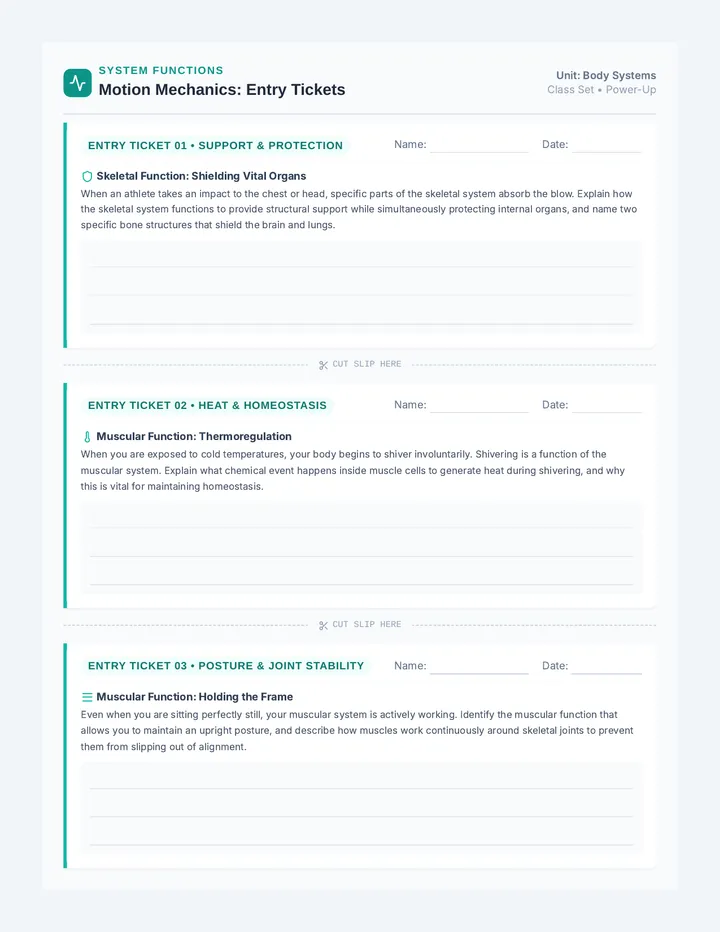
A comprehensive unit focusing on the physiological functions, real-world mechanics, and interactions of major human body systems.
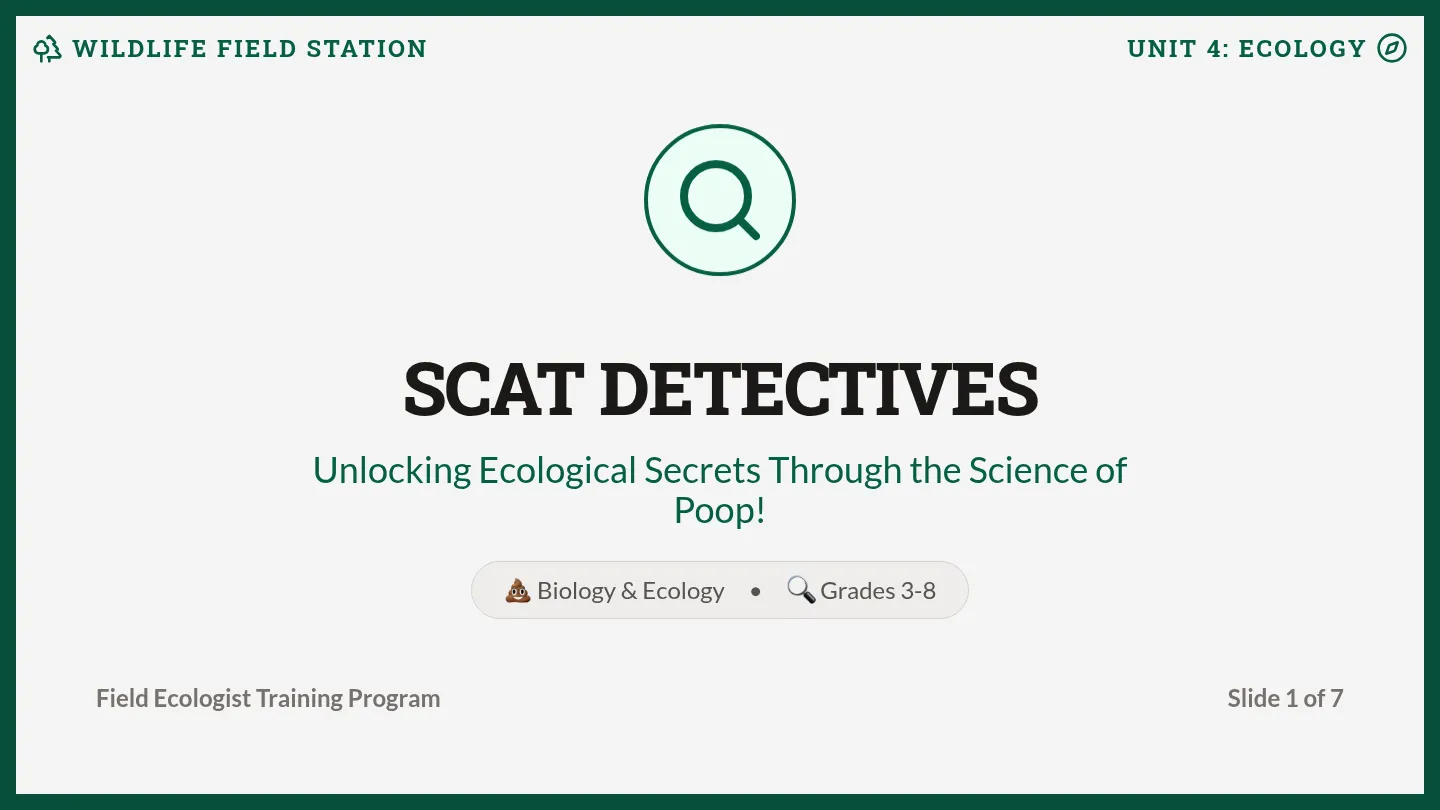
A hands-on, highly engaging science lesson exploring how ecologists study animal scat (poop) to understand wildlife diets, behaviors, and ecosystems. Students will learn to identify animal diets based on physical characteristics of scat.
This sequence immerses students in the rigorous demands of professional communication, focusing on how formatting influences credibility. Students analyze poorly formatted business documents to identify failures in communication, then progressively build skills in structuring emails, memos, and resumes.
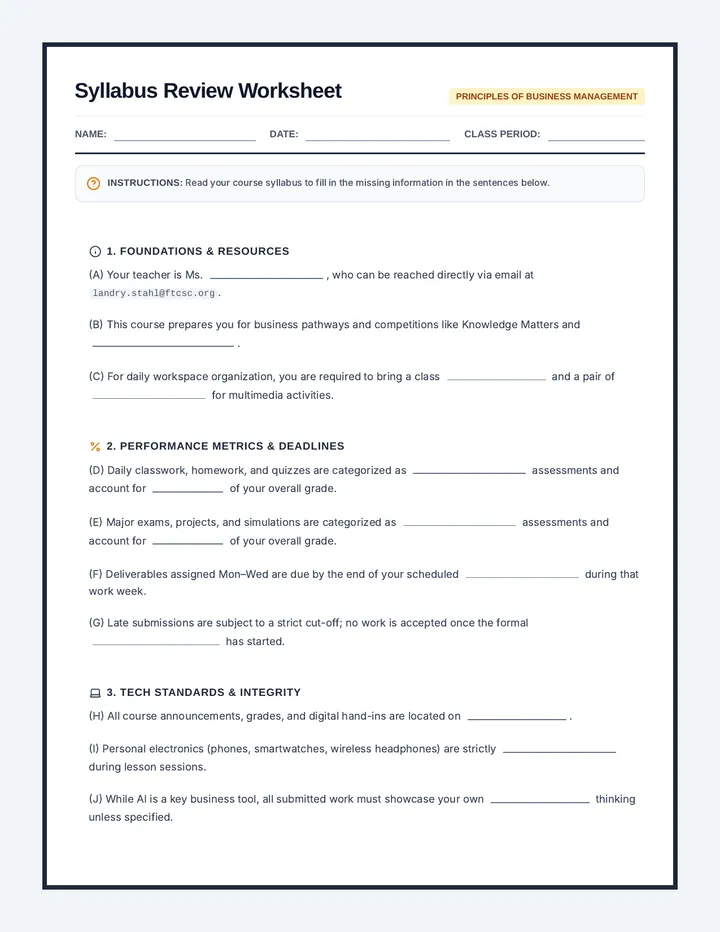
A foundational introduction to the expectations, grading, policies, and structure of the Principles of Business Management course.