A student-led inquiry project exploring the intersection of music and neuroscience. Students choose their own research path to discover how musical training transforms cognitive development and present their unique findings.
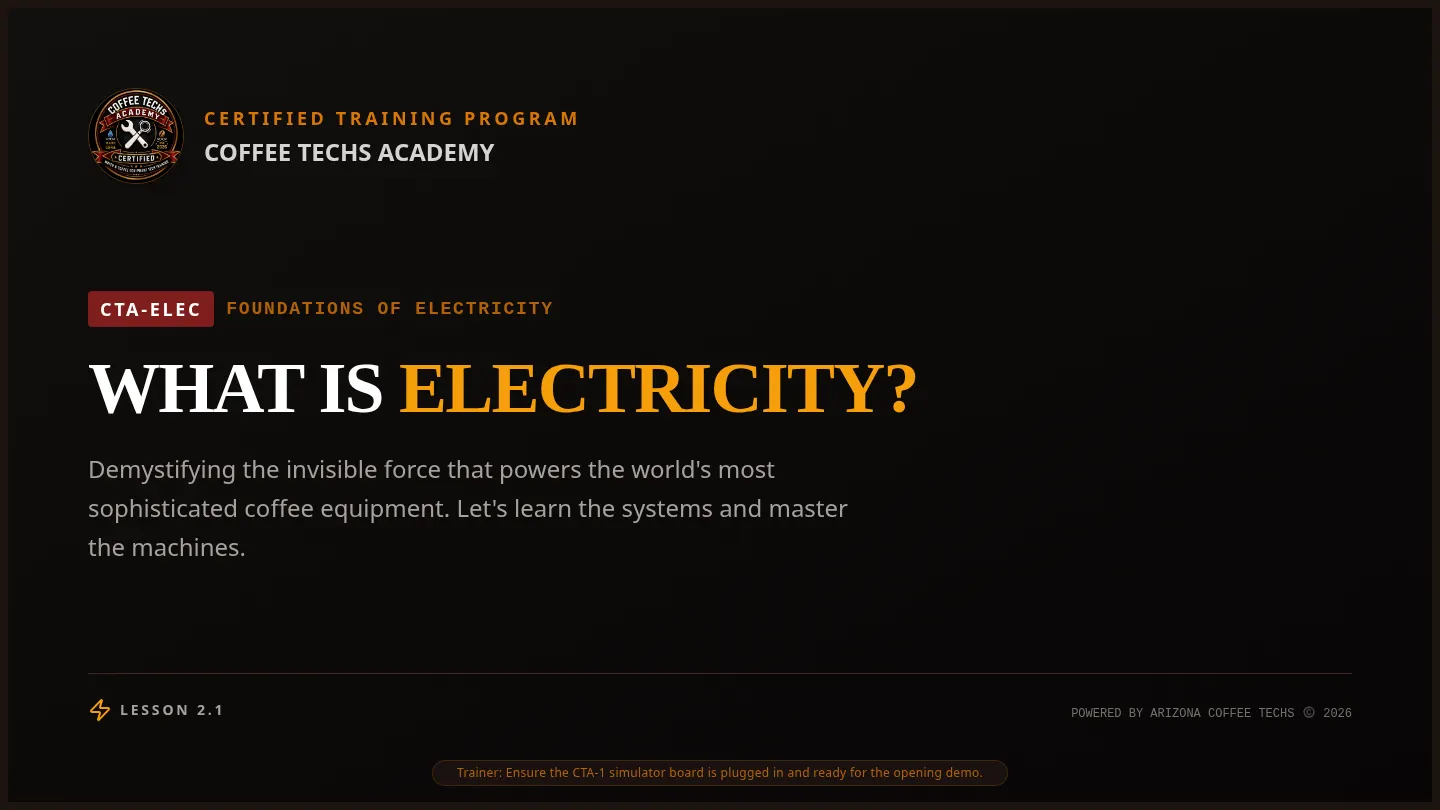
A comprehensive technical certification sequence designed to teach commercial coffee equipment technicians how to demystify electricity, safely troubleshoot components, and master electrical systems.
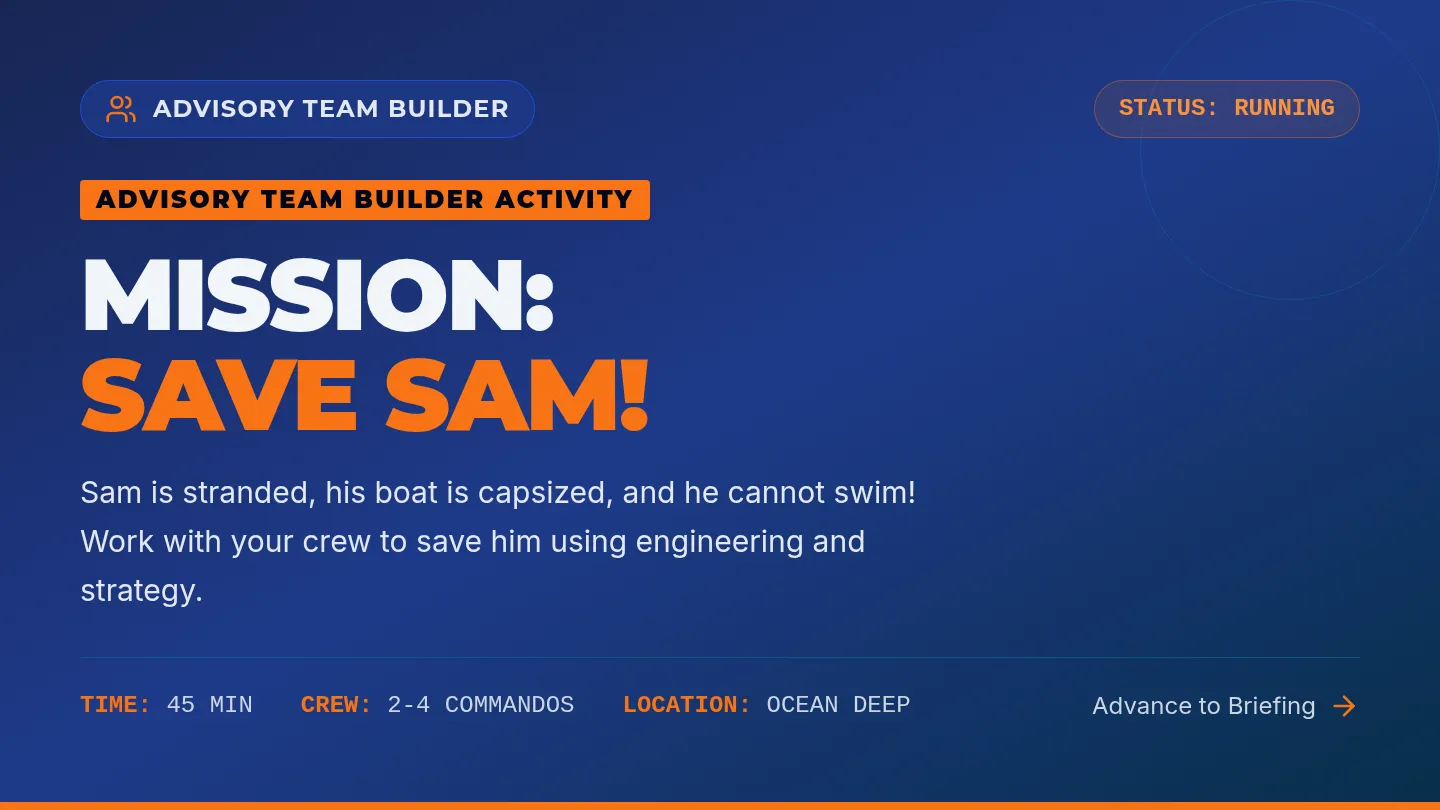
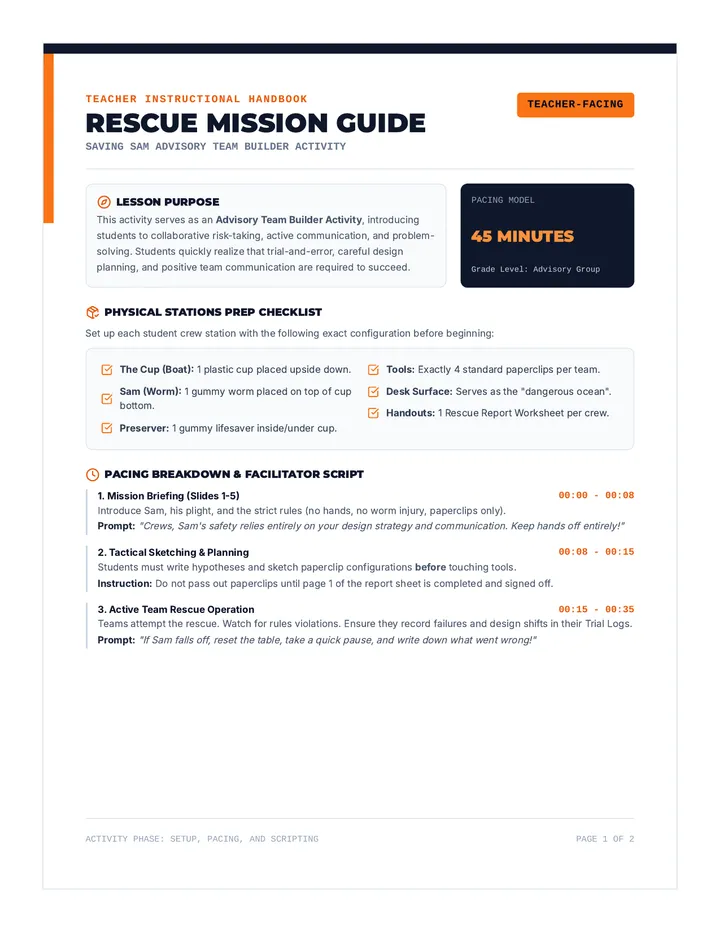
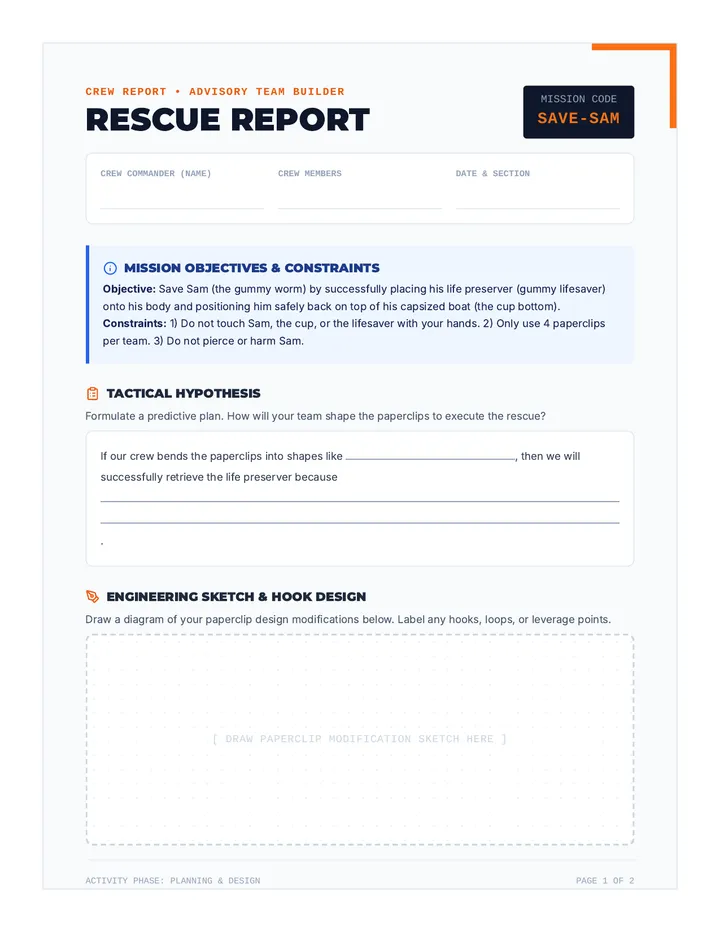
An introductory STEM and cooperative learning lesson where students work in teams to save Sam, a gummy worm stranded on a capsized boat, using only paperclips to retrieve and equip his life preserver.
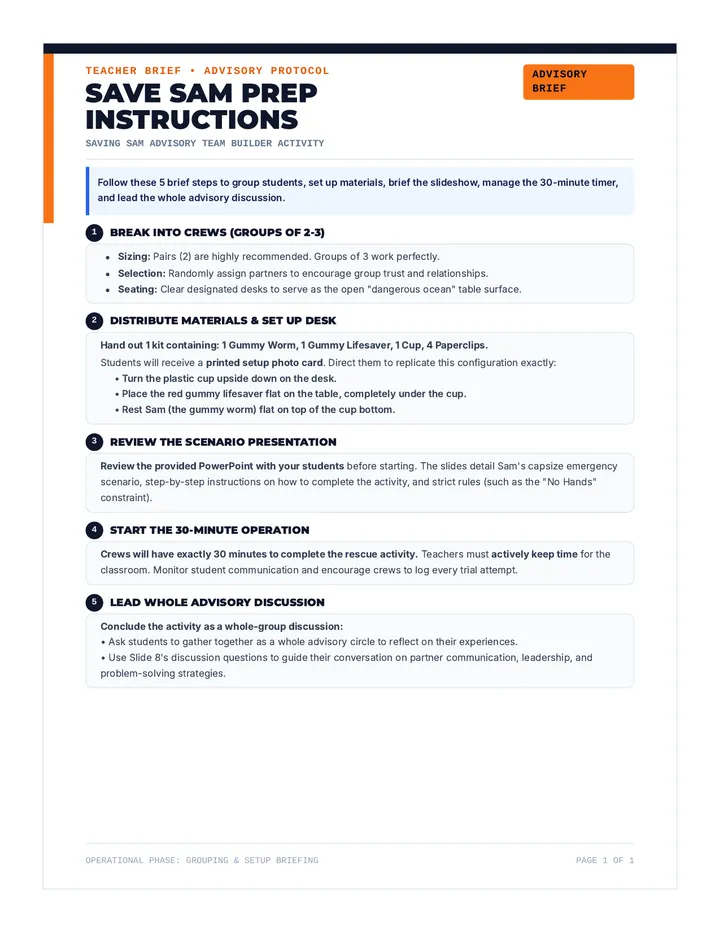
A brief, step-by-step instructional guide for teachers on breaking students into groups of 2-3, distributing materials, briefing the scenario via slides, and managing the 30-minute timer.
An ecology and life science curriculum sequence exploring the microscopic and macroscopic systems of our planet, from cellular organelles and biological organization to Earth's interconnected spheres.
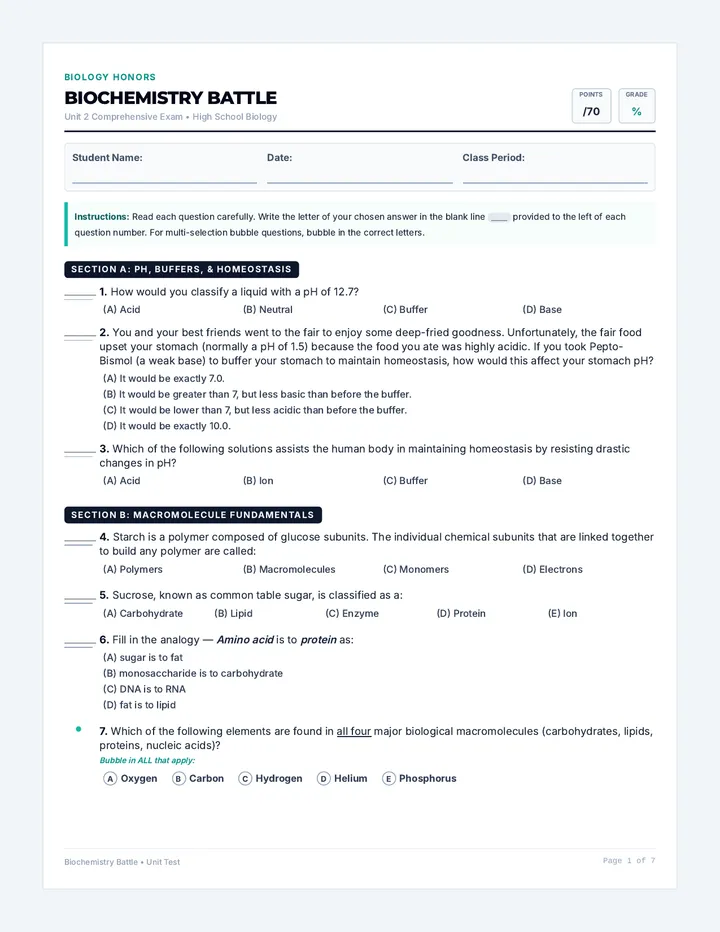
A comprehensive biology unit exam and matching teacher key assessing students' understanding of pH, buffers, macromolecule structures, lab identification, and enzyme kinetics.
A comprehensive, 2-page instructional guide for teachers containing step-by-step setup instructions, material lists, scripted prompts, pacing suggestions, common student misconceptions, and a 4-point cooperative rubric.
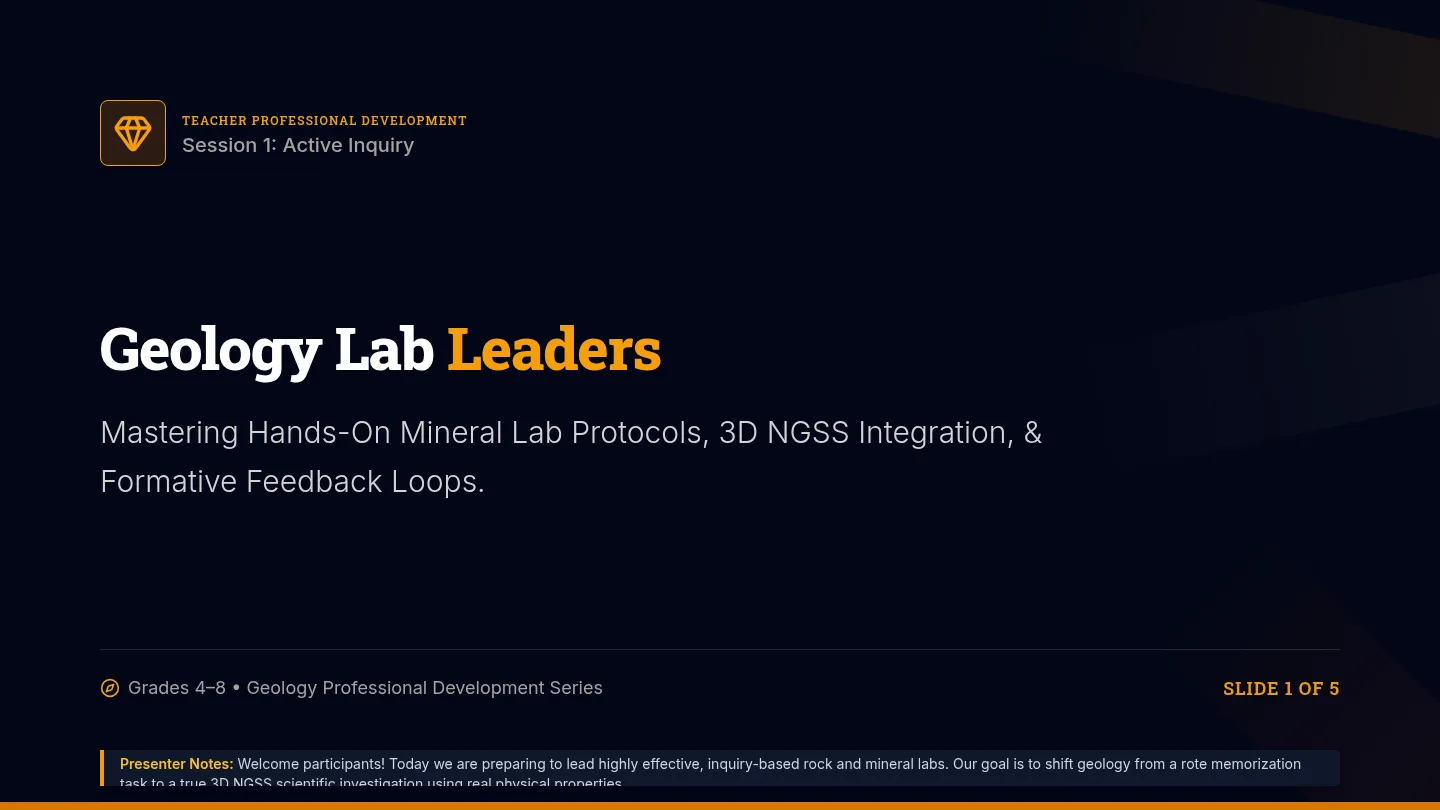
A comprehensive teacher professional development and model lesson plan sequence. It equips educators with hands-on mineral testing protocols, inquiry-based (3D) NGSS teaching strategies, geological vocabulary support, and formative assessment tools for grades 4-8.
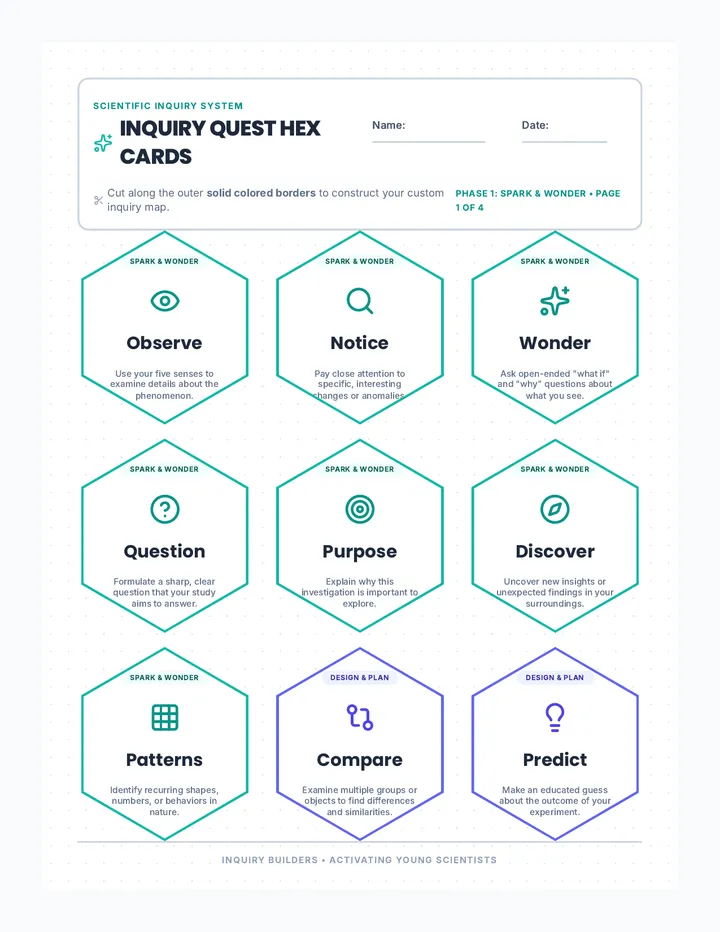
A lesson designed to guide students through the fundamental stages of scientific inquiry using tactile, color-coded hex cards to map, sort, and collaborate on scientific investigations.
A structured, 2-page print-ready student worksheet designed to guide students through the engineering design process during the challenge. Includes space for design sketches, hypothesis writing, a trial tracking log, and team reflection questions.
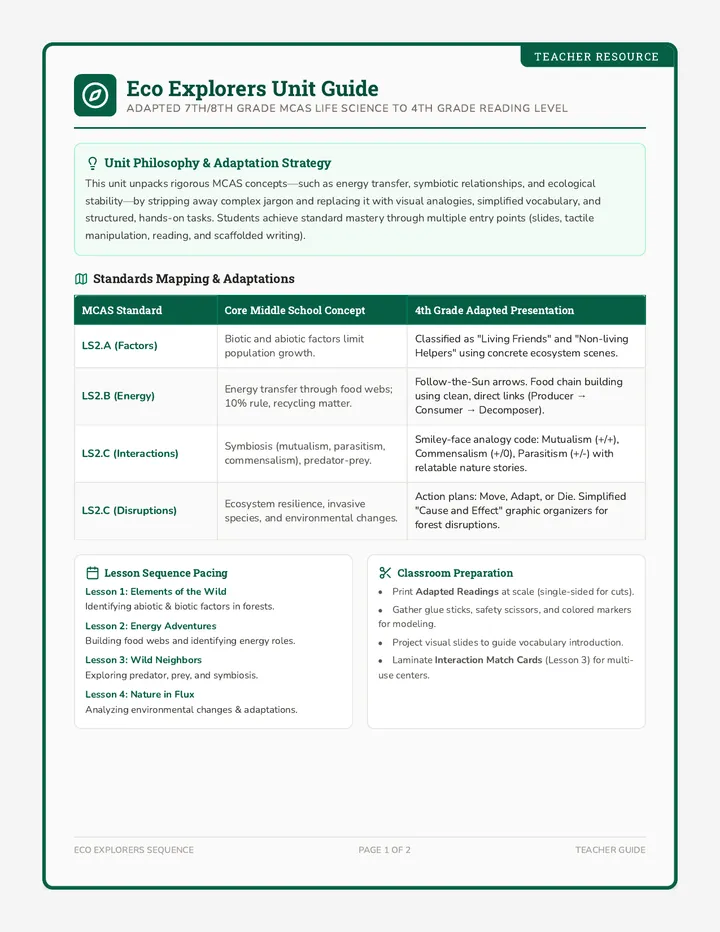
An interactive, highly visual ecosystem unit designed for 7th/8th grade MCAS standards but adapted to a 4th-grade reading and comprehension level. The unit explores abiotic/biotic factors, energy flow, interactions, and disruptions through hands-on activities, adapted readings, visual slides, and scaffolded assessments.
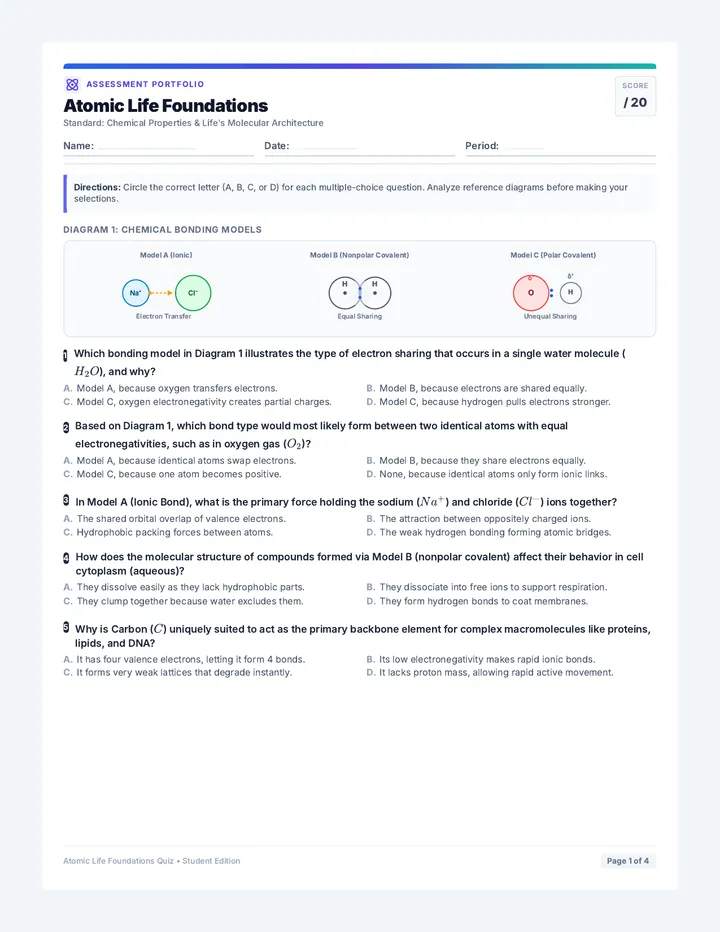
A comprehensive assessment package evaluating students' understanding of biochemistry, chemical bonding, molecular structures, and solubility principles in biological systems.
An interactive, highly visual presentation designed to guide students through the Saving Sam STEM challenge. It features step-by-step visual rules, clear success criteria, and structured team discussion prompts using a high-contrast marine rescue theme.