A comprehensive lesson exploring how roots, stems, and leaves work together to transform sunlight, water, and air into energy. Students will act out the chemical reaction of photosynthesis and identify the key inputs and outputs of the process.
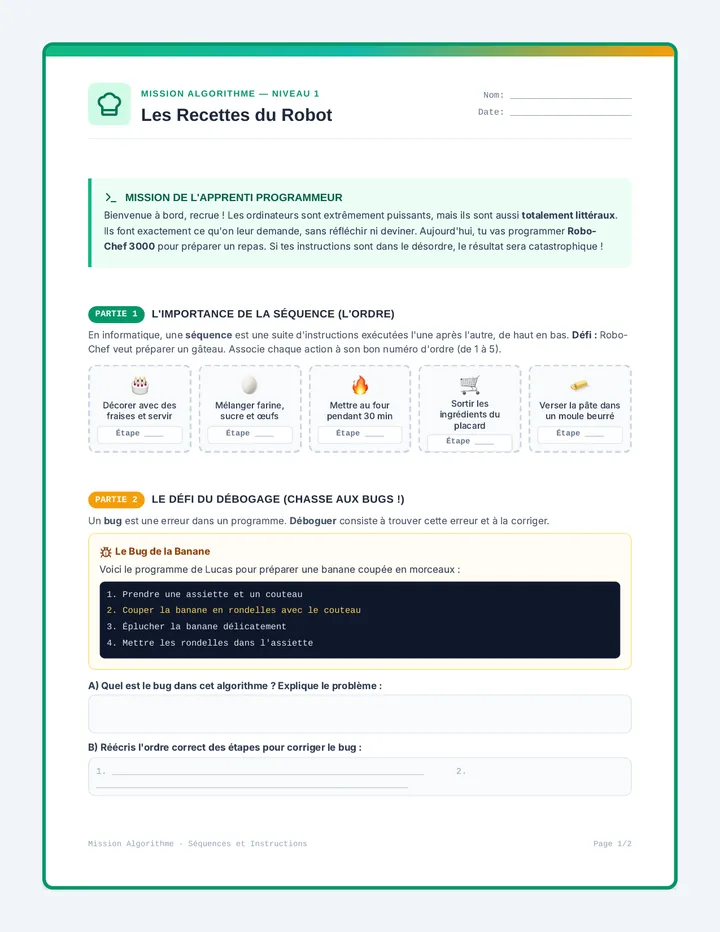
Une séquence d'initiation à l'algorithmique sans code pour débutants absolus. À travers des métaphores concrètes, les apprenants découvrent les trois piliers de la programmation : les séquences d'instructions, les conditions et les boucles.
An immersive lesson where students learn to distinguish between direct observations and logical inferences. Using everyday mystery scenarios, students practice analyzing visual evidence and building evidence-based arguments.
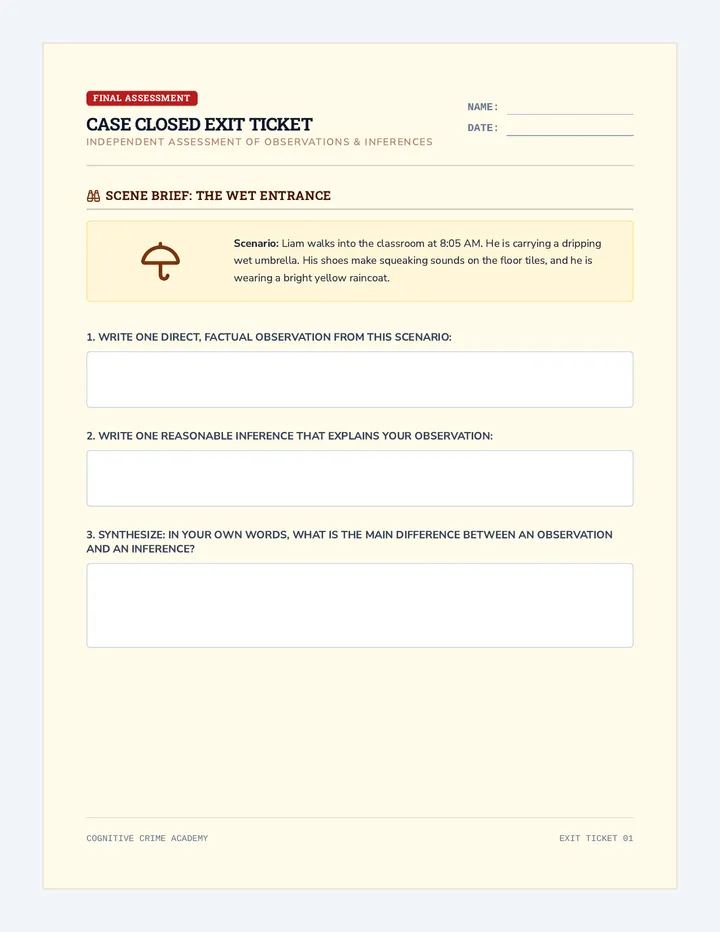
A highly focused 1-page exit ticket to assess student comprehension of observations and inferences. Features a quick-assessment scenario and a metacognitive synthesis question with clean student writing lines.
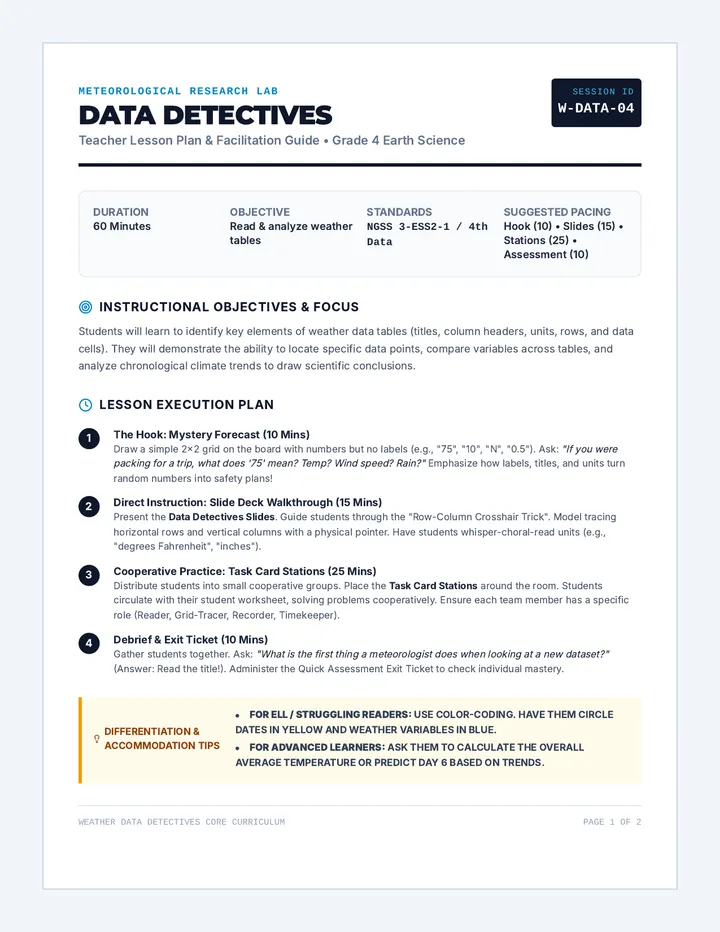
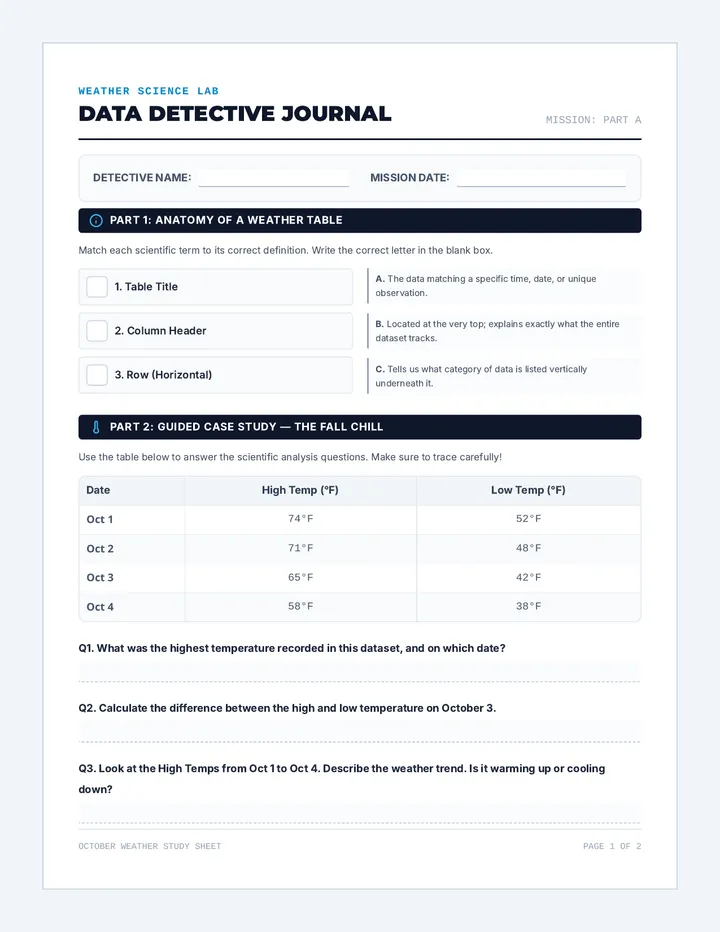
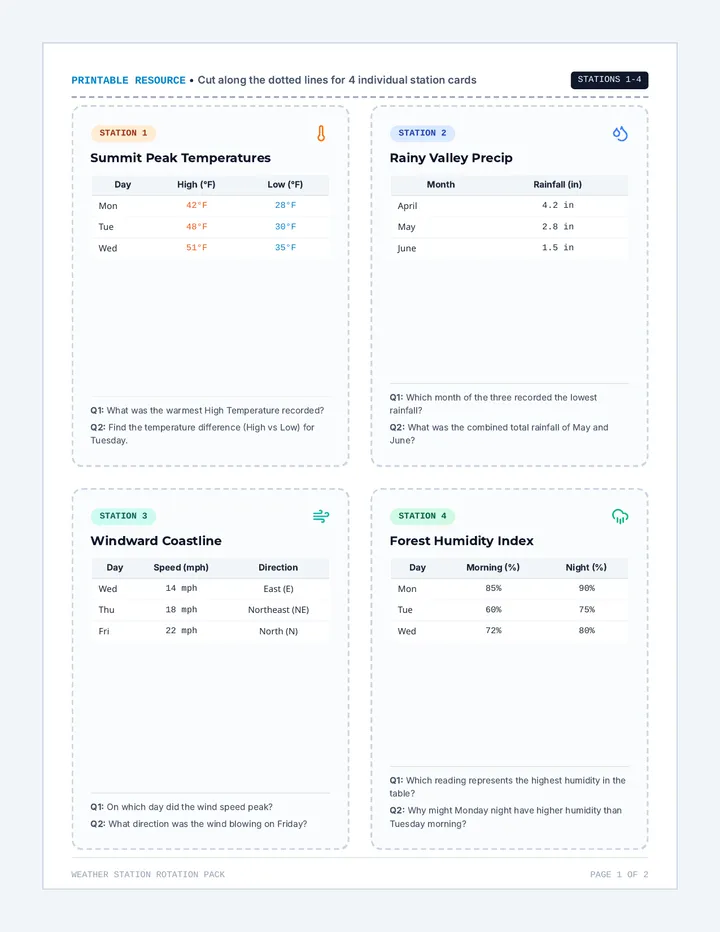
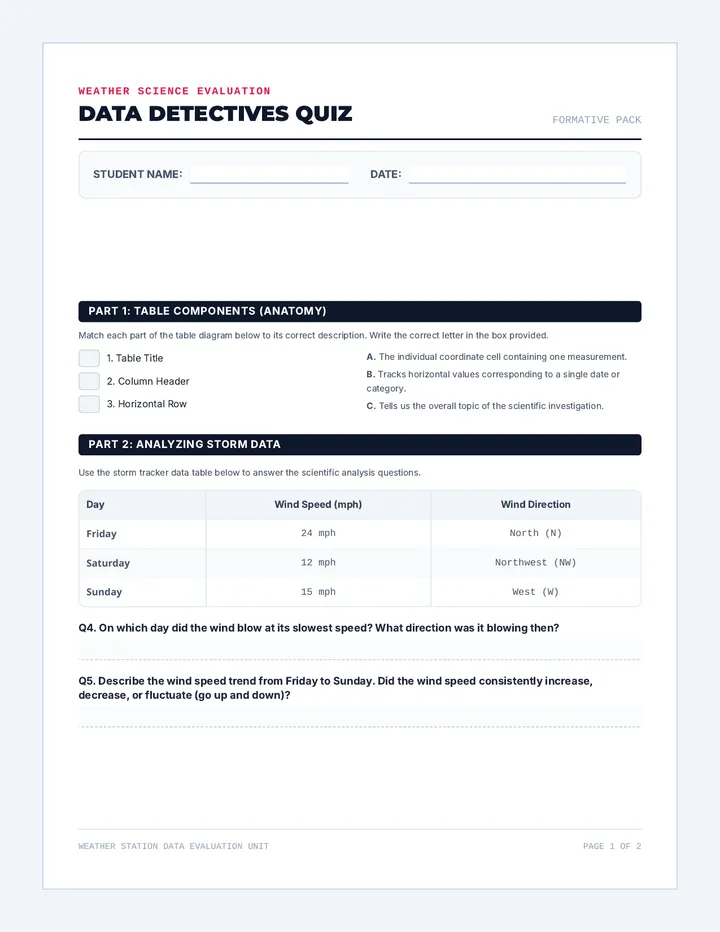
A hands-on 4th-grade science sequence exploring energy transfer, thermal design, and data-driven climate analysis through weather tracking and solar oven engineering.
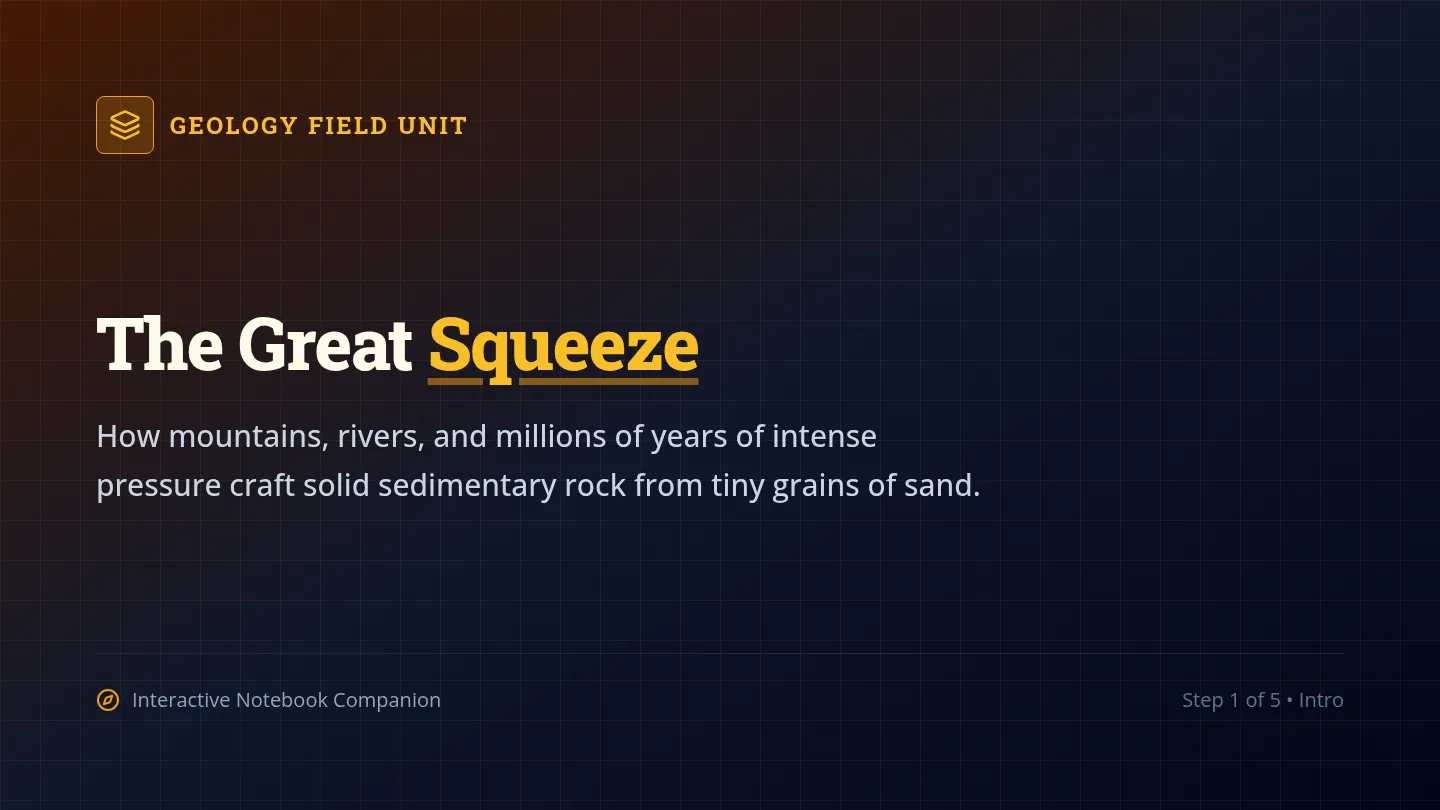
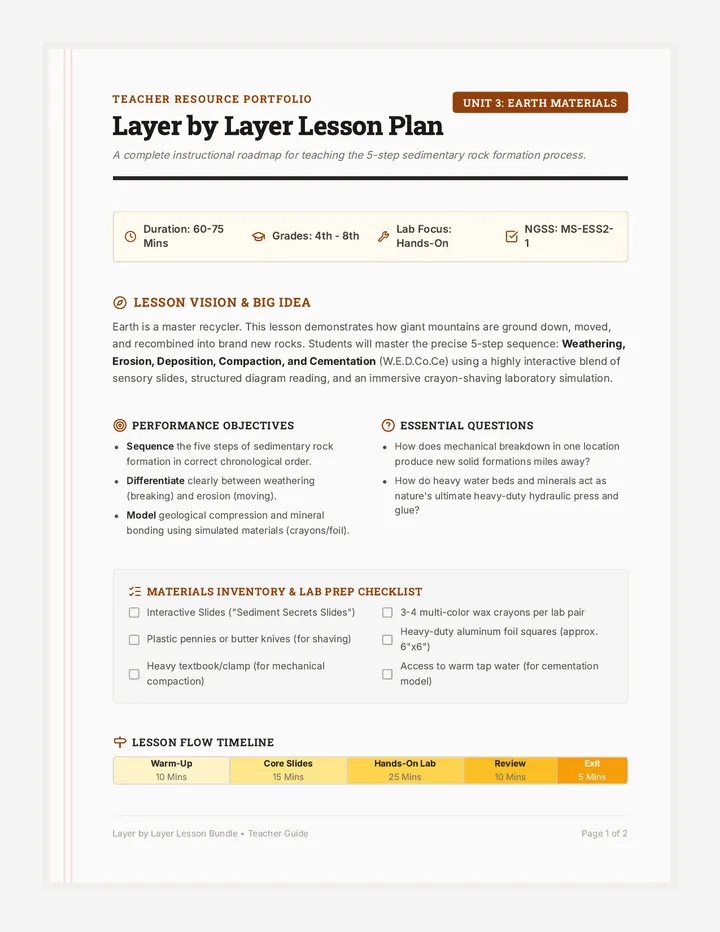
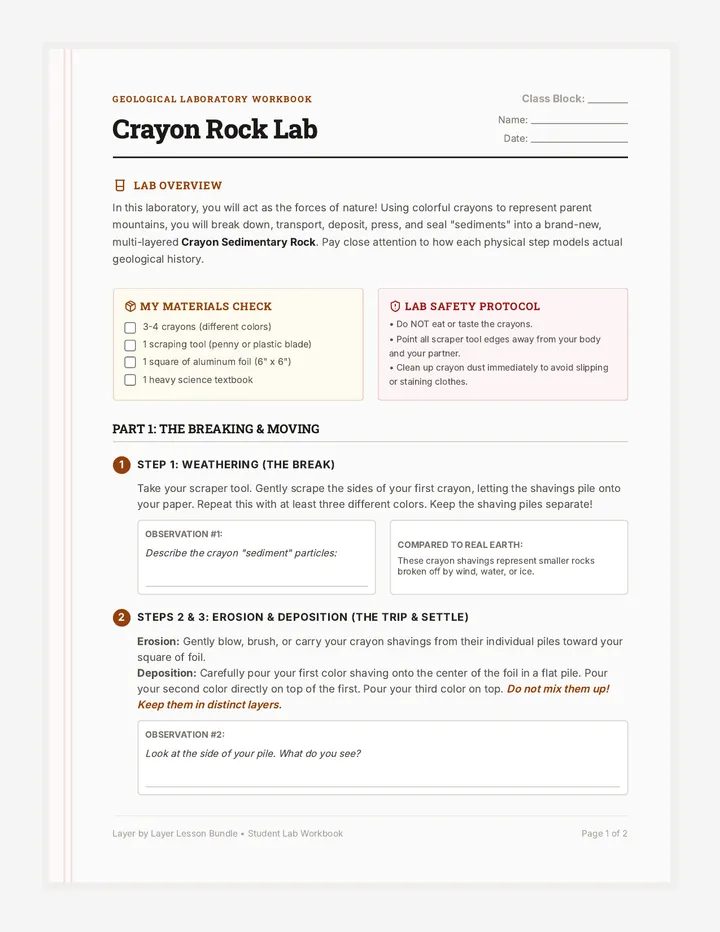
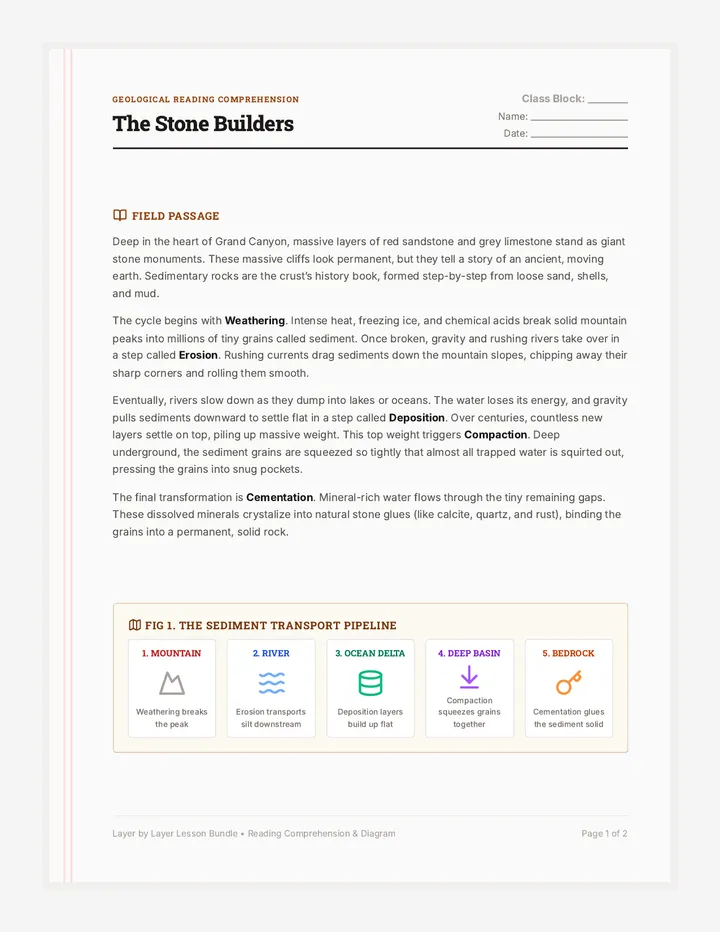
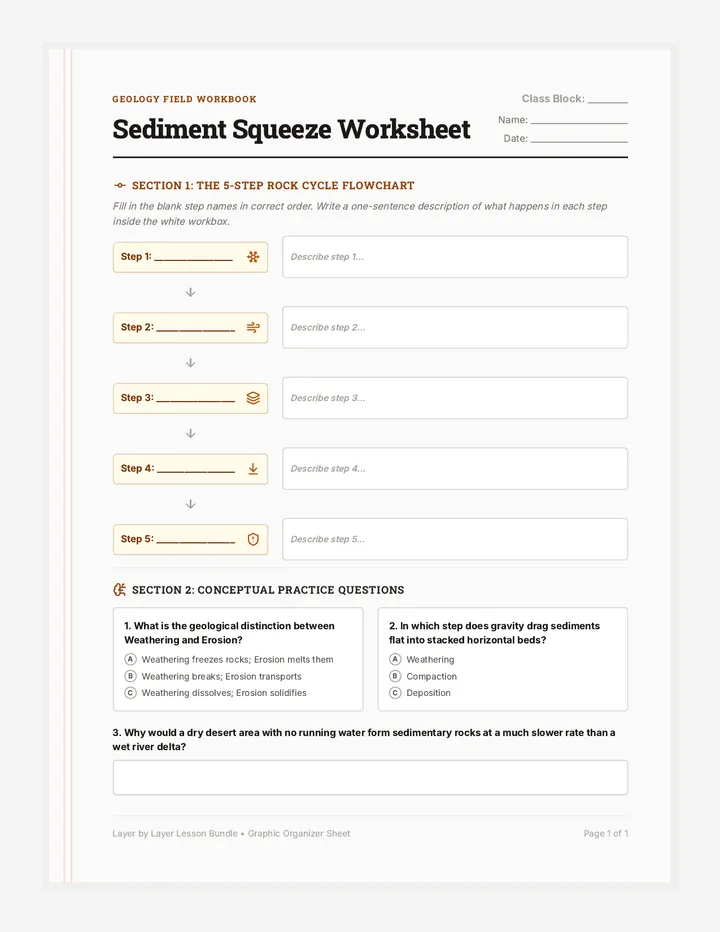
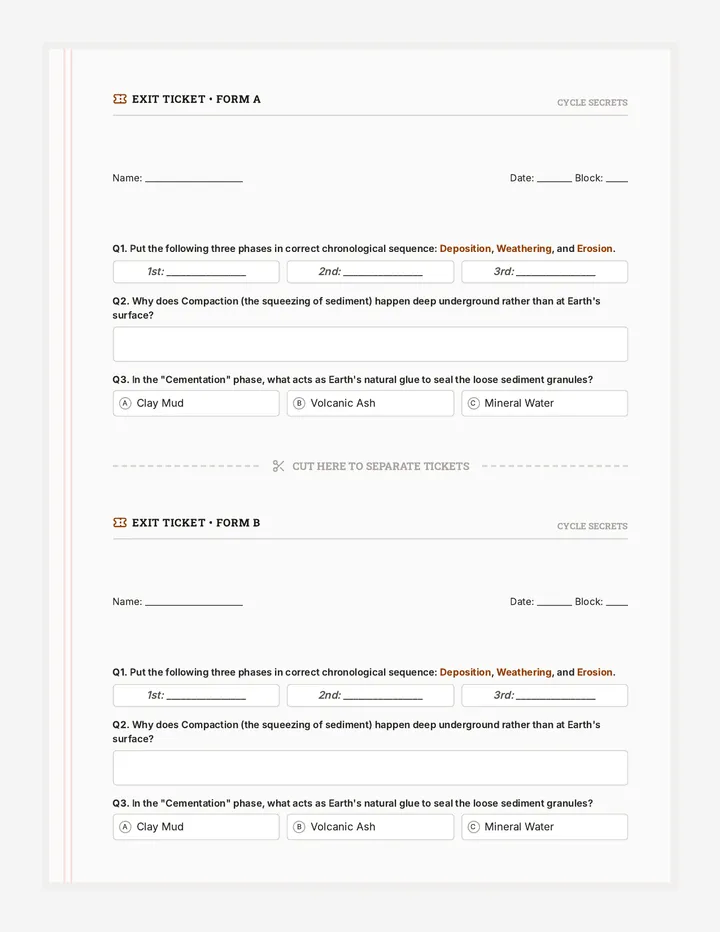
A comprehensive lesson exploring the 5-step sedimentary rock formation process (Weathering, Erosion, Deposition, Compaction, and Cementation). Includes an instructional slide deck, a detailed teacher guide, a crayon-modeling hands-on lab, an interactive diagram worksheet, and an exit ticket.
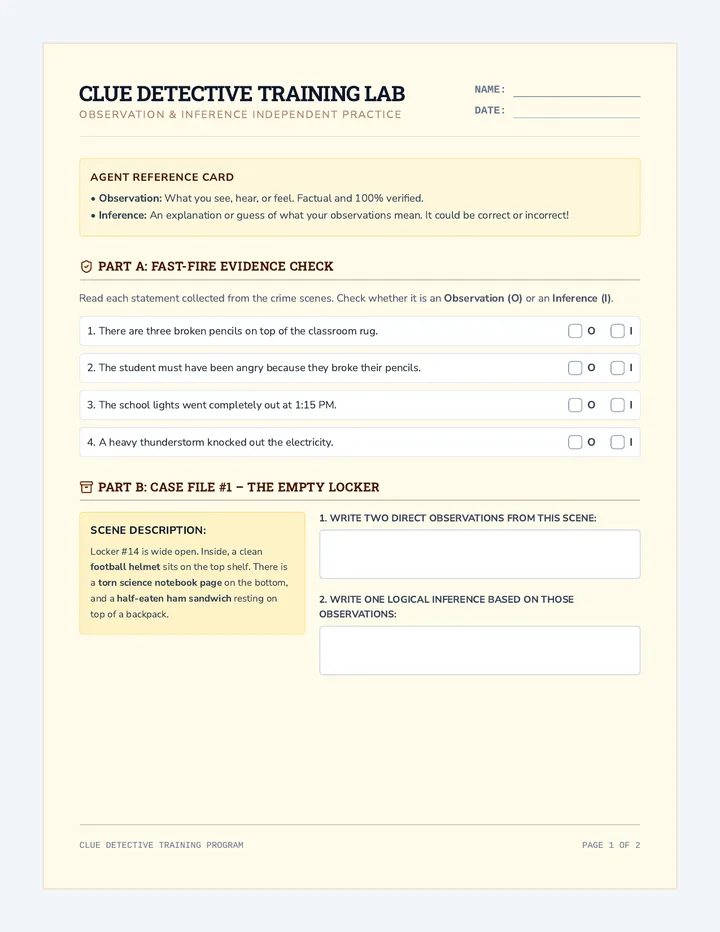
A 2-page highly engaging student activity workbook. It features quick-fire observation vs. inference classification, and two multi-step mystery case studies with clear, light-colored writing boxes for handwriting.
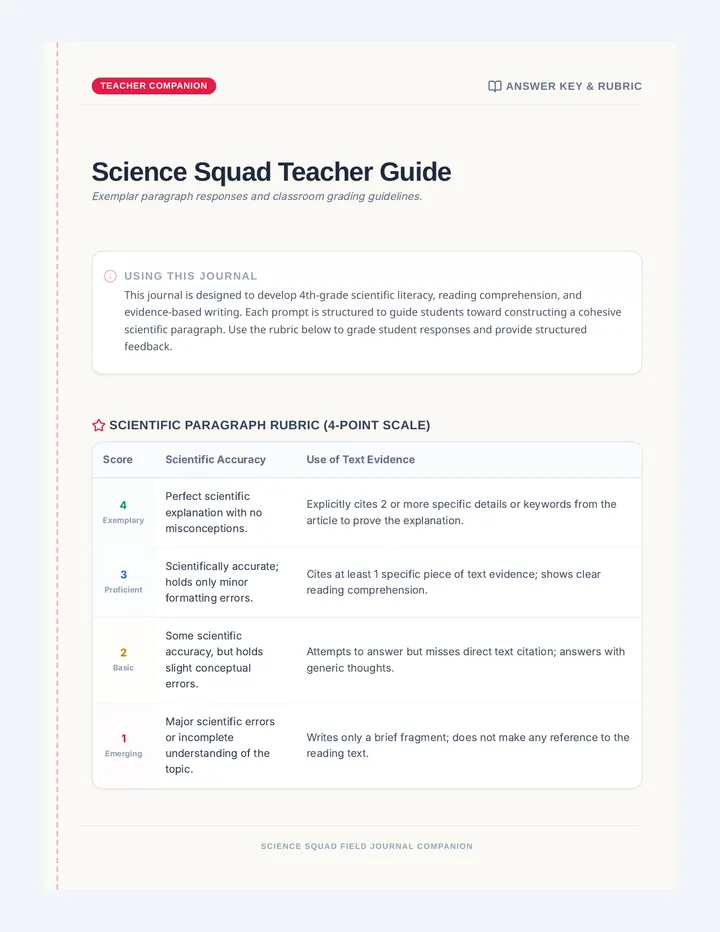
A multi-grade collection of scientific reading comprehension and response booklets designed to build disciplinary literacy in Earth, Life, and Physical sciences across elementary and middle school levels.
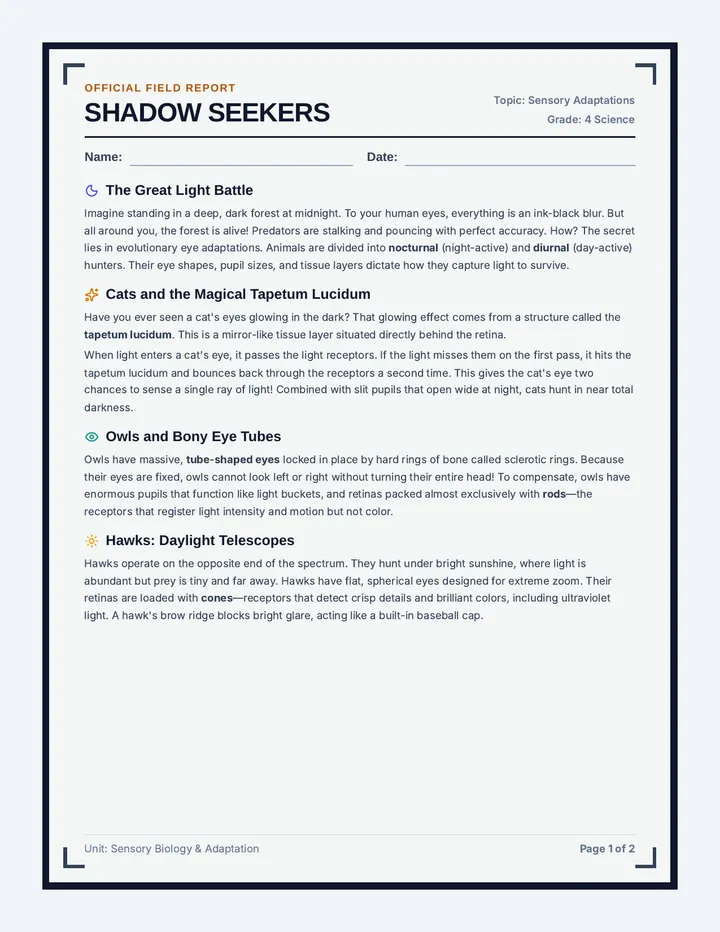
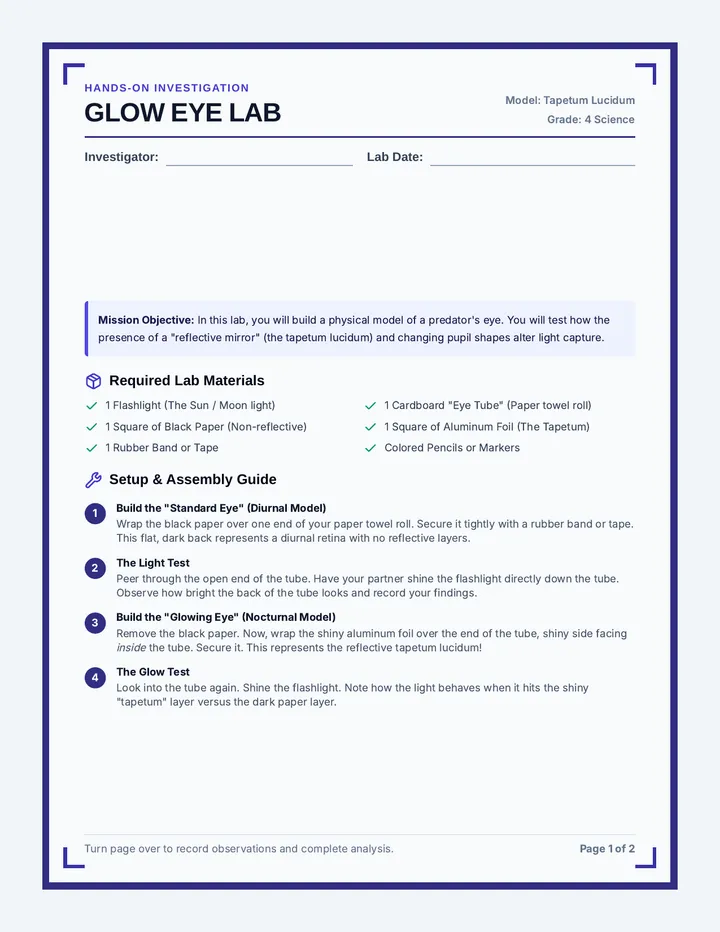
A comprehensive 4th-grade science lesson exploring nocturnal and diurnal animal eye adaptations, featuring comparing owls, cats, and hawks. Students investigate structures like the tapetum lucidum and differing pupil shapes to understand how animals survive and hunt.
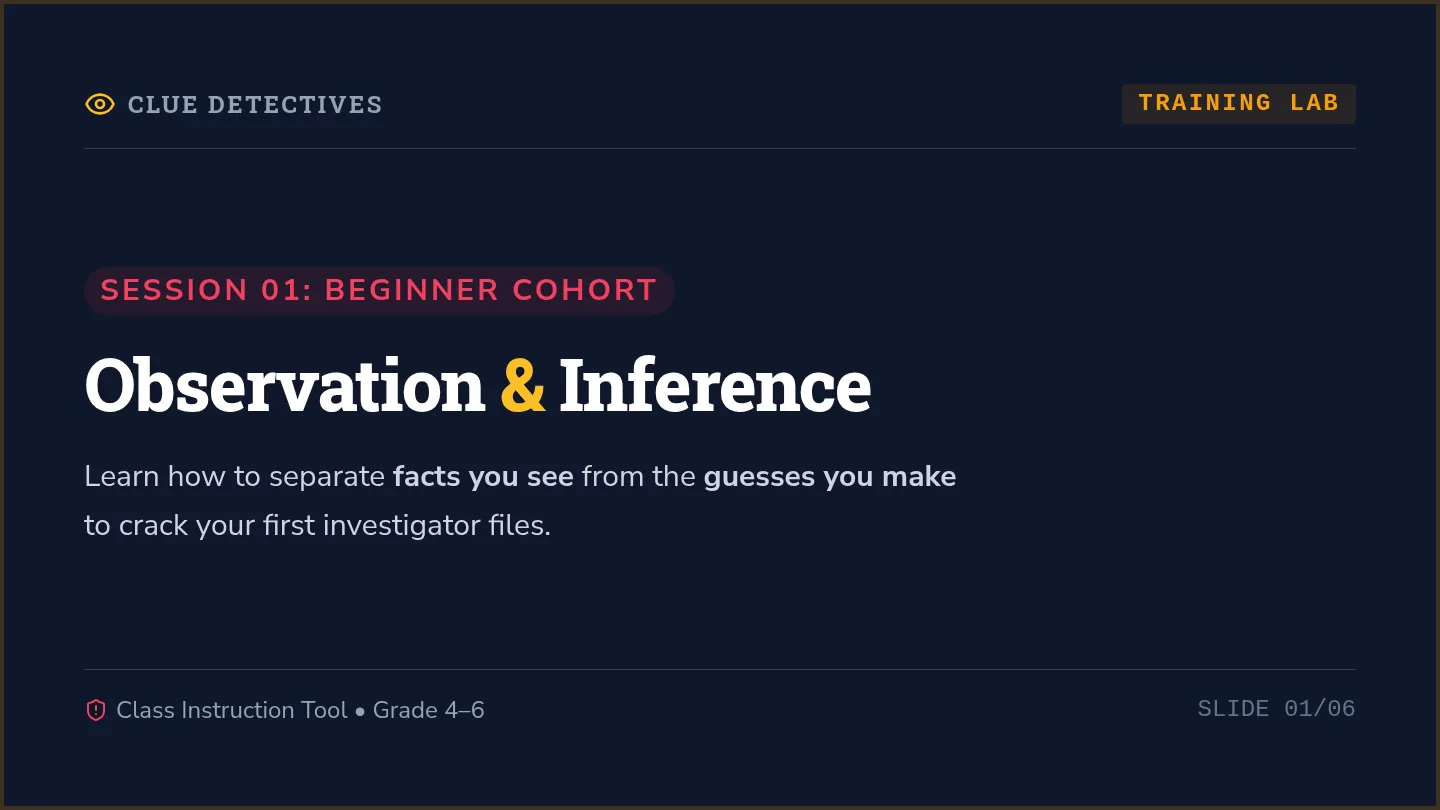
A highly visual 6-slide deck designed to introduce students to observations and inferences. Uses large readable text (minimum 24px), dark high-contrast investigator themes, and step-by-step group practice scenarios.
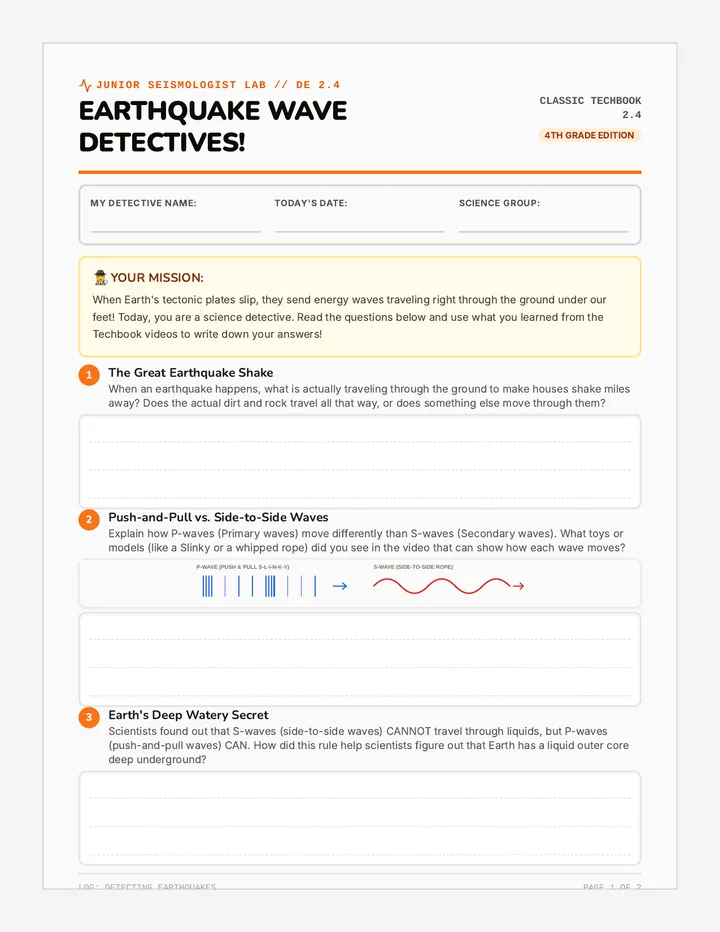
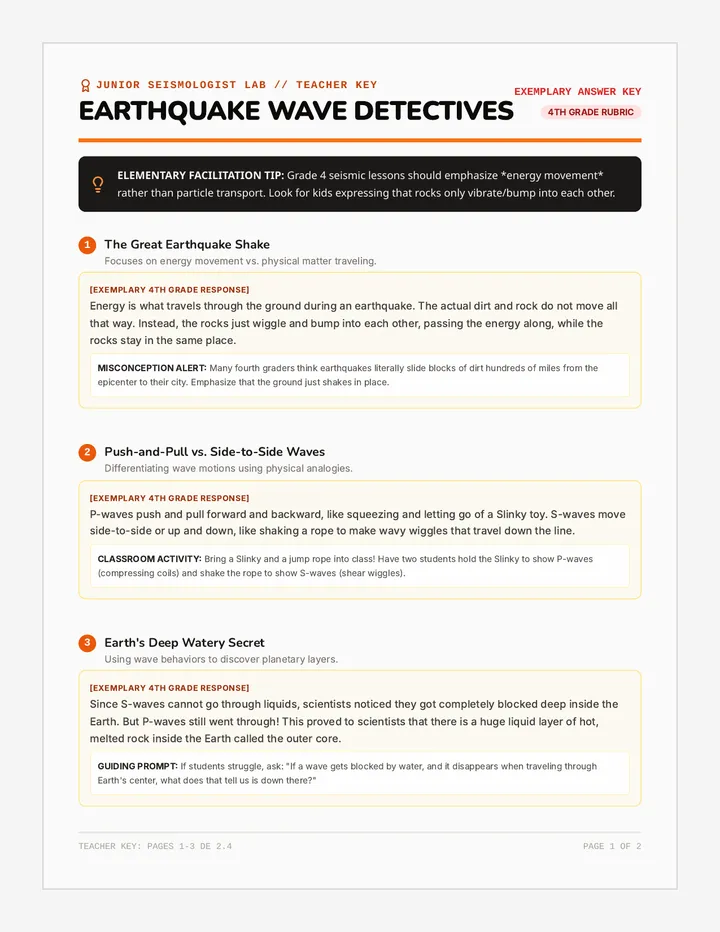
An earth and space science curriculum unit covering dynamic earth processes, earthquake wave mechanics, atmospheric pressure systems, and weather prediction techniques.
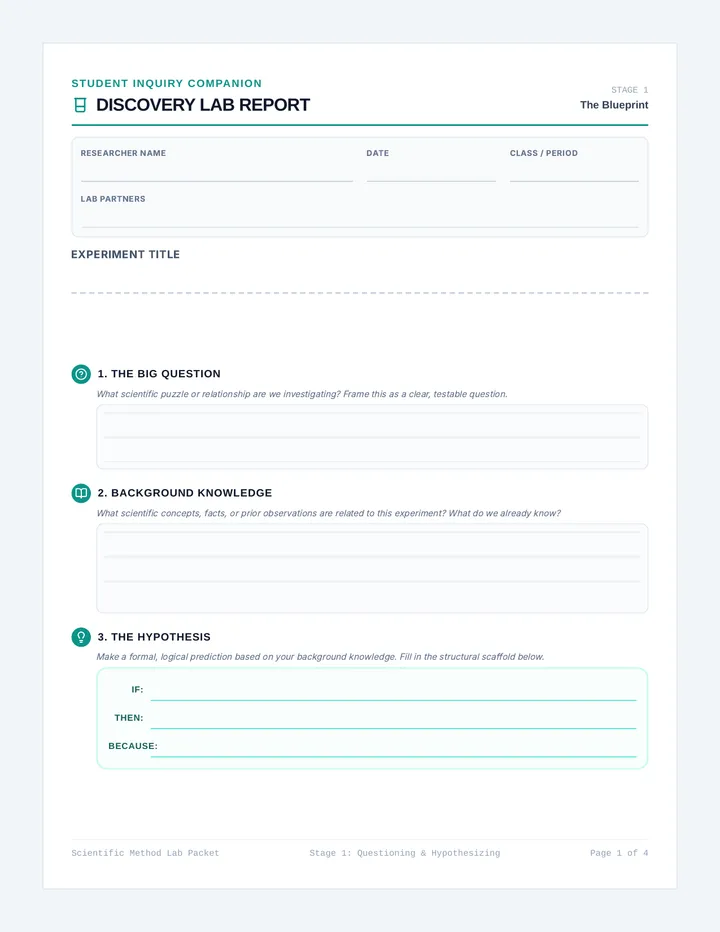
A foundational lesson containing a comprehensive, multi-page scientific inquiry packet and guide that scaffolds students through every stage of the scientific method for any classroom experiment.
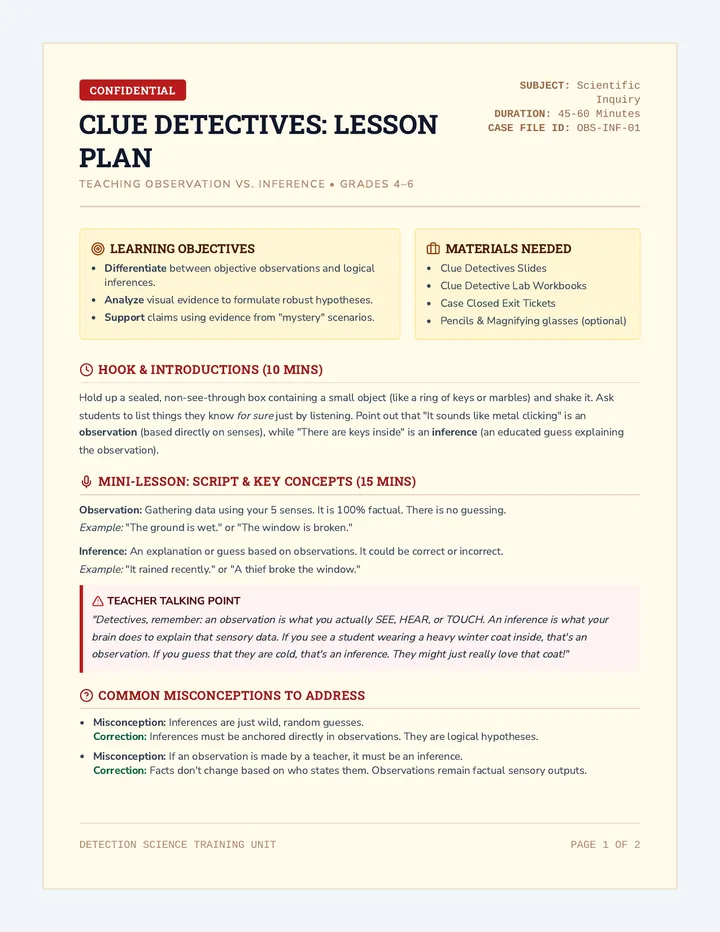
A comprehensive 2-page print-ready lesson plan and facilitation guide for teachers. It includes structured instructional scripts, misconceptions, guided practice prompts, differentiation strategies, and an answer key.