A hands-on exploration of physical changes in matter, focusing on reversibility, state changes, and the conservation of identity.
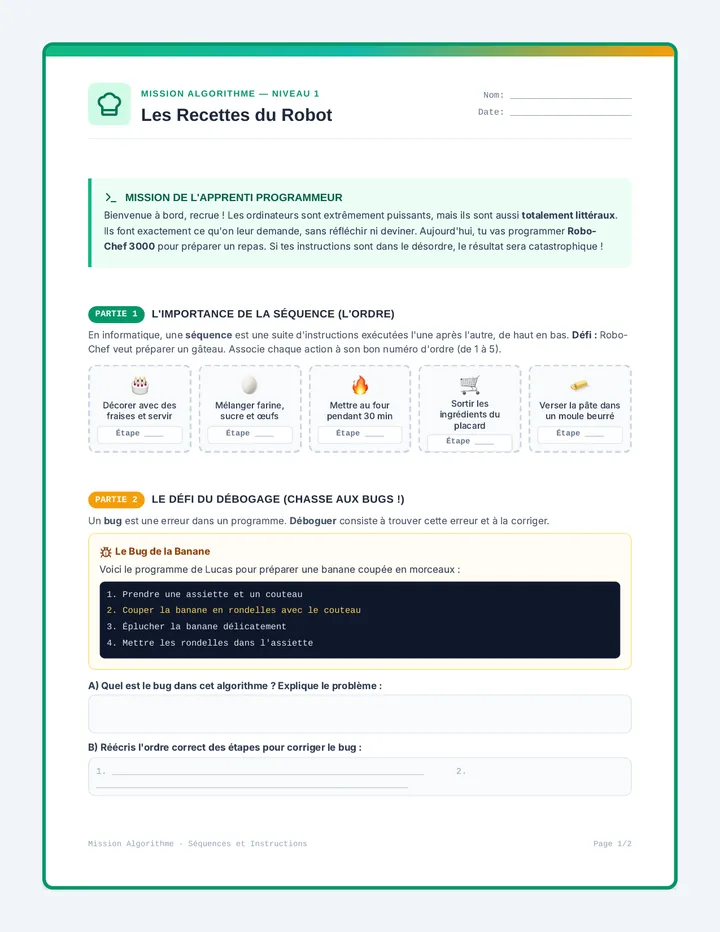
Une séquence d'initiation à l'algorithmique sans code pour débutants absolus. À travers des métaphores concrètes, les apprenants découvrent les trois piliers de la programmation : les séquences d'instructions, les conditions et les boucles.
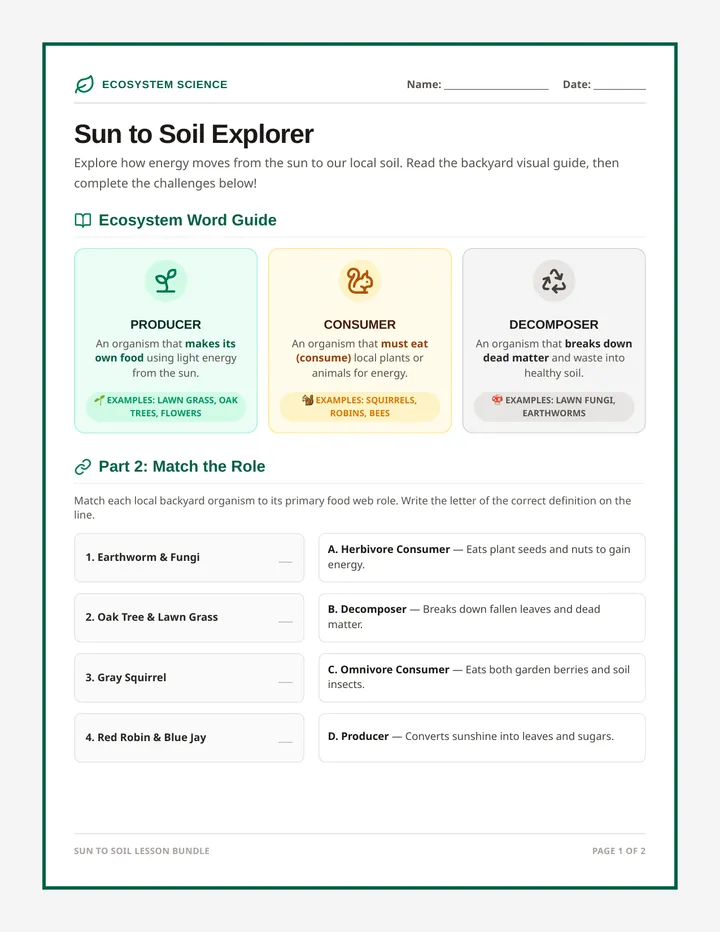
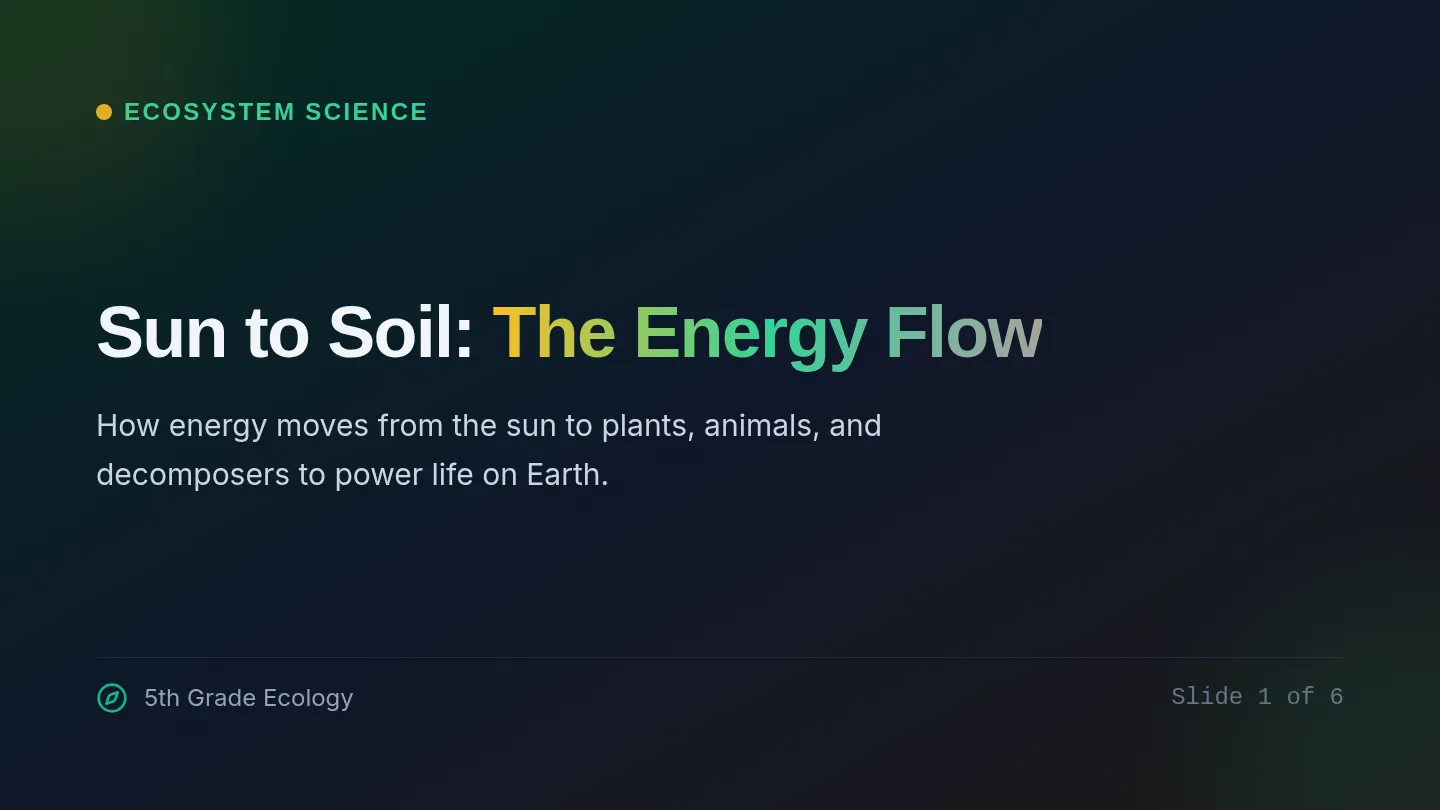
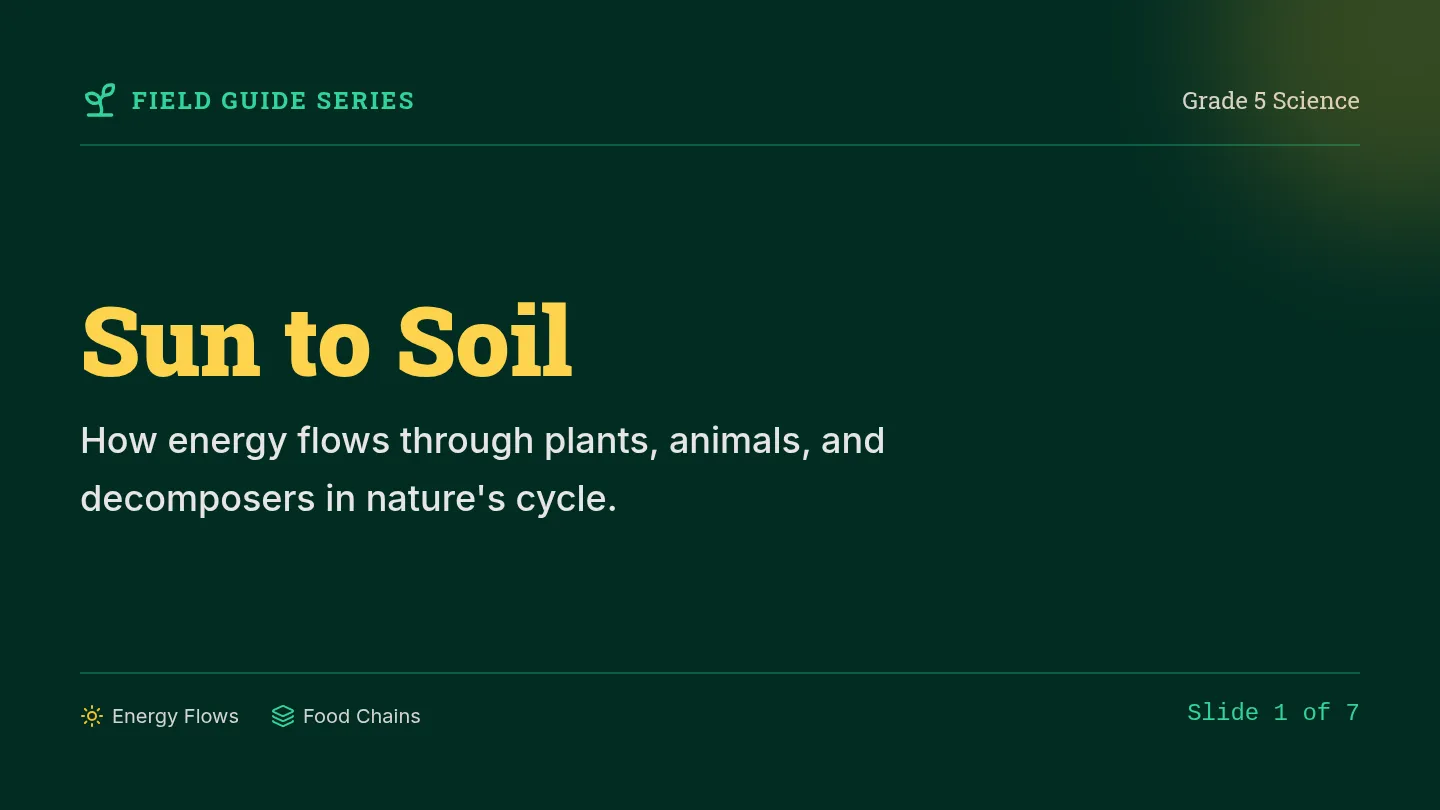
A 5th-grade science lesson exploring how energy flows from the sun through producers, consumers, and decomposers. Includes visually scaffolded slides, a guided practice worksheet, and a quick exit ticket.
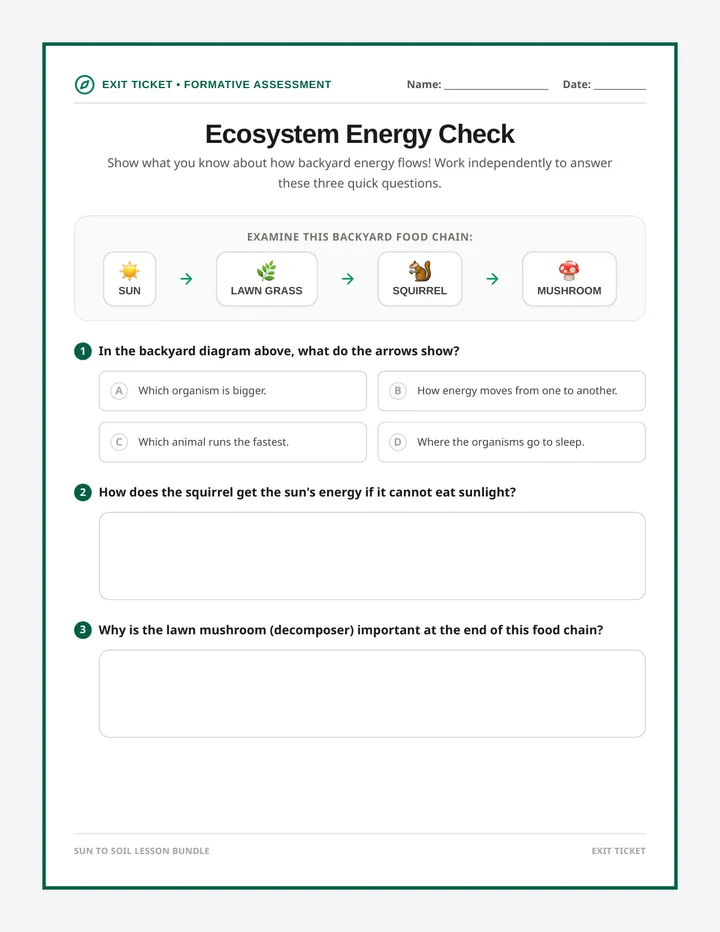
A quick visual formative assessment checking students' understanding of energy transfer direction, producer roles, and decomposer dynamics in food chains.
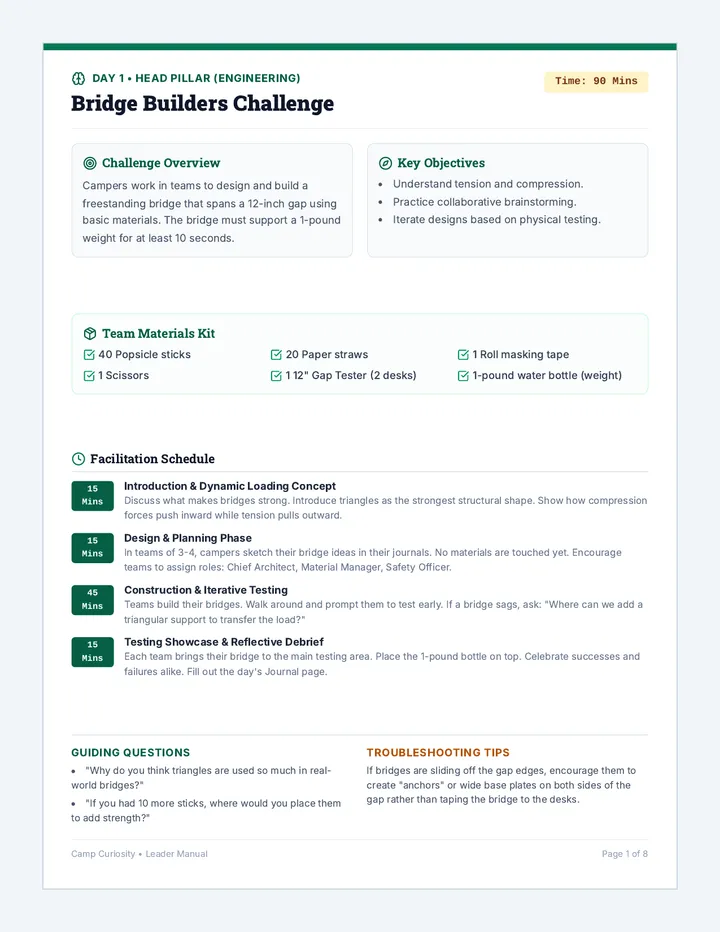
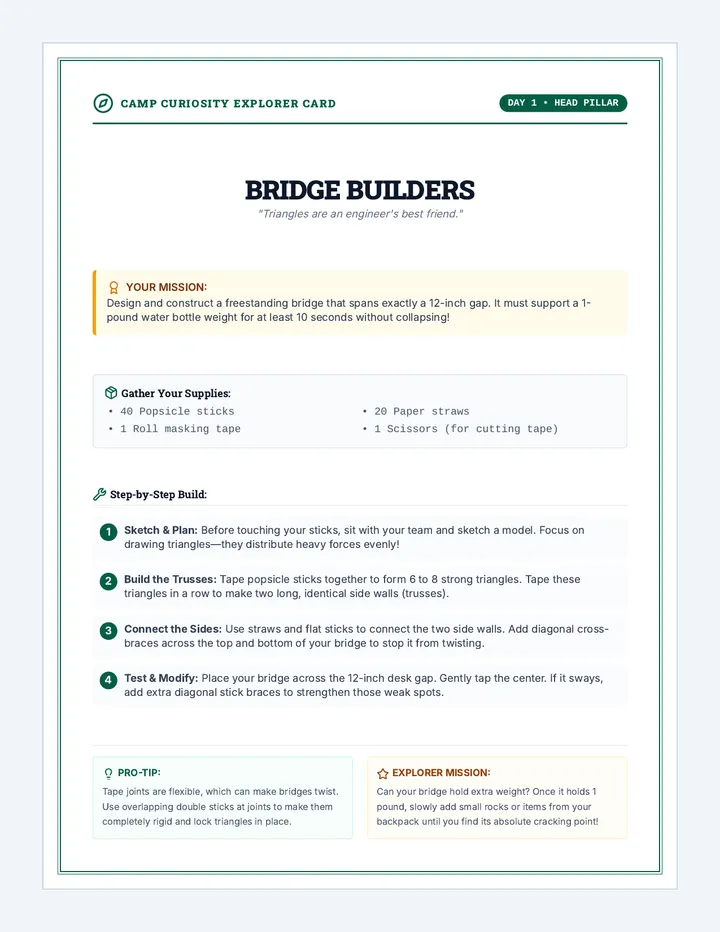
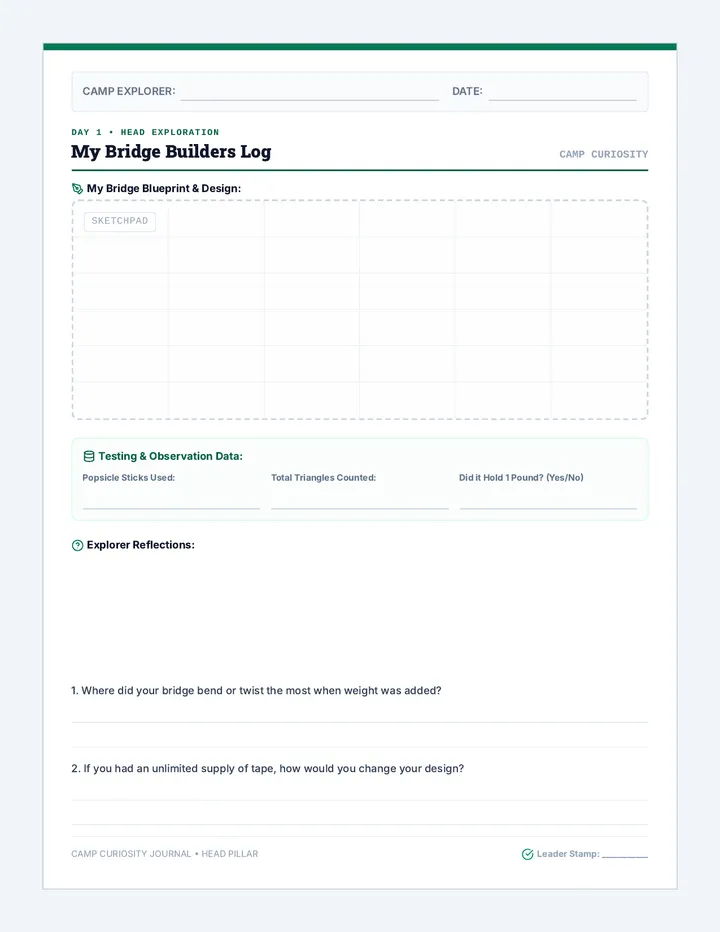
An action-packed, hands-on 8-day 4-H camp program focusing on Head, Heart, Hands, and Health. Students tackle engineering, teamwork, ecology, nutrition, and art challenges through daily active learning.
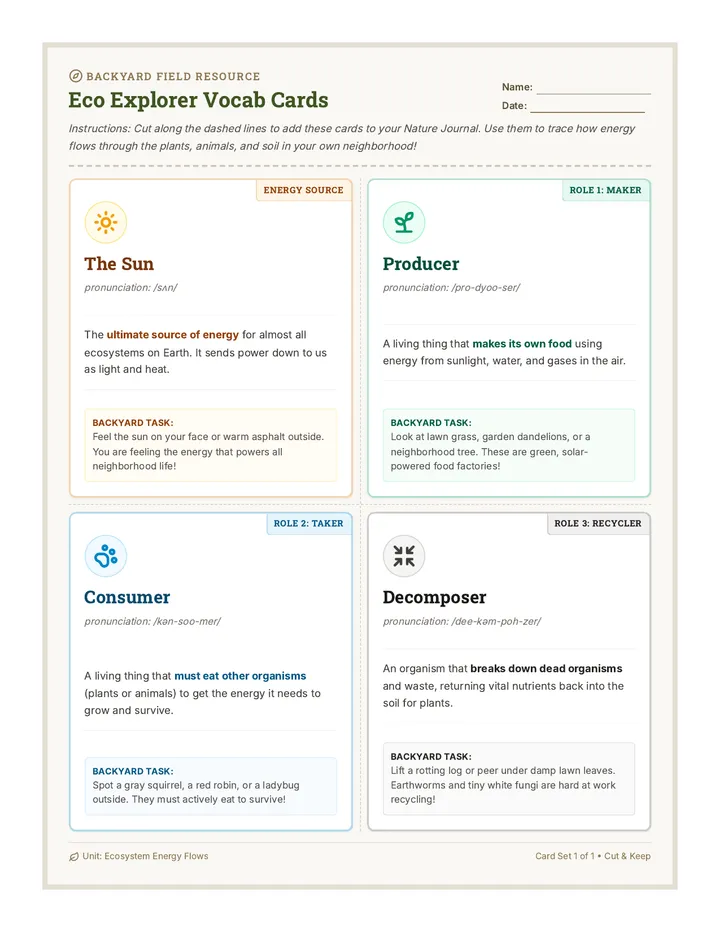
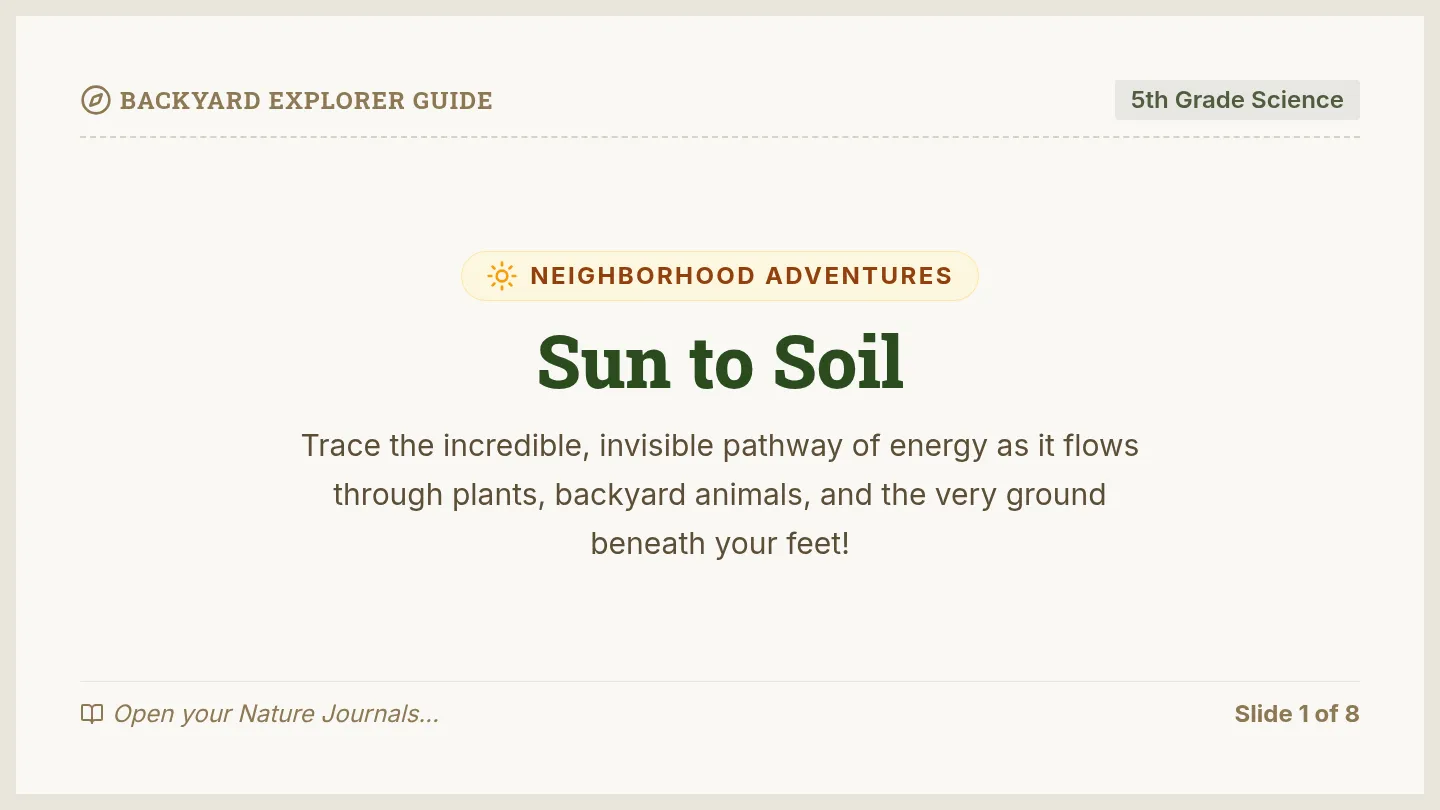
A 5th-grade science lesson introducing how energy flows from the sun through producers, consumers, and decomposers. The lesson uses a field guide/nature journal aesthetic and includes interactive slides, visual vocabulary cards, and a hands-on flow activity.
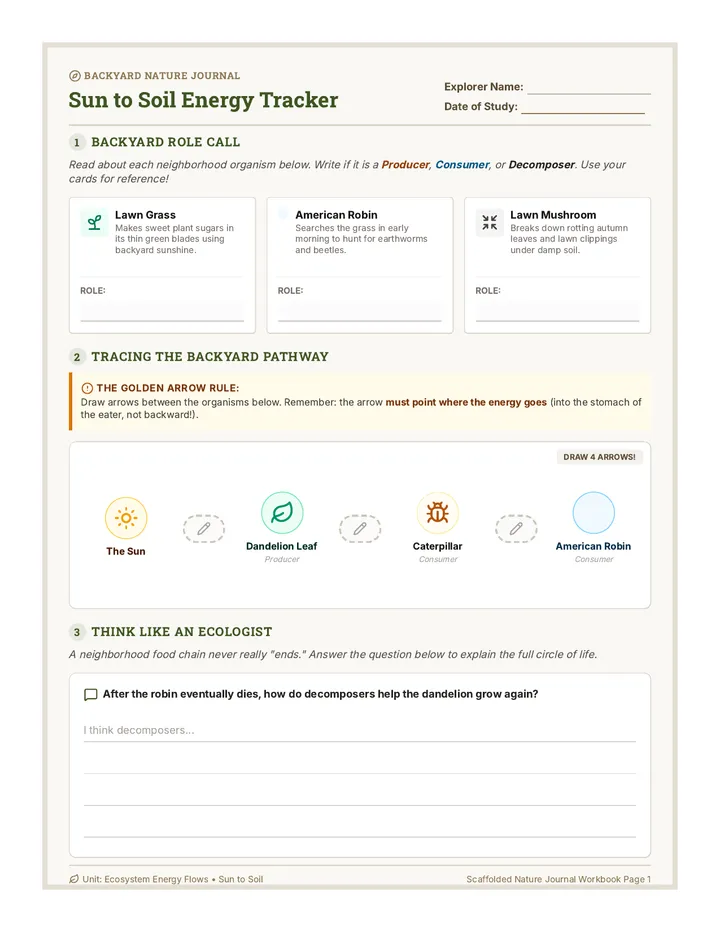
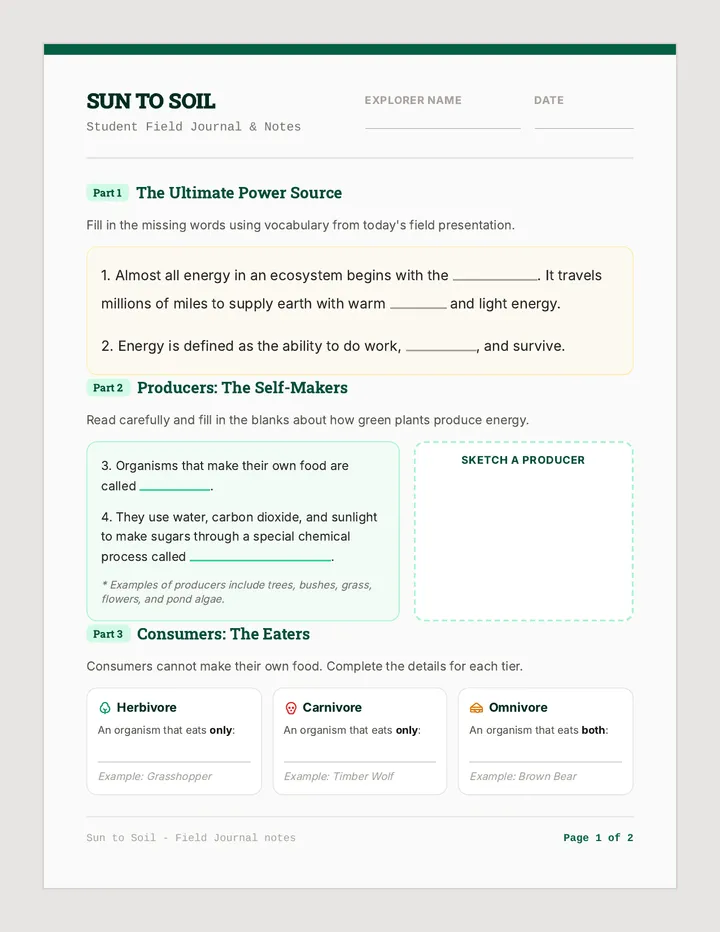
A 2-page visually scaffolded student worksheet. Features picture-supported vocabulary guides and fill-in-the-blank ecosystem mapping exercises.
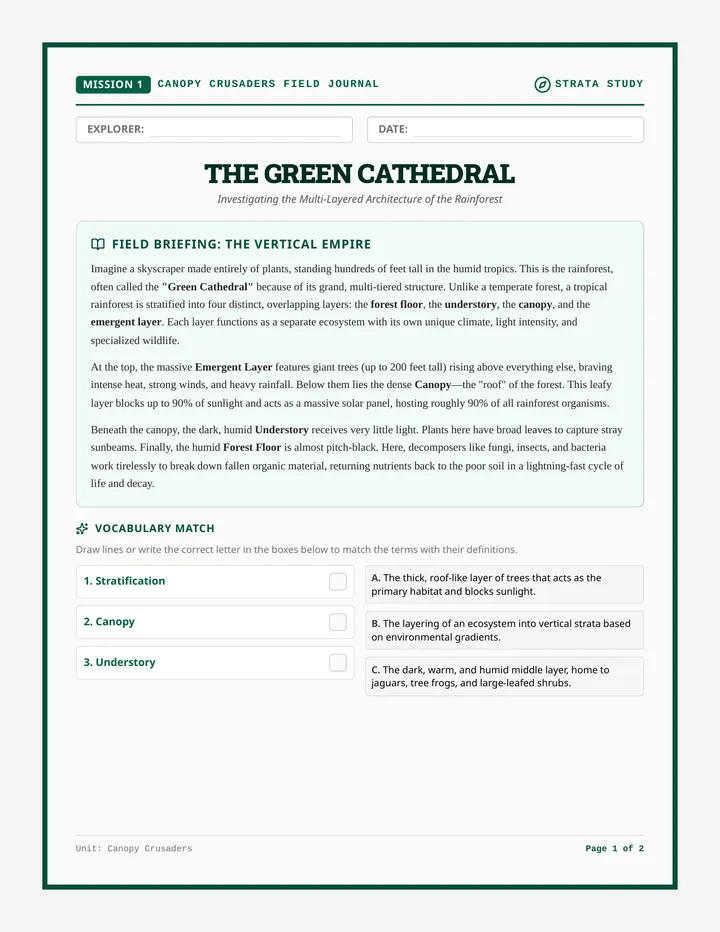
A comprehensive unit on rainforest ecology, climate regulation, and conservation. Students explore the structural layers of the rainforest, their roles as carbon sinks, the threats of deforestation, and collaborative solutions for preservation.
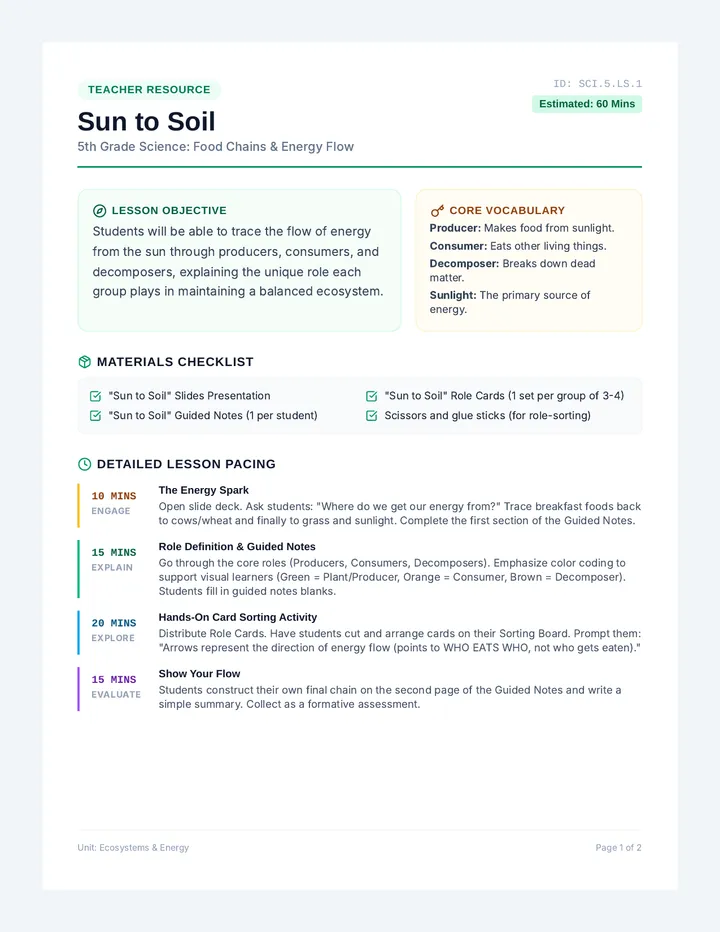
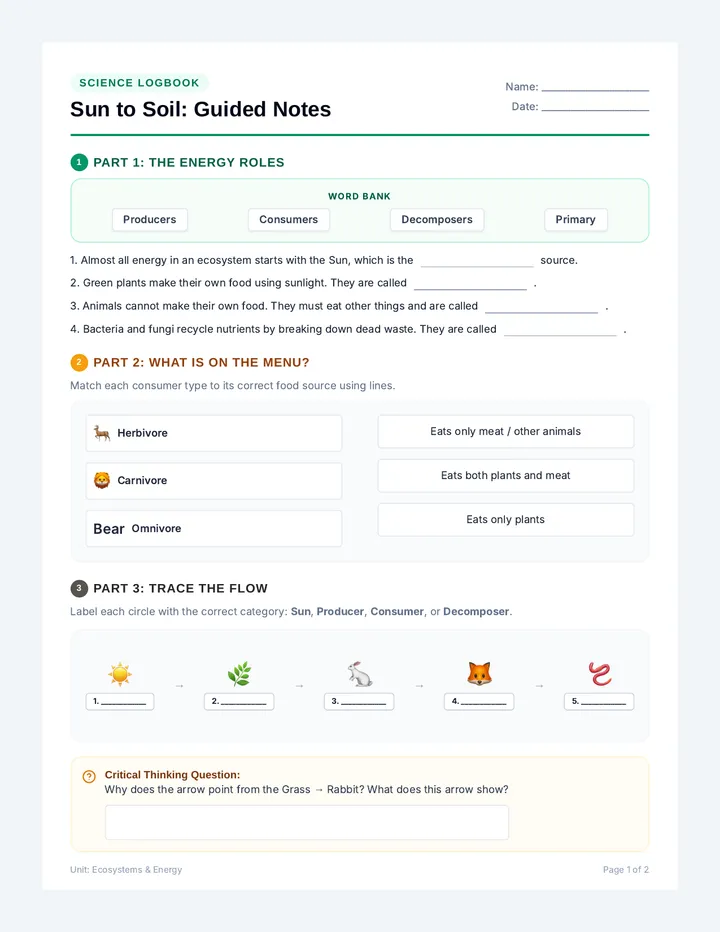
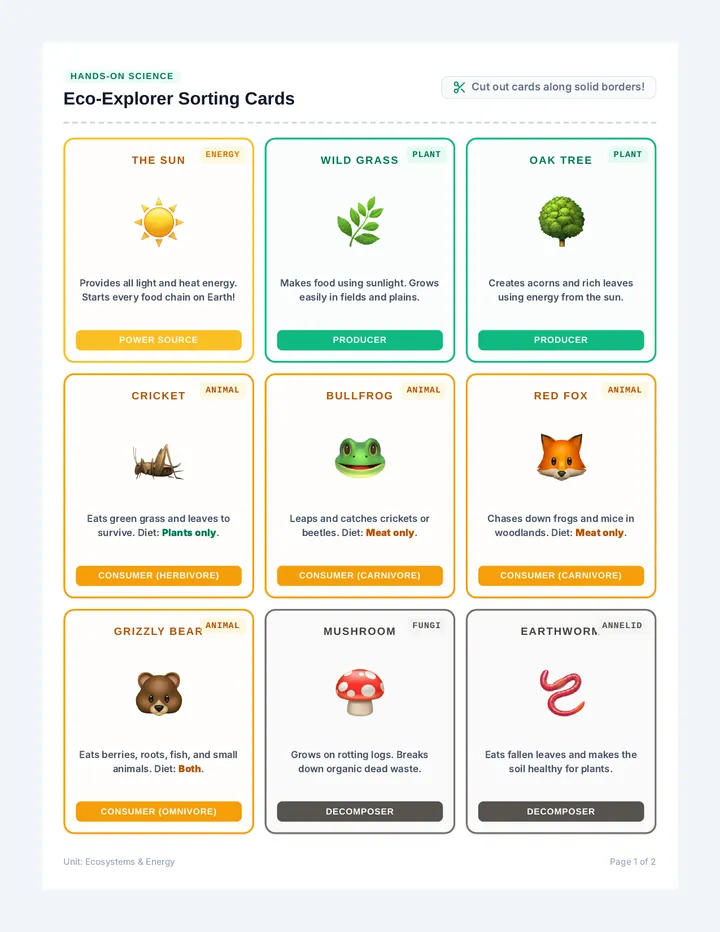
A comprehensive fifth-grade science lesson on food chains and ecological energy flow, covering producers, consumers, and decomposers. This bundle includes highly visual instructional slides, guided notes, hands-on role sorting cards, and a detailed teacher facilitation guide.
Interactive slide presentation illustrating the flow of energy from the sun through producers, consumers, and decomposers, complete with backyard suburban examples like squirrels, garden plants, and robins.
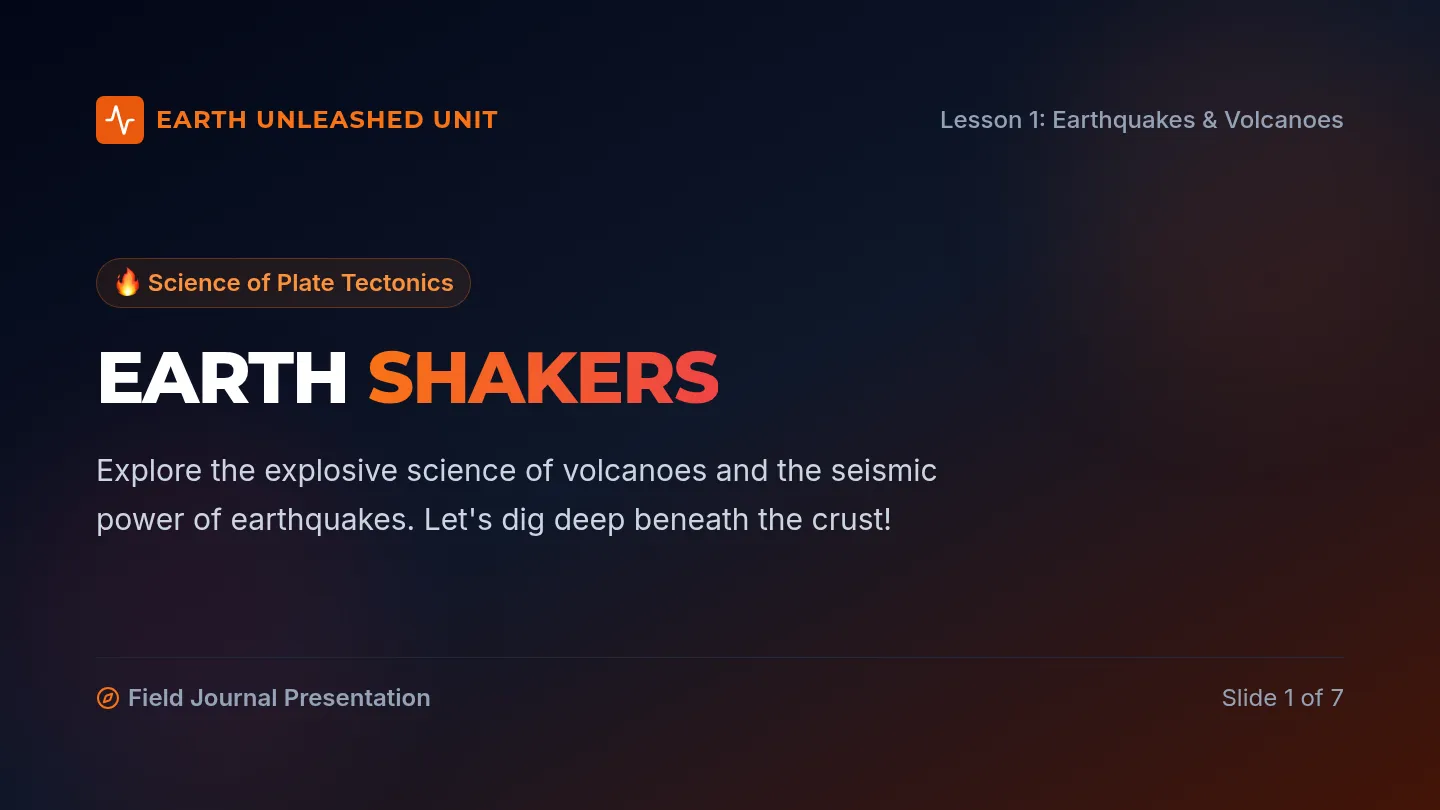
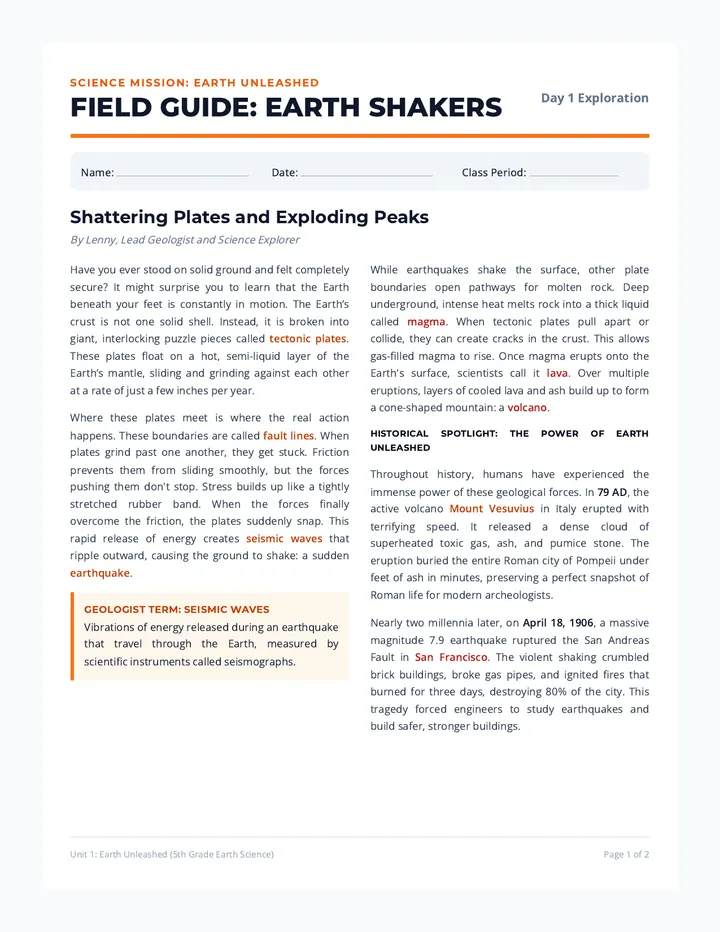
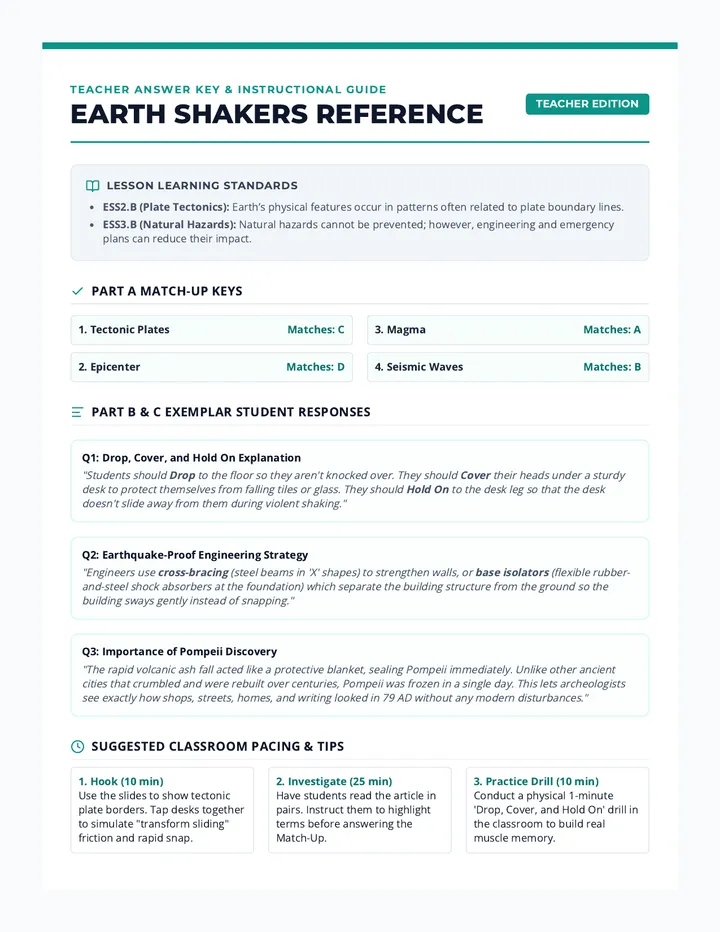
An immersive fifth-grade unit on natural disasters. Students explore the science, history, and safety preparation for earthquakes, volcanoes, hurricanes, tornadoes, wildfires, and floods through interactive slides, reading investigations, and emergency planning projects.
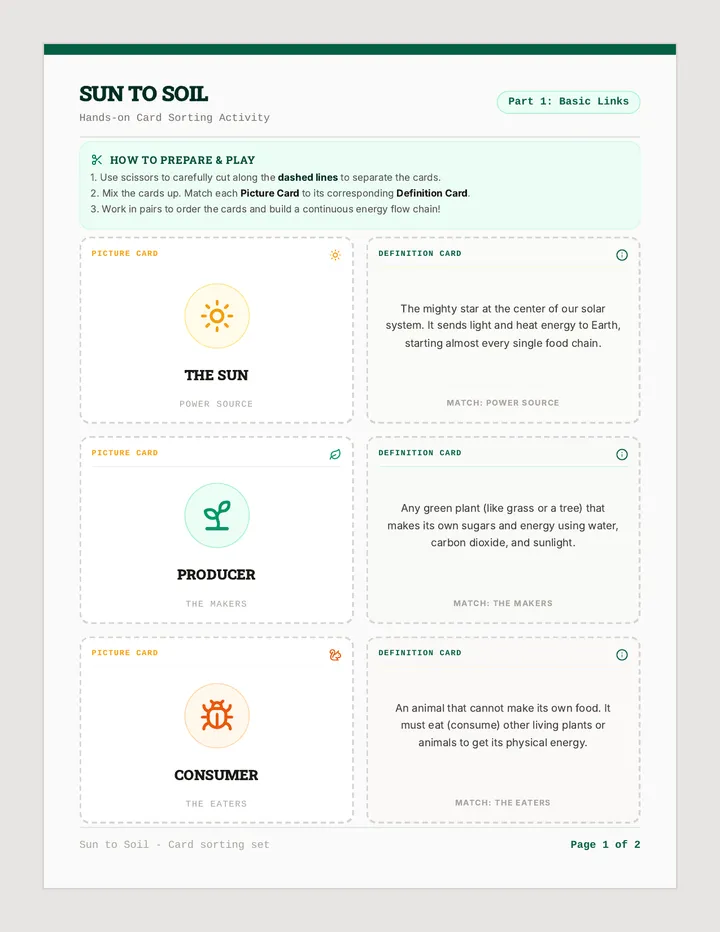
A comprehensive 5th-grade science lesson on food chains, exploring how energy flows from the sun to producers, consumers, and decomposers. Features visual scaffolds, guided notes, and an interactive card-sorting activity.
An engaging student-facing worksheet that reinforces food chain vocabulary, teaches students how to draw correct energy arrows, and prompts them to write a reflection on how decomposers support producers, closing the nutrient loop.