v_i = _________
v_f = _________
Δt = _________
Show Formula & Math Work:
Answer: _________________
Question 2:
A rover reversing West at -15 m/s slams on the brakes and decelerates uniformly, slowing to a velocity of -3 m/s over a time of 3.0 seconds. Calculate the average acceleration.
Identify Variables & Substitutions:
v_i = _________
v_f = _________
Δt = _________
Show Formula & Math Work:
Answer: _________________
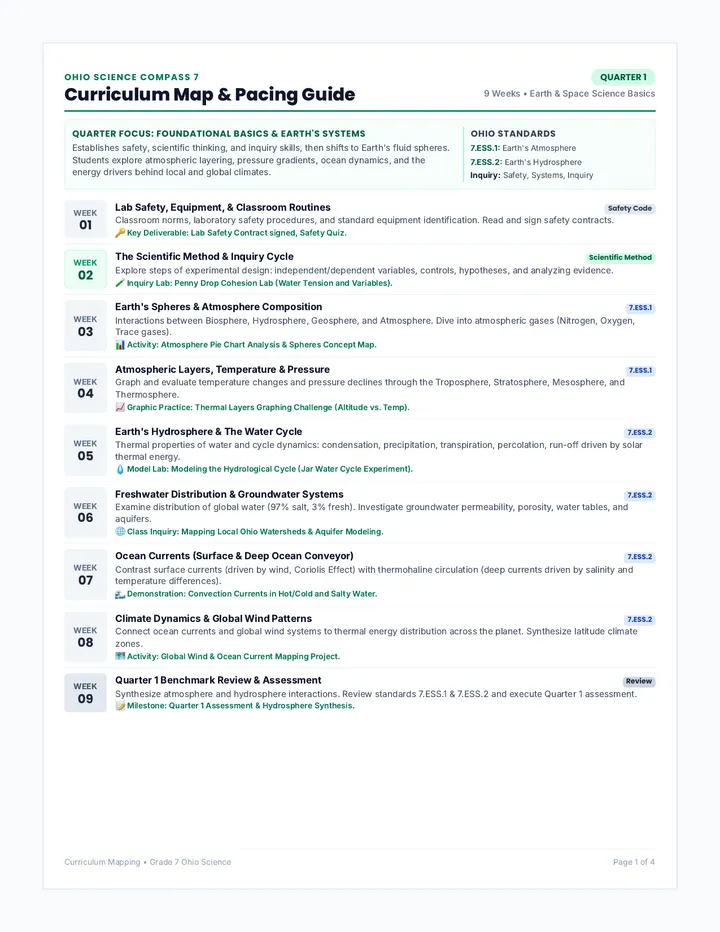
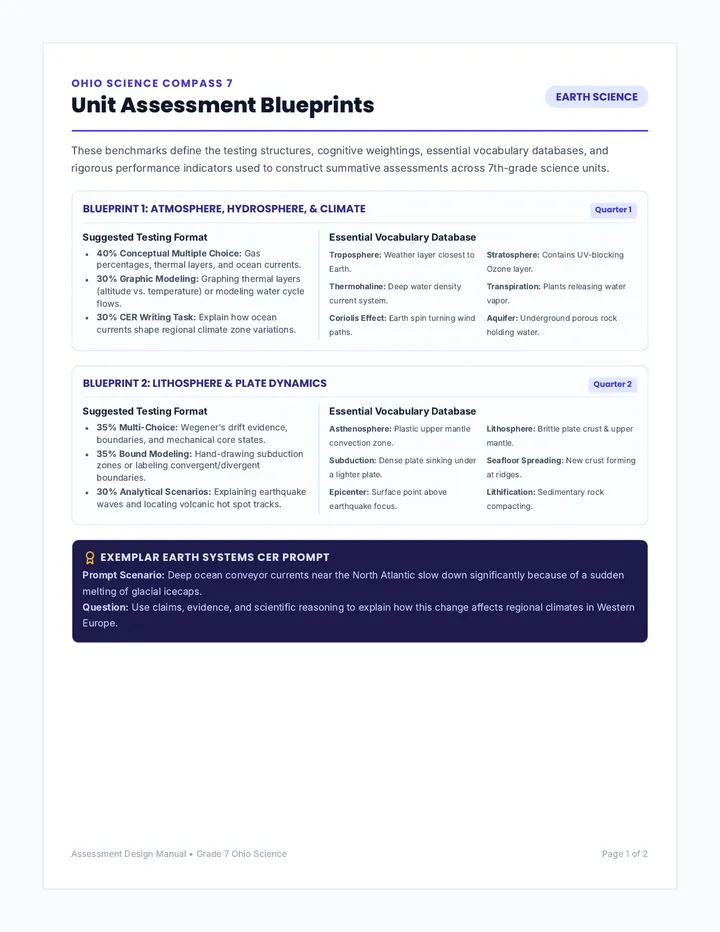
Use the V-T graph below to solve the questions about the object's acceleration.
(0, 10) (6.0, 70) Time t (s) v (m/s)
Velocity vs. Time profile for a speeding kart.
Q3: Identify the rise (\(\Delta v\)) and run (\(\Delta t\)) values on the graph:
Rise = ________ m/s
Run = ________ s
Q4: Calculate the slope of the line to find the acceleration:
Formula: Slope = Rise / Run
Math Work: _____________________________________
Acceleration = _________________
Page 2
Velocity, Direction & Acceleration
Kinematics Practice Set
Form A
Part 6: Homework & Test Practice Problems
Solve the 5 additional word problems below. Show all equations used, direct substitutions with appropriate positive and negative mathematical signs, and circle your final answers with proper units.
Question 5:
An Olympic runner starting from a stationary rest position (\(v_i = 0\text{ m/s}\)) charges forward and reaches a maximum positive velocity of +10.0 m/s in exactly 2.5 seconds. Calculate the runner's average acceleration.
Show Math Work: Answer: _______________________
Question 6:
A physics stone is dropped from a high cliff and experiences gravity's constant downward acceleration of -9.8 m/s². If the stone starts from rest, calculate its final velocity after falling for exactly 3.0 seconds.
Show Math Work: Answer: _______________________
Question 7:
A massive cargo truck traveling East along a flat road at a velocity of +25.0 m/s hits a loose gravel patch, slowing down to a velocity of +15.0 m/s in exactly 5.0 seconds. Find the truck's acceleration.
Show Math Work: Answer: _______________________
Question 8:
A miniature remote-controlled car reversing West at -2.0 m/s speeds up in reverse, reaching a final negative velocity of -14.0 m/s in exactly 3.0 seconds. Compute its acceleration vector.
Show Math Work: Answer: _______________________
Question 9:
A bicyclist coasting Eastward at +8.0 m/s hits a headwind that applies a constant deceleration of -1.5 m/s² for exactly 4.0 seconds. Compute the cyclist's final velocity.
Show Math Work: Answer: _______________________
Page 3
Velocity, Direction & Acceleration
Kinematics Practice Set
Form A
Part 7: Graphical Interpretation & Translation Challenge
An electric delivery kart performs a multi-stage run. Its movement is tracked on the Velocity-Time graph below, consisting of three distinct intervals: A, B, and C. Use the graph to solve the 5 final questions.
Time t (s) Velocity v (m/s) 0 (Rest) +20 4.0 8.0 12.0 Interval A Interval B Interval C
Question 10: Calculate the kart's acceleration during Interval A (from \(t = 0\) to \(t = 4.0\text{ s}\)) by computing the slope.
Show Rise/Run Calculation: a_A = _______________________
Question 11: Describe the kart's motion during Interval B (from \(t = 4.0\text{ s}\) to \(t = 8.0\text{ s}\)). What is its acceleration value?
Description / Reasoning: a_B = _______________________
Question 12: Compute the kart's acceleration during Interval C (from \(t = 8.0\text{ s}\) to \(t = 12.0\text{ s}\)). Include the proper mathematical sign.
Show Rise/Run Calculation: a_C = _______________________
Question 13: During which interval(s) is the kart's velocity positive, but its acceleration is negative? What is happening to the speed during this time?
Question 14 (Synthesis): Translate the movement in Interval C to a coordinate vector explanation. Why does a negative acceleration cause the kart to slow down here?
Page 4
Velocity, Direction & Acceleration
Ticker Dot intervals: Slowing Down
Spacing decreases sequentially as the object covers less and less ground.
Kinematics Slide 5/8
Velocity Vector Reader
Motion Mechanics
Core Concepts
Because velocity is a vector, acceleration occurs whenever there is a change in speed, direction, or both.
1. Speeding Up
Increasing speed magnitude. Aligned vectors (\(\vec{v}\) and \(\vec{a}\) point in identical coordinate directions).
2. Slowing Down
Decreasing speed magnitude. Opposing vectors (\(\vec{v}\) and \(\vec{a}\) point in opposite coordinate directions).
3. Changing Direction
Turning or traveling in a curved path. Constant speed, but velocity rotates, generating centripetal acceleration.
Kinematics Slide 6/8
Velocity Vector Reader
Motion Mechanics
Graphical Slope Analysis
To find the acceleration from a Velocity vs. Time (V-T) graph, compute the line's slope:
Slope = Rise / Run = \(\frac{\Delta v}{\Delta t}\)
Time t (s) v (m/s) Run: Δt Rise: Δv
Kinematics Slide 7/8
Velocity Vector Reader
Motion Mechanics
Interactive Checkpoint
"A skateboarder is traveling at a velocity of -3.0 m/s. They accelerate down a hill and reach a velocity of -15.0 m/s in exactly 4.0 seconds."
Work with your table partner to calculate the skateboarder's average acceleration and decide if they are speeding up or slowing down.
Sentence Stem: "Since initial and final velocities are both negative and speed magnitude increases, the skateboarder is ___________ because their velocity and acceleration vectors both ___________."
Kinematics Slide 8/8
Velocity Vector Reader
Grading & Formative Assessment
| Part 1 Table Answers | Velocity (\(\vec{v}\)) | Acceleration (\(\vec{a}\)) |
|---|---|---|
| East (+) and slowing down. | Positive (+) | Negative (-) |
| West (-) and speeding up. | Negative (-) | Negative (-) |
| West (-) and constant speed. | Negative (-) | Zero (0) |
| Descending (-) and slowing down. | Negative (-) | Positive (+) |
Part 2: Ticker Tapes
Part 3: Explanations
-5 m/s² is negative direction, not always slowing. A car reversing West (\(v < 0\)) with \(a < 0\) speeds up.
Q1 (Motorcycle): a = (v_f - v_i) / t = (36 - 12) / 4 = 24 / 4 = +6.0 m/s²
Q2 (Rover): a = (v_f - v_i) / t = (-3 - (-15)) / 3 = 12 / 3 = +4.0 m/s²
Q3 Rise/Run: Rise (Δv) = +60 m/s; Run (Δt) = 6.0 s
Q4 Slope/Acc: Slope = 60 / 6 = +10 m/s²
Q5 (Runner): a = (10.0 - 0) / 2.5 = 10 / 2.5 = +4.0 m/s²
Q6 (Stone): v_f = v_i + a*t = 0 + (-9.8 * 3.0) = -29.4 m/s
Q7 (Truck): a = (15.0 - 25.0) / 5.0 = -10.0 / 5 = -2.0 m/s²
Q8 (RC Car): a = (-14.0 - (-2.0)) / 3.0 = -12.0 / 3 = -4.0 m/s²
Q9 (Cyclist): v_f = v_i + a*t = +8.0 + (-1.5 * 4.0) = +8.0 - 6.0 = +2.0 m/s
• Q10 (Interval A): Slope = Rise / Run = (20 - 0) / 4.0 = +5.0 m/s². Speed is increasing Eastward.
• Q11 (Interval B): Flat slope. No velocity change. Acceleration is 0 m/s². Constant speed.
• Q12 (Interval C): Slope = (0 - 20) / (12 - 8) = -20 / 4.0 = -5.0 m/s².
• Q13 speed check: Interval C. Velocity is positive (+20 to 0) but slope/acceleration is negative (-5). Opposite signs cause the object to slow down.
• Q14 vector check: The kart travels East (velocity is +) while acceleration points West (negative). Because the acceleration vector opposes the motion vector, it acts as a decelerating force.
Page 2
Velocity, Direction & Acceleration
Pos. (x) Time (t) Linear Upward Vel. (v) Time (t) Flat & Positive
The dots are spaced completely evenly, indicating that uniform distances are covered during each consecutive time step. The velocity vector arrow (\(\vec{v}\)) points right, and its size remains constant.
0s 2s 4s 𝓿
Figure 2.2: Ticker model of uniform positive motion. Equal space steps = Constant speed.
Concept Check Answer
For constant positive velocity, the position-time graph has a positive slope, which indicates that displacement changes at a constant rate.
Page 2
Velocity, Direction & Acceleration Key
Motion Mechanics Textbook Answer Key
Section 2.3: Constant Velocity
Constant Direction: West
What happens when an object moves backward or to the left at a constant rate? This is constant negative velocity. The speed is still perfectly steady, but the position decreases linearly over time.
Graph Profiles: Negative Constant Velocity
Pos. (x) Time (t) Linear Downward Vel. (v) Time (t) Flat & Negative
Notice that the particle is moving to the left. The dots are still spaced completely evenly, but we read the path chronologically from right to left. The velocity vector arrow (\(\vec{v}\)) points to the left.
0s 2s 4s 𝓿
Figure 3.2: Ticker model of uniform negative motion. Dot sequence starts at 360px and travels left.
Concept Check Answer
For constant negative velocity, the Position-Time graph slope must be negative, while the Velocity-Time graph line remains horizontal in the negative region of the vertical axis.
Constant Velocity (-) Uniform movement in the negative direction (towards the left or down).
"My partner and I agree that a negative constant velocity graph always slopes downward because..."
position decreases at a uniform rate as the object moves leftward.
Velocity, Direction & Acceleration Key
Page 3
Section 2.4: Speeding Up Profiles
Answer Key
Speeding Up (+) Moving in the positive direction while speed increases.
"The dots grow further apart over time, which tells me that speed is..."
increasing because the object is covering a greater distance in each successive second of travel.
Speeding Up: Rightward
An object is speeding up in the positive direction when it travels to the right and its velocity is increasing. To speed up, the velocity (\(\vec{v}\)) and acceleration (\(\vec{a}\)) vectors must point in the exact same direction (both positive).
Graph Profiles: Positive Speeding Up
Pos. (x) Time (t) Curving Up Vel. (v) Time (t) Sloping Up
The space between dots grows progressively wider as time proceeds to the right, showing that the object covers more ground each second. Both vector arrows point East (+).
0s 3s 6s 𝓿 𝓪
Figure 4.2: Ticker model of positive speeding up. Dot steps expand. Velocity and acceleration both point right.
Concept Check Answer
For speeding up in the positive direction, velocity is positive (+) and acceleration is positive (+).
Page 4
Velocity, Direction & Acceleration Key
Motion Mechanics Textbook Answer Key
Section 2.5: Speeding Up Profiles
Speeding Up: Leftward
An object can speed up while traveling backwards. This is speeding up in the negative direction (e.g., a car reversing down a driveway). To speed up, the vectors must align, meaning both velocity (\(\vec{v}\)) and acceleration (\(\vec{a}\)) are negative.
Graph Profiles: Negative Speeding Up
Pos. (x) Time (t) Curving Down Vel. (v) Time (t) Sloping Down
The spacing of dots grows wider, but the motion progresses from right to left. The vector arrows for velocity (\(\vec{v}\)) and acceleration (\(\vec{a}\)) both point to the left (-).
0s 3s 6s 𝓿 𝓪
Figure 5.2: Ticker model of negative speeding up. Dots expand as they travel leftward. Both vectors are negative.
Concept Check Answer
For speeding up in the negative direction, the velocity has a negative (-) sign, and the acceleration must have a negative (-) sign.
Speeding Up (-) Moving in the negative direction while speed increases.
"Even though the acceleration is negative, the object is actually speeding up because..."
both vectors point in the same direction, which means the negative acceleration acts to increase speed westward.
Velocity, Direction & Acceleration Key
Page 5
Section 2.6: Slowing Down Profiles
Answer Key
Slowing Down (+) Moving in the positive direction while speed decreases.
"When tapping the brakes, the acceleration vector points to the left because..."
it must act in opposition to the positive rightward velocity to slow the object's speed.
Slowing Down: Rightward
An object is slowing down in the positive direction when it moves right but loses speed (e.g., a car approaching a red light). This occurs when the velocity (\(\vec{v}\)) is positive, and the acceleration (\(\vec{a}\)) is negative.
Graph Profiles: Positive Slowing Down
Pos. (x) Time (t) Flattening Up Vel. (v) Time (t) Sloping Down
The space between dots gets progressively smaller as time proceeds to the right. The velocity vector arrow (\(\vec{v}\)) points right (+), but the acceleration arrow (\(\vec{a}\)) points left (-).
0s 3s 6s 𝓿 𝓪
Figure 6.2: Ticker model of positive slowing down. Dots squeeze together. Acceleration opposes velocity.
Concept Check Answer
Whenever an object slows down, its acceleration vector points in the opposite direction of its velocity vector.
Page 6
Velocity, Direction & Acceleration Key
Motion Mechanics Textbook Answer Key
Section 2.7: Slowing Down Profiles
Slowing Down: Leftward
An object is slowing down in the negative direction when it travels backward (to the left) but its speed is decreasing (e.g., a car reversing and hitting the brakes). In this scenario, velocity (\(\vec{v}\)) is negative, and acceleration (\(\vec{a}\)) is positive.
Graph Profiles: Negative Slowing Down
Pos. (x) Time (t) Flattening Down Vel. (v) Time (t) Sloping Up
The dots get closer together, but the motion progresses from right to left. Velocity vector arrow (\(\vec{v}\)) points left (-), but acceleration arrow (\(\vec{a}\)) points right (+).
0s 3s 6s 𝓿 𝓪
Figure 7.2: Ticker model of negative slowing down. Dot intervals get tighter leftward. Acceleration is positive.
Concept Check Answer
For slowing down in the negative direction, the velocity has a negative (-) sign, and the acceleration must have a positive (+) sign.
Slowing Down (-) Moving in the negative direction while speed decreases.
"A positive acceleration acting on a negative velocity results in slowing down because..."
the vectors directly oppose each other, which mathematically decreases the speed value towards zero.
Velocity, Direction & Acceleration Key
Page 7
Section 2.8: Vector Cheat Sheet
Answer Key
Signs match (+/+ or -/-) → Speeding Up
Signs oppose (+/- or -/+) → Slowing Down
In 1D motion, what physical parameter decides the sign of the velocity vector?
The direction of motion (rightward/East is +, leftward/West is -).
Synthesis Toolkit
This comprehensive grid compiles all the configurations we have analyzed. Use this as a core study map to visualize vector sign pairings and their resulting physical behaviors.
𝓿: (+)
a: (0)
Constant Speed (+): Moving right, steady pacing. Zero acceleration.
𝓿: (-)
a: (0)
Constant Speed (-): Moving left, steady pacing. Zero acceleration.
𝓿: (+)
a: (+)
Speeding Up (+): Moving right, speed increases. Both vectors point East (+).
𝓿: (-)
a: (-)
Speeding Up (-): Moving left, speed increases. Both vectors point West (-).
𝓿: (+)
a: (-)
Slowing Down (+): Moving right, speed decreases. Acceleration opposes motion.
𝓿: (-)
a: (+)
Slowing Down (-): Moving left, speed decreases. Acceleration opposes motion.
The Golden Rule of Kinematics
Acceleration does NOT tell you which way an object is moving. It only tells you how the velocity is changing. Velocity sign alone dictates movement direction!
Velocity, Direction & Acceleration Key
Page 8
Motion Mechanics Textbook Answer Key
Section 2.9: Understanding Acceleration
Name: TEACHER ANSWER KEY
Date: CLASSROOM REFERENCE
Core Kinematics Concept
While velocity describes the rate at which an object's position changes, acceleration describes the rate at which its velocity changes. Since velocity contains both a speed and a direction, an object accelerates if it changes speed, direction, or both.
x = 0 m x = 2 m x = 8 m t = 0s v₁ = +2 m/s t = 1s v₂ = +6 m/s t = 2s Δt = 1.0s Δv = +4 m/s CONSTANT ACCELERATION: a = +4.0 m/s²
1. Speeding Up Velocity and acceleration point in the same direction (+/+ or -/-).
2. Slowing Down Velocity and acceleration point in opposite directions (+/- or -/+).
3. Changing Direction Even at a constant speed, any change in path counts as acceleration (centripetal).
Because velocity is a vector, an object traveling in a circle at a steady speed of 5 m/s is still accelerating. This is because its direction of movement is continuously changing!
Three Ways to Accelerate:
Yes, moving left (negative velocity) and hitting the brakes (positive acceleration opposes motion and slows it down).
Write down in your own words what acceleration represents:
The rate of change of velocity—it tells us how much velocity vector details change during each single second.
Velocity, Direction & Acceleration Key
Page 9
Motion Mechanics Textbook Answer Key
Section 2.10: Graphical Slopes
Graphical Kinematics
In mathematics, slope represents the rate of change of the vertical axis variable with respect to the horizontal axis variable, defined as Rise over Run (\(\frac{\Delta y}{\Delta x}\)). On a Velocity vs. Time (V-T) graph:
Time t (s) Velocity v (m/s) 20 80 1.0 4.0 A (1.0, 20) B (4.0, 80) Run: Δt = 3.0 s Rise: Δv = +60 m/s Slope = Rise / Run a = +20 m/s²
Whenever a Velocity-Time graph line has a positive slope, acceleration is positive. Whenever it has a negative slope, acceleration is negative. A flat horizontal V-T line represents zero acceleration!
Why does dividing velocity (m/s) by time (s) yield acceleration units (m/s²)?
Dividing (m/s) by (s) is equivalent to multiplying (m/s) by (1/s), yielding m/(s*s) or meters per second squared.
Velocity, Direction & Acceleration Key
Page 10
Motion Mechanics Textbook Answer Key
Section 2.11: Kinematic Equations
Mathematical Physics
Average acceleration is mathematically defined as the rate of change of velocity:
\[ a = \frac{\Delta v}{\Delta t} = \frac{v_f - v_i}{t_f - t_i} \]
Where a = acceleration, v_f = final velocity, v_i = initial velocity, and t = elapsed time.
Since velocity is distance over time (\(m/s\)) and acceleration tracks the change of velocity over time (\(s\)), the unit of acceleration is meters per second per second. If a car's acceleration is \(+3\text{ m/s}^2\), its velocity increases by \(3\text{ m/s}\) every second.
Sample Calculation
"A skateboarder traveling East at +2.0 m/s accelerates down a hill to a final velocity of +14.0 m/s. This change takes exactly 4.0 seconds. Find the acceleration."
1. Identify knowns: v_i = +2 m/s, v_f = +14 m/s, t = 4 s
2. Set up: a = (v_f - v_i) / t
3. Calculate: a = (14 - 2) / 4 = 12 / 4 = +3.0 m/s²
Delta (Δ) The mathematical shorthand indicating "change in" a quantity (Final minus Initial).
A bicyclist traveling West at -8.0 m/s slows to -2.0 m/s in 3.0 seconds.
\(a = \frac{v_f - v_i}{\Delta t}\)
\(a = \frac{-2.0 - (-8.0)}{3.0}\)
\(a = \frac{+6.0}{3.0} = \mathbf{+2.0\text{ m/s}^2}\)
Velocity, Direction & Acceleration Key
Page 11
Section 2.12: Analytical Graphing
Answer Key
The slope of a position graph is velocity.
The slope of a velocity graph is acceleration.
If the line on a V-T graph is straight and slopes downward crossing the axis, what does that represent?
Constant negative acceleration. The object slows down to zero, stops, and then speeds up in the negative direction.
Graphic Interpretation
Translating physical events from Position-Time graphs to Velocity-Time graphs is a critical lab skill. Follow this direct guide to translate any curves.
Translating Position-Time
Look at the steepness. A steep line means high velocity. A horizontal line means velocity is zero. An upward slope is positive velocity; a downward slope is negative velocity.
Translating Velocity-Time
Look at the height relative to zero. The actual coordinate on the Y-axis tells you the speed and direction. Sloping away from zero is speeding up; sloping towards zero is slowing down.
Student Translation Key (Answer Key)
| Motion Scenario | Shape on P-T Graph: | Shape on V-T Graph: |
|---|---|---|
| Constant Positive Velocity | Straight line, positive slope | Flat horizontal line above zero |
| Constant Negative Velocity | Straight line, negative slope | Flat horizontal line below zero |
| Speeding Up Positive | Curving upward, steeper slope | Line starting at 0, sloping upward |
| Slowing Down Positive | Curving upward, flattening slope | Straight line sloping toward zero |
Velocity, Direction & Acceleration Key
Page 12
Section 2.13: Synthesis & Reflections
Answer Key
Velocity determines direction.
Acceleration determines how speed changes over time.
Sketch vectors for a car moving backward and speeding up:
v: ← (Negative)
a: ← (Negative)
Active Synthesis
Collaborate with your table partners to evaluate these analytical physics prompts.
1 The Reversing Speedometer
Your car's speedometer only shows speed (magnitude) but does not record direction signs. If you are reversing down a driveway, how would your velocity sign change if you gas it versus hit the brakes?
Think-Pair-Share Answer:
"When reversing and hitting the brakes, our velocity is negative, but acceleration is positive because it opposes motion to slow us down."
2 The Zero Velocity Paradox
Is it possible for an object's instantaneous velocity to be exactly zero while its acceleration is non-zero?
Think-Pair-Share Answer:
"At the very top of its path, a thrown ball has zero velocity, but its acceleration is negative (gravity) because velocity is still changing at -9.8 m/s²."
Exit Ticket: Master Concept Check Key
State the simple golden rule you would use to teach a peer how to quickly check whether any moving object is speeding up or slowing down.
Compare the signs of velocity and acceleration. If the signs match (+/+ or -/-), the object is speeding up. If the signs oppose (+/- or -/+), the object is slowing down.
Velocity, Direction & Acceleration Key
Page 13
D) (- / +)
6. A spacecraft reversing in the negative coordinate direction hits its rockets, experiencing a negative acceleration. How will its speed respond?
A) Speed remains constant because signs are both negative.
B) Speed decreases because the acceleration is negative.
C) Speed increases because velocity and acceleration are aligned (-) / (-)
D) Speed drops to zero instantly.
Honors Workspace: Sketch velocity and acceleration vector arrows below
Kinematics and Dynamics Units
Page 2
Kinematics Honors Assessment
MCQ Bank - Page 3
Section 2: Dot Models & Ticker Timers
Figure 2.1: Honors Multi-Object Ticker Comparisons (Start at Left, traveling East)
Model A:
Model B:
7. Which of the following vector configurations correctly corresponds to the motion profile displayed in Model A of Figure 2.1?
A) Velocity vector is East (+), Acceleration vector is West (-)
B) Velocity vector is West (-), Acceleration vector is East (+)
C) Both Velocity and Acceleration vectors are East (+)
D) Both Velocity and Acceleration vectors are West (-)
8. Which real-world engineering scenario is best modeled by the dot patterns shown in Model B of Figure 2.1?
A) A hyperloop pod starting from rest and speeding up Eastward
B) A landing aircraft traveling Eastward and engaging brakes
C) A submarine traveling at a uniform constant cruise speed
D) A dragster traveling Westward and slowing to a stop
9. On a high-resolution ticker tape survey, if the distance interval between dot #3 and dot #4 is strictly larger than the interval between dot #7 and dot #8, what must be true? (Assume constant timer frequency).
A) The object was traveling faster during the early interval.
B) The object was traveling slower during the early interval.
C) The object has a constant positive acceleration.
D) The timer frequency was decaying.
Honors Workspace: Sketch dot spacing vectors and displacement intervals below
Kinematics and Dynamics Units
Page 3
Kinematics Honors Assessment
MCQ Bank - Page 4
Section 3: Acceleration Calculations
Figure 3.1: Runner Acceleration Profile Schema
t = 0 s, v_i = 0 m/s t = 2.5 s, v_f = +10.0 m/s
10. Referring to Figure 3.1, an Olympic sprinter starting from rest reaches a final velocity of +10.0 m/s in exactly 2.5 seconds. What is the runner's average acceleration magnitude?
A) +2.5 m/s²
B) +4.0 m/s²
C) -4.0 m/s²
D) +25.0 m/s²
11. A car traveling Eastward at +12.0 m/s is gunned forward, accelerating uniformly to +36.0 m/s in exactly 4.0 seconds. Compute its average acceleration rate.
A) +6.0 m/s²
B) -6.0 m/s²
C) +9.0 m/s²
D) +12.0 m/s²
12. A space rover reversing Westward at -15.0 m/s slams on the brakes and decelerates uniformly, slowing to a negative velocity of -3.0 m/s in exactly 3.0 seconds. Calculate its average acceleration vector.
A) -4.0 m/s²
B) +4.0 m/s²
C) +6.0 m/s²
D) -6.0 m/s²
Honors Workspace: Show your algebraic setups and computations below
Kinematics and Dynamics Units
Page 4
Kinematics Honors Assessment
MCQ Bank - Page 5
Section 3: Graphical Velocity Calculations
Graph 3.2: Velocity-Time Constant Profile with Shaded Area
Time t (s) v (m/s) +20 0 5.0 Shaded Area = Displacement (Δx)
13. Referring to the Velocity-Time profile in Graph 3.2, what is the average acceleration of the object during this 5.0-second run?
A) +4.0 m/s²
B) -4.0 m/s²
C) Exactly zero
D) +20.0 m/s²
14. Using the geometric shaded area under the Velocity-Time curve in Graph 3.2, calculate the total displacement of the object during this 5.0-second interval.
A) +20.0 m
B) +4.0 m
C) +100.0 m
D) Exactly zero
15. A train traveling East at +30.0 m/s experiences an acceleration of -2.0 m/s² for exactly 5.0 seconds. Its final velocity is:
A) +20.0 m/s
B) +40.0 m/s
C) +10.0 m/s
D) -10.0 m/s
Honors Workspace: Show your geometric area equations and calculation steps below
Kinematics and Dynamics Units
Page 5
Kinematics Assessment Series
MCQ Bank - Page 6
Section 4: Advanced Graphical Interpretation Challenge
Graph 4.1: Velocity-Time (Axis Crossing)
+10 +30 0 -10 4.0 7.0 8.0
Graph 4.2: Position-Time Curvature
Curve Translation t (s) x (m)
16. Referring to Graph 4.1, what is the acceleration of the object during the first interval from \(t = 0\) to \(t = 4.0\text{ s}\)?
A) +10.0 m/s²
B) +5.0 m/s²
C) +7.5 m/s²
D) +20.0 m/s²
17. Referring to Graph 4.1, determine the acceleration of the object during the second interval from \(t = 4.0\) to \(t = 8.0\text{ s}\). (Note: keep sign rules in mind!)
A) -5.0 m/s²
B) -10.0 m/s²
C) +10.0 m/s²
D) -40.0 m/s²
18. Referring to Graph 4.1, at what time \(t\) does the object momentarily halt and change direction?
A) 4.0 seconds
B) 6.0 seconds
C) 7.0 seconds
D) 8.0 seconds
19. Referring to Graph 4.1, during which time interval is the object moving West (negative direction) while speeding up?
A) From t = 0 to t = 4.0 seconds
B) From t = 4.0 to t = 7.0 seconds
C) From t = 7.0 to t = 8.0 seconds
D) Both B and C
20. Which of the following statements correctly profiles the motion from \(t = 4.0\text{ s}\) to \(t = 7.0\text{ s}\) in Graph 4.1?
A) Moving East (positive velocity) while speeding up
B) Moving East (positive velocity) while slowing down
C) Moving West (negative velocity) while speeding up
D) Moving West (negative velocity) while slowing down
Honors Workspace: Show your Rise over Run calculations and graph translations below
Kinematics and Dynamics Units
Page 6
A) (+ / +)
B) (- / -)
C) (+ / -) ✔
D) (- / +)
6. A spacecraft reversing in the negative coordinate direction hits its rockets, experiencing a negative acceleration. How will its speed respond?
A) Speed remains constant because signs are both negative.
B) Speed decreases because the acceleration is negative.
C) Speed increases because velocity and acceleration are aligned (-) / (-) ✔
D) Speed drops to zero instantly.
Q4: Speed is the absolute magnitude of velocity. |-15.0| = 15 m/s, which is greater than |+5.0| = 5 m/s.
Q5: Eastward travel implies positive velocity vector. Slowing down implies acceleration opposes velocity (-).
Velocity Acceleration MCQ Answers
Page 2
Kinematics Assessment Series - Answer Key
MCQ Bank - Page 3
Section 2: Dot Models & Speed Patterns
Figure 2.1: Honors Multi-Object Ticker Comparisons (All models start at left and travel East)
Model A:
Model B:
Model C:
7. Which of the following vector configurations correctly corresponds to the motion profile displayed in Model A of Figure 2.1?
A) Velocity is East (+), Acceleration is West (-)
B) Velocity is West (-), Acceleration is East (+)
C) Both Velocity and Acceleration are East (+) ✔
D) Both Velocity and Acceleration are West (-)
8. Which real-world engineering scenario is best modeled by the dot patterns shown in Model B of Figure 2.1?
A) A hyperloop pod starting from rest and speeding up Eastward
B) Traveling Eastward and tapping the brakes ✔
C) A submarine traveling at a uniform constant cruise speed
D) A dragster traveling Westward and slowing to a stop
9. On a high-resolution ticker tape survey, if the distance interval between dot #3 and dot #4 is strictly larger than the interval between dot #7 and dot #8, what must be true? (Assume constant timer frequency).
A) The object was traveling faster during the early interval. ✔
B) The object was traveling slower during the early interval.
C) The object has a constant positive acceleration.
D) The timer frequency was decaying.
Model A covers larger steps as time moves right: Speed is increasing. Acceleration points East (+) with velocity.
Model B covers smaller steps over time: Speed is decreasing. Acceleration points West (-) opposing Eastward velocity.
Velocity Acceleration MCQ Answers
Page 3
Kinematics Assessment Series - Answer Key
MCQ Bank - Page 4
Section 3: Acceleration Calculations
Figure 3.1: Runner Acceleration Profile Schema
t = 0 s, v_i = 0 m/s t = 2.5 s, v_f = +10.0 m/s
10. Referring to Figure 3.1, an Olympic sprinter starting from rest reaches a final velocity of +10.0 m/s in exactly 2.5 seconds. What is the runner's average acceleration magnitude?
A) +2.5 m/s²
B) +4.0 m/s² ✔
C) -4.0 m/s²
D) +25.0 m/s²
11. A car traveling Eastward at +12.0 m/s is gunned forward, accelerating uniformly to +36.0 m/s in exactly 4.0 seconds. Compute its average acceleration rate.
A) +6.0 m/s² ✔
B) -6.0 m/s²
C) +9.0 m/s²
D) +12.0 m/s²
12. A space rover reversing Westward at -15.0 m/s slams on the brakes and decelerates uniformly, slowing to a negative velocity of -3.0 m/s in exactly 3.0 seconds. Calculate its average acceleration vector.
A) -4.0 m/s²
B) +4.0 m/s² ✔
C) +6.0 m/s²
D) -6.0 m/s²
Q10: a = (10.0 - 0) / 2.5 = +4.0 m/s².
Q11: a = (36.0 - 12.0) / 4.0 = 24.0 / 4.0 = +6.0 m/s².
Q12: a = (-3.0 - (-15.0)) / 3.0 = +12.0 / 3.0 = +4.0 m/s².
Velocity Acceleration MCQ Answers
Page 4
Kinematics Assessment Series - Answer Key
MCQ Bank - Page 5
Section 3: Graphical Velocity Calculations
Graph 3.2: Velocity-Time Constant Profile with Shaded Area
Time t (s) v (m/s) +20 0 5.0 Shaded Area = Displacement (Δx)
13. Referring to the Velocity-Time profile in Graph 3.2, what is the average acceleration of the object during this 5.0-second run?
A) +4.0 m/s²
B) -4.0 m/s²
C) Exactly zero ✔
D) +20.0 m/s²
14. Using the geometric shaded area under the Velocity-Time curve in Graph 3.2, calculate the total displacement of the object during this 5.0-second interval.
A) +20.0 m
B) +4.0 m
C) +100.0 m ✔
D) Exactly zero
15. A train traveling East at +30.0 m/s experiences an acceleration of -2.0 m/s² for exactly 5.0 seconds. Its final velocity is:
A) +20.0 m/s ✔
B) +40.0 m/s
C) +10.0 m/s
D) -10.0 m/s
Q13: Flat horizontal V-T line represents constant speed (no velocity change). Acceleration is exactly zero.
Q14: Area under V-T curve = Height * Width = (20.0 m/s) * (5.0 s) = +100.0 m.
Velocity Acceleration MCQ Answers
Page 5
Kinematics Assessment Series - Answer Key
MCQ Bank - Page 4
Section 4: Advanced Graphical Interpretation Challenge
Graph 4.1: Velocity-Time (Axis Crossing)
+10 +30 0 -10 4.0 7.0 8.0
Graph 4.2: Position-Time Curvature
Curve Translation t (s) x (m)
16. Referring to Graph 4.1, what is the acceleration of the object during the first interval from \(t = 0\) to \(t = 4.0\text{ s}\)?
A) +10.0 m/s²
B) +5.0 m/s² ✔
C) +7.5 m/s²
D) +20.0 m/s²
17. Referring to Graph 4.1, determine the acceleration of the object during the second interval from \(t = 4.0\) to \(t = 8.0\text{ s}\). (Note: keep sign rules in mind!)
A) -5.0 m/s²
B) -10.0 m/s² ✔
C) +10.0 m/s²
D) -40.0 m/s²
18. Referring to Graph 4.1, at what time \(t\) does the object momentarily halt and change direction?
A) 4.0 seconds
B) 6.0 seconds
C) 7.0 seconds ✔
D) 8.0 seconds
19. Referring to Graph 4.1, during which time interval is the object moving West (negative direction) while speeding up?
A) From t = 0 to t = 4.0 seconds
B) From t = 4.0 to t = 7.0 seconds
C) From t = 7.0 to t = 8.0 seconds ✔
D) Both B and C
20. Which of the following statements correctly profiles the motion from \(t = 4.0\text{ s}\) to \(t = 7.0\text{ s}\) in Graph 4.1?
A) Moving East (positive velocity) while speeding up
B) Moving East (positive velocity) while slowing down ✔
C) Moving West (negative velocity) while speeding up
D) Moving West (negative velocity) while slowing down
Q16: Slope_A = (30 - 10) / (4.0 - 0) = +5.0 m/s².
Q17: Slope_B = (-10 - 30) / (8.0 - 4.0) = -40 / 4.0 = -10.0 m/s².
Q18: v = 0 at t = 7.0s, marking the moment the direction of motion reverses.
Velocity Acceleration MCQ Answers
Page 6
| Velocity Sign (\(\vec{v}\)) | Acceleration Sign (\(\vec{a}\)) | Vector Relationship | Physical Motion Behavior |
|---|---|---|---|
| Positive (+) [Moving East] | Positive (+) [Pushing East] | Aligned Signs | Speeding Up Eastward |
| Negative (-) [Moving West] | Negative (-) [Pushing West] | Aligned Signs | Speeding Up Westward |
| Positive (+) [Moving East] | Negative (-) [Pushing West] | Opposing Signs | Slowing Down Eastward |
| Negative (-) [Moving West] | Positive (+) [Pushing East] | Opposing Signs | Slowing Down Westward |
Position-Time (P-T) Slopes = Velocity
Straight line, positive slope Moves Eastward at a constant speed. Velocity is constant and positive.
Straight line, negative slope Moves Westward at a constant speed. Velocity is constant and negative.
Curve curving upward (steeper) Object is speeding up Eastward. Velocity increases over time.
Velocity-Time (V-T) Slopes = Acceleration
Horizontal line above zero axis Velocity is constant and positive. Acceleration is zero.
Horizontal line below zero axis Velocity is constant and negative. Acceleration is zero.
Straight line sloping upward The slope is positive. Acceleration is constant and positive.
How to calculate slope (Rise / Run) on a V-T Graph
Velocity, Direction & Acceleration
Page 2
Page 1
Velocity and Acceleration Problems - Answer Key
Form A
Part 4 & 5: Numerical Kinematics Solutions
Worked steps showing base equation, substitutes with signs, and circled answers with units.
Question 1 Solution:
A motorcycle cruising East at +12 m/s accelerates uniformly to +36 m/s in 4.0 seconds.
Variables & Substitutions:
v_i = +12 m/s
v_f = +36 m/s
Δt = 4.0 s
Formula & Math Work:
a = (v_f - v_i) / Δt
a = (36 - 12) / 4.0 = 24 / 4
Answer: +6.0 m/s²
Question 2 Solution:
A rover reversing West at -15 m/s slowing to a velocity of -3 m/s over a time of 3.0 seconds.
Variables & Substitutions:
v_i = -15 m/s
v_f = -3 m/s
Δt = 3.0 s
Formula & Math Work:
a = (v_f - v_i) / Δt
a = (-3 - (-15)) / 3.0 = +12 / 3
Answer: +4.0 m/s²
Use the V-T graph below to solve the questions about the object's acceleration.
(0, 10) (6.0, 70) Time t (s) v (m/s)
Q3: Identify the rise (\(\Delta v\)) and run (\(\Delta t\)) values on the graph:
Rise = +60 m/s
Run = 6.0 s
Q4: Calculate the slope of the line to find the acceleration:
Work: Slope = Rise / Run = +60 m/s / 6.0 s
Answer: Acceleration = +10.0 m/s²
Page 2
Velocity and Acceleration Problems Key
Velocity and Acceleration Problems - Answer Key
Form A
Part 6: Worked Solutions & Math Steps
Equations, substitutions with appropriate mathematical coordinate signs, and boxed final answers.
Question 5 Worked Solution:
An Olympic runner starting from rest (\(v_i = 0\)) charges forward to +10.0 m/s in exactly 2.5 seconds. Calculate acceleration.
a = (v_f - v_i) / t = (+10.0 - 0) / 2.5 = 10 / 2.5 a = +4.0 m/s²
Question 6 Worked Solution:
A physics stone is dropped from rest under gravity's downward acceleration of -9.8 m/s². Find final velocity after 3.0 seconds.
v_f = v_i + a*t = 0 + (-9.8 * 3.0) = -29.4 v_f = -29.4 m/s
Question 7 Worked Solution:
A truck traveling East at +25.0 m/s gravel slows to +15.0 m/s in exactly 5.0 seconds. Find acceleration.
a = (15.0 - 25.0) / 5.0 = -10 / 5 = -2.0 a = -2.0 m/s²
Question 8 Worked Solution:
An RC car reversing West at -2.0 m/s speeds up to -14.0 m/s in exactly 3.0 seconds. Compute acceleration.
a = (-14.0 - (-2.0)) / 3.0 = -12 / 3 = -4.0 a = -4.0 m/s²
Question 9 Worked Solution:
A cyclist coasting Eastward at +8.0 m/s experiences -1.5 m/s² acceleration for 4.0 seconds. Compute final velocity.
v_f = v_i + a*t = +8.0 + (-1.5 * 4.0) = 8.0 - 6.0 v_f = +2.0 m/s
Page 3
Velocity and Acceleration Problems Key
Velocity and Acceleration Problems - Answer Key
Form A
Part 7: Graphical Interpretation & Translation Challenge Answers
Time t (s) Velocity v (m/s) 0 (Rest) +20 4.0 8.0 12.0 Interval A Interval B Interval C
Question 10: Calculate the kart's acceleration during Interval A by computing the slope.
Rise / Run = (20 - 0) / (4.0 - 0) = +20 / 4.0 a_A = +5.0 m/s²
Question 11: Describe the kart's motion during Interval B. What is its acceleration value?
Flat slope. Velocity is constant at +20 m/s. No velocity change. a_B = 0 m/s²
Question 12: Compute the kart's acceleration during Interval C. Include the proper mathematical sign.
Rise / Run = (0 - 20) / (12.0 - 8.0) = -20 / 4.0 a_C = -5.0 m/s²
Question 13: During which interval(s) is the kart's velocity positive, but its acceleration is negative? What happens to speed?
Interval C. Velocity values are positive (above axis), but slope (acceleration) is negative. Speed is decreasing (slowing down).
Question 14 (Synthesis): Translate Interval C to coordinate vector check. Why does negative acceleration slow it down?
The kart travels East (positive velocity vector) while acceleration points West (negative coordinate). Because velocity and acceleration oppose, acceleration acts as a brake, reducing speed.
Page 4
Velocity and Acceleration Problems Key