Students investigate the difference between light sources and reflectors by modeling how the Sun illuminates the Moon. Through hands-on exploration with flashlights and foam balls, they discover why non-luminous objects appear to shine.
A comprehensive technical certification sequence designed to teach commercial coffee equipment technicians how to demystify electricity, safely troubleshoot components, and master electrical systems.
A highly engaging vocabulary lesson where students master key ecosystem and habitat terms through interactive pairing games and hands-on sentence completion.
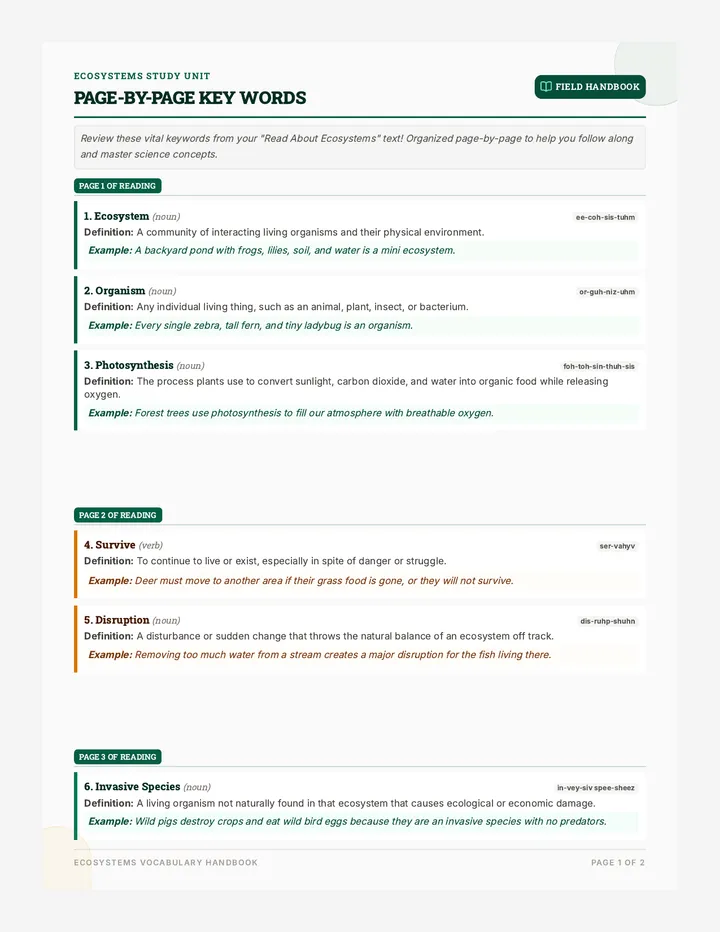
A page-by-page illustrated study guide of key ecosystem terms for third-grade classrooms. Organizes vital terms from Page 1 to Page 5 of the reading text, providing clear definitions, contextual examples, and an interactive student sketchpad area.
A comprehensive teacher professional development and model lesson plan sequence. It equips educators with hands-on mineral testing protocols, inquiry-based (3D) NGSS teaching strategies, geological vocabulary support, and formative assessment tools for grades 4-8.
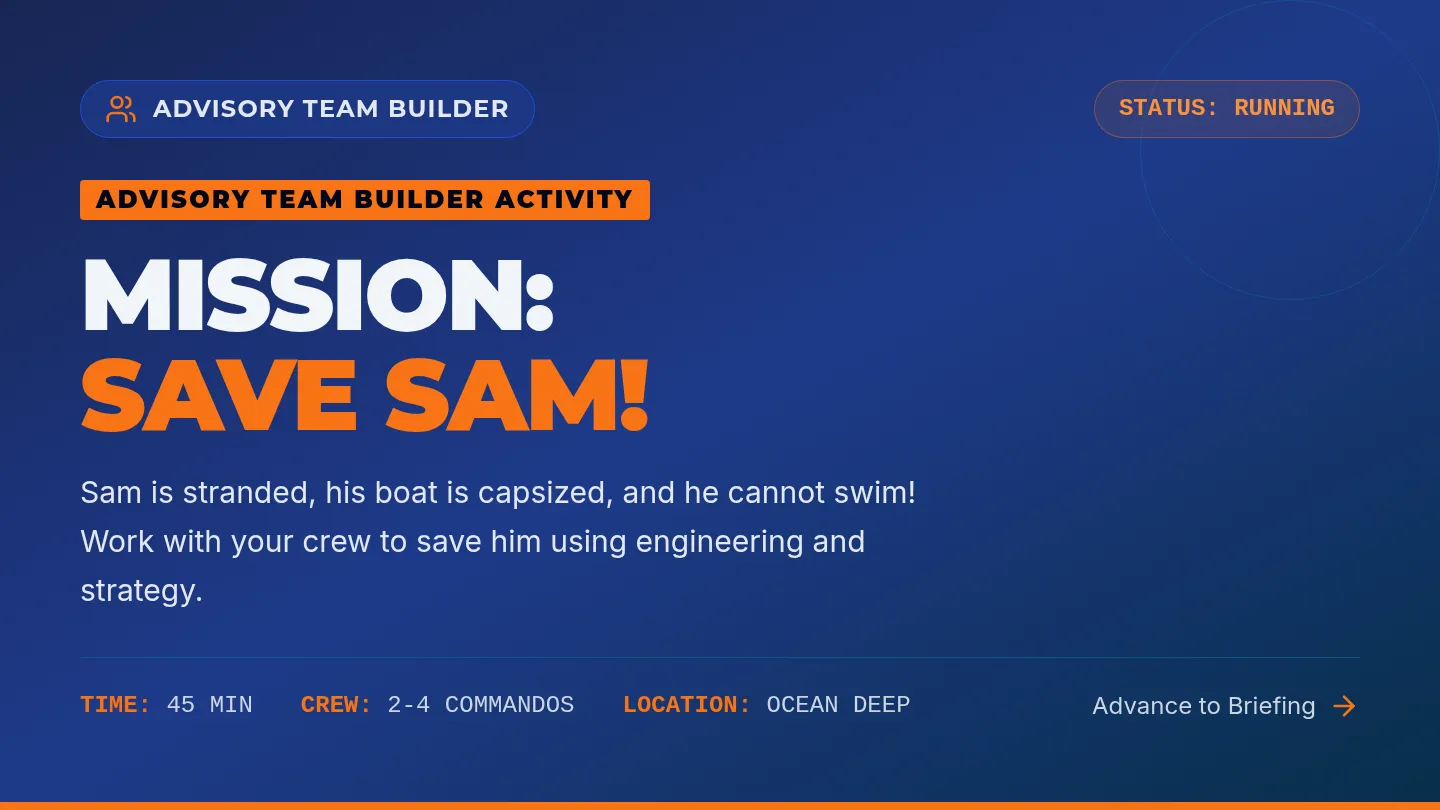
An introductory STEM and cooperative learning lesson where students work in teams to save Sam, a gummy worm stranded on a capsized boat, using only paperclips to retrieve and equip his life preserver.
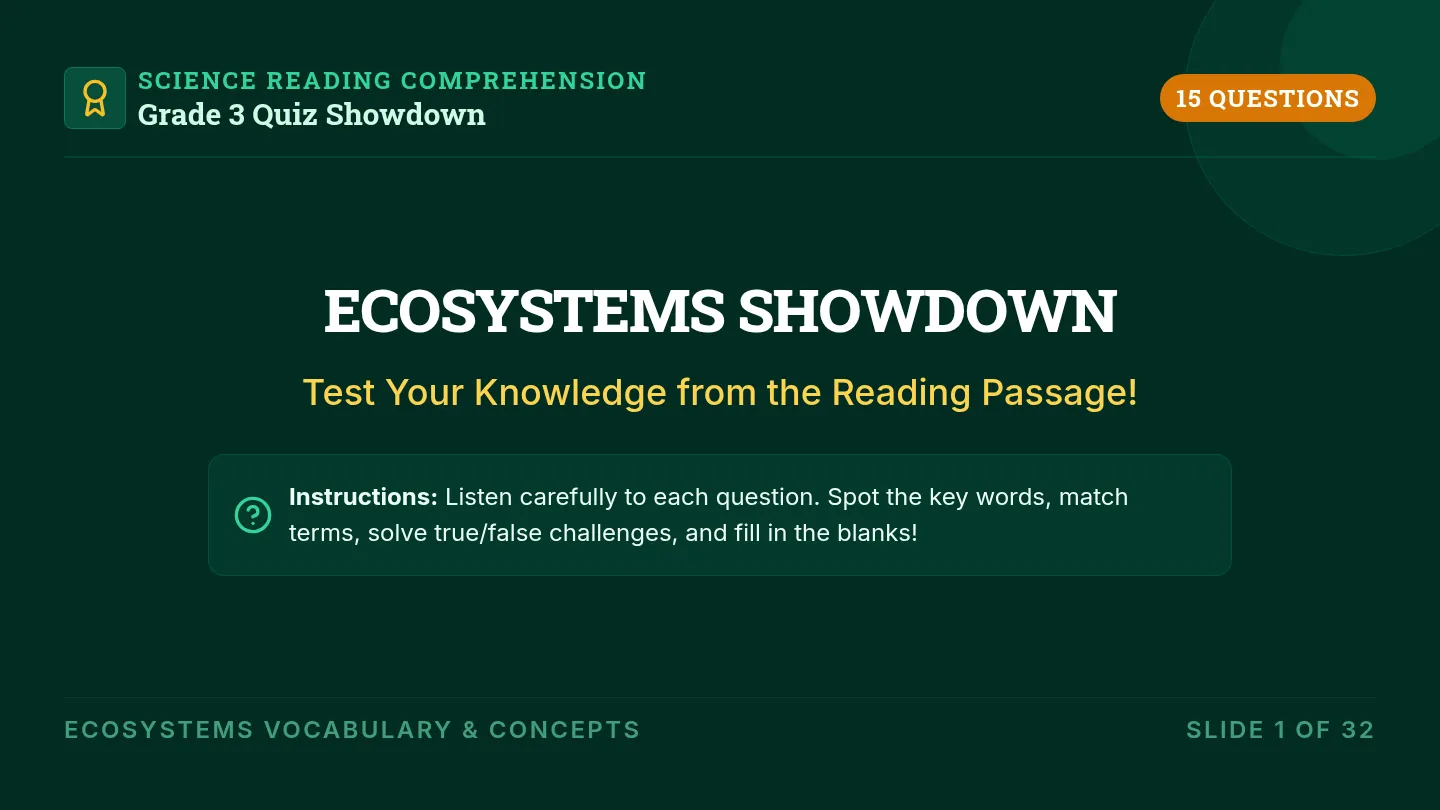
A comprehensive 32-slide quiz presentation designed for third-grade classrooms. Features 15 sequential questions (multiple choice, true/false, matching, fill-in-the-blank, and open-ended) mapped to the page numbers of the Generation Genius ecosystems text, with instructional scaffolds and clear answer reveal slides.
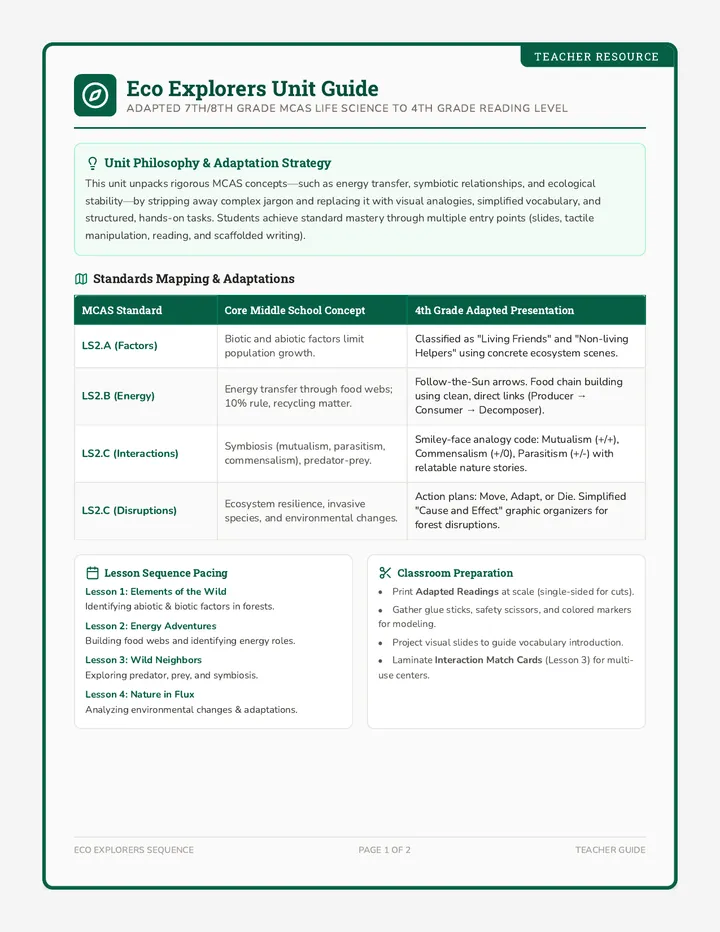
An interactive, highly visual ecosystem unit designed for 7th/8th grade MCAS standards but adapted to a 4th-grade reading and comprehension level. The unit explores abiotic/biotic factors, energy flow, interactions, and disruptions through hands-on activities, adapted readings, visual slides, and scaffolded assessments.
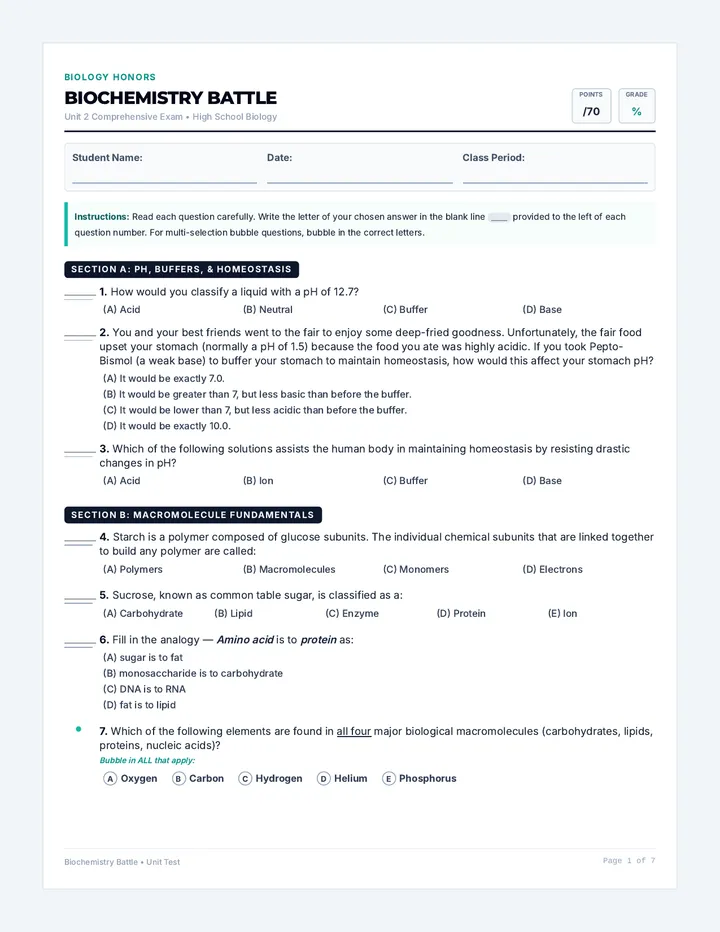
A comprehensive biology unit exam and matching teacher key assessing students' understanding of pH, buffers, macromolecule structures, lab identification, and enzyme kinetics.
An interactive, screen-optimized slide deck designed for virtual classrooms. Features matching challenges with definitions and context clues for all seven vocabulary words, along with interactive rounds, virtual game mechanics, and a wildcard answer debrief slide.
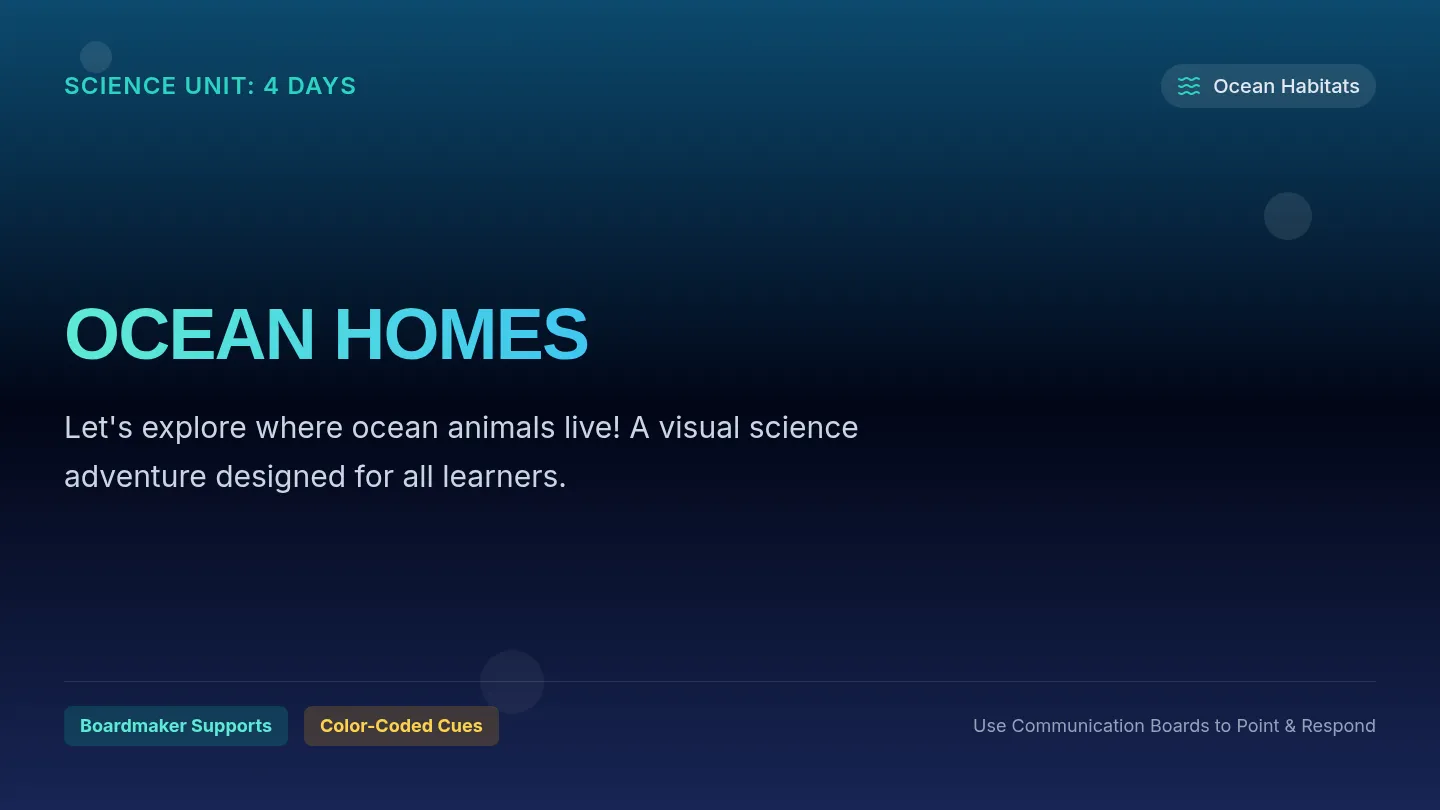
A highly visual 4-day science unit exploring ocean habitats and depth zones. Tailored for differentiated instruction for 3rd grade and nonverbal 7th grade students using Boardmaker-style symbols, color-coded matching, and visual check comprehension.
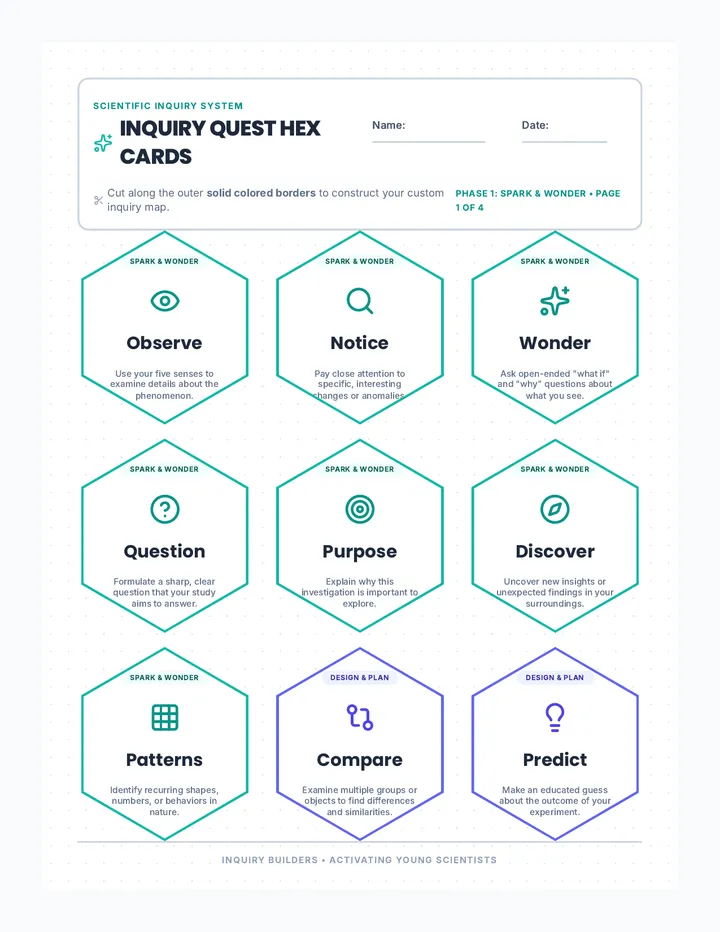
A lesson designed to guide students through the fundamental stages of scientific inquiry using tactile, color-coded hex cards to map, sort, and collaborate on scientific investigations.
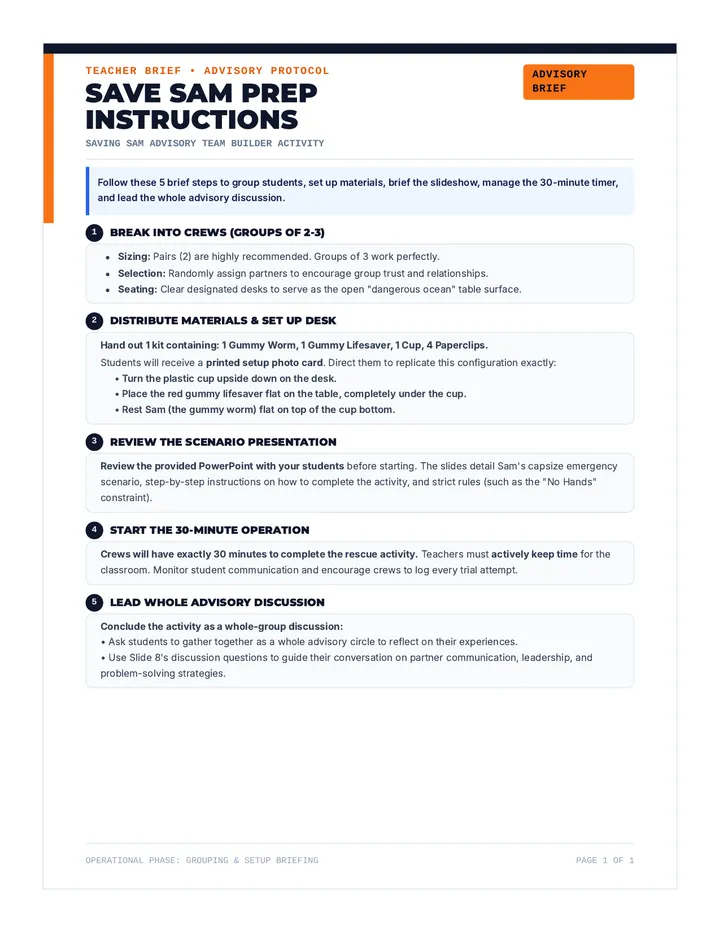
A brief, step-by-step instructional guide for teachers on breaking students into groups of 2-3, distributing materials, briefing the scenario via slides, and managing the 30-minute timer.