Eye Spy Slides Vision Science
EYE SPY
Seeing the World Through Different Eyes
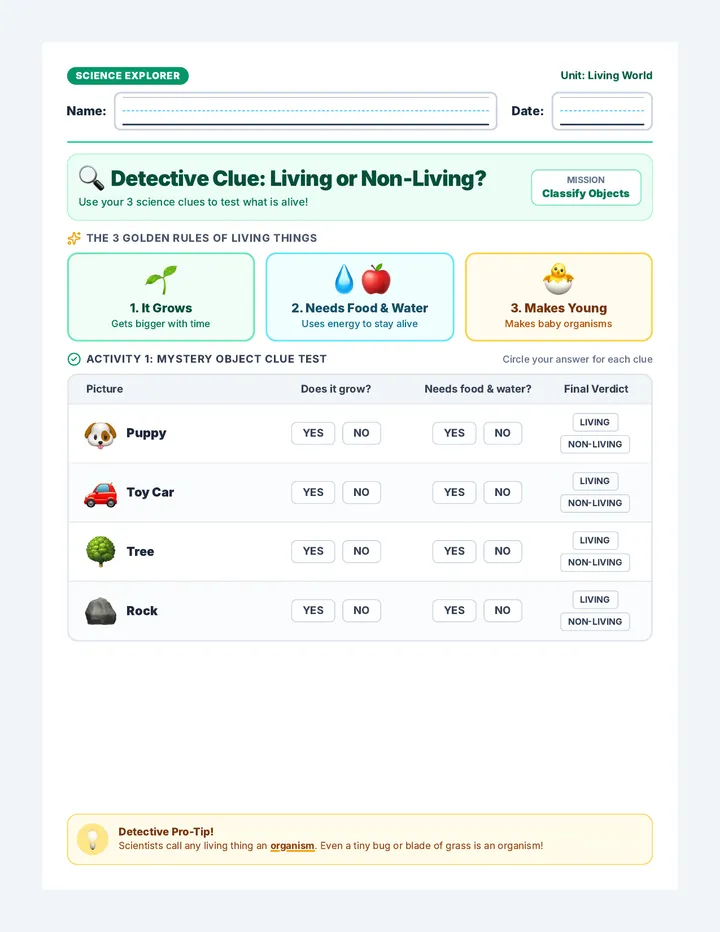
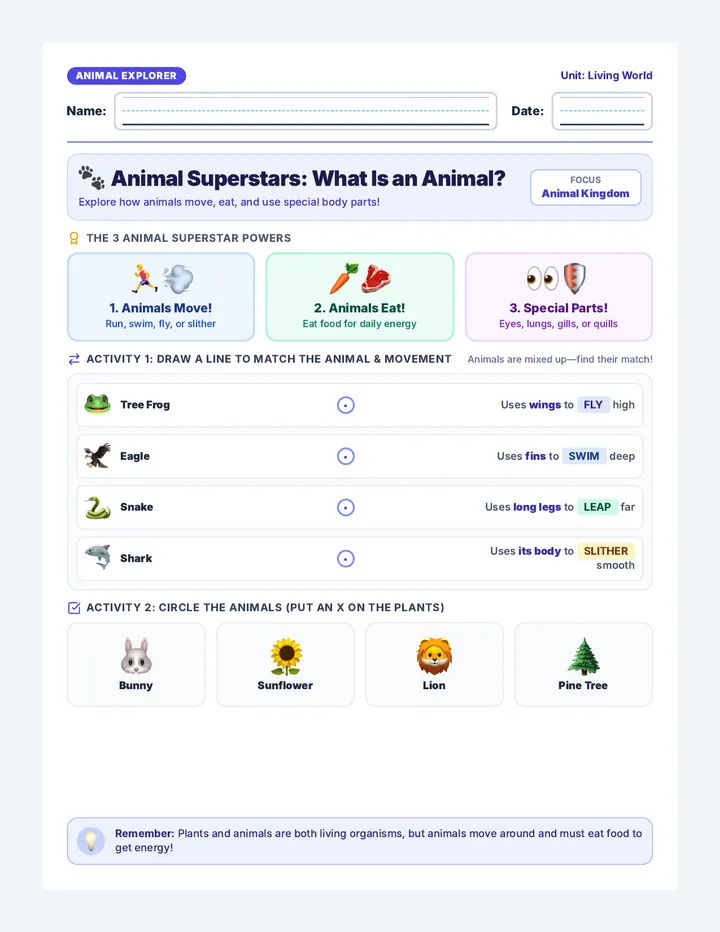
Warm-Up: Spot the Ball!
Look at the red ball on the green grass.
How Do We See Color?
Watch: 1:15 - 2:28
Embedded media
Pause & Discuss
• What are Cones ?
• What happens if only 2 kinds work?
• How do dogs see the world?
The "Color Code" Team
RED CONES
Detect reddish and orange light.
GREEN CONES
Detect greenish and yellow light.
BLUE CONES
Detect bluish and purple light.
Activity: Dog Vision Design
1
Imagine you are a dog. You only see shades of Blue and Yellow.
2
Draw a fun playground scene in your journal using ONLY blue and yellow markers.
3
Will your playground look the same as a human playground?
Only These Colors!
Investigation: The Red Filter
Filter On
"Where did the red go?"
Look at the playground photos through your red filter.
Observe: How do red things change? What happens to the contrast (brightness) of the colors?
The Big Question
Why is a neon yellow tennis ball a better design for a dog toy than a bright red one?
Dog Vision Journal Eye Spy
Vision & Color Science Lab
Scientist:
Date:
Part 1: The Warm Up
Look at the image of the red ball on the green grass. Is it easy or hard to find?
Easy to find
Hard to find
Why do you think that is?
Part 2: Dog Vision Design
Dogs only see shades of blue and yellow. Draw a playground scene using ONLY those two colors!
Use Blue and Yellow Markers Only
Part 3: The Red Filter Test
Look at the playground photos through a red filter. What changes?
Observation: Colors
How do the red objects change when you look through the filter?
Observation: Comparison
Which colors look almost the same through the filter?
The Big Question
Why is a neon yellow ball better for a dog to play with than a bright red ball? Use what you learned about cones and dog vision to explain!
Playground Photos Handout Playground Vision Lab
Use these images with your Red Filter
Scene 1: The Red Twist
Can you see the slide through the filter?
Scene 2: Rainbow Bars
Which colors disappear or change most?
Scene 3: Color Ball Pit
Find the hidden blue ball!
Scene 4: Swing Colors
Which swing looks brightest through red?
"Vision is just how your brain understands the light bouncing off it."
Eye Spy Teacher Guide Eye Spy
Teacher Facilitation Guide
Target Grade 3rd Grade
Objective
Students will demonstrate how color blindness and animal vision differ from standard human vision by creating filtered images and using limited color palettes to simulate dichromatic (two-cone) vision.
Pacing
Warm-Up 5 Minutes
Video & Discussion 10 Minutes
Main Activity 20 Minutes
Closure 10 Minutes
Materials
Blue & Yellow markers or crayons (1 set per pair)
Red cellophane squares or plastic red filters
Eye Spy Student Journals
Playground Vision Handouts
Access to YouTube video
Key Discussion Moments
0:43
Rods vs. Cones
"Which one helps you see at a sleepover when the lights are off? Which one helps you choose a matching outfit?"
Goal: Reinforce that rods are for light/dark and cones are for color detail.
1:46
Color Blindness
"Look at the split screen of the tomatoes. How might this change how someone interacts with the world, like crossing the street at a traffic light?"
Goal: Connect biological vision to real-world accessibility and safety.
2:22
Dog Ball Design
"Based on what we just learned about dog eyes, what color ball would be easiest for a dog to find in green grass? Red or Blue?"
Goal: Predict outcomes based on vision models before the video reveals the answer.
Pro-Tips for the Lab
!
The Red Filter Effect
The red filter simulates red-green color blindness by washing out red tones. Red items will appear much lighter or "disappear" into the white background of the handout, mimicking how contrast is lost when red cones don't function.
?
Managing Markers
During the "Dog Vision Design," be strict about using ONLY blue and yellow. This forces students to experience the limited spectrum dogs navigate daily.
Science Recap
Cones: Specialized cells in the retina. Humans usually have 3 (Red, Green, Blue). Dogs have 2 (mostly Yellow/Blue).
Contrast vs. Color: Color blindness isn't seeing "nothing"; it's a loss of the ability to distinguish between specific wavelengths, making different colors look like the same shade of gray or brown.
Ultraviolet: Mentioned in the video climax. Bees see patterns on flowers that are literally "invisible" to us because our cones cannot detect those fast light waves.