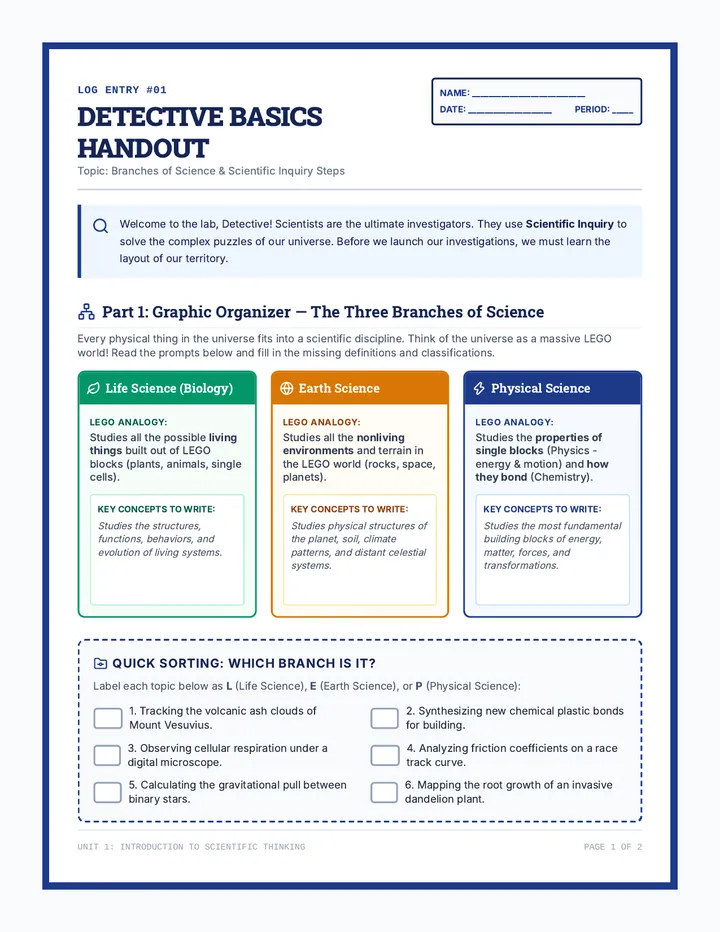
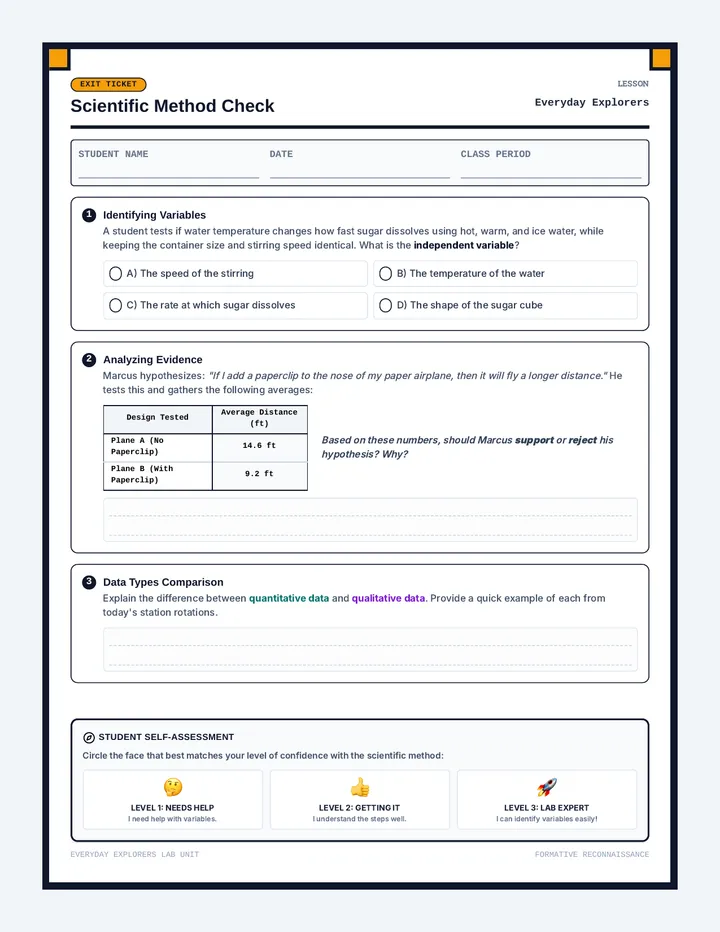
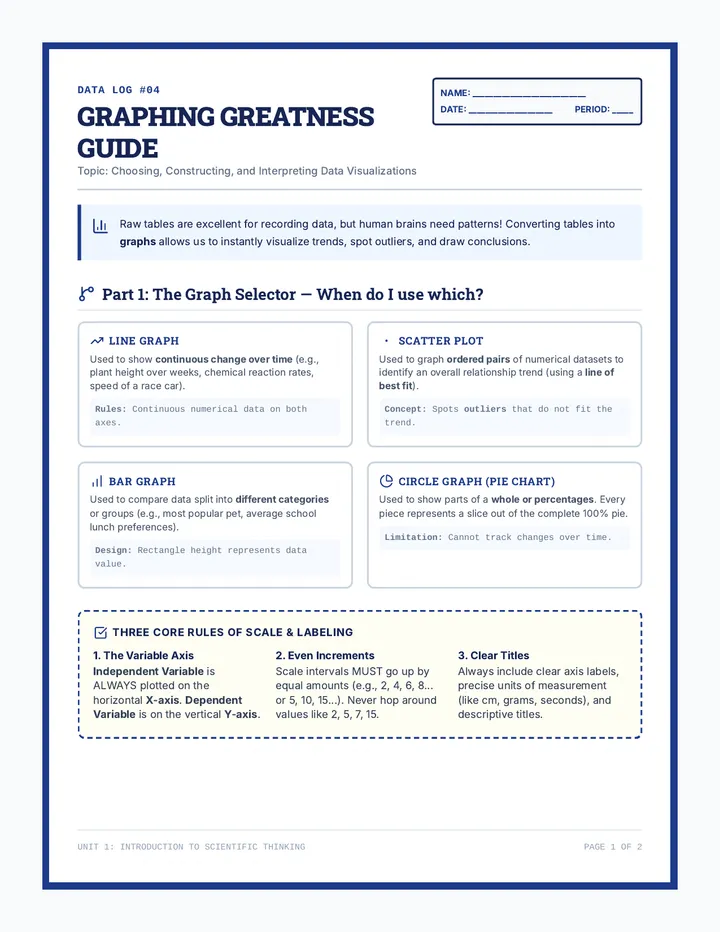
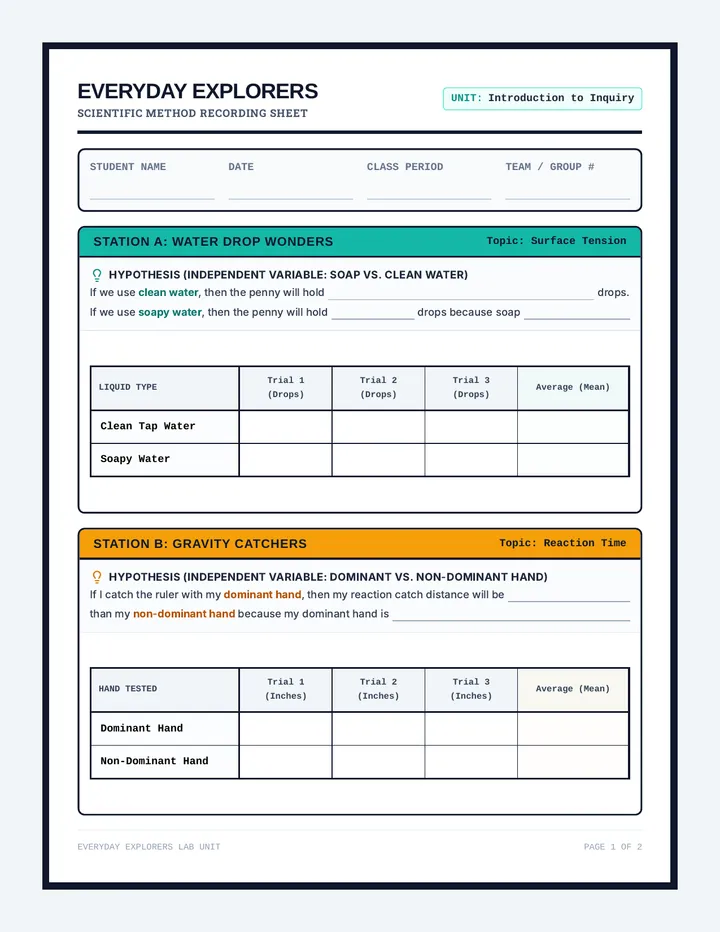
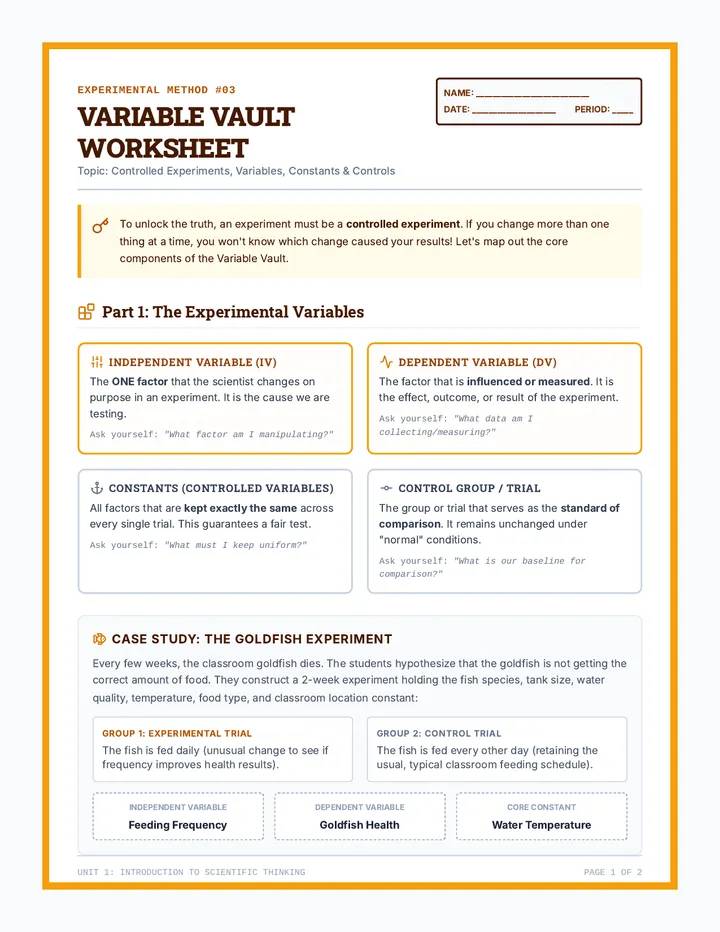
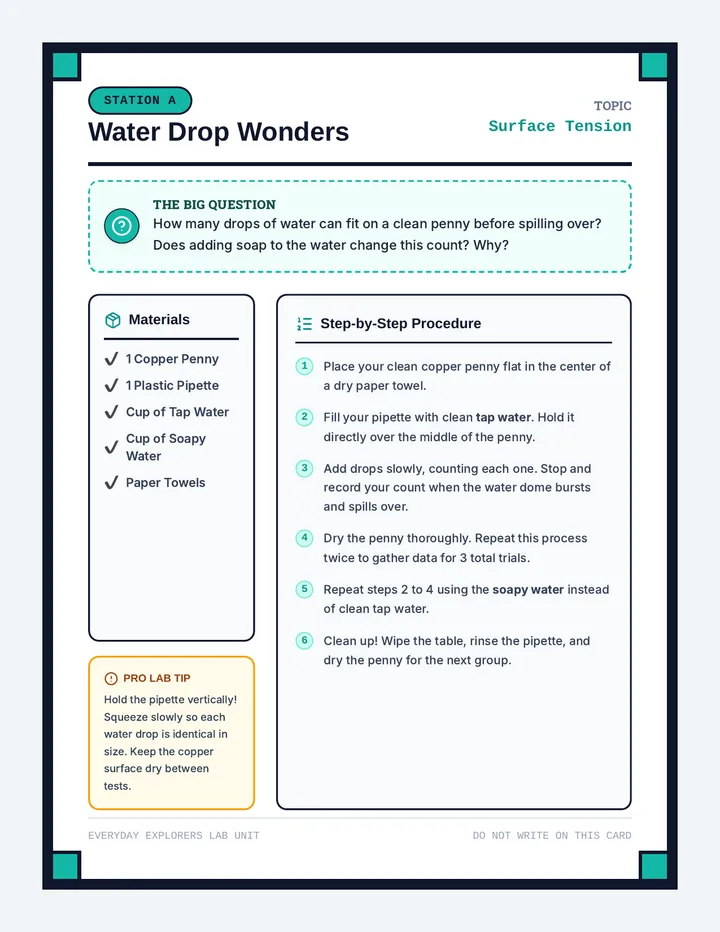
A 6th-grade science lesson introducing the Scientific Method through three hands-on station rotations: Water Drop Wonders, Gravity Catchers, and Paperclip Floating. Students practice making hypotheses, gathering quantitative and qualitative data, identifying variables, and drawing evidence-based conclusions.
6 Trade roles! Partner B will drop the ruler, and Partner A will do the catching and recording.
EVERYDAY EXPLORERS LAB UNIT DO NOT WRITE ON THIS CARD
Station C
Paperclip Floating
TOPIC Cohesion Forces
The Big Question
Can a steel metal paperclip float on water? What happens to the cohesive skin-like forces of water when soap is introduced to the environment?
Materials
✔ Plastic Bowl
✔ Metal Paperclips (various)
✔ Liquid Dish Soap (bottle)
✔ Wooden Toothpick
✔ Paper Towels
Pro Lab Tip
Do not drop the clip directly! Create an "L-shape" lifter out of another paperclip. Lay the test clip flat on the lifter, then lower it extremely slowly.
Step-by-Step Procedure
1 Fill the plastic bowl 3/4 full with cool tap water. Ensure the water is completely still.
2 Try to drop a paperclip onto the surface of the water with your fingers. Observe if it floats or sinks. Record this.
3 Now, use a paperclip "lifter" (or a small piece of tissue) to carefully and gently rest a dry paperclip horizontally flat on the water's surface. Try until it floats!
4 Once the paperclip is floating, dip a toothpick in liquid dish soap, then touch the water's surface far away from the paperclip. Record what happens instantly!
5 Dump the soapy water out completely. Rinse the bowl thoroughly with fresh water so NO soap remains. Wipe the table dry for the next rotation.
EVERYDAY EXPLORERS LAB UNIT DO NOT WRITE ON THIS CARD
Evidence-Based Conclusion
In science, a hypothesis is never just "wrong." Choose one station from today and explain whether your hypothesis was supported or rejected by your data, referencing your averages.