A 6th-grade science lesson exploring the difference between perceived danger (pain) and actual lethality (disease) in arthropods, featuring a debate between the Bullet Ant and the Mosquito.
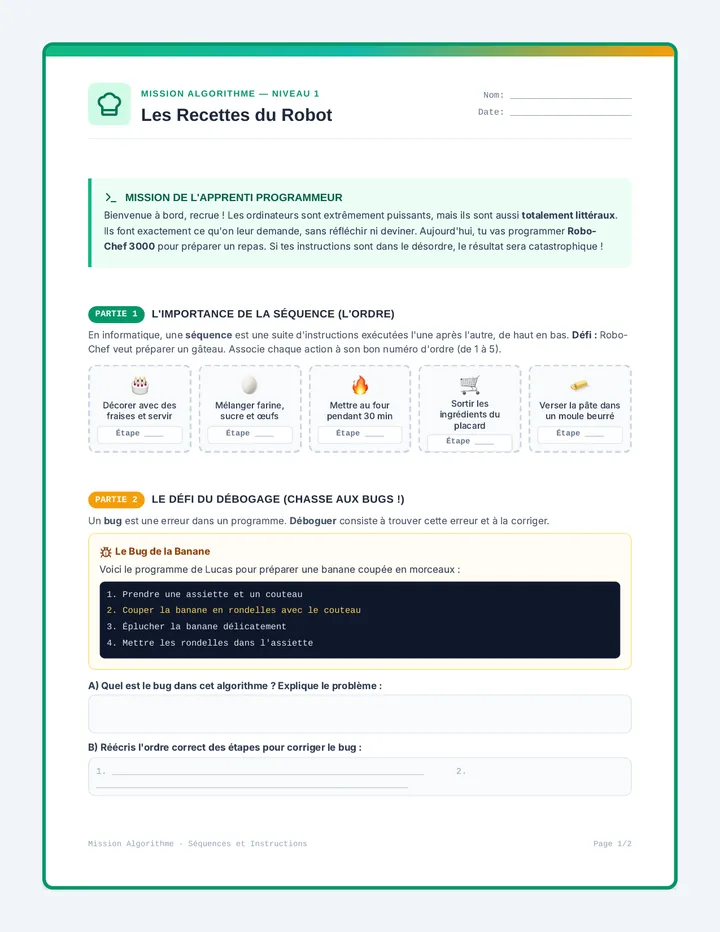
Une séquence d'initiation à l'algorithmique sans code pour débutants absolus. À travers des métaphores concrètes, les apprenants découvrent les trois piliers de la programmation : les séquences d'instructions, les conditions et les boucles.
A comprehensive online safety curriculum combining key digital citizenship concepts: managing digital footprints, identifying online scams and phishing, and establishing healthy screen time habits.
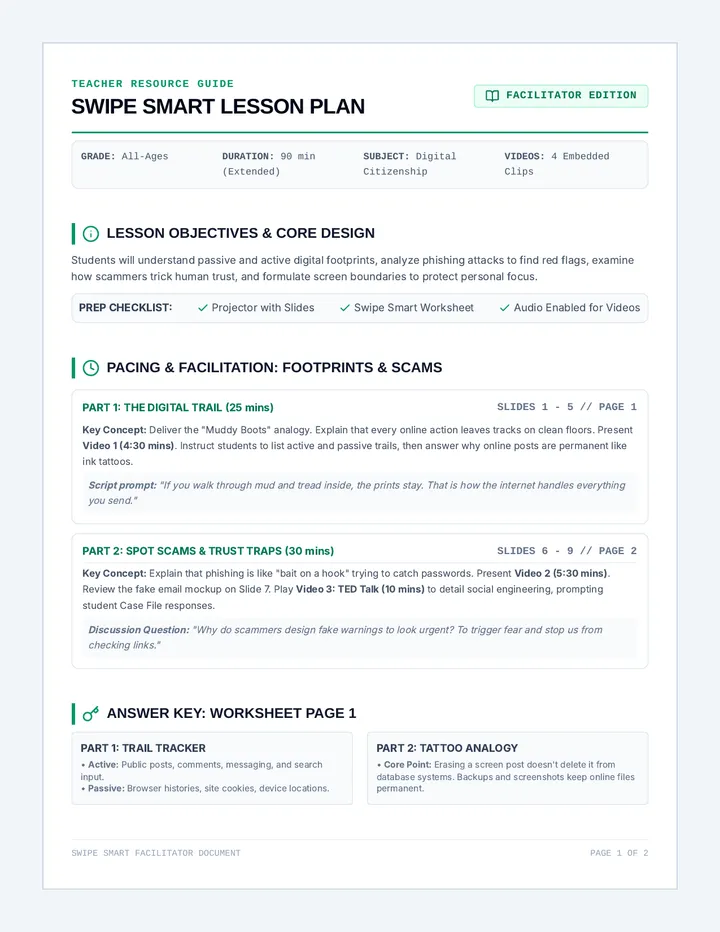
A comprehensive 2-page print-ready lesson plan, facilitation guide, and answer key for the Swipe Smart curriculum. Includes slide-by-slide instructional scripts, pacing tips, and discussion prompt templates.
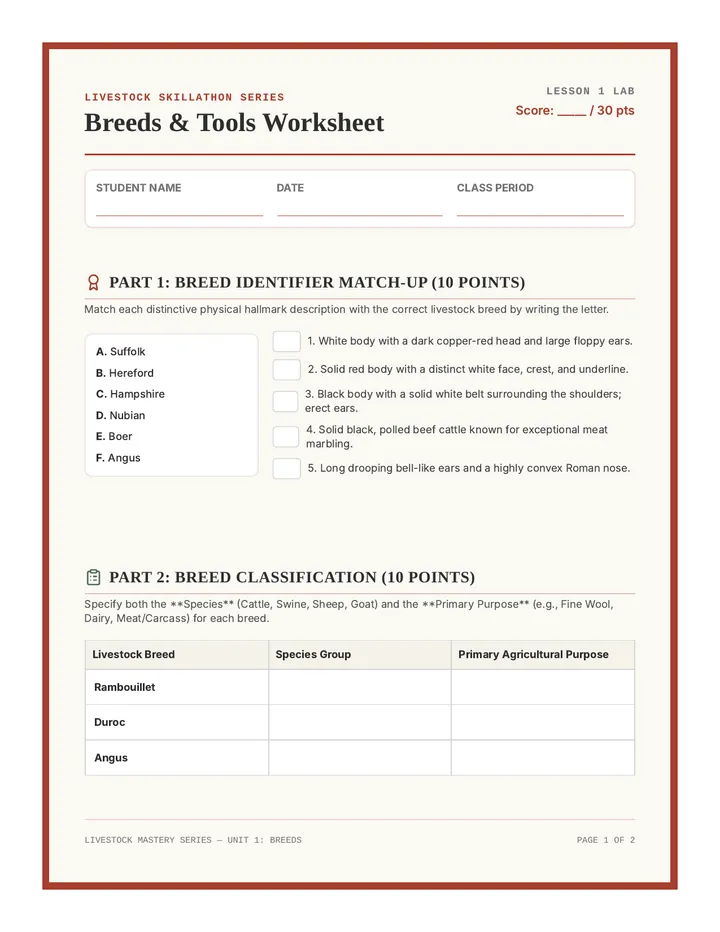
An immersive preparation program that equips agriculture students with the hands-on identification and evaluation skills needed to conquer competitive Livestock Skillathon contests.
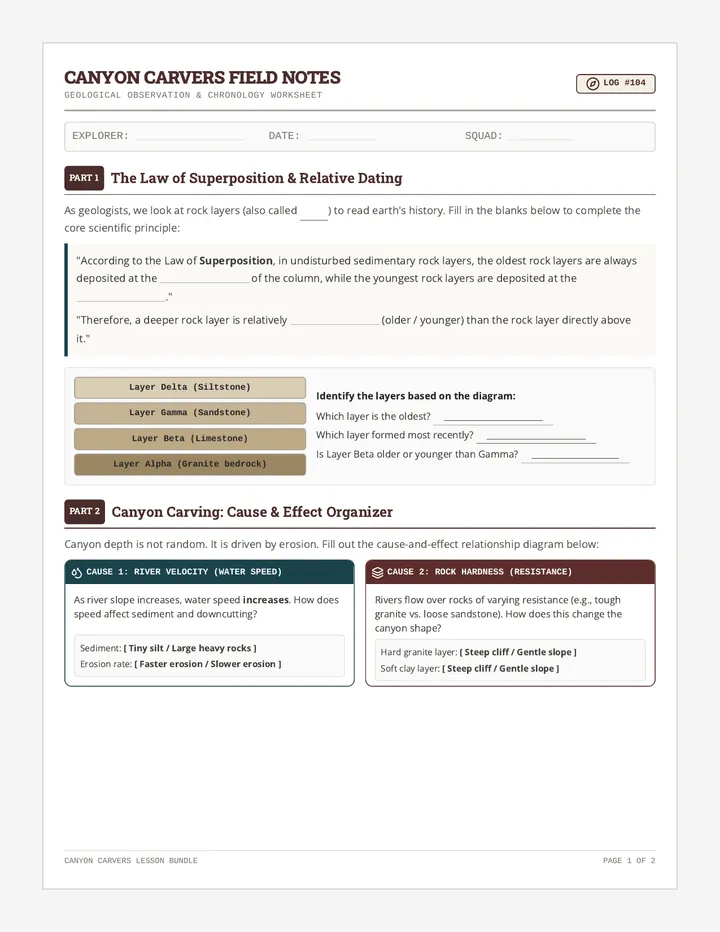
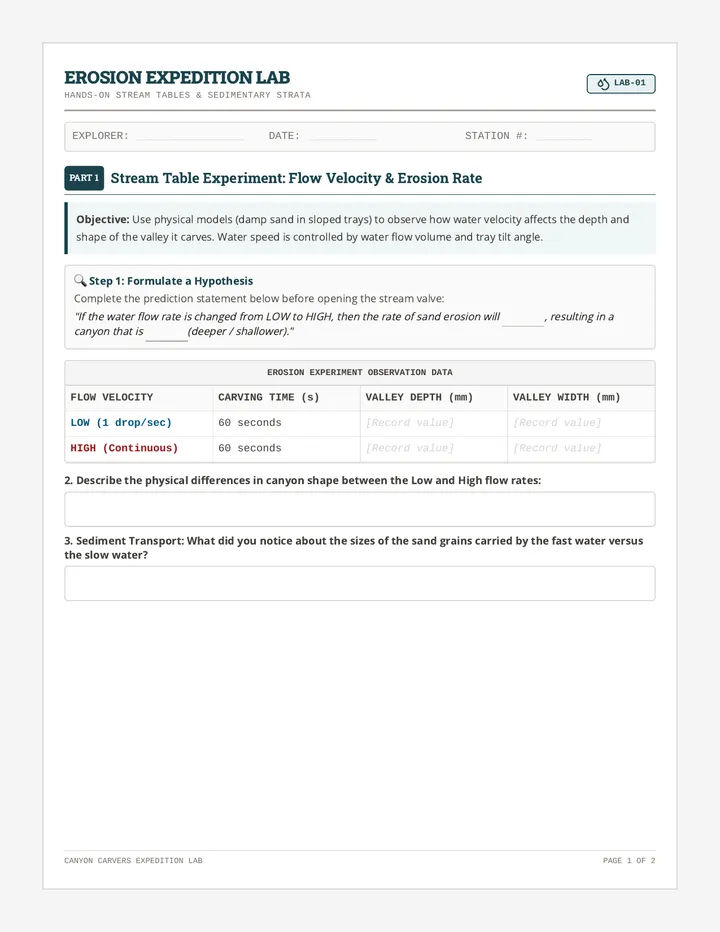
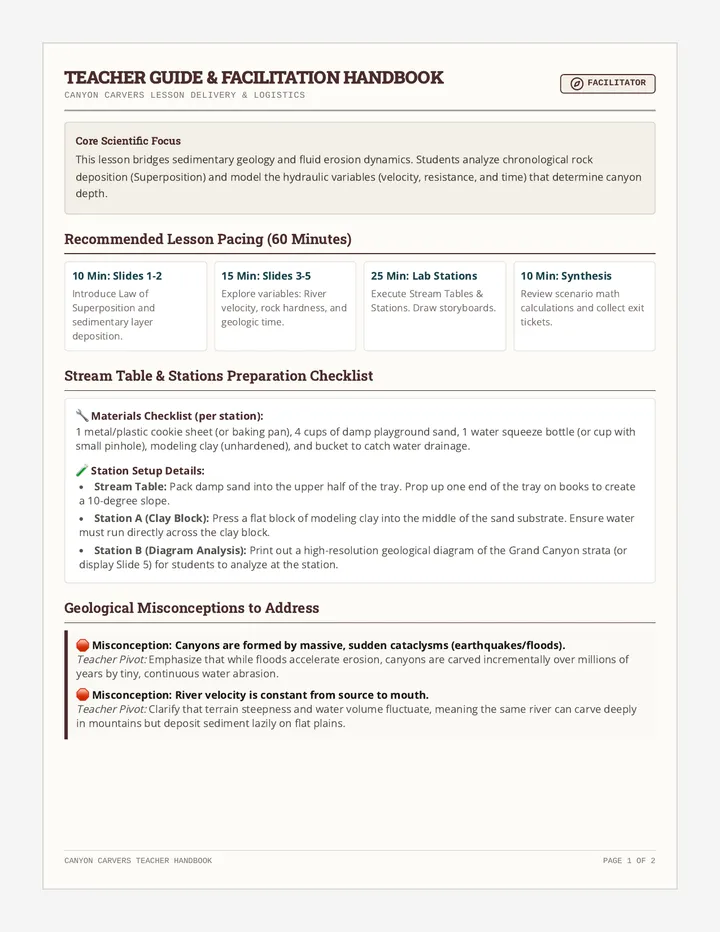
A comprehensive lesson exploring how relative dating determines rock layer age and how river velocity, rock hardness, and time interact to carve valleys of varying depths.
An engaging, universally accessible 90-minute slide deck for teaching digital citizenship. Explains complex cyber safety, footprint, phishing, and screen time concepts using highly relatable, jargon-free analogies easily understood by all ages.
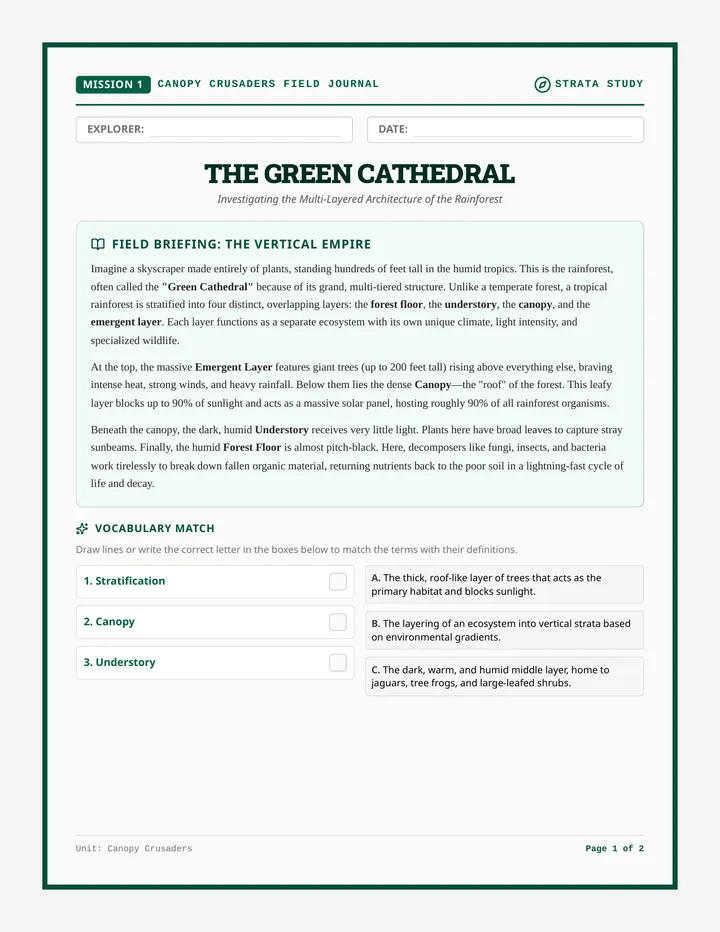
A comprehensive unit on rainforest ecology, climate regulation, and conservation. Students explore the structural layers of the rainforest, their roles as carbon sinks, the threats of deforestation, and collaborative solutions for preservation.
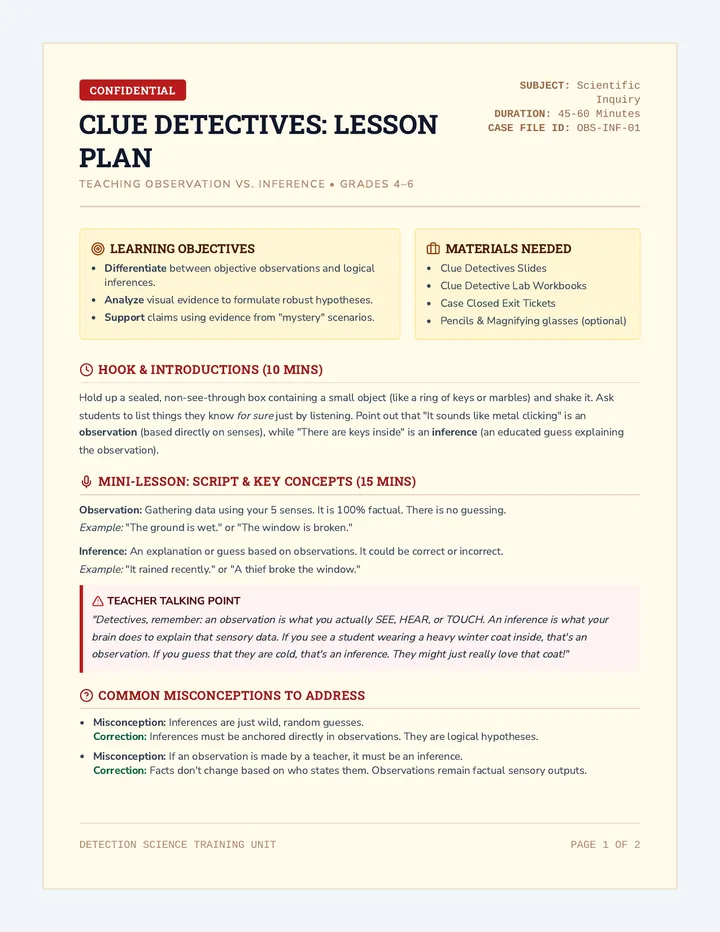
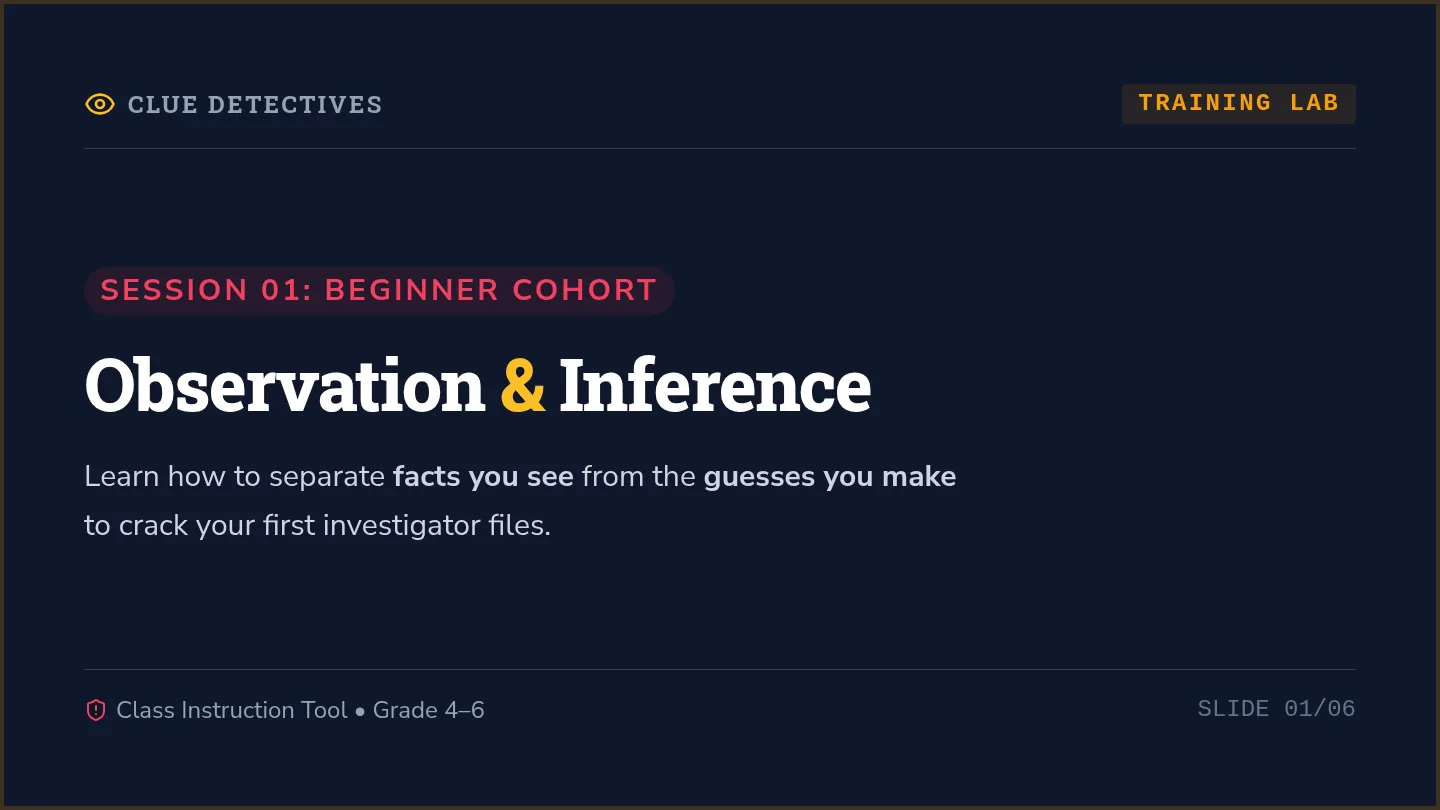
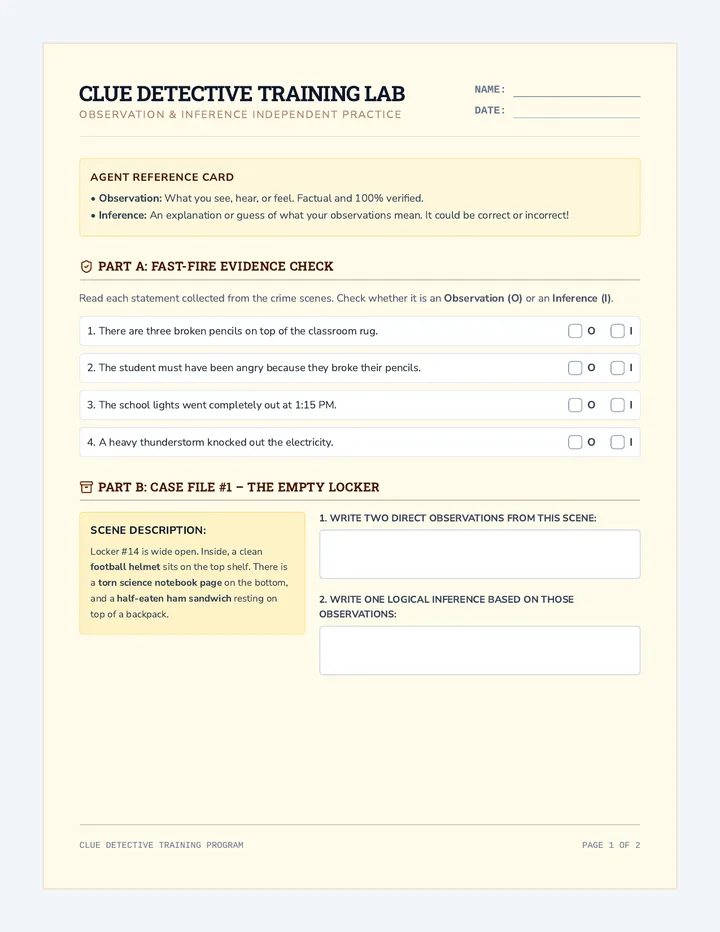
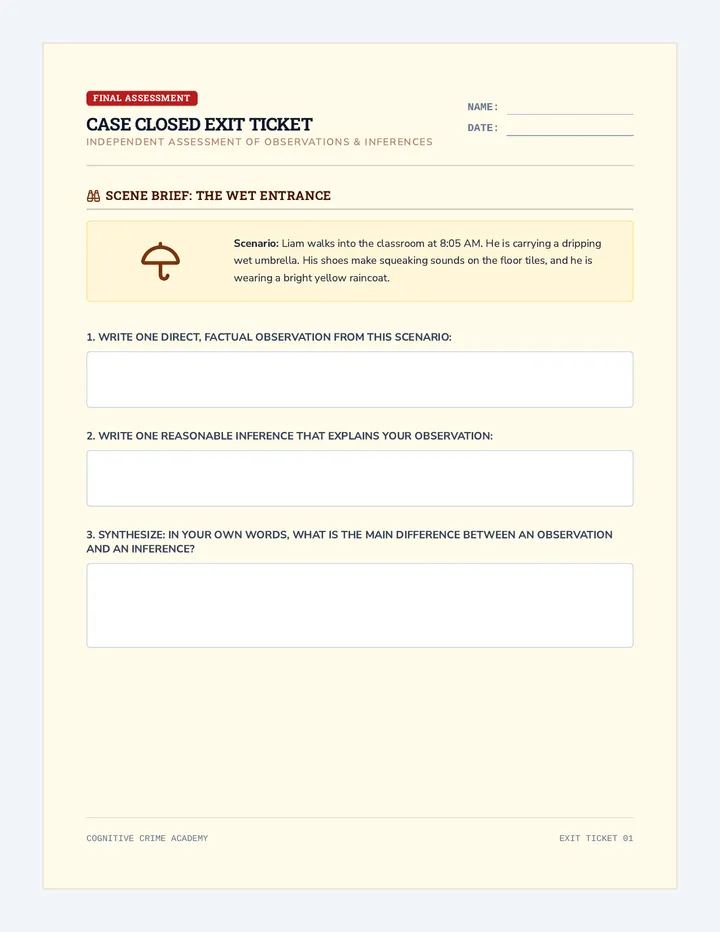
An immersive lesson where students learn to distinguish between direct observations and logical inferences. Using everyday mystery scenarios, students practice analyzing visual evidence and building evidence-based arguments.
A 2-page printable teacher guide containing lesson plans, physical stream table setup instructions, common geological misconceptions, pacing recommendations, and a complete answer key for the math scenarios and exit tickets.
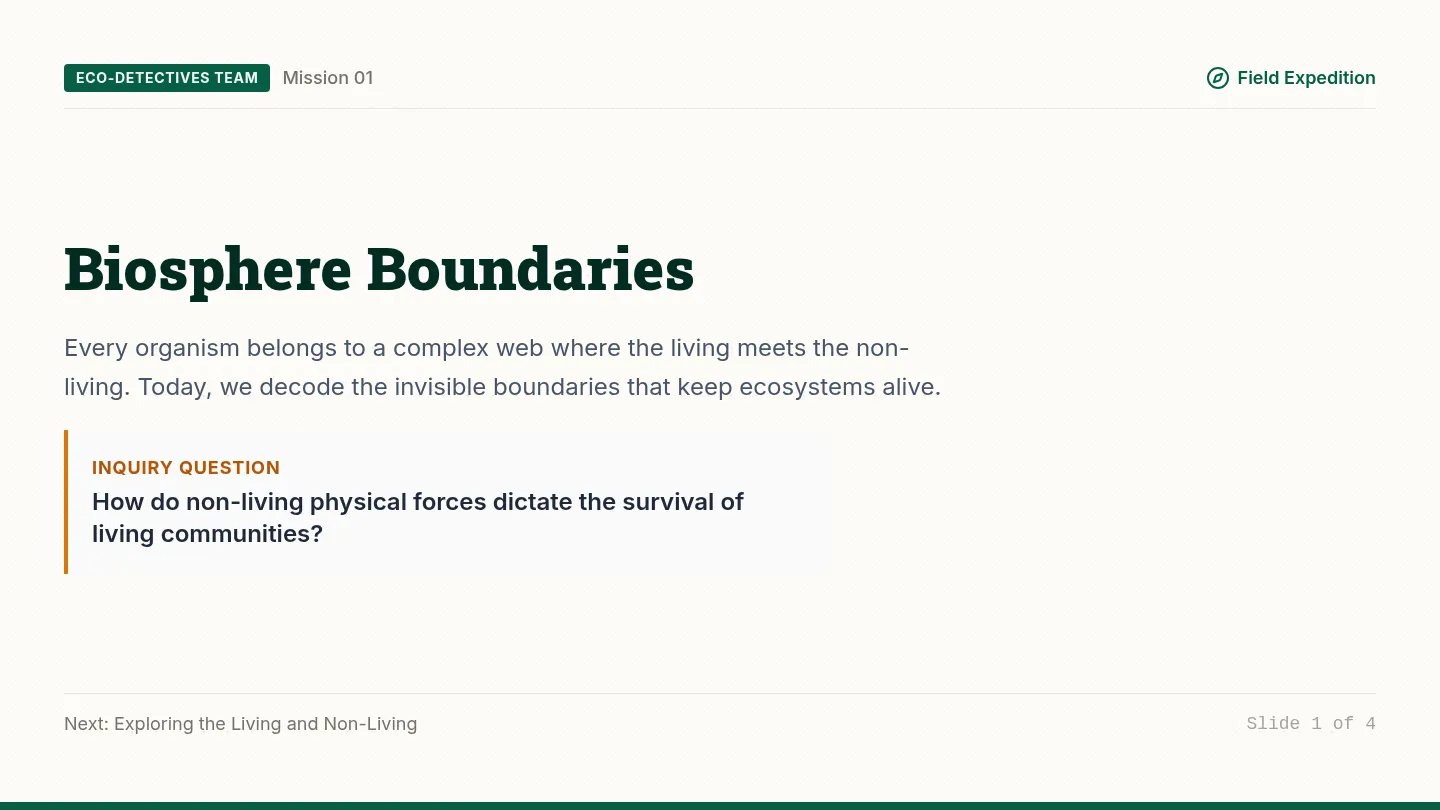
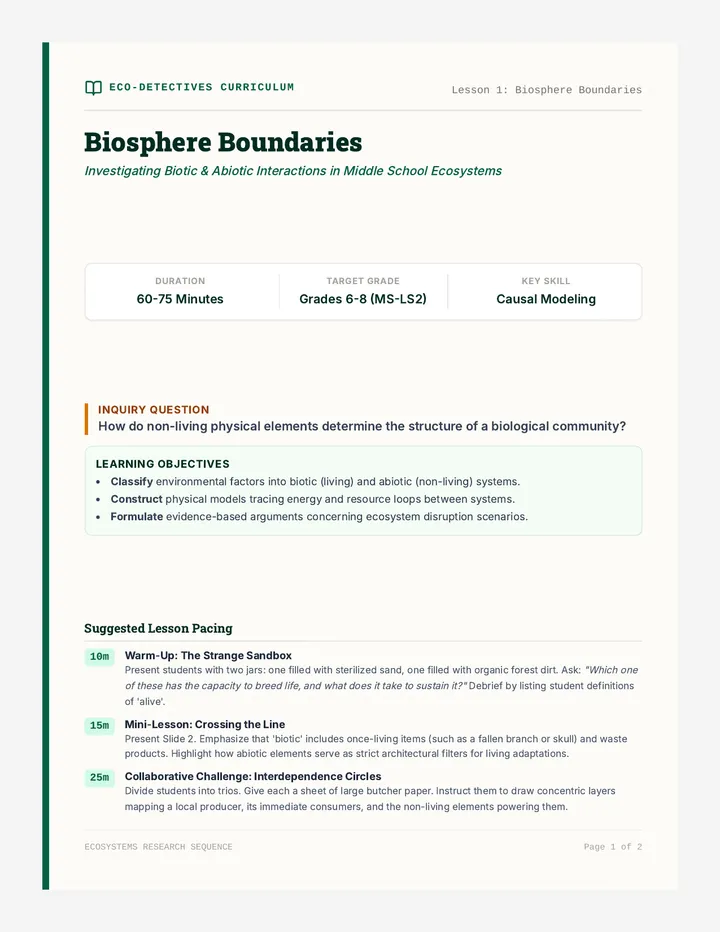
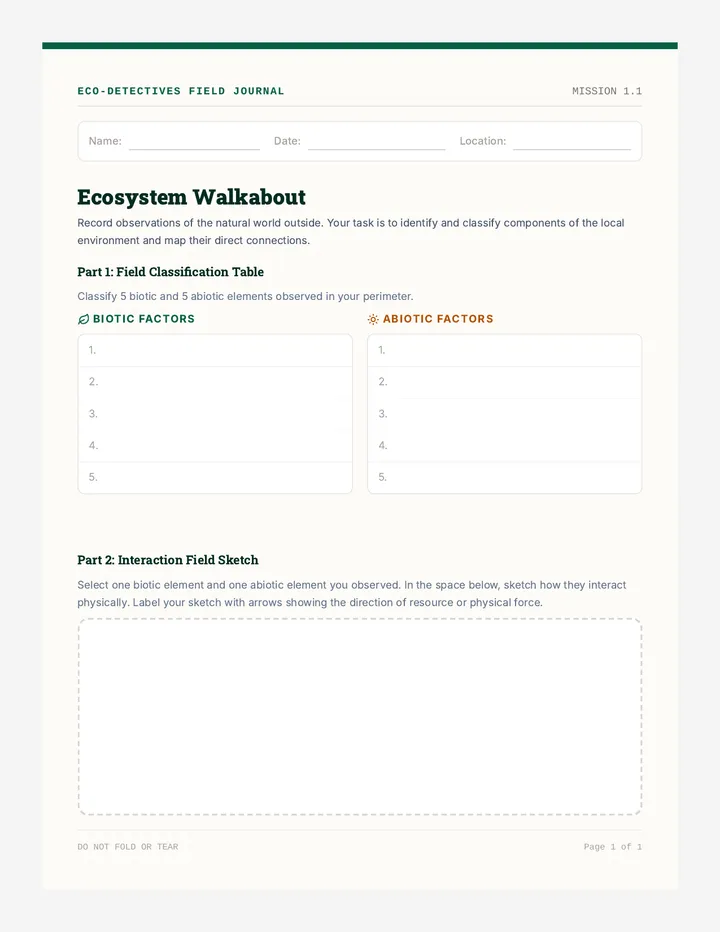
A middle school scientific inquiry sequence where students investigate abiotic and biotic components, trace trophic energy pyramids, and build critical media literacy by evaluating ecological research sources.
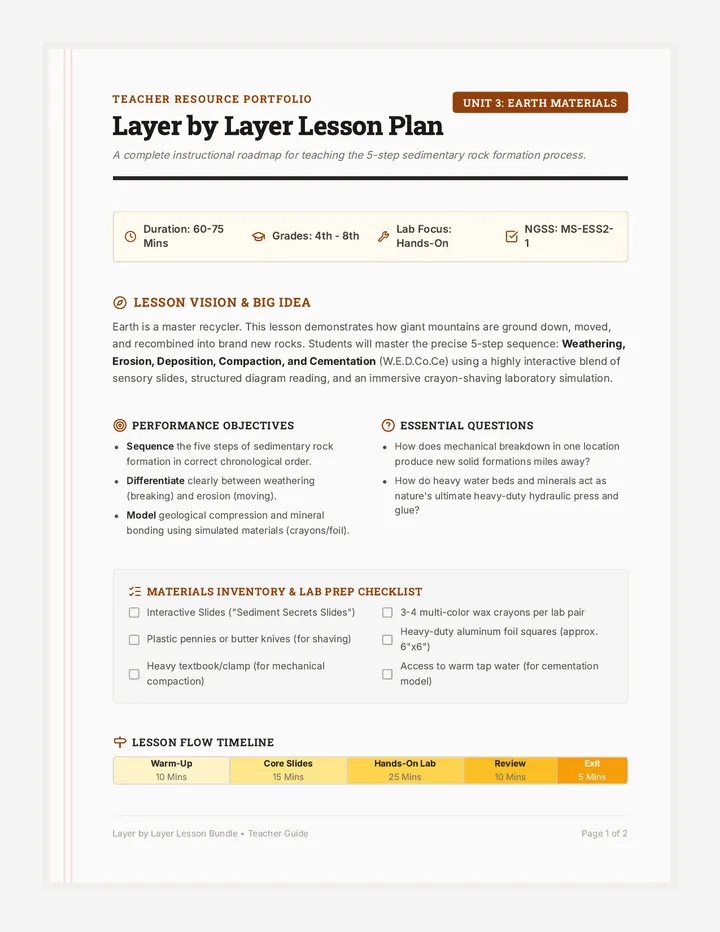
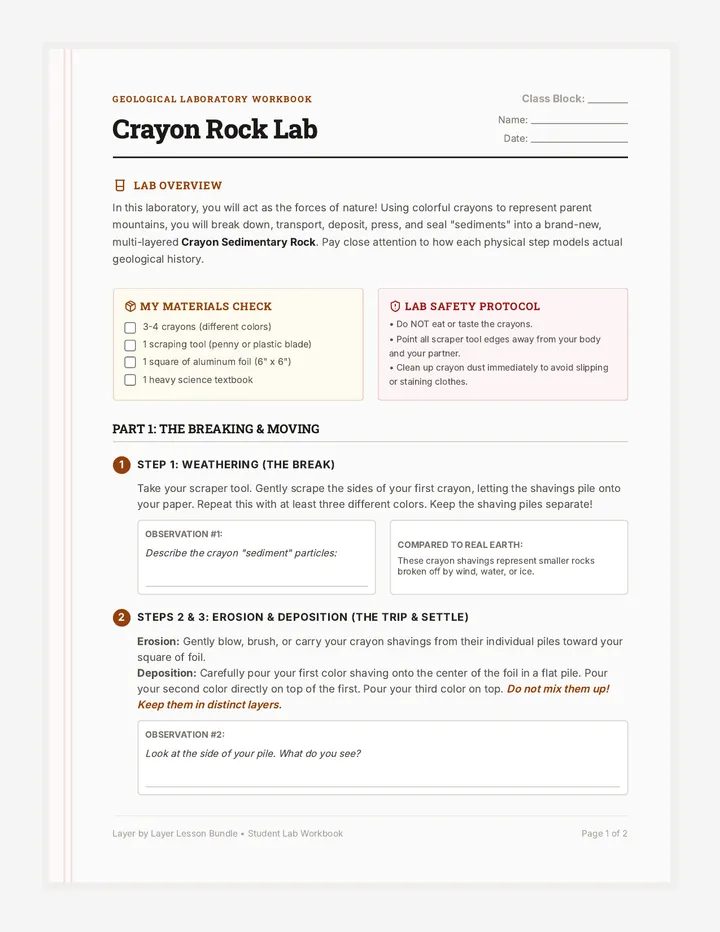
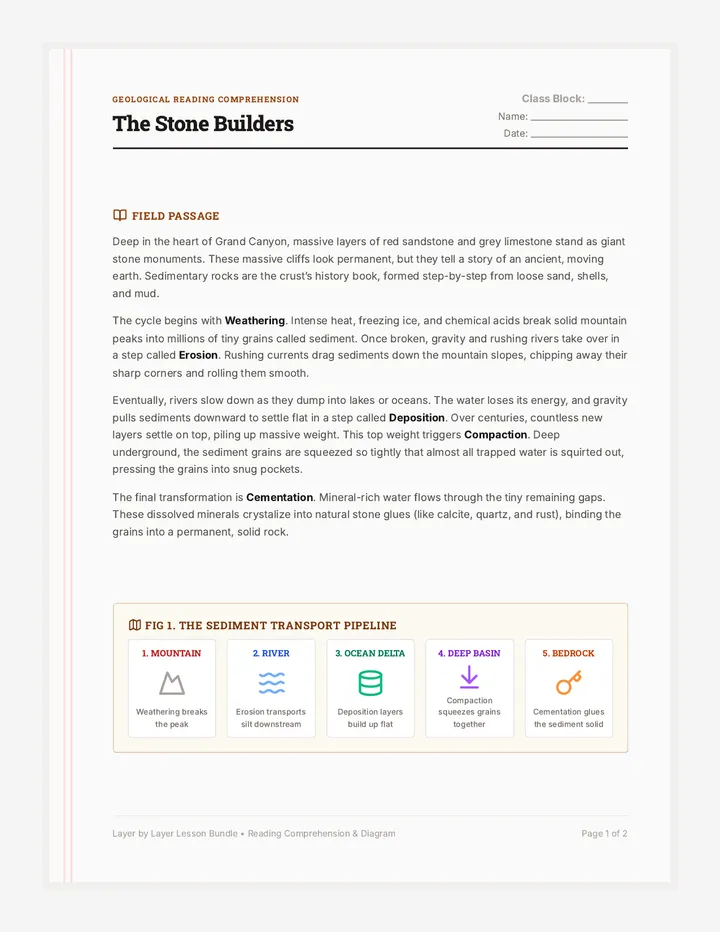
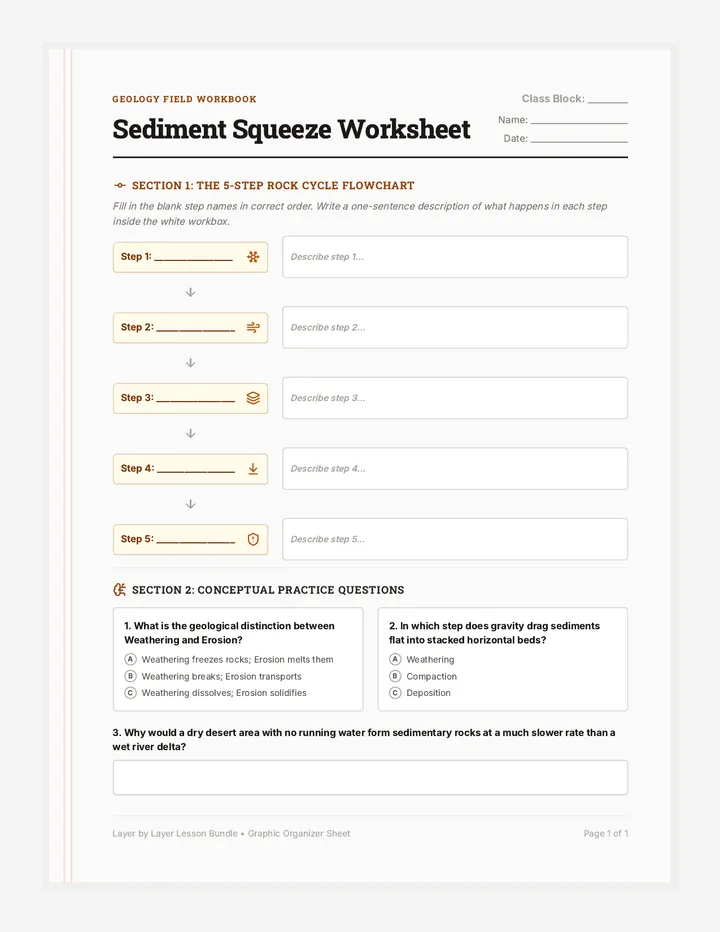
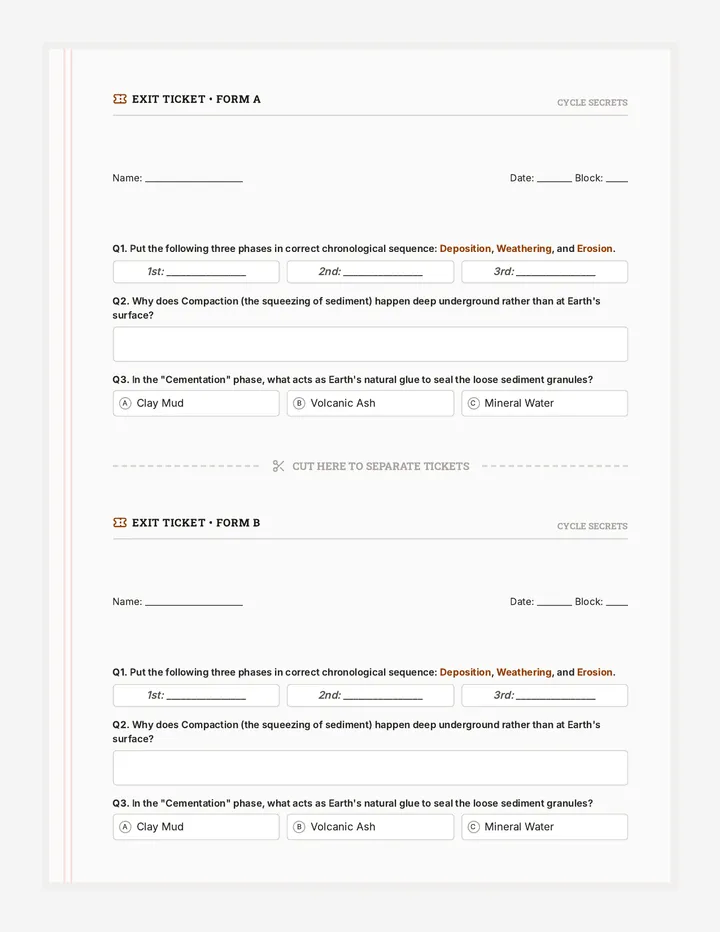
A comprehensive lesson exploring the 5-step sedimentary rock formation process (Weathering, Erosion, Deposition, Compaction, and Cementation). Includes an instructional slide deck, a detailed teacher guide, a crayon-modeling hands-on lab, an interactive diagram worksheet, and an exit ticket.
A 2-page printable student lab worksheet. Page 1 contains a stream table experiment guide, data tables comparing low vs. high flow rate, and hypothesis sections. Page 2 outlines physical station rotations (sand vs. clay barriers, Grand Canyon diagram analysis) and includes a 3-panel storyboard for students to sketch landscapes over geologic time.