Cellular Blueprints Worksheet
Cellular Blueprints
Biotechnology & DNA Technology Lab Manual
Name
Date
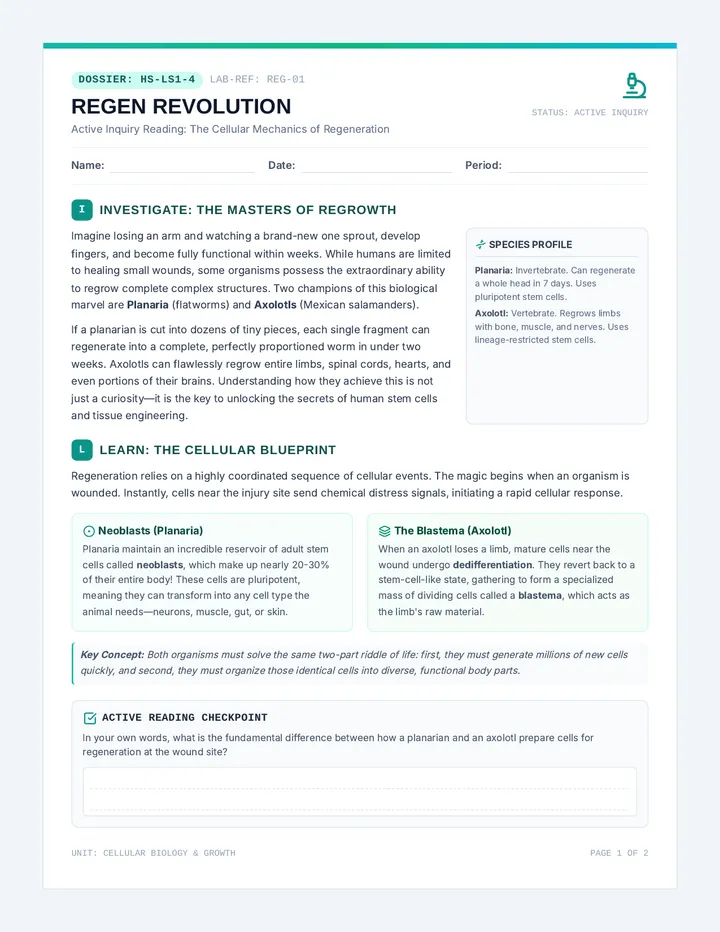
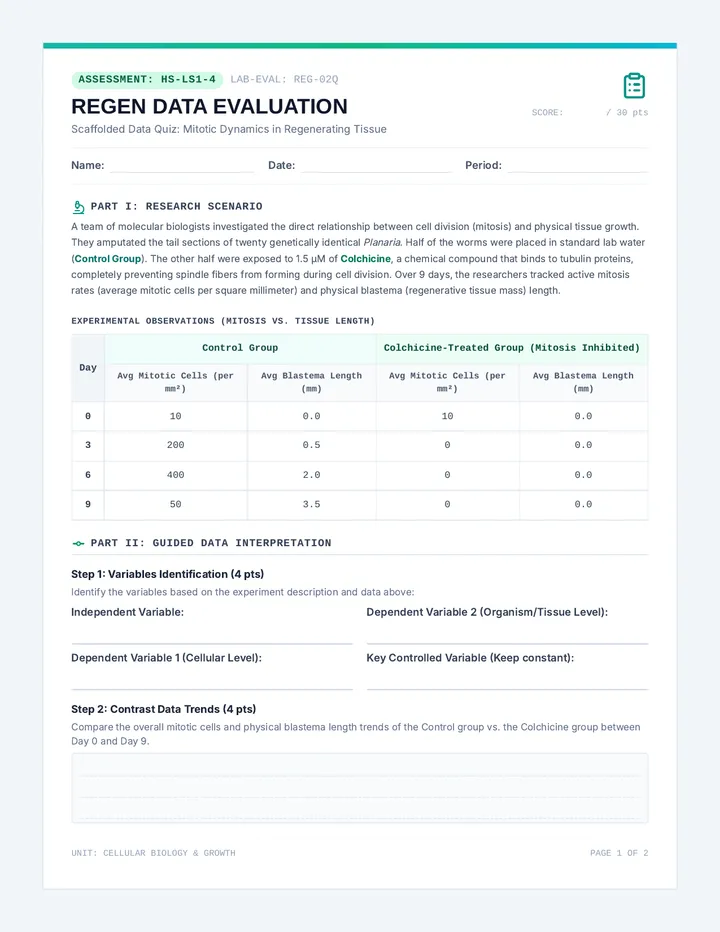
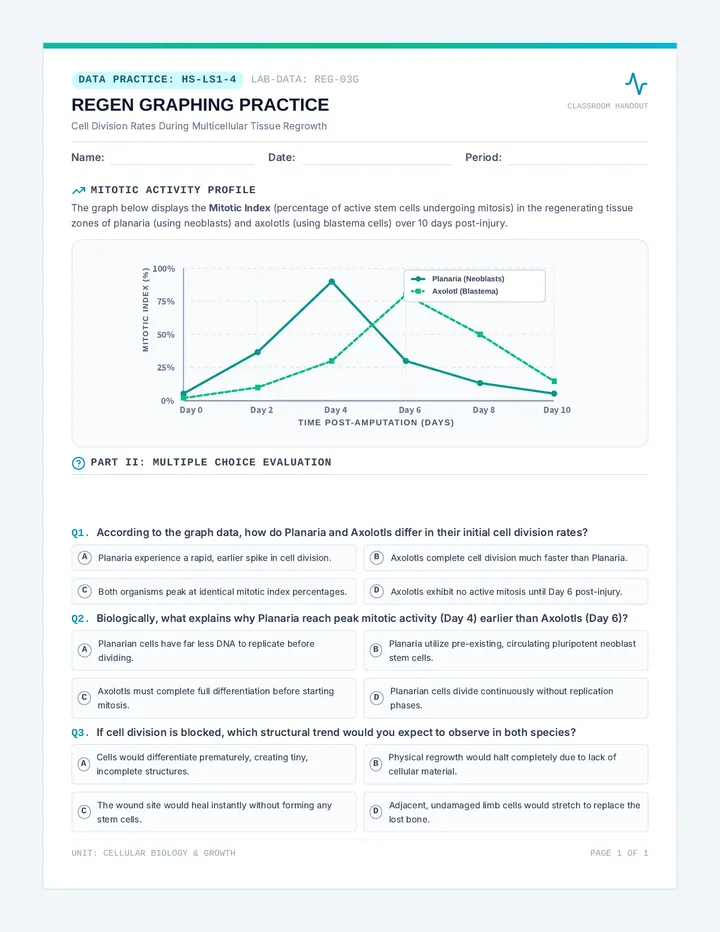
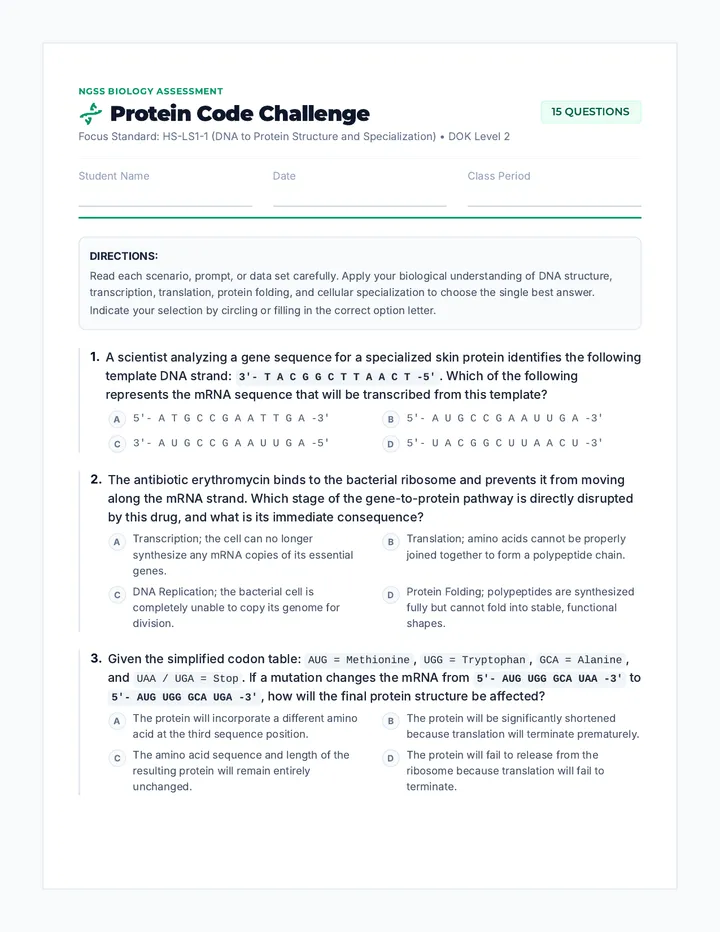
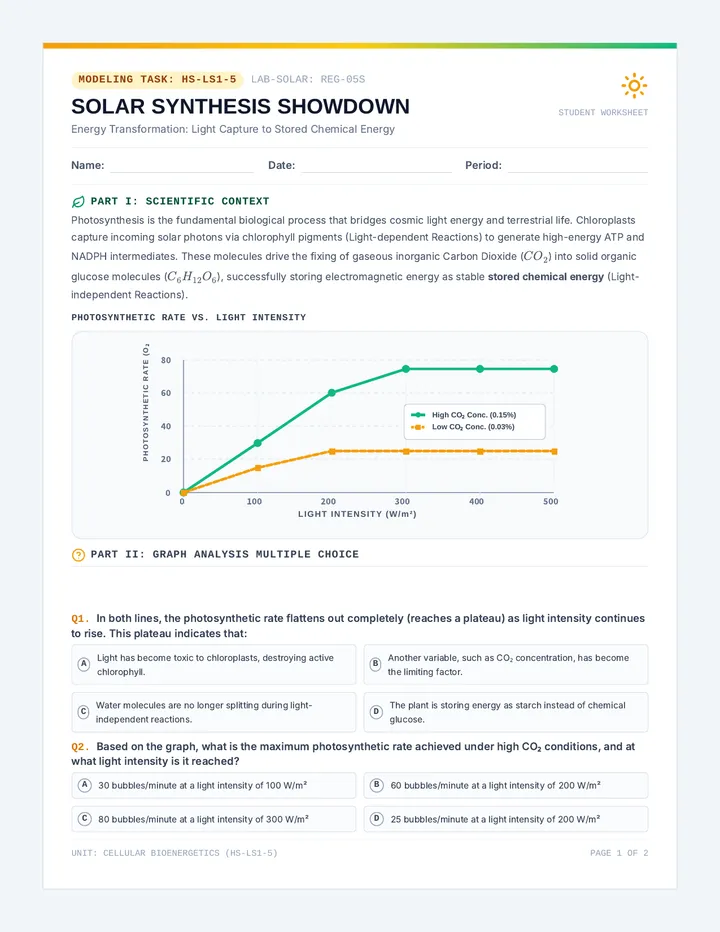
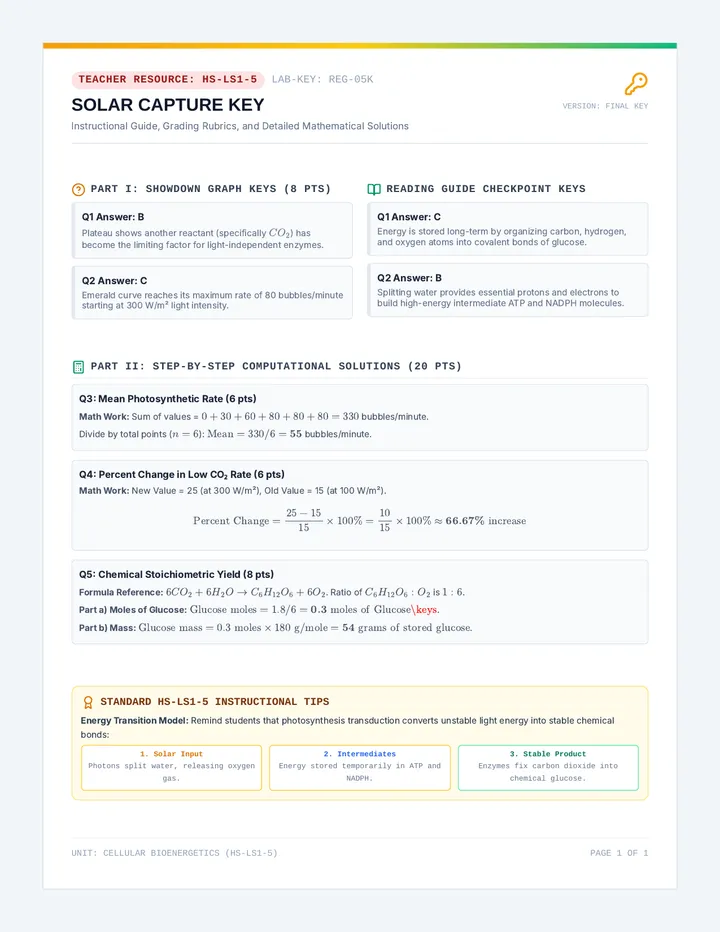
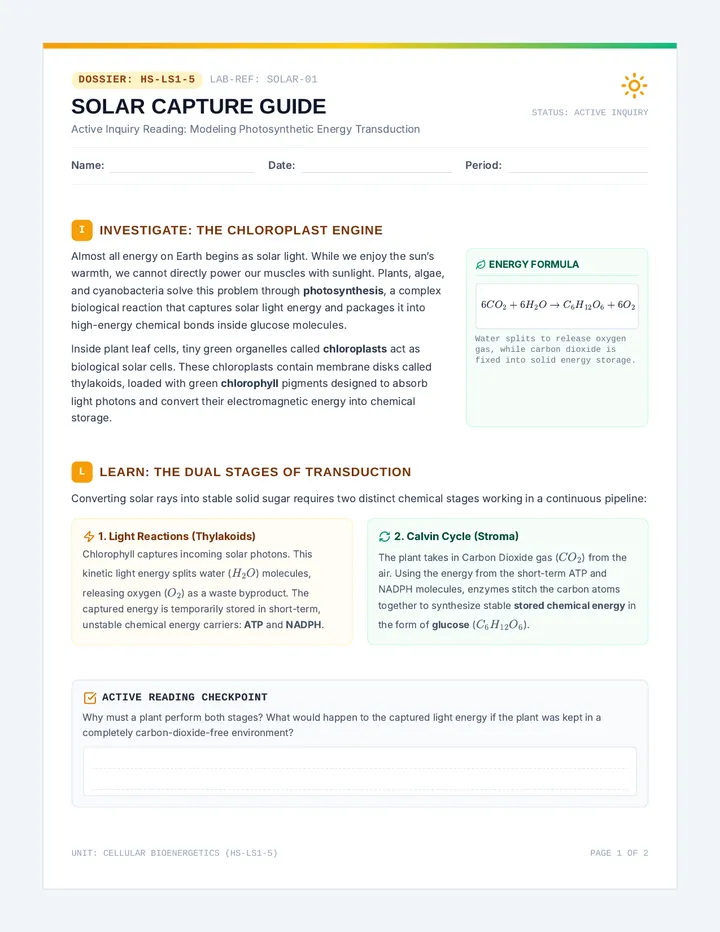
Part 1: The Future Inside Our Cells
Investigate the tools and technologies used in modern biological laboratories.
When Maya entered the science laboratory, she could hardly believe what she saw. Scientists were using biotechnology, the use of living systems and organisms to create useful products and solve problems.
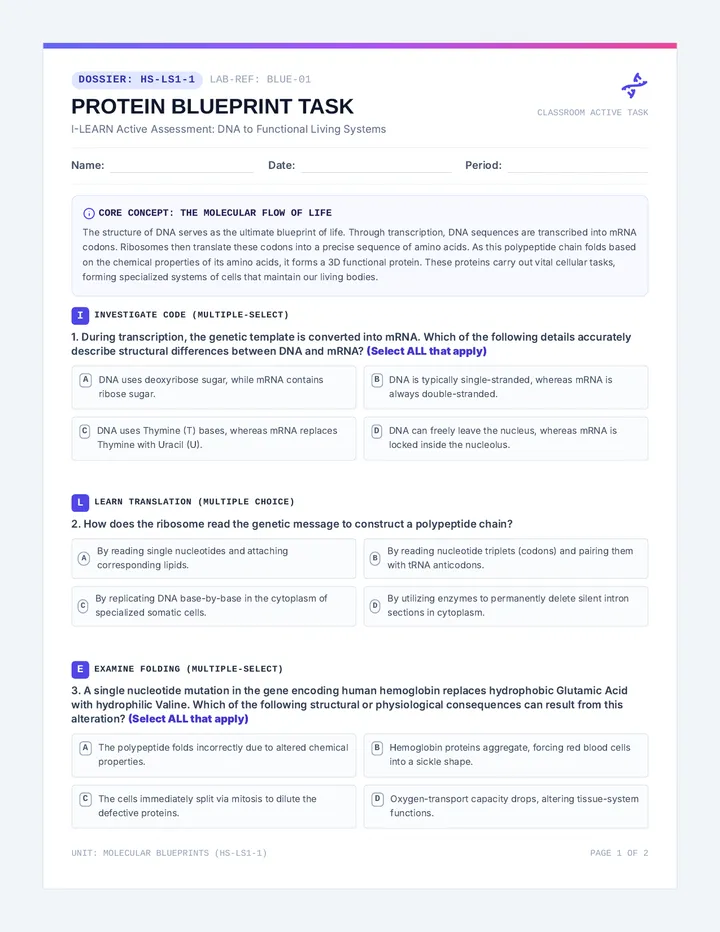
Dr. Ramirez explained that every living organism contains DNA, a molecule that carries genetic information. DNA contains sections called genes, which determine traits such as eye color or height. All of the DNA inside an organism makes up its genome.
Years ago, scientists worked together on the Human Genome Project to identify and map every human gene. This project helped doctors better understand inherited diseases.
Dr. Ramirez then showed Maya a machine used for PCR, or polymerase chain reaction. PCR allows scientists to make millions of copies of a small DNA sample. Scientists often use this in criminal investigations and medical testing.
DNA Structural Model
Sugar-Phosphate
Backbone
Nitrogenous
Base Pairs
Adenine (A) + Thymine (T)
Cytosine (C) + Guanine (G)
Maya observed gel electrophoresis, a process used to separate DNA fragments by size. Small pieces move farther through a gel than larger ones. This helps compare samples and identify genetic signatures.
The scientists also discussed genetic engineering, changing an organism’s DNA for desired traits. Plants are often genetically modified (GMOs) to resist pests or survive droughts.
Scientists can create identical copies of organisms through cloning. While this helps protect endangered species, human cloning is ethically debated. Inside cells, protein synthesis uses DNA instructions found on chromosomes to build proteins for survival.
Finally, Maya learned that every cell is protected by a cell membrane, which controls entry and exit to maintain homeostasis.
PCR Process: DNA Amplification
1
Denaturation
Heat separates double strands into single strands.
2
Annealing
Primers bind to target sequences on DNA.
3
Extension
Polymerase builds new complementary strands.
Part 2: Vocabulary Matching
Reference Bank
Biotechnology DNA Gene Genome PCR Gel Electrophoresis Genetic Engineering Mutation Cloning GMO CRISPR Protein Synthesis Chromosome Trait Cell Membrane
Gene
Mutation
Cloning
Biotechnology
Genome
PCR
Chromosome
DNA
Genetic Engineering
GMO
CRISPR
Protein Synthesis
Gel Electrophoresis
Trait
Cell Membrane
A.
Controls what enters/leaves the cell
B.
The complete set of DNA in an organism
C.
Process of making proteins in the cell
D.
A change in a DNA sequence
E.
Technology used to copy DNA many times
F.
A characteristic passed from parents
G.
Use of living systems to solve problems
H.
A molecule carrying genetic information
I.
Organism whose DNA has been changed
J.
A section of DNA that controls a trait
K.
Structure of DNA containing many genes
L.
Process used to separate DNA fragments
M.
A tool scientists use to edit genes
N.
Process of making an identical organism
O.
Changing DNA to produce desired traits
Part 3: Critical Thinking
Lab Report Synthesis
1. What is biotechnology?
2. Why is PCR important in science?
3. What does gel electrophoresis help scientists do?
4. What are GMOs?
5. Why do some people have concerns about cloning and gene editing?
Science Discourse: Sentence Starters
"DNA is important because..."
"One use of biotechnology is..."
"Scientists use PCR to..."
"Genetic engineering can help by..."
Cellular Blueprints Answer Key
Cellular Blueprints
Teacher Answer Key & Guide
Vocabulary Matching Key
1. Biotechnology G
6. Gel Electrophoresis L
11. CRISPR M
2. DNA H
7. Genetic Engineering O
12. Protein Synthesis C
3. Gene J
8. Mutation D
13. Chromosome K
4. Genome B
9. Cloning N
14. Trait F
5. PCR E
10. GMO I
15. Cell Membrane A
Model Critical Thinking Responses
1. Biotechnology Definition
Using living organisms or biological systems to develop products or solve practical problems.
2. PCR Importance
Allows rapid amplification of DNA, enabling study of small samples for forensic investigations and disease testing.
3. Gel Electrophoresis Purpose
It separates DNA fragments by size to create a unique "genetic fingerprint" for identification or research.
4. GMO Explanation
Genetically Modified Organisms whose DNA has been engineered to possess desirable traits like pest resistance.
5. Ethical Considerations
Includes environmental safety concerns, the ethics of human cloning, and debate over modifying the human genome.
Teacher Tip: See the student worksheet (page 2) for the PCR flowchart. Emphasize that "amplification" means creating many identical copies for analysis.