Project Lead Guide Teacher Resource Project Lead Guide
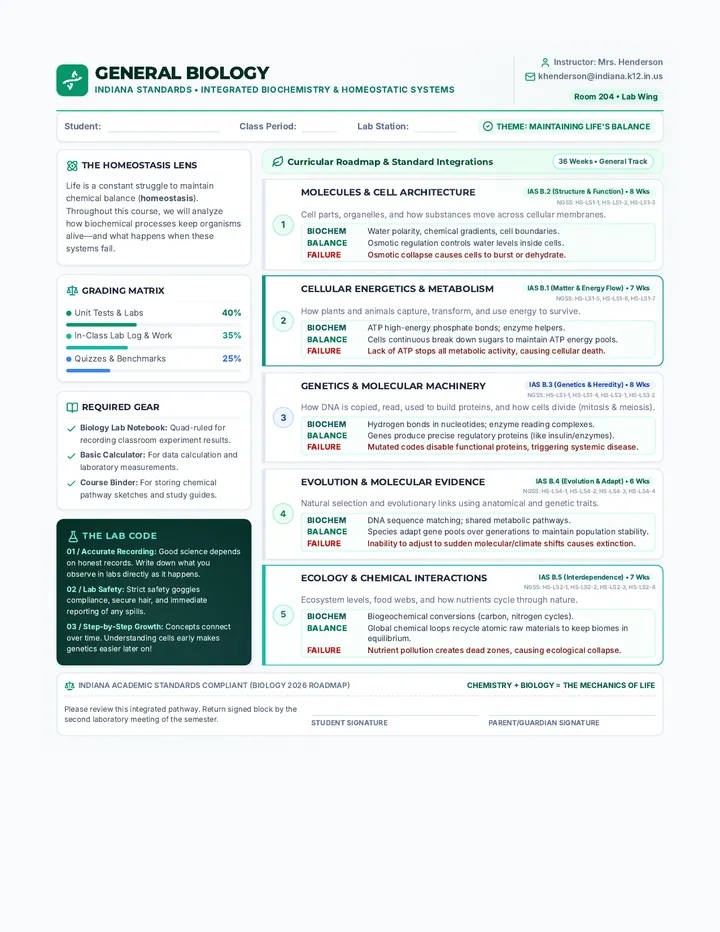
Atomic Architects: Matter & Energy
Grade 8 TEKS 8.5
Instructional Strategy: Johnstone's Triangle
This lesson utilizes Johnstone's Triangle to bridge the gap between observable phenomena and abstract concepts. Every concept is explored through three lenses:
Macroscopic: What students observe with their senses (color change, gas production, temperature shift).
Sub-microscopic: Representations of atoms, subatomic particles, and molecular rearrangement.
Symbolic: Chemical symbols, formulas, and balanced chemical equations.
STAAR Focus Areas
Subatomic particles & identity
Valence electrons & reactivity
Periodic Table trends
Chemical Formulas & Counting Atoms
Law of Conservation of Mass
Lesson Phases
1
The Blueprint (Atoms & Periodic Table)
Focus on TEKS 8.5A, 8.5B, 8.5C
Use the Periodic Property Map to identify trends. Key Script: "If the valence electrons are the 'handshake' of the atom, the group number tells us how many hands are ready to grab!"
2
The Construction (Formulas & Equations)
Focus on TEKS 8.5D
Modeling Symbolic representation. Practice counting atoms in complex formulas like \(3Ca(OH)_2\). Ensure students understand that coefficients apply to the entire molecule, while subscripts apply only to the preceding element/parentheses.
3
Structural Integrity (Conservation of Mass)
Focus on TEKS 8.5E
The Mass Guardian Investigation . Students must reconcile the macro (weight change in open systems) with the symbolic (balanced equations). Emphasize that "Missing" mass usually escapes as a gas (Macro-Submicro connection).
Model-Based Questioning
For Atoms & Table
"If we change the number of protons in this blueprint, do we just have a bigger version of the same element, or a new building entirely?" (Identity)
"Looking at Group 1, why are these 'architects' so eager to react compared to Group 18?" (Reactivity/Valence)
For Chemical Reactions
"If the scale shows less mass after the reaction, did the atoms vanish or just change their 'housing' status?" (Conservation of Mass)
"How does the symbolic equation \(2H_2 + O_2 \rightarrow 2H_2O\) represent the Law of Conservation of Mass?"
Misconception Alerts
Misconception 1
Students often think mass is lost when a gas is produced.
Correction: Explicitly link the gas bubbles (Macro) to atoms leaving the container (Sub-micro).
Misconception 2
Confusing Atomic Number with Atomic Mass.
Correction: Define identity strictly as Protons (the 'Social Security Number' of an element).
Misconception 3
Balancing equations by changing subscripts.
Correction: Remind students that changing subscripts changes the 'Blueprint' (the substance), while coefficients change the 'Quantity'.
STAAR Success Tip
Reporting Category 2 usually accounts for ~12-14 questions on the Grade 8 Science STAAR. The most common "trick" involves counting atoms in formulas with parentheses. Always have students draw the atoms for \(Mg(NO_3)_2\) once to visualize that the 2 applies to everything inside.
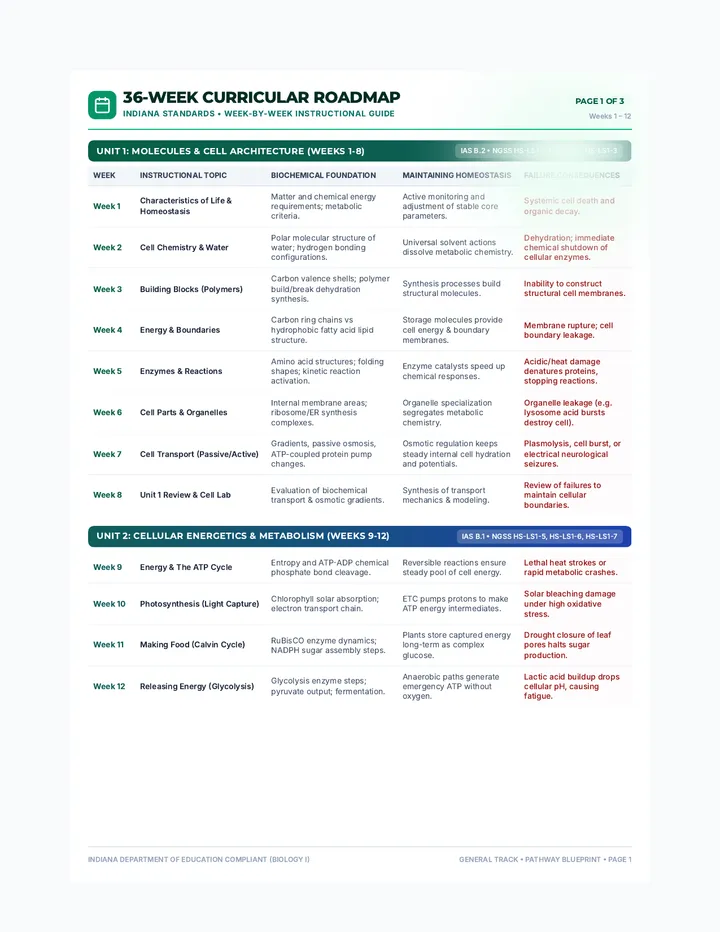
Element Blueprints Activity Element Blueprints
Site Mapping: The Periodic Table of Elements
Project Architect:
Submission Date:
Part 1: Navigating the Grid
Vertical Columns = GROUPS
Elements in the same group share Chemical Properties and the same number of valence electrons.
Horizontal Rows = PERIODS
Elements in the same period share the same number of energy levels (electron shells).
Quick Mapping Check:
1. Which coordinate determines reactivity?
Group
Period
2. Which coordinate shows energy levels?
Group
Period
Zone Map Placeholder
Color your Periodic Table following the guide in Part 2
Part 2: Zoned Materials
Metals
Luster (Shiny)
Malleable (Bendable)
Good Conductors
Location: Left of Staircase
Metalloids
Semiconductors
Mixed properties
Solid at RT
Location: Touching Staircase
Nonmetals
Dull appearance
Brittle (Breaks)
Poor Conductors
Location: Right of Staircase
Part 3: Atomic Identification
Complete the structural logs for the following elements using your Periodic Table.
11 Na Sodium
Valence Electrons:
Reactivity Level (High/Low):
Classification:
Number of Energy Levels:
18 Ar Argon
Valence Electrons:
Reactivity Level (High/Low):
Classification:
Number of Energy Levels:
14 Si Silicon
Valence Electrons:
Reactivity Level (High/Low):
Classification:
Number of Energy Levels:
Architect's Synthesis Question
An unknown element is discovered. It is brittle, dull, and has 6 valence electrons. What can you predict about its identity and its placement on the blueprint? Explain your reasoning using at least two different trends.
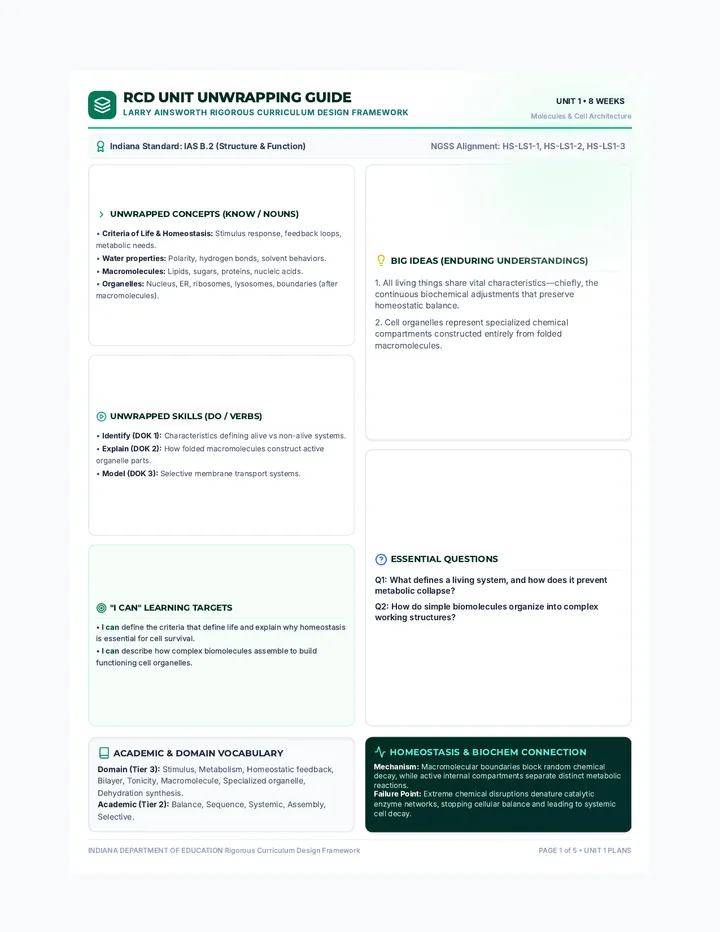
Reaction Reassembly Worksheet Reaction Reassembly
Symbolic Site Analysis: Balancing & Evidence
Project Status Under Construction
Part 1: Macroscopic Evidence
In the field, architects must identify when a new substance has been formed. Circle the 5 indicators that prove a chemical reaction (structural change) has occurred:
Gas Production (Bubbles)
Melting Ice
Unexpected Color Change
Formation of a Precipitate
Breaking Glass
Temperature Change
Shredding Paper
Production of Light
Part 2: Symbolic Balancing
Balance the following chemical equations. Use the atom counting tables to ensure the reactants equal the products. Note: You can ONLY change coefficients, never subscripts!
H2 +
O2 →
H2O
Reaction Type Analysis
Is this balanced?
Reactant Side Element Product Side H O
Fe +
O2 →
Fe2O3
Reaction Type Analysis
Elements present:
Reactant Side Element Product Side Fe O
Part 3: Inventory Check
Calculate the total number of atoms in each chemical formula below:
4Na2SO4
Na:
S:
O:
Total Atoms:
2Mg(NO3)2
Mg:
N:
O:
Total Atoms:
"Why must we balance equations? We don't balance them just to be neat. We balance them because atoms are like bricks—they can't just vanish into thin air or appear out of nowhere. If you start with 10 bricks, you must end with 10 bricks, even if they are now part of a house instead of a pile."
— The Law of Conservation of Mass
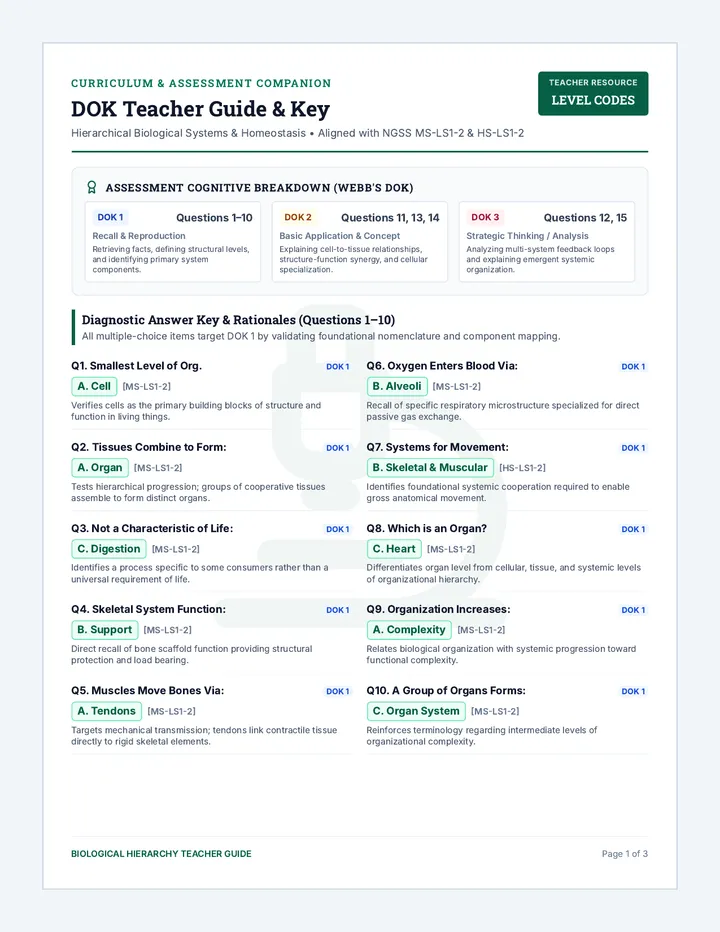
Mass Guardian Investigation Activity Mass Guardian Lab
Investigation: The Law of Conservation of Mass
Mission Type Lab Investigation
Mission Briefing
The Law of Conservation of Mass states that matter is neither created nor destroyed during a chemical reaction. The total mass of the reactants must equal the total mass of the products. Today, we test this law in two different environments: an Open System (matter can escape) and a Closed System (nothing escapes).
Procedure
Measure 10g of baking soda (reactant A) and 20g of vinegar (reactant B).
Phase 1 (Open System): Mix the reactants in an open beaker. Wait for the bubbling to stop. Measure the final mass.
Phase 2 (Closed System): Place the vinegar in a small cup inside a sealable plastic bag. Place the baking soda in the bottom of the bag. Seal the bag tightly and measure the initial mass.
Tip the bag to mix the reactants. Wait for the reaction to finish. Measure the final mass before opening the bag.
System Type Initial Mass (g) Final Mass (g) Open Beaker Closed Bag
The Triple Point Analysis (Johnstone's Triangle)
1. Macroscopic (Observations)
What did you see, hear, or feel during the reaction?
2. Sub-microscopic (Atomic)
Draw the atoms before and after. Hint: Where did the atoms go in the open beaker?
3. Symbolic (Chemical Equation)
Identify the gas produced:
NaHCO3 + CH3COOH → NaCH3COO + H2O + ?
The Law Equation:
Mass of Reactants = Mass of
Critical Conclusion
1. In the Open System , the mass appeared to decrease. Based on your sub-microscopic model, did the atoms actually vanish? Explain what happened.
2. Why did the Closed System provide better evidence for the Law of Conservation of Mass?
STAAR Checkpoint Assessment Science Assessment: Atomic Architects
Reporting Category 2: Matter and Energy (TEKS 8.5A-E)
Name: ________________________________
Date: __________________ Class: _______
Which subatomic particle is the primary factor in determining the chemical identity of an atom?
A Electron
B Neutron
C Proton
D Nucleus
An element is located in Group 17 and Period 3 of the Periodic Table. How many energy levels (electron shells) does an atom of this element have?
F 3
G 7
H 17
J 20
Sodium (Na) is a highly reactive metal in Group 1. Why is Sodium more reactive than Neon (Ne) in Group 18?
A Sodium has more total electrons than Neon.
B Neon has a complete outer energy level, while Sodium has only one valence electron.
C Neon is a gas, and all gases are more stable than metals.
D Sodium has more protons in its nucleus, making it more unstable.
A student is testing a sample of an unknown element. The sample is solid at room temperature, has a dull appearance, and shatters when hit with a hammer. Which classification best describes this element?
F Metal
G Nonmetal
H Metalloid
J Noble Gas
3Mg(OH)2
How many total atoms of Oxygen are present in the chemical formula shown above?
A 2
B 3
C 5
D 6
Which observation provides the strongest evidence that a chemical reaction has occurred between two substances?
F One substance dissolves in the other.
G The mixture begins to bubble and release a gas.
H The temperature of the substances remains constant.
J The shape of one substance is altered.
A student reacts 50g of Reactant A with 50g of Reactant B in a sealed container. After the reaction, 100g of a new product is formed. Which law does this result demonstrate?
A Law of Universal Gravitation
B Law of Conservation of Mass
C Law of Periodic Reactivity
D Law of Atomic Identity
CH4 + 2O2 → CO2 + 2H2O
The equation for the combustion of methane is shown above. Which statement best describes the atoms in this reaction?