Lenny.com
Explore
Create
ActivitiesNewMathEnglish Language ArtsScience & EngineeringSocial StudiesGlobal LanguagesHealth & Physical EducationSpecial EducationCounseling & Life SkillsArts & CreativityESL
Lenny.com
Lenny.com
Explore
Create
ActivitiesNewMathEnglish Language ArtsScience & EngineeringSocial StudiesGlobal LanguagesHealth & Physical EducationSpecial EducationCounseling & Life SkillsArts & CreativityESL
Lenny.com
Science & EngineeringLife ScienceLiving ThingsAnimalsPlantsBody SystemsTraitsAdaptationsCellsEcosystemsHeredityGenes to TraitsCell DivisionPhysicsComparing MaterialsShapes and PropertiesMagnetsMagnetismLightSoundLight and SoundMatterStates of MatterChanges of StateMixturesPhysical and Chemical ChangeHeating and CoolingHeat and Thermal EnergyEnergyForce and MotionElectrical CircuitsAtoms and MoleculesPeriodic TableMotion in One DimensionMotion in Two DimensionsScalars and VectorsForces and Laws of MotionCircular Motion and GravityMomentum and ImpulseWork, Energy, and PowerWavesElectromagnetic WavesGeometric OpticsElectricity and MagnetismSimple Harmonic MotionThermodynamicsNuclear PhysicsEarth Science & AstronomyWeatherWater CycleRocks and MineralsFossilsEarth's FeaturesEarth's ResourcesEarth's StructureWeather and ClimateEarth EventsFossils and Geologic TimePlate TectonicsHuman ImpactsAstronomyChemistryUnits and MeasurementAtomic StructurePeriodic TrendsChemical BondingNomenclatureMolecular StructureIntermolecular ForcesThe MoleStoichiometryProperties of GasesSolutionsChemical ReactionsBalancing EquationsEnergy ChangesRates of ReactionsEquilibriumAcids and BasesQuantum ModelBiologyClassificationCell StructureThe Chemistry of LifeBiomoleculesCellular TransportCell EnergyCell Growth and DivisionDNAProtein SynthesisMeiosis and Sexual ReproductionPatterns of InheritanceMulticellular OrganismsEvolutionEcologyBiodiversityComputer ScienceAlgorithms and Computational ThinkingProgramming LanguagesComputing SystemsNetworks and InternetData AnalysisCybersecurityAI and Machine LearningSoftware Design and DevelopmentBlockchainEngineering & AIDesigning ExperimentsEngineering PracticesDesign ThinkingEngineering Design ProcessMechanical EngineeringElectrical EngineeringMaterials and StructuresCAD and 3D DesignRoboticsArtificial Intelligence BasicsVibe CodingMachine LearningAI Ethics and SocietySystems ThinkingEntrepreneurship & InnovationEntrepreneurial MindsetBusiness Idea DevelopmentBusiness Plan BasicsMarketing & Customer DiscoveryFinancial Management for Startups
Lenny.com

Solutions

Lenny for EducatorsLenny for SchoolsLenny for Districts

Product

ExploreSign inCreateSupportAbout

Resources

Getting startedMTSS Acceleration Program

© 2026 Lenny Learning Inc.

TermsPrivacyAccessibility
LinkedInInstagramX
Lenny

Shapes and Properties

Geometric identification of two-dimensional and three-dimensional figures using attributes like sides, vertices, and symmetry. Classifies polygons and solids while exploring spatial relationships and coordinate geometry basics.

Videos

How Engineers Build Strong Bridges

How Engineers Build Strong Bridges

In this engaging episode of SciShow Kids, host Jessi and her robot friend Squeaks explore the fascinating world of structural engineering to answer a viewer's question: "Why are bridges so strong?" The video breaks down complex engineering concepts into digestible lessons, using clear analogies, real-world examples, and physical demonstrations. It explains how engineers design structures to withstand heavy loads by utilizing specific shapes and materials. The video introduces three primary types of bridges: beam bridges, truss bridges, and suspension bridges. Through a failed experiment with a simple cardboard beam bridge, students learn about weight limits and structural failure. The narrative then pivots to solutions, highlighting how triangles are the secret weapon of strength in truss bridges and how the force of tension is harnessed in suspension bridges like the Golden Gate Bridge. This resource is highly valuable for elementary science and STEM classrooms. It provides a foundational understanding of physics concepts like force, tension, and compression without being overwhelming. Teachers can use this video to launch bridge-building challenges, geometry lessons about the strength of shapes, or social studies units on community infrastructure and the role of engineers.

SciShow KidsSciShow Kids

3mins 45s

Building Tall Towers: The Power of Pyramids

Building Tall Towers: The Power of Pyramids

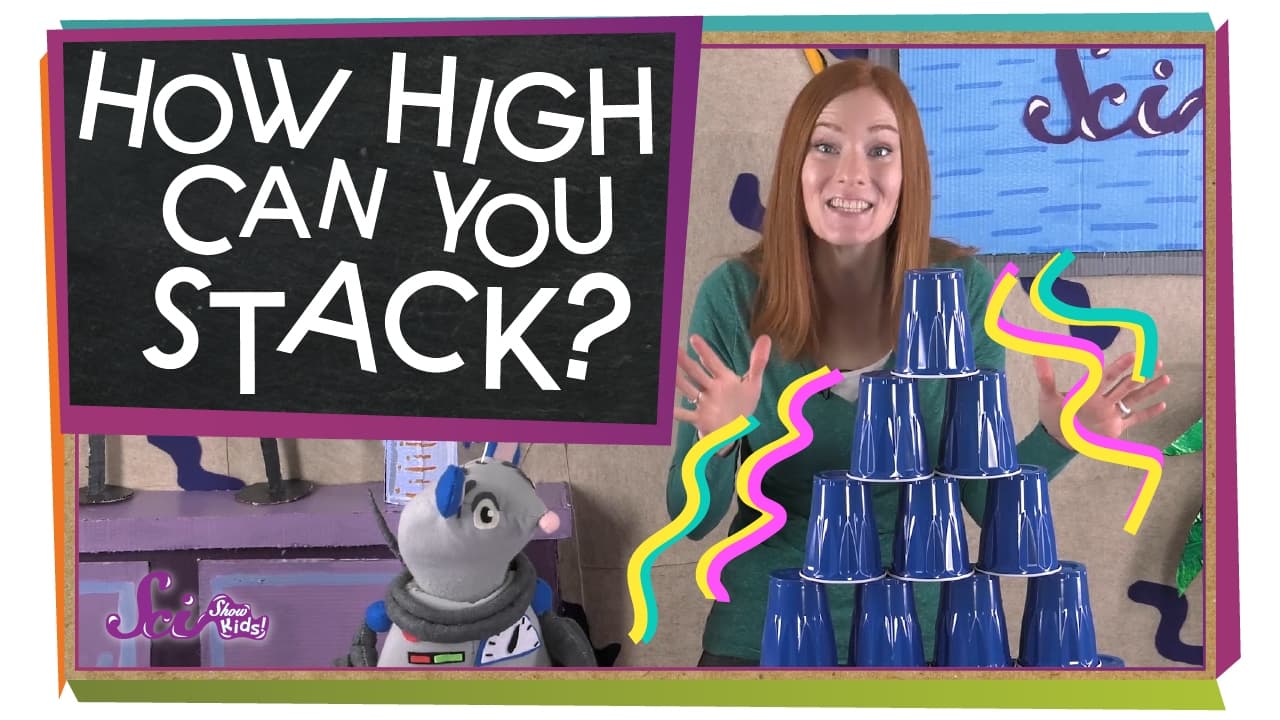
In this engaging engineering episode from SciShow Kids, host Jessi and her robot mouse friend Squeaks explore the physics of stability through a hands-on cup-stacking challenge. The video demonstrates the difference between unstable vertical stacks and stable pyramid structures, using clear visuals and simple analogies to explain why a wide base is crucial for building tall structures. The lesson moves from a failed attempt at a single column to a successful pyramid design, introducing the concept of weight distribution. Key themes include structural engineering, balance, geometry, and the scientific method of trial and error. The video explicitly connects abstract physics concepts to the students' own bodies (standing on one foot vs. two) and real-world architecture (skyscrapers). It breaks down the "why" behind structural failures in a way that is accessible to young learners. This video is an excellent resource for early elementary classrooms introducing STEM challenges or basic physics. It provides a perfect launchpad for low-cost, hands-on building activities using simple materials like plastic cups. Teachers can use it to introduce engineering vocabulary like "stable," "base," and "collapse," while encouraging students to predict outcomes and test their own designs.

SciShow KidsSciShow Kids

4mins 6s

Investigating Matter: Observable and Measurable Properties

Investigating Matter: Observable and Measurable Properties

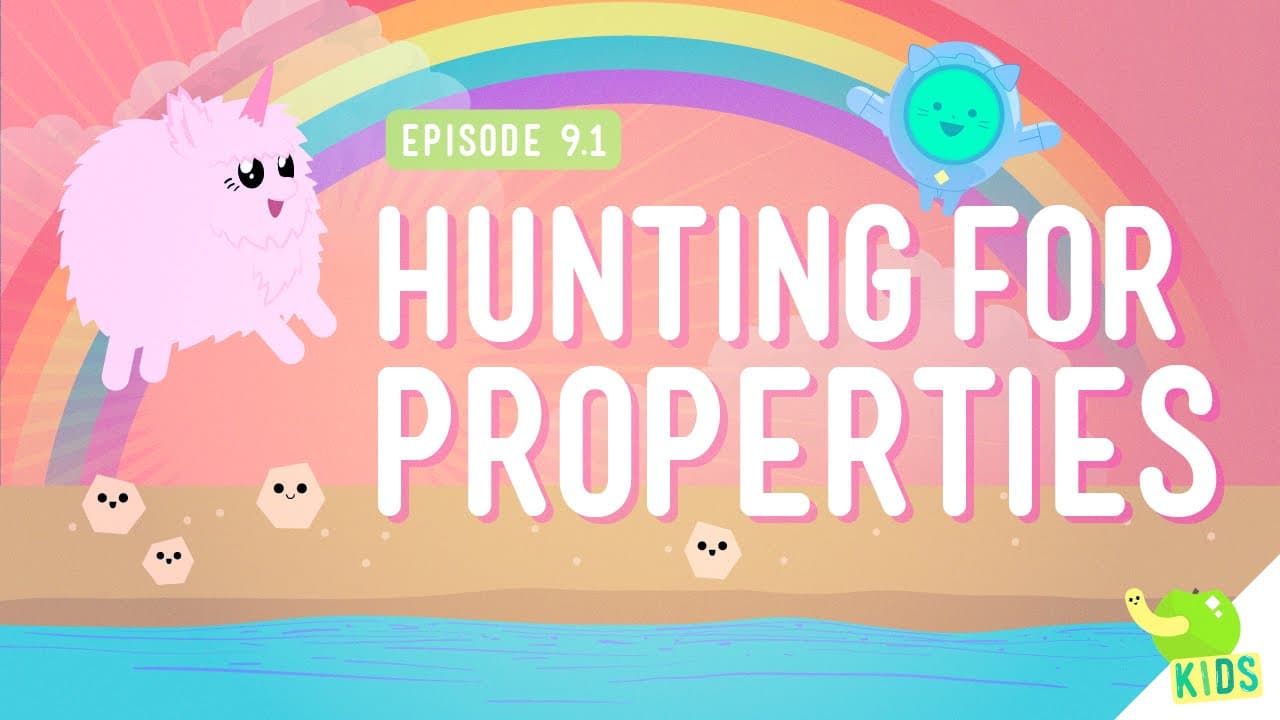
This educational video introduces students to the fundamental concepts of matter and its properties. Hosted by Sabrina Cruz from Crash Course Kids, the video uses a relatable analogy of playing with preschool blocks to explain complex scientific ideas. It defines "matter" as anything that has weight and takes up space, and "properties" as the characteristics used to describe that matter. The video distinguishes between qualitative properties (like color and shape) and quantitative properties (like length, width, height, volume, and weight) that can be measured using tools.

Crash Course KidsCrash Course Kids

4mins

How We Use Senses to Describe Matter

How We Use Senses to Describe Matter

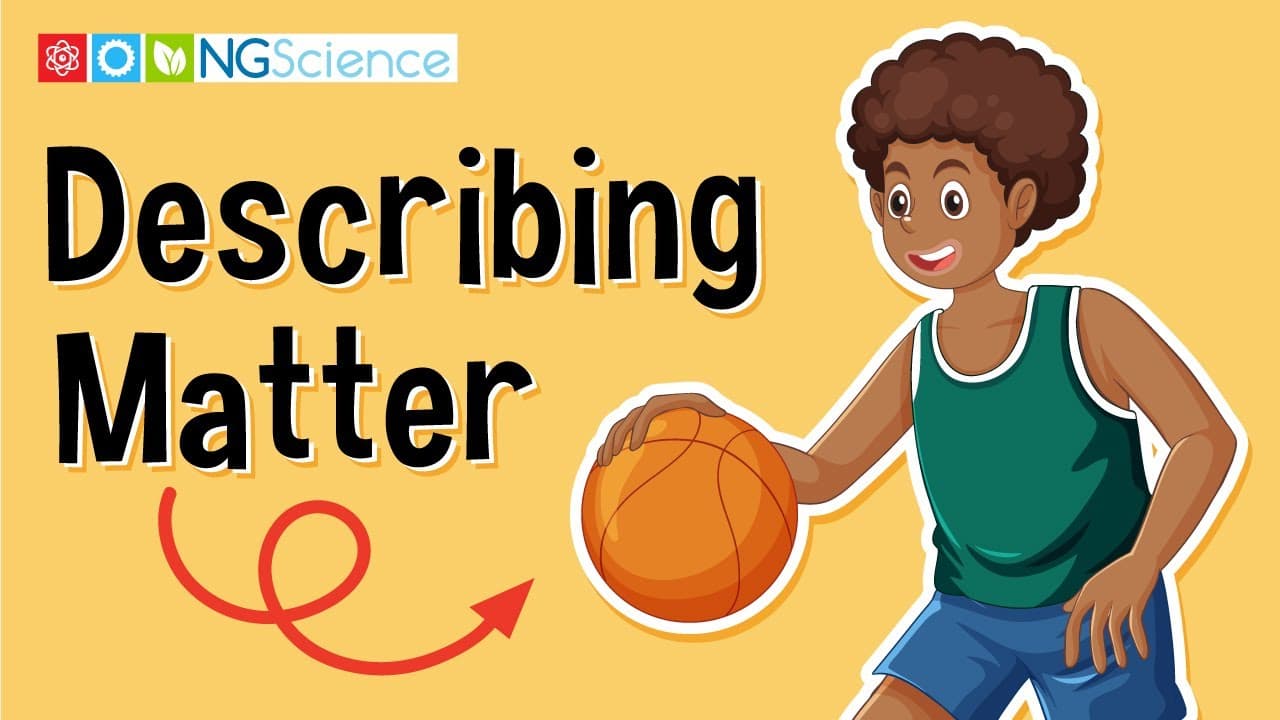
This educational video introduces young students to the fundamental scientific concept of matter and its properties. Through clear narration and relatable visual examples, it explains how we use our senses—specifically sight and touch—to observe and describe the world around us. The video breaks down abstract terms like "matter," "properties," and "texture" into child-friendly definitions, illustrating them with everyday objects like toys, animals, and household items. The content focuses on developing observational skills and building scientific vocabulary. Key themes include identifying physical attributes such as shape, size, color, hardness, and softness. The video specifically contrasts opposing textures (smooth vs. rough, hard vs. soft) to help students understand how to differentiate between materials based on tactile evidence. For educators, this video serves as an excellent hook for physical science units on matter or the five senses. It models scientific inquiry by encouraging viewers to look closely and touch objects to gather information. The clear examples provide a solid foundation for classroom activities involving sorting, classifying, and describing objects, making it a valuable tool for early elementary science curricula.
Next Generation ScienceNext Generation Science

1min 51s

Sequences

Spin Cycle Reading Guide Updated v4

Spin Cycle Unit

A comprehensive unit on rotational mechanics, mapping the transition from linear motion to angular dynamics through technical analysis and real-world applications.

CM

Chuguna Murugesan

34
Bâtisseurs de Ponts Guide Enseignant

Bâtisseurs de Ponts

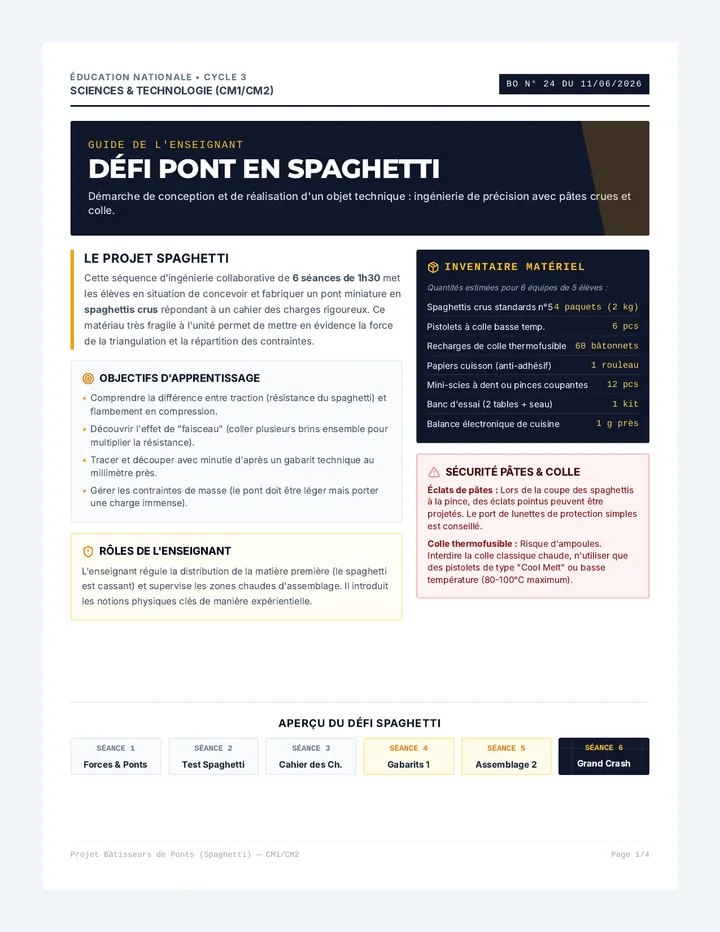
Une séquence complète de 6 séances d'1h30 en sciences et technologie pour CM1/CM2, axée sur la démarche d'investigation et de conception technologique pour réaliser une maquette de pont résistante. Séquence conforme aux programmes du BO n° 24 du 11 juin 2026.

LP

LAURENT PERCHE

6
Shape Shifters Slides

Engineering Essentials

A comprehensive STEM sequence for grades 1-5 focusing on structural engineering and physics. Students progress from exploring material properties and shapes to designing complex, efficient structures, building their understanding of forces, stability, and the engineering design process.

CS

Cami Skaggs

15
Lattice Logic Slides

Crystallography and Lattice Geometry

An undergraduate-level exploration of solid-state crystallography, moving from real-space lattice geometry and packing efficiency to the mathematical abstraction of reciprocal space and X-ray diffraction analysis. Students master the geometric principles that govern material properties at the atomic scale.

10
Symmetry Ops Slides

Symmetry and Conservation Law

This sequence bridges the gap between abstract geometry and physical law by introducing group theory as a tool for analyzing physical systems. Students classify shapes, translate operations into matrix algebra, derive conservation laws via Noether's Theorem, and apply symmetry to quantum selection rules.

14
Balance Point Slides

Shape and Spin

This sequence explores the physics of rotational inertia through the lens of geometry. Students transition from point-mass calculations to analyzing extended rigid bodies, investigating how the spatial distribution of mass affects an object's resistance to angular acceleration.

15