Lenny.com
Explore
Create
ActivitiesNewMathEnglish Language ArtsScience & EngineeringSocial StudiesGlobal LanguagesHealth & Physical EducationSpecial EducationCounseling & Life SkillsArts & CreativityESL
Lenny.com
Lenny.com
Explore
Create
ActivitiesNewMathEnglish Language ArtsScience & EngineeringSocial StudiesGlobal LanguagesHealth & Physical EducationSpecial EducationCounseling & Life SkillsArts & CreativityESL
Lenny.com
Lenny.com

Solutions

Lenny for EducatorsLenny for SchoolsLenny for Districts

Product

ExploreSign inCreateSupportAbout

Resources

Getting startedMTSS Acceleration Program

© 2026 Lenny Learning Inc.

TermsPrivacyAccessibility
LinkedInInstagramX
Lenny

Motion in One Dimension

Displacement, velocity, and acceleration concepts for objects moving along a straight path. Applies kinematic equations to model uniform acceleration and free fall scenarios.

Science & EngineeringLife ScienceLiving ThingsAnimalsPlantsBody SystemsTraitsAdaptationsCellsEcosystemsHeredityGenes to TraitsCell DivisionPhysicsComparing MaterialsShapes and PropertiesMagnetsMagnetismLightSoundLight and SoundMatterStates of MatterChanges of StateMixturesPhysical and Chemical ChangeHeating and CoolingHeat and Thermal EnergyEnergyForce and MotionElectrical CircuitsAtoms and MoleculesPeriodic TableMotion in One DimensionMotion in Two DimensionsScalars and VectorsForces and Laws of MotionCircular Motion and GravityMomentum and ImpulseWork, Energy, and PowerWavesElectromagnetic WavesGeometric OpticsElectricity and MagnetismSimple Harmonic MotionThermodynamicsNuclear PhysicsEarth Science & AstronomyWeatherWater CycleRocks and MineralsFossilsEarth's FeaturesEarth's ResourcesEarth's StructureWeather and ClimateEarth EventsFossils and Geologic TimePlate TectonicsHuman ImpactsAstronomyChemistryUnits and MeasurementAtomic StructurePeriodic TrendsChemical BondingNomenclatureMolecular StructureIntermolecular ForcesThe MoleStoichiometryProperties of GasesSolutionsChemical ReactionsBalancing EquationsEnergy ChangesRates of ReactionsEquilibriumAcids and BasesQuantum ModelBiologyClassificationCell StructureThe Chemistry of LifeBiomoleculesCellular TransportCell EnergyCell Growth and DivisionDNAProtein SynthesisMeiosis and Sexual ReproductionPatterns of InheritanceMulticellular OrganismsEvolutionEcologyBiodiversityComputer ScienceAlgorithms and Computational ThinkingProgramming LanguagesComputing SystemsNetworks and InternetData AnalysisCybersecurityAI and Machine LearningSoftware Design and DevelopmentBlockchainEngineering & AIDesigning ExperimentsEngineering PracticesDesign ThinkingEngineering Design ProcessMechanical EngineeringElectrical EngineeringMaterials and StructuresCAD and 3D DesignRoboticsArtificial Intelligence BasicsVibe CodingMachine LearningAI Ethics and SocietySystems ThinkingEntrepreneurship & InnovationEntrepreneurial MindsetBusiness Idea DevelopmentBusiness Plan BasicsMarketing & Customer DiscoveryFinancial Management for Startups

Videos

Graphing and Solving Quadratic Functions

Graphing and Solving Quadratic Functions

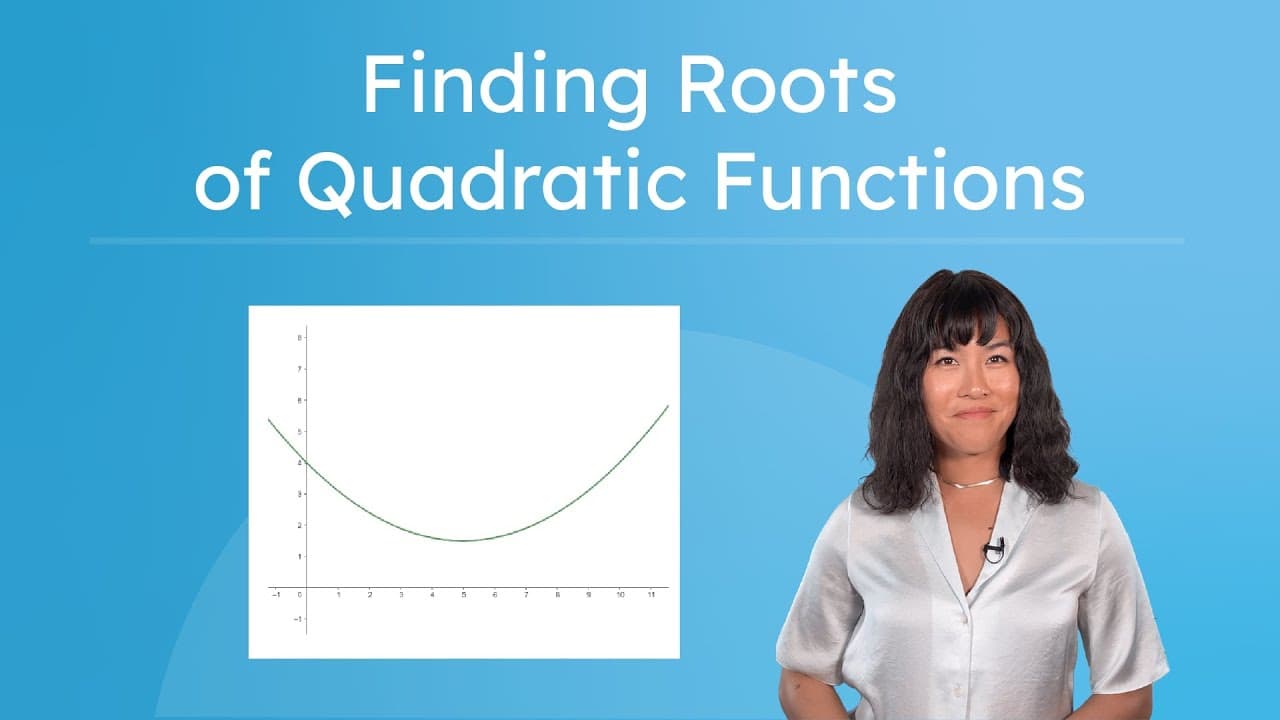
This educational video uses the real-world scenario of a diving competition to explain the properties and applications of quadratic functions. The video begins by modeling a diver's trajectory using a specific equation, challenging viewers to identify the correct graph that represents the dive based on concepts like x-intercepts and concavity. It effectively transitions from this concrete application to abstract algebraic problem-solving techniques. Key mathematical themes include analyzing parabolas, finding x-intercepts (also called roots or zeros), calculating the time interval between two intercepts, and utilizing the quadratic formula. The video provides a detailed explanation of the discriminant ($b^2 - 4ac$), demonstrating how it predicts the number and type of roots (real vs. imaginary) a function possesses. It also touches upon advanced concepts such as complex numbers and root multiplicity. This resource is highly valuable for algebra classrooms as it bridges the gap between theoretical math and physical motion. Teachers can use it to introduce quadratic modeling, reinforce the relationship between algebraic equations and their graphical representations, or as a comprehensive review of solving quadratics using factoring and the quadratic formula. The step-by-step walkthroughs of different problem types allow for paused learning and immediate practice.

Miacademy & MiaPrep Learning ChannelMiacademy & MiaPrep Learning Channel

15mins 35s

Calculating Speed vs. Velocity: Definitions and Practice

Calculating Speed vs. Velocity: Definitions and Practice

This educational video provides a clear and comprehensive introduction to the physics concepts of speed and velocity. It begins by engaging students with examples of fast-moving objects like race cars and rockets before settling into the mathematical definitions of motion. The narrator uses real-world analogies, such as a long car trip involving both highway driving and traffic jams, to distinguish between average speed and instantaneous speed. The video then introduces the crucial distinction between scalar quantities and vector quantities, explaining how distance relates to speed while displacement relates to velocity. The content covers key themes in kinematics, specifically focusing on the difference between distance (total ground covered) and displacement (straight-line distance from start to finish). It explicitly teaches the formulas for calculating average speed (Distance/Time) and average velocity (Displacement/Time). A significant portion of the video is dedicated to step-by-step worked examples where the narrator calculates both speed and velocity for the same trip, demonstrating how the results differ numerically and conceptually—most notably that velocity requires a direction. For educators, this video is an excellent resource for middle school physical science or introductory high school physics classrooms. It moves beyond simple definitions to application, providing guided practice problems that allow students to test their understanding immediately. The use of visual maps to illustrate the path of travel versus the vector of displacement helps concrete thinkers grasp abstract concepts. Teachers can use this video to introduce motion formulas, reinforce the concept of vectors, or as a flipped classroom assignment before a lab on measuring motion.

Miacademy & MiaPrep Learning ChannelMiacademy & MiaPrep Learning Channel

7mins 42s

Understanding Distance, Displacement, and Reference Frames

Understanding Distance, Displacement, and Reference Frames

This engaging physics lesson breaks down the fundamental concepts of motion by exploring the critical difference between distance and displacement. Through relatable real-world analogies like a cruise ship vacation and a road trip, the video illustrates how two seemingly similar measurements can yield vastly different results depending on the path taken. The narrator uses clear visual maps to demonstrate that distance is the total length traveled, while displacement is the straight-line "net change" from start to finish—often described as "as the crow flies." The video introduces the essential concept of "reference frames"—the perspective from which motion is measured. By contrasting the Earth's surface with the interior of a moving car, students learn that motion is relative; an object can be moving thousands of miles or standing perfectly still depending on what is defined as the fixed point. This conceptual framework helps explain why a passenger on a cruise ship might be considered stationary relative to the ship but moving rapidly relative to the Earth. Ideal for middle and high school physical science classes, this video bridges the gap between conceptual understanding and mathematical application. It walks students through step-by-step calculation problems involving one-dimensional motion (East/West and North/South), teaching them how to compute distance by adding total path lengths and displacement by finding the difference between starting and ending positions. The clear, guided practice problems provide excellent models for classroom problem-solving.

Miacademy & MiaPrep Learning ChannelMiacademy & MiaPrep Learning Channel

8mins 26s

Mastering Acceleration: Definition, Units, and Calculations

Mastering Acceleration: Definition, Units, and Calculations

This educational video provides a comprehensive introduction to the physics concept of acceleration. It begins by grounding the abstract concept in physical sensation—explaining that acceleration is the motion you can actually feel, unlike constant velocity. The host guides viewers through the formal definition of acceleration as a vector quantity representing the rate of change in velocity, using clear visuals and real-world examples like motorcycles, top fuel dragsters, and space shuttles to illustrate these changes in speed and direction.

Miacademy & MiaPrep Learning ChannelMiacademy & MiaPrep Learning Channel

9mins 41s

Tracking Motion: An Introduction to Kinematics and Friction

Tracking Motion: An Introduction to Kinematics and Friction

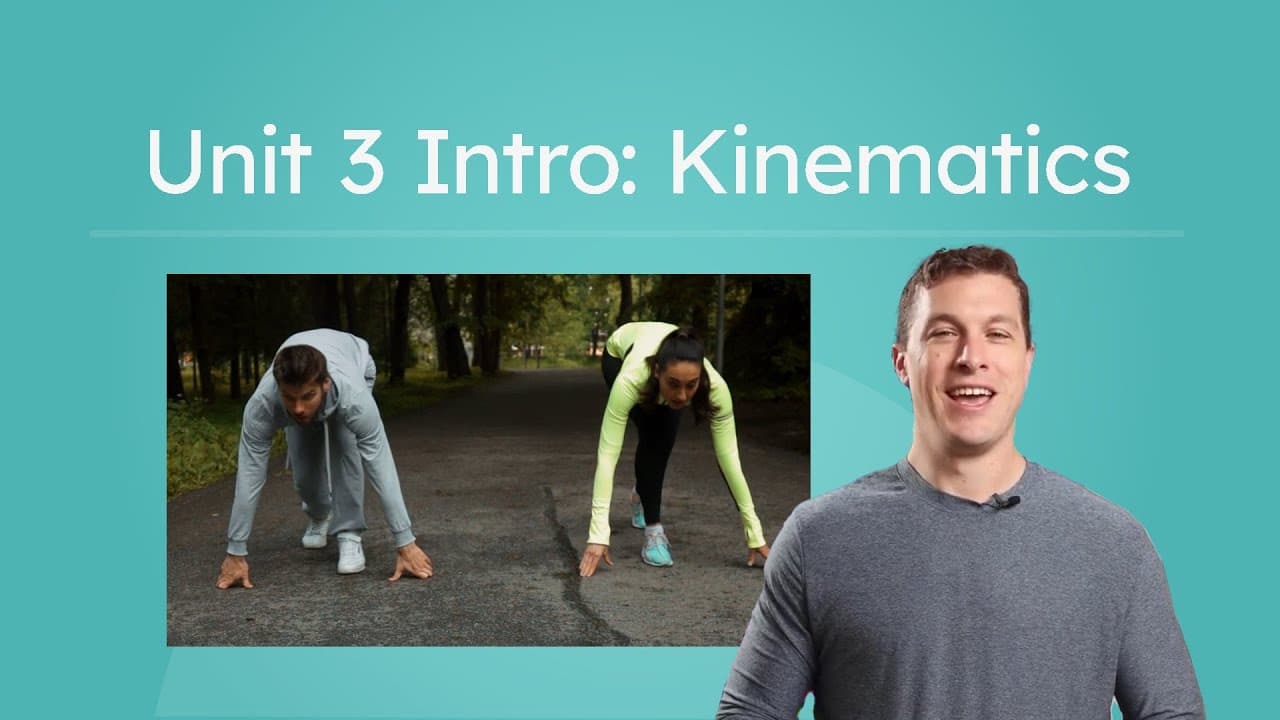
This educational video serves as a comprehensive introduction to a high school physics unit on kinematics. The host begins by connecting physics to exciting real-world examples like fast cars, rockets, and sports to explain that kinematics is the study of motion using mathematical equations. The video outlines a clear progression of learning, starting with simple one-dimensional motion, advancing to two-dimensional projectile motion, and finally introducing the concept of friction, which is often initially neglected in basic kinematic models. The content explores several key physics themes, including the difference between distance and displacement, the decomposition of vectors into vertical and horizontal components, and the distinction between static and kinetic friction. It uses visual aids like triangles overlaid on basketball shots and skiers on slopes to demonstrate how complex motion can be broken down into manageable mathematical parts. The concept of an "inclined plane" is also introduced, showing how gravity affects objects on a slope. For educators, this video is an excellent "unit hook" or introductory overview for a physics class. It sets the stage for future lessons on calculating velocity, acceleration, and force. The clear definitions and visual examples of vector components make abstract trigonometric applications concrete for students. Teachers can use the built-in review quiz at the end of the video as a formative assessment to check for immediate understanding of the key vocabulary introduced.
Miacademy & MiaPrep Learning ChannelMiacademy & MiaPrep Learning Channel

7mins 58s

Mastering Position-Time Graphs and Calculating Velocity

Mastering Position-Time Graphs and Calculating Velocity

This educational video provides a clear and comprehensive introduction to position-time graphs, bridging the gap between algebraic concepts and physics applications. By analyzing real-world examples like Usain Bolt's world-record sprint and a daily walk to a mailbox, the narrator demonstrates how to translate motion into graphical data. The lesson systematically breaks down the components of a line graph, explains the physical significance of slope and y-intercept, and derives the fundamental physics equation for motion ($d_f = vt + d_0$) from the slope-intercept form ($y = mx + b$). The content explores key kinematics themes including constant velocity, changing velocity, and directionality. Viewers learn that the slope of a position-time graph represents velocity, with steeper slopes indicating faster speeds and horizontal lines indicating a stationary object. The video also addresses the concept of negative velocity, using a multi-segment graph to illustrate how moving back towards a starting point results in a negative slope. Through step-by-step calculations, students are guided on how to determine average velocity for different segments of a trip. This resource is highly valuable for middle and high school physical science or physics classrooms, particularly for students struggling to connect abstract math skills with concrete science concepts. It offers excellent classroom applications, such as analyzing motion graphs, calculating rates of change, and understanding the difference between speed and velocity. The clear visual aids and step-by-step derivation of formulas make it an ideal tool for introducing kinematics or reviewing graphing skills in a scientific context.

Miacademy & MiaPrep Learning ChannelMiacademy & MiaPrep Learning Channel

13mins 6s

Materials

Drop Video Mastery Slides

Drop Video Mastery Slides

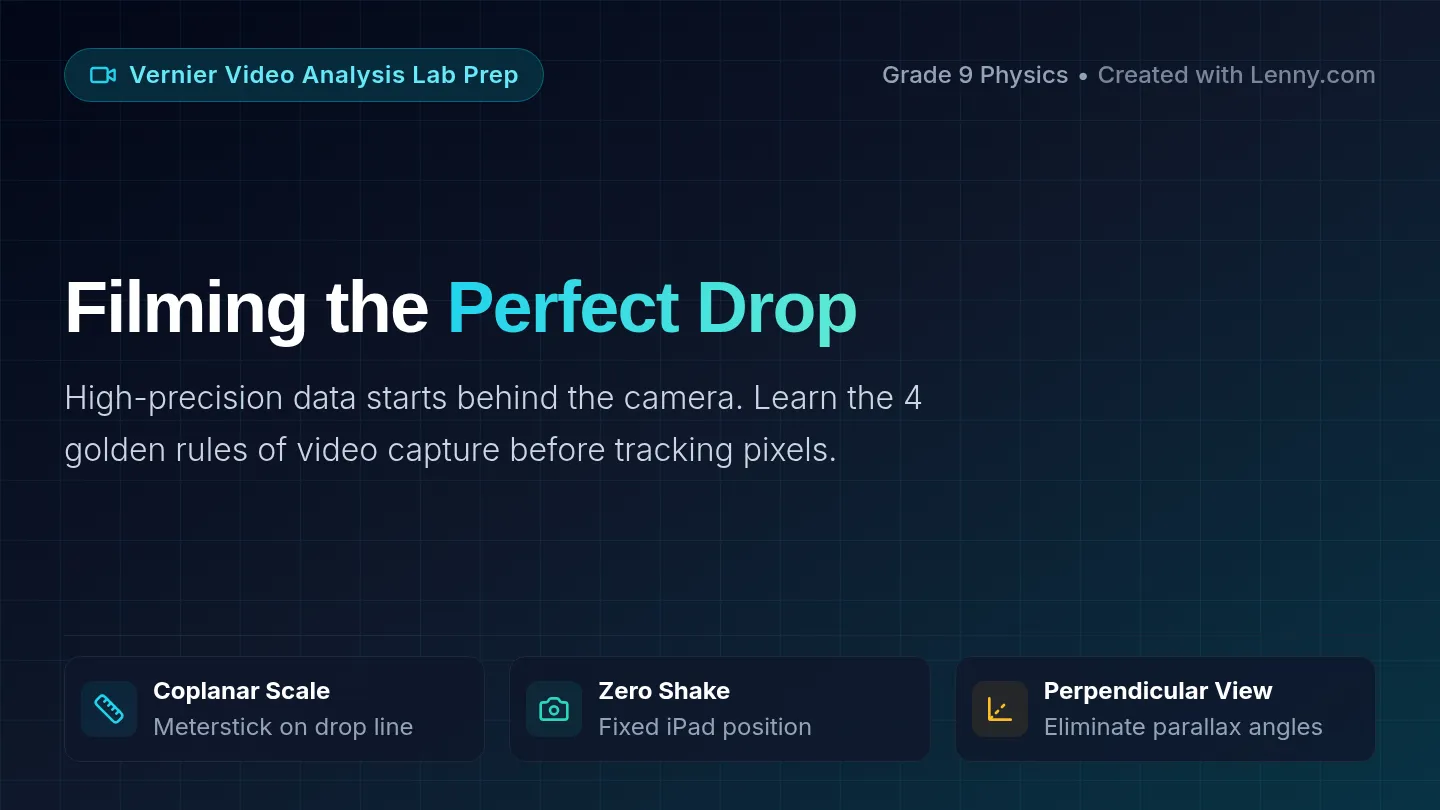
A high-impact instructional slide deck for 9th-grade physics students preparing to film a falling ball for Vernier Video Analysis. Features visual diagrams and best practices for camera stability, plane alignment, meterstick calibration, and perspective error prevention.

LW

Lucas Wickham

Straw Glider Challenge Guide

Straw Glider Challenge Guide

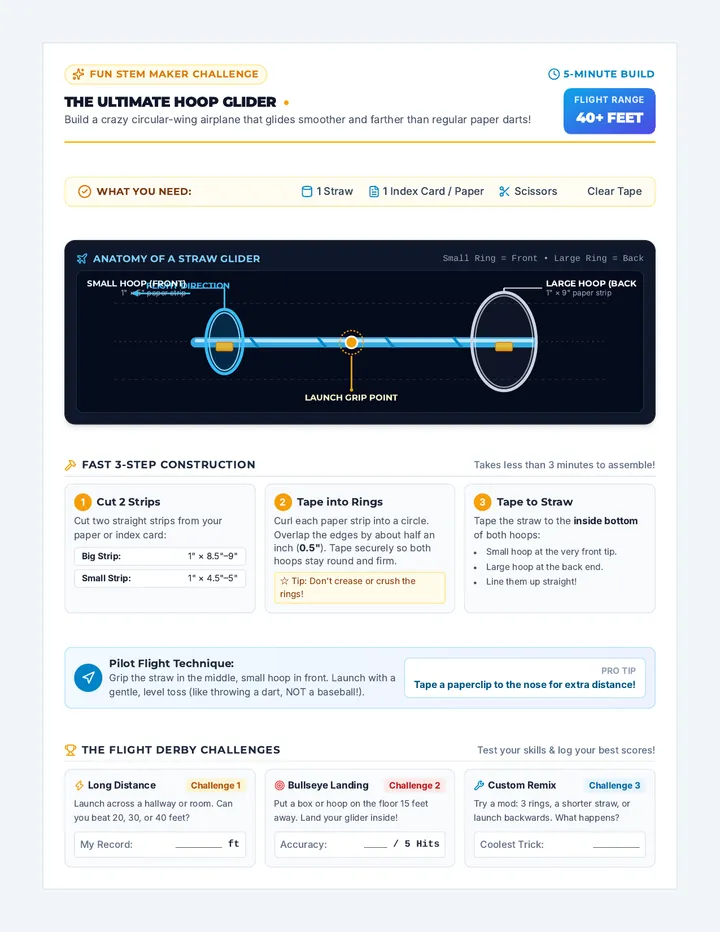
A fun, visual, single-page maker guide and challenge sheet for building a straw loop glider. Features an illustrated diagram of the glider, rapid 3-step build instructions, pilot flight hacks, and three gamified flight challenges.

AR

Angie Rice

Pixel Pulse Game Activity

Pixel Pulse Game Activity

A dynamic two-page STEM and game design activity exploring the physics, neuroscience, and mechanics of timing in video games. Students test their real-world reaction time through a ruler-drop physics lab and compete in an unplugged tabletop frame-trap timing duel.

Sequences

Naval Architect Challenge Answer Key

Fluid Dynamics

A series of lessons exploring the physics of fluids, including buoyancy, pressure, and fluid flow.

CM

Chuguna Murugesan

28
Spin Cycle Reading Guide Updated v4

Spin Cycle Unit

A comprehensive unit on rotational mechanics, mapping the transition from linear motion to angular dynamics through technical analysis and real-world applications.

CM

Chuguna Murugesan

34
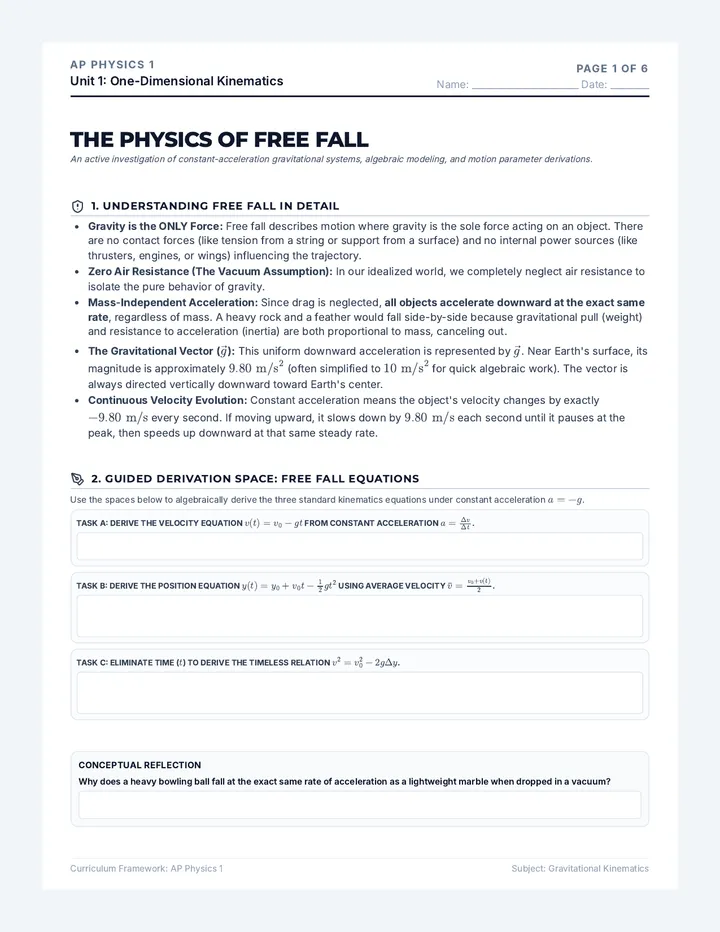
Gravitational Kinematics Reading Packet

AP Kinematics Unit

A comprehensive AP Physics 1 unit on one-dimensional and two-dimensional kinematics, covering free fall vertical motion, horizontal projectile pathways, experimental lab designs, and graphical signature analysis.

CM

Chuguna Murugesan

6
Momentum Mechanics Slides

Crash Test Lab

A physics unit wrap-up focusing on collisions, momentum, and vehicle safety engineering. This sequence transitions from hands-on lab investigation to independent data analysis and mathematical modeling.

C

ckroeker

16
Motion Dual Reading Pack

Physics of Motion

A comprehensive unit exploring the principles of kinematics, focusing on the relationship between linear and angular motion through readings, analysis, and real-world applications.

CM

Chuguna Murugesan

8
Harmonic Cosmos Slides

Celestial Empires

An exploration of how humanity harnessed the stars and the physics of time to build global networks, mapping the Earth through celestial symmetry and precision engineering.

DB

Danielle Burham

18

Lessons

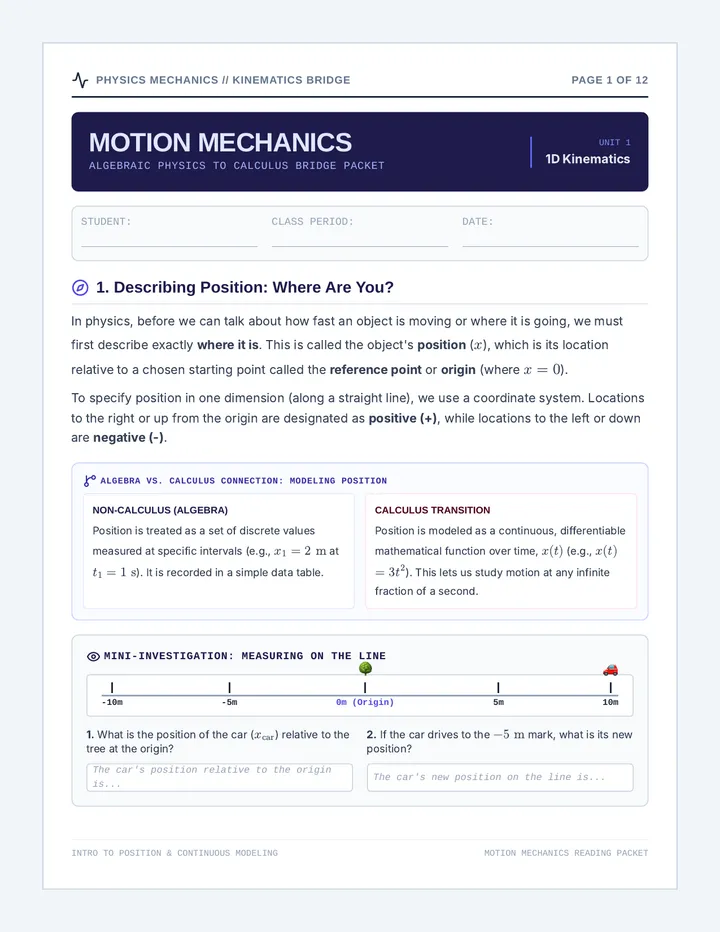
Motion Mechanics Reading Packet

Motion Mechanics

A comprehensive physics lesson bridging algebraic kinematics to introductory calculus. Includes a 12-page side-by-side reading packet, 13 instructional presentation slides, active learning Think-Pair-Share worksheets, a conceptual transition workbook, and a detailed teacher guide with full answer keys.

CM

Chuguna Murugesan

24
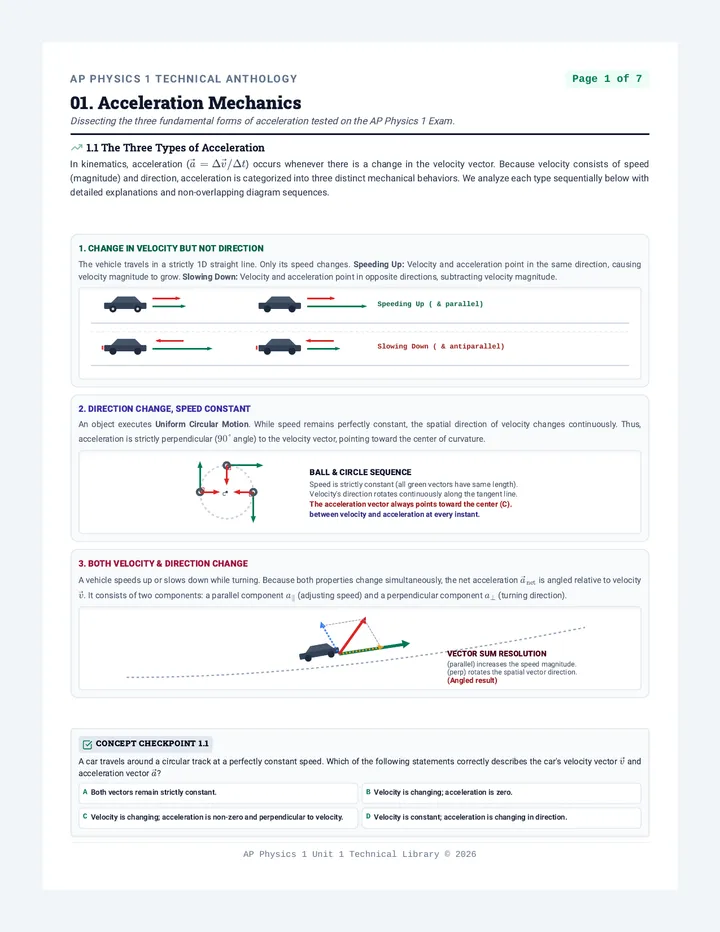
Motion Mechanics Anthology

Motion Mechanics

An AP Physics 1 lesson focusing on the advanced graphical, algebraic, and vector representations of velocity and acceleration. Includes a comprehensive 12-page reading anthology and a matching 12-page student analysis packet.

CM

Chuguna Murugesan

14
Oscillation Station Slides

SHM Fundamentals

A comprehensive introduction to Simple Harmonic Motion, covering restoring forces, kinematics, and energy conservation in oscillating systems.

CM

Chuguna Murugesan

42
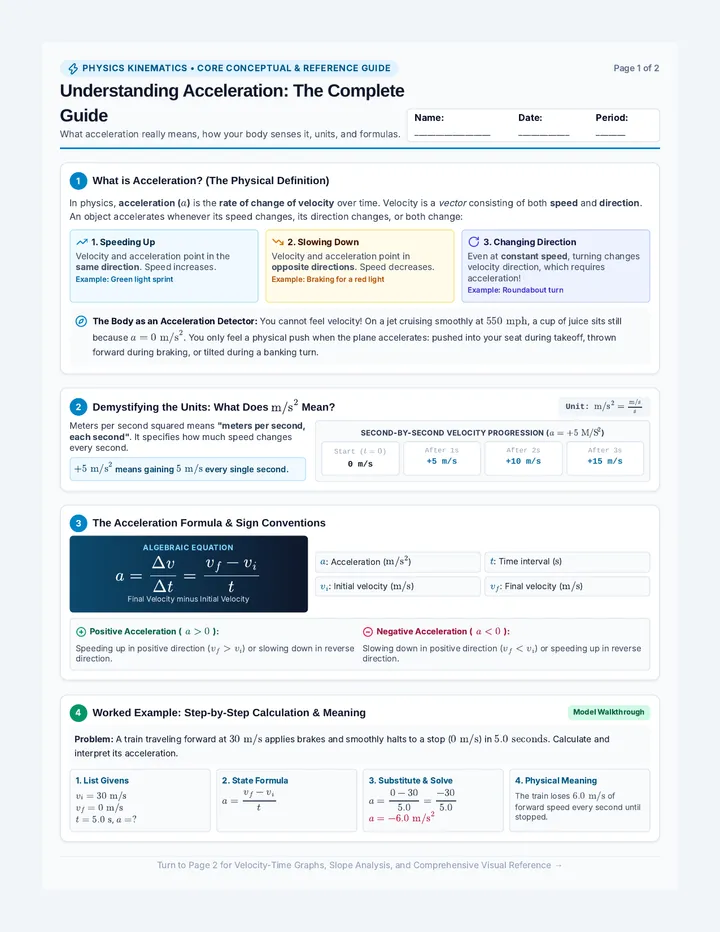
Acceleration Fundamentals Handout

Speed Shift Science

A comprehensive physics lesson focused on understanding acceleration as the rate of change of velocity, calculating acceleration using kinematic formulas, and determining acceleration from the slope of velocity-time graphs.

CM

Chuguna Murugesan

13
Mechanics Mastery Reading

Newtonian Mechanics Mastery

An in-depth, algebra-based investigation of forces, friction, and coupled systems designed for AP Physics 1. This lesson develops physical intuition, vector decomposition skills, and systemic problem-solving using Newton's Laws.

CM

Chuguna Murugesan

13
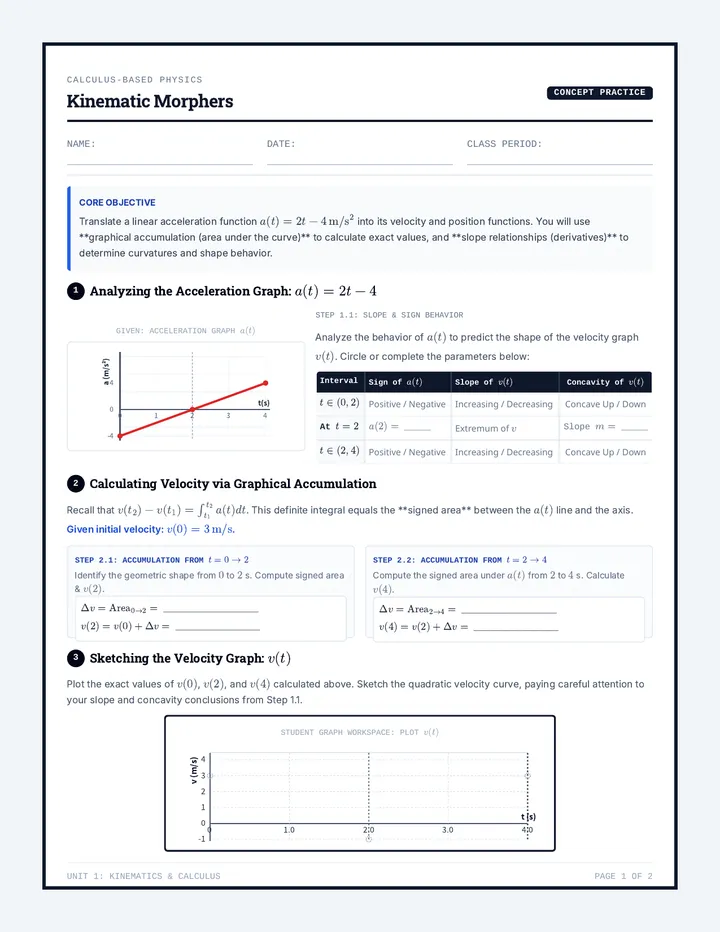
Kinematic Morphers Worksheet

Motion Morphers

A calculus-based physics lesson focused on translating motion graphs (acceleration to velocity to position) using graphical accumulation (area under the curve) and slope relationship analysis, featuring scaffolded practice and a visual reference poster.

CM

Chuguna Murugesan

7