Lenny.com
Explore
Create
ActivitiesNewMathEnglish Language ArtsScience & EngineeringSocial StudiesGlobal LanguagesHealth & Physical EducationSpecial EducationCounseling & Life SkillsArts & CreativityESL
Lenny.com
Lenny.com
Explore
Create
ActivitiesNewMathEnglish Language ArtsScience & EngineeringSocial StudiesGlobal LanguagesHealth & Physical EducationSpecial EducationCounseling & Life SkillsArts & CreativityESL
Lenny.com
Lenny.com

Solutions

Lenny for EducatorsLenny for SchoolsLenny for Districts

Product

ExploreSign inCreateSupportAbout

Resources

Getting startedMTSS Acceleration Program

© 2026 Lenny Learning Inc.

TermsPrivacyAccessibility
LinkedInInstagramX
Lenny

Reality vs. Fiction

Criteria for distinguishing factual events from imaginative narratives in literature and media. Strengthens critical thinking through analysis of historical accuracy, character archetypes, and narrative structures.

English Language ArtsPhonics & Reading FoundationsLetter IdentificationLearn Letters A-ZLowercase and Uppercase LettersConsonants and VowelsLetter-Sound AssociationsLetter-Sound Associations: LowercaseLetter-Sound Associations: UppercaseBeginning and Ending SoundsRhymingBlending And SegmentingShort VowelsShort Vowel SoundsConsonant BlendsConsonant DigraphsBlends, Digraphs, and TrigraphsDigraphs, Blends, and Silent LettersLong Vowel SoundsLong Vowel PatternsShort and Long VowelsShort and Long Vowel PatternsSilent EVowel SoundsVowel TeamsR-Controlled VowelsDiphthongs: Oi, Oy, Ou, OwVariant VowelsVariant, Diphthong, And R Vowel PatternsSoft G And CSight WordsIrregular WordsWord RecognitionSyllablesSyllable TypesTwo-Syllable WordsMultisyllabic WordsPhoneme ManipulationDecodable TextsVocabularyAction WordsQuestion WordsNouns and AdjectivesClassify WordsCompound WordsSynonyms and AntonymsHomophonesHomophones and HomonymsShades of MeaningContext CluesPrefixes and SuffixesGreek and Latin RootsAnalogiesIdioms and AdagesForeign Words and ExpressionsWord Choice and UsageReference SkillsReading ComprehensionRead-Along Literary TextsRead-Along Informational TextsReality vs. FictionStory ElementsCharacterSequenceMain IdeaCause And EffectCompare And ContrastReading StrategiesText StructureAuthor's PurposeAuthor's Purpose And ToneAuthor's PerspectivePoint Of ViewThemeInference And ThemeInference And AnalysisPoetry ElementsLiterary DevicesAnalyzing LiteratureAnalyzing Informational TextsComparing TextsAudience, Purpose, And ToneBusiness DocumentsNovel StudyNonfiction Book StudyGrammar & MechanicsSentencesNounsVerbsAdjectivesPronounsCapitalizationPunctuationContractionsConjunctionsPrepositionsArticlesAdjectives And AdverbsVerb TypesVerb TensePronouns And AntecedentsPronoun TypesSubject-Verb AgreementDirect And Indirect ObjectsSentences, Fragments, And Run-OnsPhrases And ClausesCommasSemicolons, Colons, And CommasDashes, Hyphens, And EllipsesSpellingAbbreviationsFormattingVerb Tense And MoodMisplaced ModifiersWritingDescriptive DetailsCreative WritingOpinion WritingTopic SentencesOrganizing WritingLinking WordsSentence VarietyIntroductions And ConclusionsPersuasive And Opinion WritingExpository WritingPersuasive StrategiesDeveloping And Supporting ArgumentsTopic Sentences And Thesis StatementsSummarizingResearch SkillsEditing And RevisingActive And Passive Voice=Writing Clearly And ConciselyDebate & Public SpeakingPublic Speaking BasicsPersuasive TechniquesClaims and EvidenceTypes of ArgumentsReasoning TypesLogical FallaciesTopic ResearchOrganizing EvidenceDebate Speech OrganizationAttacking and Defending ArgumentsClash and EngagementImpact CalculusQuestioning and Cross-ExaminationCritical ThinkingInformal LogicFormal LogicInductive Reasoning

Videos

Understanding Realistic Fiction: Stories from Everyday Life

Understanding Realistic Fiction: Stories from Everyday Life

This video introduces students to the literary genre of realistic fiction within the context of a thematic journey through "Genre Land." The host finds herself in a seaside village where a sudden rainstorm ruins her beach plans, serving as a perfect metaphor for the everyday problems characters face in realistic fiction. Through this narrative frame, the video defines the genre as stories containing believable characters, settings, and events that could actually happen in real life, distinct from fantasy or science fiction.

Miacademy & MiaPrep Learning ChannelMiacademy & MiaPrep Learning Channel

11mins 52s

How to Summarize Non-Fiction Text Using a Map Analogy

How to Summarize Non-Fiction Text Using a Map Analogy

This engaging instructional video explores the essential skill of summarizing non-fiction texts. Through a friendly and accessible narration, the video distinguishes between summarizing fiction stories and summarizing informational content like articles, textbooks, or scientific papers. It uses clear analogies and hypothetical scenarios to break down exactly what a summary should contain—and crucially, what it should leave out—helping students understand that a summary is a tool for capturing the "big picture" rather than a container for every single fact.

Khan AcademyKhan Academy

2mins 42s

Easy as PIE: Identifying Author's Purpose in Nonfiction

Easy as PIE: Identifying Author's Purpose in Nonfiction

This engaging educational video introduces students to the concept of "Author's Purpose" using the popular "PIE" acronym (Persuade, Inform, Entertain). Set against a bakery backdrop, the host and her robot companion, Mia, guide viewers through analyzing nonfiction texts. They demonstrate how different texts about the same subject—pie—can have vastly different goals, helping students distinguish between opinions, facts, and narratives. The video breaks down the specific characteristics of each purpose, focusing on identifying the central idea, analyzing language choices (emotional vs. objective vs. descriptive), and recognizing text structures. It uses three distinct reading passages—"Pie for All" (persuasive), "Pie History" (informative), and "Pie Town" (entertaining)—as concrete examples for students to practice their analysis skills alongside the narrator. For educators, this video serves as an excellent introduction or review of nonfiction reading comprehension skills. It includes built-in pause points for students to read passages and complete accompanying activities (referenced as a PDF but easily replicable on paper). The content encourages critical thinking by asking students not just *what* a text says, but *why* the author wrote it, a crucial skill for media literacy and advanced reading comprehension.

Miacademy & MiaPrep Learning ChannelMiacademy & MiaPrep Learning Channel

10mins 30s

How to Distinguish Between Fantasy, Fairy Tales, and Realistic Fiction

How to Distinguish Between Fantasy, Fairy Tales, and Realistic Fiction

This engaging video introduces students to the concept of literary genres through a virtual visit to a bookstore. The host, Caroline, explains that genres are categories of stories with their own specific styles and rules. The video focuses on differentiating between three specific genres: Realistic Fiction, Fairy Tales, and Fantasy. Through clear definitions and illustrative examples, viewers learn how the same object—a golden key—functions differently within the narrative structure of each genre.

Miacademy & MiaPrep Learning ChannelMiacademy & MiaPrep Learning Channel

10mins 11s

How to Use Metaphors to Make Creative Comparisons

How to Use Metaphors to Make Creative Comparisons

In this engaging language arts video, students explore the concept of metaphors—a figure of speech that compares two unlike things without using the words "like" or "as." Through clear definitions and relatable examples, the narrator breaks down how metaphors function as creative tools for description. The video carefully distinguishes metaphors from similes, helping viewers understand the subtle but important grammatical difference between these two common literary devices. The content focuses on three primary examples to illustrate the concept: comparing a fast runner to a cheetah, describing snow as a white blanket, and using the idiom "piece of cake" to describe ease of learning. Each example is deconstructed to show exactly what is being compared and why it qualifies as a metaphor. The video also addresses the literal versus figurative nature of these comparisons, ensuring students understand that metaphors are imaginative rather than factual statements. This resource is highly valuable for elementary classrooms introducing figurative language or creative writing. It provides a visual and auditory explanation that simplifies abstract concepts, making it easier for students to identify metaphors in their reading and incorporate them into their own writing. The humorous ending, featuring the narrator literally frozen in ice, serves as a memorable final check for understanding the difference between literal reality and metaphorical comparison.

Homeschool PopHomeschool Pop

6mins 12s

Mastering Figurative Language: Similes, Metaphors, and More

Mastering Figurative Language: Similes, Metaphors, and More

This engaging educational video provides a clear and humorous introduction to figurative language, distinguishing it from literal speech. Through the use of hand-drawn animations and dynamic text, the narrator breaks down five essential figures of speech: simile, metaphor, personification, hyperbole, and allusion. The video explains that figurative language involves saying one thing but meaning another to express truths more vividly, using the example of an "eagle-eyed editor" to demonstrate the concept. The content is structured systematically, dedicating a segment to each literary device. It defines similes as comparisons using "like" or "as" (e.g., "hungry as a wolf"), contrasts them with metaphors which make direct comparisons (e.g., "love is a rose"), and explores how personification attributes human traits to inanimate objects. It also covers hyperbole as purposeful exaggeration for effect and explains allusion as a reference to shared cultural knowledge, citing examples like Superman and Gollum. For educators, this video serves as an excellent primer or review tool for English Language Arts units on literary devices or creative writing. It provides accessible definitions and memorable visual examples that help students grasp abstract linguistic concepts. The humor and pacing make it suitable for upper elementary and middle school students, helping them move beyond literal interpretations to understand nuance, imagery, and emphasis in writing.
Khan AcademyKhan Academy

5mins 58s

Materials

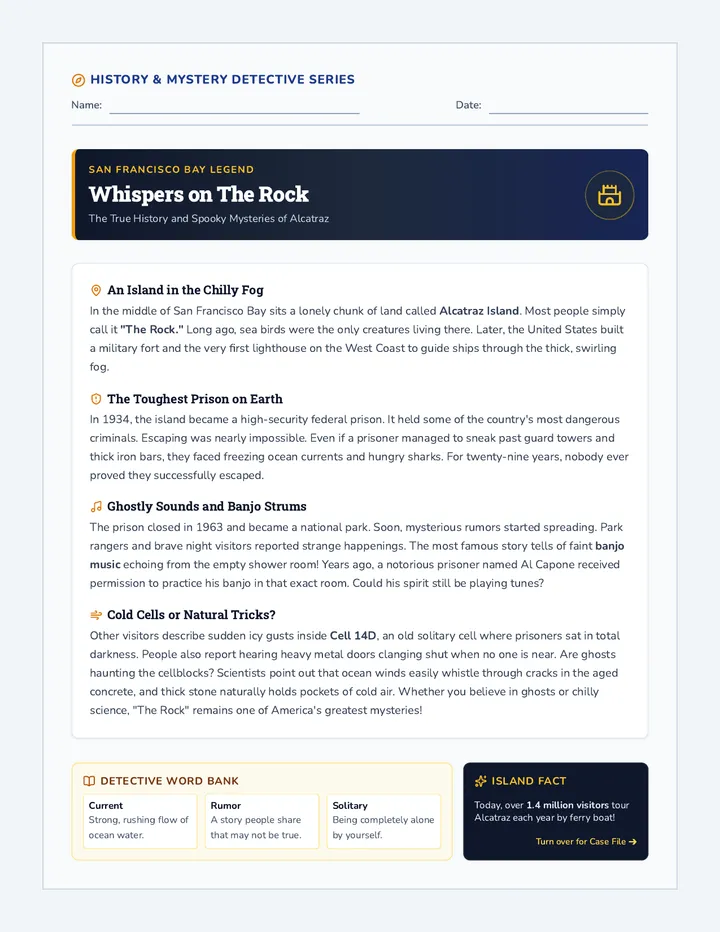
Whispers on The Rock Activity

Whispers on The Rock Activity

A 2-page 3rd-grade reading comprehension activity exploring the history and mysterious ghost legends of Alcatraz Island. Includes an engaging informational passage with vocabulary support and a detective-themed investigation worksheet featuring text-dependent questions, true/false checks, and scientific reasoning prompts.

JO

Jennifer OGrady

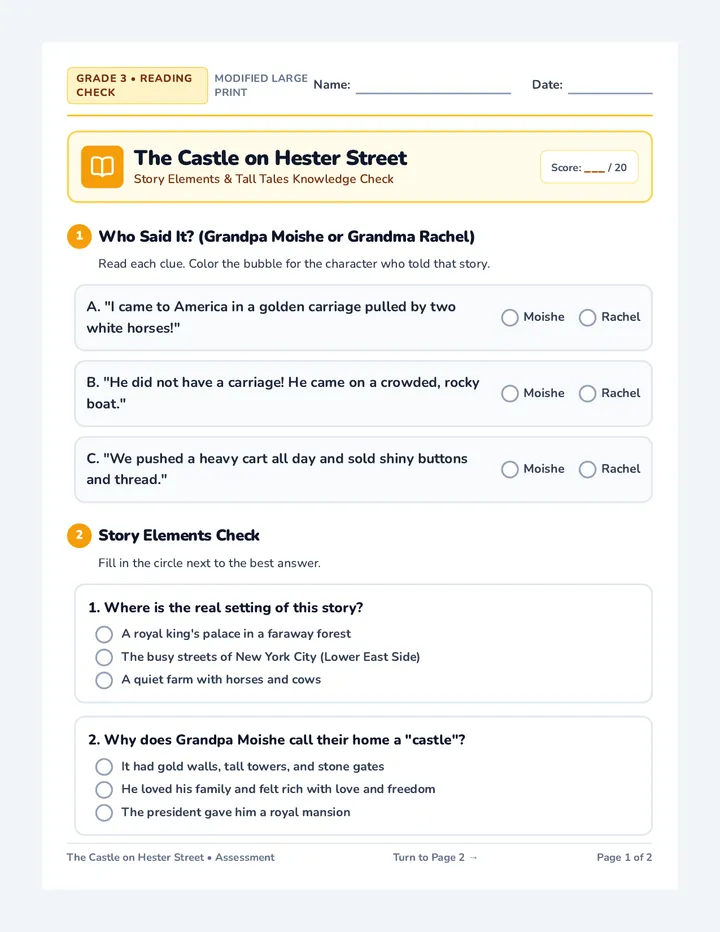
Hester Street Story Assessment

Hester Street Story Assessment

A 2-page modified, vision-friendly 3rd-grade assessment on *The Castle on Hester Street* covering story elements, characters, tall tales vs. reality, key vocabulary, and sequencing with large text and high-contrast layouts.

RM

Rosalyn Mcrae

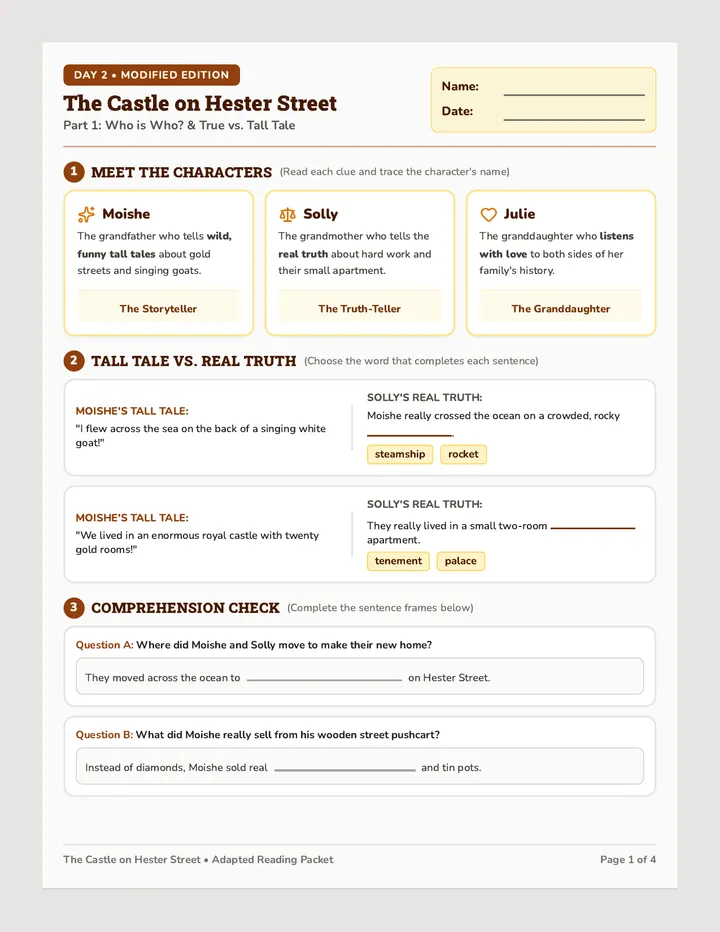
Hester Street Modified Packet

Hester Street Modified Packet

A 4-page modified, large-print Day 2 classwork packet for *The Castle on Hester Street*, featuring simplified directions, sentence starters, visual word banks, spacious handwriting lines, and scaffolded comprehension, vocabulary, and sequencing activities.

RM

Rosalyn Mcrae

Sequences

Invention Quest Slides

Frindle Frenzy Novel Study

A 9-day novel study for 'Frindle' by Andrew Clements, aligned to 3rd Grade ELAR TEKS, focusing on character development, vocabulary, and plot analysis.

LH

Lucy Hellerman

56
Lesson Plan 1 Introduction

Literary Device Detectives

A comprehensive multi-unit sequence for 3rd and 4th grade students covering key literary devices: Introduction to Figurative Language, Onomatopoeia, Similes, Metaphors, Personification, and Idioms. Each unit provides 5 lesson plans, interactive notebook resources, and a wide variety of activities and stories designed to improve descriptive writing and reading comprehension.

JS

Janette Sullivan

105
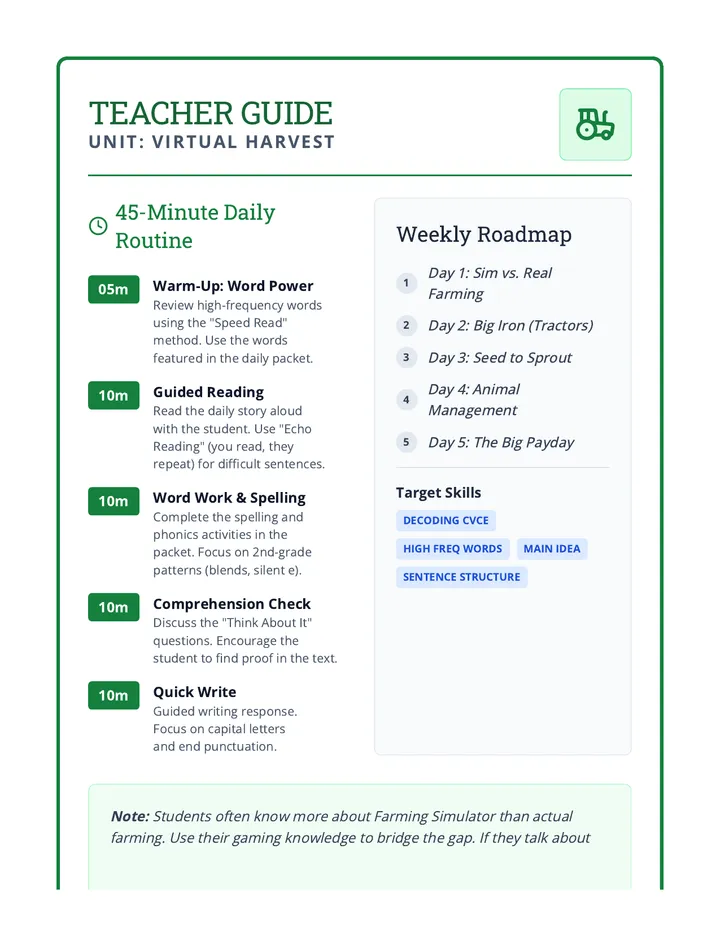
Virtual Harvest Teacher Guide

Digital Dirt

A 5-day reading comprehension and writing unit for struggling readers, blending the world of Farming Simulator with real-world agriculture. Focuses on 2nd-grade level literacy skills within a high-interest 5th-grade context.

CM

carley Martin

30
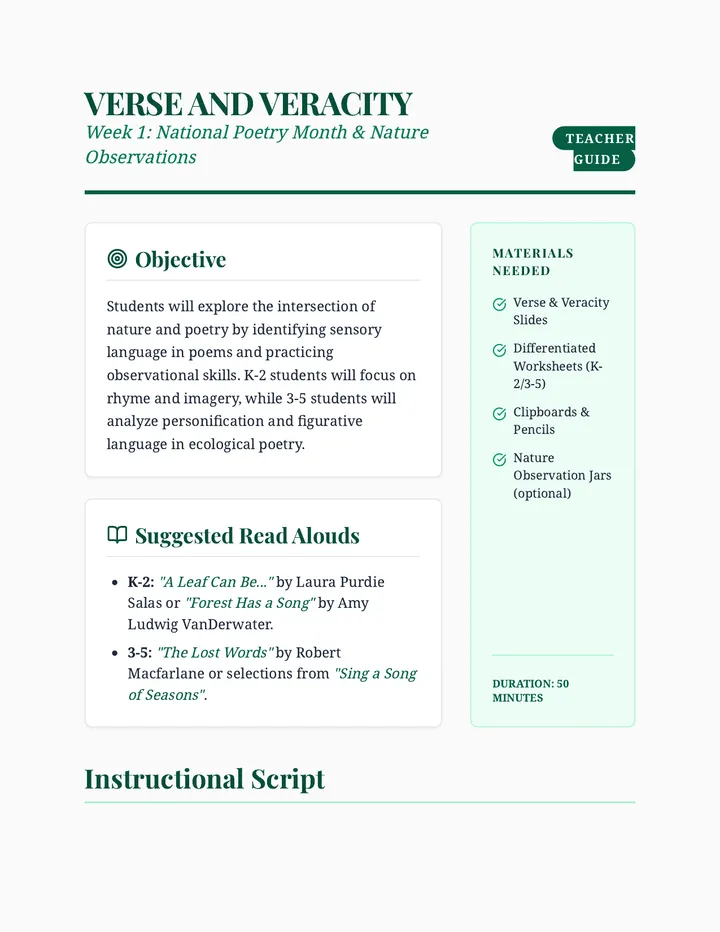
Verse and Veracity Teacher Guide

Media Center Year Curriculum

A comprehensive K-5 Media Center curriculum spanning August to May. Each month features a thematic unit integrating library skills (Dewey Decimal System, research, digital citizenship), literacy (poetry, biographies, informational texts), and STEM/Maker Space challenges. Resources are differentiated for K-2 and 3-5.

B

bethany.nied

50
Module 2 Week 1 CFU Assessment

Dysart ELA Assessments

A collection of ELA assessment materials for 3rd grade, following the Dysart Schools template and AASA alignment.

DG

Danielle Garland

34
Glazed Greatness Passage

Donut Days

A comprehensive unit on donuts that combines informational and fictional texts to practice foundational reading skills, vocabulary, and comprehension strategies modeled after IREAD-3.

J

JESSICA.STEPHENS

6

Lessons

Truth Trackers Slides

Truth Trackers

A foundational lesson for 1st graders to distinguish between facts (proven truths) and opinions (personal feelings) using familiar themes like animals, food, and weather.

MC

Milena Criniti

5
Voice Box Discussion Cards

Voice Box Introduction

An introductory small-group lesson for Grade 3 students focused on distinguishing facts from opinions, using opinion sentence starters, and supporting an opinion with a reason.

A

amagalhaes

7
Century Stories Worksheet

Linguistic Lab Passages

A collection of reading passages designed to challenge students' comprehension and linguistic awareness by analyzing word counts, sentence structures, and syllable patterns.

VL

V Lundgren

3
Ocean Giants Worksheet

Reading Adventure Quest

A collection of 10 engaging reading passages for 3rd-grade students, featuring a mix of fiction and nonfiction topics with comprehension and inferencing questions.

M

martineza

10
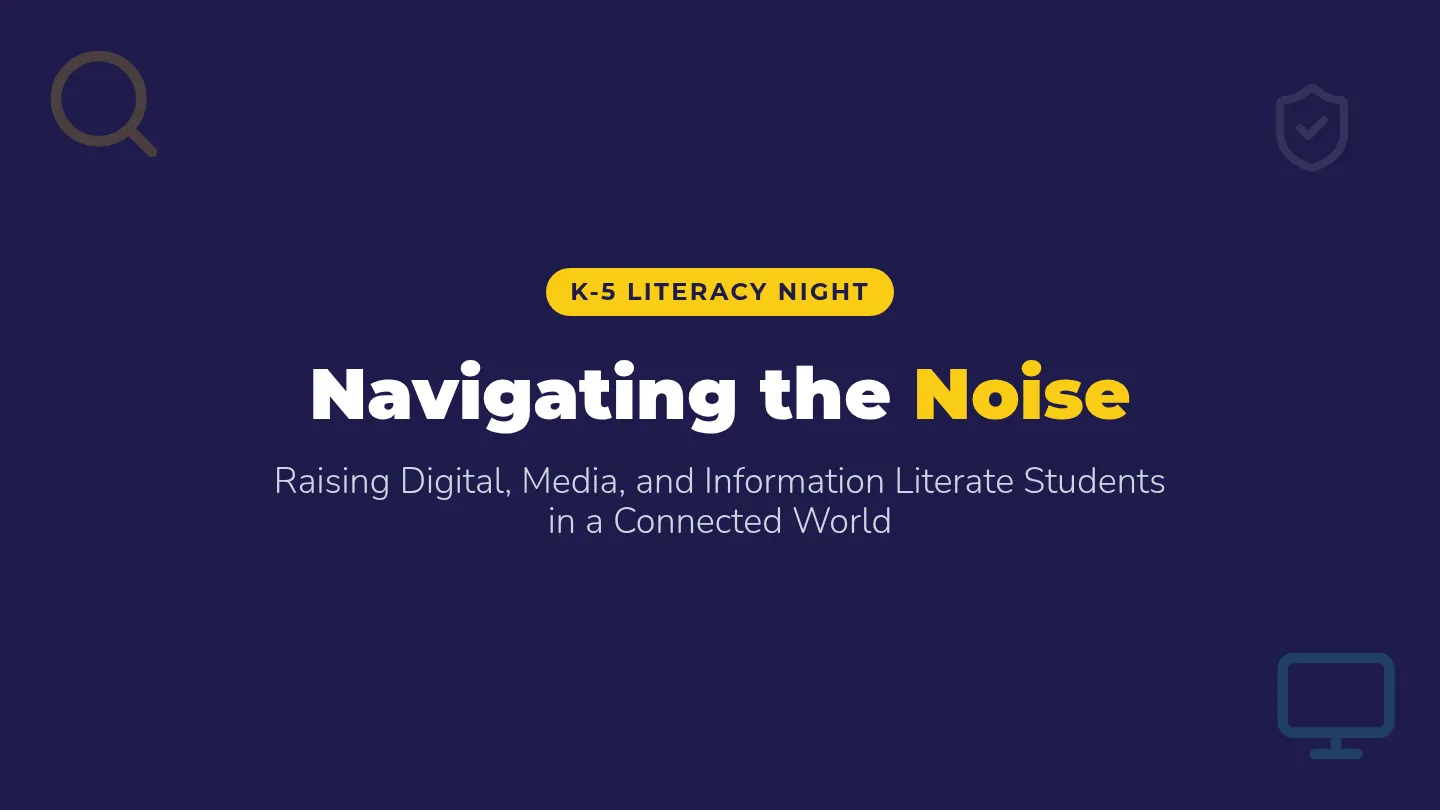
Digital Detectives Presentation Slides

Digital Detectives Literacy Night

A comprehensive presentation and resource set for a K-5 Literacy Night focused on media, digital, and information literacy. Parents will learn how these skills are integrated into the classroom and how to support their children at home.

RN

Renae Nichols

3
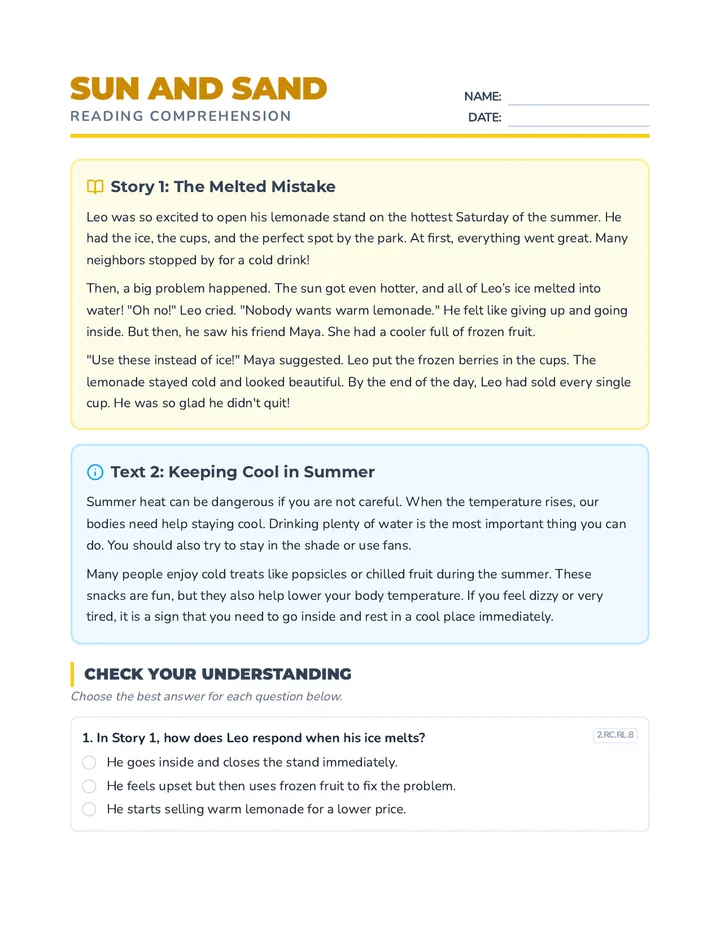
Sun and Sand Worksheet

Summer Reading Adventures

A reading comprehension lesson focused on summer-themed stories, addressing Arkansas second-grade standards for literary and informational texts, including character response, story structure, and point of view.

AM

amanda motley

2