Lenny.com
Explore
Create
ActivitiesNewMathEnglish Language ArtsScience & EngineeringSocial StudiesGlobal LanguagesHealth & Physical EducationSpecial EducationCounseling & Life SkillsArts & CreativityESL
Lenny.com
Lenny.com
Explore
Create
ActivitiesNewMathEnglish Language ArtsScience & EngineeringSocial StudiesGlobal LanguagesHealth & Physical EducationSpecial EducationCounseling & Life SkillsArts & CreativityESL
Lenny.com
Lenny.com

Solutions

Lenny for EducatorsLenny for SchoolsLenny for Districts

Product

ExploreSign inCreateSupportAbout

Resources

Getting startedMTSS Acceleration Program

© 2026 Lenny Learning Inc.

TermsPrivacyAccessibility
LinkedInInstagramX
Lenny

Articles

Distinguishes between definite and indefinite articles while establishing rules for count and non-count nouns. Targets correct usage of 'a,' 'an,' and 'the' across varied sentence structures.

English Language ArtsPhonics & Reading FoundationsLetter IdentificationLearn Letters A-ZLowercase and Uppercase LettersConsonants and VowelsLetter-Sound AssociationsLetter-Sound Associations: LowercaseLetter-Sound Associations: UppercaseBeginning and Ending SoundsRhymingBlending And SegmentingShort VowelsShort Vowel SoundsConsonant BlendsConsonant DigraphsBlends, Digraphs, and TrigraphsDigraphs, Blends, and Silent LettersLong Vowel SoundsLong Vowel PatternsShort and Long VowelsShort and Long Vowel PatternsSilent EVowel SoundsVowel TeamsR-Controlled VowelsDiphthongs: Oi, Oy, Ou, OwVariant VowelsVariant, Diphthong, And R Vowel PatternsSoft G And CSight WordsIrregular WordsWord RecognitionSyllablesSyllable TypesTwo-Syllable WordsMultisyllabic WordsPhoneme ManipulationDecodable TextsVocabularyAction WordsQuestion WordsNouns and AdjectivesClassify WordsCompound WordsSynonyms and AntonymsHomophonesHomophones and HomonymsShades of MeaningContext CluesPrefixes and SuffixesGreek and Latin RootsAnalogiesIdioms and AdagesForeign Words and ExpressionsWord Choice and UsageReference SkillsReading ComprehensionRead-Along Literary TextsRead-Along Informational TextsReality vs. FictionStory ElementsCharacterSequenceMain IdeaCause And EffectCompare And ContrastReading StrategiesText StructureAuthor's PurposeAuthor's Purpose And ToneAuthor's PerspectivePoint Of ViewThemeInference And ThemeInference And AnalysisPoetry ElementsLiterary DevicesAnalyzing LiteratureAnalyzing Informational TextsComparing TextsAudience, Purpose, And ToneBusiness DocumentsNovel StudyNonfiction Book StudyGrammar & MechanicsSentencesNounsVerbsAdjectivesPronounsCapitalizationPunctuationContractionsConjunctionsPrepositionsArticlesAdjectives And AdverbsVerb TypesVerb TensePronouns And AntecedentsPronoun TypesSubject-Verb AgreementDirect And Indirect ObjectsSentences, Fragments, And Run-OnsPhrases And ClausesCommasSemicolons, Colons, And CommasDashes, Hyphens, And EllipsesSpellingAbbreviationsFormattingVerb Tense And MoodMisplaced ModifiersWritingDescriptive DetailsCreative WritingOpinion WritingTopic SentencesOrganizing WritingLinking WordsSentence VarietyIntroductions And ConclusionsPersuasive And Opinion WritingExpository WritingPersuasive StrategiesDeveloping And Supporting ArgumentsTopic Sentences And Thesis StatementsSummarizingResearch SkillsEditing And RevisingActive And Passive Voice=Writing Clearly And ConciselyDebate & Public SpeakingPublic Speaking BasicsPersuasive TechniquesClaims and EvidenceTypes of ArgumentsReasoning TypesLogical FallaciesTopic ResearchOrganizing EvidenceDebate Speech OrganizationAttacking and Defending ArgumentsClash and EngagementImpact CalculusQuestioning and Cross-ExaminationCritical ThinkingInformal LogicFormal LogicInductive Reasoning

Videos

How to Use Definite and Indefinite Articles

How to Use Definite and Indefinite Articles

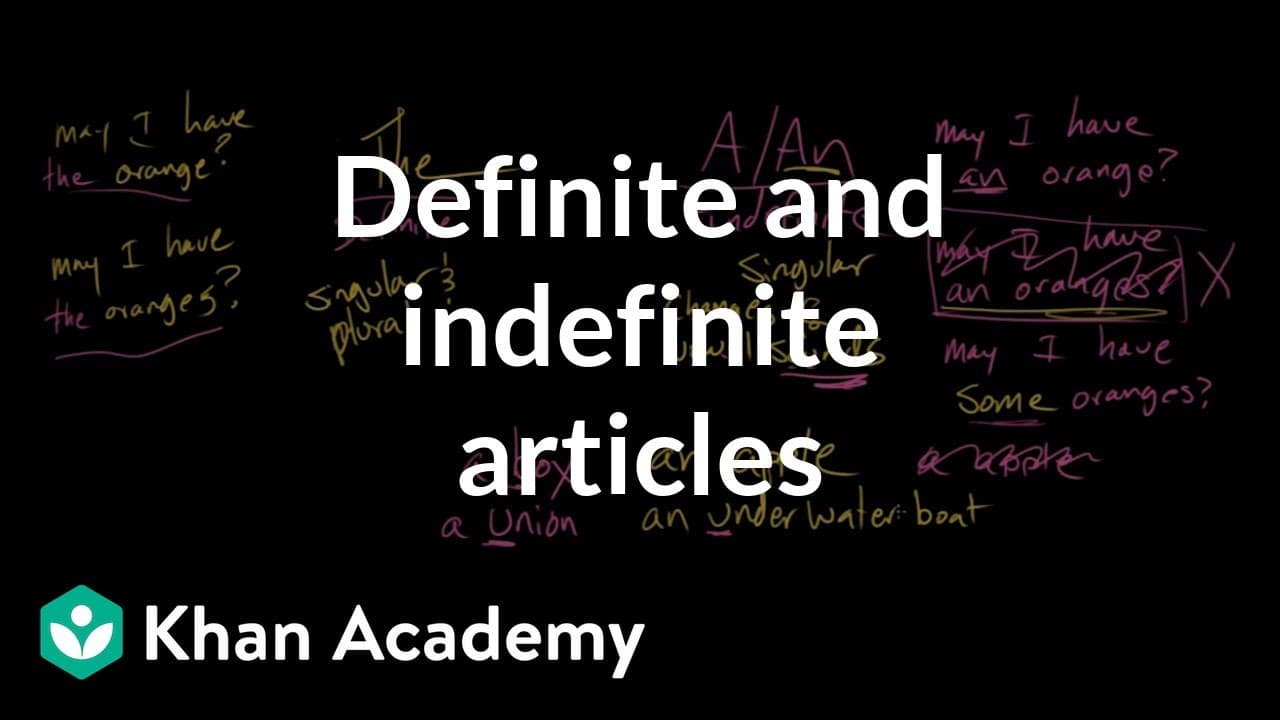
This educational video provides a clear and accessible breakdown of English articles, specifically focusing on the differences between the definite article "the" and the indefinite articles "a" and "an." Using a digital whiteboard format, the narrator visually maps out the rules regarding specificity, number (singular vs. plural), and phonetic sounds. The video uses simple examples like requesting an orange to illustrate how word choice changes meaning based on whether the speaker wants *any* item or a *specific* item. The content explores three main grammatical rules: the distinction between definite (specific) and indefinite (non-specific) references, the constraints of singular versus plural nouns, and the phonetic rule for choosing between "a" and "an." A significant portion of the video is dedicated to the nuance of vowel *sounds* versus vowel *letters*, using tricky examples like "union" vs. "underwater" to explain why the sound determines the article rather than the spelling. For educators, this resource serves as an excellent tool for teaching grammar fundamentals to elementary students or English Language Learners (ELLs). It addresses common errors in student writing, such as mismatching articles with plural nouns (e.g., "an oranges") or using the wrong indefinite article before vowel sounds. The visual diagramming helps abstract grammatical terms become concrete, making it a valuable asset for writing workshops and grammar mini-lessons.

Khan AcademyKhan Academy

4mins 14s

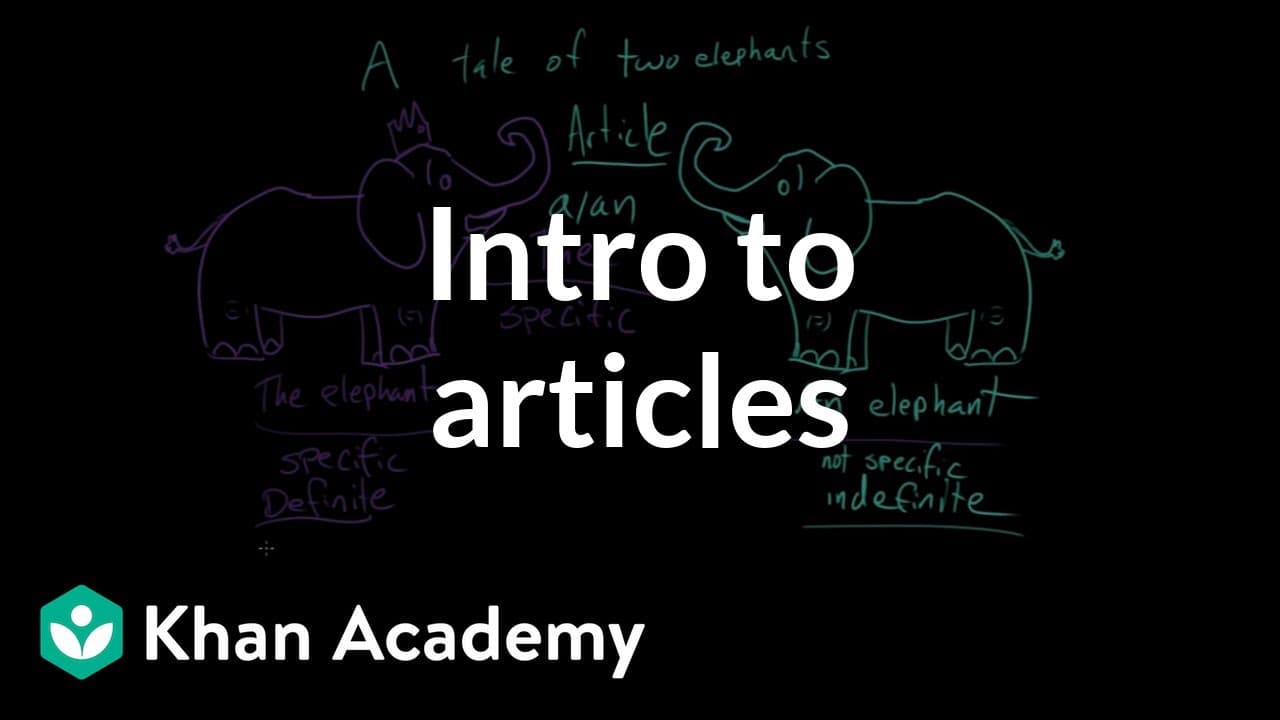
The Tale of Two Elephants: Definite vs Indefinite Articles

The Tale of Two Elephants: Definite vs Indefinite Articles

A clear and engaging introduction to grammatical articles using a simple visual analogy of two elephants. The video defines articles as a type of adjective or determiner that signals how specific a noun is. It distinguishes between the 'definite' article (the) and 'indefinite' articles (a/an) through a side-by-side comparison. Using the 'Tale of Two Elephants,' the narrator explains the core concept of specificity. One elephant is identified as a specific individual ('The Queen of the Elephants'), illustrating the use of the definite article. The other is described as 'any ol' elephant,' illustrating the use of indefinite articles. This concrete example helps students grasp abstract grammatical terminology. This video is excellent for introducing parts of speech in elementary language arts classrooms. It simplifies the often-confusing choice between 'a/an' and 'the' for both native speakers and English language learners. Teachers can use the 'specific vs. not specific' framework to help students improve precision in their writing and speaking.

Khan AcademyKhan Academy

2mins 48s

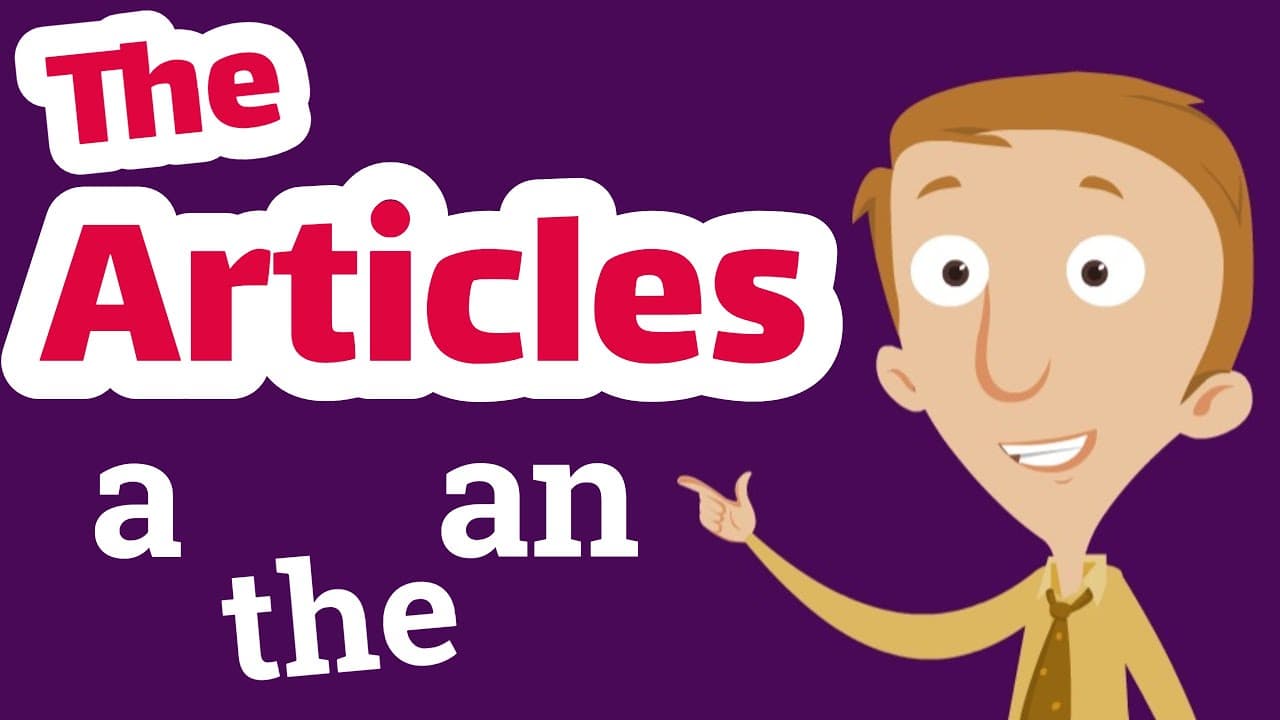
How to Use A, An, and The Correctly

How to Use A, An, and The Correctly

This engaging animated lesson provides a clear and humorous introduction to the three grammatical articles in the English language: "a", "an", and "the". The video distinguishes these from "news articles" and dives straight into mechanics, using a friendly narrator to explain the difference between "indefinite" articles (general items) and the "definite" article (specific items). Through a series of relatable examples involving cookies, dogs, and toothbrushes, viewers learn that "indefinite" means non-specific, while "definite" implies a specific object known to both the speaker and listener. The content covers the specific rules for usage, breaking down the vowel sound rule for choosing between "a" and "an". It reviews the vowels (A, E, I, O, U) and demonstrates how words starting with these letters require "an" to flow correctly. The video then contrasts these with "the", using dramatic and funny scenarios—like eating the last donut or losing a specific key—to illustrate how using "the" changes the urgency and meaning of a sentence compared to using "a". This video is an excellent resource for early elementary literacy lessons or English Language Learners (ELL) of various ages. It simplifies abstract grammatical terminology like "indefinite article" by anchoring it in concrete visual examples. Teachers can use this video to introduce the concept of articles, practice identifying vowels versus consonants, or spark writing activities where students must choose the correct article to convey specific meanings.
Homeschool PopHomeschool Pop

10mins 9s

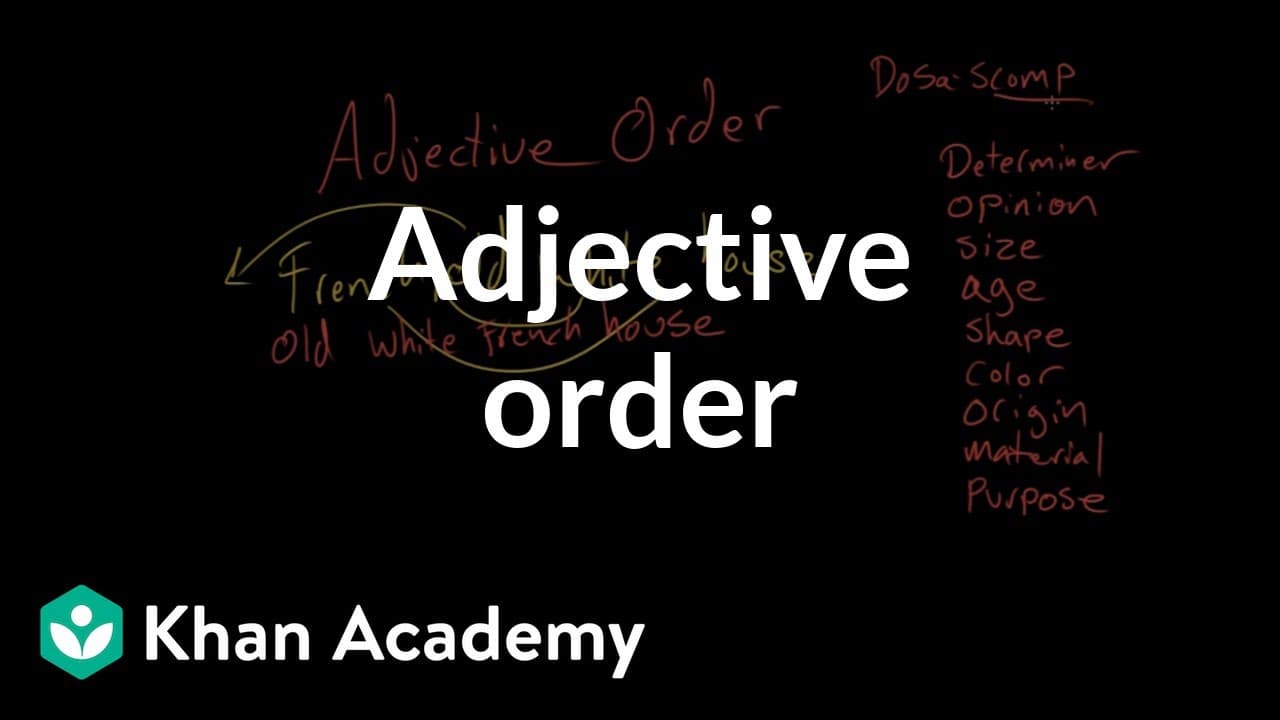
The Secret Order of Adjectives in English

The Secret Order of Adjectives in English

This educational video unveils the hidden rules governing the order of adjectives in English sentences. While native speakers naturally intuit that "old white French house" sounds correct while "French old white house" does not, this lesson explicitly breaks down the hierarchy of categories—from quantity and opinion to origin and material—that dictates this sequence. The narrator introduces a memorable and humorous mnemonic device, "DOSA-SCOMP," to help learners recall the correct order. The video covers key grammatical concepts including the specific categorization of adjectives (Determiner, Opinion, Size, Age, Shape, Color, Origin, Material, Purpose) and the distinction between cumulative adjectives (which follow a set order without commas) and coordinate adjectives (which come from the same category and require commas). It uses clear, handwritten visual examples to demonstrate how these rules apply to complex noun phrases. For educators, this resource provides an engaging tool for teaching syntax and descriptive writing. It is particularly valuable for English Language Learners (ELLs) who cannot rely on "what sounds right" and need concrete rules to master sentence structure. The lesson encourages students to play with language by constructing absurdly long descriptive phrases, making the dry mechanics of grammar fun and accessible.

Khan AcademyKhan Academy

5mins 49s

The Complete Guide to Grammar Basics

The Complete Guide to Grammar Basics

This comprehensive grammar compilation video serves as an extensive guide to the foundational rules of the English language for elementary students. Through a mix of animation, live-action clips, and humorous character interactions, the video breaks down complex grammatical concepts into digestible segments. It begins by introducing the four main types of sentences—interrogative, exclamatory, declarative, and imperative—helping students understand how punctuation and tone change meaning. It then moves into sentence structure, teaching students how to identify and fix common writing errors like sentence fragments and run-on sentences.

Homeschool PopHomeschool Pop

58mins 54s

Materials

Grammaire Double Niveau Progression Guide

Grammaire Double Niveau Progression Guide

Progression annuelle complète de grammaire pour cours double CM1-CM2 conforme au Bulletin Officiel n° 16 d'avril 2025. Structurée sur 36 semaines (5 périodes scolaires à raison d'une heure hebdomadaire), elle détaille les objectifs notionnels, les manipulations syntaxiques et la différenciation spécifique CM1/CM2.

LP

LAURENT PERCHE

Sentence Builder Worksheet

Sentence Builder Worksheet

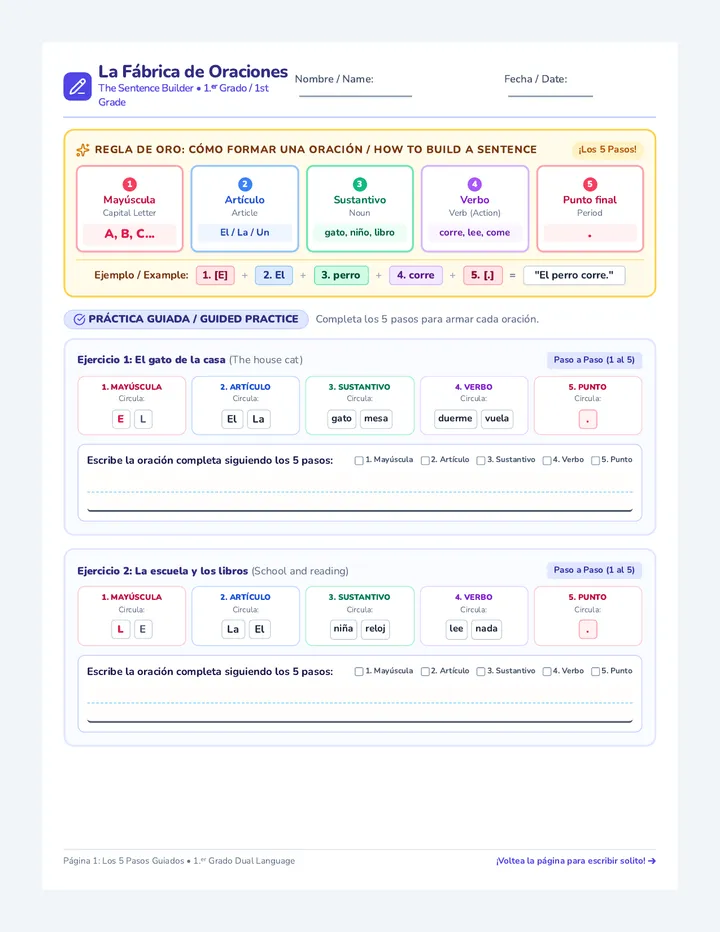
A two-page dual language first-grade Spanish sentence building worksheet with 5 sequential steps, featuring enlarged cross-off word bank boxes for each independent practice exercise.

J

jessicaayalalopez

Sequences

Mission Message Guide Enseignant

Expertise Formation Premier Degré

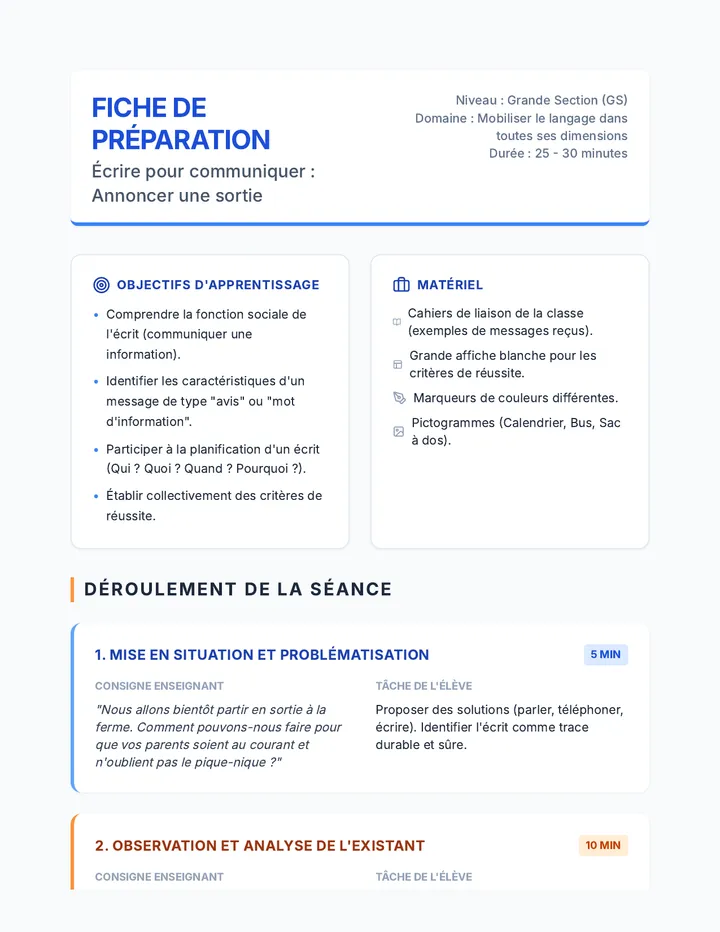
Une série de modules de formation destinés aux conseillers pédagogiques pour renforcer leur expertise en ingénierie de formation continue, spécifiquement appliquée à l'enseignement du français à l'école primaire.

VD

Val Désirée

27
Word Watchers Worksheet

Literacy Launchpad

A series of early literacy lessons designed to build confidence in beginning readers through sentence tracking, sight word mastery, and phonetic decoding.

A

alina.rodriguez

11
Wild Writing Curriculum Overview

Science Scouts Expedition

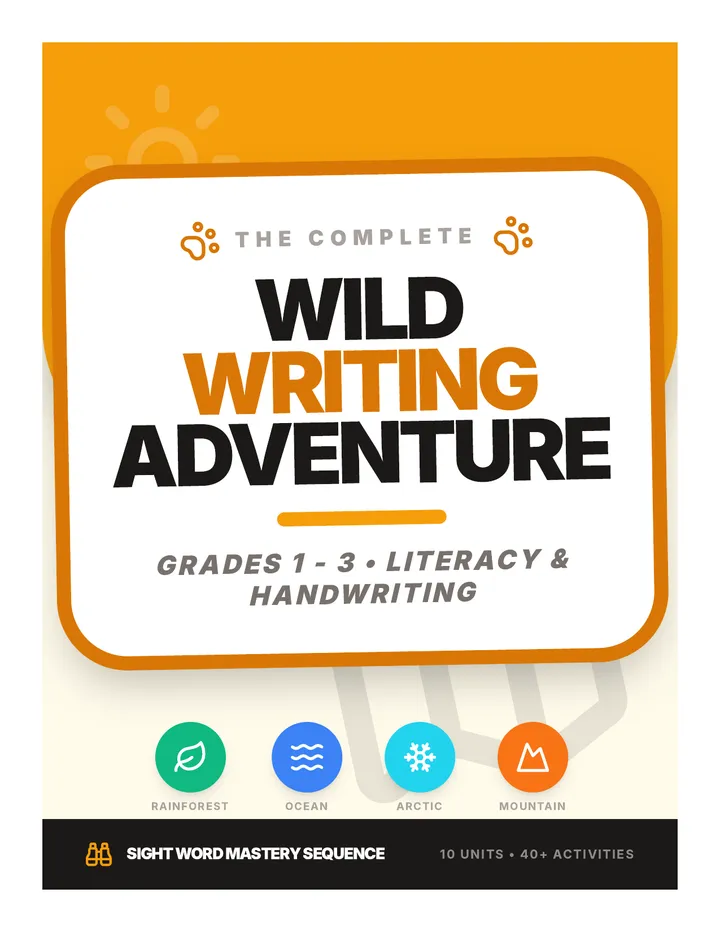
An inquiry-based science and literacy curriculum for grades 1-3 that combines foundational scientific concepts with high-frequency sight word mastery and precision handwriting practice.

AC

Andrew Casini

41
Day 1 Camden Matrix Planner

Be Verb Explorers

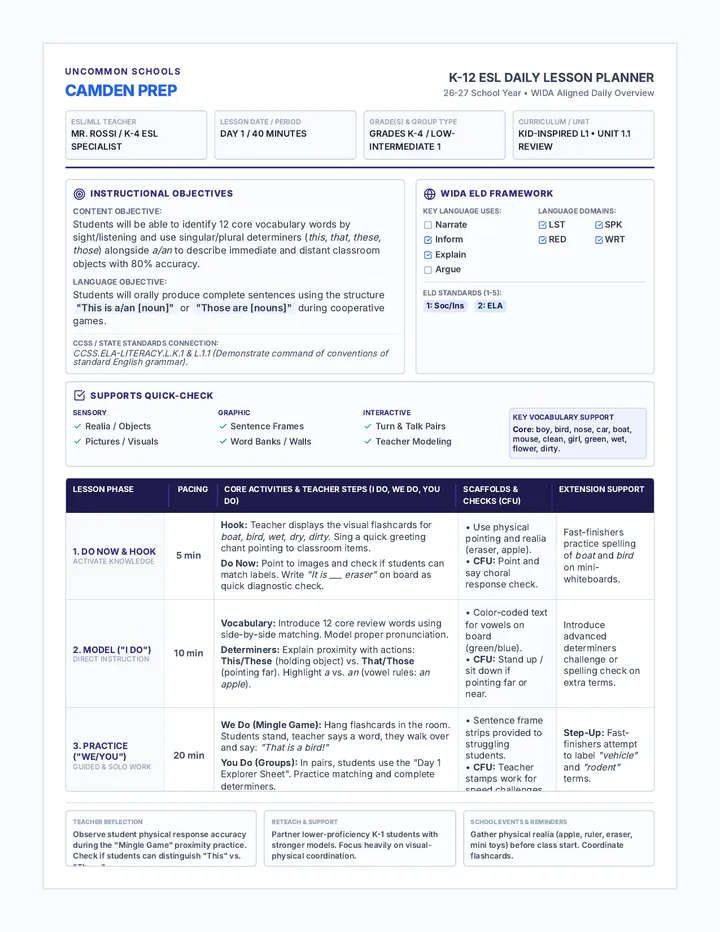
An intensive two-day English language sequence for K-4 ESL students, aligning Kid-Inspired Low-Intermediate 1 curriculum with the Camden Prep Weekly Planning Matrix. Students master core vocabulary, determiners, and be-verb question-and-answer structures with targeted scaffolding and rapid-pacing speaking games.

V

vincent.rossi

4
Complete Intervention Master Binder

Sentence Sparks

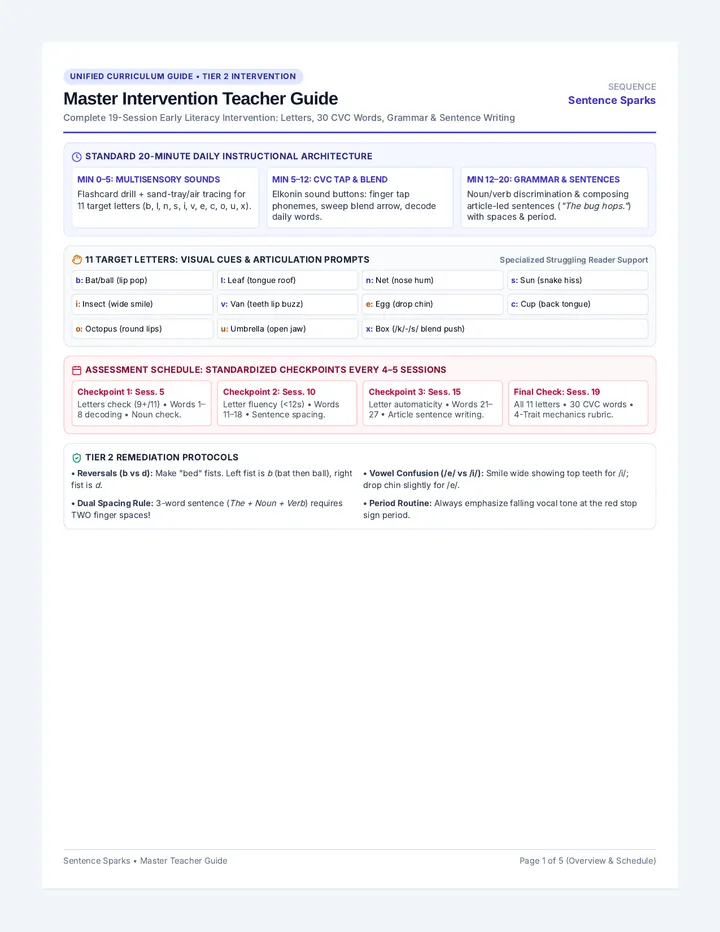
A comprehensive 19-session tier-2 early literacy intervention sequence systematically targeting letter-sound mastery for 11 critical letters, blending 30 CVC words, identifying nouns and verbs, and composing simple sentences with spacing and punctuation.

K

kurtzm

1
Marble Mystery Maze Plus Plus

Detective Den Mysteries

A 5-week reading intervention program for Grade 2 students to develop comprehension, vocabulary, and grammar skills through an engaging, continuous detective story.

AJ

Amanda Julin

20

Lessons

Chant Chouette Fiche Lecture

Chouette Conte et Comprehension

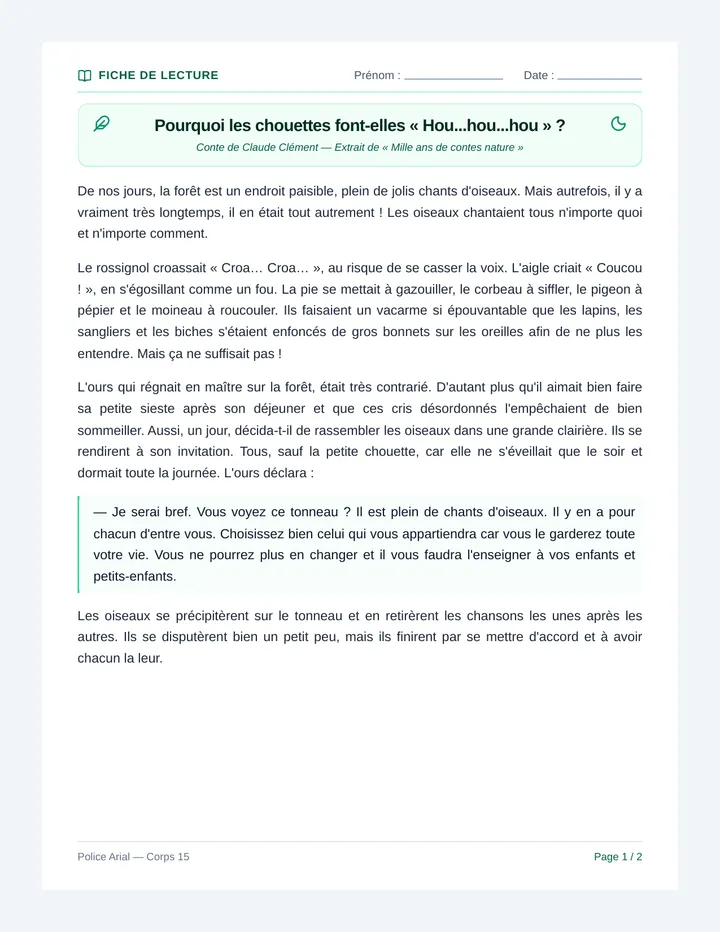
Séquence pédagogique complète autour du conte « Pourquoi les chouettes font-elles Hou...hou...hou ? » de Claude Clément pour CM1/CM2, comprenant les textes de lecture (standard et adapté), le dispositif de dictée en trois temps, la fiche de compréhension type conte des origines, son corrigé et la fiche de préparation enseignant.

LP

LAURENT PERCHE

20
Describing Detectives Slides

Describing Detectives

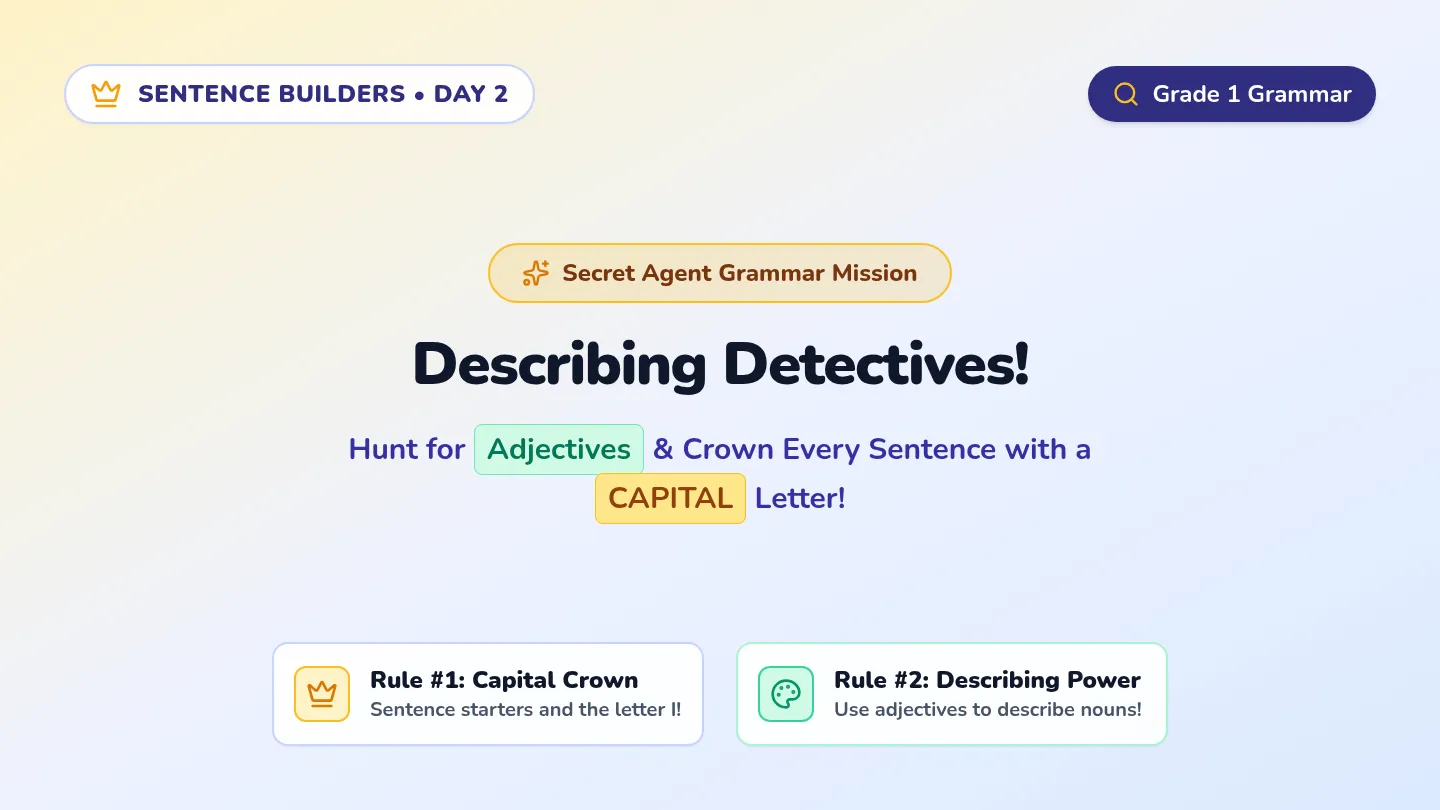
A high-engagement Grade 1 grammar lesson that introduces adjectives as describing words while reinforcing sentence capitalization through a playful 'Capital Crown' detective theme. Students connect Day 1 pronoun and article knowledge with new sensory and descriptive words using hands-on sentence-building mats and card-pairing activities.

EB

Emily Brown

4
Sentence Builder Mat

Action Word Adventures

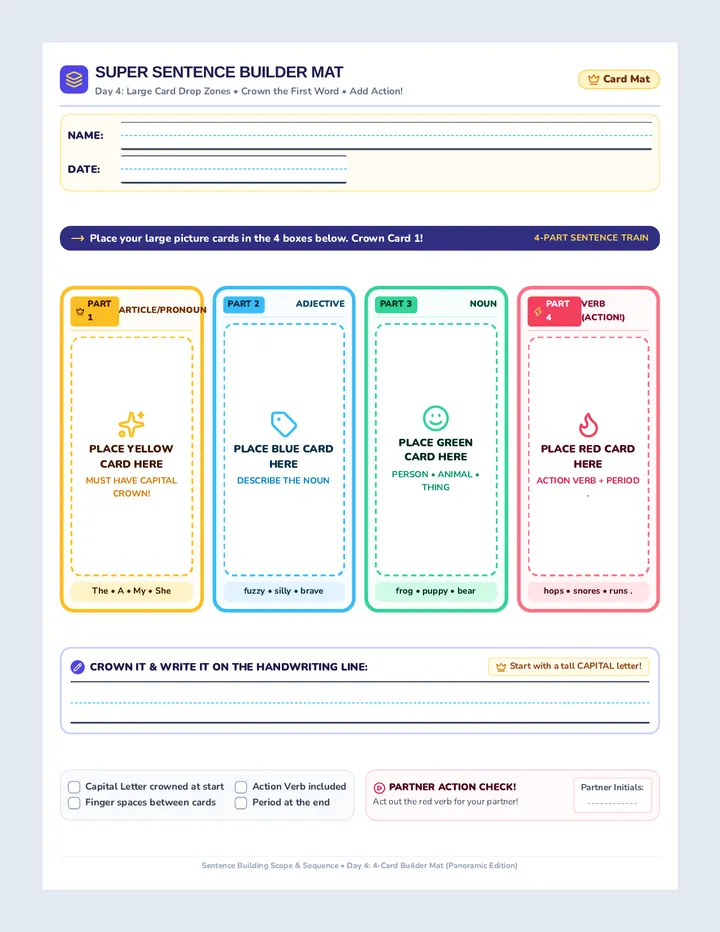
A high-energy 1st-grade lesson introducing verbs into 4-part sentence building while spiraling essential beginning-sentence capitalization skills. Students use kinetic action routines, physical word cards, and visual 'Capital Crown' cues to build and write complete sentences.

EB

Emily Brown

5
Article Agents Slides

Article Agents

A comprehensive lesson on using articles (a, an, the) correctly, focusing on vowel/consonant sounds and definite vs. indefinite contexts for 5th graders.

HP

Hector Parra

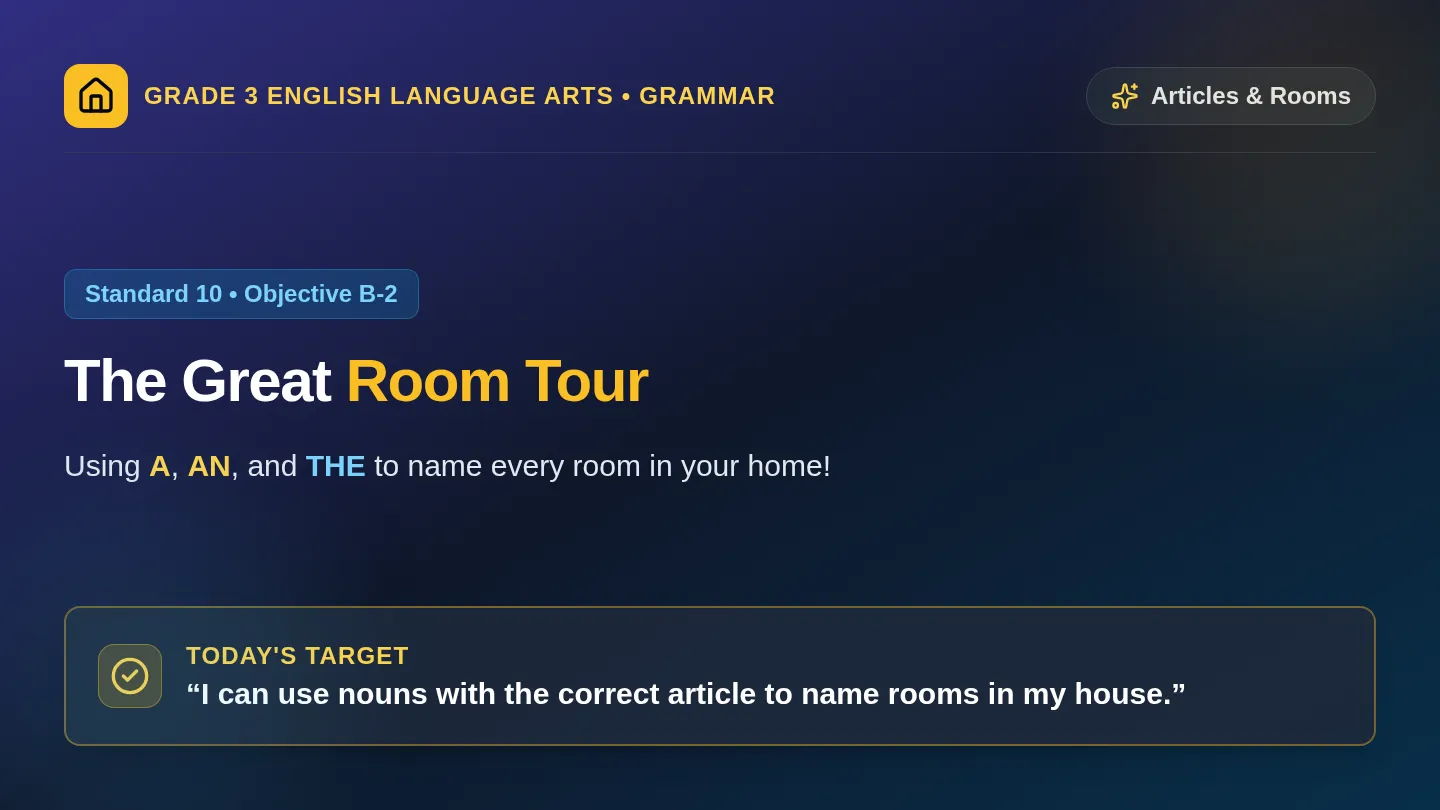
9
Room Tour Slides

Room Builder

Students learn to identify rooms in a house and pair them with appropriate articles based on phonetic rules and conversational context. Includes interactive presentation slides and hands-on practice activities.

HP

Hector Parra

2
Grammar Gridlock Novice Worksheet

Grammar Gridlock

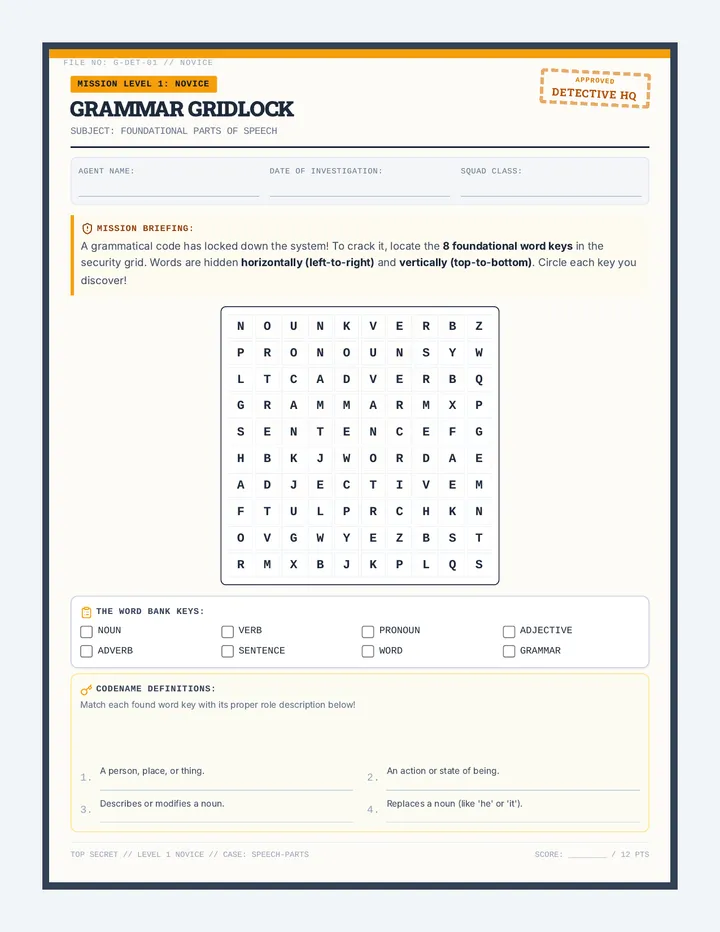
A differentiated set of word search activities designed to help students master basic parts of speech (noun, verb, adjective, etc.). Includes three tiered difficulty levels (Novice, Agent, and Master) with accompanying word study exercises and a comprehensive teacher guide with full answer keys.

ED

Evelyn Diaz

4