Conoce el Suelo Hoja Día 1 de 5 TEKS 1.10(B)
Diario de Campo
Conoce el Suelo
Nombre: ____________________________________
Fecha: _________________
¿Qué es el suelo?
El suelo cubre la Tierra. Está formado por pedacitos pequeños de roca , arena , tierra y restos de plantas . ¡Estas partículas pequeñas pueden quedarse quietas o moverse de un lugar a otro!
1. ¿Qué encontramos en el suelo?
Encierra en un círculo los 4 elementos que forman parte del suelo.
🪨 Piedritas
🍂 Hojas secas
🚗 Carro
🏖️ Arena
🧸 Peluche
🪱 Tierra
Palabras clave de hoy:
suelo roca arena partículas mover
Conoce el Suelo — Observación
Página 2
2. Observa y dibuja el suelo
Dibuja una muestra de suelo. Incluye piedritas, arena y pedacitos de hojas.
3. ¿Qué puede mover las partículas del suelo?
Marca con una X los dos elementos de la naturaleza que mueven el suelo.
💧 El agua
🌙 La luna
💨 El viento
⭐ Las estrellas
4. Escribe sobre lo que aprendiste
Usa las palabras del recuadro para completar la oración.
suelo • roca • lugar
El _____________________ tiene partículas pequeñas de _____________________ y arena.
Estas partículas se pueden mover de un _____________________ a otro.
Agua en Acción Hoja Día 2 de 5 TEKS 1.10(B)
Diario de Campo
Agua en Acción
Nombre: ____________________________________
Fecha: _________________
¿Cómo mueve el agua el suelo?
Cuando llueve fuerte o corre un río, el agua empuja la tierra, la arena y las piedritas. El agua lleva las partículas del suelo desde los lugares altos hacia los lugares bajos .
1. Haz una predicción
Imagina una montaña de tierra. Si echamos agua arriba, ¿qué pasará con la tierra?
La tierra subirá hasta las nubes.
El agua bajará y arrastrará partículas de tierra hacia abajo.
La tierra no cambiará de lugar.
2. Dibuja: Antes y después de la lluvia
Muestra dónde está la tierra antes de llover y dónde termina después de que corre el agua.
Antes de la lluvia ☀️
Después de la lluvia 🌧️
Agua en Acción — Camino del Agua
Página 2
3. ¿Qué mueve el agua con más facilidad?
Encierra el objeto que un chorro suave de agua puede mover más lejos.
🏔️ Roca gigante
⏳ Arena fina
🪨 Piedra pesada
4. El viaje de la tierra
Dibuja flechas desde lo alto de la colina hasta el charco de abajo para mostrar cómo el agua baja la tierra.
⛰️ Colina alta (tierra y arena)
Lugar bajo (lodo y charco) 🌊
5. Explica lo que observaste
Completa las oraciones usando las palabras del banco.
agua • abajo • arena
El _____________________ de la lluvia empuja la tierra y la _____________________.
El suelo se mueve hacia _____________________ por la colina.
Viento Viajero Hoja Día 3 de 5 TEKS 1.10(B)
Diario de Campo
Viento Viajero
Nombre: ____________________________________
Fecha: _________________
¿Cómo mueve el viento el suelo?
El viento es aire en movimiento. Cuando sopla fuerte sobre la tierra seca o la arena , levanta las partículas livianas y las lleva lejos. ¡Así se forman las dunas de arena!
1. Prueba del viento: ¿Cuál vuela más?
Si soplamos con un popote o abanico, ¿qué tipo de suelo se mueve más rápido? Encierra tu respuesta.
🏜️ Arena seca y suelta
🟤 Lodo mojado y pesado
2. Dibuja el viento moviendo la arena
Dibuja líneas de viento soplando y granitos de arena volando hacia un montículo nuevo.
Viento Viajero — Fuerza del Viento
Página 2
3. Une con una línea
Une cada tipo de viento con lo que puede mover en el suelo.
🍃 Brisa suave
🌬️ Viento muy fuerte
🌪️ Levanta mucha arena y polvo
🍂 Mueve hojas secas y polvo fino
4. ¿Cierto o falso?
Encierra Sí o No para cada oración.
El viento puede mover arena seca de un lugar a otro.
Sí No
El viento mueve rocas gigantes con facilidad.
Sí No
5. Completa la idea
Usa las palabras del recuadro para completar las oraciones.
viento • seco • lejos
El _____________________ sopla sobre el suelo _____________________.
Las partículas livianas viajan _____________________.
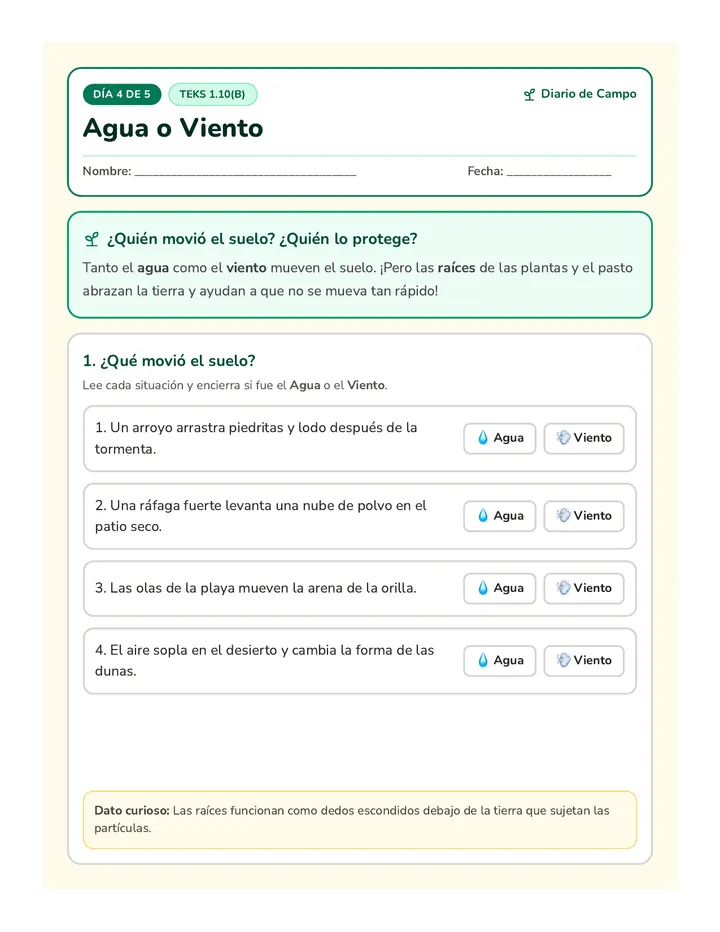
Agua o Viento Hoja Día 4 de 5 TEKS 1.10(B)
Diario de Campo
Agua o Viento
Nombre: ____________________________________
Fecha: _________________
¿Quién movió el suelo? ¿Quién lo protege?
Tanto el agua como el viento mueven el suelo. ¡Pero las raíces de las plantas y el pasto abrazan la tierra y ayudan a que no se mueva tan rápido!
1. ¿Qué movió el suelo?
Lee cada situación y encierra si fue el Agua o el Viento .
1. Un arroyo arrastra piedritas y lodo después de la tormenta.
💧 Agua 💨 Viento
2. Una ráfaga fuerte levanta una nube de polvo en el patio seco.
💧 Agua 💨 Viento
3. Las olas de la playa mueven la arena de la orilla.
💧 Agua 💨 Viento
4. El aire sopla en el desierto y cambia la forma de las dunas.
💧 Agua 💨 Viento
Dato curioso: Las raíces funcionan como dedos escondidos debajo de la tierra que sujetan las partículas.
Agua o Viento — Raíces Protectoras
Página 2
2. ¿Dónde se queda mejor el suelo?
Si llueve igual sobre los dos terrenos, encierra el terreno que pierde menos tierra.
🟫 Tierra sola sin plantas
🌱 Tierra con pasto y raíces
3. Dibuja plantas protegiendo una colina
Dibuja pasto arriba de la tierra y raíces largas abajo sujetando las partículas.
4. Completa la oración
Usa las palabras del recuadro.
raíces • sujetan • agua
Las _____________________ de las plantas _____________________ el suelo.
Así, el _____________________ y el viento no se llevan tanta tierra.
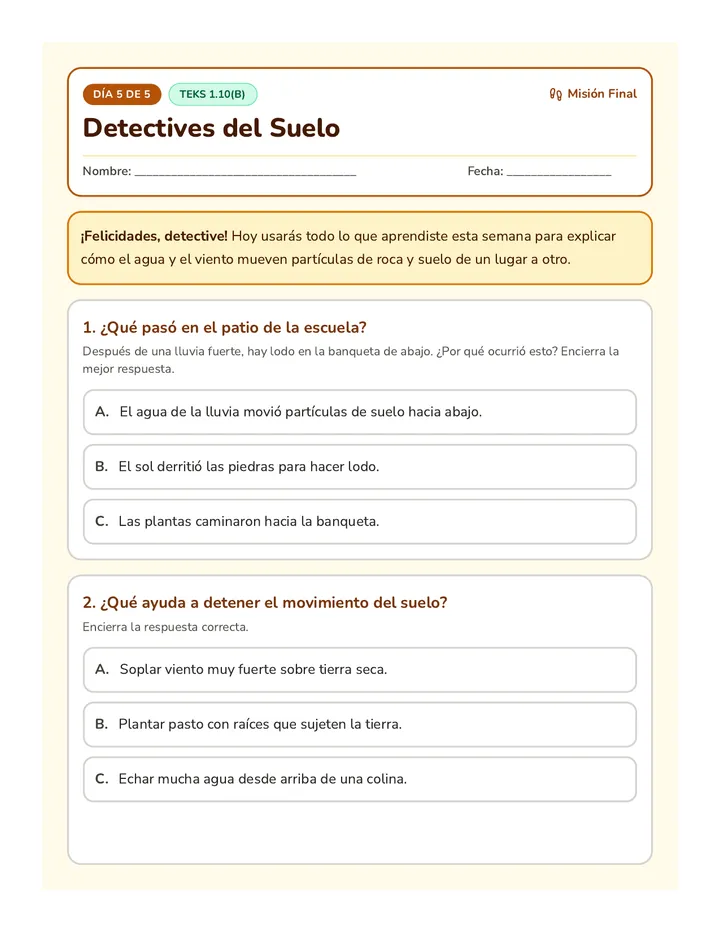
Detectives del Suelo Hoja Día 5 de 5 TEKS 1.10(B)
Misión Final
Detectives del Suelo
Nombre: ____________________________________
Fecha: _________________
¡Felicidades, detective! Hoy usarás todo lo que aprendiste esta semana para explicar cómo el agua y el viento mueven partículas de roca y suelo de un lugar a otro.
1. ¿Qué pasó en el patio de la escuela?
Después de una lluvia fuerte, hay lodo en la banqueta de abajo. ¿Por qué ocurrió esto? Encierra la mejor respuesta.
A. El agua de la lluvia movió partículas de suelo hacia abajo.
B. El sol derritió las piedras para hacer lodo.
C. Las plantas caminaron hacia la banqueta.
2. ¿Qué ayuda a detener el movimiento del suelo?
Encierra la respuesta correcta.
A. Soplar viento muy fuerte sobre tierra seca.
B. Plantar pasto con raíces que sujeten la tierra.
C. Echar mucha agua desde arriba de una colina.
Detectives del Suelo — Tu Historia
Página 2
3. El gran viaje de una partícula
Dibuja una partícula de arena o tierra moviéndose de un lugar a otro por el agua o por el viento.
4. Escribe sobre tu dibujo
Completa las líneas para contar cómo se movió el suelo.
En mi dibujo, el _____________________ movió la _____________________.
La partícula viajó desde _____________________ hasta _____________________.
5. ¿Cómo te sentiste esta semana?
Colorea o encierra la carita que muestra cuánto aprendiste sobre cómo se mueve el suelo.
🌟 ¡Lo domino!
🙂 Voy bien
🤔 Necesito repasar