Gravity Paradox Teacher Guide Gravity Paradox
Teacher Facilitation Guide
Grade 9-12 Science
Objective
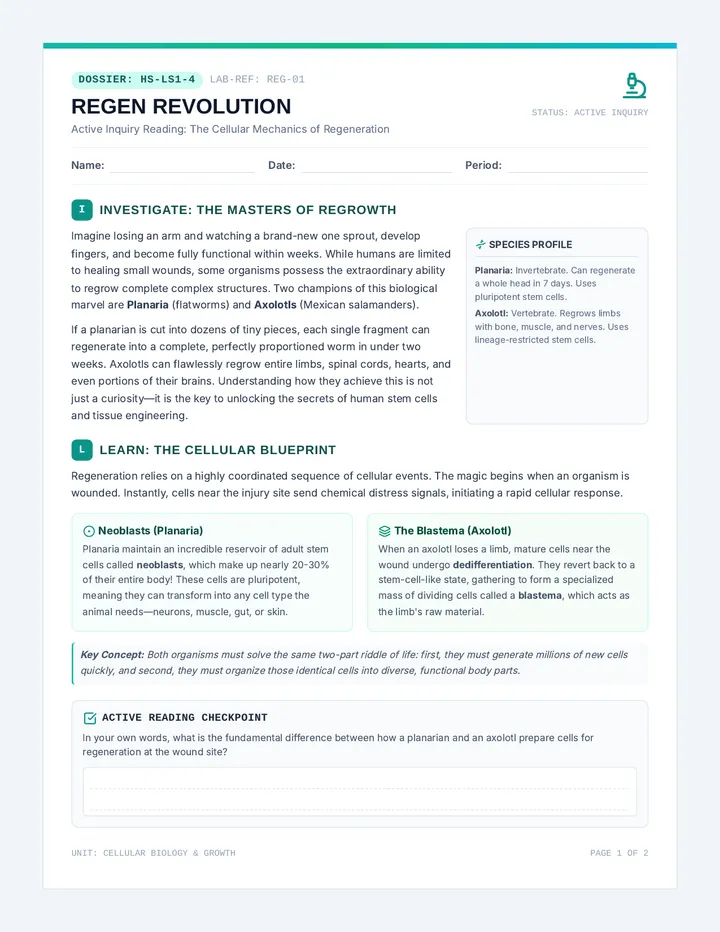
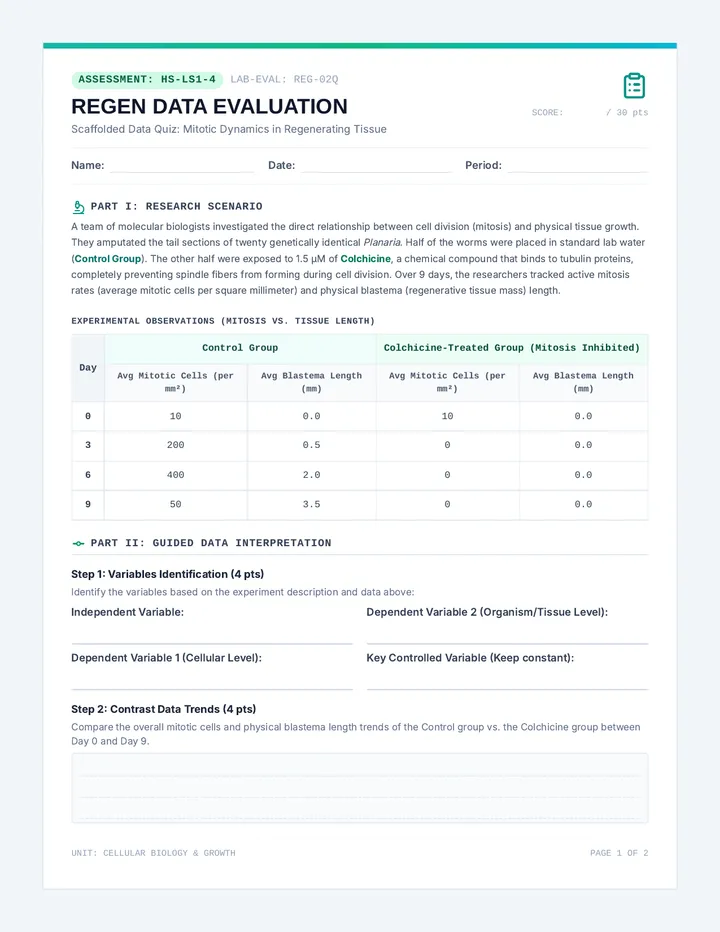
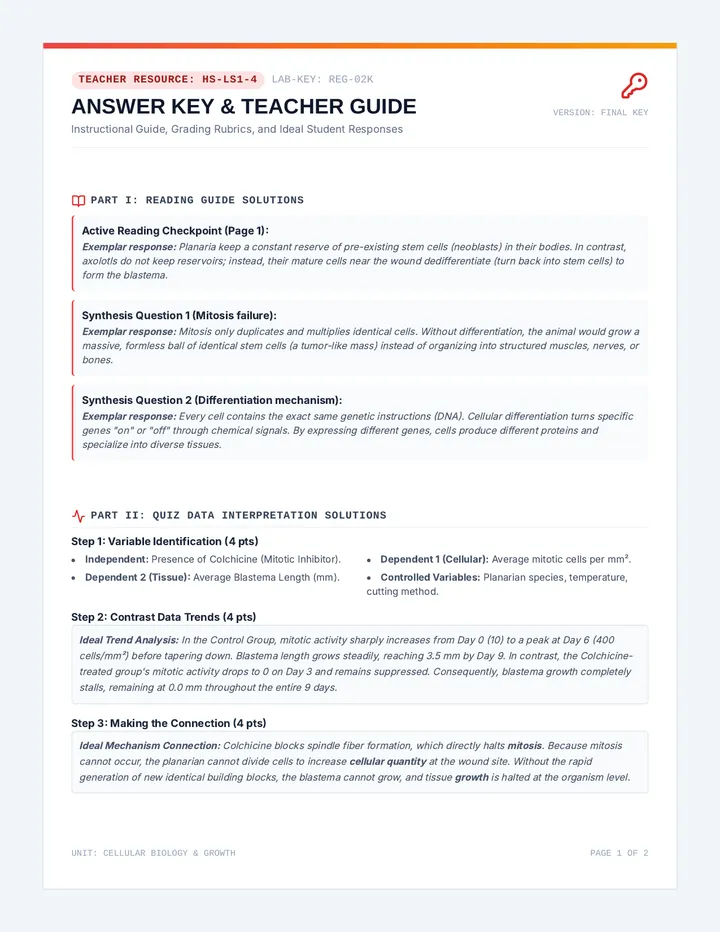
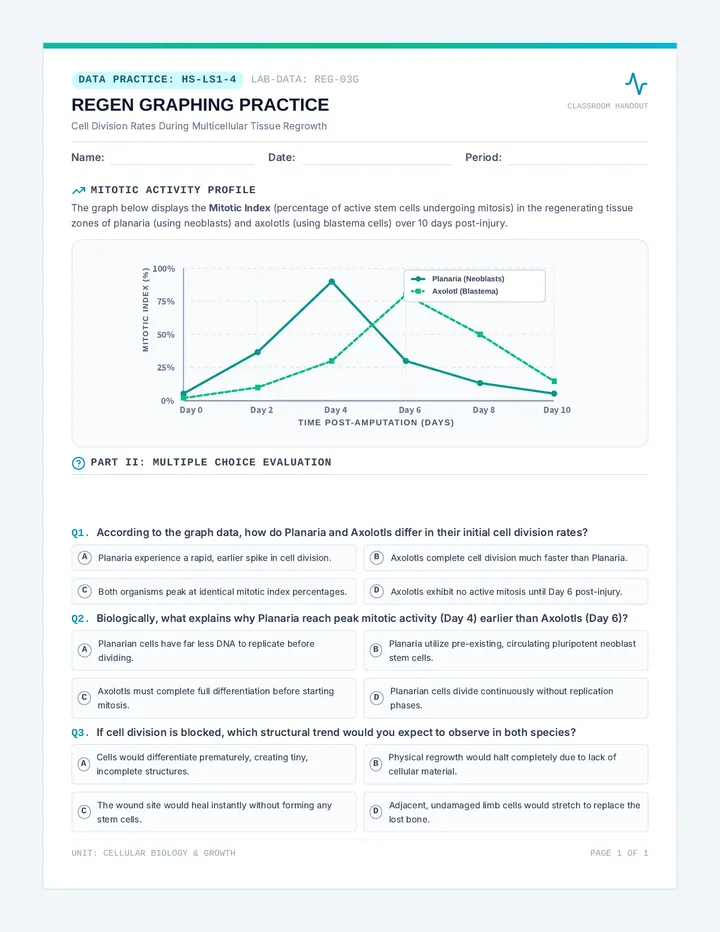
Students will understand the historical context of the scientific method through Galileo's experiments and mathematically prove why gravitational acceleration is independent of an object's mass.
Pacing Guide (50 Minutes)
0-5 min The Hook: Show Leaning Tower of Pisa. Discuss "common sense" vs. scientific observation.
5-15 min Video & Discussion: Watch timestamps 1:57-2:28. Contrast thought experiments with empirical data.
15-40 min Lab Activity: "Recreating Galileo" experiment using water bottles of varying mass.
40-50 min Synthesis: Calculation check and reflection on sources of error (air resistance, human reaction time).
Materials Needed
Empty & Full Water Bottles
Stopwatches / Phones
Meter Sticks
Balance/Scale (optional)
Vocabulary
Paradox: A logical contradiction.
Empirical: Based on observation.
Acceleration (g): Change in velocity over time.
Video: Critical Teaching Moments
1:57 - The Tower Historical Context
Pause & Discuss: Ask students what they think would happen if they dropped a bowling ball and a feather. Mention air resistance vs. a vacuum. Introduce Galileo's 1589 "experiment" (some historians believe it was actually a thought experiment).
3:20 - Formula Fusion Physics Integration
The Setup: When \(F=ma\) and \(F=G\frac{Mm}{r^2}\) are both on screen. Ask: "If gravity is the only force acting on the object, how can we combine these two formulas?" (Set them equal to each other).
4:05 - The Magic Act Mathematical Proof
CRITICAL MOMENT: Pause right before the narrator cancels the mass. Ask: "If we divide by \(m_1\) (the object's mass), what happens to the variable on both sides? Does the size of the object matter anymore?"
Misconceptions
Heavier = Faster: Most students believe heavier objects "fall faster" because they feel a stronger pull. Remind them that while the force is larger, the inertia (resistance to change) is also larger.
Air Resistance: Students often conflate air resistance with mass. Use the "crumpled vs flat paper" example to show that surface area matters more for air resistance than mass does.
Lab Tips
Syncing Drops: Ensure the dropper releases both bottles simultaneously from the same height. Use a flat board or ruler to release both at once.
Reaction Time: Human reaction time is roughly 0.2s. At a height of 2 meters, the fall time is only ~0.64s. Encourage multiple trials and averaging to minimize error.
Safety: Use plastic bottles (not glass). Ensure the drop zone is clear.
Gravity Paradox Slides Gravity Paradox
Uncovering the truth about falling objects from Galileo to Newton
The Mystery Tower
🇮🇹
This is the Leaning Tower of Pisa.
"What do you know about this tower from a scientific perspective?"
Think about: Shape, mass, gravity, and stability.
1589
The Father of Observation
Galileo Galilei
He challenged 2,000 years of "common sense" wisdom from Aristotle.
The Claim: "Heavier objects fall faster."
The Discovery: In a vacuum, all objects fall at the same rate.
"In a question of science, the authority of a thousand is not worth the humble reasoning of a single individual."
The Physics Paradox
Watch: 1:57 - 2:28
Embedded media
Thought Experiment
Logical reasoning without physical testing.
Empirical Experiment
Gathering data through observation and measurement.
The Conflict
FACT A
Gravitational FORCE depends on mass.
\(F = G \frac{Mm}{r^2}\)
(Bigger object = More pull)
Paradox!
FACT B
Gravitational ACCELERATION is the same for all.
\(g = 9.8 \text{ m/s}^2\)
(Bowling ball = Feather)
The "Magic" of Cancellation
1
Force of Gravity = Force of Acceleration
\(m_1 a = G \frac{M_e m_1}{r^2}\)
2
Divide both sides by \(m_1\)... and it disappears!
\(a = G \frac{M_e}{r^2}\)
Activity: Recreating Galileo
The Challenge
Prove that mass doesn't affect acceleration using water bottles of different weights.
Use a Full vs. Empty bottle.
Drop from the same height.
Time the fall (3 trials each).
Pro-Tips
Release both bottles at the exact same time .
Use a meter stick to ensure precise height.
Average your results to reduce human error.
Final Thoughts
Why aren't results perfect?
Air Resistance
Gravity Paradox Lab Worksheet Recreating Galileo
Physics Lab: Gravitational Acceleration
Student Name
Date
The Pisa Experiment
In 1589, Galileo Galilei supposedly dropped two spheres of different masses from the Leaning Tower of Pisa to demonstrate that their time of descent was independent of their mass. Today, we resolve this "paradox" by testing it empirically and checking the mathematical proof from our video.
Materials
Empty Water Bottle
Full Water Bottle
Stopwatch
Meter Stick
Hypothesis
If we drop a full bottle and an empty bottle from the same height, then...
Experimental Data
Drop Height (d) = _________ meters
Object Type Trial 1 (s) Trial 2 (s) Trial 3 (s) Avg Time (t) Empty Bottle Full Bottle
Data Analysis
Calculate Acceleration (a):
\(a = \frac{2d}{t^2}\)
Use your average time (t) and your measured height (d).
Show Your Work (Full Bottle):
Synthesis & Reflection
1. Compare the falling speed of the full bottle vs. the empty bottle. Did your empirical results support Galileo's claim?
2. In the video, the narrator shows a "magic moment" in the math where a variable cancels out. Which variable was it, and why does this solve the "Paradox"?
3. Why wasn't your calculated acceleration exactly \(9.8 \text{ m/s}^2\)? Identify at least two specific sources of error in your experiment.
Gravitational Acceleration Constant (g) ≈ 9.80665 m/s²
Gravity Paradox Answer Key Gravity Paradox
Lab Worksheet Answer Key & Discussion Guide
Teacher Resource
Sample Data & Analysis
Theoretical Calculation
If a student drops a bottle from 2.0 meters :
t = \(\sqrt{\frac{2d}{g}}\) = \(\sqrt{\frac{4.0}{9.8}}\) ≈ 0.64 seconds
Note: This is very fast! Expect student times to be higher (0.8s - 1.0s) due to human reaction time at the start and stop of the stopwatch.
The Paradox Formula
Set Newton's 2nd Law equal to Universal Gravitation:
\(m_1 a = G \frac{M_e m_1}{r^2}\)
Cancellation: Divide both sides by \(m_1\) (the mass of the object). The acceleration (\(a\)) remains constant regardless of how large \(m_1\) is.
Reflection Response Guide
1. Did your empirical results support Galileo's claim?
Ideal Answer: Yes. Even if the times weren't identical, the bottles should have hit the ground nearly simultaneously. The mass difference (approx. 500g vs 20g) did not result in a significant time difference.
2. Which variable cancelled out, and why does this solve the Paradox?
Ideal Answer: The variable \(m_1\) (mass of the falling object) cancelled out. This solves the paradox because while the force of gravity is indeed stronger on a heavier object, the acceleration doesn't care about the object's mass—only the mass of the planet (\(M_e\)).
3. Identify at least two specific sources of error.
Human Reaction Time: Delay in pressing the stopwatch button (usually adds ~0.2s).
Air Resistance: While the bottles are similar shapes, air resistance still acts on them slightly differently based on cross-sectional stability.
Release Synchronization: Difficulty in releasing both bottles at the exact same micro-second.
Troubleshooting Unexpected Results
Result: Empty bottle falls significantly slower.
Cause: If the bottles are dropped from a very high distance (e.g., 3rd floor balcony), air resistance becomes a larger factor for the empty bottle because it has less momentum to overcome the drag. Ensure drops are from ~2 meters.
Result: Calculated acceleration is > 15 m/s².
Cause: Under-timing the fall. If the timer starts late or stops early, the calculated acceleration will skyrocket. Suggest using video analysis (slow-mo) on phones for more accurate timing.