A student activity guide for implementing a wall-following algorithm. Includes hardware setup, pseudocode completion with nested logic, and a debugging log.
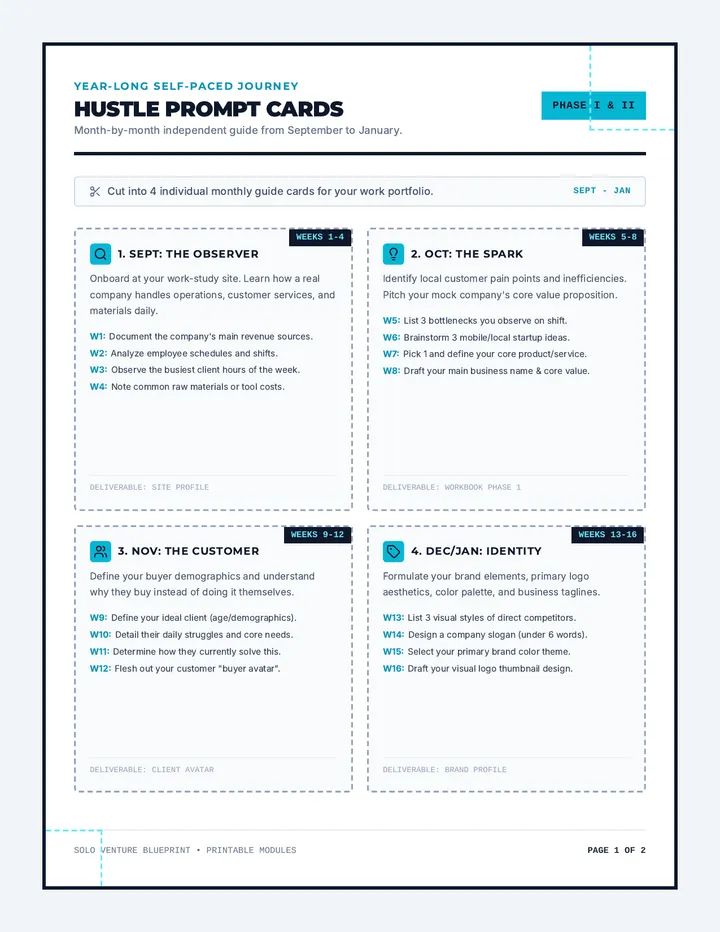
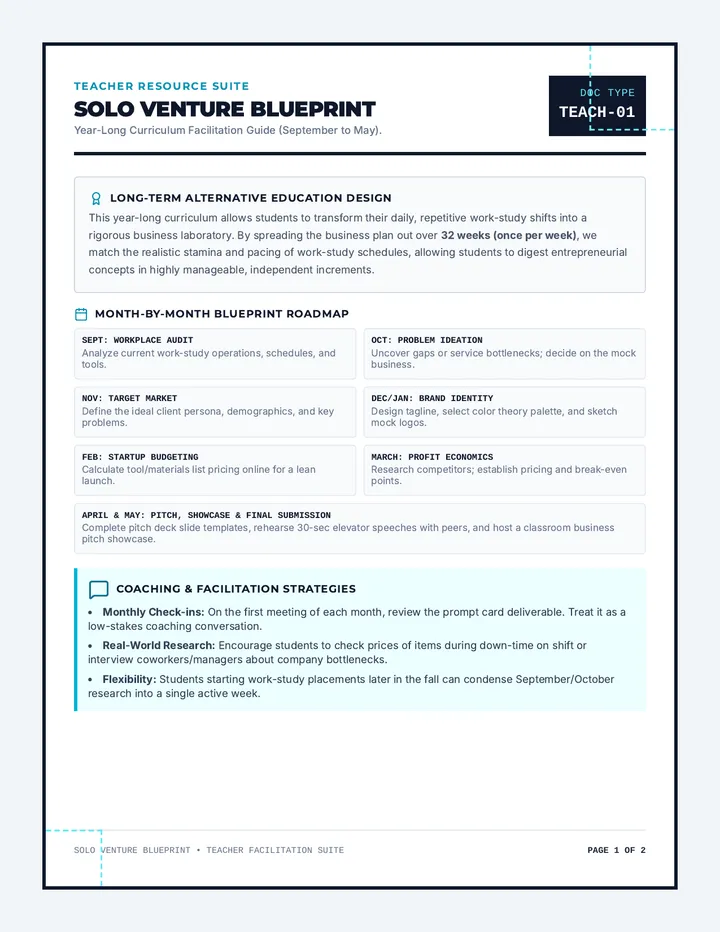
A year-long, self-paced entrepreneurship curriculum spanning September to May for alternative education students in work-study placements. Students transform real-world work experience into a modular business plan and slide presentation.
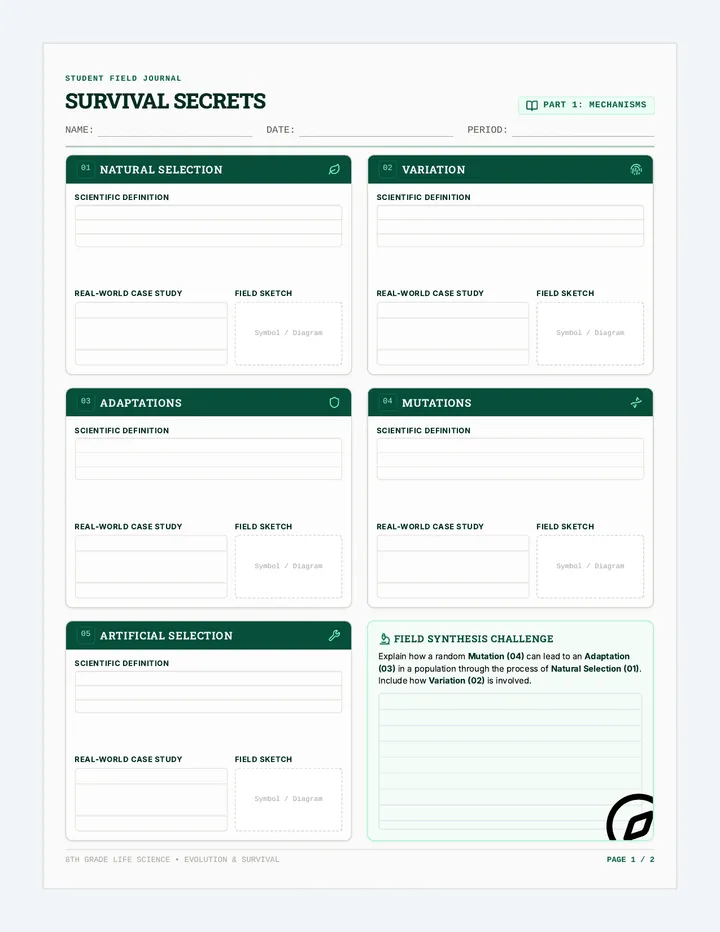
An active-recall study unit on natural selection and evolutionary evidence, featuring graphic organizers, application activities, and a practice quiz.
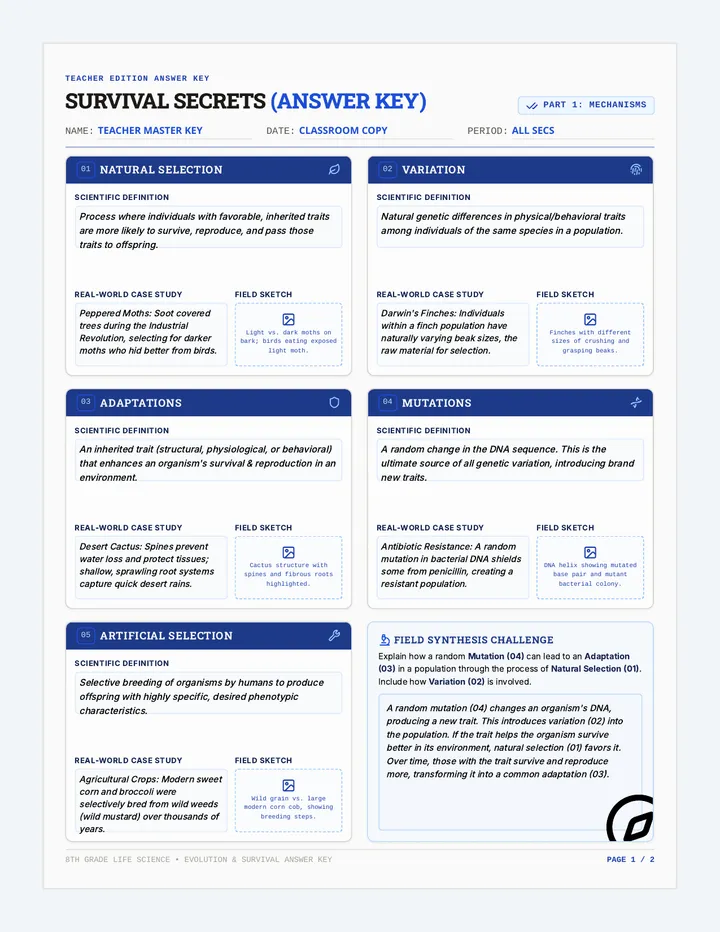
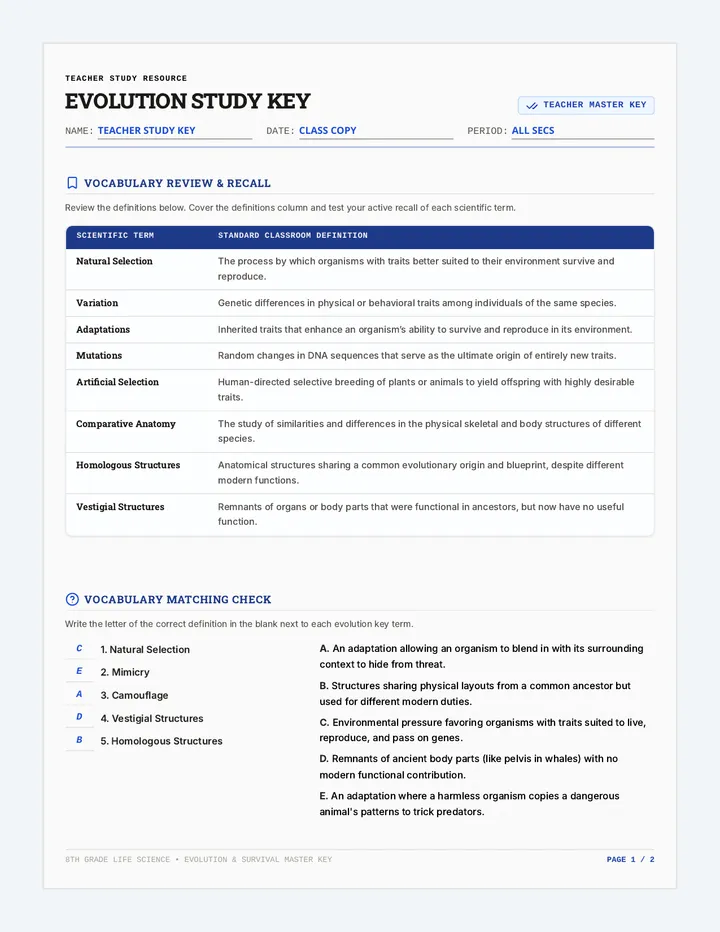
Complete teacher answer key for the Evolution Study Guide, containing completed vocabulary matching and high-quality exemplar written responses styled in blue ink.
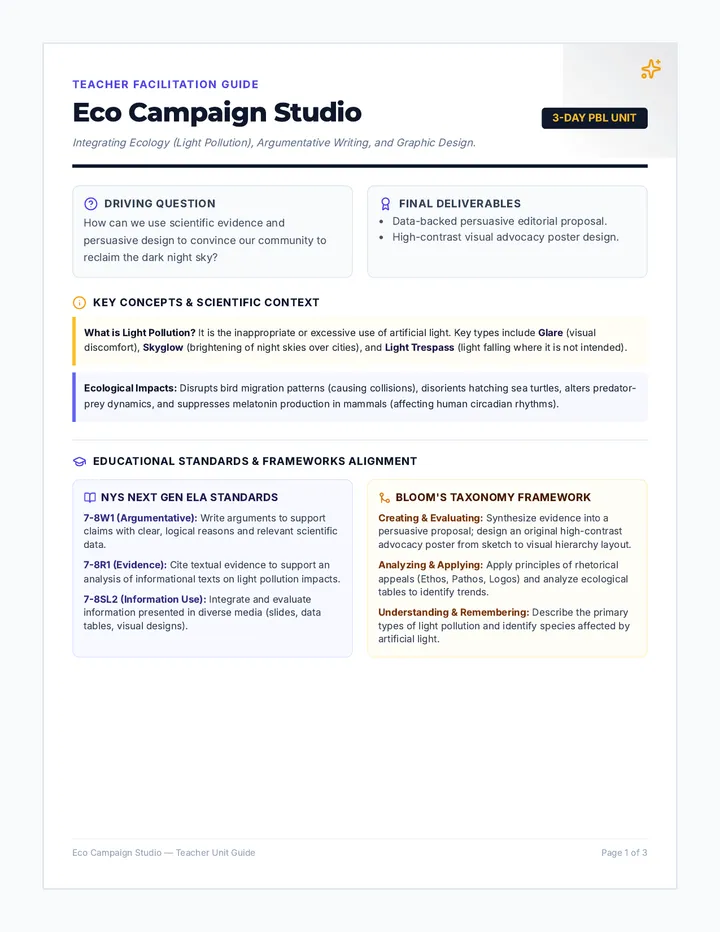
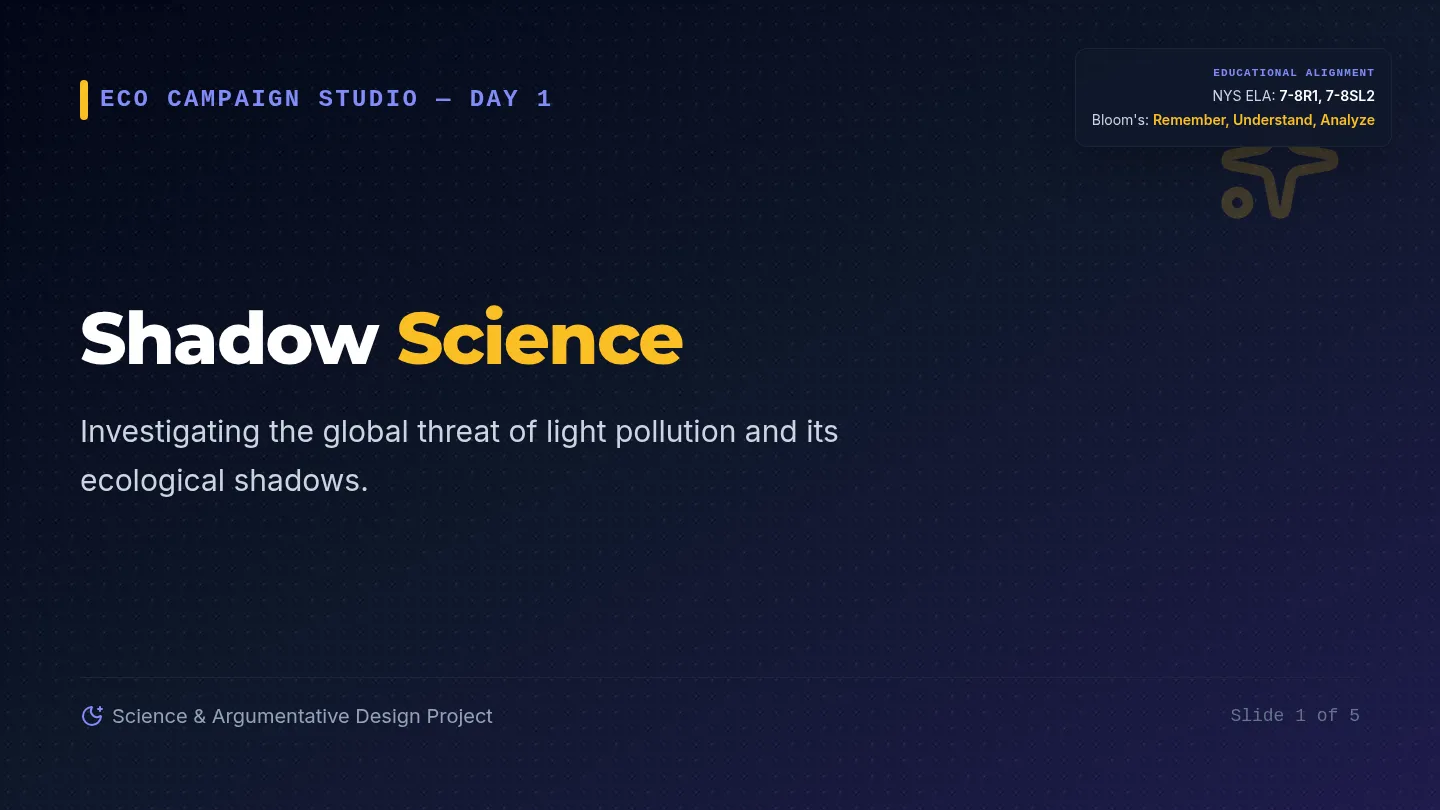
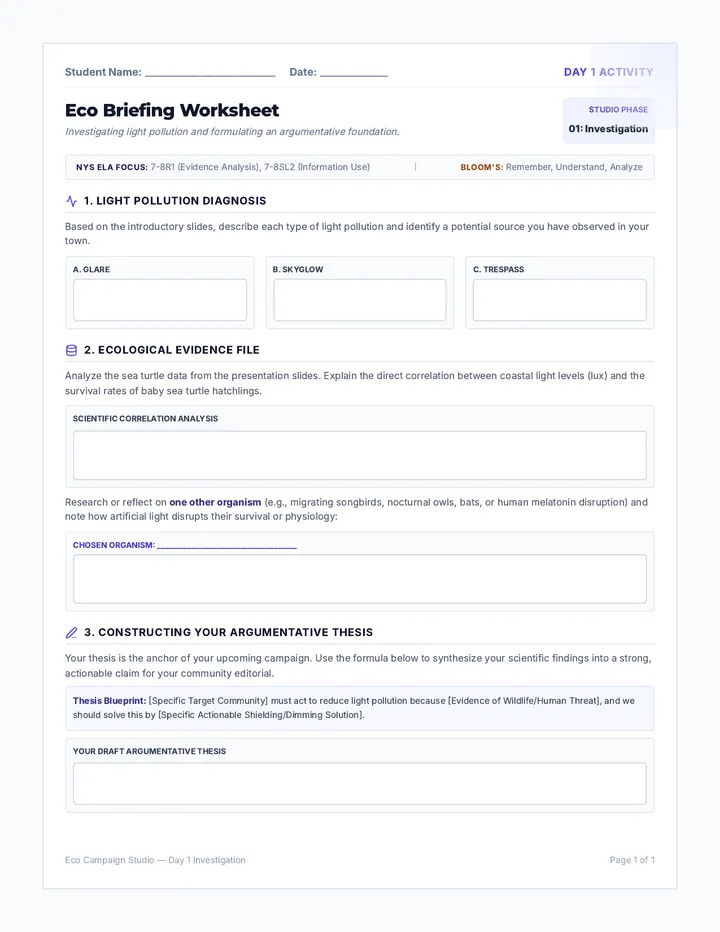
A cross-curricular, 3-day project-based unit combining science, argumentative writing, and graphic design. Students investigate the ecological impacts of light pollution, write a data-driven persuasive proposal, and design a community awareness campaign poster.
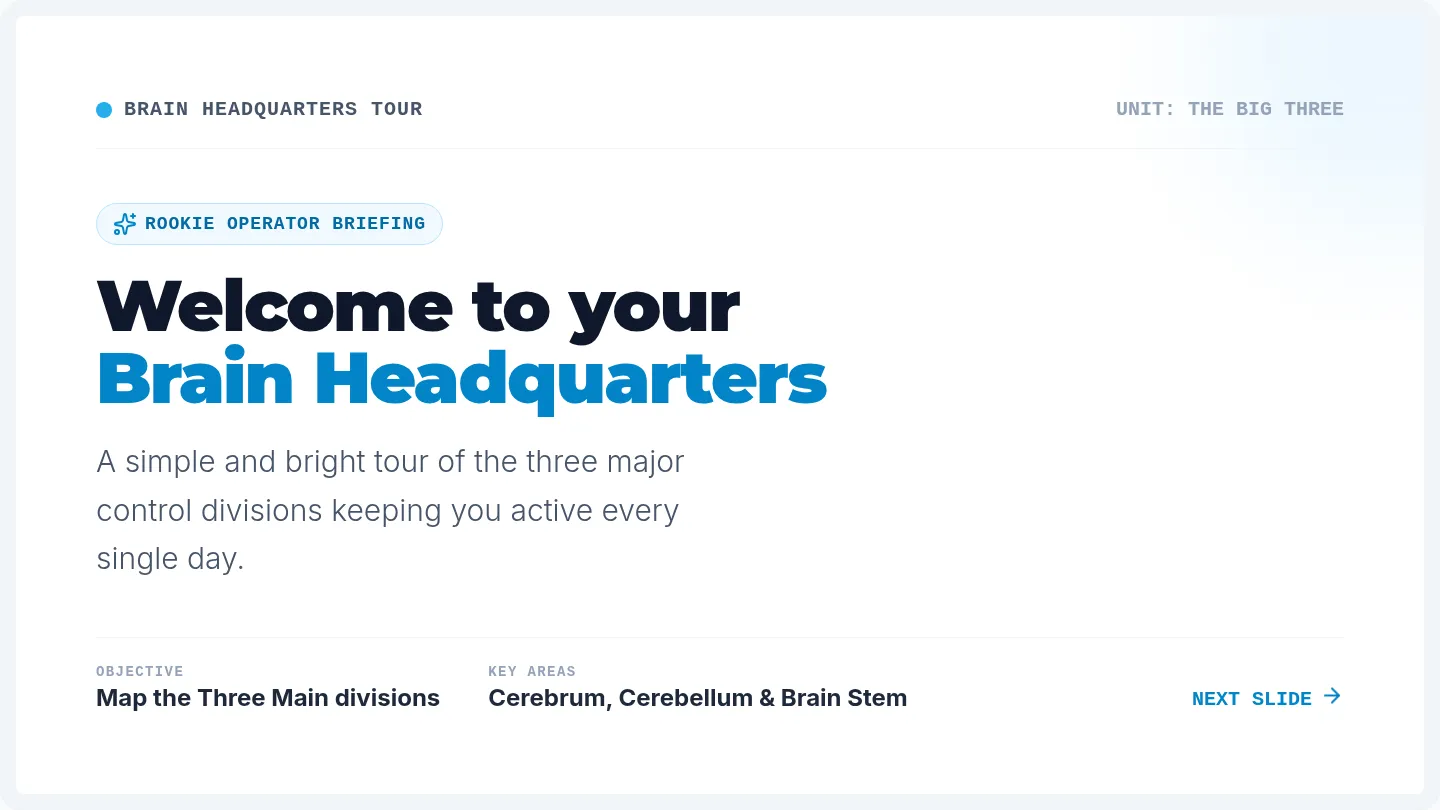
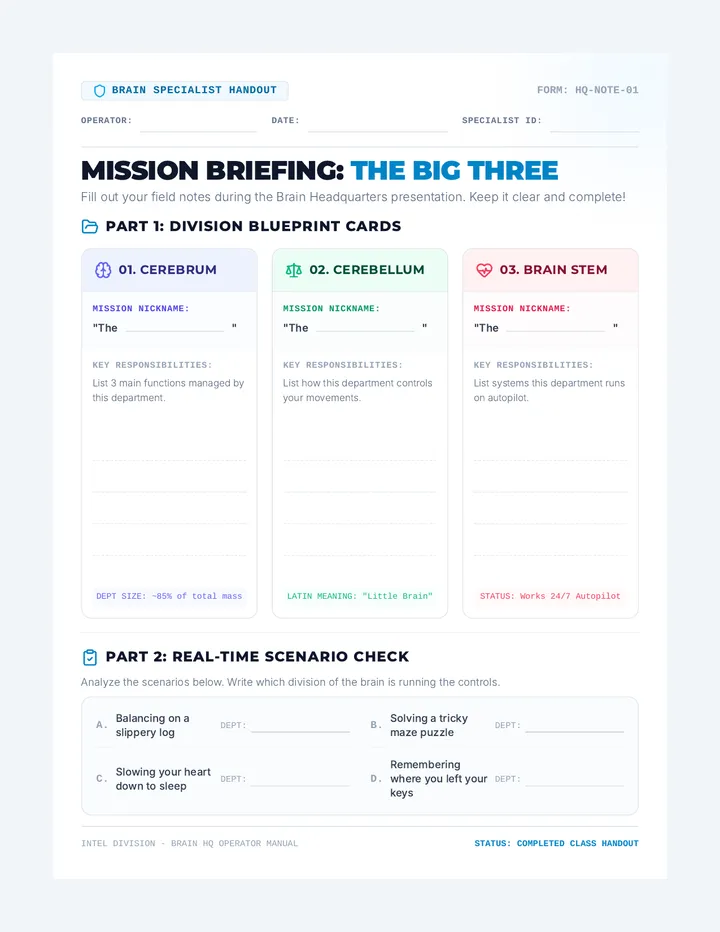
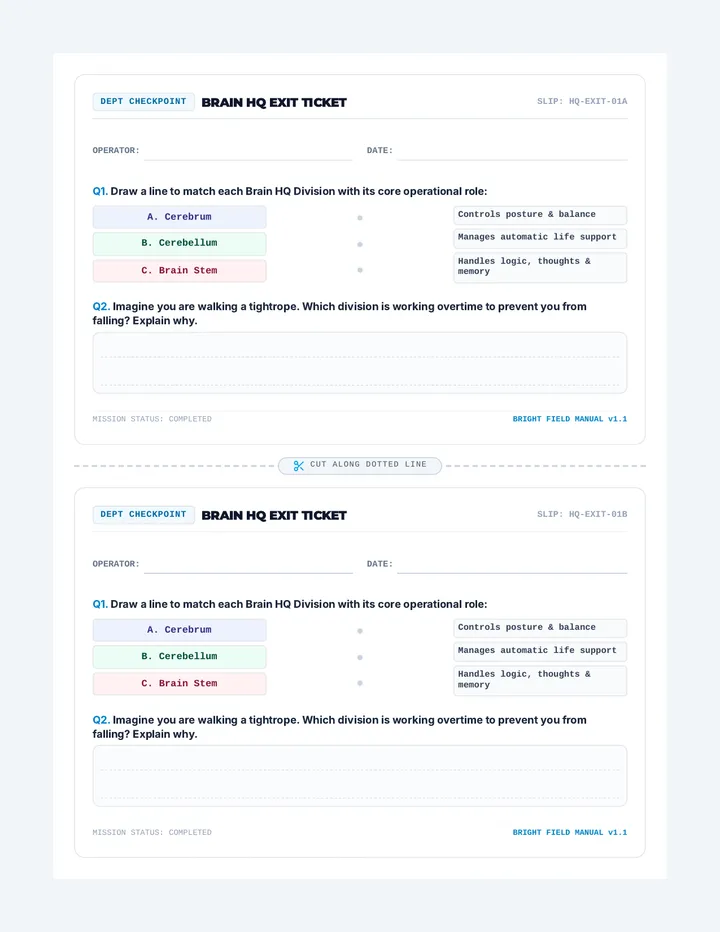
An interactive lesson introducing elementary or middle school students to the three major divisions of the brain: the Cerebrum, Cerebellum, and Brain Stem.
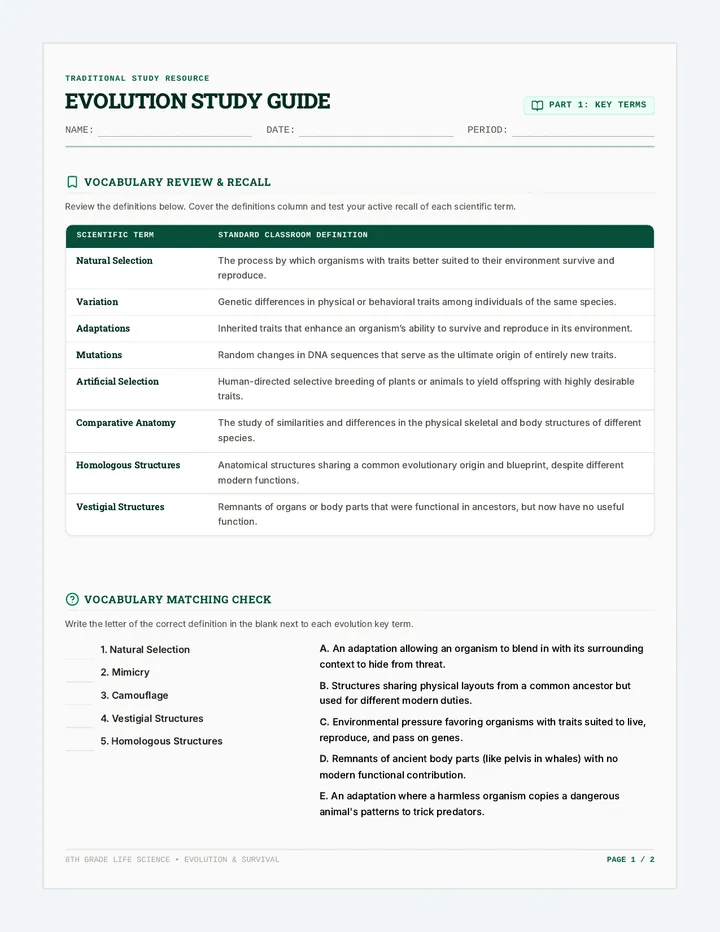
A traditional 2-page print-ready study guide for 8th-grade science, featuring direct definitions, structured vocabulary matching, and four scenario-based short-answer practice questions.
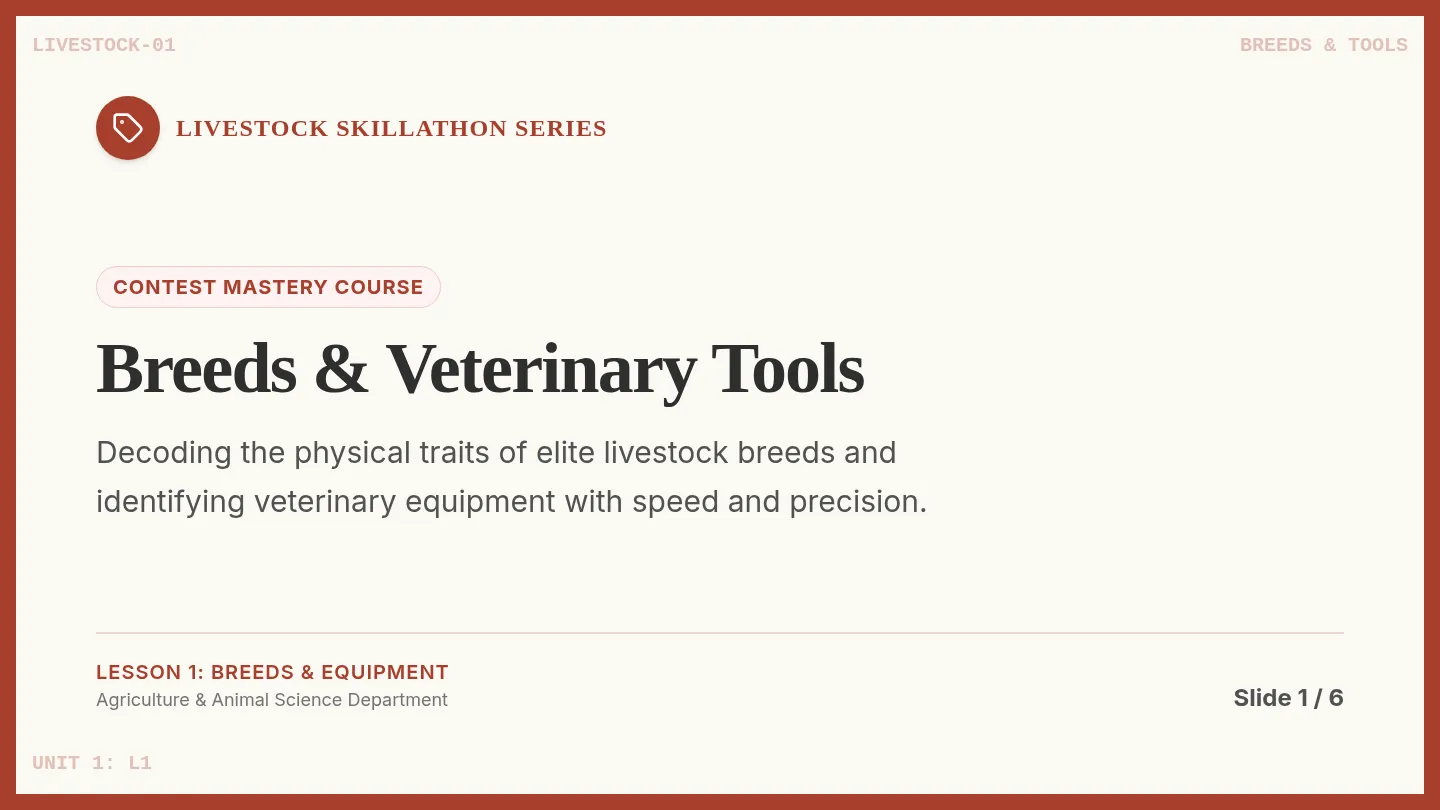
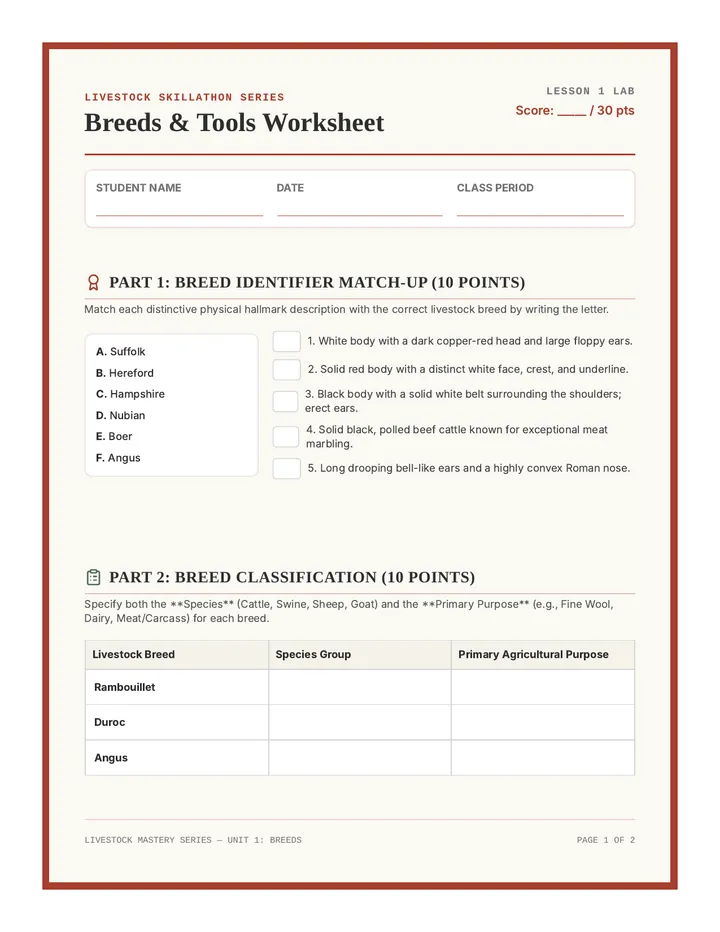
An immersive preparation program that equips agriculture students with the hands-on identification and evaluation skills needed to conquer competitive Livestock Skillathon contests.
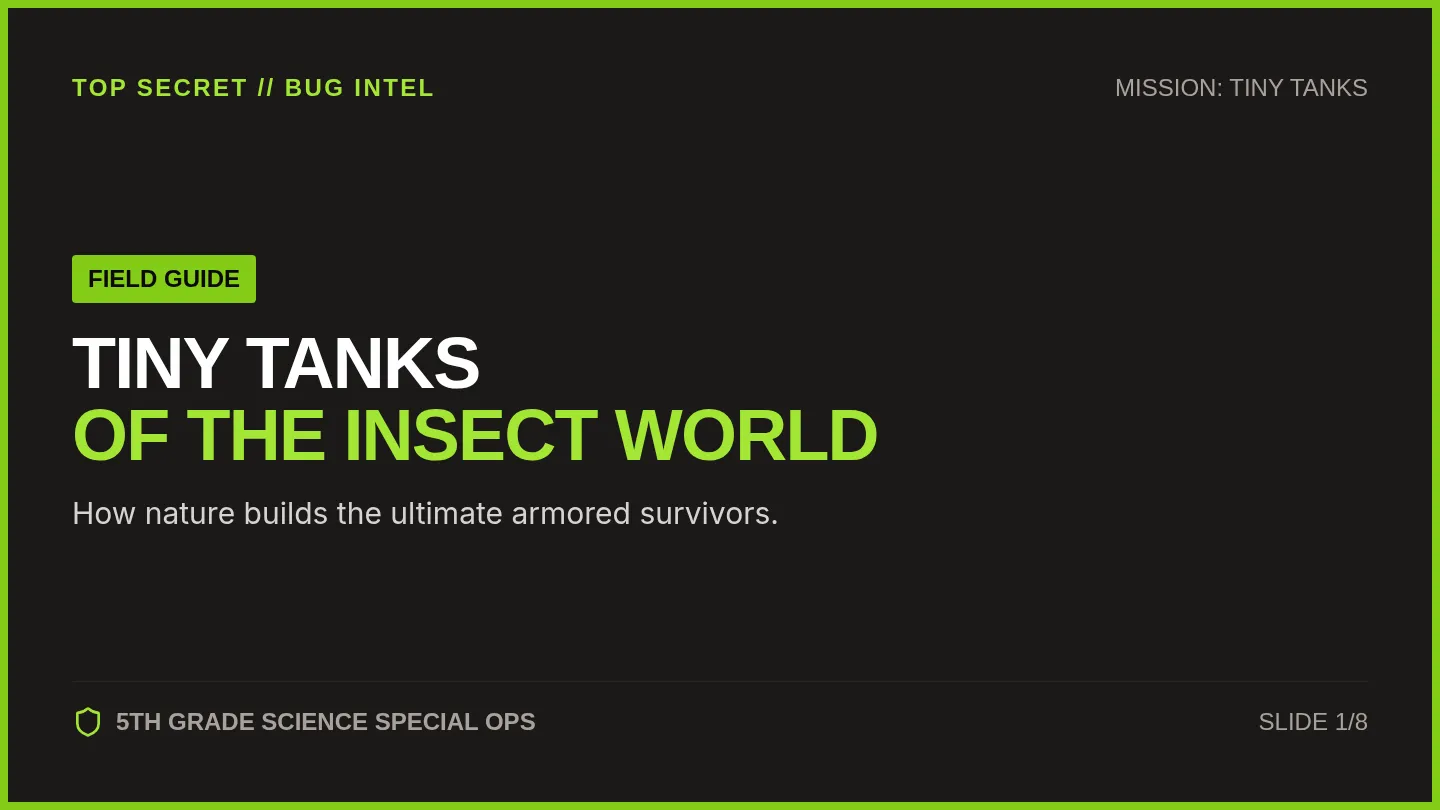
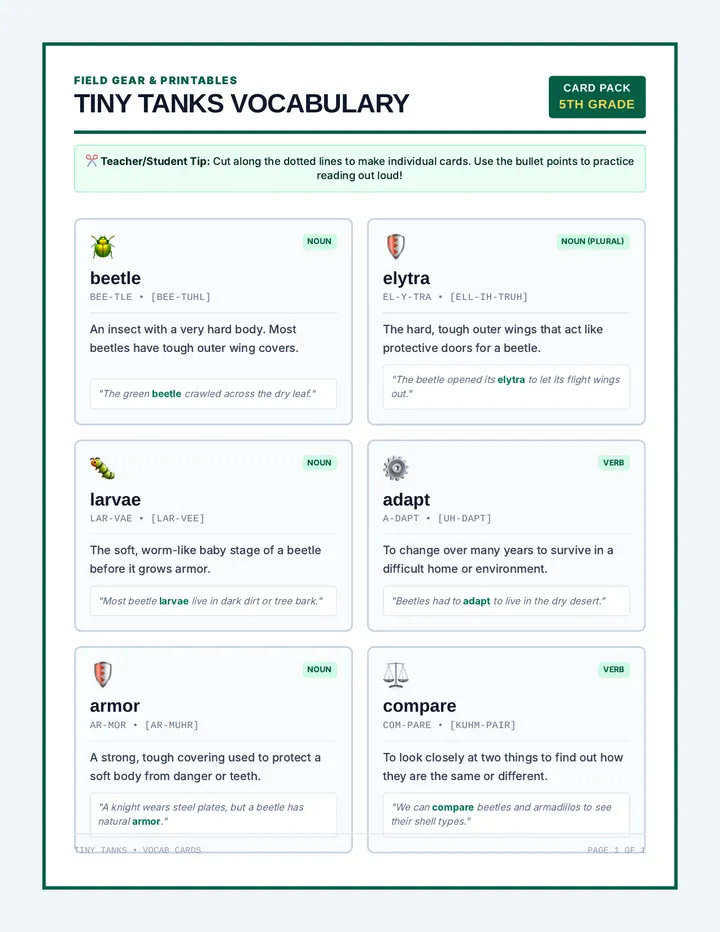
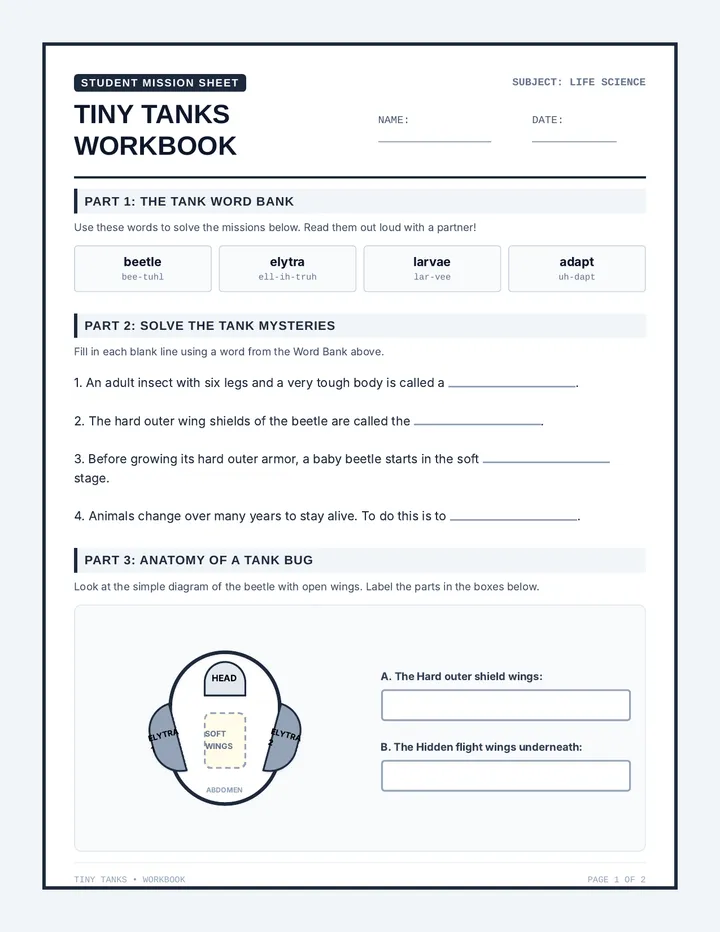
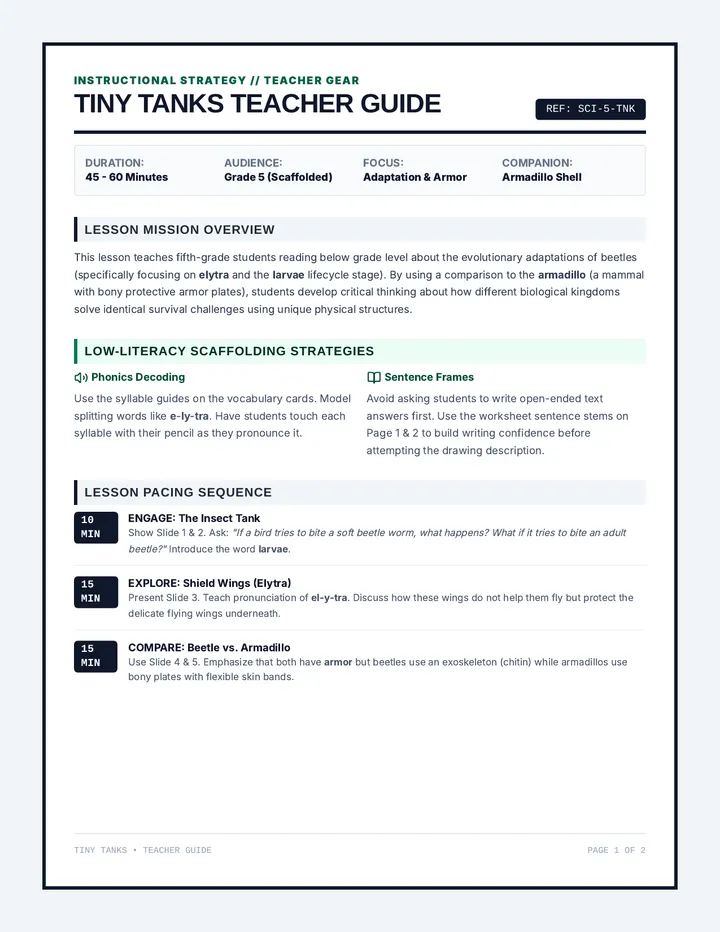
An engaging, highly visual science lesson exploring beetles as the armored tanks of the insect world, designed specifically for fifth-grade students reading below grade level. Students learn about elytra, beetle adaptation, and compare insect armor to that of the armadillo through scaffolded activities.
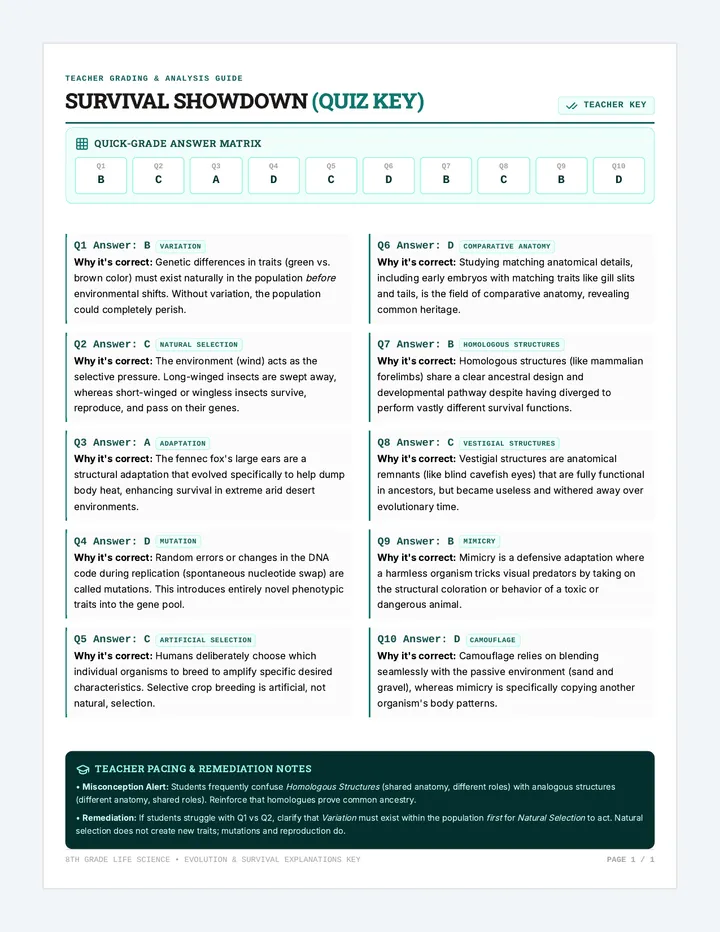
A detailed single-page teacher answer key and pedagogical guide for the Survival Showdown Quiz, containing a quick-grade matrix and thorough explanations for why each option is correct or incorrect.
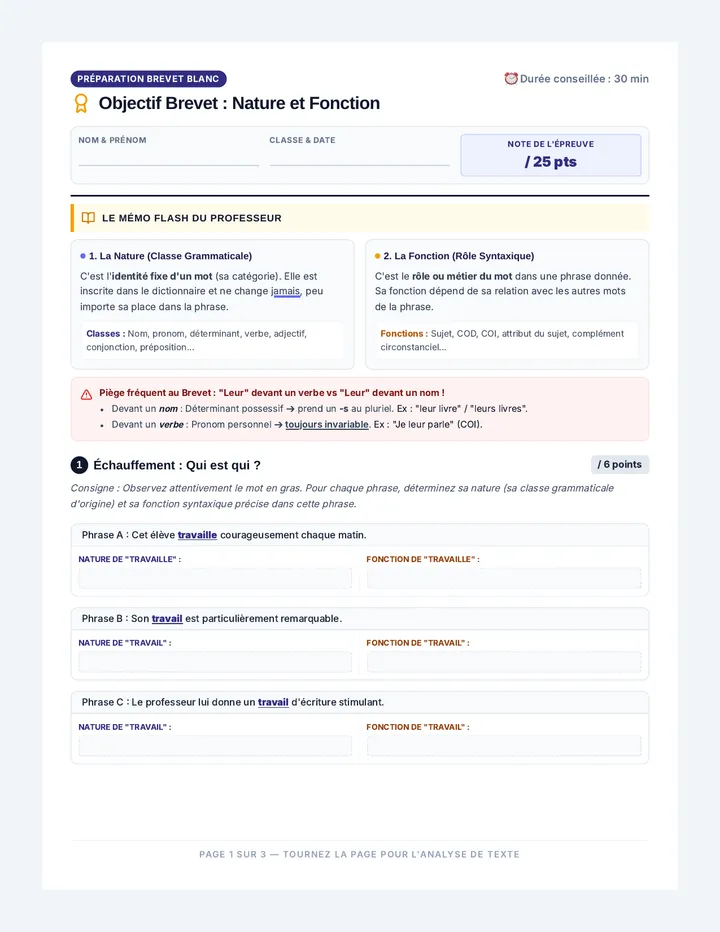
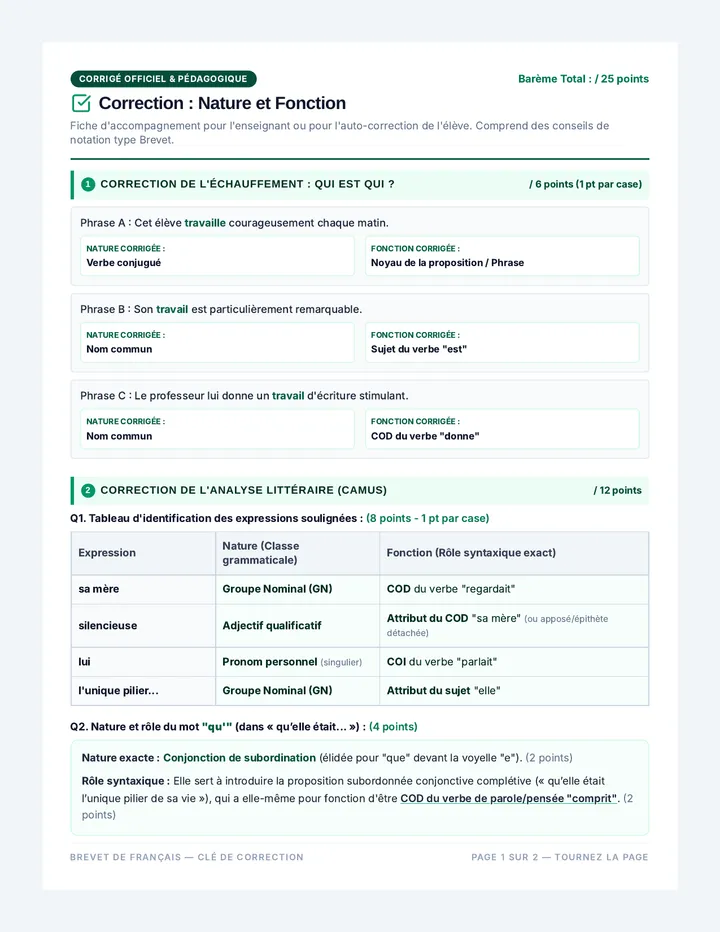
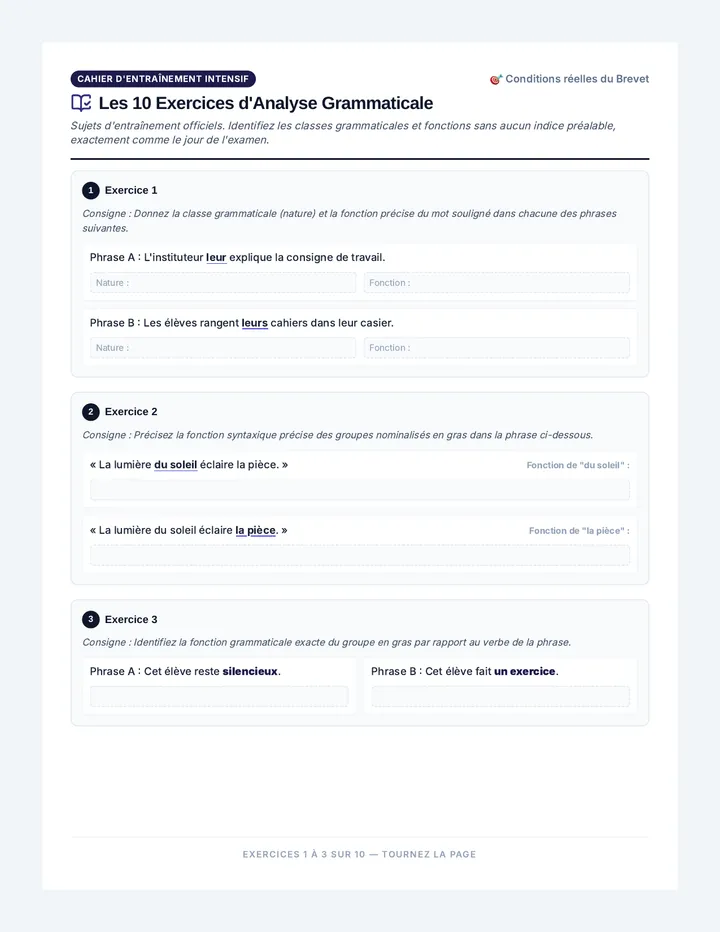
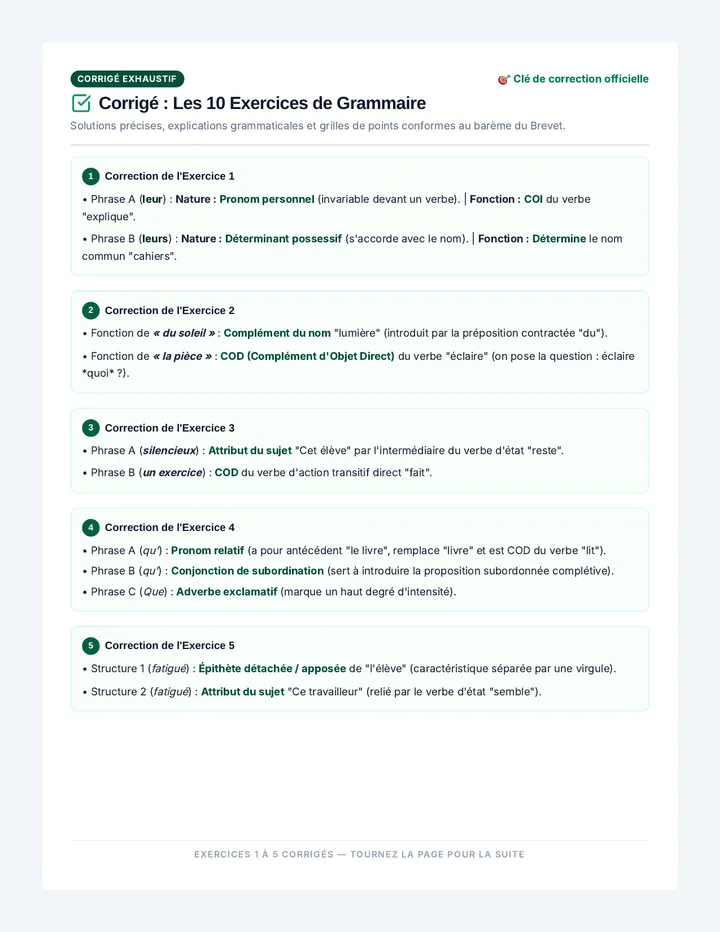
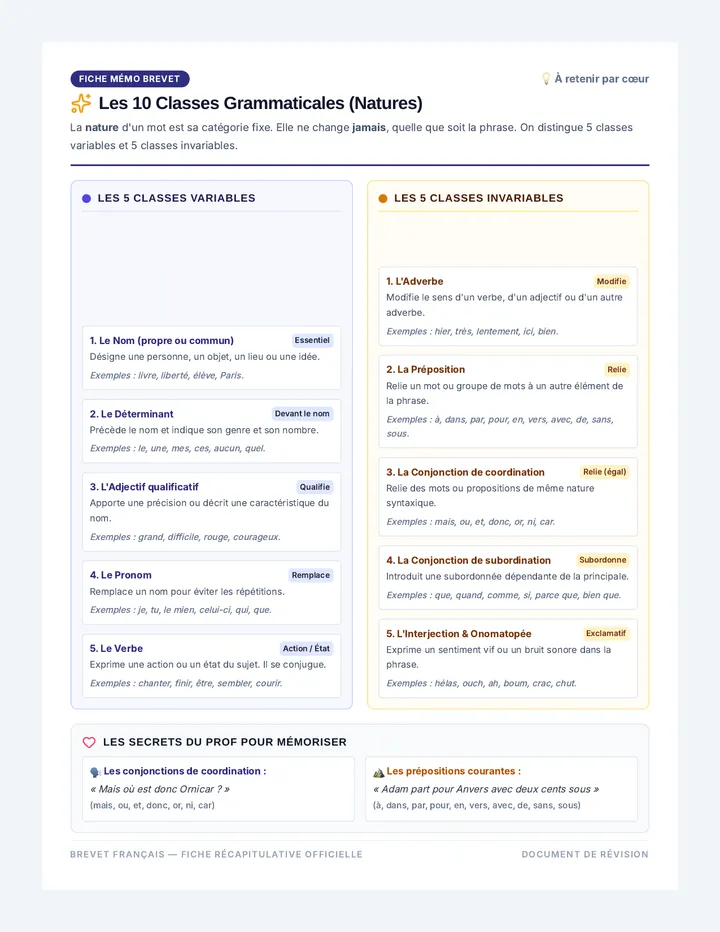
Un programme complet de révision intensive pour le Brevet, regroupant des fiches, exercices et corrigés détaillés en français et en physique-chimie.
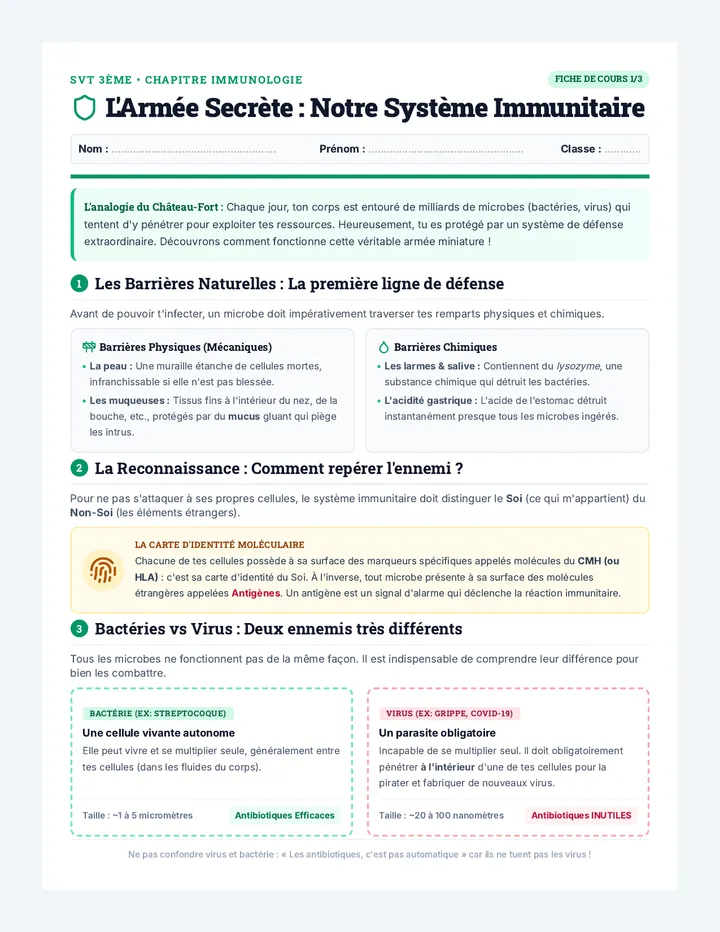
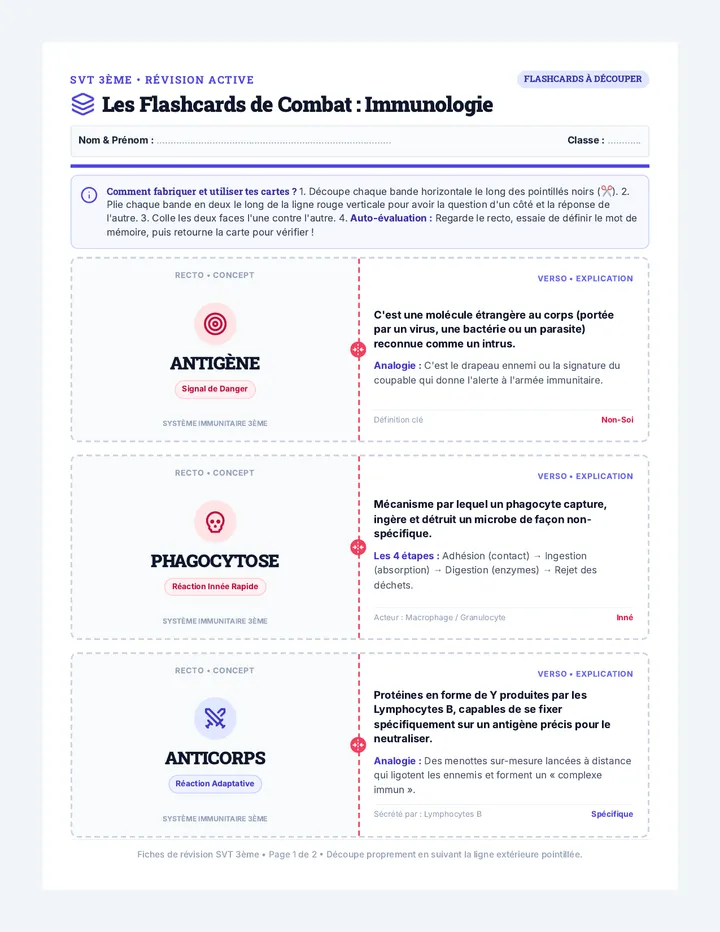
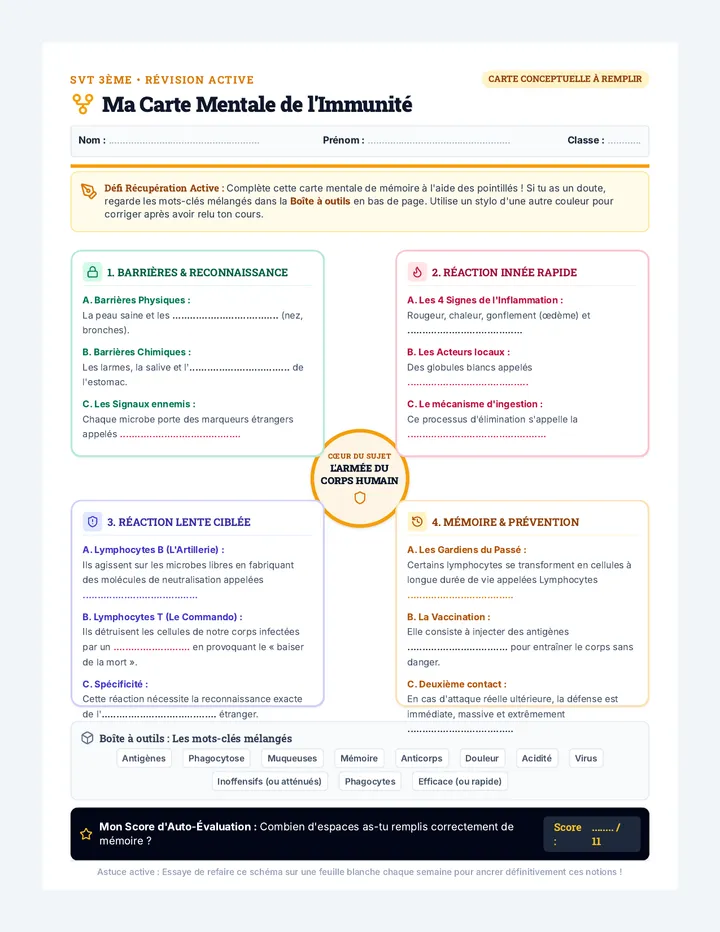
Une leçon complète et ultra-pédagogique de SVT (niveau 3ème) sur le système immunitaire. Conçue avec des analogies percutantes, des schémas structurés et des outils de révision active pour garantir la compréhension et la mémorisation de tous les élèves.
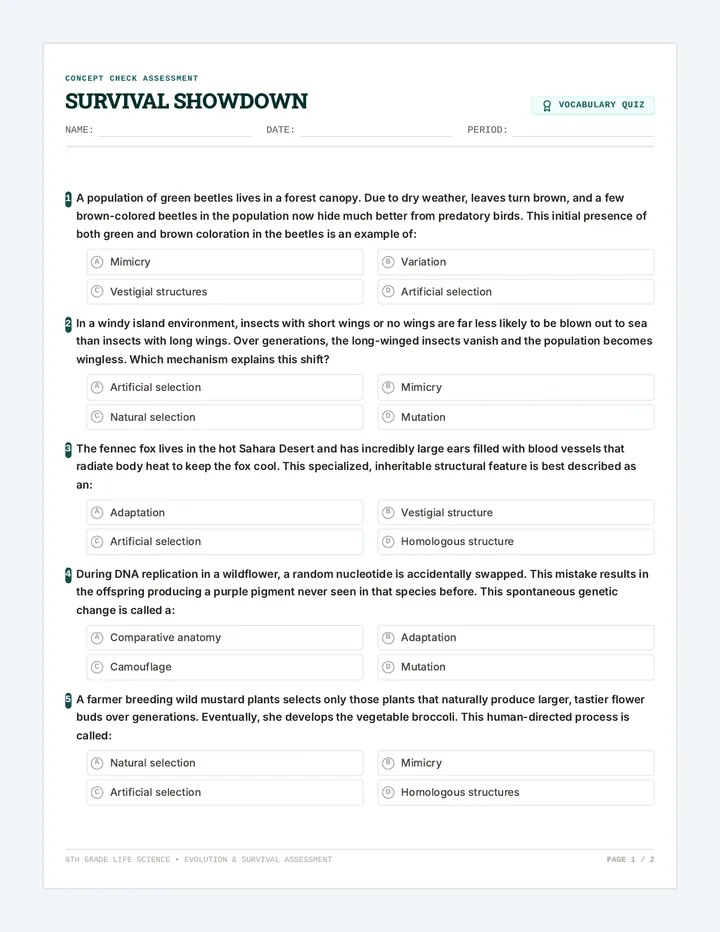
A 10-question application-based multiple-choice practice quiz for 8th-grade science students, testing their mastery of natural selection and evidence of evolution vocabulary under real-world scenarios.