Lenny.com
Explore
Create
ActivitiesNewCurriculumNewMathEnglish Language ArtsScience & EngineeringSocial StudiesGlobal LanguagesHealth & Physical EducationSpecial EducationCounseling & Life SkillsArts & CreativityESL
Lenny.com
Lenny.com
Explore
Create
ActivitiesNewCurriculumNewMathEnglish Language ArtsScience & EngineeringSocial StudiesGlobal LanguagesHealth & Physical EducationSpecial EducationCounseling & Life SkillsArts & CreativityESL
Lenny.com
Lenny.com

Solutions

Lenny for EducatorsLenny for SchoolsLenny for Districts

Product

ExploreSign inCreateSupportAbout

Resources

Getting startedMTSS Acceleration Program

Newsletters

School Funding Newsletter

© 2026 Lenny Learning Inc.

TermsPrivacyAccessibility
LinkedInInstagramX
Lenny
English Language ArtsPhonics & Reading FoundationsLetter IdentificationLearn Letters A-ZLowercase and Uppercase LettersConsonants and VowelsLetter-Sound AssociationsLetter-Sound Associations: LowercaseLetter-Sound Associations: UppercaseBeginning and Ending SoundsRhymingBlending And SegmentingShort VowelsShort Vowel SoundsConsonant BlendsConsonant DigraphsBlends, Digraphs, and TrigraphsDigraphs, Blends, and Silent LettersLong Vowel SoundsLong Vowel PatternsShort and Long VowelsShort and Long Vowel PatternsSilent EVowel SoundsVowel TeamsR-Controlled VowelsDiphthongs: Oi, Oy, Ou, OwVariant VowelsVariant, Diphthong, And R Vowel PatternsSoft G And CSight WordsIrregular WordsWord RecognitionSyllablesSyllable TypesTwo-Syllable WordsMultisyllabic WordsPhoneme ManipulationDecodable TextsVocabularyAction WordsQuestion WordsNouns and AdjectivesClassify WordsCompound WordsSynonyms and AntonymsHomophonesHomophones and HomonymsShades of MeaningContext CluesPrefixes and SuffixesGreek and Latin RootsAnalogiesIdioms and AdagesForeign Words and ExpressionsWord Choice and UsageReference SkillsReading ComprehensionRead-Along Literary TextsRead-Along Informational TextsReality vs. FictionStory ElementsCharacterSequenceMain IdeaCause And EffectCompare And ContrastReading StrategiesText StructureAuthor's PurposeAuthor's Purpose And ToneAuthor's PerspectivePoint Of ViewThemeInference And ThemeInference And AnalysisPoetry ElementsLiterary DevicesAnalyzing LiteratureAnalyzing Informational TextsComparing TextsAudience, Purpose, And ToneBusiness DocumentsNovel StudyNonfiction Book StudyGrammar & MechanicsSentencesNounsVerbsAdjectivesPronounsCapitalizationPunctuationContractionsConjunctionsPrepositionsArticlesAdjectives And AdverbsVerb TypesVerb TensePronouns And AntecedentsPronoun TypesSubject-Verb AgreementDirect And Indirect ObjectsSentences, Fragments, And Run-OnsPhrases And ClausesCommasSemicolons, Colons, And CommasDashes, Hyphens, And EllipsesSpellingAbbreviationsFormattingVerb Tense And MoodMisplaced ModifiersWritingDescriptive DetailsCreative WritingOpinion WritingTopic SentencesOrganizing WritingLinking WordsSentence VarietyIntroductions And ConclusionsPersuasive And Opinion WritingExpository WritingPersuasive StrategiesDeveloping And Supporting ArgumentsTopic Sentences And Thesis StatementsSummarizingResearch SkillsEditing And RevisingActive And Passive Voice=Writing Clearly And ConciselyDebate & Public SpeakingPublic Speaking BasicsPersuasive TechniquesClaims and EvidenceTypes of ArgumentsReasoning TypesLogical FallaciesTopic ResearchOrganizing EvidenceDebate Speech OrganizationAttacking and Defending ArgumentsClash and EngagementImpact CalculusQuestioning and Cross-ExaminationCritical ThinkingInformal LogicFormal LogicInductive Reasoning

Summary Blueprint Template

A structured two-page summarizing organizer and sentence starter toolkit for students. Features categorized sentence frames for main ideas, key supporting details, and conclusions, paired with guided planning boxes and a paragraph drafting sheet with a self-assessment checklist.

SSaWashburn

You might also like

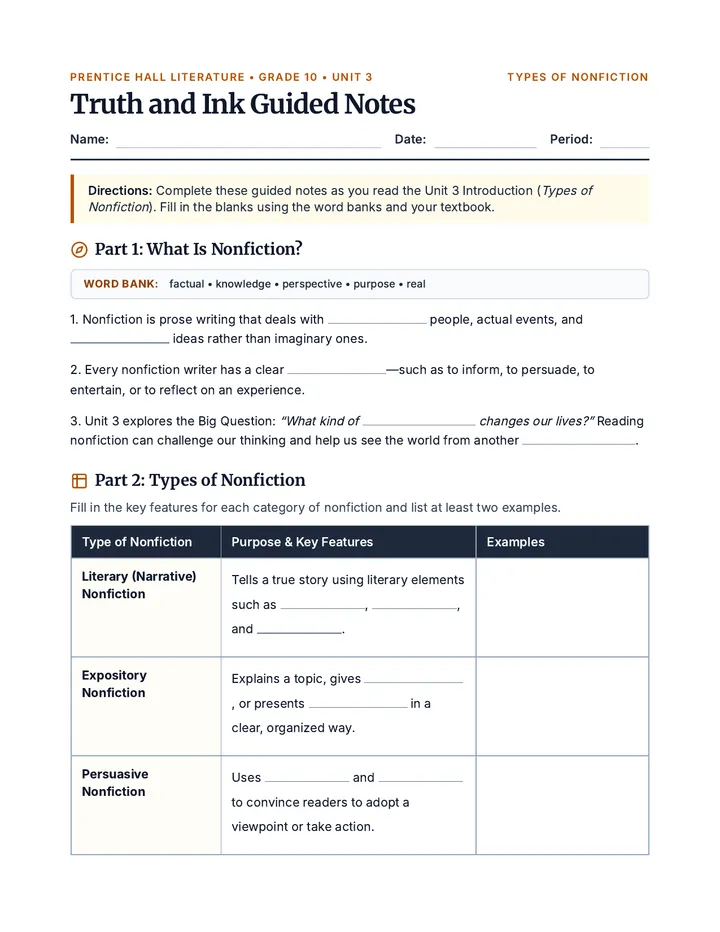
Truth and Ink Guided Notes

Nonfiction Foundations

A three-lesson sequence of Unit 3: Types of Nonfiction introductory guided notes and answer keys for Grade 10, Grade 9, and Grade 8 Prentice Hall Literature Common Core Edition.

PR

Paula Rein

6
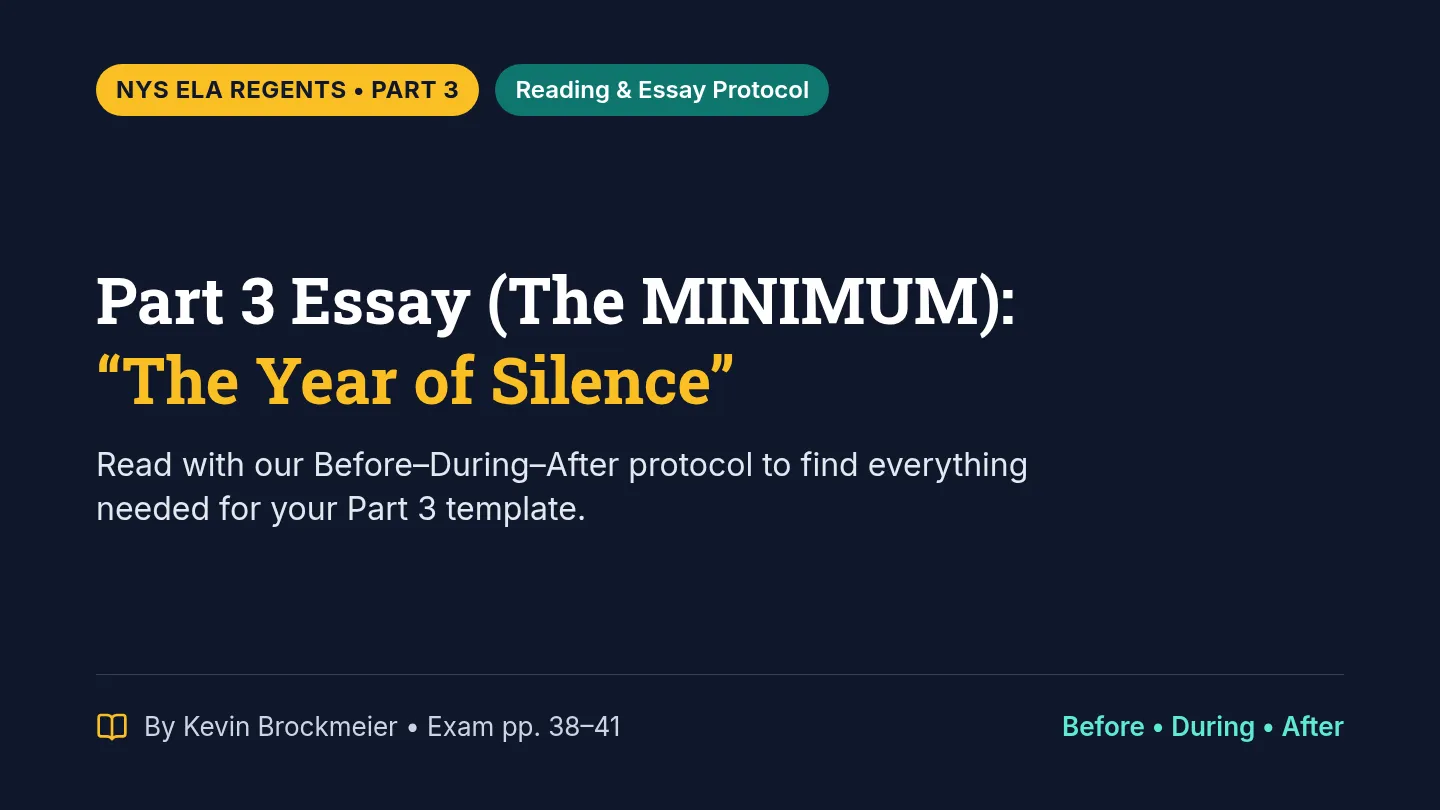
Part 3 Analysis Slides

Silence Analysis Blueprint

A complete ELL-scaffolded lesson preparing students for Part 3 of the NYS ELA Regents Exam using Kevin Brockmeier's *"The Year of Silence"*. Includes step-by-step instructional slides, a scaffolded student organizer with evidence-hunting tools and "The MINIMUM" essay frames, and a teacher guide with pacing, line-referenced evidence bank, and model response.

SO

Siena Oliveri

3
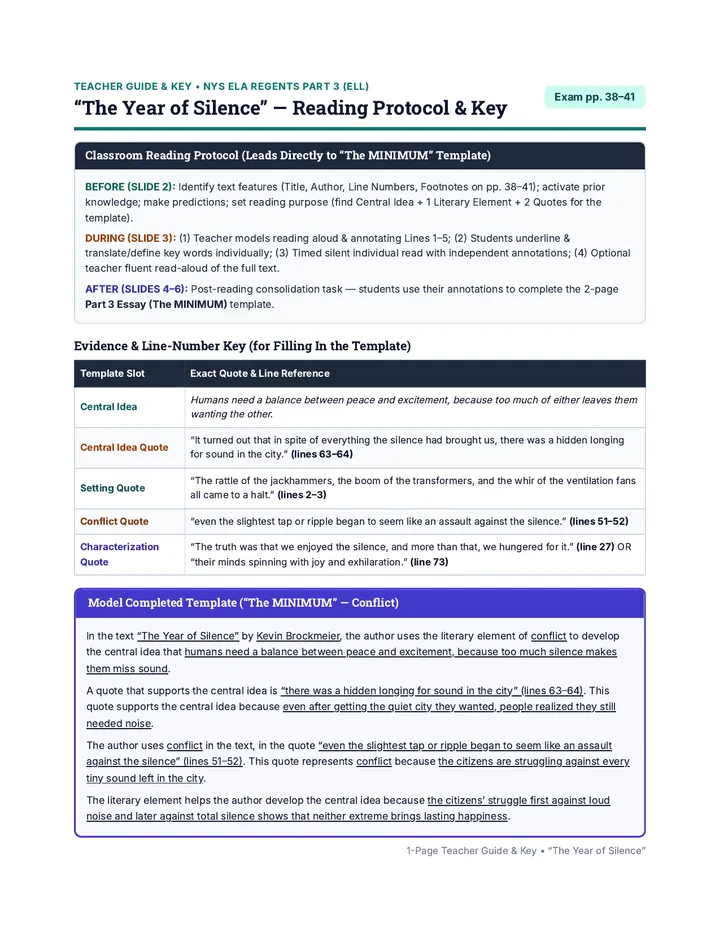
Silence Analysis Teacher Guide

Silence Analysis Teacher Guide

A concise 1-page teacher cheat sheet and answer key for the *"The Year of Silence"* Part 3 ELL lesson. Integrates the teacher's BEFORE / DURING / AFTER reading protocol (with independent reading and annotation) alongside a line-referenced evidence bank and a completed model response using the "The MINIMUM" template.

SO

Siena Oliveri

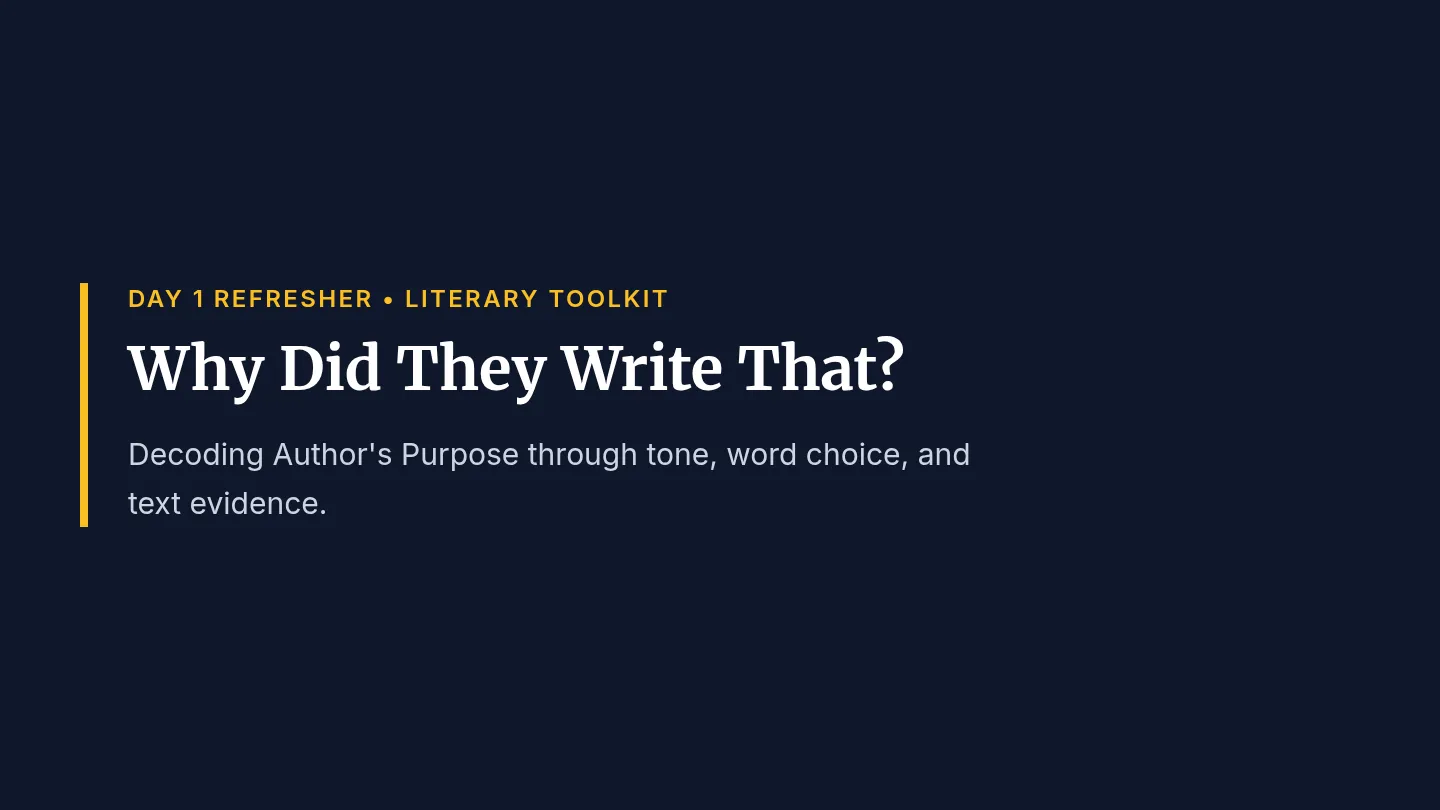
Purpose Clues Slides

Story Craft Reboot

A 3-day ELA refresher sequence reviewing author's purpose, figurative language, theme, and poetry elements through interactive slides, close-reading worksheets, and teacher guides.

AC

Anaissa Carrillo

12
Inference Clues Slides

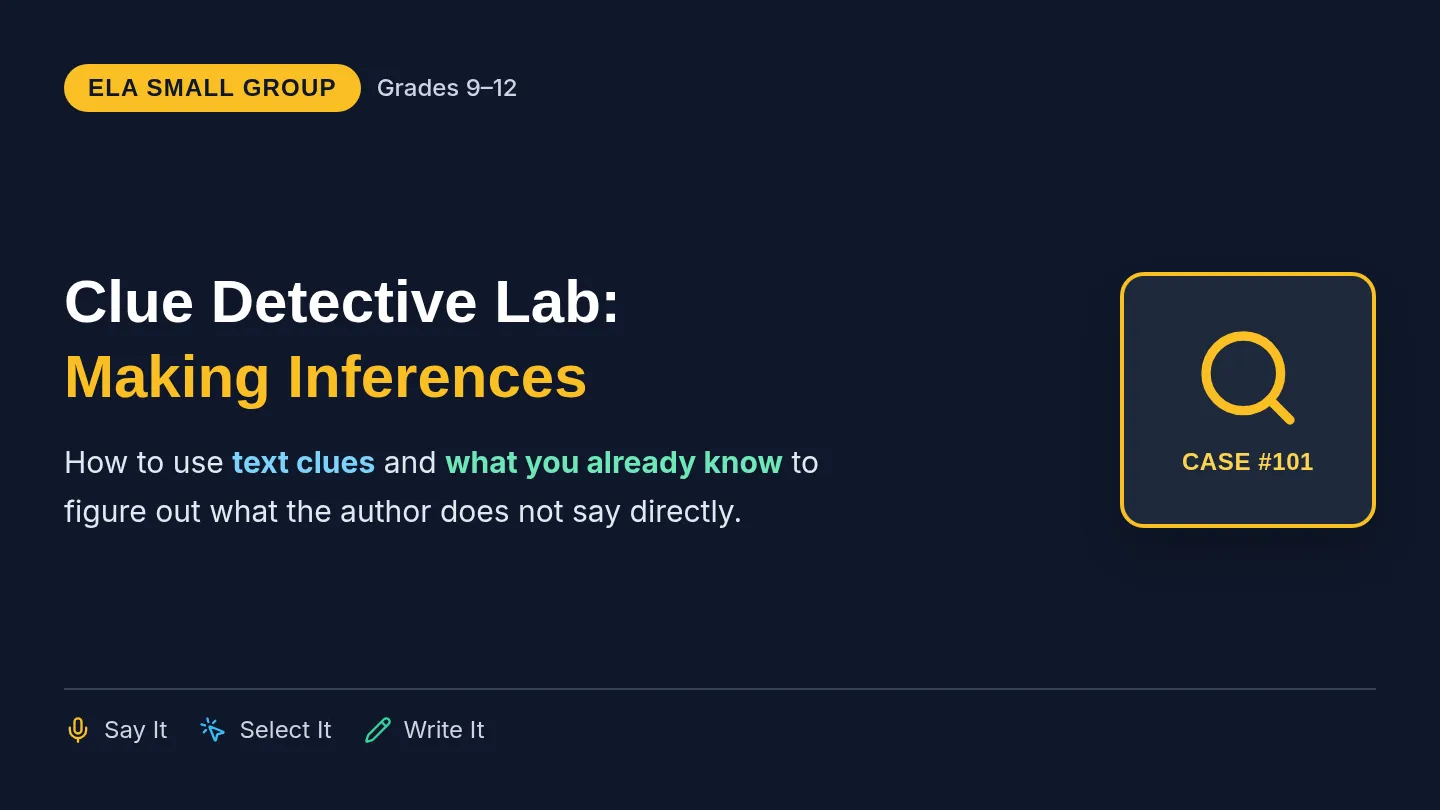
ELA Small Group - Making Inferences (Clue Detective Lab)

A small-group high school ELA lesson for grades 9–12 special education students focusing on making inferences using text clues and background knowledge. Includes visual teaching slides, a teacher facilitation guide, a multi-modal student practice activity with sentence frames and graphic organizers, and an answer key.

AW

Amy Watenpool

4
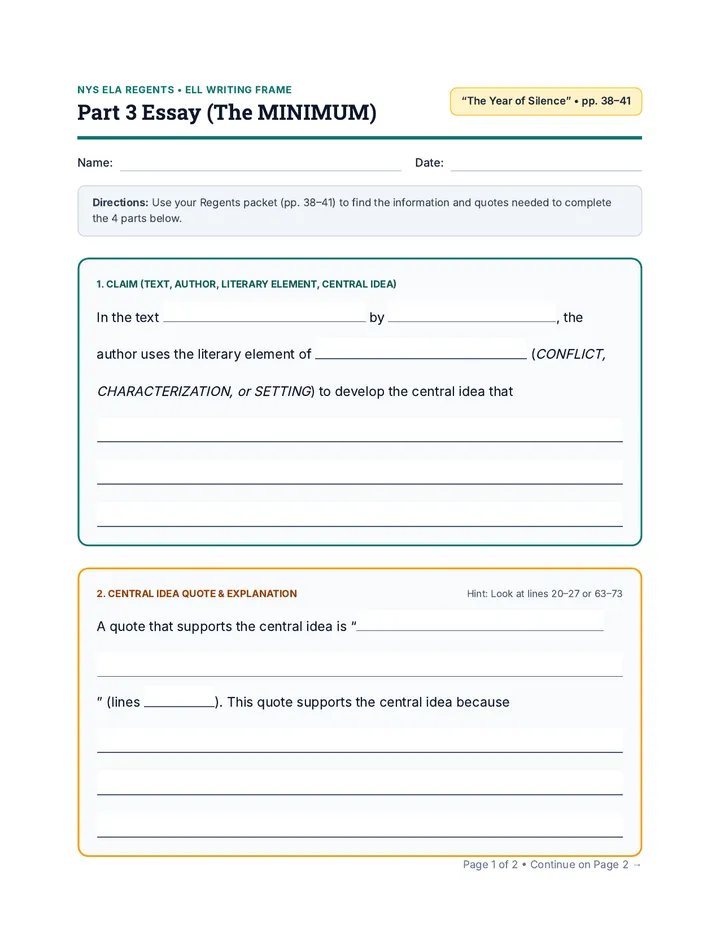
Part 3 Essay Template

Part 3 Essay Template

A 2-page print-ready student template for the Part 3 Essay ("The MINIMUM") on Kevin Brockmeier's *"The Year of Silence"* (Exam pp. 38–41). Features the exact 4-part sentence-frame template with generous white writing lines and minimal line-range hints so ELLs can directly fill in their response.

SO

Siena Oliveri

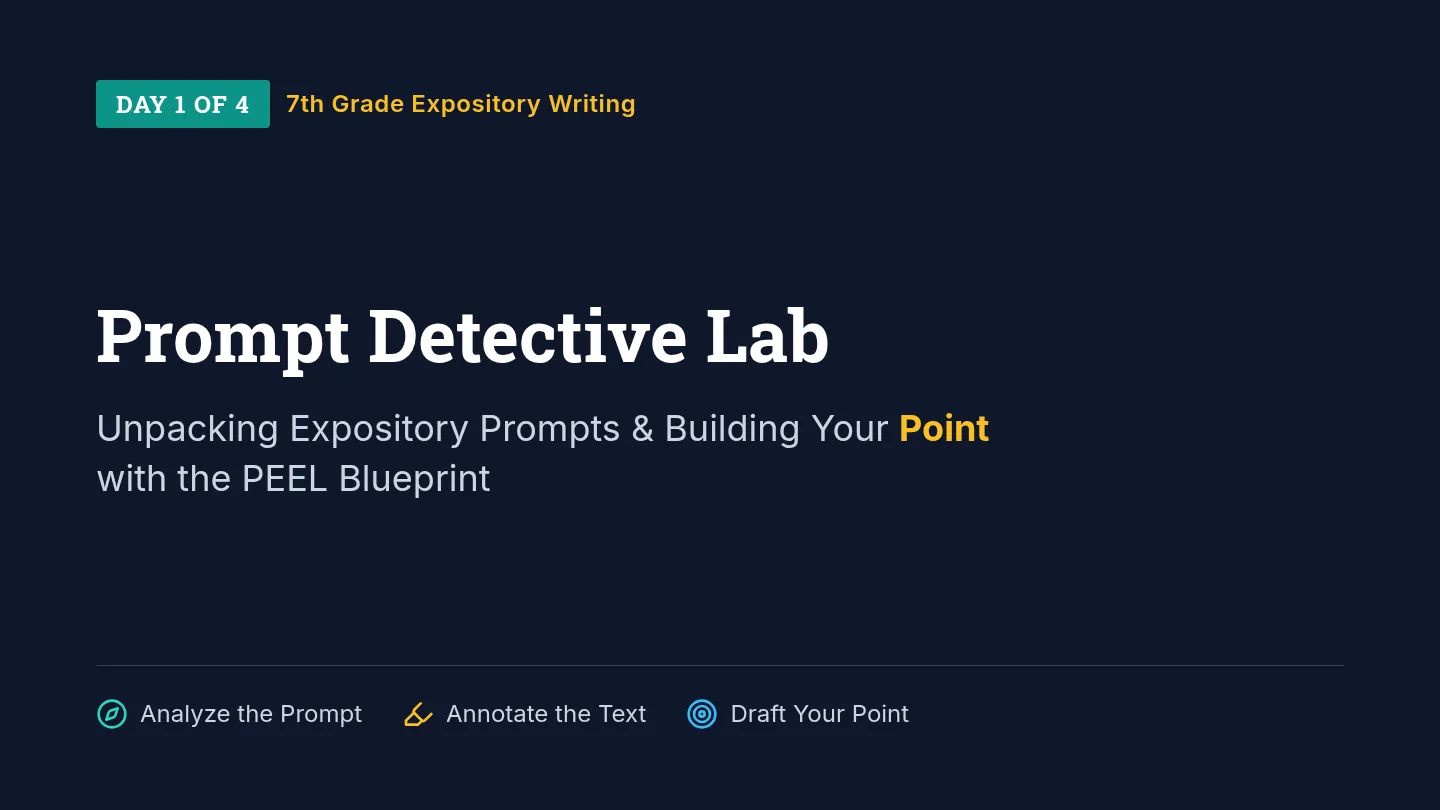
Prompt Detective Slides

PEEL Power Builders

A 4-day 7th-grade ELA writing sequence guiding students to construct an Extended Constructed Response (ECR) on a teacher-provided expository text using the PEEL method (Point, Evidence, Explanation, Link). Students progress from prompt analysis and evidence selection to analytical drafting, peer review, and rubric-based revision.

AC

Anaissa Carrillo

14
Presentation Launch Slides

Presentation Sprint Launch

A focused, accountable launch lesson for Unit 1 Humanities Group Presentations. Students clarify their presentation roles, audit unfinished website products, and complete a structured work sprint under clear deadlines and expectations.

SO

Siena Oliveri

4
Part 3 Analysis Slides

Part 3 Analysis Slides

A 6-slide instructional deck for ELL learners structured around the teacher's BEFORE / DURING / AFTER reading protocol (with independent reading and annotation) for Kevin Brockmeier's *"The Year of Silence"* (Exam pp. 38–41), leading directly into filling out the Part 3 Essay ("The MINIMUM") template.

SO

Siena Oliveri

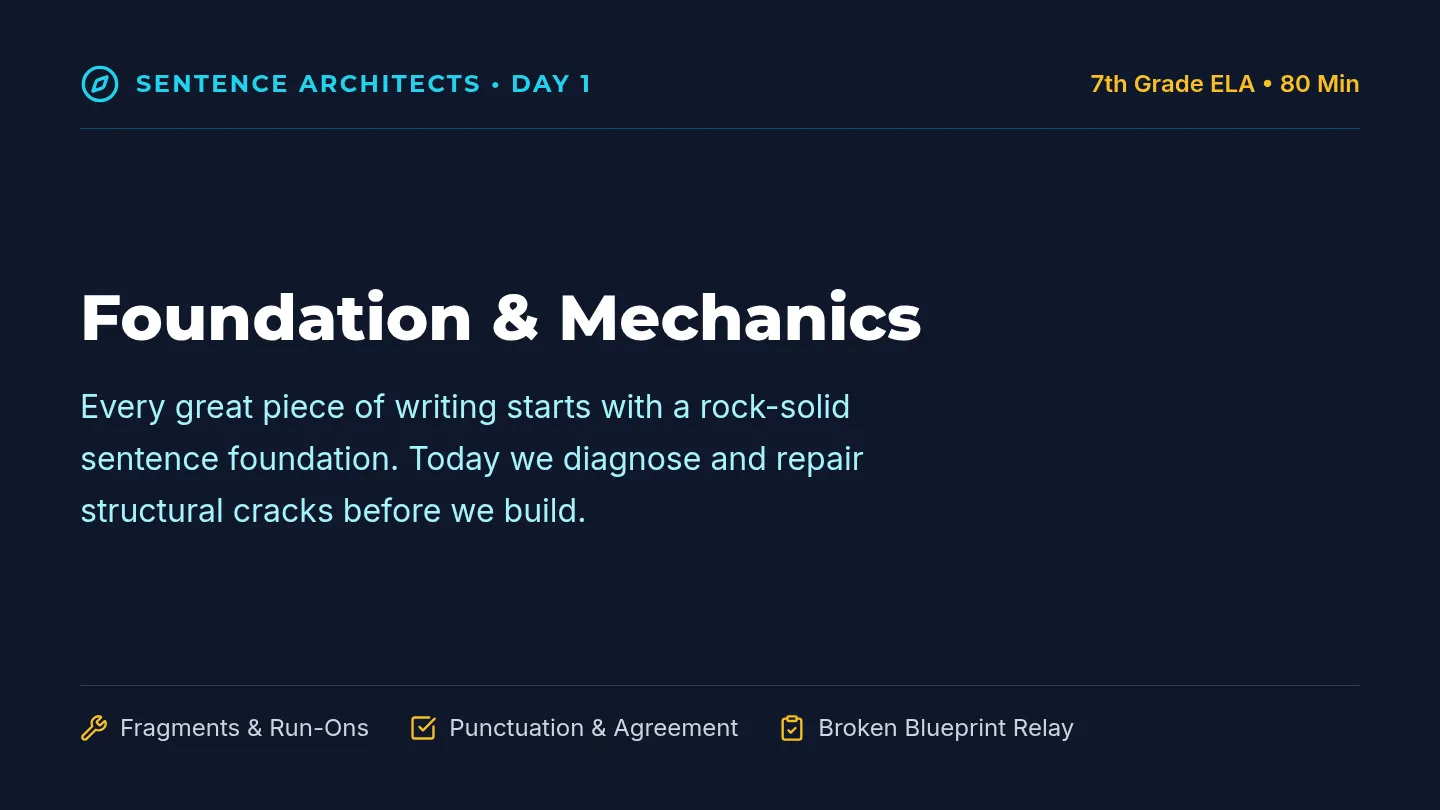
Mechanics Blueprint Slides

Sentence Architects

A 4-day, 80-minute-per-day (1 hr 20 min) 7th-grade grammar and writing mechanics unit designed around a Sentence Architects theme. Students master core mechanics, prepositional phrases, and conjunctions through hands-on repair labs, collaborative challenges, and creative writing activities.

AC

Anaissa Carrillo

12
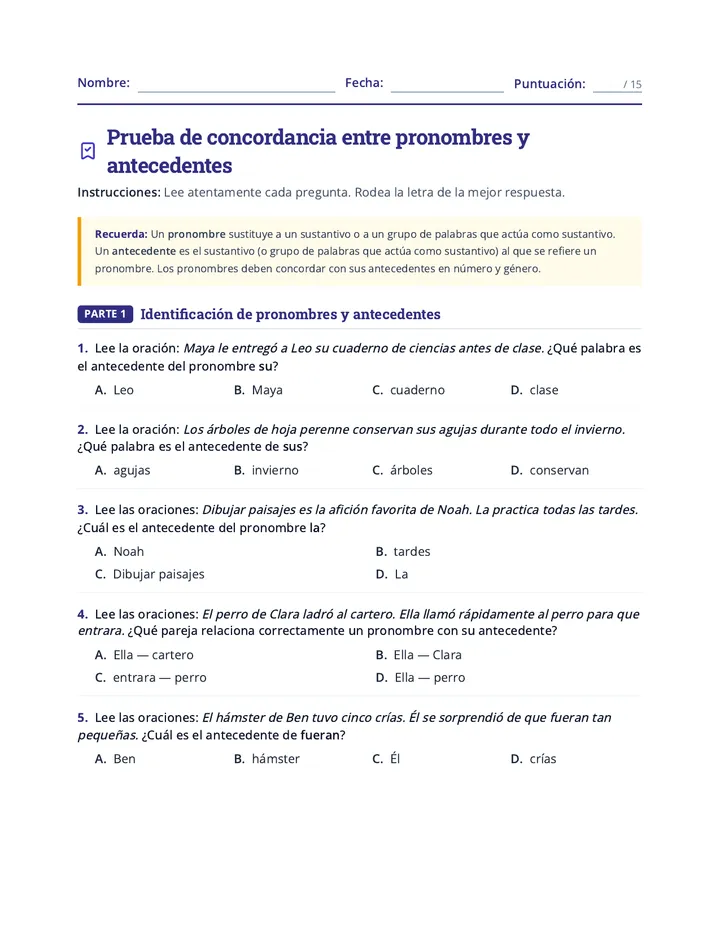
Pronoun Matchup Quiz

Pronoun Matchup

A 6th-grade grammar assessment lesson on pronoun-antecedent agreement aligned to the Pronouns and Antecedents practice worksheet. Includes a 15-question multiple-choice quiz and a complete teacher answer key.

A

aglenn

2
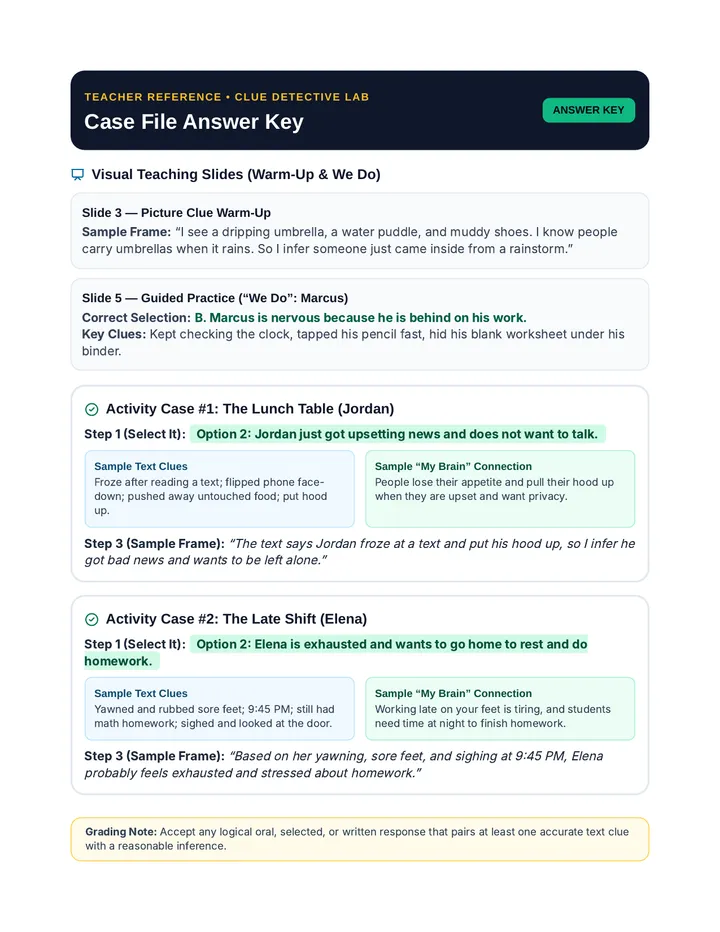
Case File Answer Key

Case File Answer Key

Answer key and sample responses for the Clue Detective Lab slides and Case File Practice Activity. Includes expected text clues, background knowledge connections, correct multiple-choice selections, and model sentence-frame responses.

AW

Amy Watenpool