Comprehensive teacher guide for Lesson 1 of the Logic Labyrinth series, covering learning objectives, instructional flow, and rules for the unplugged physical logic maze activity.
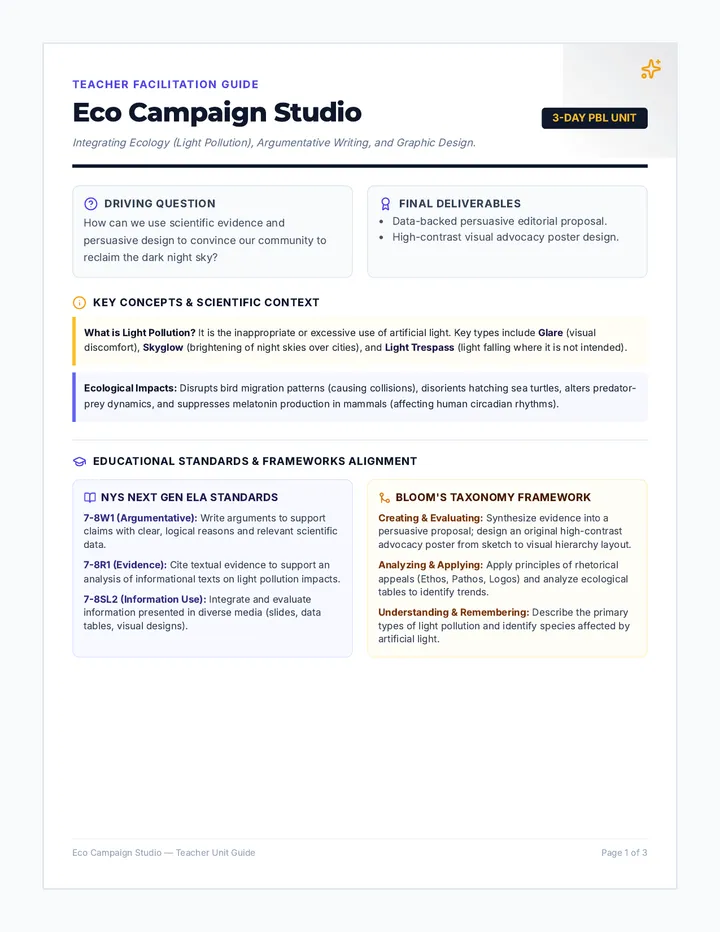
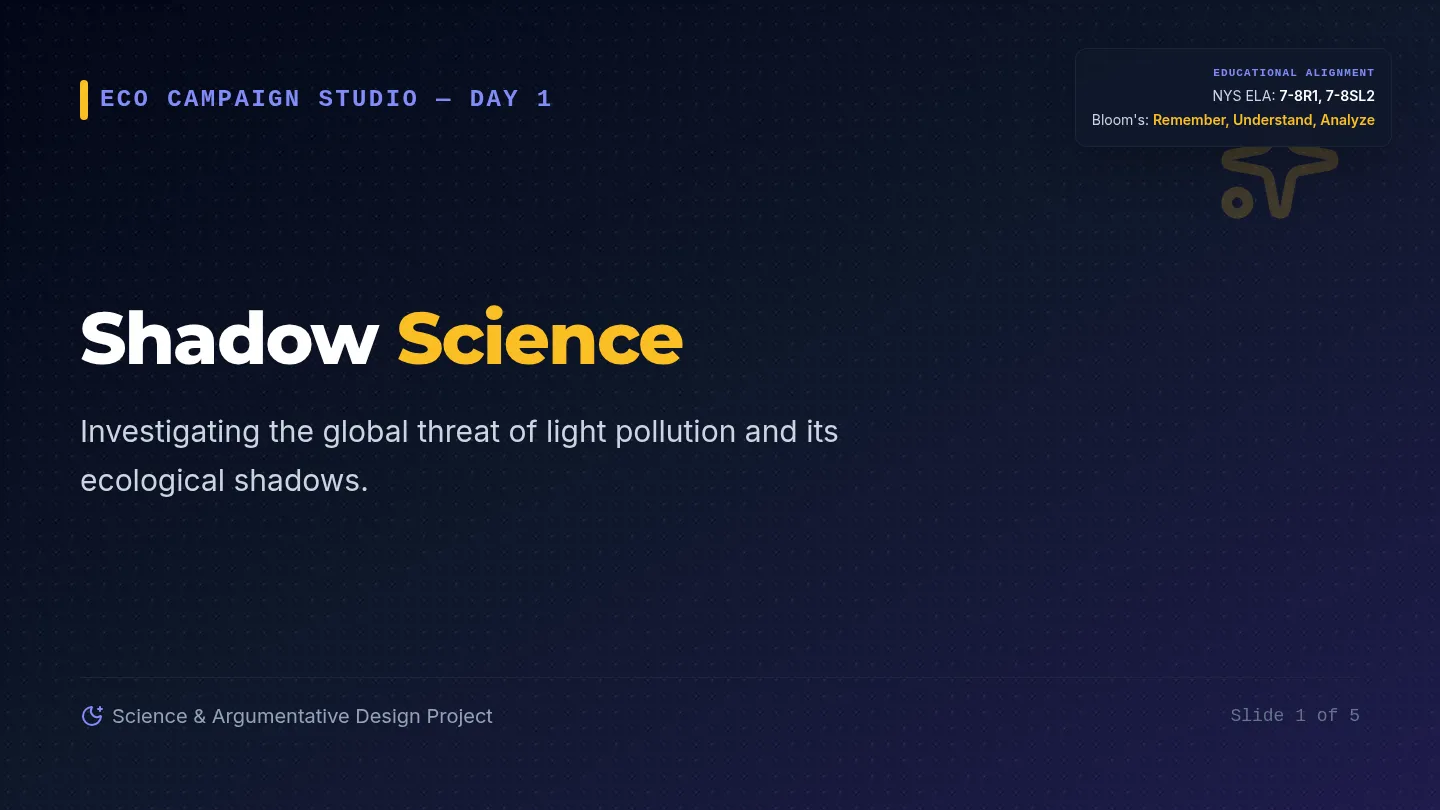
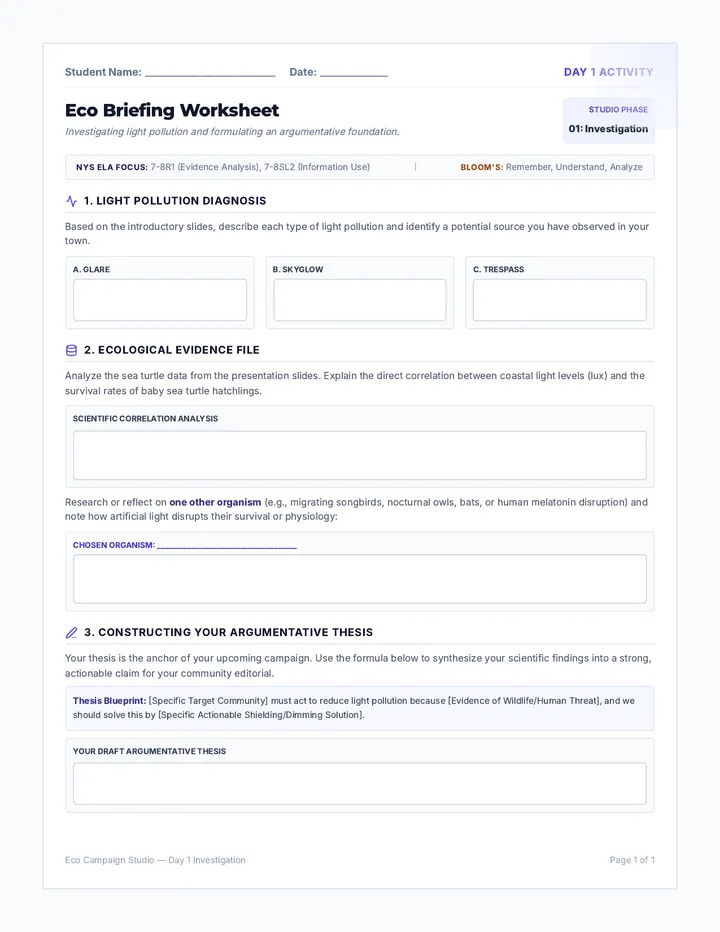
A cross-curricular, 3-day project-based unit combining science, argumentative writing, and graphic design. Students investigate the ecological impacts of light pollution, write a data-driven persuasive proposal, and design a community awareness campaign poster.
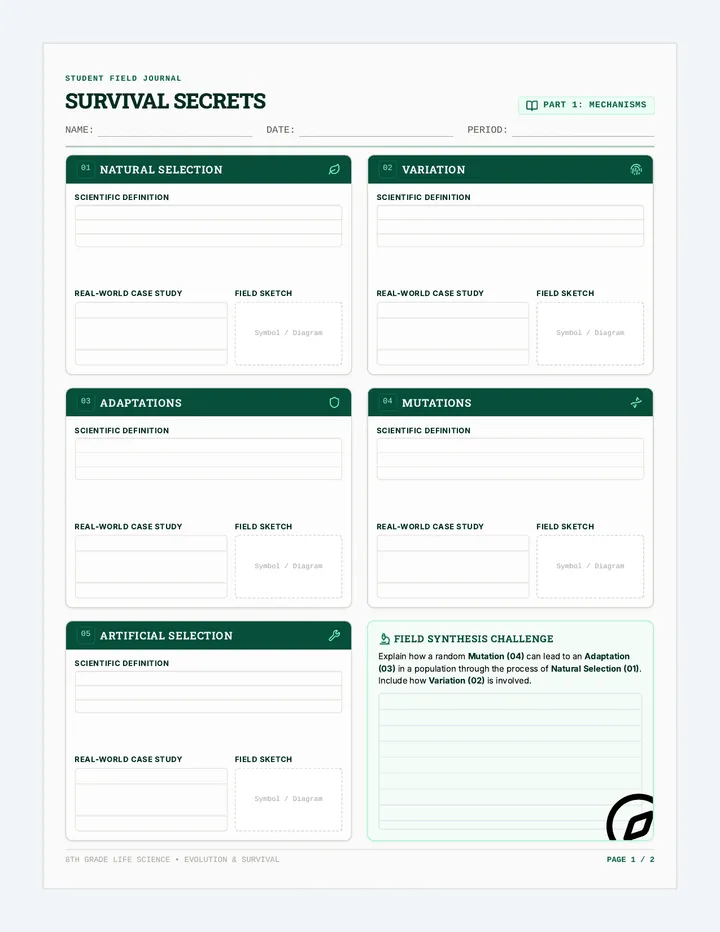
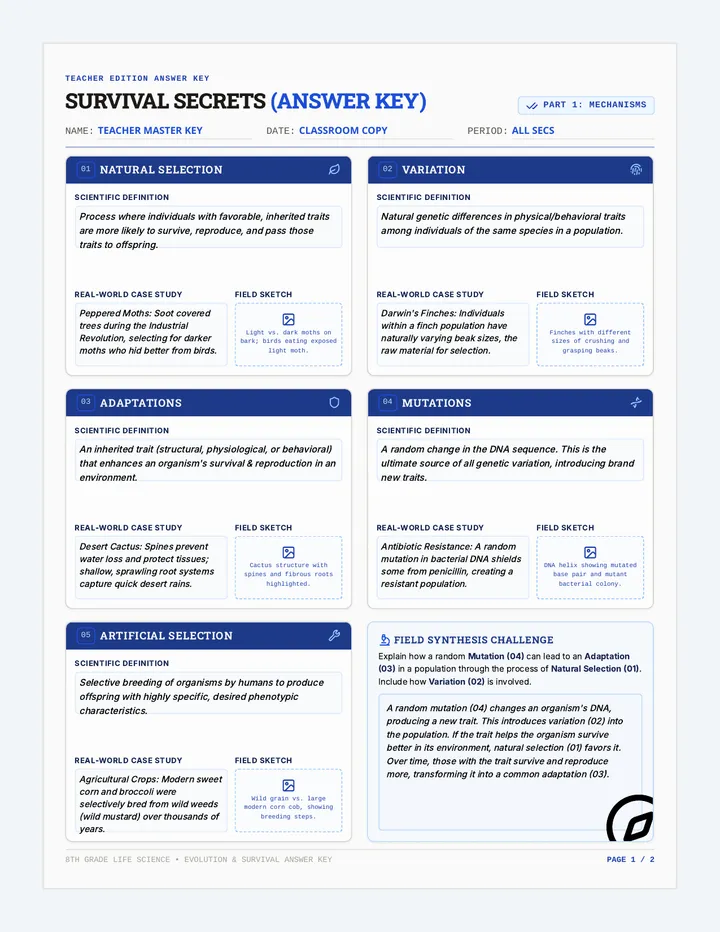
An active-recall study unit on natural selection and evolutionary evidence, featuring graphic organizers, application activities, and a practice quiz.
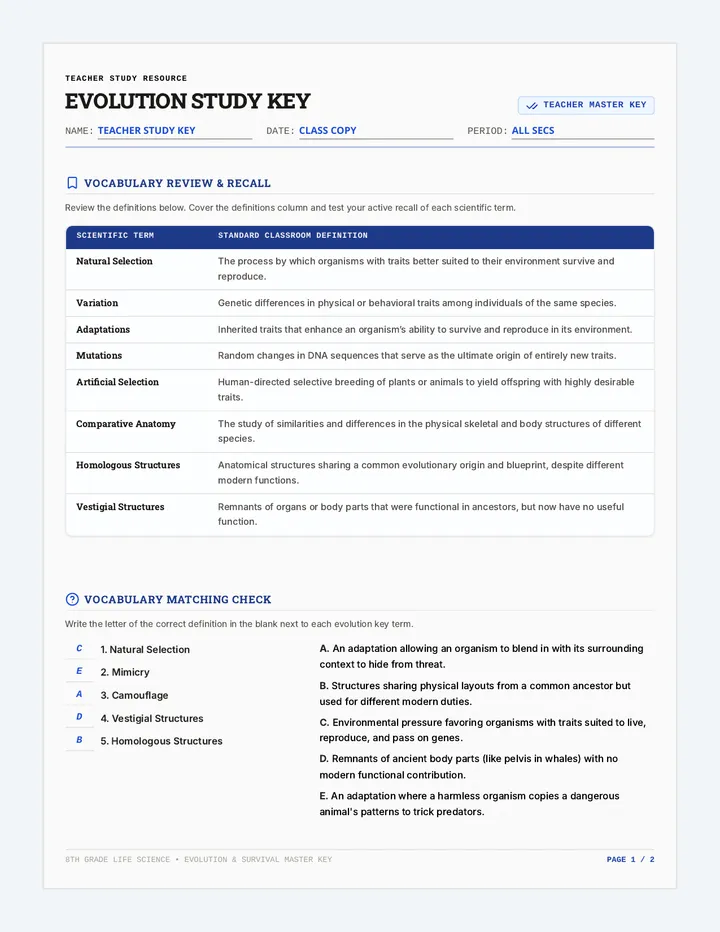
Complete teacher answer key for the Evolution Study Guide, containing completed vocabulary matching and high-quality exemplar written responses styled in blue ink.
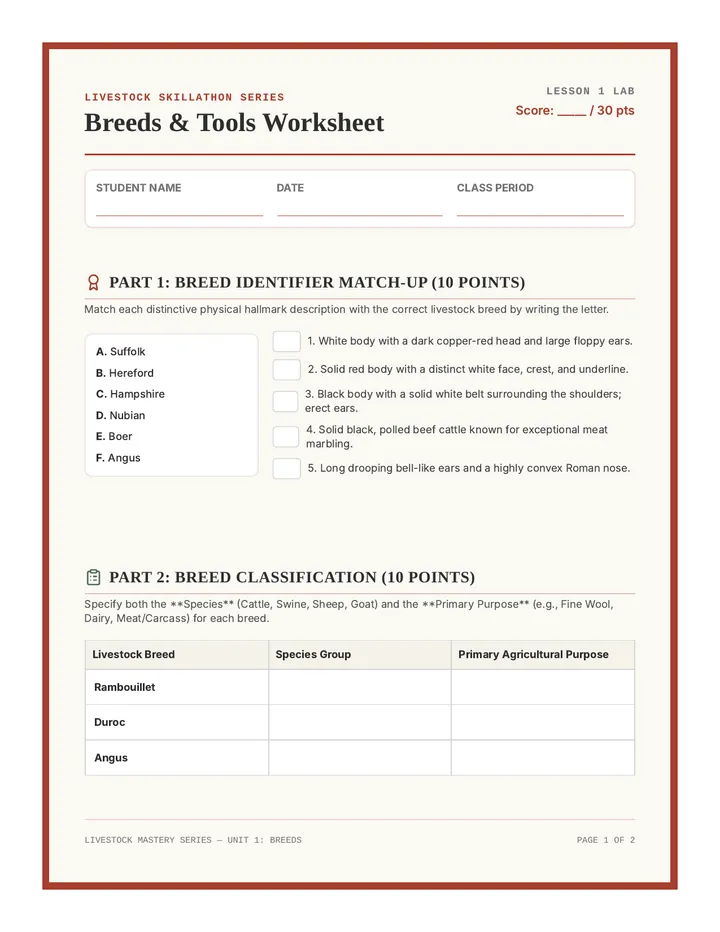
An immersive preparation program that equips agriculture students with the hands-on identification and evaluation skills needed to conquer competitive Livestock Skillathon contests.
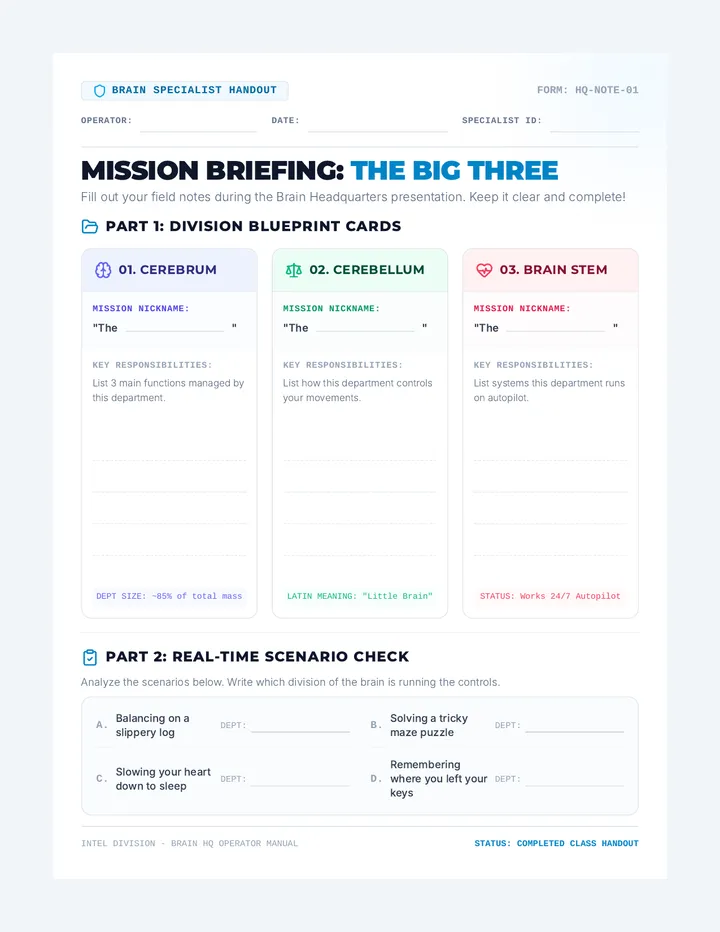
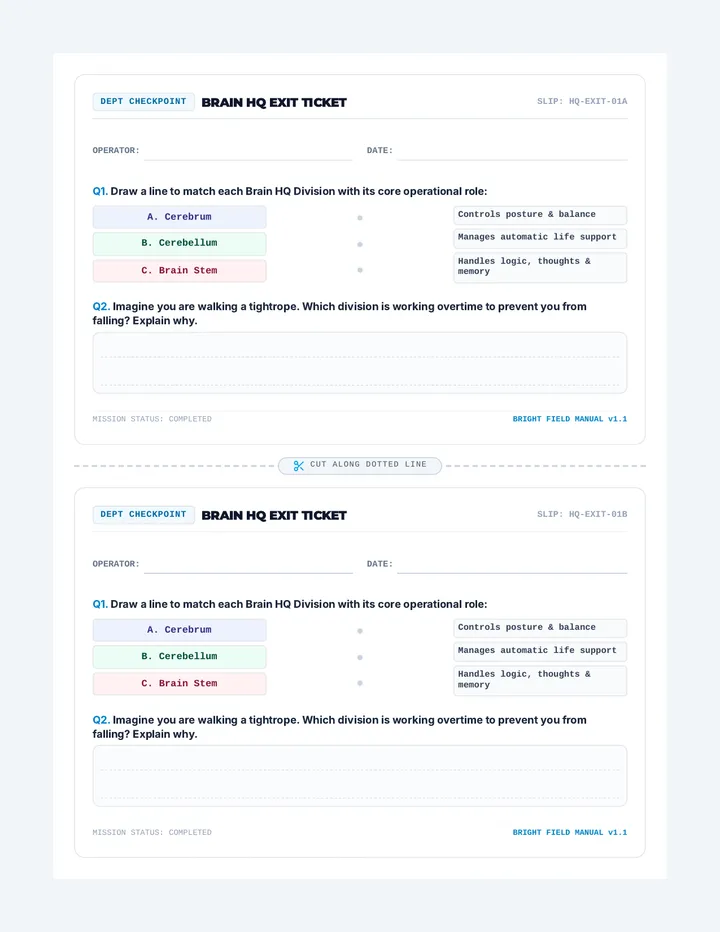
An interactive lesson introducing elementary or middle school students to the three major divisions of the brain: the Cerebrum, Cerebellum, and Brain Stem.
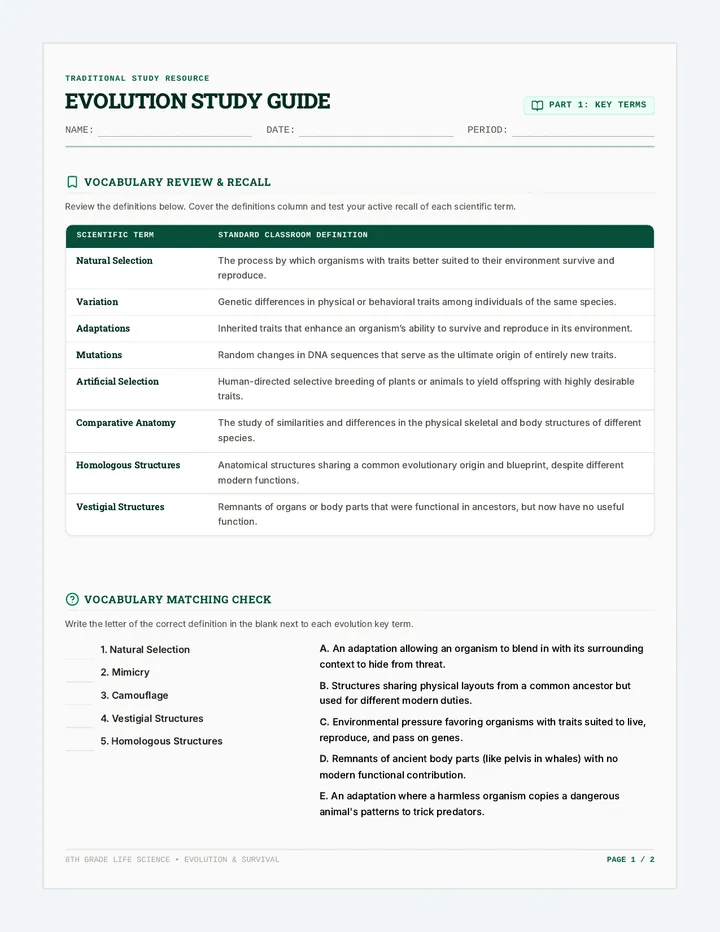
A traditional 2-page print-ready study guide for 8th-grade science, featuring direct definitions, structured vocabulary matching, and four scenario-based short-answer practice questions.
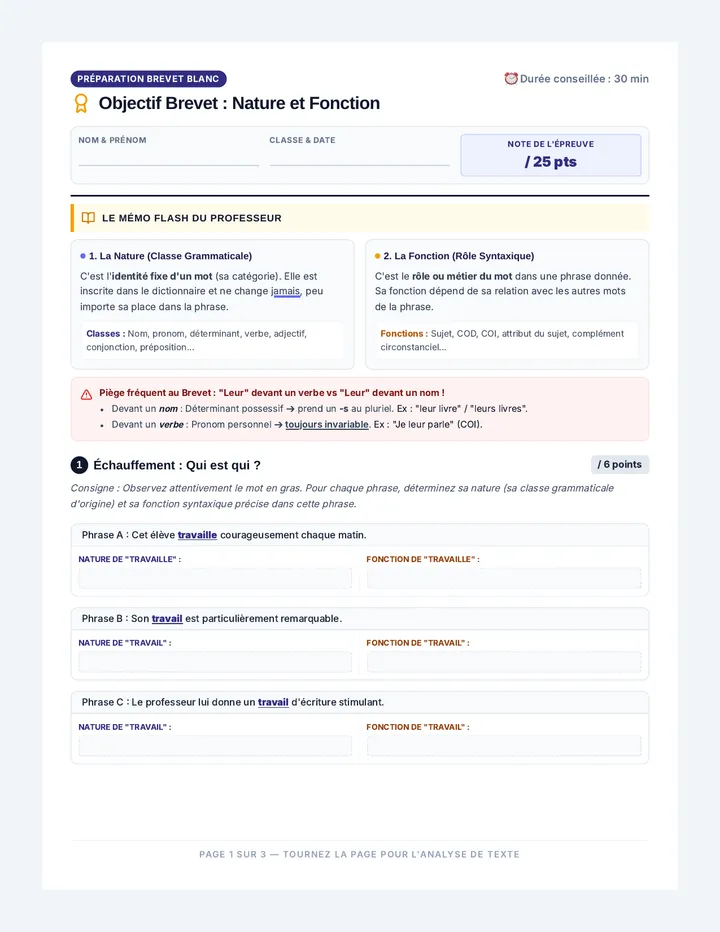
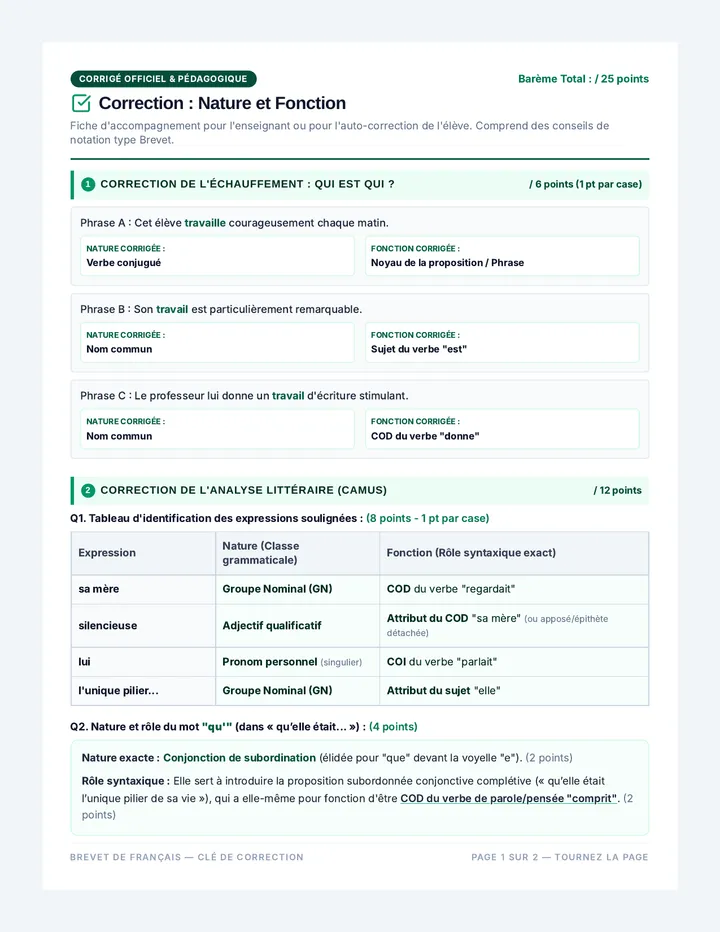
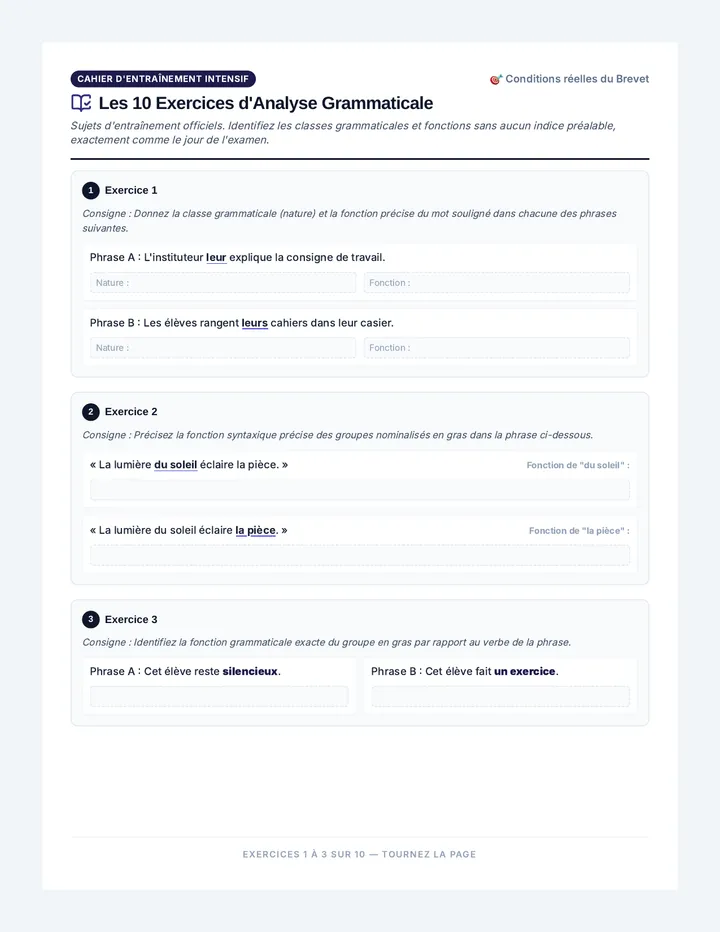
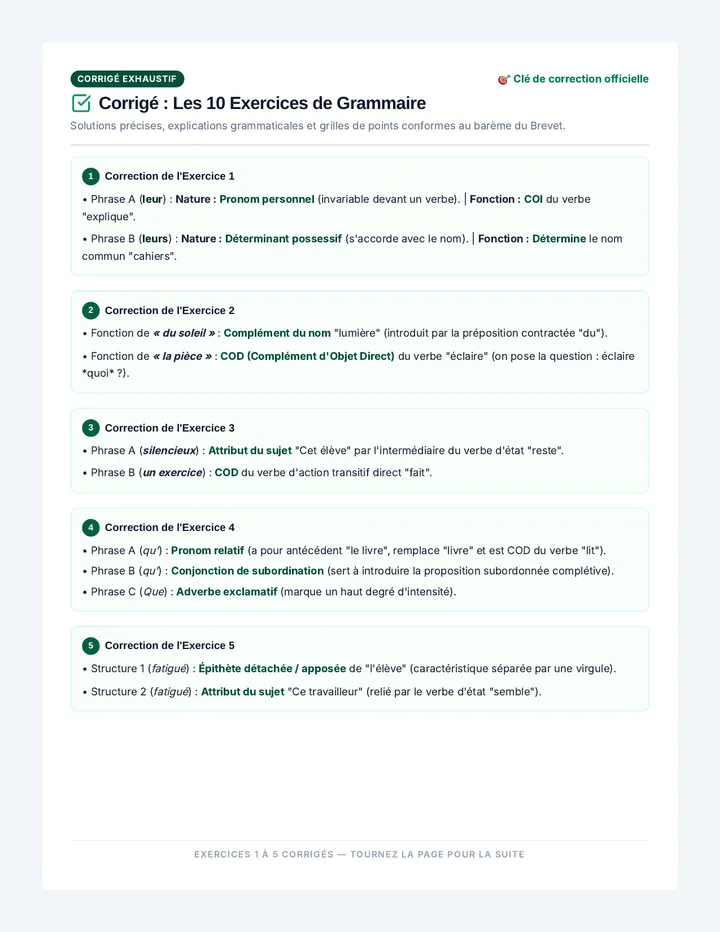
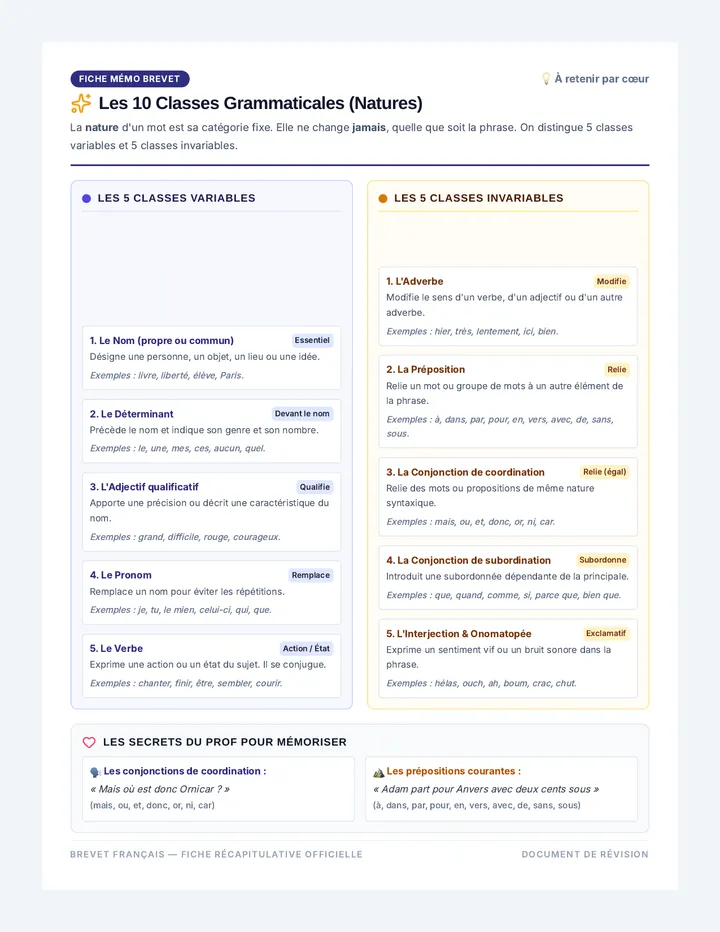
Un programme complet de révision intensive pour le Brevet, regroupant des fiches, exercices et corrigés détaillés en français et en physique-chimie.
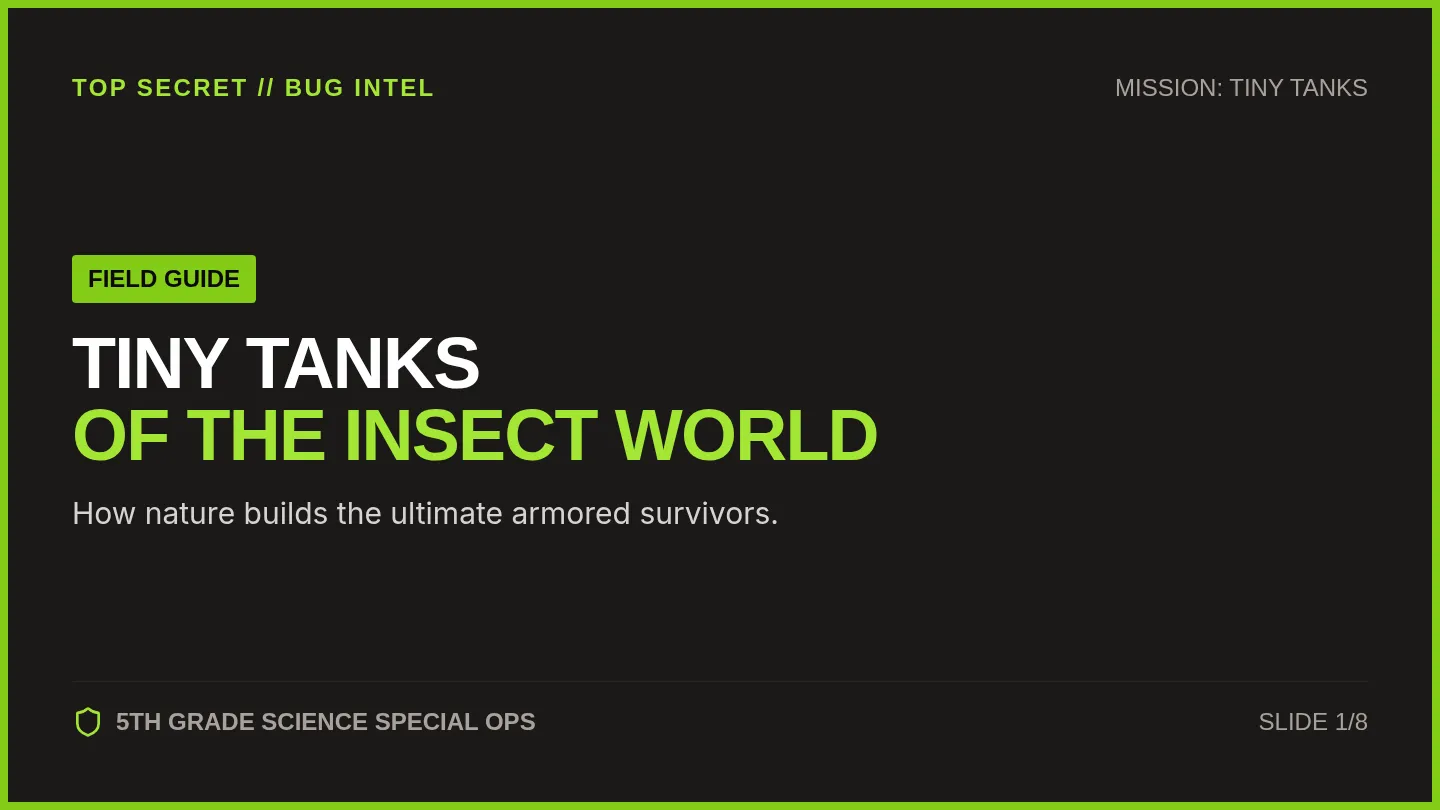
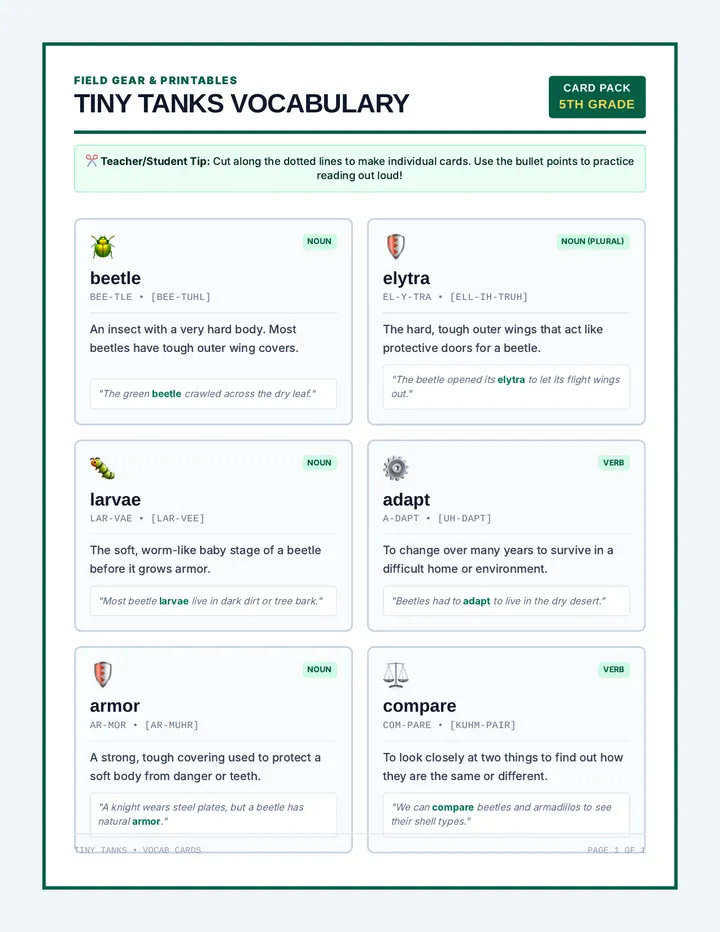
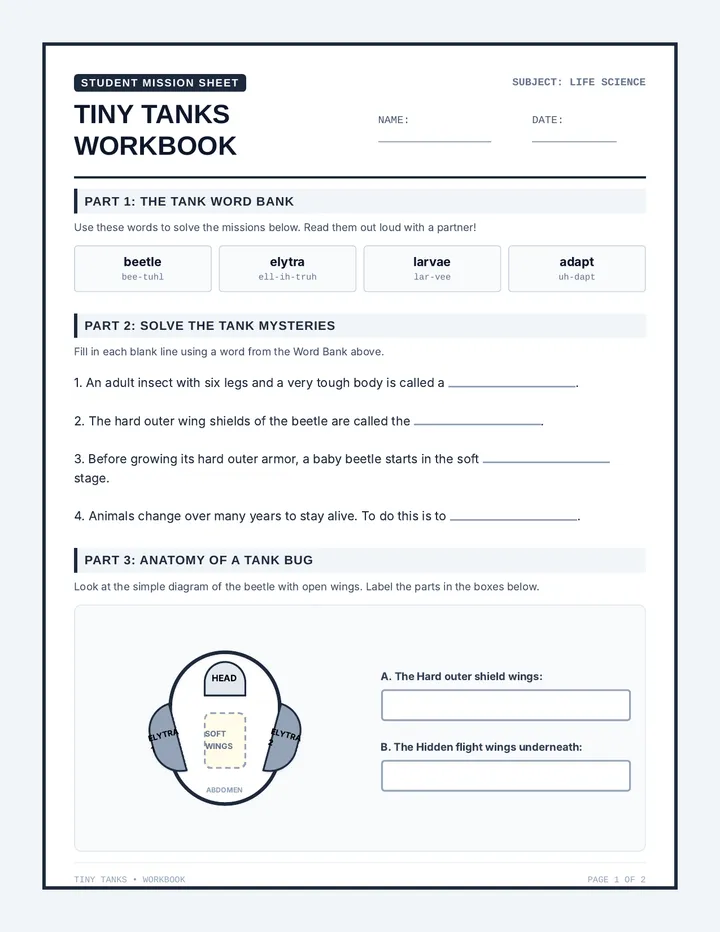
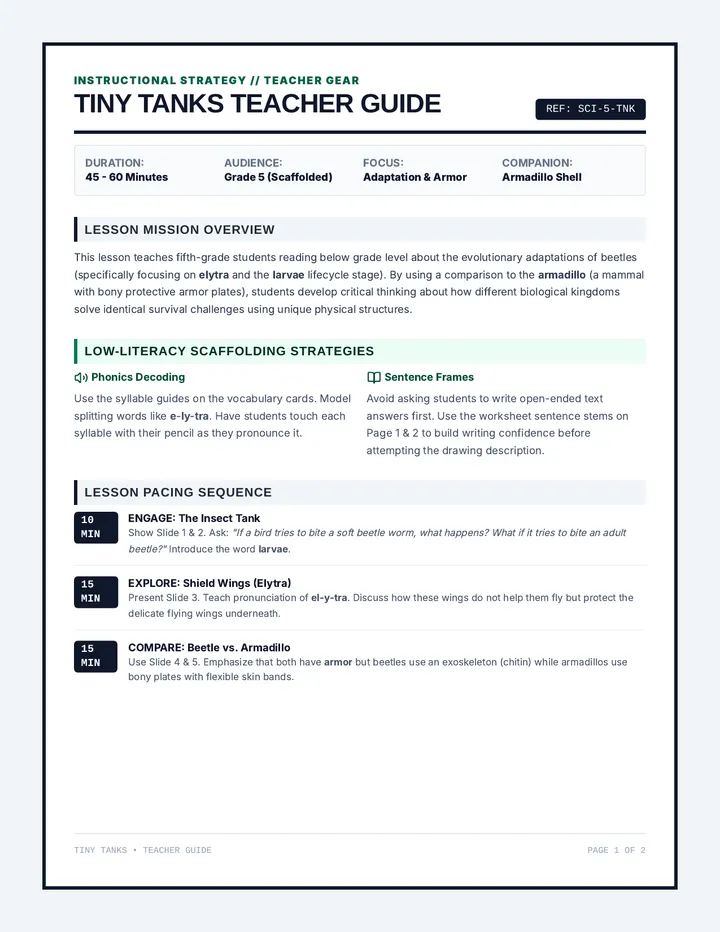
An engaging, highly visual science lesson exploring beetles as the armored tanks of the insect world, designed specifically for fifth-grade students reading below grade level. Students learn about elytra, beetle adaptation, and compare insect armor to that of the armadillo through scaffolded activities.
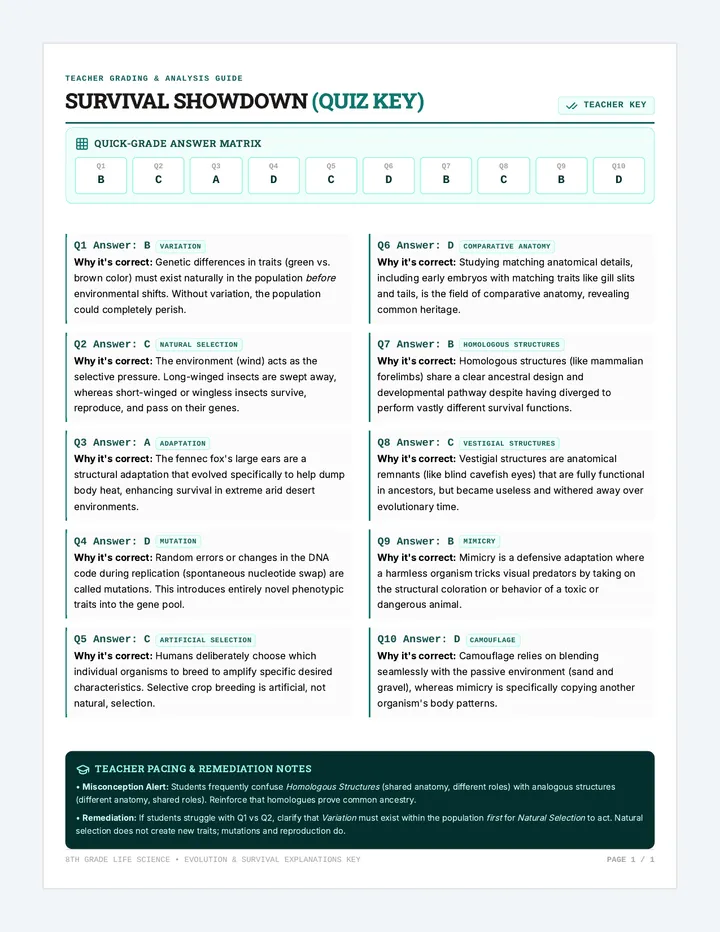
A detailed single-page teacher answer key and pedagogical guide for the Survival Showdown Quiz, containing a quick-grade matrix and thorough explanations for why each option is correct or incorrect.
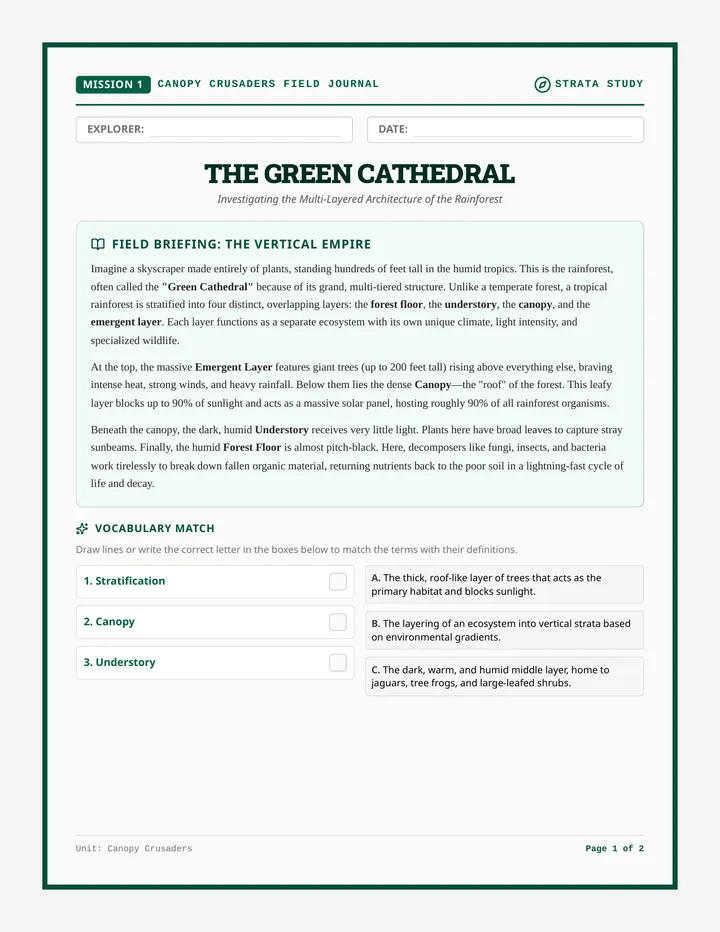
A comprehensive unit on rainforest ecology, climate regulation, and conservation. Students explore the structural layers of the rainforest, their roles as carbon sinks, the threats of deforestation, and collaborative solutions for preservation.
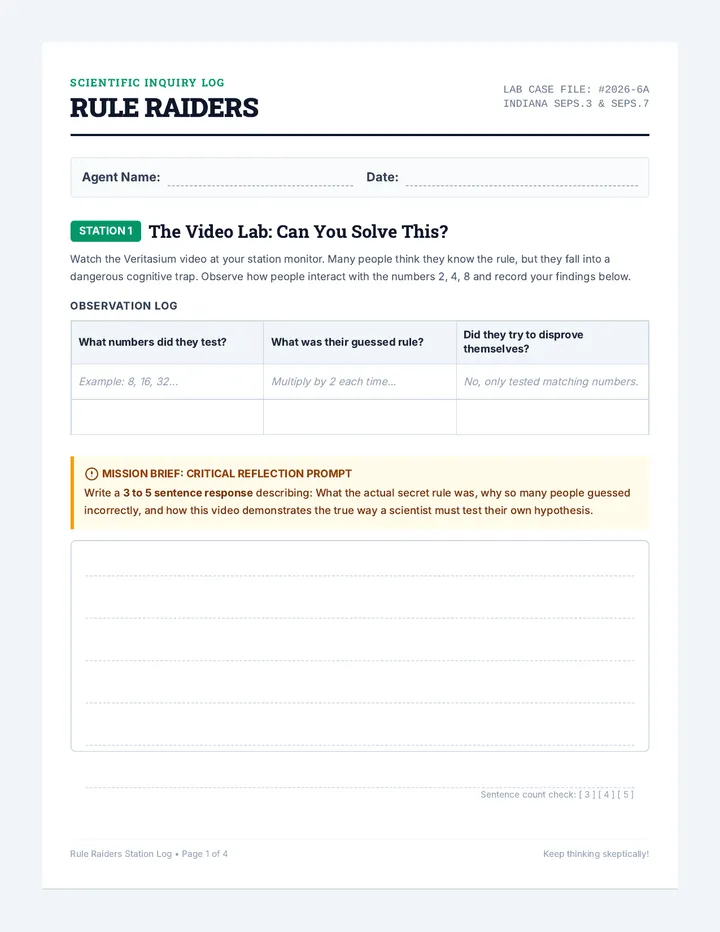
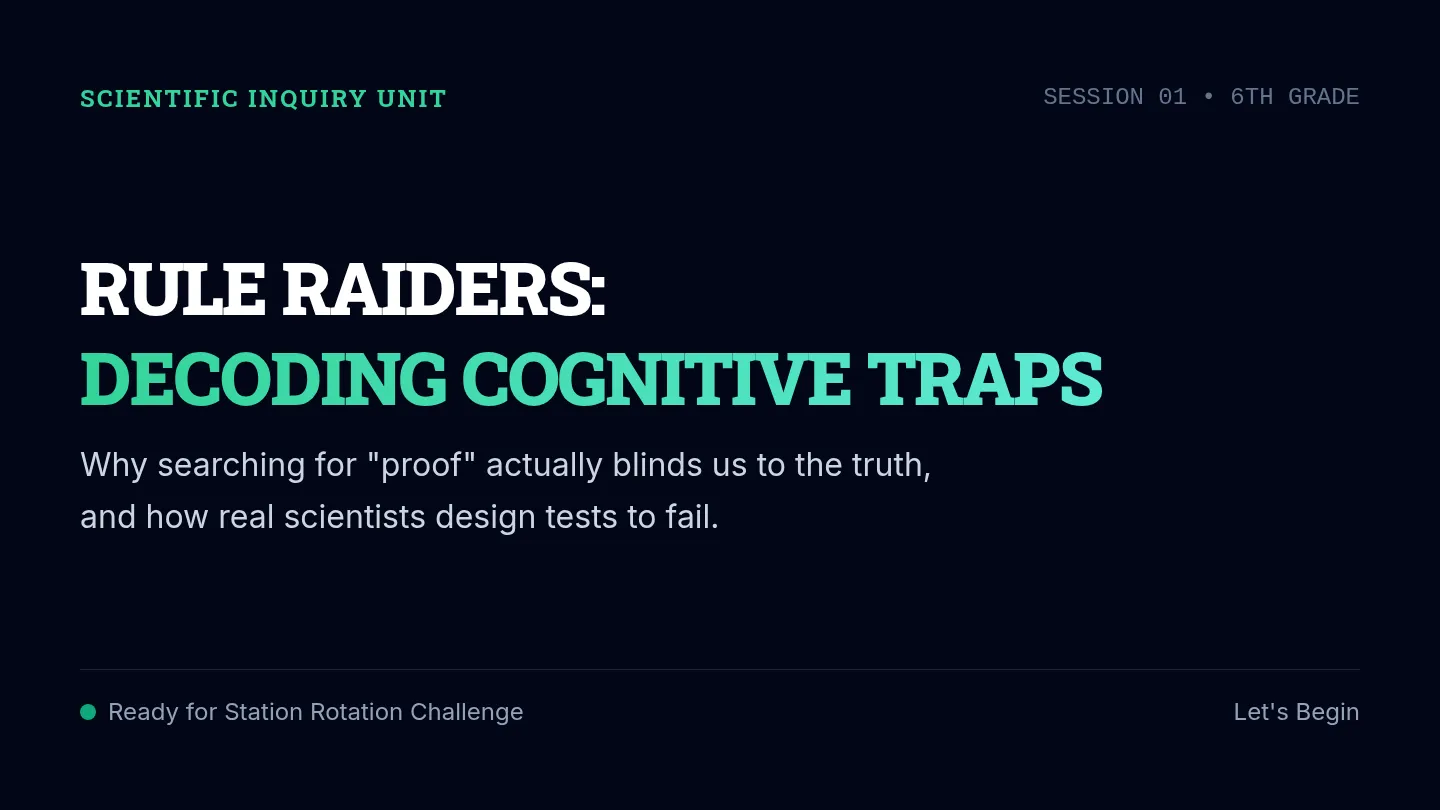
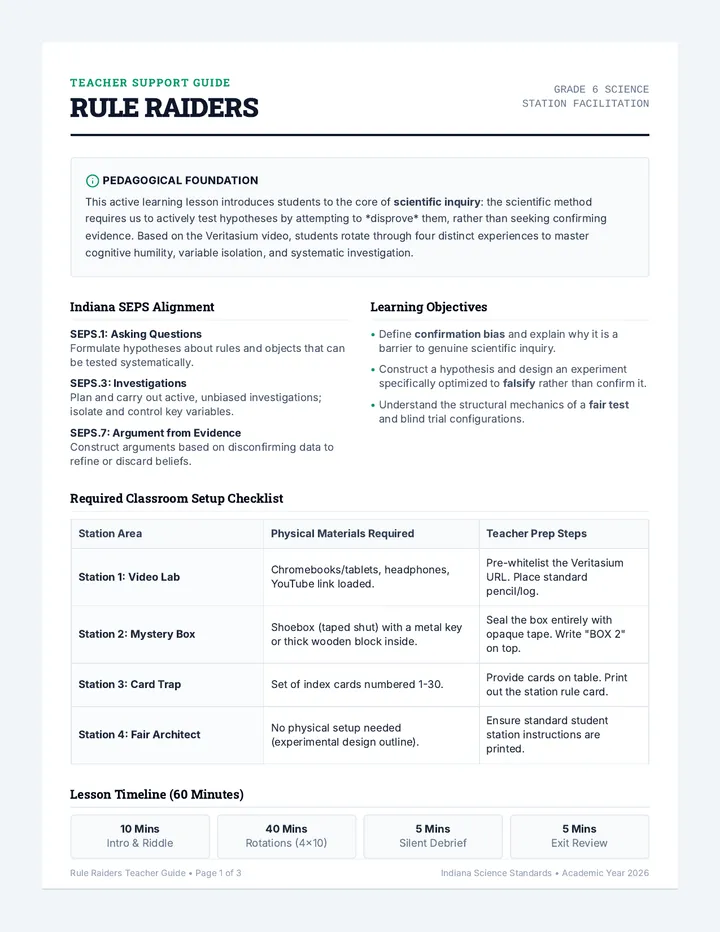
A active learning station rotation lesson where sixth-grade students discover the dangers of confirmation bias and learn the power of testing hypotheses by trying to disprove them. Based on the Veritasium 'Can You Solve This?' video, students rotate through digital and hands-on offline inquiry challenges to build robust scientific thinking skills aligned with Indiana SEPS.
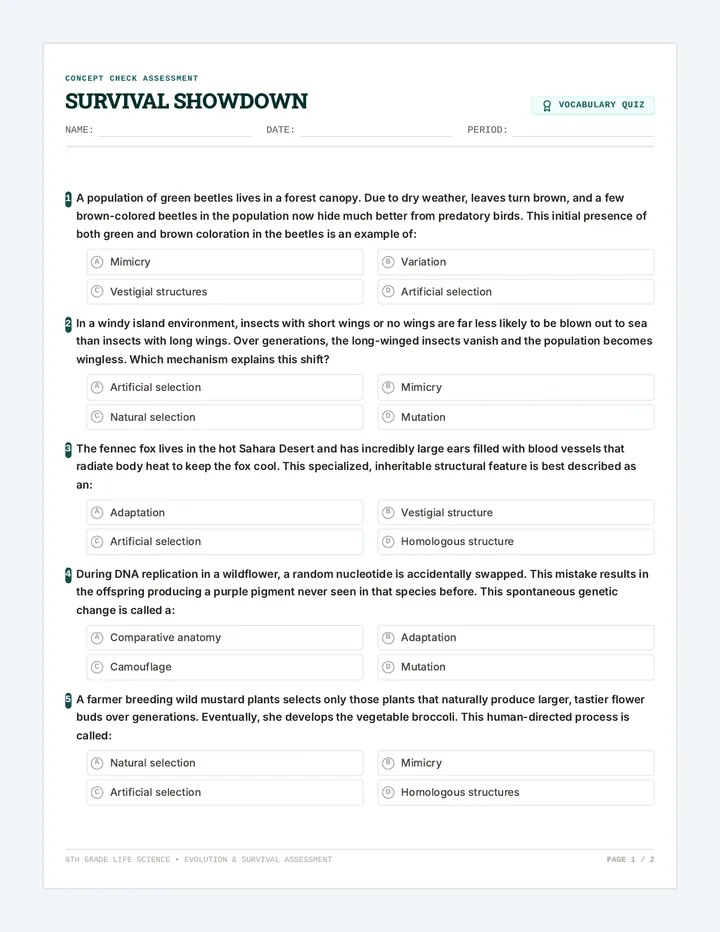
A 10-question application-based multiple-choice practice quiz for 8th-grade science students, testing their mastery of natural selection and evidence of evolution vocabulary under real-world scenarios.