A comprehensive rubric for assessing the Deep Dive Diary narrative, scoring students on narrative voice, scientific accuracy, creativity, and mechanics.
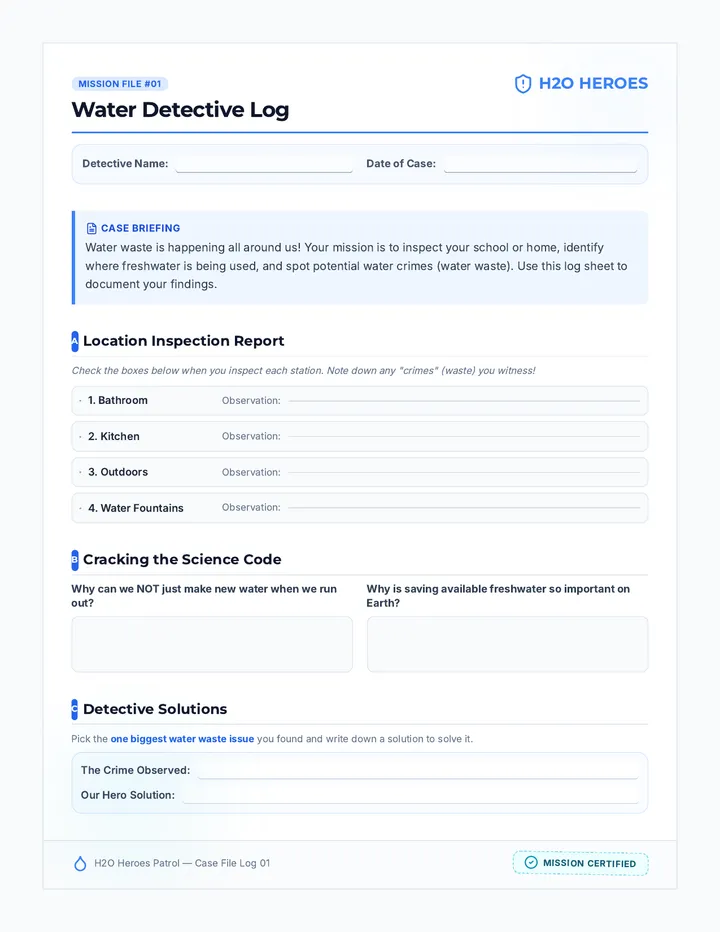
A comprehensive third-grade science and ELA unit focusing on freshwater distribution, conservation, and persuasive public service announcements. Students learn about global water resources and work in teams to design and produce a persuasive PSA to save water in their school or community.
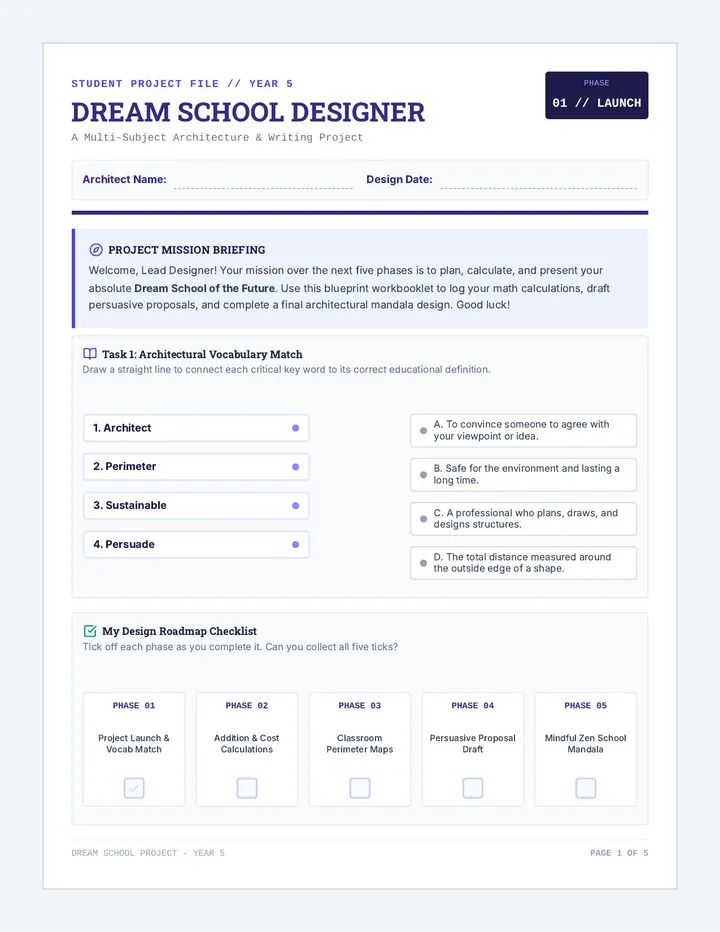
A project-based workbooklet and guide where Year 5 students design their ultimate future school. The project is broken down into structured, bite-sized daily steps integrating English, Maths, Science, Geography, and Art.
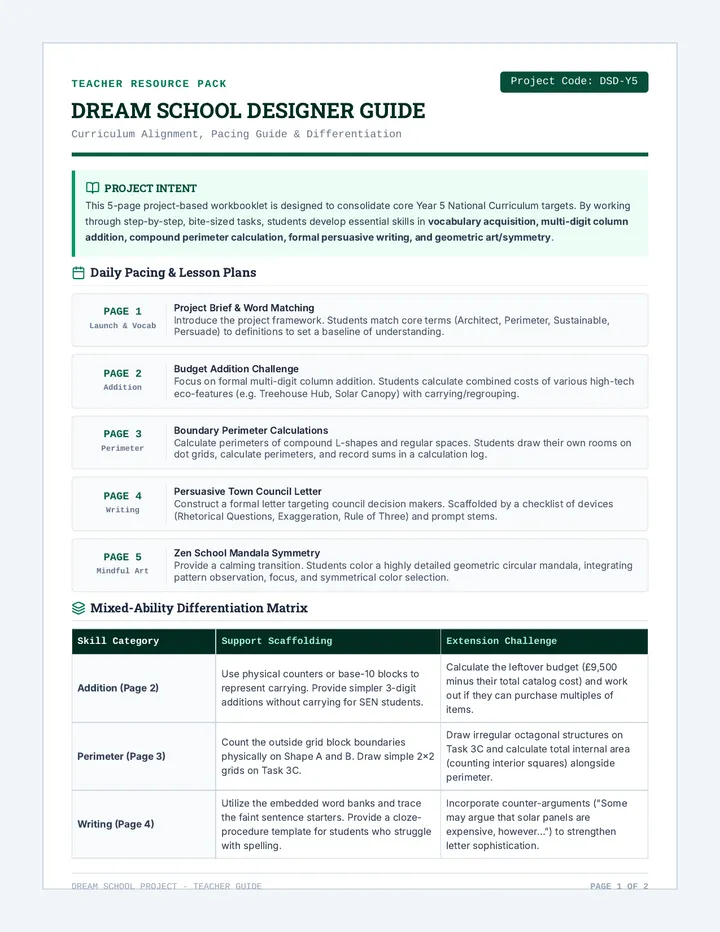
A 2-page teacher-facing lesson plan, differentiation matrix, and answer key designed to support educators in delivering the Dream School Designer project to Year 5 mixed-ability classes.
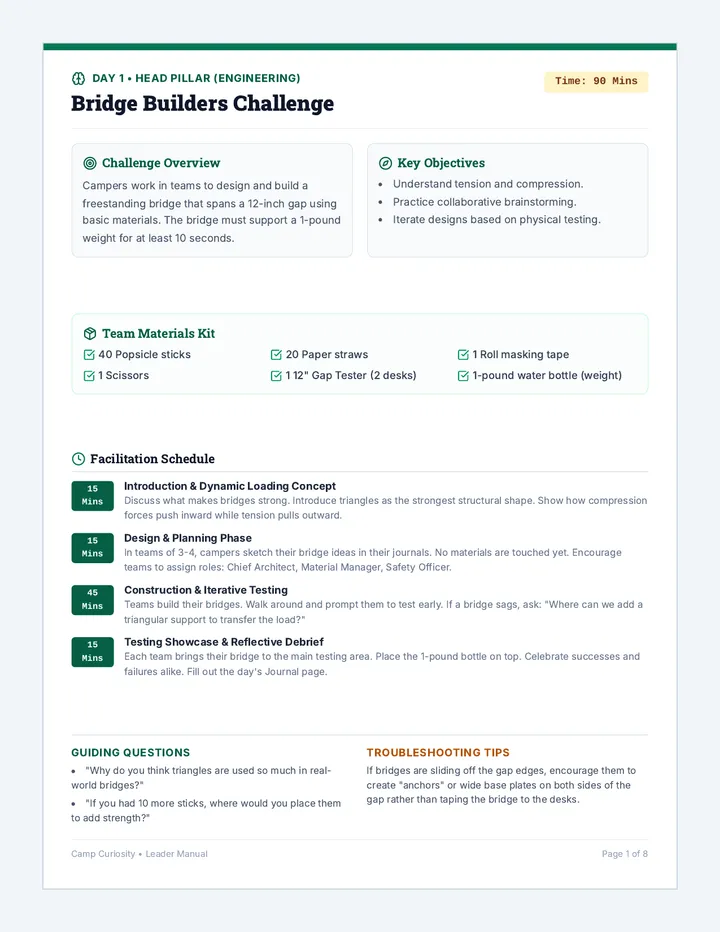
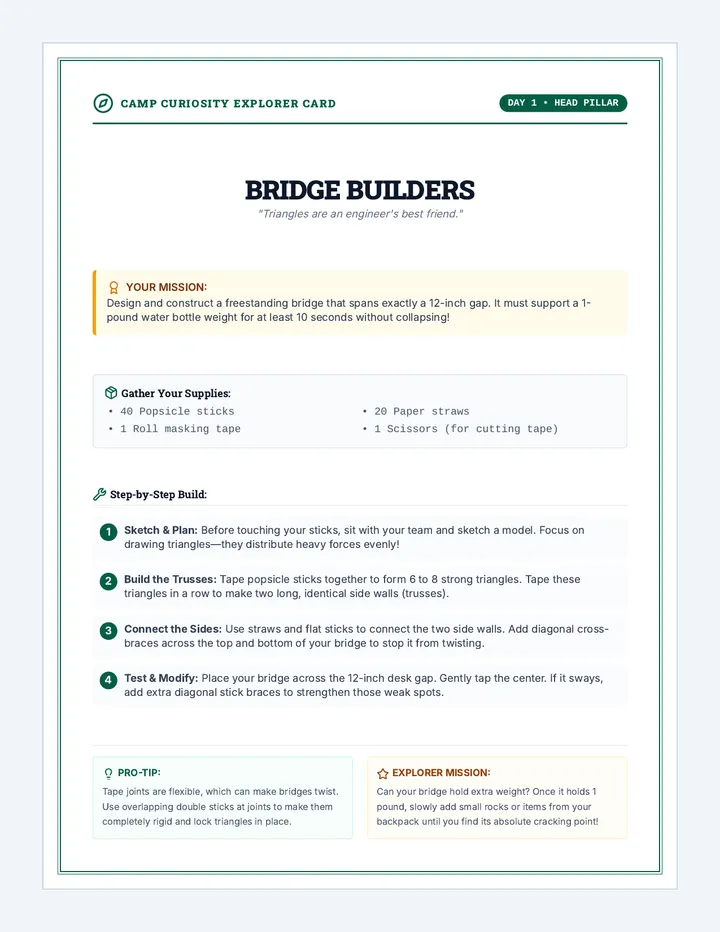
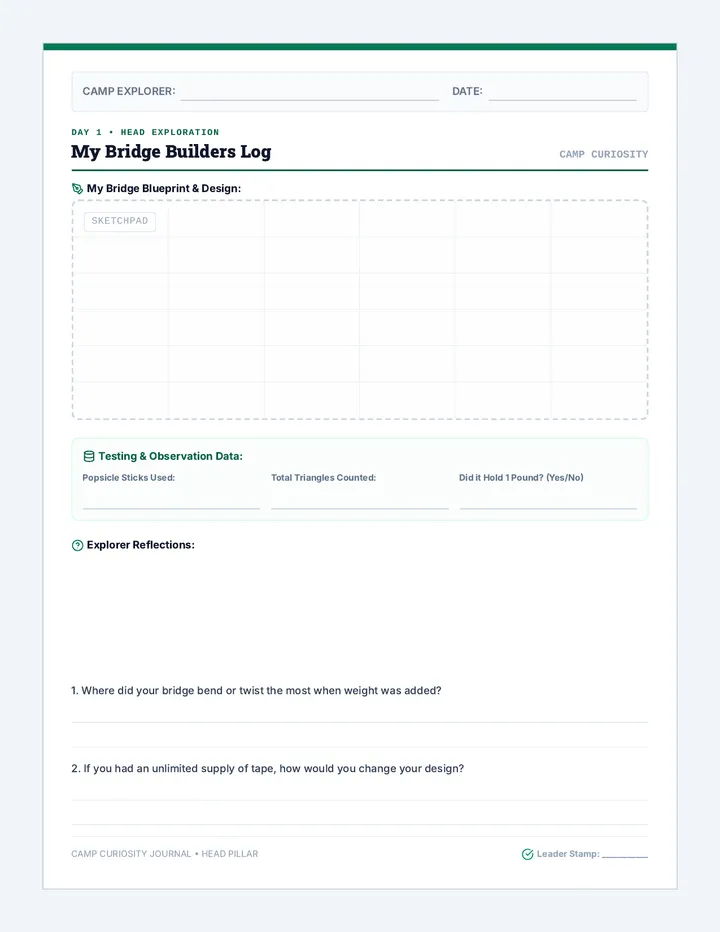
An action-packed, hands-on 8-day 4-H camp program focusing on Head, Heart, Hands, and Health. Students tackle engineering, teamwork, ecology, nutrition, and art challenges through daily active learning.
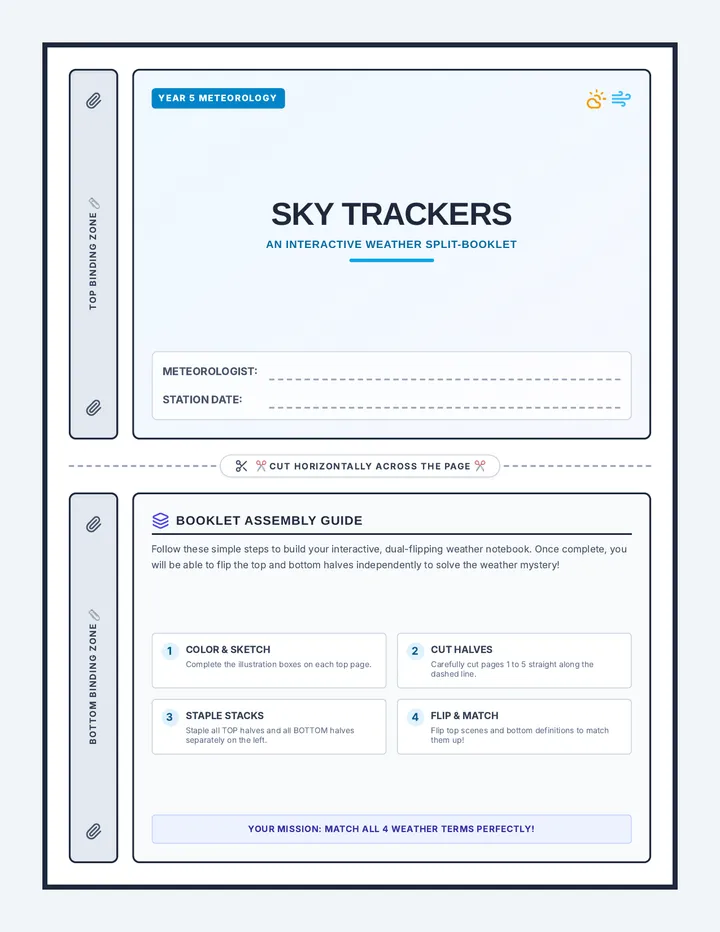
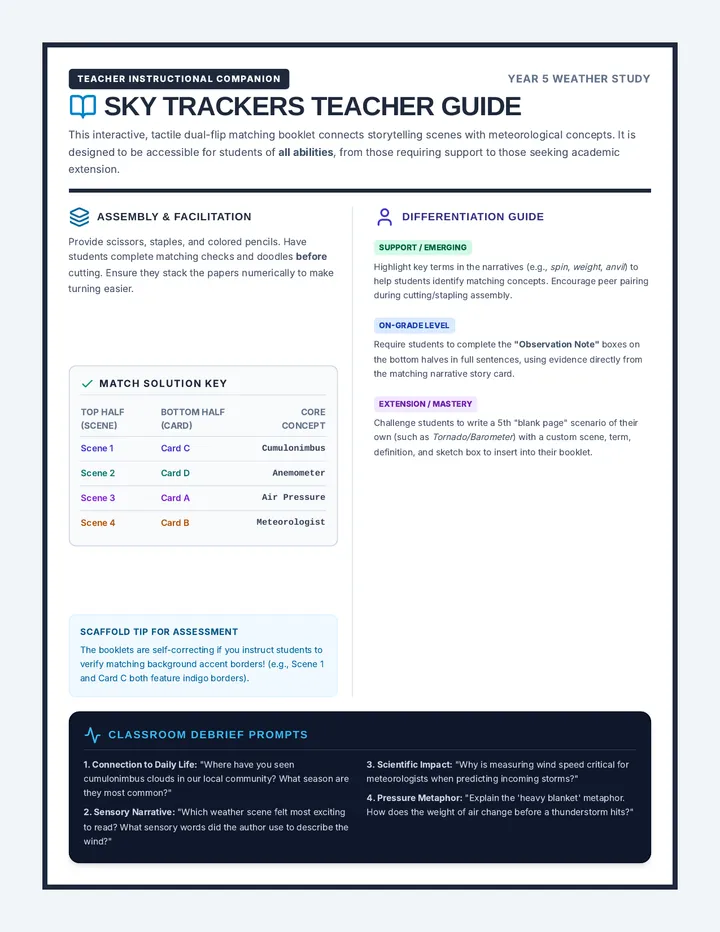
An interactive meteorological study where students construct and solve a dual-flip split booklet to match descriptive weather narratives with scientific terms and definitions.
A redesigned, 5-page student workbooklet featuring a Launch Checklist and Vocab Match, two Maths pages on perimeter and multi-digit addition, a formal Persuasive Writing letter, and a highly detailed SVG mandala for mindful coloring.
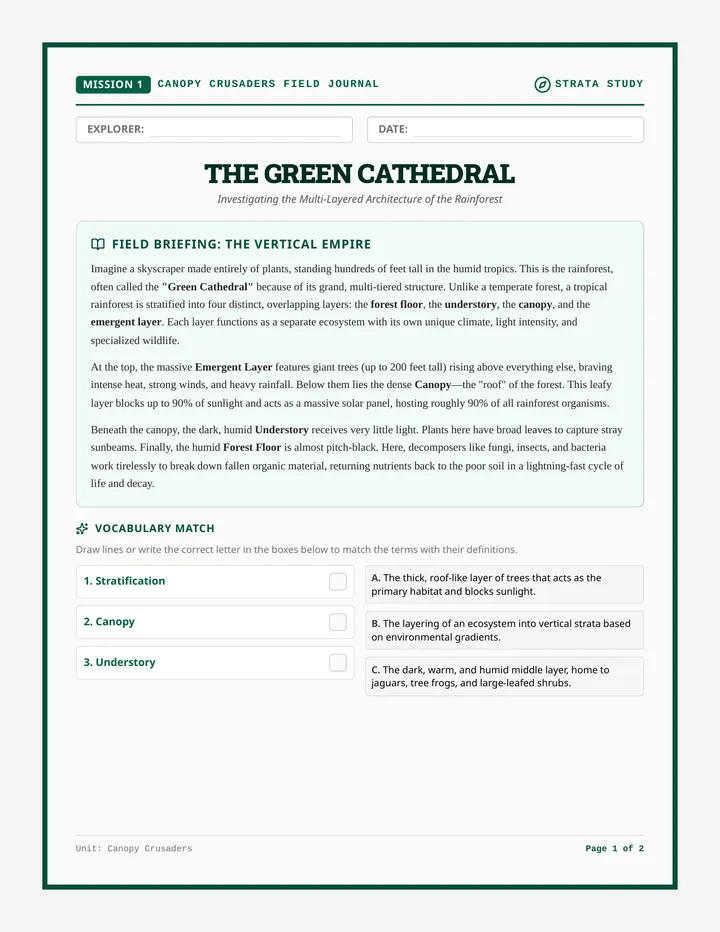
A comprehensive unit on rainforest ecology, climate regulation, and conservation. Students explore the structural layers of the rainforest, their roles as carbon sinks, the threats of deforestation, and collaborative solutions for preservation.
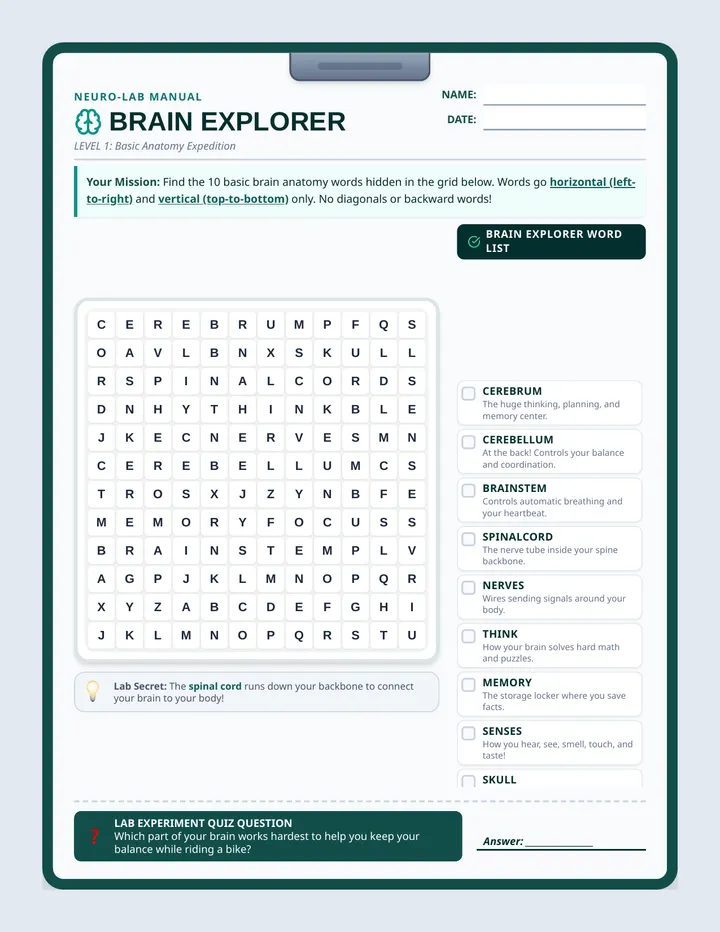
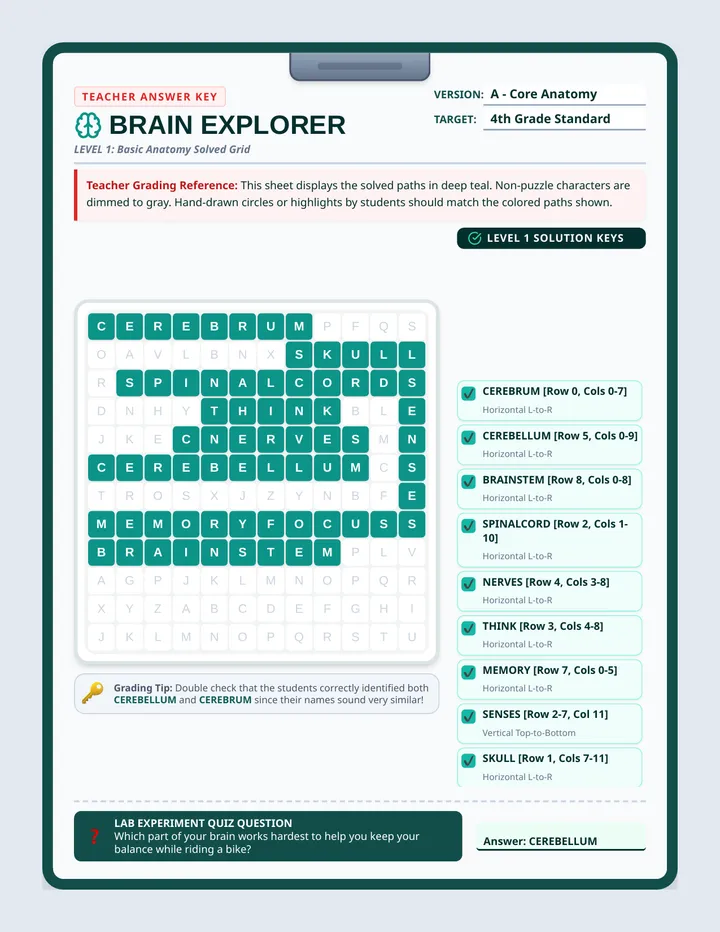
A collection of differentiated word search puzzles focusing on basic brain anatomy, vocabulary, and functions for fourth-grade students. Includes beginner and advanced levels with matching answer keys.
A comprehensive 1-page teacher reference guide containing assembly instructions, differentiation tips for all learning levels, an explicit match answer key, and classroom discussion prompts.
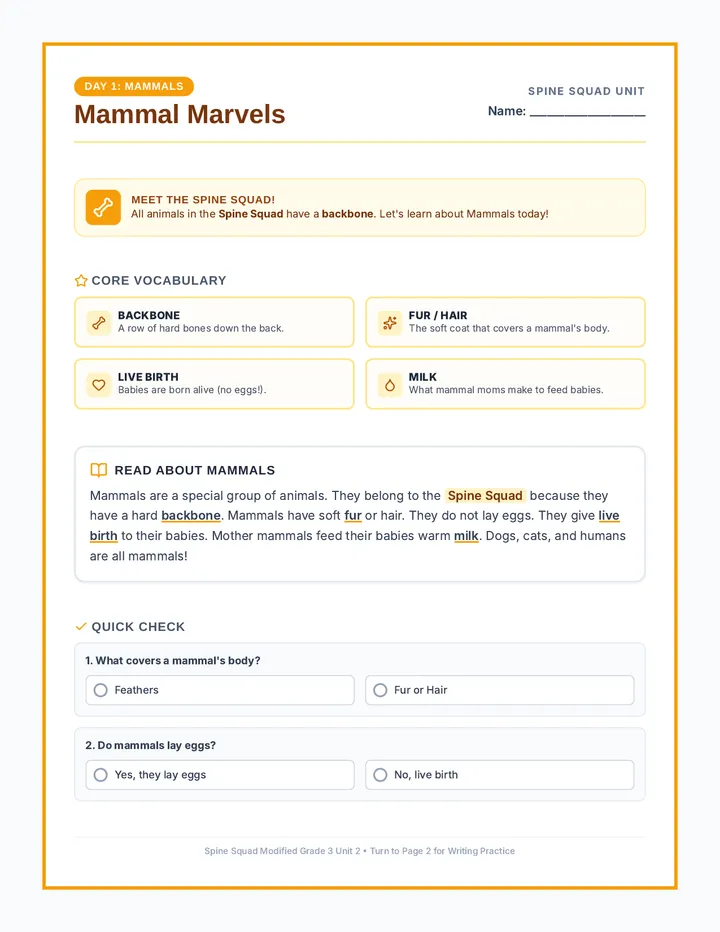
A five-day modified animal classification unit focusing on the five main vertebrate groups, designed with extensive visual support, sentence frames, and tracing options for modified learning.
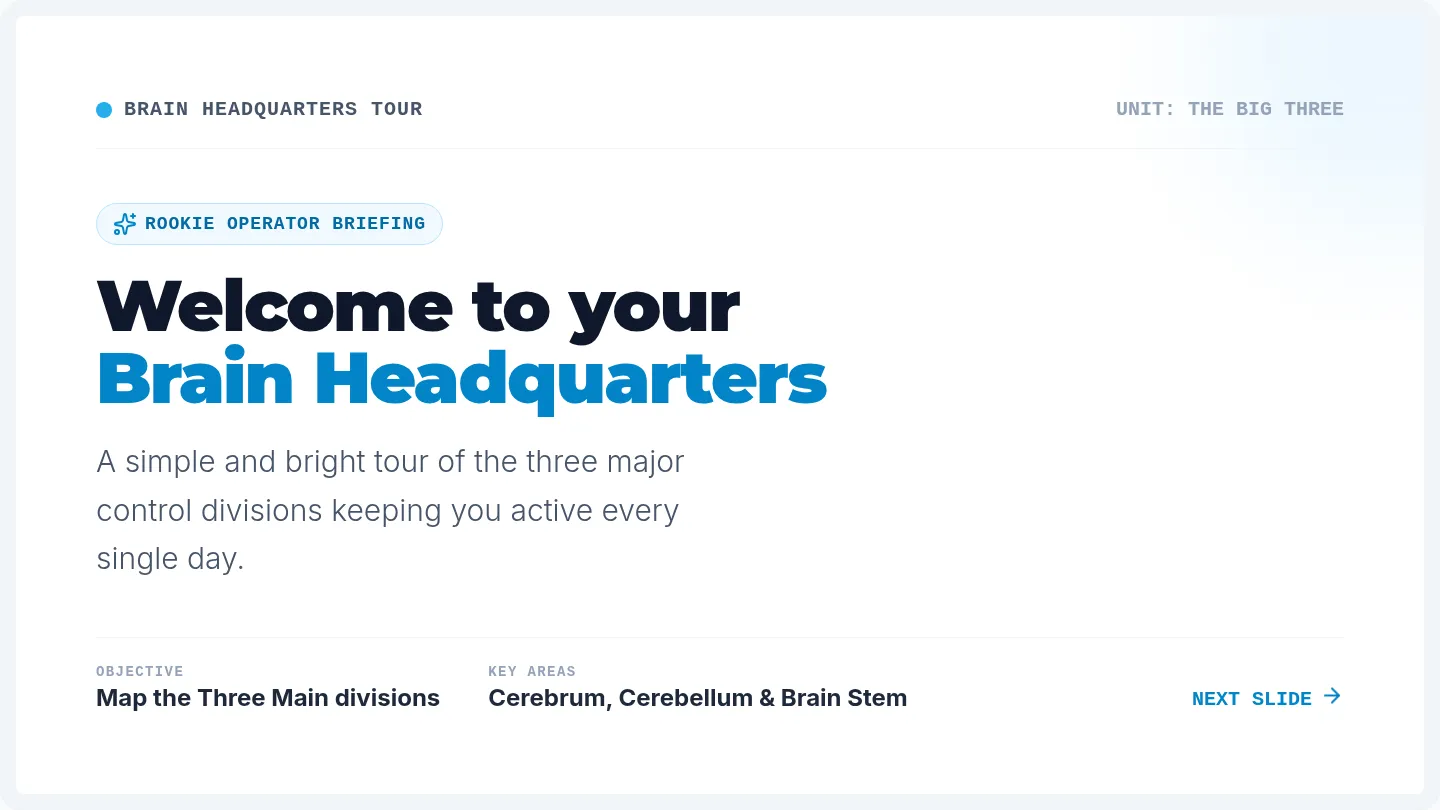
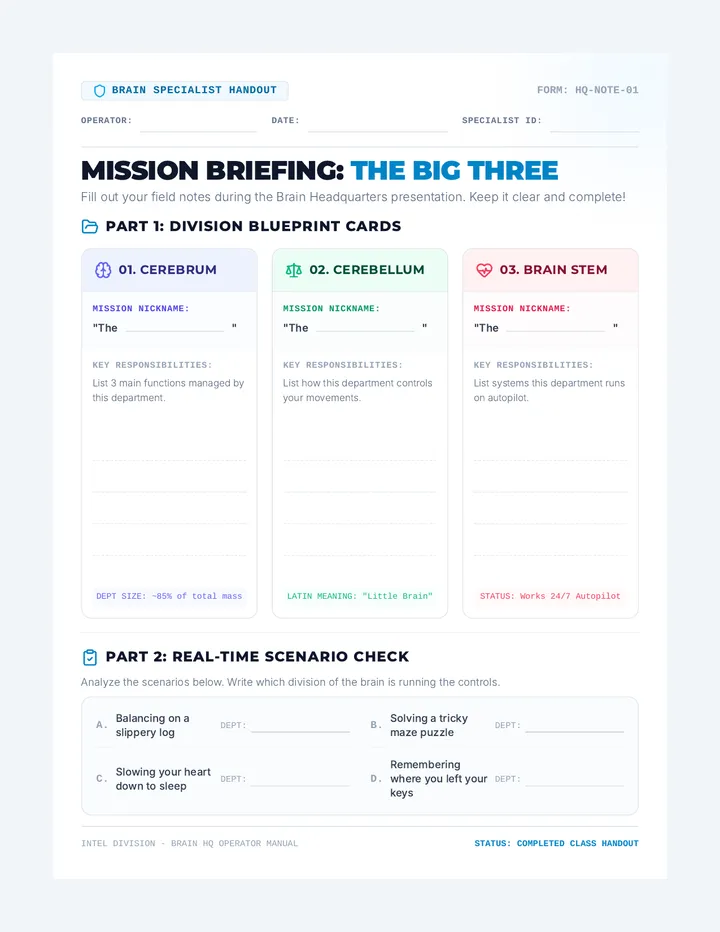
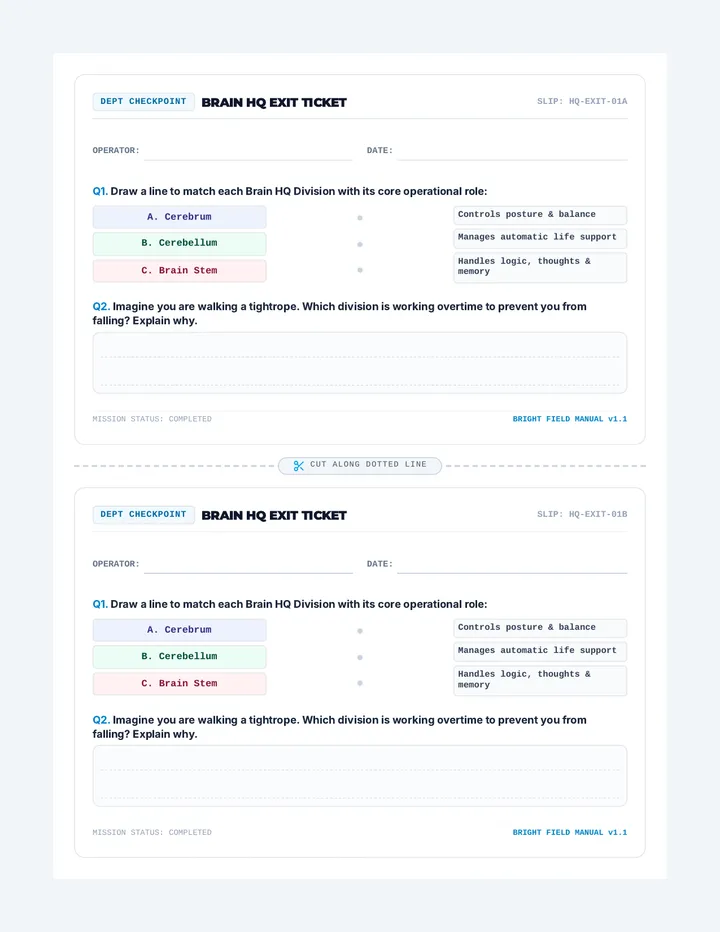
An interactive lesson introducing elementary or middle school students to the three major divisions of the brain: the Cerebrum, Cerebellum, and Brain Stem.
A 5-page interactive print-ready split booklet where students cut pages in half to match rich narrative weather scenes (top half) with scientific definitions (bottom half). Perfect for Year 5 meteorology and vocabulary integration.