An unplugged computational thinking lesson for grades 2-4 where students help Zizi, a friendly coding mascot, navigate grids, learn about algorithms, and master basic debugging concepts.
An intensive High School Biology sequence that dives deep into the biophysics and biochemistry of photosynthesis. Students explore the molecular machinery of the light-dependent reactions and the enzymatic steps of the Calvin cycle.
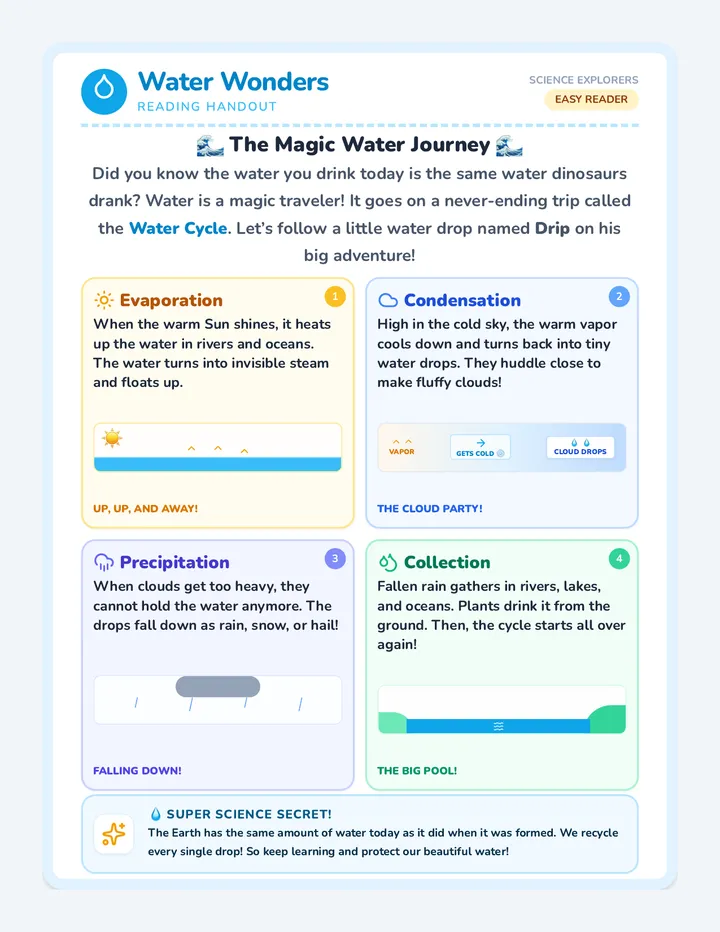
An engaging and accessible mini-lesson on the water cycle designed for early elementary students. It features a simplified reading passage, a comprehension worksheet with word bank fill-in-the-blanks and picture identification, a hands-on cut-and-glue matching activity, and complete teacher answer keys.
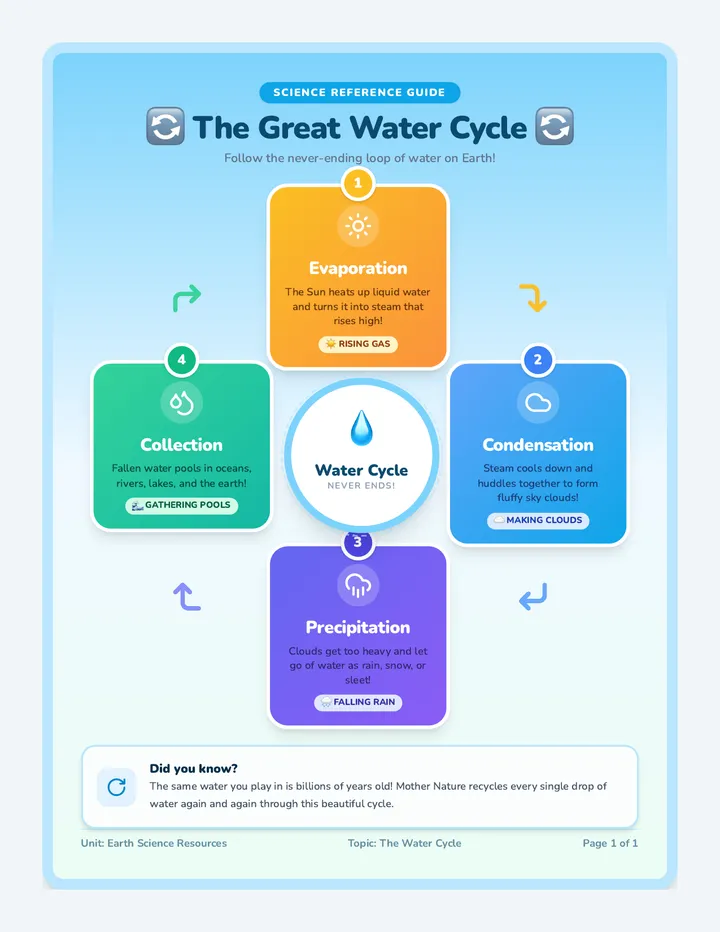
A visually stunning, high-contrast, educational water cycle diagram poster. It presents the full cycle (Evaporation, Condensation, Precipitation, and Collection) with large titles, clear arrows, friendly illustrations, and distinct sections, making it perfect for classroom display or desk reference.
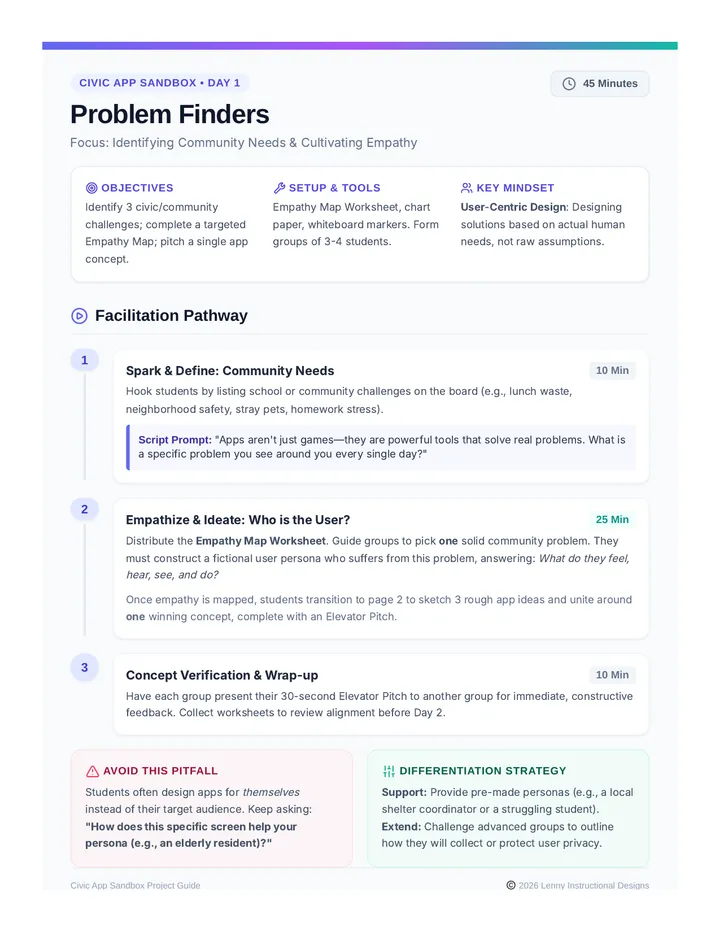
A three-day project-based learning unit where students design and pitch interactive paper prototypes of apps that address real-world community challenges.
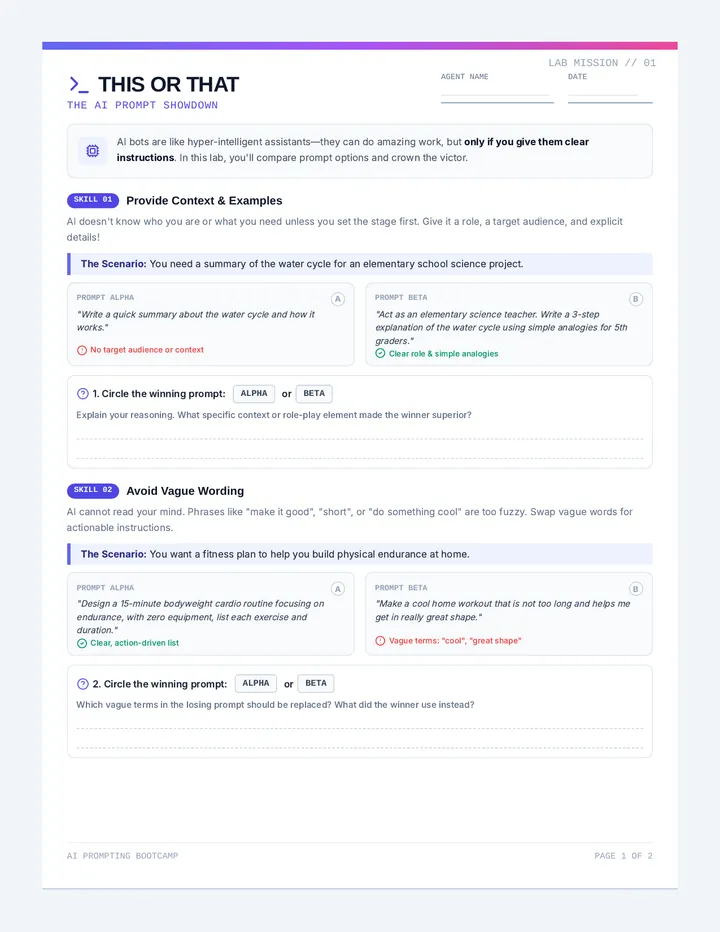
A hands-on lesson teaching students how to craft high-quality AI prompts by comparing exemplars and non-exemplars. Students learn to provide context, eliminate vague language, and set clear constraints.
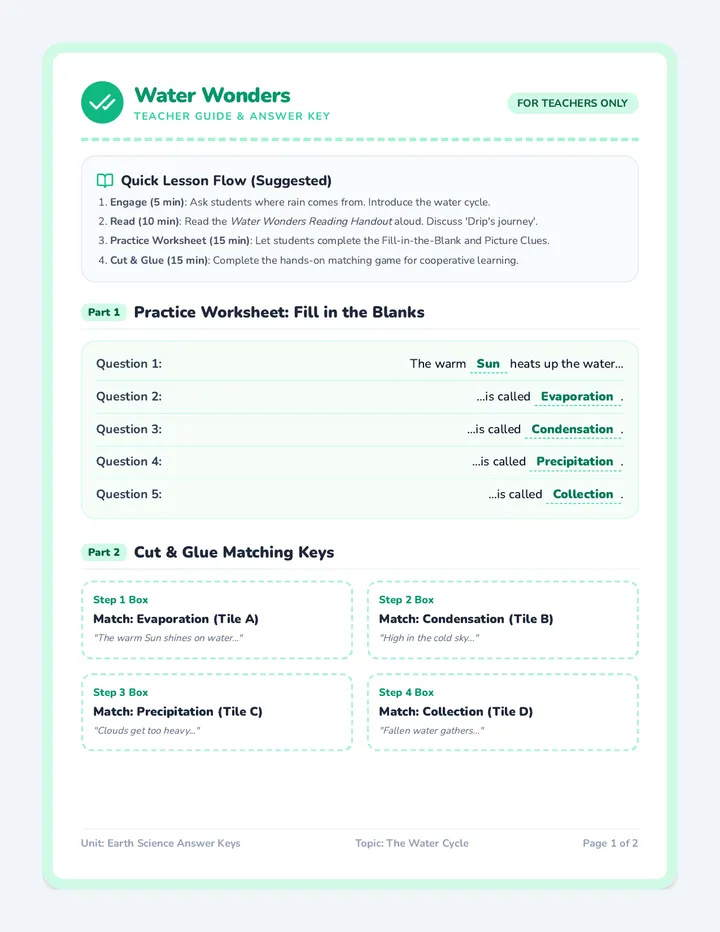
A complete teacher answer key and lesson guide. Page 1 provides a quick instructional outline and the correct answers for the Fill-in-the-Blank and Cut-and-Glue matching activities. Page 2 provides suggested answers and grading parameters for the Picture Clues student descriptions.
A comprehensive elementary/middle school astronomy unit exploring the predictable patterns of Earth and sky. Students investigate why constellations change seasonally and decode the predictable cycle of lunar phases through hands-on models, observations, and guided inquiry.
A suite of highly stylized, themed Google Classroom banners for secondary science classes, covering 1st, 2nd, 3rd, 5th, and 9th periods. Each banner features a unique branch of science and color palette, designed for high-impact visual appeal in digital environments.
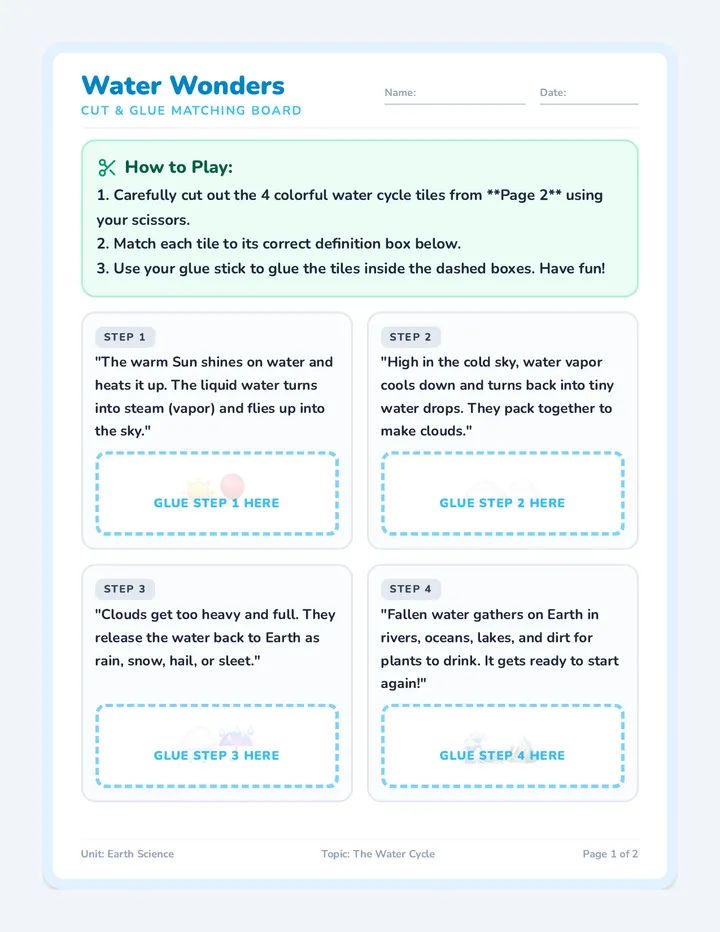
A fun, hands-on 2-page cut-and-glue matching activity. Page 1 is the 'Water Cycle Board' featuring definition boxes with cute dashed borders where students glue their answers. Page 2 contains four beautifully illustrated, easy-to-cut term tiles with visual icons and friendly slogans.
A hands-on, inquiry-based elementary science unit investigating the secrets of photosynthesis. Students act as 'Plant Power Detectives' conducting wet labs, including leaf chromatography and Elodea oxygen bubble experiments, to discover how plants capture light, make food, and produce oxygen.
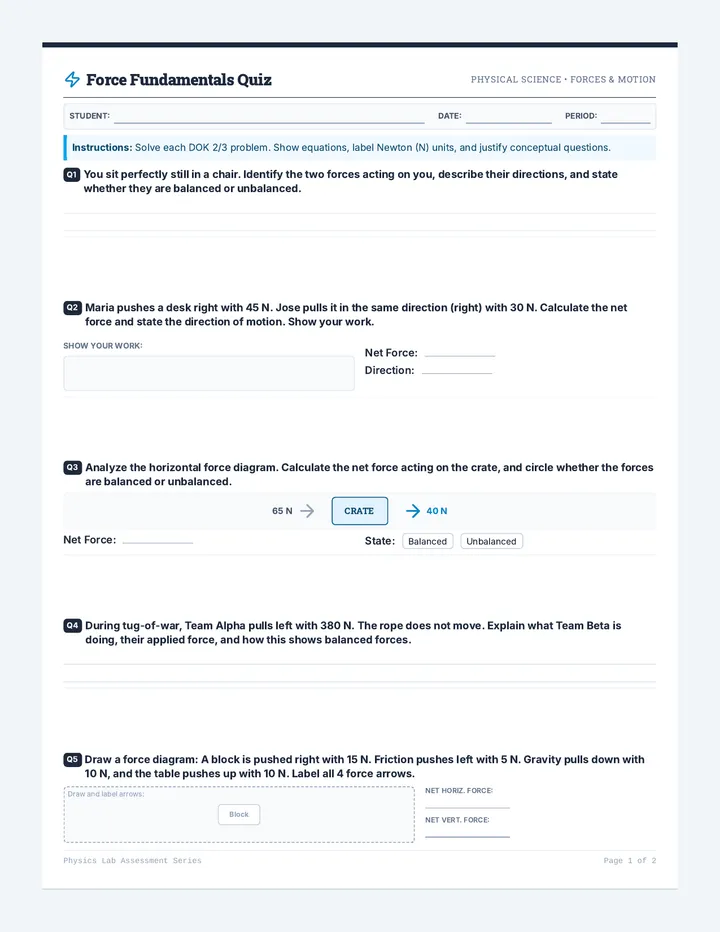
A physics-focused lesson exploring the core concepts of push and pull forces, net force calculations, balanced vs. unbalanced forces, and force diagrams based on textual and quantitative evidence.
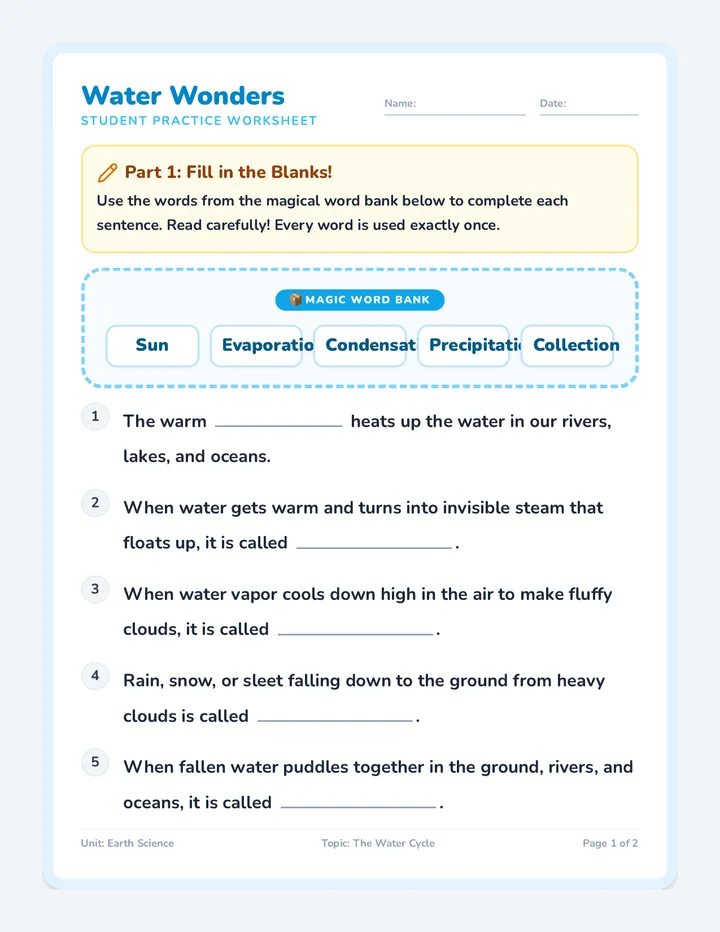
A student-facing 2-page practice worksheet. Page 1 features a clear word bank at the top followed by five easy-to-read fill-in-the-blank questions. Page 2 provides icon-driven picture clues where students identify and describe each of the four main stages of the water cycle in their own words.