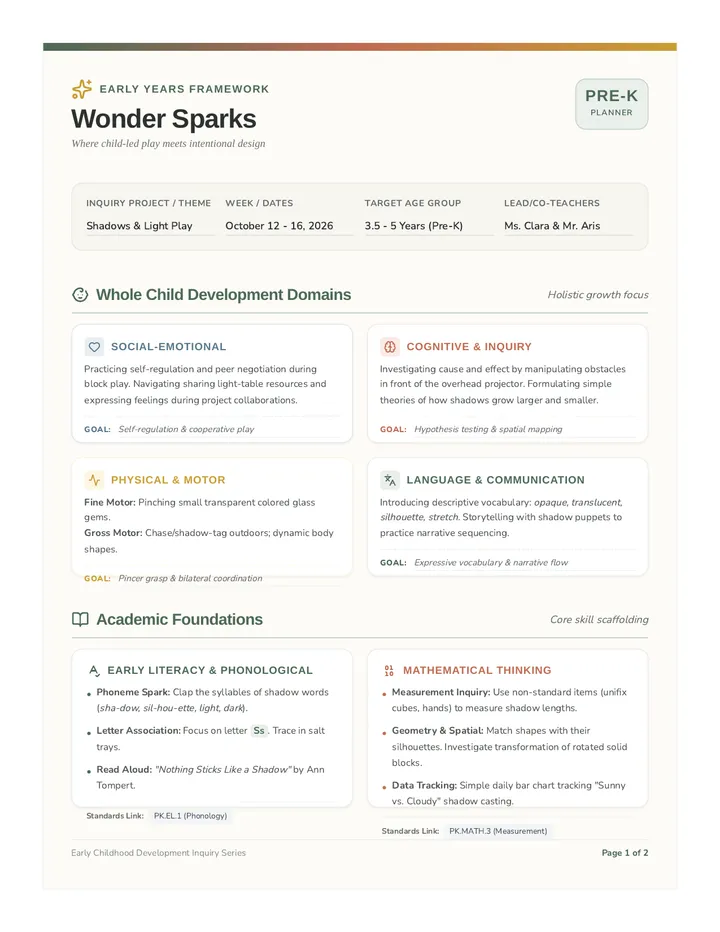
A comprehensive PreK lesson plan template designed with a Reggio-inspired aesthetic, focusing on child-led play, whole-child developmental domains, and academic foundations.
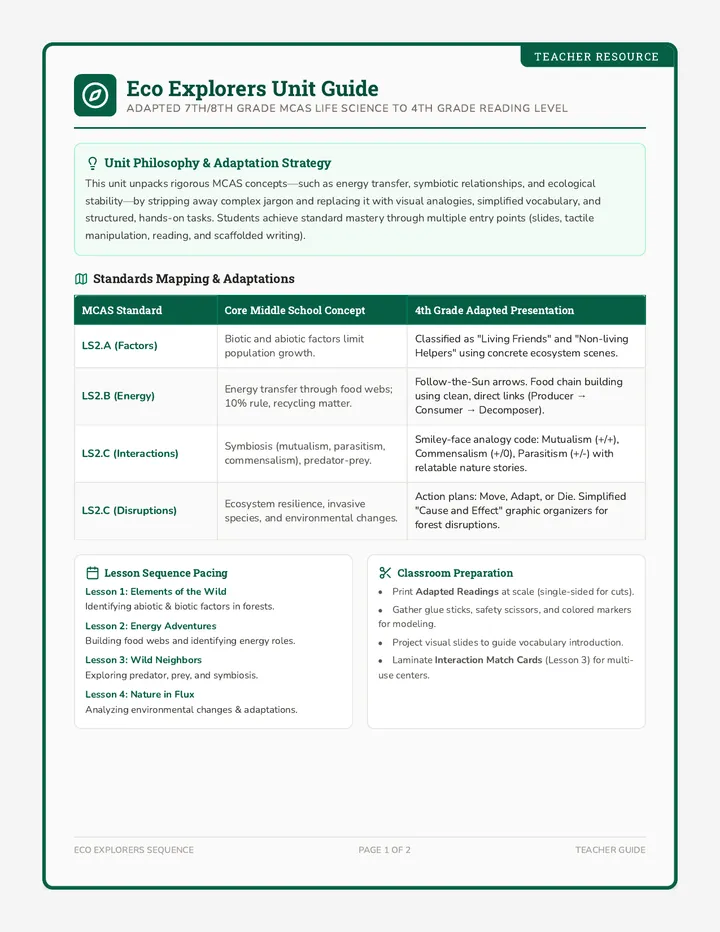
An interactive, highly visual ecosystem unit designed for 7th/8th grade MCAS standards but adapted to a 4th-grade reading and comprehension level. The unit explores abiotic/biotic factors, energy flow, interactions, and disruptions through hands-on activities, adapted readings, visual slides, and scaffolded assessments.
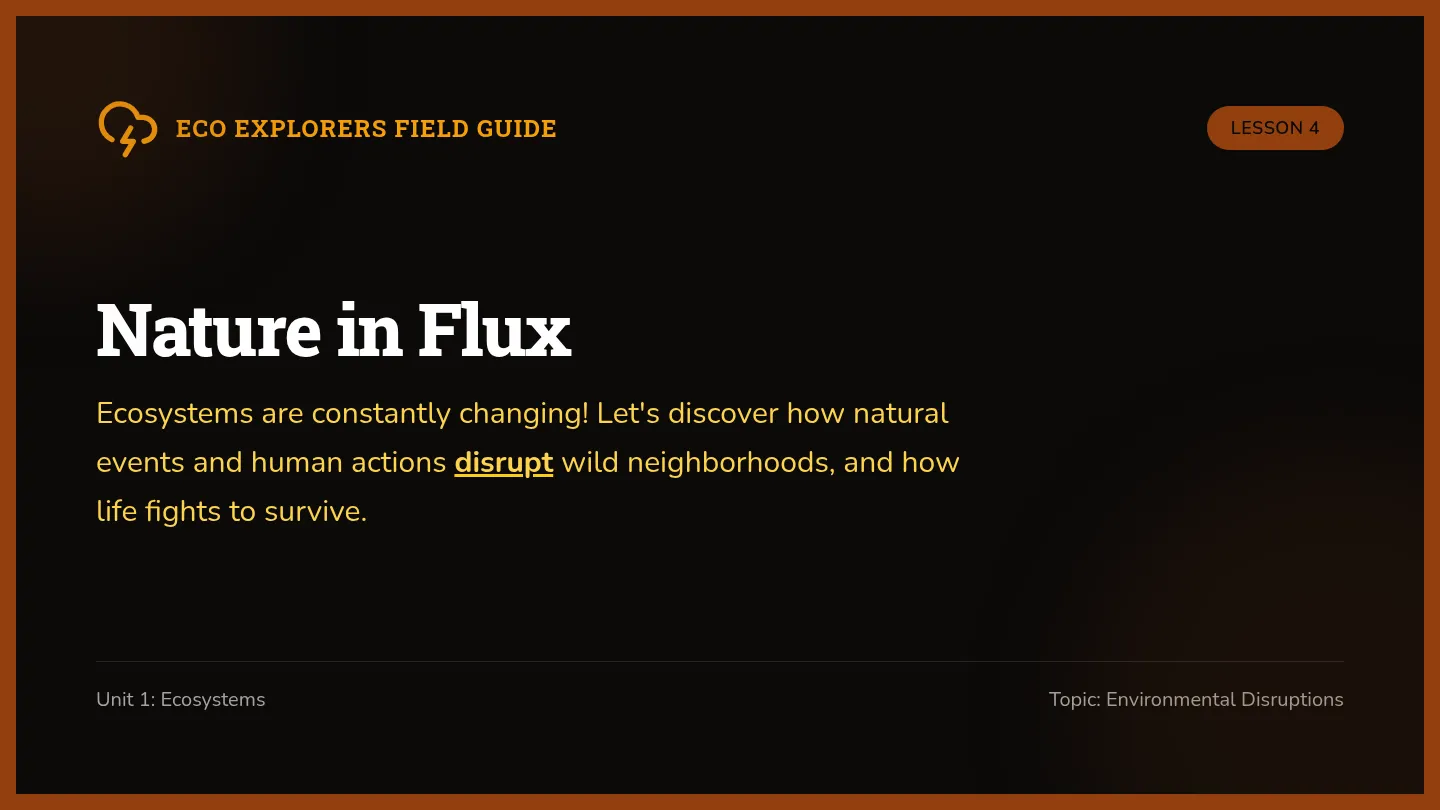
Students examine how ecosystems change over time due to natural events and human activities, and how these disruptions force living things to adapt, relocate, or face survival challenges. Includes disruption scenario cards, a checklist, and slide reviews.
A Reggio-inspired, beautifully designed 2-page Pre-K lesson plan template. It integrates Play & Exploration, Whole Child Domains, and Academic Foundations with structured, print-ready layouts, guides, and fillable fields.
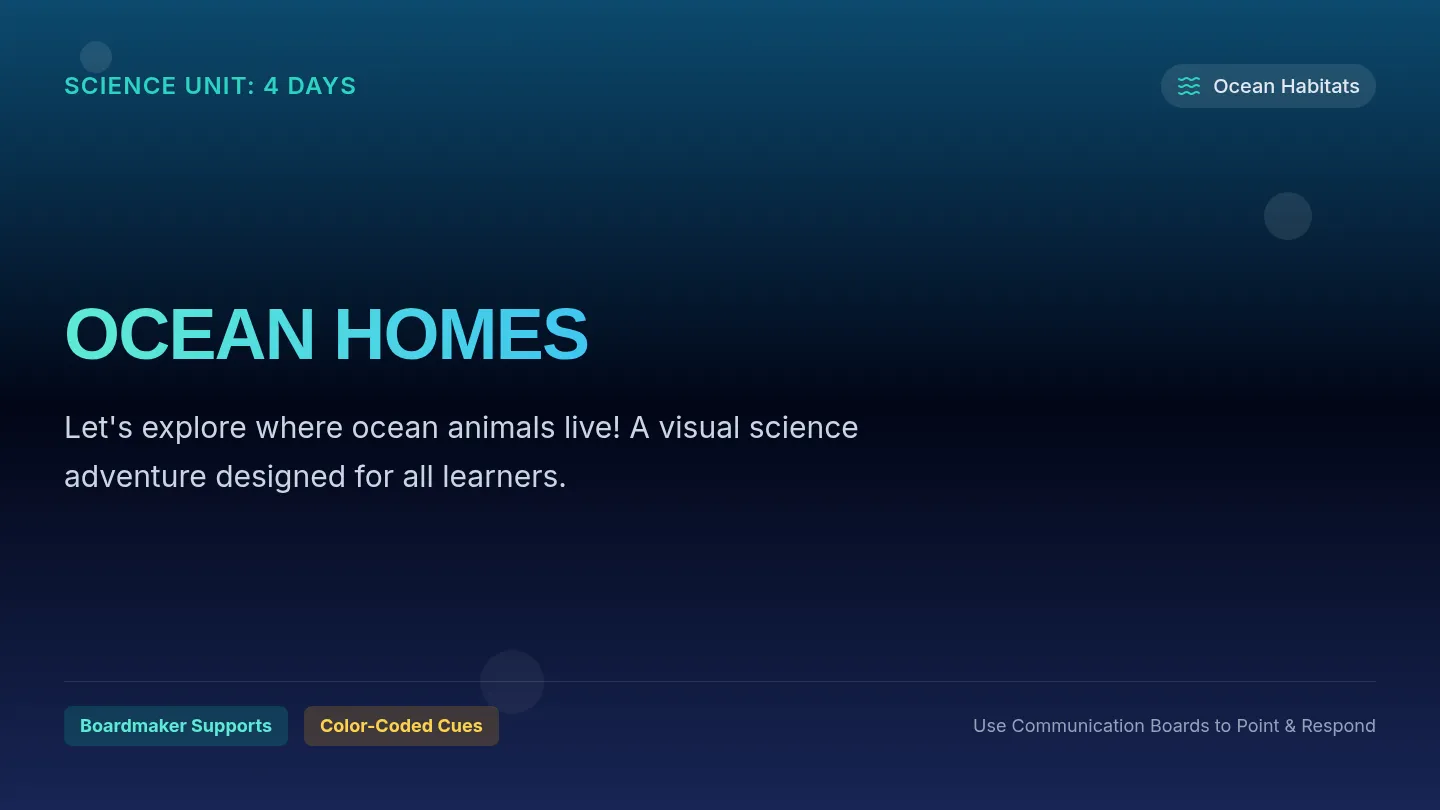
A highly visual 4-day science unit exploring ocean habitats and depth zones. Tailored for differentiated instruction for 3rd grade and nonverbal 7th grade students using Boardmaker-style symbols, color-coded matching, and visual check comprehension.
Students discover how organisms interact in a forest ecosystem, exploring predator-prey relationships, competition, and simple symbiotic alliances (mutualism, commensalism, parasitism) with kid-friendly analogies. Includes interactive task cards, adapted guides, and slide visuals.
A highly visual 7-slide presentation focusing on animals, vocabulary (dim, bioluminescence), and the absence of plants in the Twilight Zone. Designed with Boardmaker-style symbols and Yes/No checks.
An intensive High School Biology sequence that dives deep into the biophysics and biochemistry of photosynthesis. Students explore the molecular machinery of the light-dependent reactions and the enzymatic steps of the Calvin cycle.
Students explore how energy flows from the sun through producers, consumers, and decomposers, and how multiple food chains link to form complex food webs. Includes modeling templates, reading guides, and instructional slides.
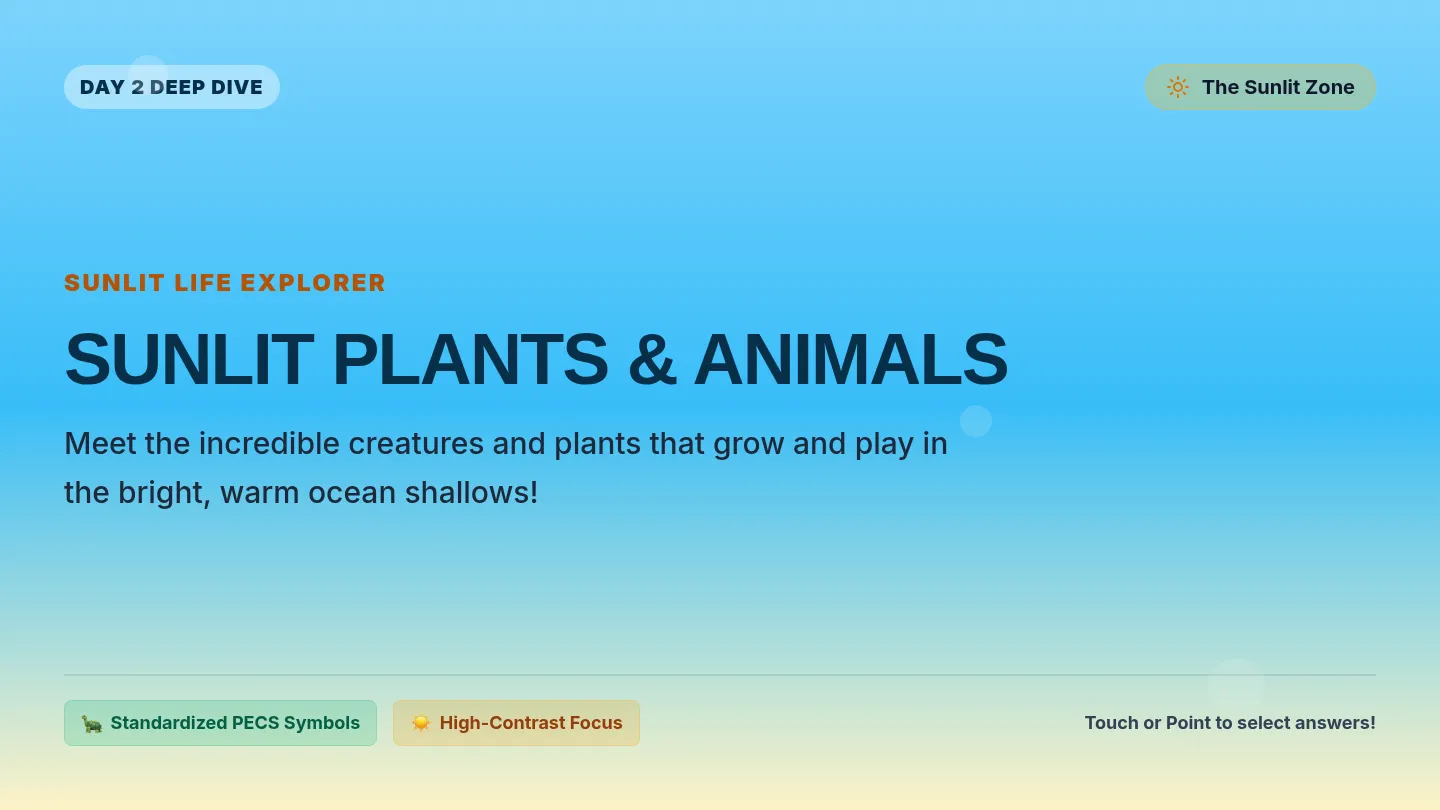
A highly visual 7-slide presentation focusing on animals and plants of the Sunlit Zone. Designed with Boardmaker-style symbols, bright sunlit theme, and interactive Yes/No question checks for turtles, dolphins, coral reefs, and giant kelp plants.
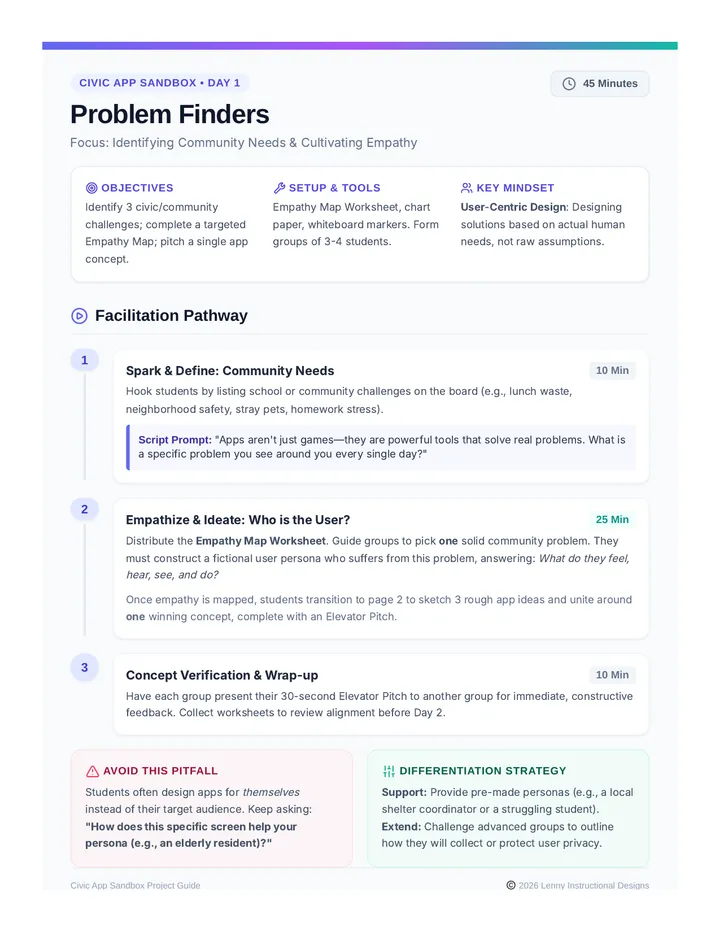
A three-day project-based learning unit where students design and pitch interactive paper prototypes of apps that address real-world community challenges.
Students learn to distinguish between living (biotic) and non-living (abiotic) parts of an ecosystem, understanding how they connect to support life. Includes an adapted reading, a card sorting activity, and highly visual slides.
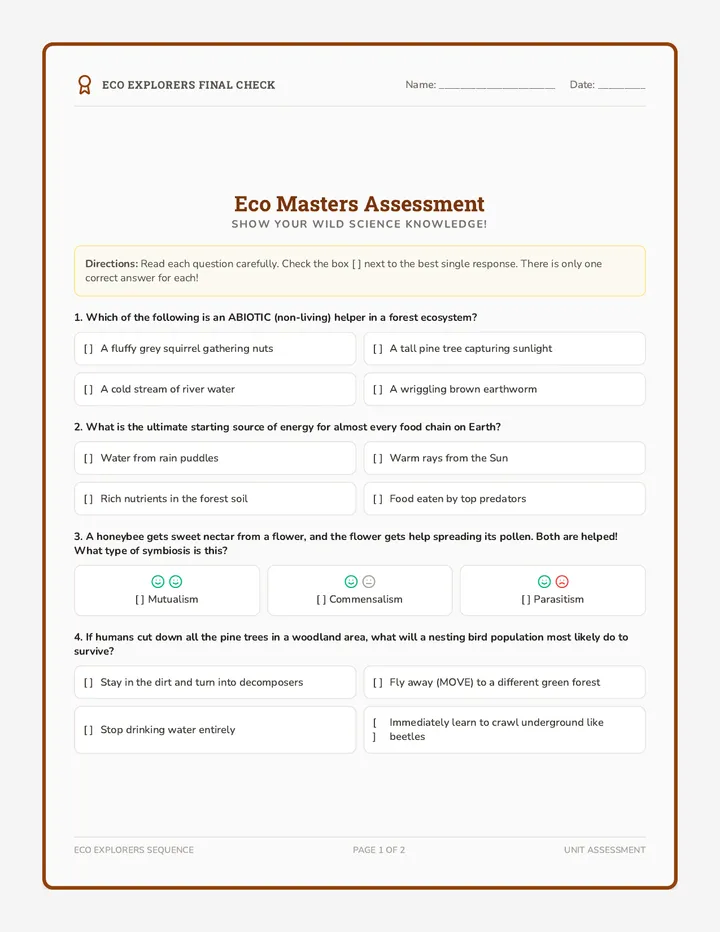
A simplified summative unit quiz featuring multiple-choice and short-answer questions with visual supports to assess students' mastery of MCAS ecosystem standards.