A foundational 20-minute lesson introducing 7th graders to artificial intelligence through everyday examples and interactive brainstorming.
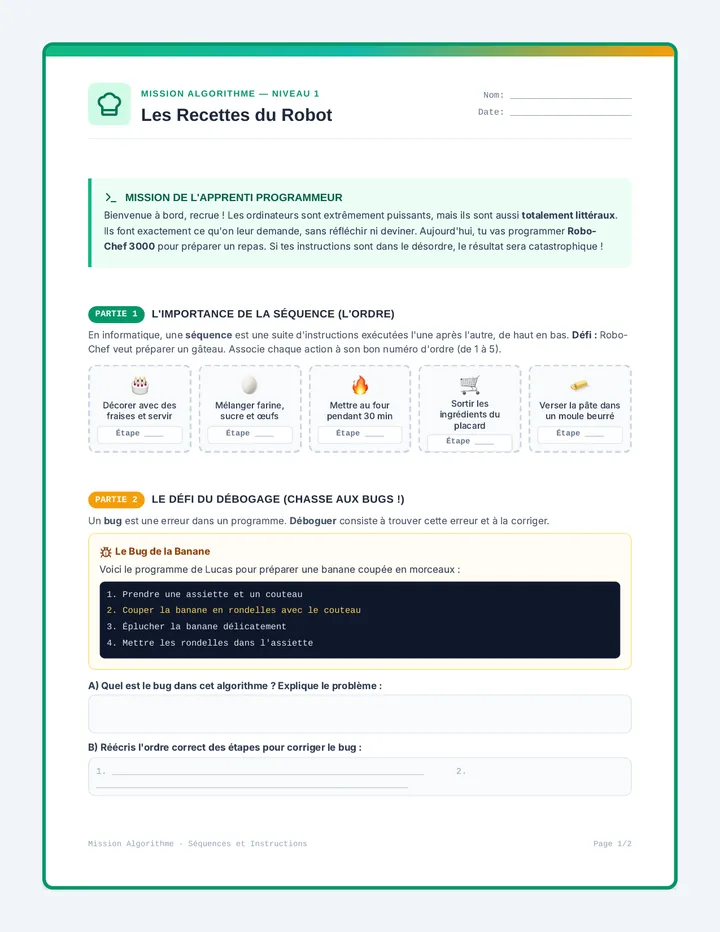
Une séquence d'initiation à l'algorithmique sans code pour débutants absolus. À travers des métaphores concrètes, les apprenants découvrent les trois piliers de la programmation : les séquences d'instructions, les conditions et les boucles.
A comprehensive online safety curriculum combining key digital citizenship concepts: managing digital footprints, identifying online scams and phishing, and establishing healthy screen time habits.
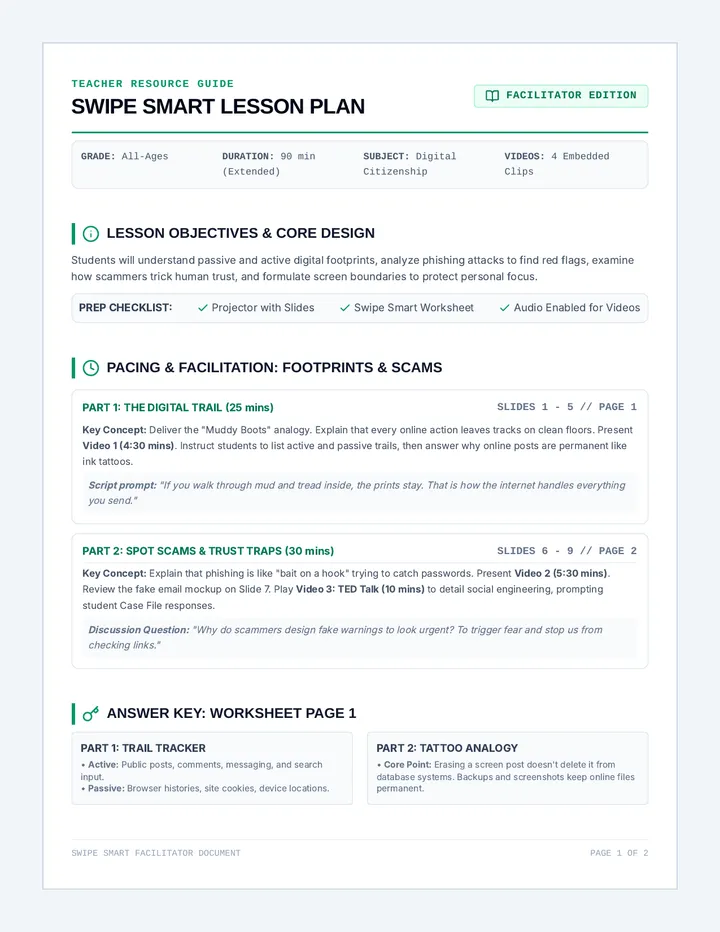
A comprehensive 2-page print-ready lesson plan, facilitation guide, and answer key for the Swipe Smart curriculum. Includes slide-by-slide instructional scripts, pacing tips, and discussion prompt templates.
A multi-grade collection of scientific reading comprehension and response booklets designed to build disciplinary literacy in Earth, Life, and Physical sciences across elementary and middle school levels.
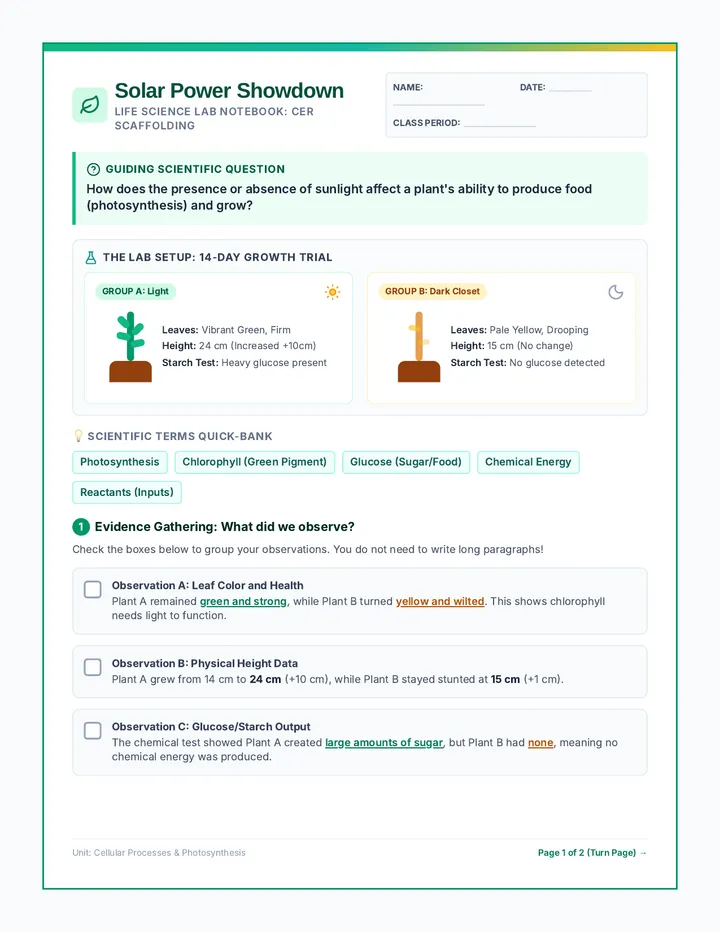
A differentiated Claim-Evidence-Reasoning (CER) lesson designed for 7th-grade life science, focusing on photosynthesis. It provides visual aids, word banks, and structured sentence frames to support students who need reduced writing demands.
An engaging, universally accessible 90-minute slide deck for teaching digital citizenship. Explains complex cyber safety, footprint, phishing, and screen time concepts using highly relatable, jargon-free analogies easily understood by all ages.
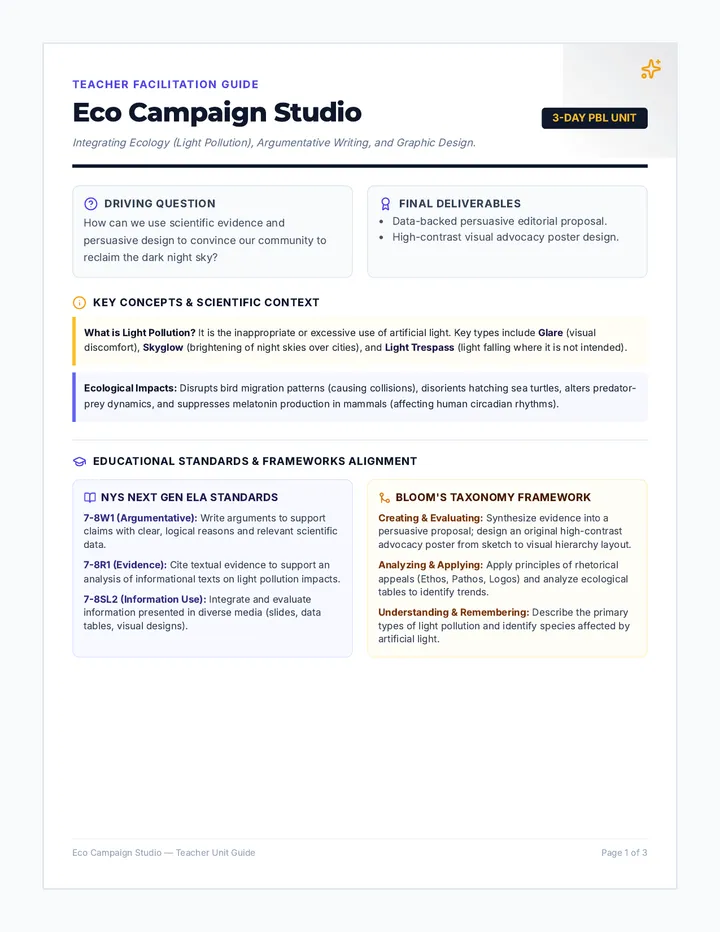
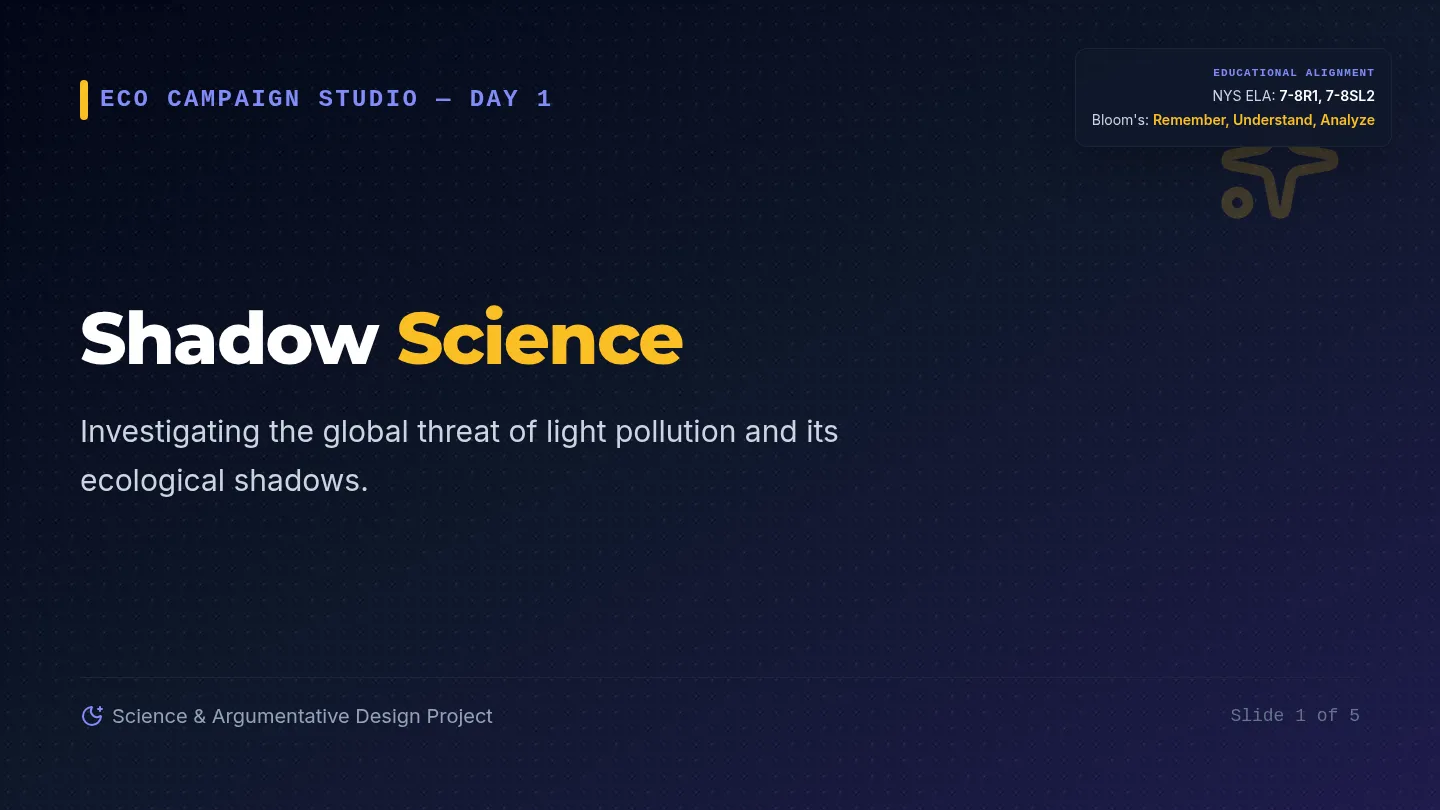
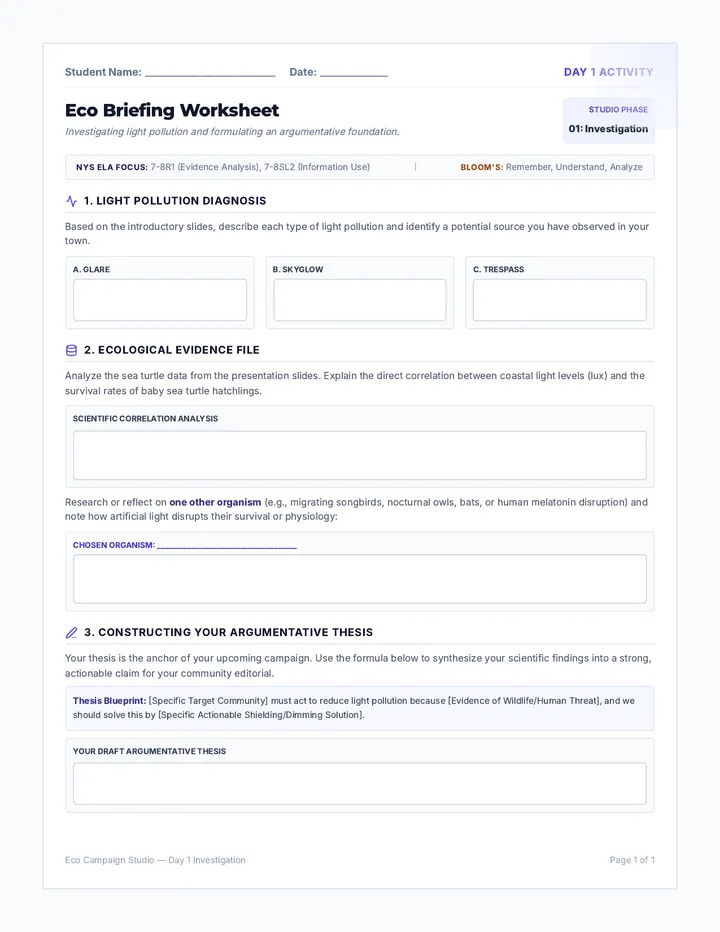
A cross-curricular, 3-day project-based unit combining science, argumentative writing, and graphic design. Students investigate the ecological impacts of light pollution, write a data-driven persuasive proposal, and design a community awareness campaign poster.
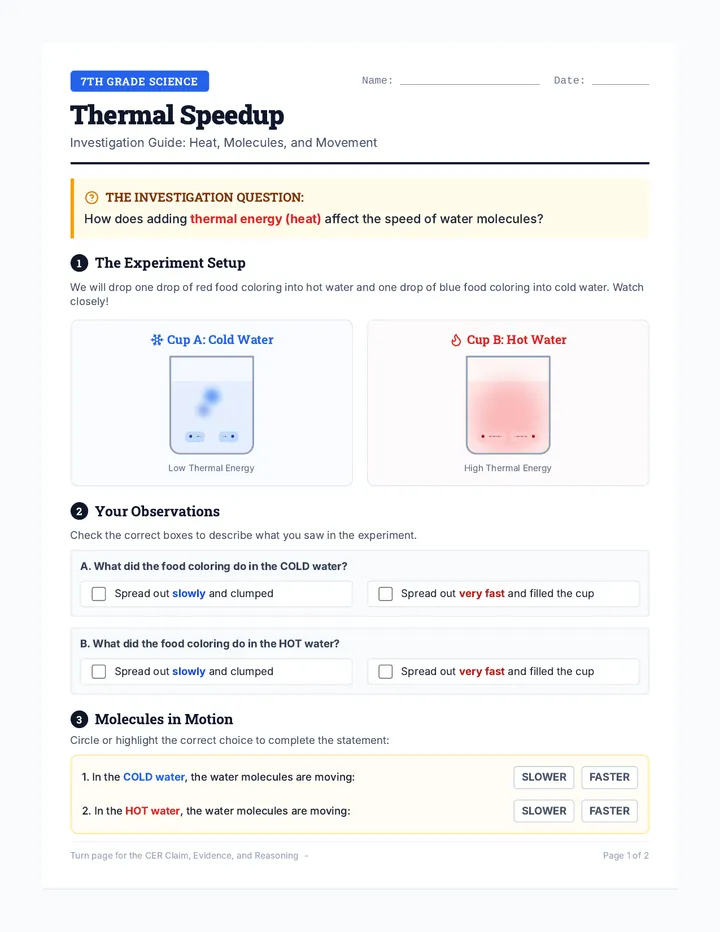
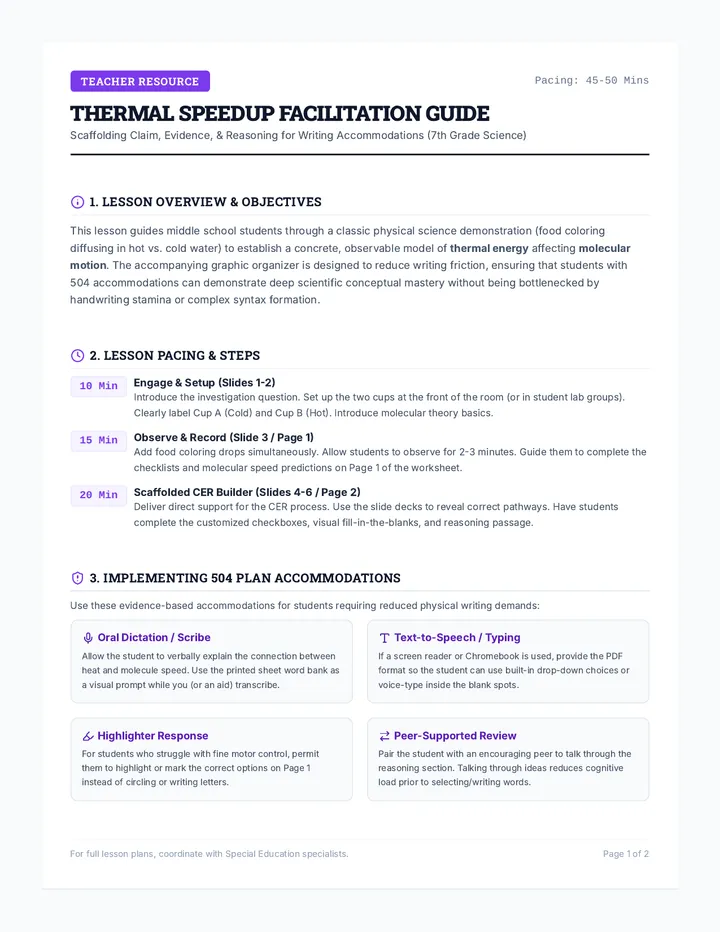
A structured science inquiry lesson investigating how thermal energy impacts molecular movement. It features a highly scaffolded CER graphic organizer designed specifically for 7th-grade students with writing accommodations (504 plan), including word banks, checkboxes, and sentence starters.
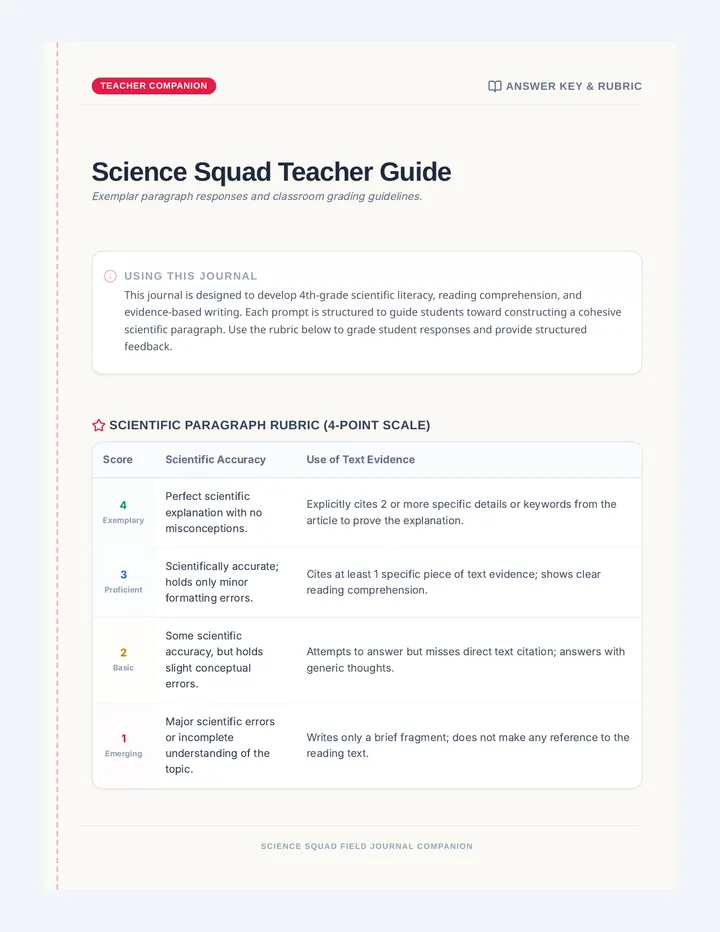
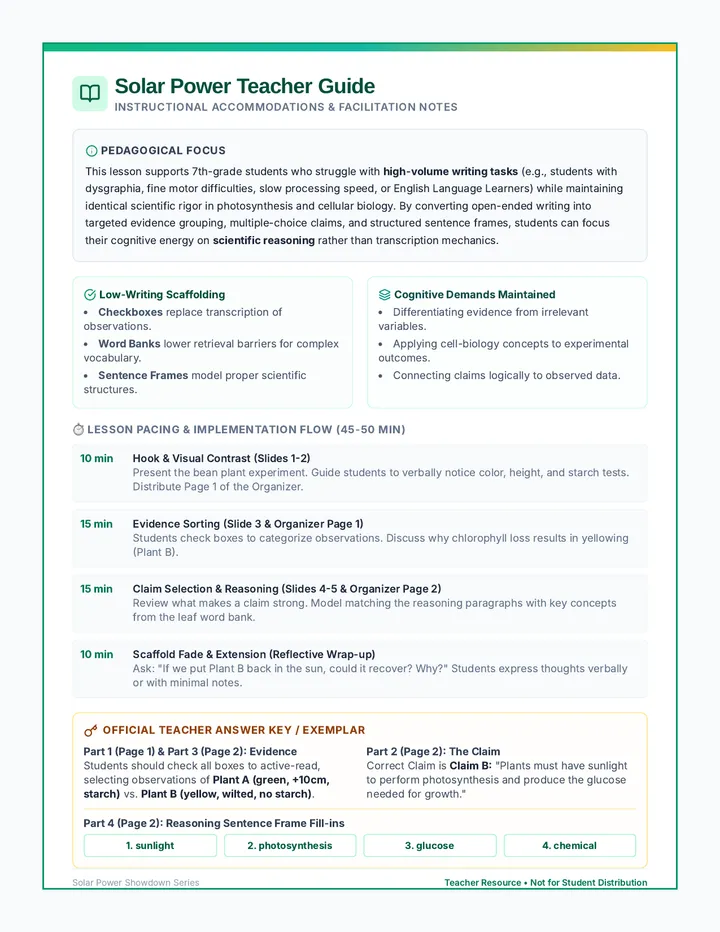
A comprehensive, one-page guide for teachers detailing pacing, differentiation strategies, and an answer key for the Solar Power Showdown CER lesson.
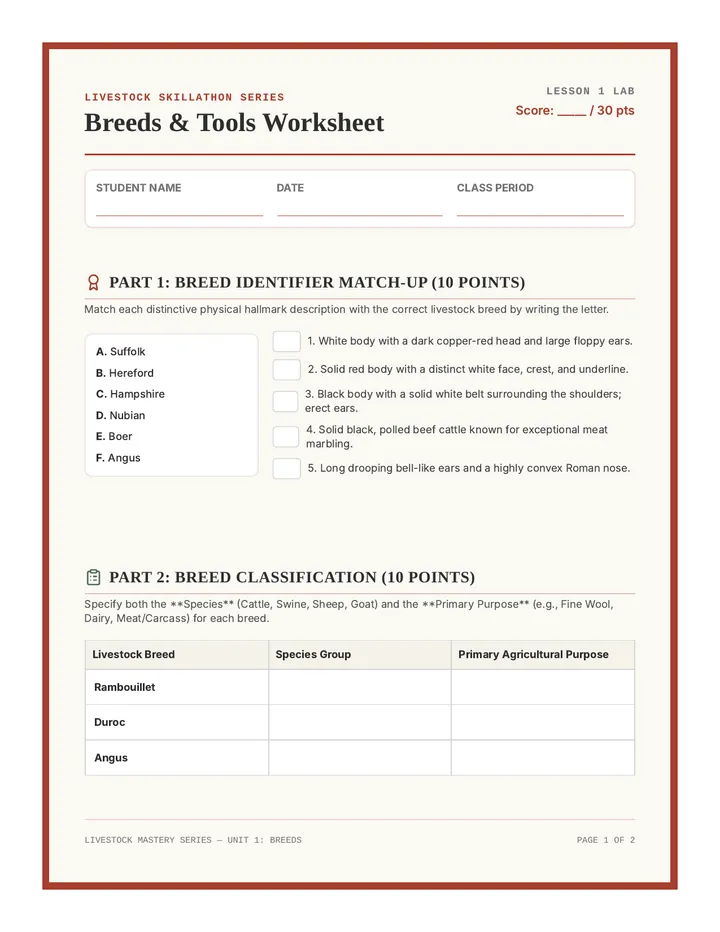
An immersive preparation program that equips agriculture students with the hands-on identification and evaluation skills needed to conquer competitive Livestock Skillathon contests.
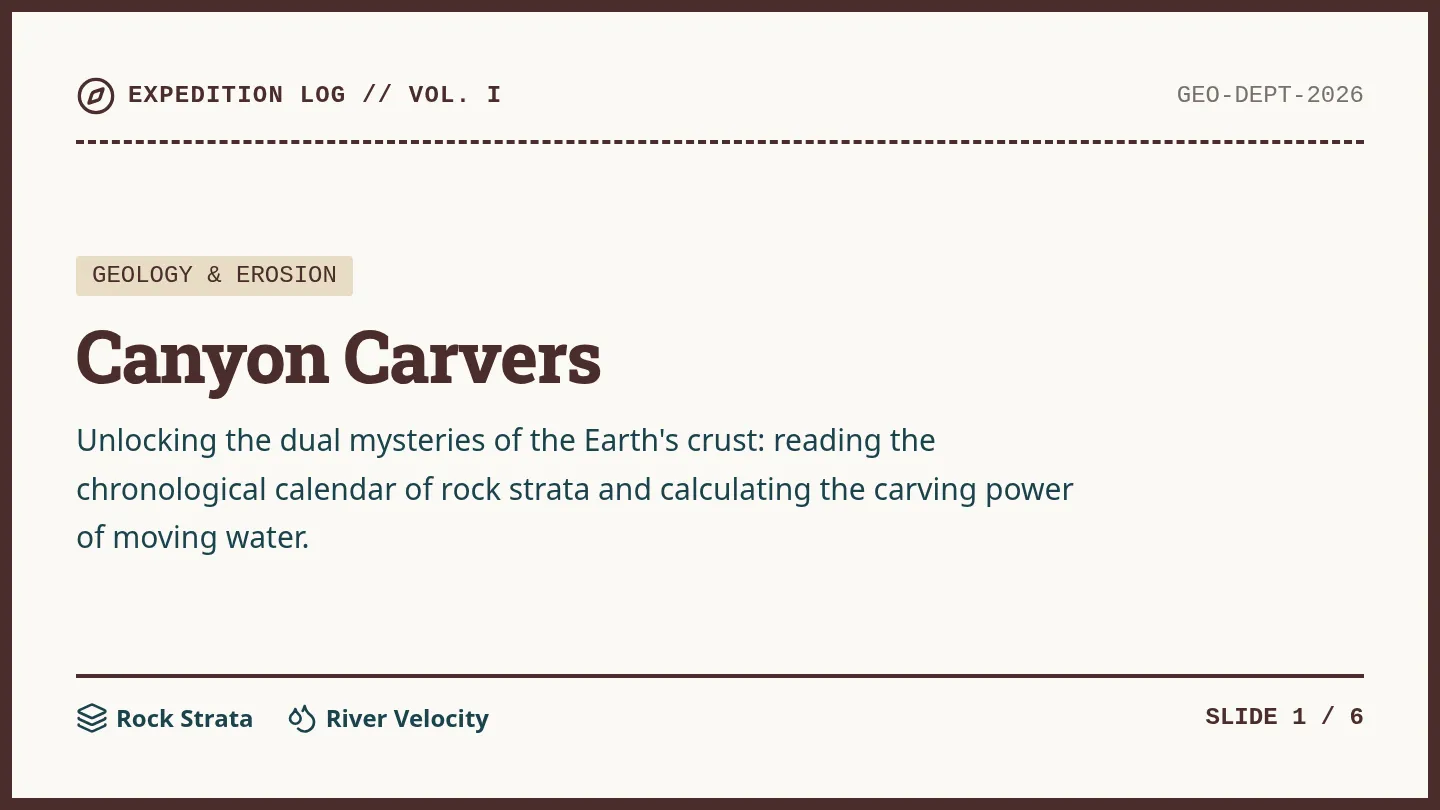
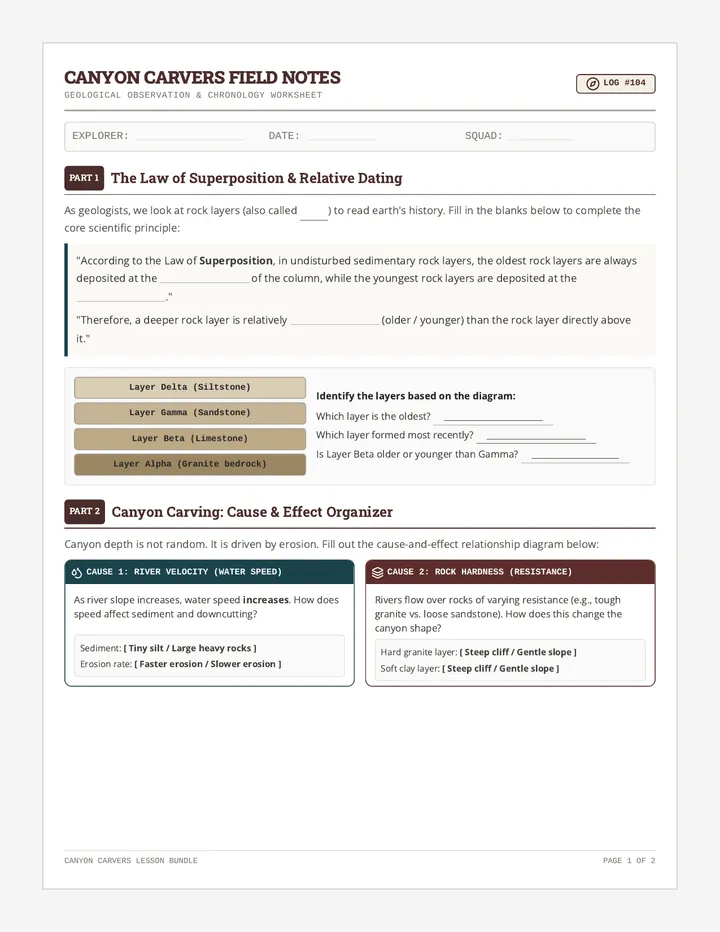
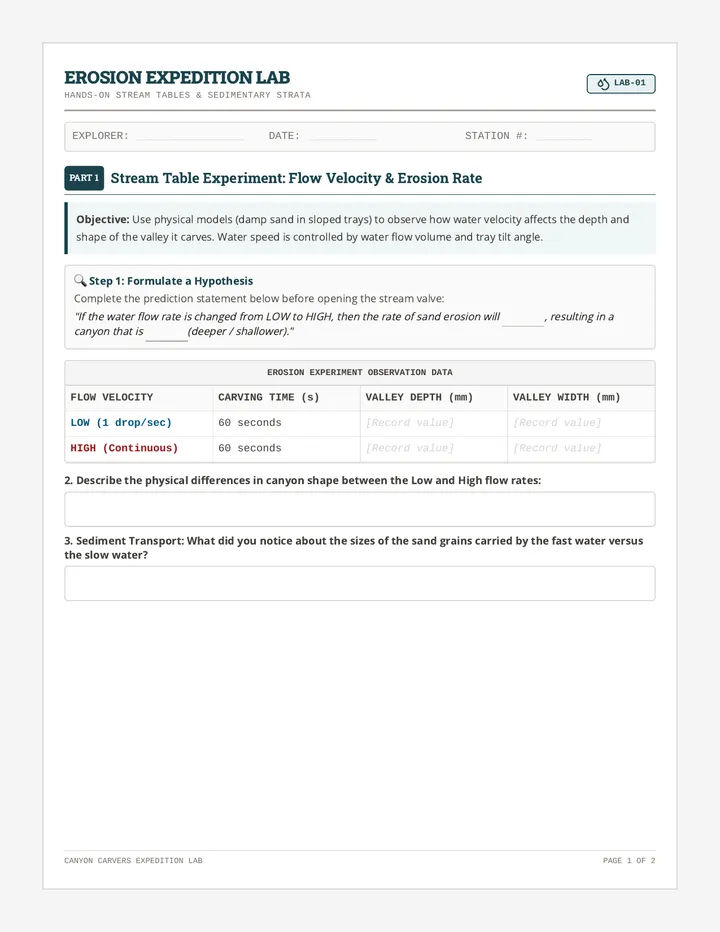
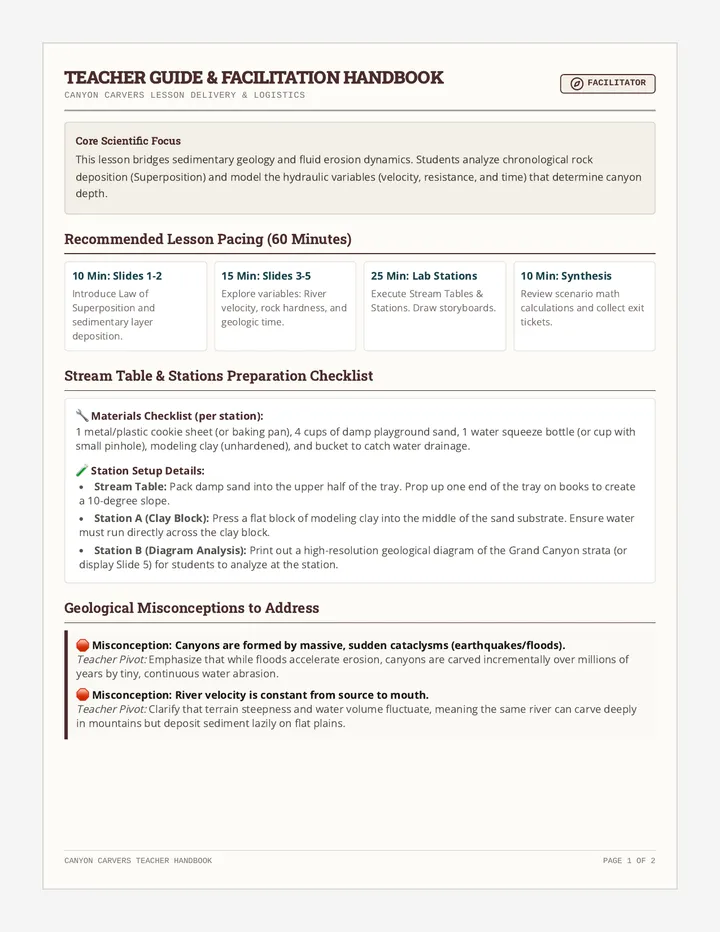
A comprehensive lesson exploring how relative dating determines rock layer age and how river velocity, rock hardness, and time interact to carve valleys of varying depths.
A highly visual, large-font presentation slide deck that teaches the concepts of photosynthesis and guides students through the simplified, low-writing CER framework.