Sensory Landscapes Worksheet
ELA Close Reading | Imagery & Mood Analysis
Name:
Date:
Period:
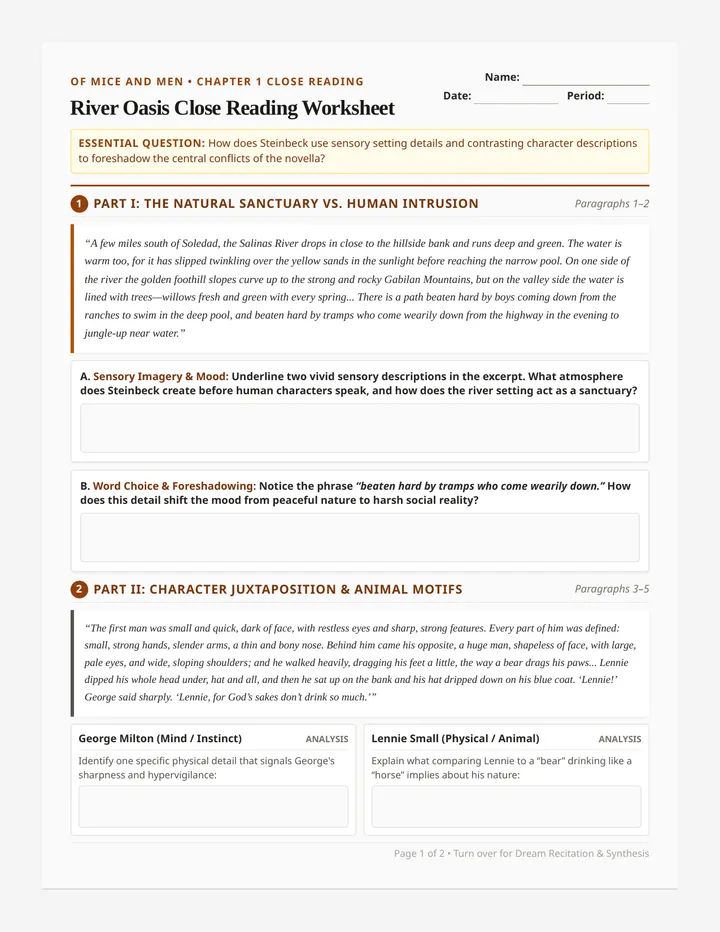
Sensory Landscapes
Exploring imagery, land motifs, and emotional resonance in literature
Close Reading & Writing
Consider
“It was a mine town, uranium most recently. Dust devils whirled sand off the mountains. Even after the heaviest of rains, the water seeped back into the ground, between the stones, and the earth was parched again.”
— Linda Hogan, “Making Do”
1
Discuss: Text Analysis
-
What feelings do you associate with images of dusty mountains and dry earth?
-
There are two images associated with land in the third sentence. Identify the two images and compare and contrast the feelings these images evoke.
Image A & Associated Feelings:
Image B & Associated Feelings:
Compare & Contrast (Emotional shift or tension):
2
Apply: Crafting Contrasting Imagery
Write a sentence describing a rainstorm using imagery that produces a positive response; then write a sentence describing a rainstorm with imagery that produces a negative response.
Positive Response Sentence
Negative Response Sentence
Explain Your Craft: Explain how the images you chose in each sentence create the positive and negative responses.
Sensory Landscapes Answer Key
Student Exemplar Key | Grade 9 Student Sample Responses
Lesson: Sensory Landscapes
Excerpt: Linda Hogan, “Making Do” Freshman Level Benchmark
“It was a mine town, uranium most recently. Dust devils whirled sand off the mountains. Even after the heaviest of rains, the water seeped back into the ground, between the stones, and the earth was parched again.”
1
Part 1: Text Analysis (Freshman Student Voice)
1. What feelings do you associate with images of dusty mountains and dry earth?
9th Grade Sample
“It makes you feel bored, tired, and super thirsty. It sounds like you’re stuck in the middle of nowhere and there’s literally nothing to do and no shade anywhere.”
Teacher Note: Casual voice, but correctly identifies feelings of exhaustion, heat, and isolation.
2. Two images associated with land in the third sentence: Identify, compare, and contrast.
9th Grade Sample
Image A: Water Sinking In
“The water sinking into the stones shows it finally rained, but the ground just gulped it up way too fast.”
Image B: Earth Parched Again
“The earth being parched again shows it’s right back to being totally dry like the storm didn't even happen.”
Contrast: You think the rain is gonna save the town, but the dirt is so dry that the good feeling is gone in two seconds.
2
Part 2: Creative Application (Freshman Sentences)
Positive Rainstorm Sentence
“The cool rain felt amazing on my face after soccer practice and made the whole street smell nice and fresh.”
Sensory Details: Cool feel on face, fresh smell, relief after practice.
Negative Rainstorm Sentence
“Freezing rain dumped all over my hoodie at the bus stop and turned my clean white shoes into muddy trash.”
Sensory Details: Freezing wetness, ruined shoes, waiting at bus stop.
Explain Your Craft: Why the words make you feel good vs. bad
9th Grade Sample
“In my first sentence, words like ‘cool,’ ‘amazing,’ and ‘fresh’ make rain feel like a relief when you’re hot. In my second sentence, words like ‘freezing,’ ‘dumped,’ and ‘muddy trash’ make the rain seem miserable because it’s cold and ruining your stuff.”
Freshman Benchmarks:
Voice: Casual but meets all prompt requirements
Contrast: Clear difference between good rain and bad rain
Craft: Explains specific words