A chemistry lesson focused on the foundational skill of balancing chemical equations, designed for English Language Learners with visual supports and a progressive difficulty structure.
A high-stakes research project where students choose an environmental challenge to solve. Using the David Attenborough video as inspiration, students research, plan, and create a model or presentation to rescue our planet.
A field trip exploration guide for the Anne Kolb Nature Center, featuring a scavenger hunt BINGO activity and a counselor answer key.
A simulation-based lesson where students model wolf population dynamics under varying levels of human interference to understand limiting factors and conservation.
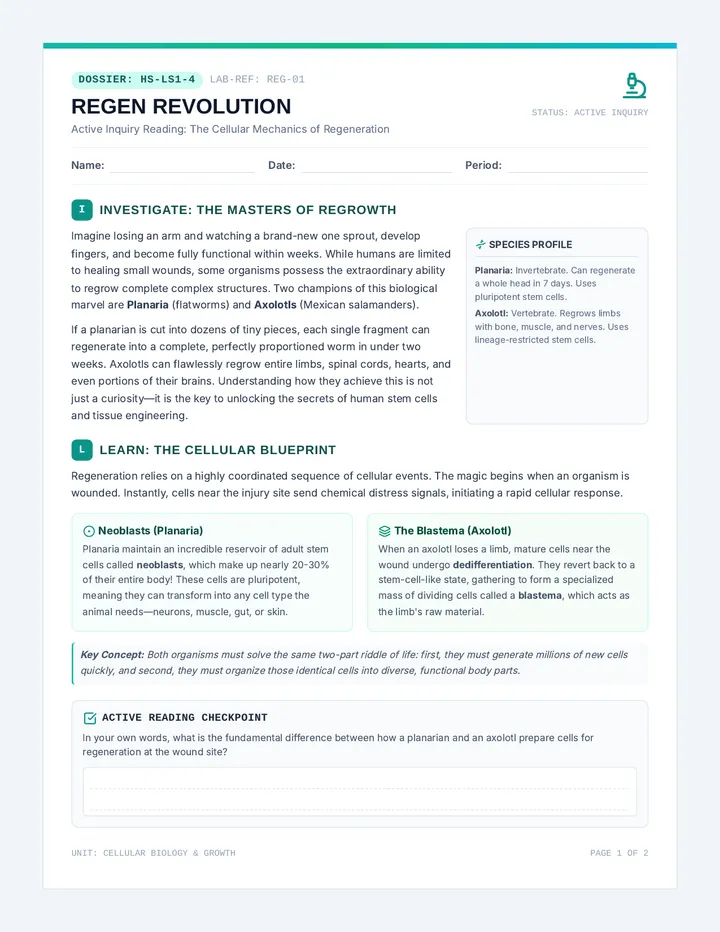
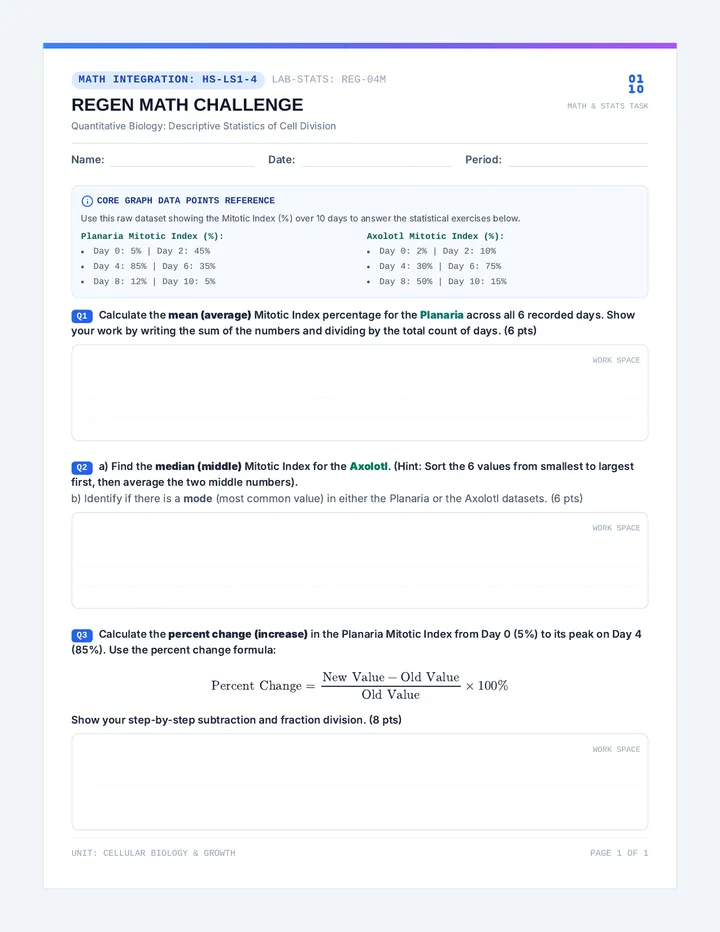
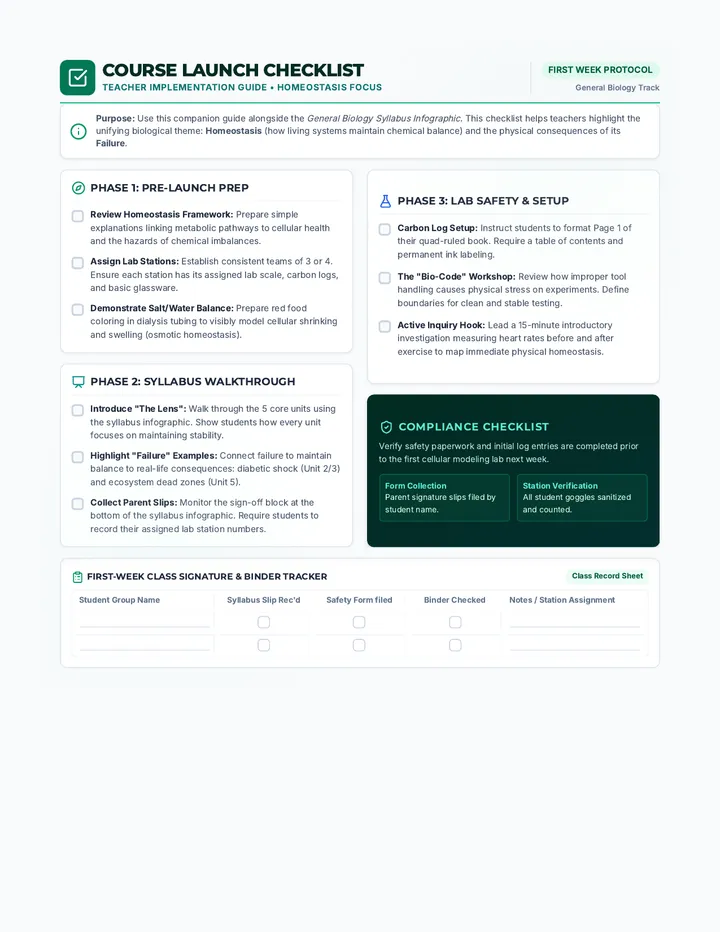
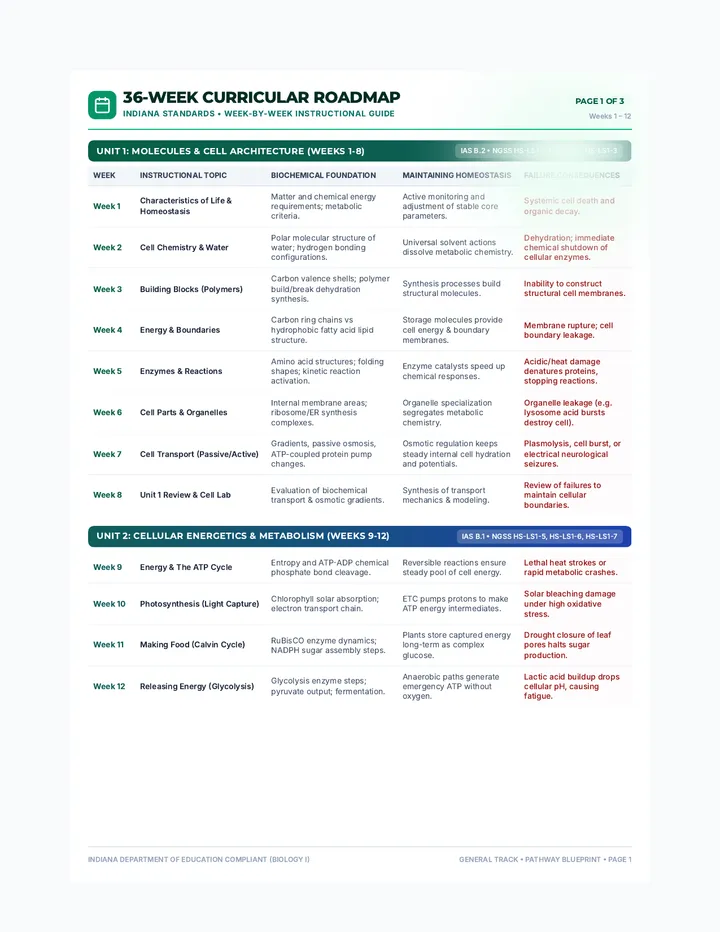
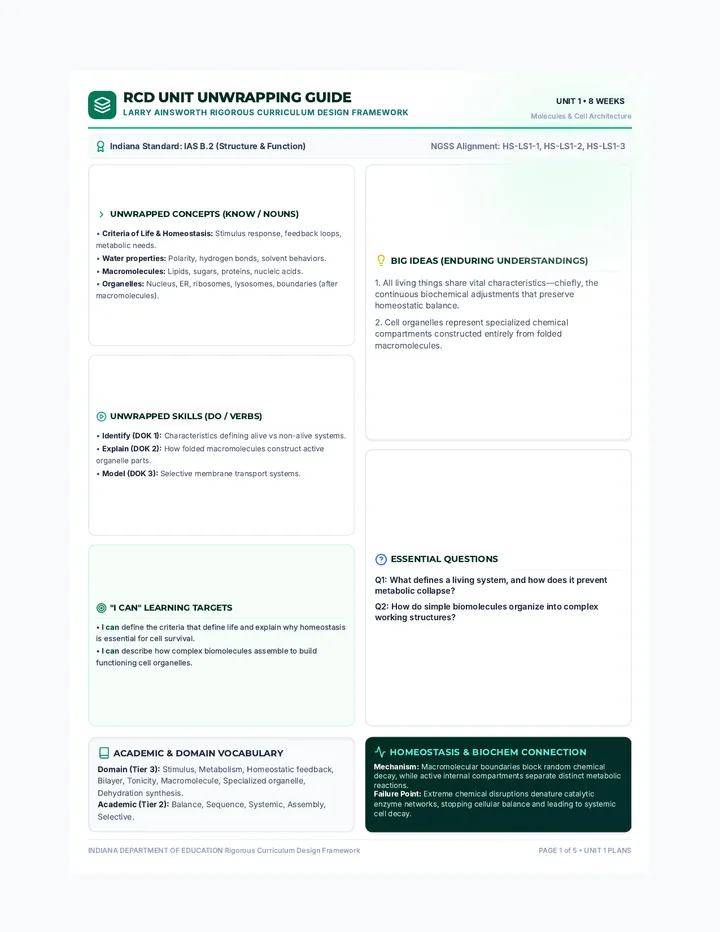
A simplified introduction to cell biology focusing on the differences between cell types and the functions of organelles using visual aids and hands-on activities.
A comprehensive review lesson covering the core foundations of chemistry, including mixtures, properties, and changes through an interactive presentation and a hands-on group analysis activity.
A quantitative investigation into latent heat. Students use calorimetry data to calculate the enthalpy of fusion for ice and model the molecular-level energy transitions that occur during phase change plateaus.
A high-energy, station-based lesson where students investigate the thermodynamics of phase changes. Students analyze intermolecular forces to explain why melting is endothermic and freezing is exothermic, using evidence from heating curves and molecular models.
A week-long project where students act as travel agents for the Eco-Expedition Agency, creating digital brochures (slide presentations) for various global biomes. Students research climate, flora, fauna, and ecological connections to attract 'eco-tourists' to their assigned biome.
A formal summative assessment designed with accessibility in mind for students who struggle with reading, focusing on payroll calculations and concepts.
A comprehensive review session to reinforce payroll concepts and prepare students for the final unit assessment.
Students analyze the employer's side of payroll, including FUTA/SUTA taxes and the value of fringe benefits in a total compensation package.
An exploration of mandatory deductions, including FICA and income taxes, focusing on how gross pay becomes net pay for employees.
Students learn to calculate gross earnings for various pay structures including hourly, salary, and overtime while maintaining accurate payroll records.
Una lección interactiva sobre las estructuras externas de los animales y cómo estas partes les ayudan a sobrevivir en su entorno, alineada con TEKS 1.13A.
A comprehensive lesson exploring the science, ethics, and societal impact of gene editing through the story of Zion, a 'designer baby'. Students engage in a hands-on DNA simulation and debate the future of human genetics.
A lesson exploring the genetic science, ethical implications, and societal impact of CRISPR and gene editing through a futuristic case study.
A review lesson focused on mastering chemical bonds, molecular geometry (VSEPR), and intermolecular forces (IMFs) through structured practice and visual instruction.
A comprehensive lesson connecting nuclear chemistry (isotopes) to climate science (greenhouse gases, ice cores, and carbon dating). Students explore how atomic mass influences molecular vibrations and how isotope ratios serve as ancient thermometers.
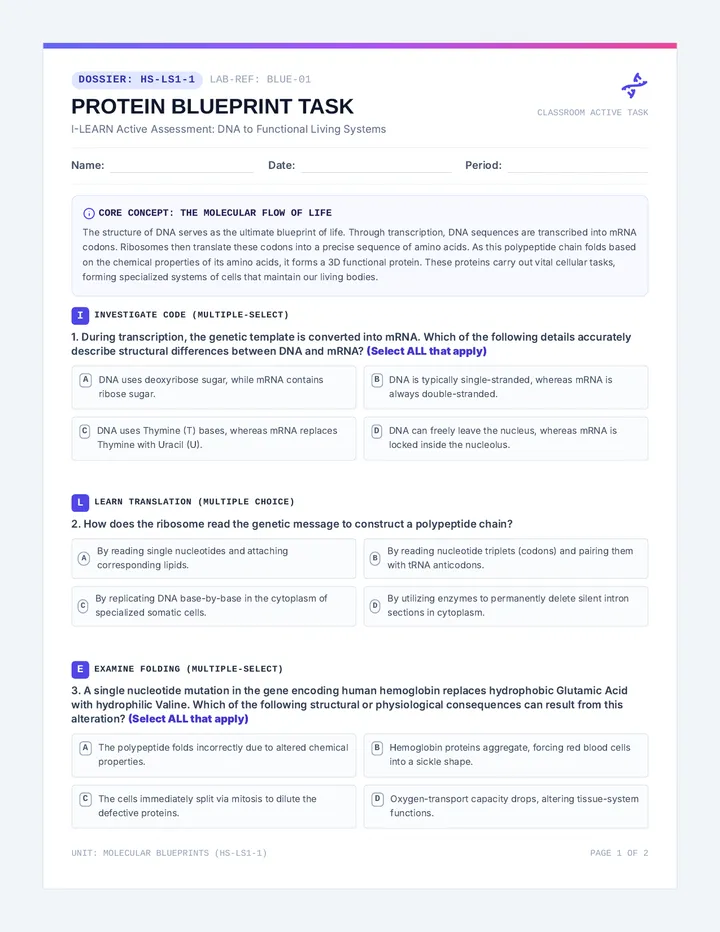
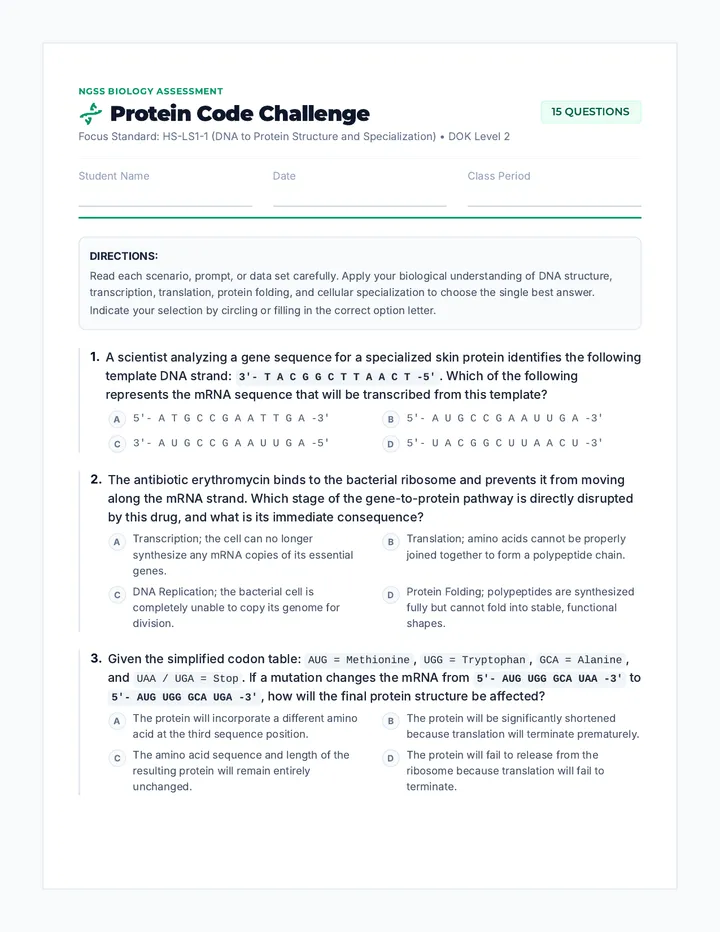
This lesson explores the relationship between structure and function in prokaryotic and eukaryotic cells, and how cells organize into complex organisms. Designed for diverse learners, it uses a 'Blueprint' theme to visualize biological systems as carefully designed structures.
A high-energy, 10-minute Earth Day activation designed to inspire immediate student action through impactful visuals and a personal pledge.
A high-energy STEM event for kids in foster care, focusing on engineering design, collaborative building, and social connection through hands-on challenges.
A deep dive into Bernoulli's Principle and fluid dynamics, focusing on the conservation of energy within moving fluids and its real-world applications in engineering and nature.
A comprehensive lab and role-play lesson where students analyze DNA profiles to determine paternity and then argue the case in a mock courtroom setting.
A lesson exploring DNA inheritance and paternity through a real-world narrative case study, focusing on DNA gel electrophoresis and Punnett squares.
A technical but accessible look into the science of deserts, covering how they form (rain shadows), advanced plant survival, and animal behaviors like estivation.
An engaging exploration of the desert biome designed for 3rd-grade students to complete independently. This lesson covers geographical locations, extreme climates, and the remarkable adaptations of desert plants and animals.
A comprehensive lesson exploring energy flow through ecosystems, the impact of resource scarcity, and the consequences of human interference like water diversion and invasive species.
A hands-on ecology lesson where students explore the relationship between native Texas wildflowers and pollinators. Students will learn about monarch migrations and native bee habitats before designing their own school pollinator garden to support local biodiversity.
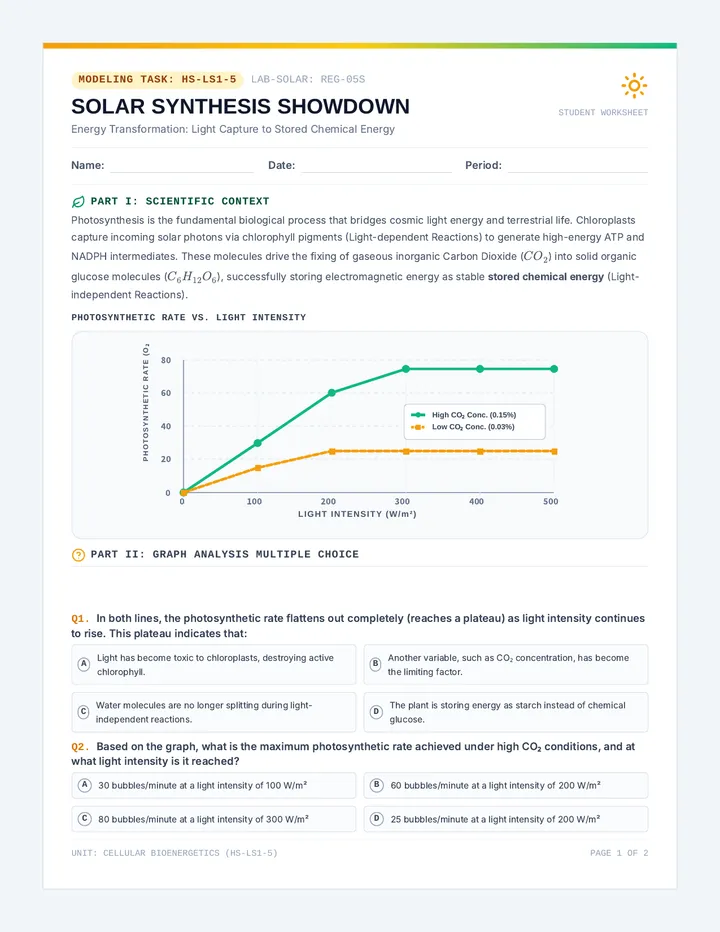
A comprehensive exploration of energy flow within the Colorado Plateau ecosystem, featuring hands-on modeling of food webs, trophic pyramids, and a botanical study of desert plant transpiration.
A beginner-friendly exploration of ocean currents, focusing on the differences between surface and deep water movements and how they affect our planet.
A comprehensive suite of data tracking tools for students to monitor their reading progress, including benchmark assessments and IMSE Orton-Gillingham concept checks from Kindergarten through 5th grade.
A high-energy lesson on cryptography and the history of the Enigma machine, designed to motivate students before the WYTOPP state assessment. Students learn about substitution ciphers and decode a secret message of encouragement.
A collection of homework materials focused on the life cycle of butterflies, designed for 8th-grade students reading at a 2nd-grade level. The materials emphasize key vocabulary, main idea and details, and cause-and-effect relationships.
A library-focused lesson for K-2 students that celebrates Earth Day through a nature-themed read-aloud and interactive activities that encourage appreciation and care for the environment.
A high school chemistry lab investigating the emission spectra of metal ions through flame tests. Students explore the Bohr model of the atom and identify unknown metal salts based on their characteristic flame colors.
A conceptual physics assessment focusing on the density of matter through water displacement and the analysis of real-world traffic data to identify scientific patterns and anomalies.
Students explore the intersection of geometry and computer science by using nested loops and variables to create generative digital art.
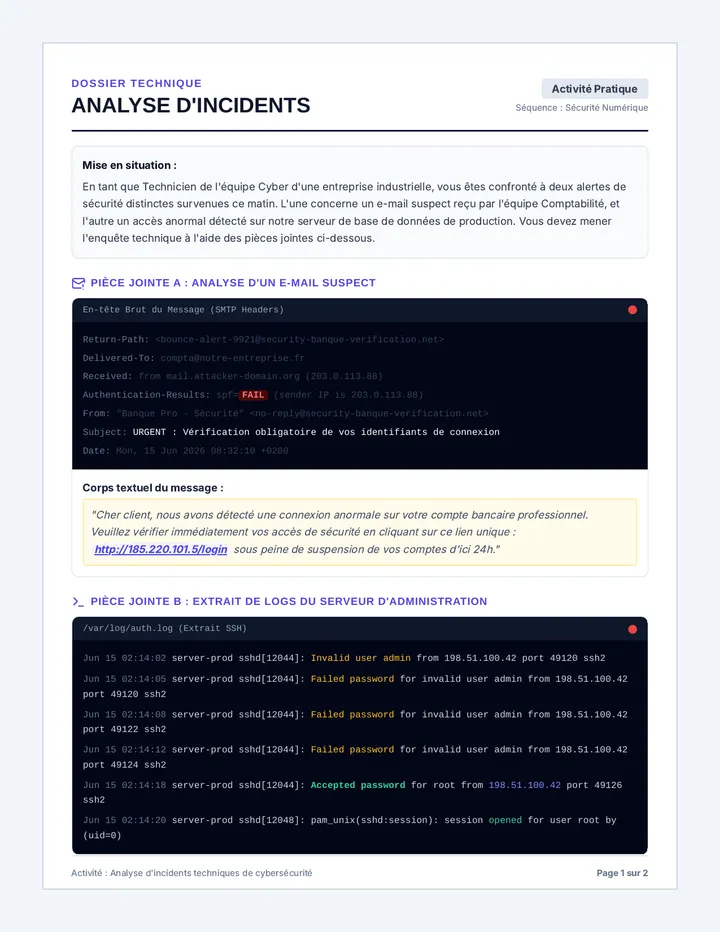
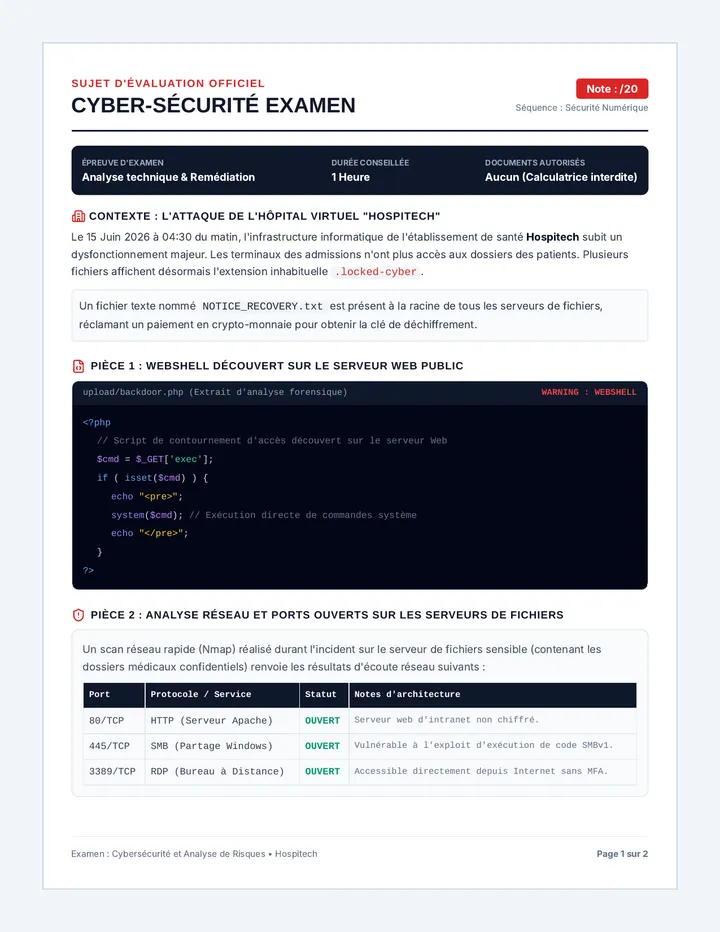
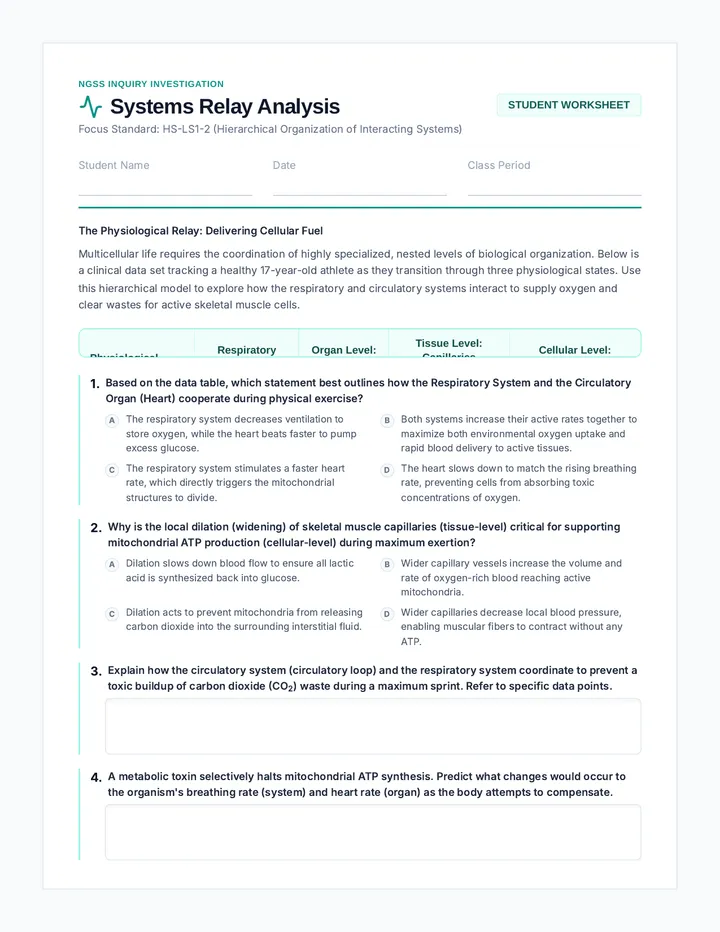
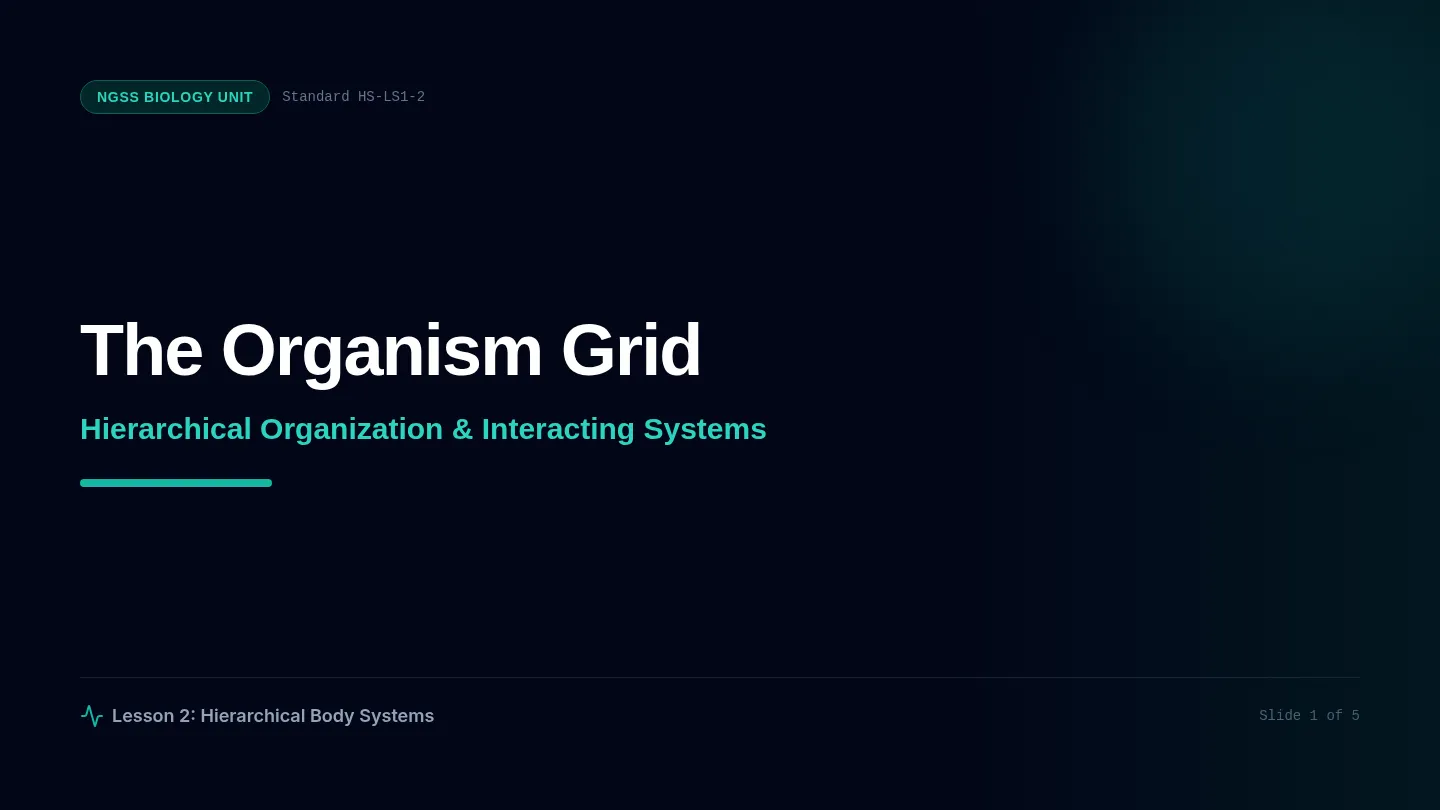
A modified lesson on continental drift designed specifically for IEP students, focusing on Alfred Wegener's theory, Pangea, and the four main pieces of evidence through scaffolded writing and visual activities.
Students become 'architects' of logic, learning to decompose everyday tasks into precise, repeatable algorithms. They will practice 'programming' humans to understand the necessity of detail and sequence in computer science.
A lesson exploring how ecosystems are organized, the relationships between organisms, and the factors that limit population growth, including the status of endangered species.
A SIOP-based lesson on Earth Day for Level 4 ELs, focusing on the 3 Rs and environmental protection through visual scaffolds, academic language support, and interactive discussion.