A high-contrast visual scavenger hunt designed to help early learners identify marine life. Includes a structured observation checklist and printable animal cards to place around the classroom.
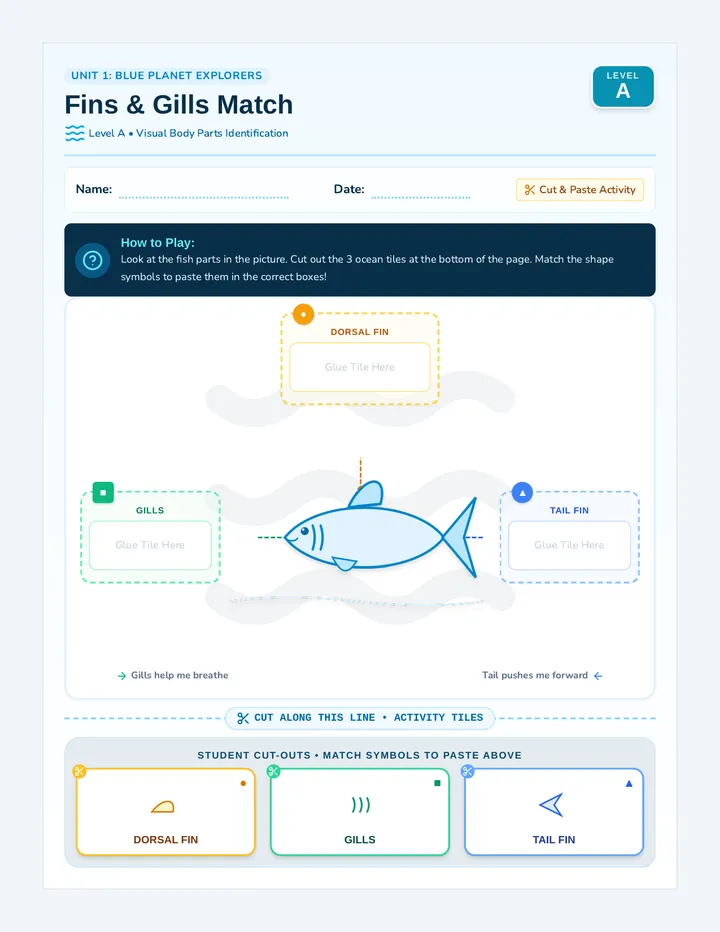
An interactive, highly visual early science unit exploring ocean animal physical traits, body parts, sizes, and diets. Features dual-level (Low/Visual and Medium/Reading) printable cut-and-paste worksheets for diverse learners.
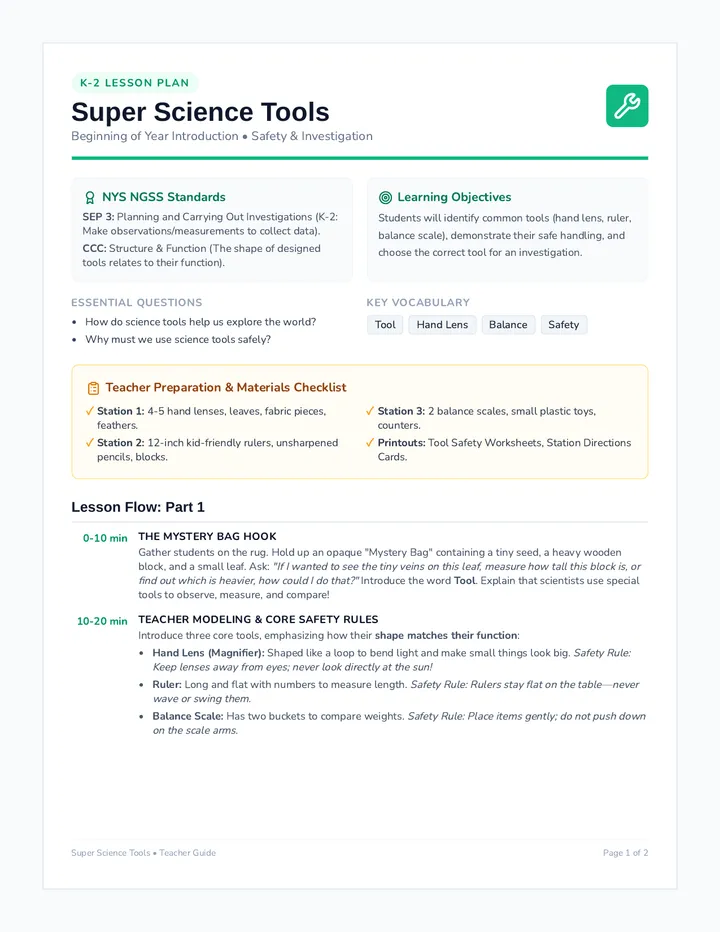
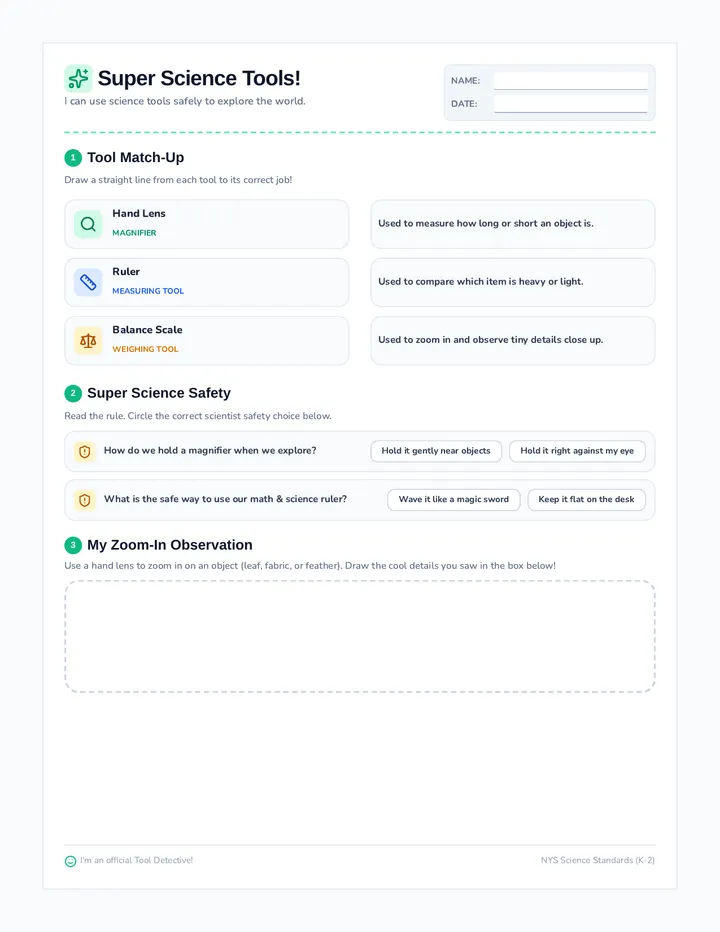
An introductory lesson for early elementary students (grades K-2) on safely identifying and using scientific tools like hand lenses, rulers, and balances, aligned with New York State Next Generation Science Standards (NYS NGSS).
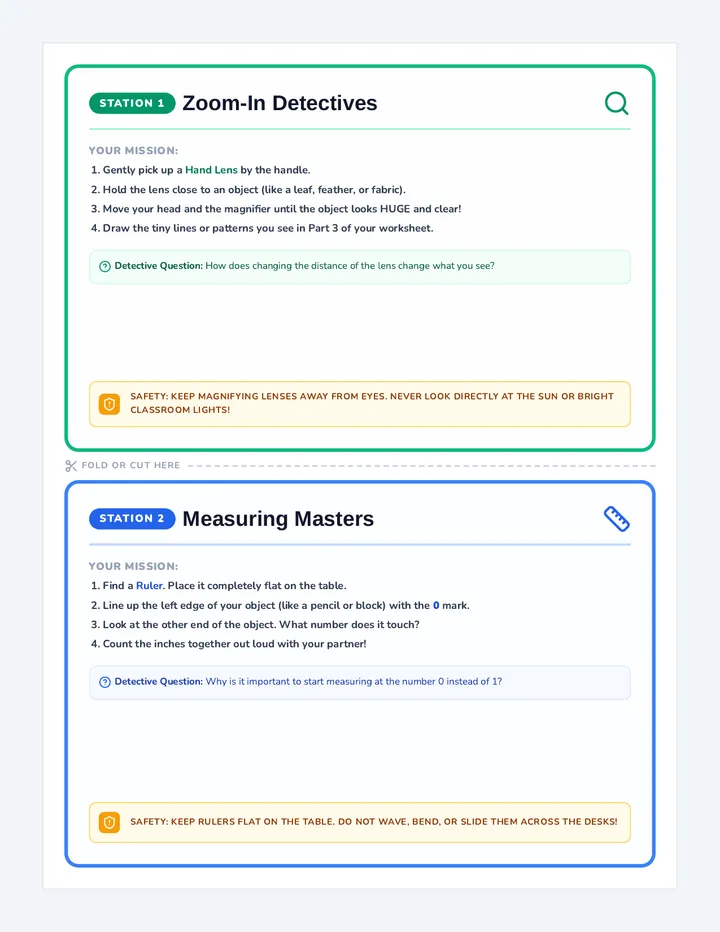
A 2-page printable set of 4 horizontal, classroom-ready science station cards with easy-to-follow instructions, safety rules, and observation prompts for K-2 students.
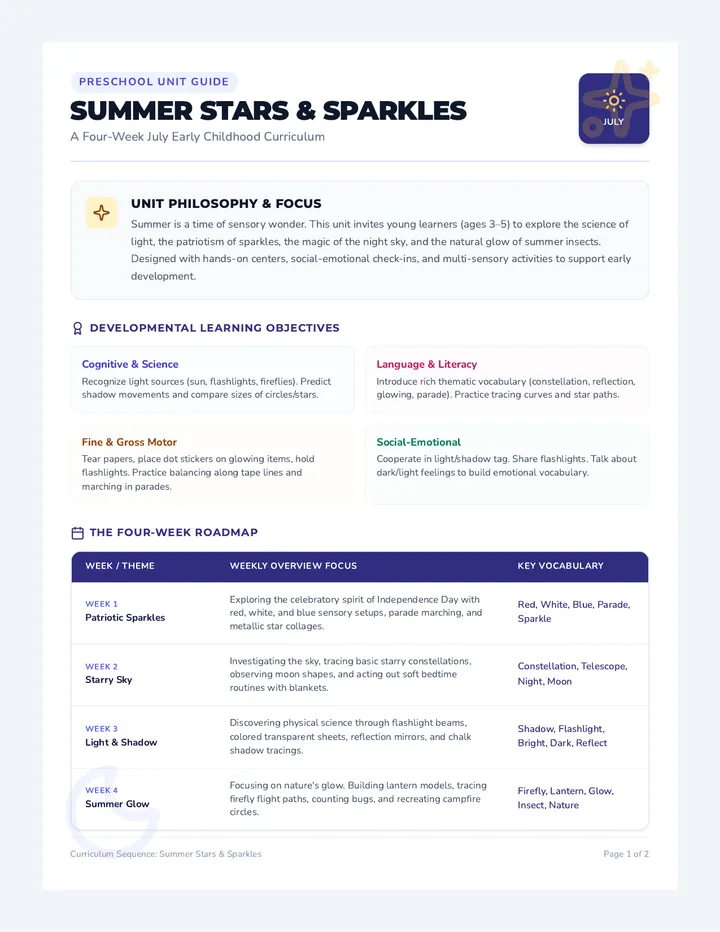
A comprehensive four-week July curriculum for preschool students, focusing on 'Summer Stars & Sparkles' through hands-on activities, sensory integration, and early math and literacy centers.
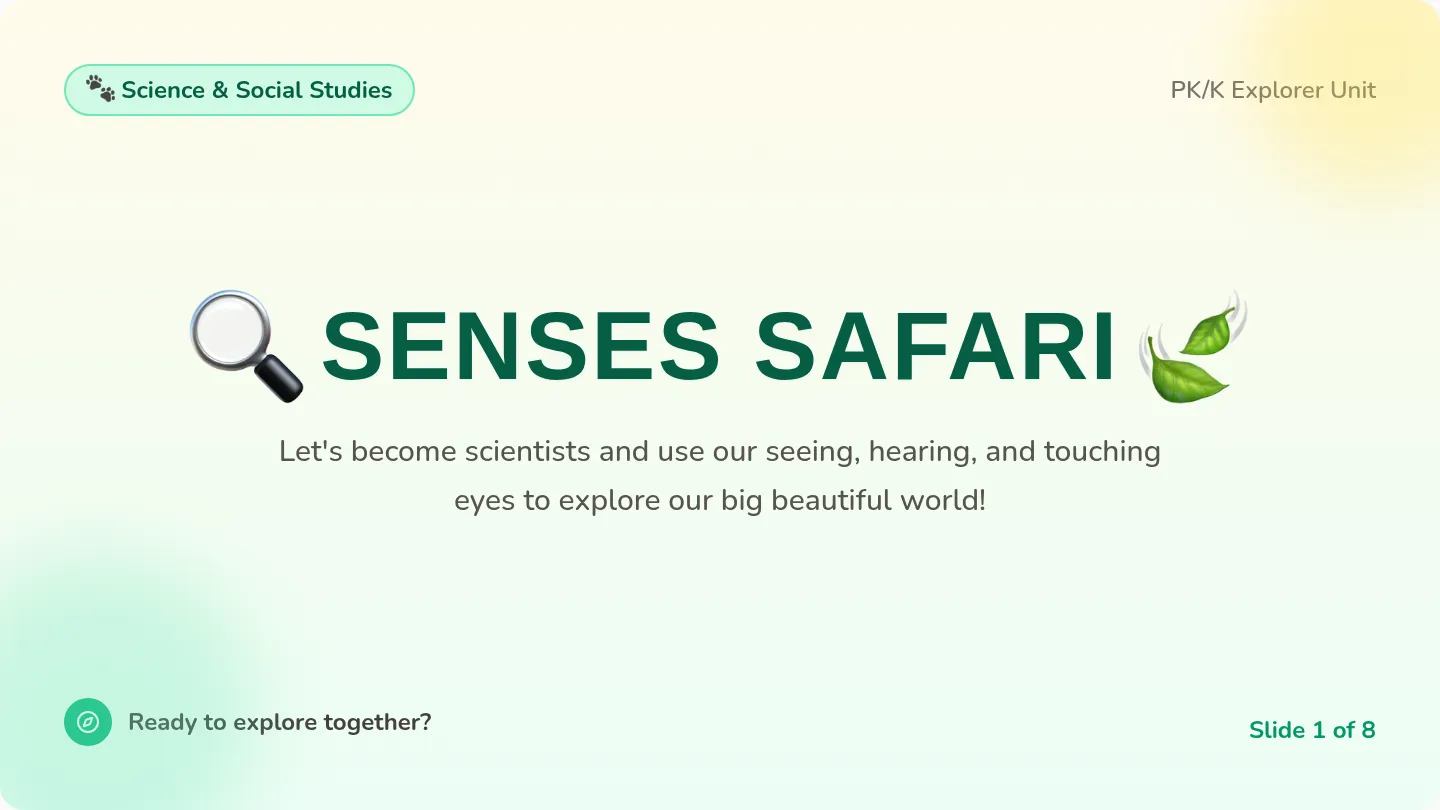
An interactive science and social studies lesson for PK/K students to explore their world using their five senses. Students learn routines of observation, data collection, and collaborative teamwork as young scientists.
A student safety and exploration worksheet for early elementary students (K-2) to practice identifying science tools, recognizing safety rules, and drawing hands-on observations.
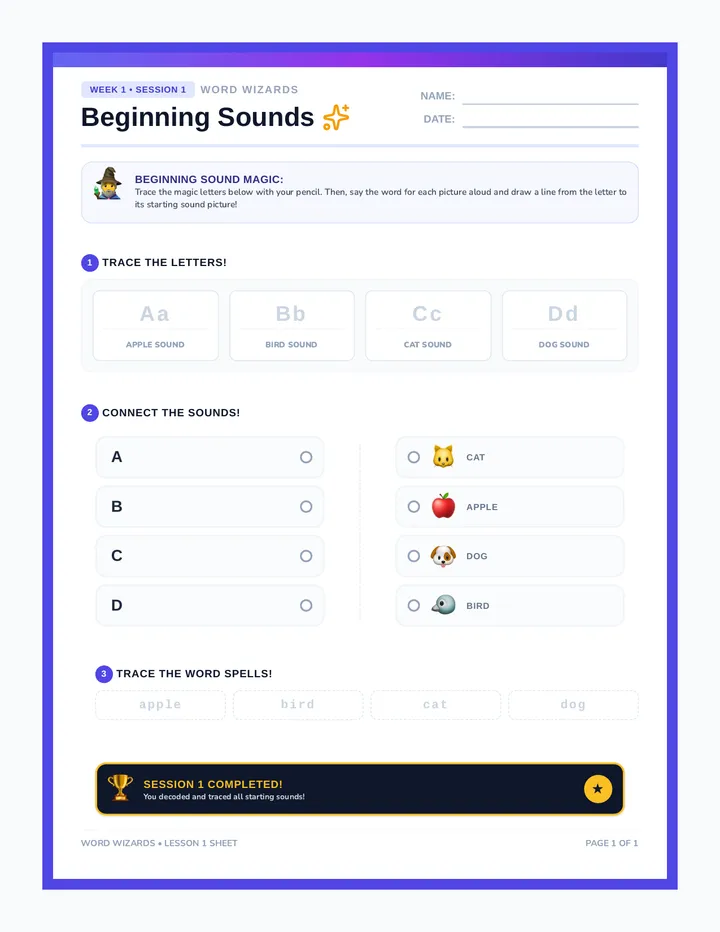
An engaging, high-impact 4-week literacy skills program for young learners. Features highly visual, fun printable worksheets focusing on beginning letter sounds, CVC phonics blending, sight word reading, and short stories.
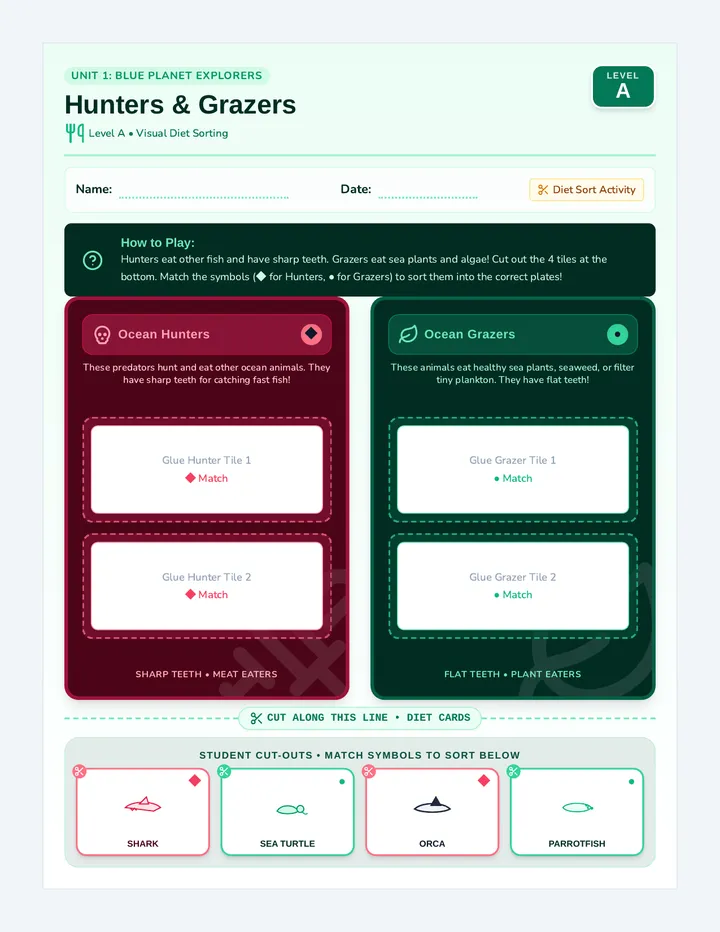
Explore ocean food chains and animal diets. Students classify sea creatures into hunters (carnivores/predators) and grazers (herbivores/filter-feeders) based on physical traits and teeth.
A comprehensive, 2-page printable lesson plan for teachers introducing science tools to K-2 students, including NYS NGSS standards, materials checklists, safety guidelines, hook activities, station procedures, and assessment questions.
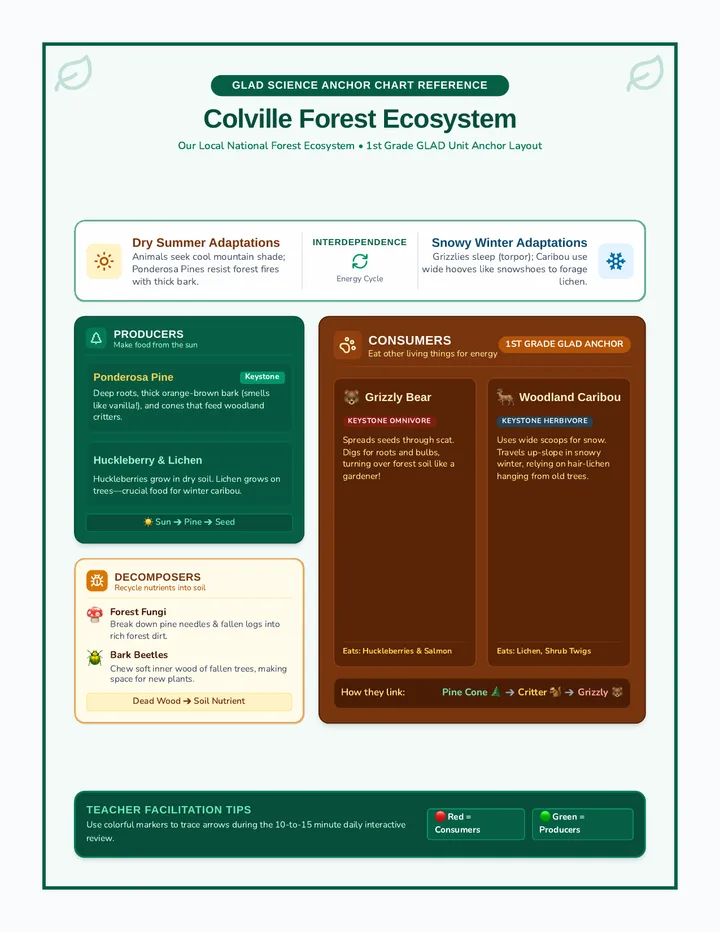
An immersive 1st-grade GLAD unit focused on the Colville National Forest ecosystem. Students explore food chains, interdependence, seasonal changes, and local keystone species through visual charts, rhythmic chants, and rewarding literacy achievements.
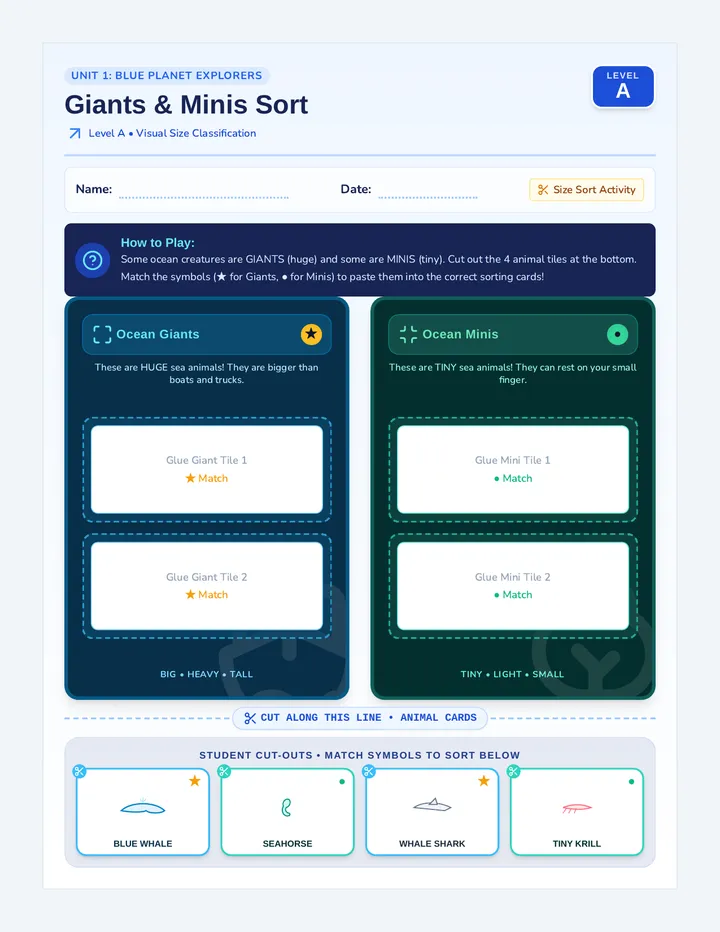
Explore and compare the sizes of ocean creatures. Students sort big ocean giants (like whales and sharks) and small ocean minis (like krill and seahorses) using sorting mats.
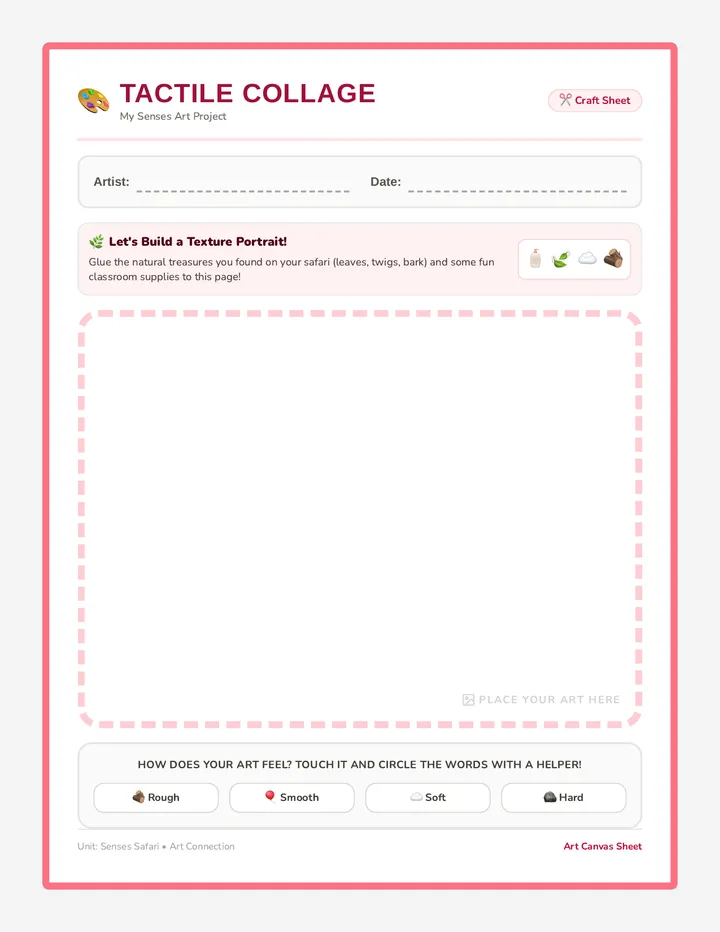
A student-facing art project worksheet providing a dedicated canvas frame and instructions for students to create a tactile five senses collage using materials gathered from their safari walk.