A complete introductory lesson on the scientific method, guiding students through the process of asking questions, identifying variables, collecting data, and writing claim-evidence-reasoning conclusions.
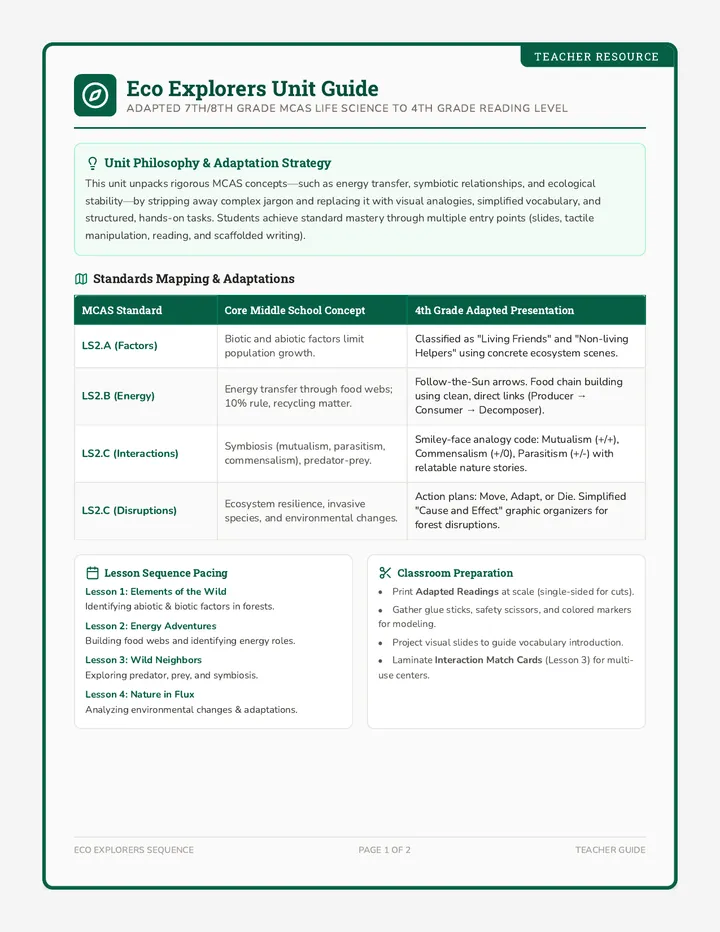
An interactive, highly visual ecosystem unit designed for 7th/8th grade MCAS standards but adapted to a 4th-grade reading and comprehension level. The unit explores abiotic/biotic factors, energy flow, interactions, and disruptions through hands-on activities, adapted readings, visual slides, and scaffolded assessments.
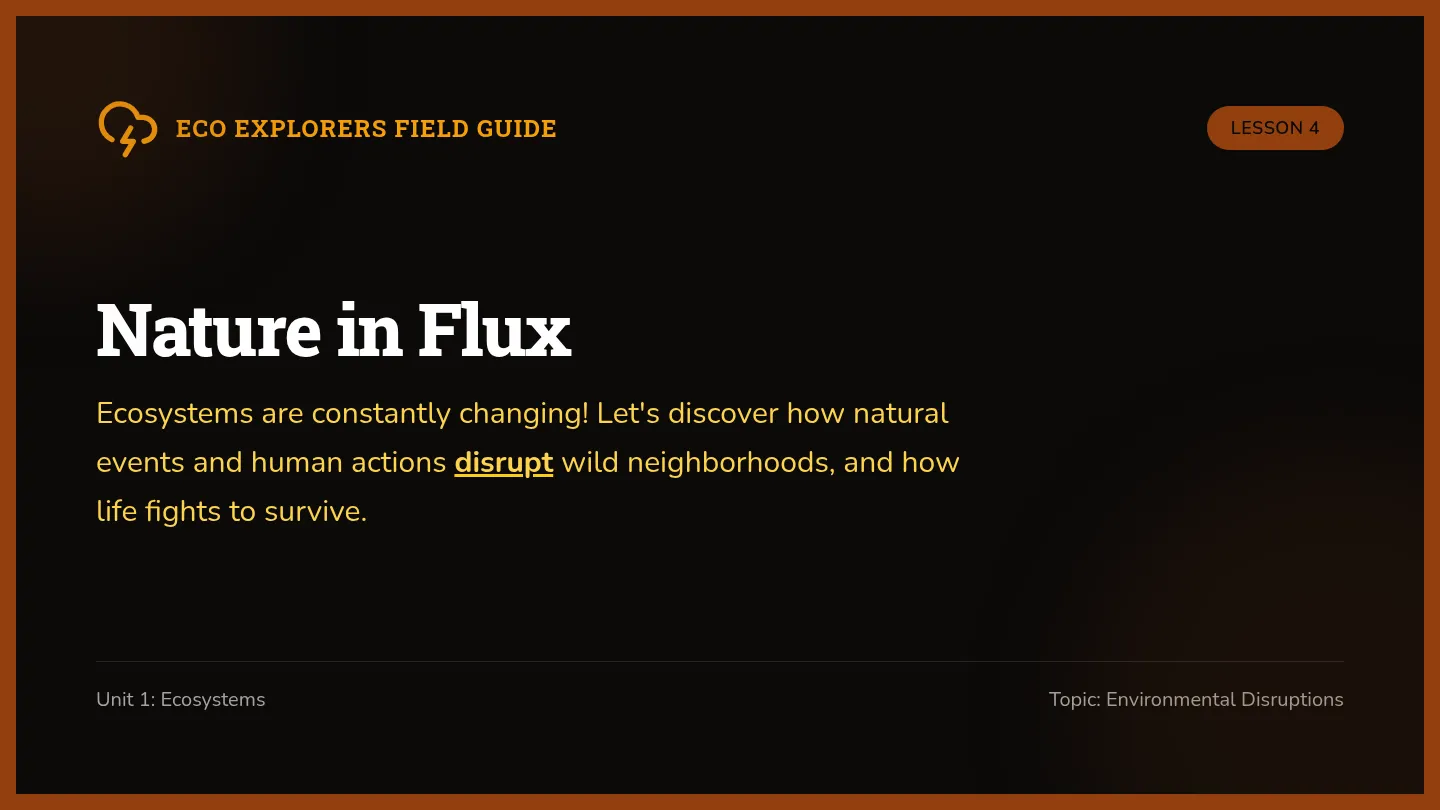
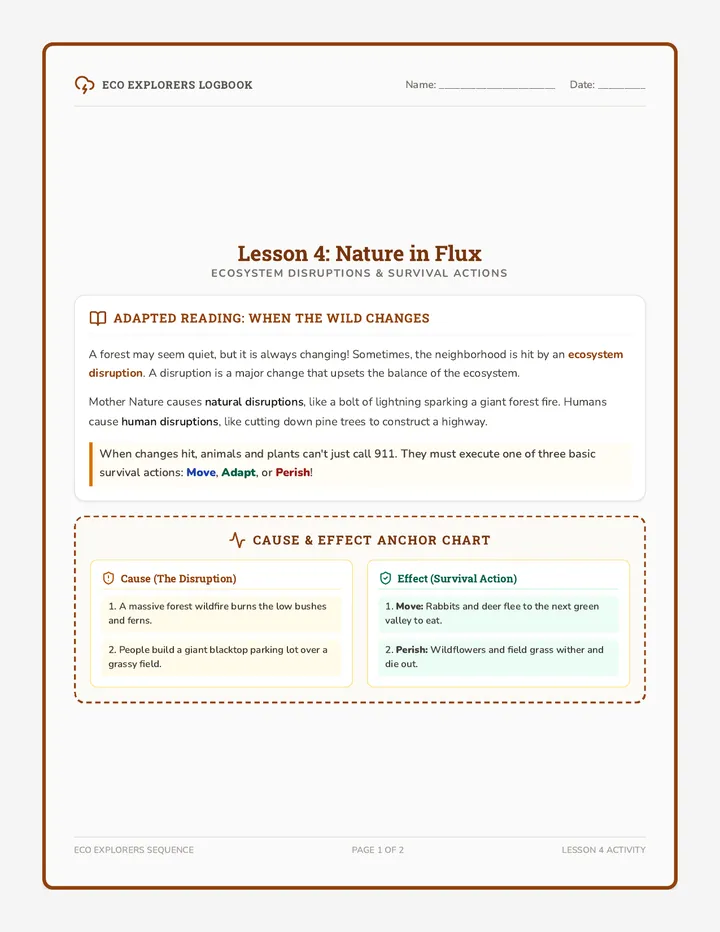
Students examine how ecosystems change over time due to natural events and human activities, and how these disruptions force living things to adapt, relocate, or face survival challenges. Includes disruption scenario cards, a checklist, and slide reviews.
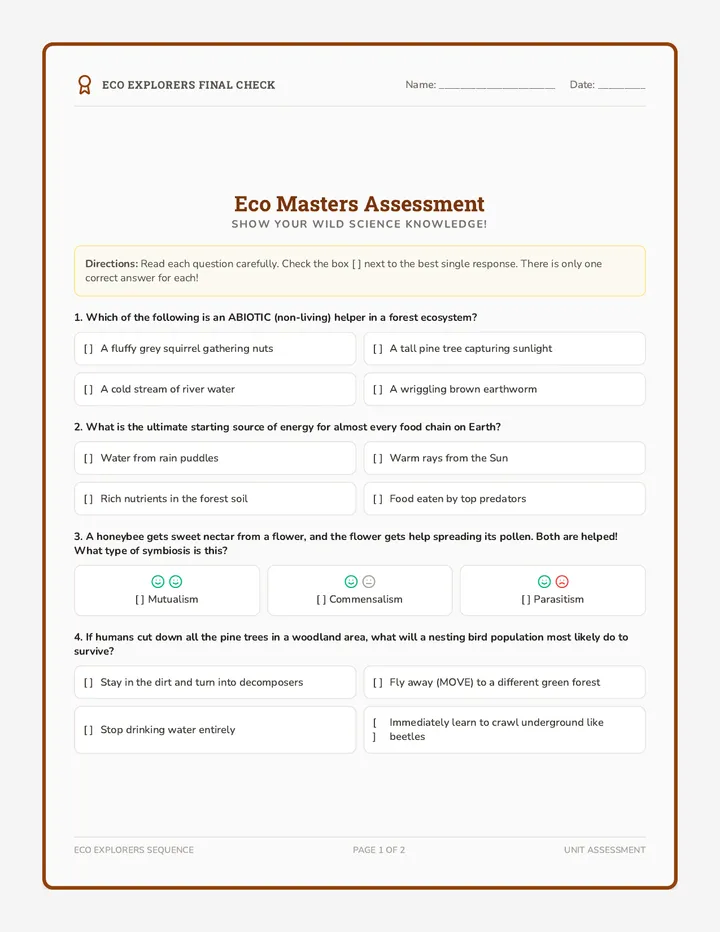
A simplified summative unit quiz featuring multiple-choice and short-answer questions with visual supports to assess students' mastery of MCAS ecosystem standards.
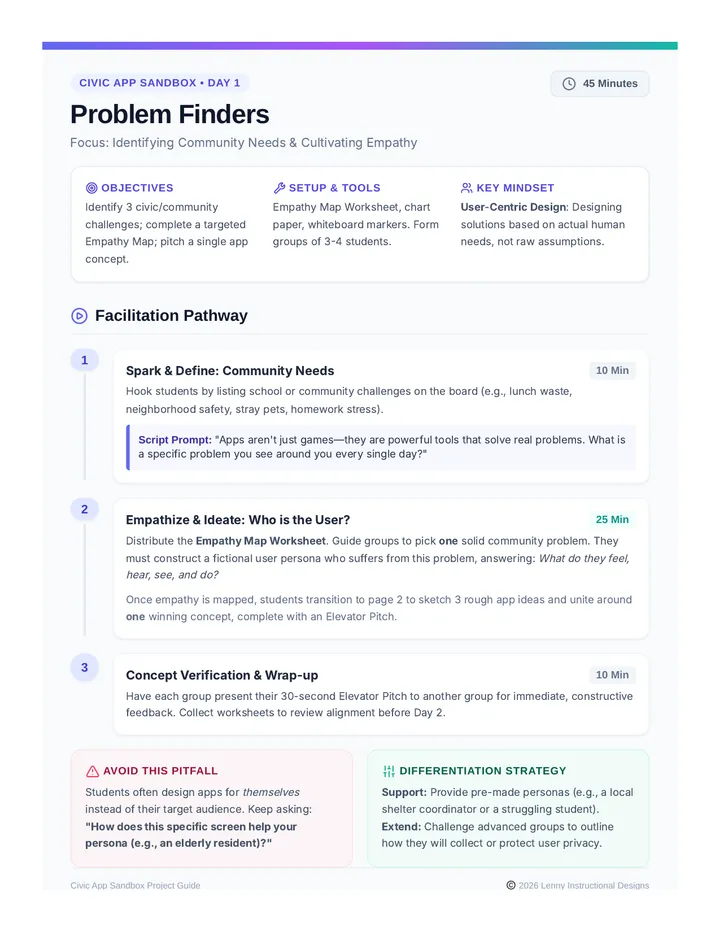
A three-day project-based learning unit where students design and pitch interactive paper prototypes of apps that address real-world community challenges.
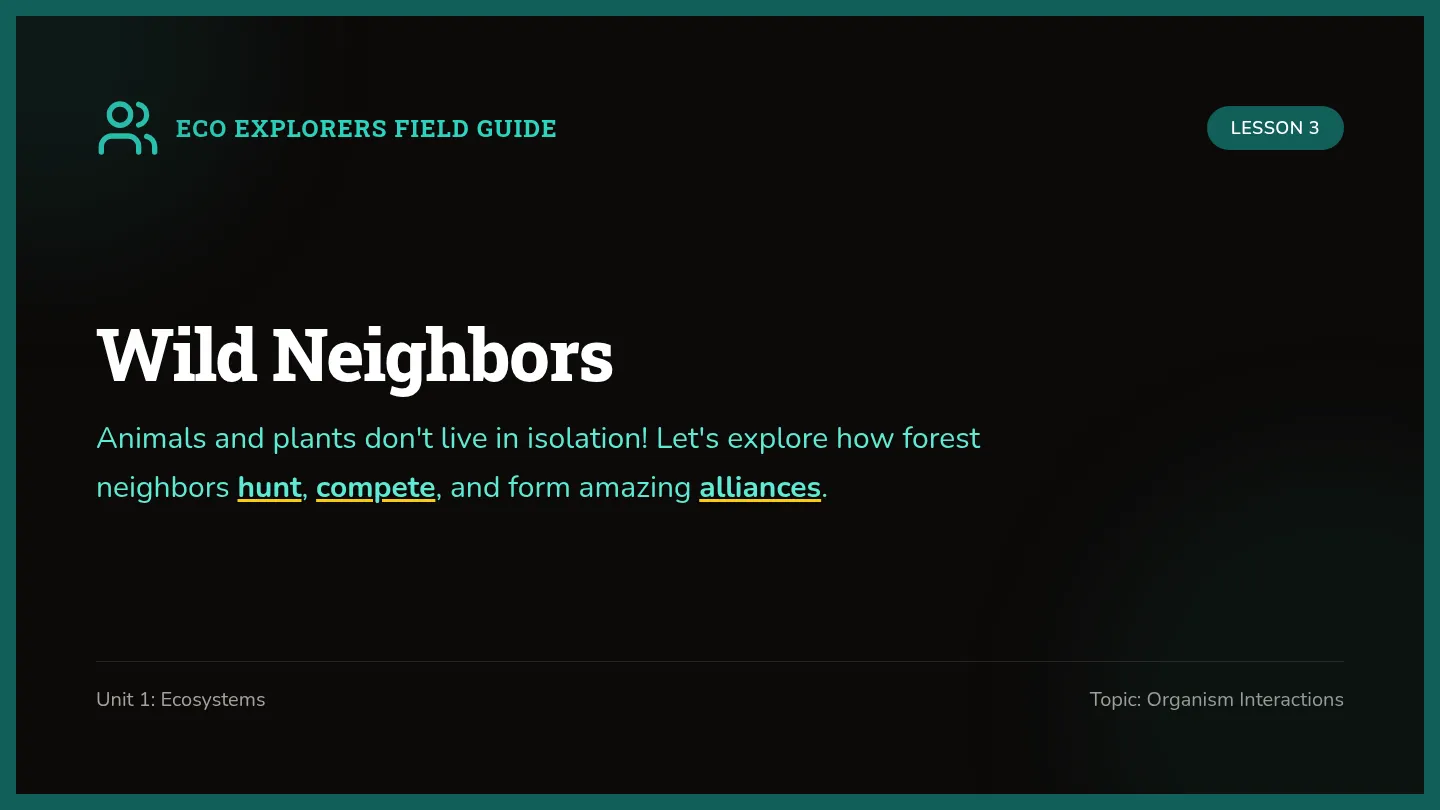
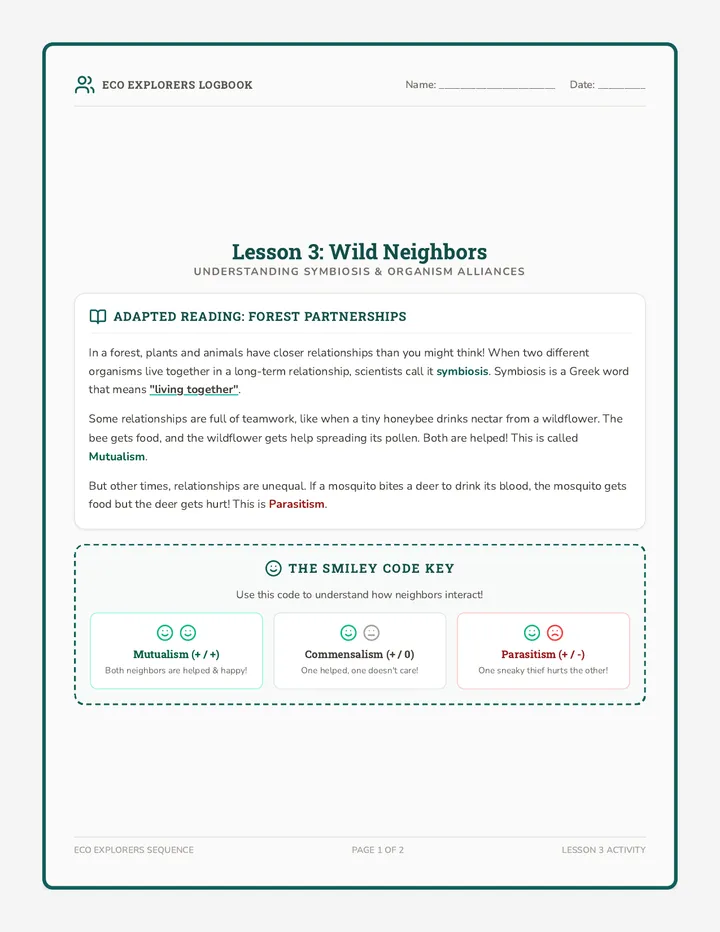
Students discover how organisms interact in a forest ecosystem, exploring predator-prey relationships, competition, and simple symbiotic alliances (mutualism, commensalism, parasitism) with kid-friendly analogies. Includes interactive task cards, adapted guides, and slide visuals.
A student packet featuring a 4th-grade adapted reading on environmental disruptions, a cause-and-effect organizer, and a hands-on disruption survival map.
A comprehensive elementary/middle school astronomy unit exploring the predictable patterns of Earth and sky. Students investigate why constellations change seasonally and decode the predictable cycle of lunar phases through hands-on models, observations, and guided inquiry.
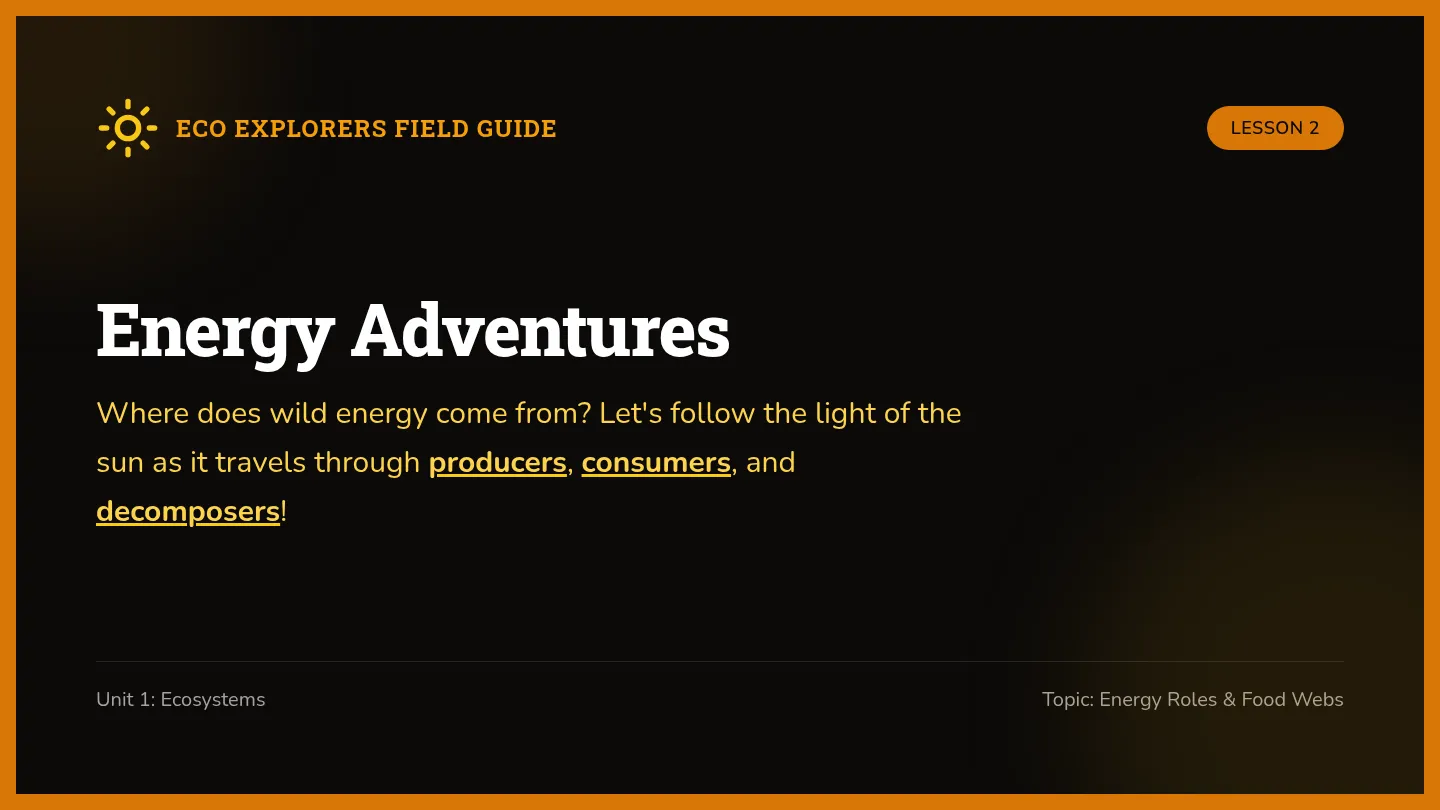
Students explore how energy flows from the sun through producers, consumers, and decomposers, and how multiple food chains link to form complex food webs. Includes modeling templates, reading guides, and instructional slides.
A highly visual slide deck explaining how ecosystems change over time due to natural events and human activities, and how these disruptions force living things to adapt, relocate, or face survival challenges.
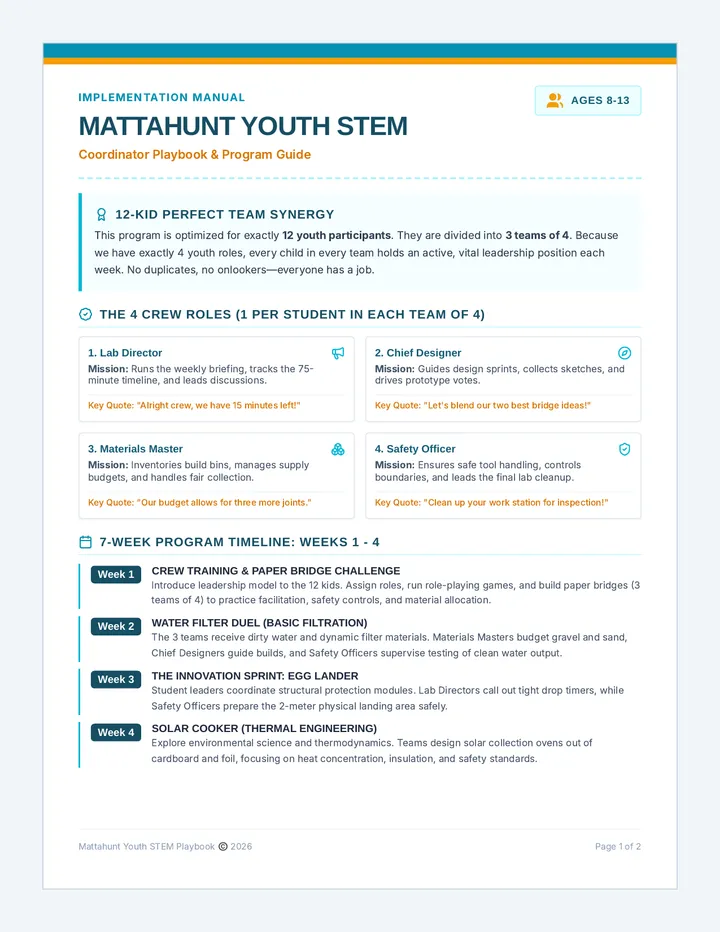
A 7-week STEM and innovation program for kids ages 8-13 at Mattahunt. Youth participants lead peer-to-peer design challenges, develop teamwork skills, and build self-efficacy through hands-on leadership roles.
Students learn to distinguish between living (biotic) and non-living (abiotic) parts of an ecosystem, understanding how they connect to support life. Includes an adapted reading, a card sorting activity, and highly visual slides.
A student packet featuring a 4th-grade adapted reading on symbiosis, an anchor chart of the Smiley Code, and a scenario match-up task-card game.