A high-energy, collaborative computer science escape challenge designed for the last day of school. Students work in pairs to solve funny, CS-themed logic and debugging puzzles to save the computer lab from a playful system glitch.
A hands-on, highly visual lesson where students explore artificial selection by roleplaying as breeders and farmers. Students analyze traits in dogs, crops, and livestock using scaffolded organizers, visual task cards, and matching tasks.
A guided inquiry lesson exploring pushes, pulls, contact forces, and balanced vs. unbalanced forces through everyday concrete examples and DOK 2-3 analysis questions.
An adapted science lesson and assessment packet designed specifically for 4th-grade WIDA Level 1 (Entering) English Language Learners focusing on energy conversions. Includes visual vocab support, simplified questions, and structured sentence frame writing aids.
An adapted 4th-grade science assessment unit on energy conversions designed specifically for WIDA Level 1 (Entering) English Language Learners. It includes a highly visual student test and a companion teacher guide with oral scripts and scaffolded support.
A scaffolded 2-page assessment and corresponding answer key covering prokaryotic and eukaryotic cells, including bacteria, plant, animal, and human cells. Features visual matching, labeling with word banks, sentence frames, and guided sentence starters, scaled to 50 points total.
An integrated science and social studies lesson exploring how regional ecosystems and native species supported historical Indigenous communities across North America. Students analyze the ecological relationships and cultural adaptations of three distinct regions.
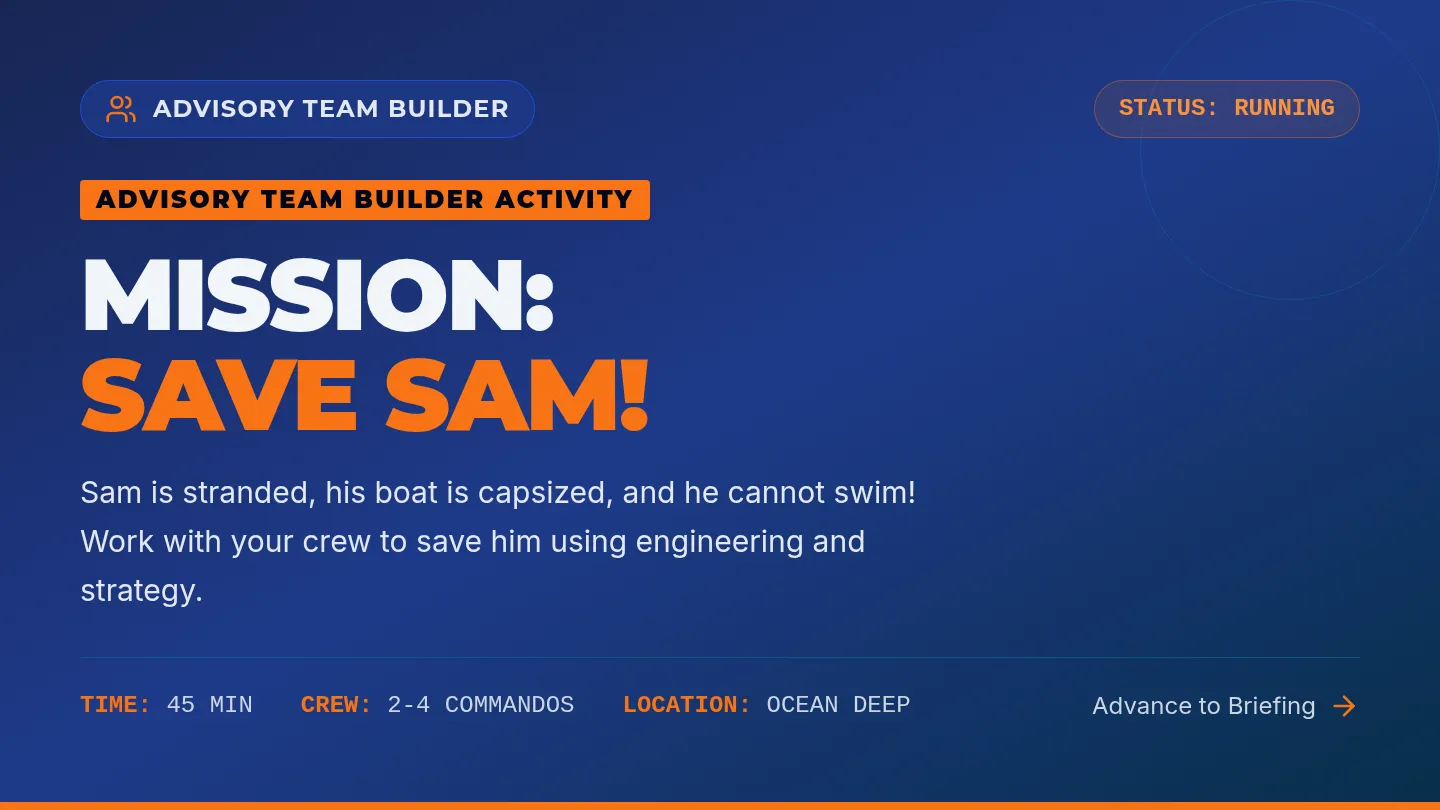
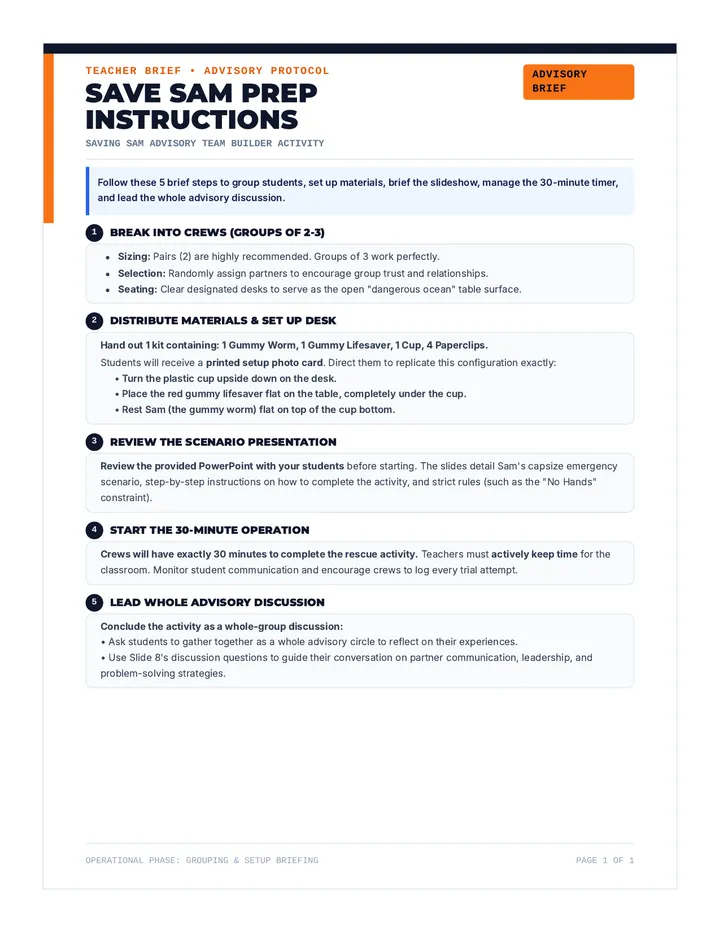
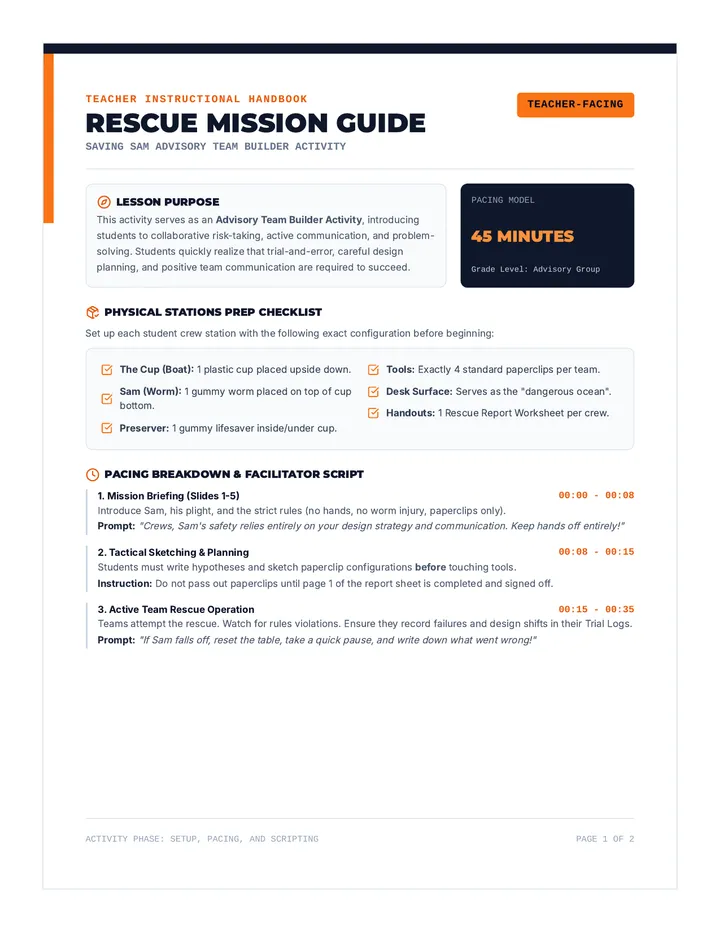
An immersive, self-directed survival simulation where students work in teams to solve creative engineering and resource-management challenges. Designed to keep the entire classroom deeply engaged and collaborative while the teacher conducts one-on-one sessions.
A lesson exploring how physical and behavioral traits help organisms survive in their environments, featuring a video documentary review and diagnostic summary.
A 5th grade research and presentation project based on EL Education Module 4. Students select a natural disaster focus, conduct research using provided expert articles, organize their findings, and choose to present via a Slide Show, Skit, or Newsroom report.
A hands-on, highly engaging, low-cost end-of-year science unit designed for 6th-grade students of lower academic levels. It features simplified, visual step-by-step guides for independent, sensory-rich experiments exploring kitchen chemistry, forces, and density.
A science unit exploring five powerful natural disasters. Students read highly structured, scaffolded articles at both third-grade and fifth-grade reading levels, practice key vocabulary, and complete comprehension checks with sentence frames and starters.
An interactive, visually rich lesson preparing Florida students for severe storms and hurricanes. Covers emergency kit building, weather alerts, home action plans, and sensory coping strategies to reduce storm anxiety.
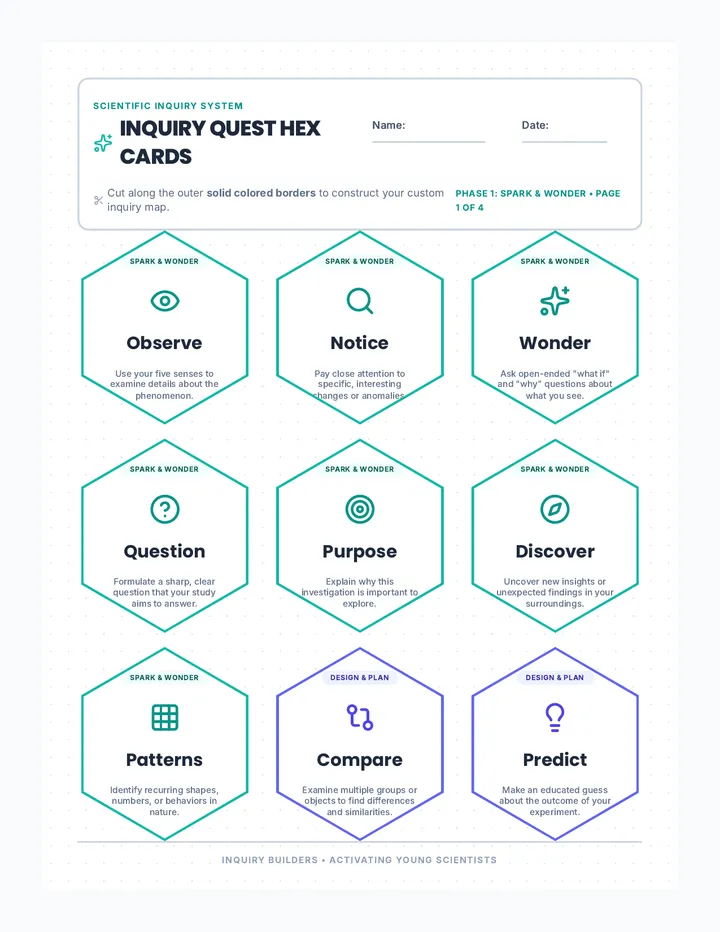
An outdoor nature scavenger hunt lesson for fourth graders designed to engage their senses, observation skills, and creativity. Students search for specific colors, geometric shapes, textures, and patterns in the schoolyard or local park, recording and sketching their findings like real field scientists.
An interactive, visual-heavy lesson where students investigate ecosystem roles (producers, consumers, and decomposers) through an engaging 'Guess Who' style game. Includes visual-support clue cards, a detective tracking sheet, and a comprehensive teacher guide.
An interactive, scaffolded lesson introducing biotic and abiotic factors in ecosystems. Includes guided notes with sentence starters, a word bank, and a hands-on sorting activity designed for students requiring accommodation.
A lesson on oceanography covering shorelines, coastal features, and the deep seafloor, adapted with a friendly My Little Pony decorative theme and chunked, accessible text for Standard Modified Special Education students.
A comprehensive, MLP:FiM-themed lesson on ocean movement (waves, tides, currents, gyres, and land influences) featuring Twilight Sparkle and friends.
Join Twilight Sparkle, Pinkie Pie, Fluttershy, and Rainbow Dash as they explore the origin, composition, and structure of Earth's oceans. This lesson is highly visual, simplified, and carefully structured with guided practice, word banks, and sentence starters.
A homework-centered lesson where students investigate school environmental habits, conduct a mini-audit, and plan statistical data collection around waste and ecological impact.
An engineering and physics lesson where students design, build, and test magnetic mazes to explore magnetic forces and the Engineering Design Process. Students investigate magnetic permeability and iterate on their designs to solve navigational challenges.
An engineering design challenge where students design, prototype, and test magnet mazes, exploring how different backing materials block or allow magnetic forces to pass through.
An upper elementary STEM lesson where students explore magnetic fields, poles, and non-contact forces by designing and building a physical magnet maze. Includes visual slides, a hands-on student design guide, and a comprehensive teacher lesson plan.
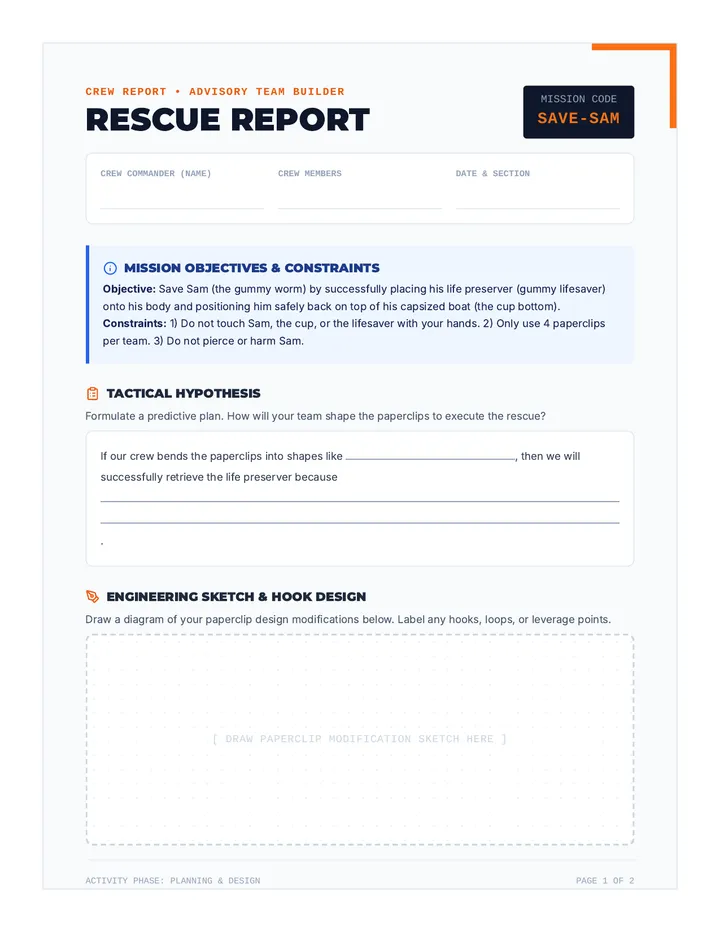
A highly engaging, hands-on lesson teaching the importance of precision, clarity, and chronological sequencing through the classic "Exact Instructions Challenge" using Marshmallow Fluff and Jelly. Students write step-by-step instructions, and the teacher follows them verbatim, humorously demonstrating how easily vague directions can go sticky.
A 4th-grade science lesson structured around the 5E model, exploring physical and chemical weathering through a high-seas pirate theme. Students investigate how waves, wind, and chemical reactions shape 'Skull Island' and reveal or bury treasure.
An end-of-year educational movie unit and math workbook based on the story of Super Mario Galaxy. Students explore gravity, orbits, and space physics through active viewing, followed by high-energy space-themed math puzzles.
An introductory biology lesson for 5th-grade students with limited literacy, focusing on identifying the core characteristics of insects through highly visual materials. Students learn about the three body parts, exoskeletons, six jointed legs, and how to distinguish insects from non-insects.
A culminating 5th-grade computer science activity celebrating computational thinking and robotics. Students choose their own adventures across unplugged algorithms and physical computing challenges in an arcade-themed finale.
Examine the triggers and devastating impacts of wildfires and floods. Students learn about fuel sources, combustion, precipitation cycles, and flash floods, focusing on prevention, mitigation, and historical events.
Investigate the atmospheric forces that create hurricanes and tornadoes. Students analyze weather patterns, pressure systems, and comparison charts, as well as the historical impacts of Hurricane Katrina and the Tri-State Tornado.
Explore the explosive science of volcanoes and the seismic power of earthquakes. Students learn about tectonic plates, magma chambers, seismic waves, and historical disasters like Mount Vesuvius and San Francisco.
An immersive fifth-grade lesson exploring natural disasters across tectonic, atmospheric, and ecological domains. Students act as 'Disaster Detectives' to analyze the science behind volcanoes, earthquakes, hurricanes, tornadoes, wildfires, and floods.
A highly differentiated 30-minute lesson where students act as 'Placement Officers' for the Pup Placement Agency. They analyze physical and behavioral traits of dog candidates and match them with appropriate service dog jobs, aligning with the OpenSciEd Grade 3 Trait Variation unit.
An engaging exploration of renewable and non-renewable natural resources, fossil fuels, and local conservation efforts through field-guide inspired readings, assessments, interactive sorting, and local mapping exercises.
A comprehensive 5th-grade science and literacy lesson exploring the intricate food webs, energy flows, and unique plant adaptations of the Amazon Rainforest through paired texts and standard-aligned analysis.
A retro 90s-themed science lesson where fourth-grade students explore the concepts of pitch and amplitude (volume) through the analog mechanics and culture of cassette tapes.
An end-of-year science and social studies review and reflection unit. Students reflect on their academic journey through a creative field log, test their knowledge in a collaborative trivia expedition, explore extension tasks via a STEM choice board, and design a curriculum time capsule project.
A hands-on science lesson for 3rd and 4th grade students focused on classifying animals into vertebrates and invertebrates. Students learn to distinguish between arthropods, mollusks, worms, amphibians, reptiles, fish, mammals, and birds using key physical characteristics.
A hands-on engineering and design project where students sketch, build, and decorate a miniature beach chair using popsicle sticks, fabric, and paint. Includes a comprehensive student-facing project packet with milestone checklist and a teacher grading rubric.
Master sensory language and persuasive advertising techniques by designing an original ice cream flavor, brand logo, and marketing pitch.
Explore states of matter, heat transfer, and freezing-point depression by making homemade ice cream in a bag using ice, salt, and cream.
Apply fraction multiplication and division to scale ice cream recipes up and down, converting fluid ounces, cups, and tablespoons.
Trace the historical origins of frozen desserts from ancient China and Rome to modern day, mapping how ingredients like vanilla, sugar, and cacao traveled globally.
An immersive, puzzle-driven coding escape room where students work in table groups to defeat a rogue AI. By solving four distinct chambers focusing on sequencing, loops, conditionals, and debugging, students demonstrate core computational thinking skills.
Students explore the fundamentals of heredity by distinguishing between inherited traits and learned behaviors. This lesson uses real-world examples from the plant and animal kingdoms to illustrate how traits are passed down through generations.