An introductory unit on forces and motion, focusing on building strong scientific vocabulary through engaging visual resources and student-friendly definitions.
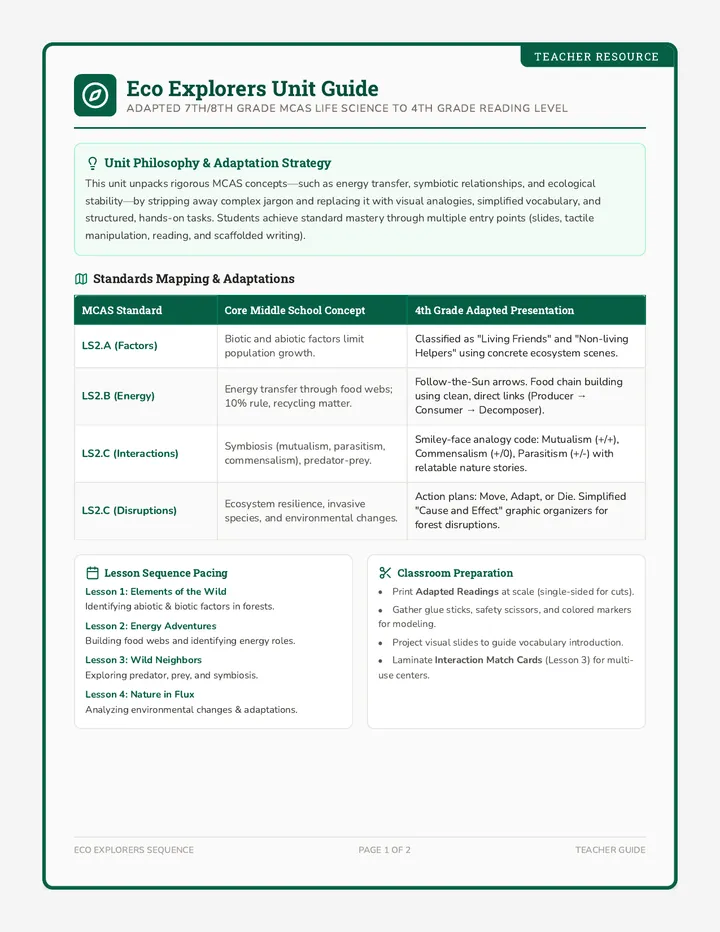
An interactive, highly visual ecosystem unit designed for 7th/8th grade MCAS standards but adapted to a 4th-grade reading and comprehension level. The unit explores abiotic/biotic factors, energy flow, interactions, and disruptions through hands-on activities, adapted readings, visual slides, and scaffolded assessments.
A comprehensive lesson on cellular division, transmission genetics, and evolutionary mechanics. This lesson covers chromosome dynamics, rules of inheritance (including non-Mendelian pathways), and how molecular-level variations scale up to drive population-level evolution.
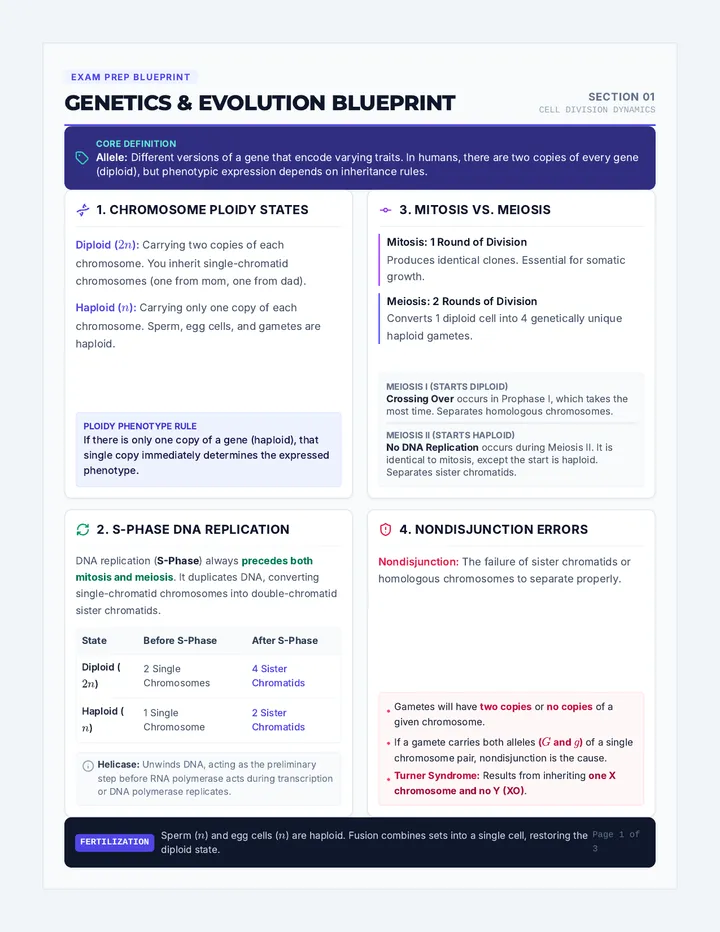
A high-yield, 3-page visual study guide and exam prep cheat sheet covering cell division, genetics, inheritance rules, linkage, and population dynamics. Designed as a printable, premium-quality reference document with diagrams, ratios, and key terms.
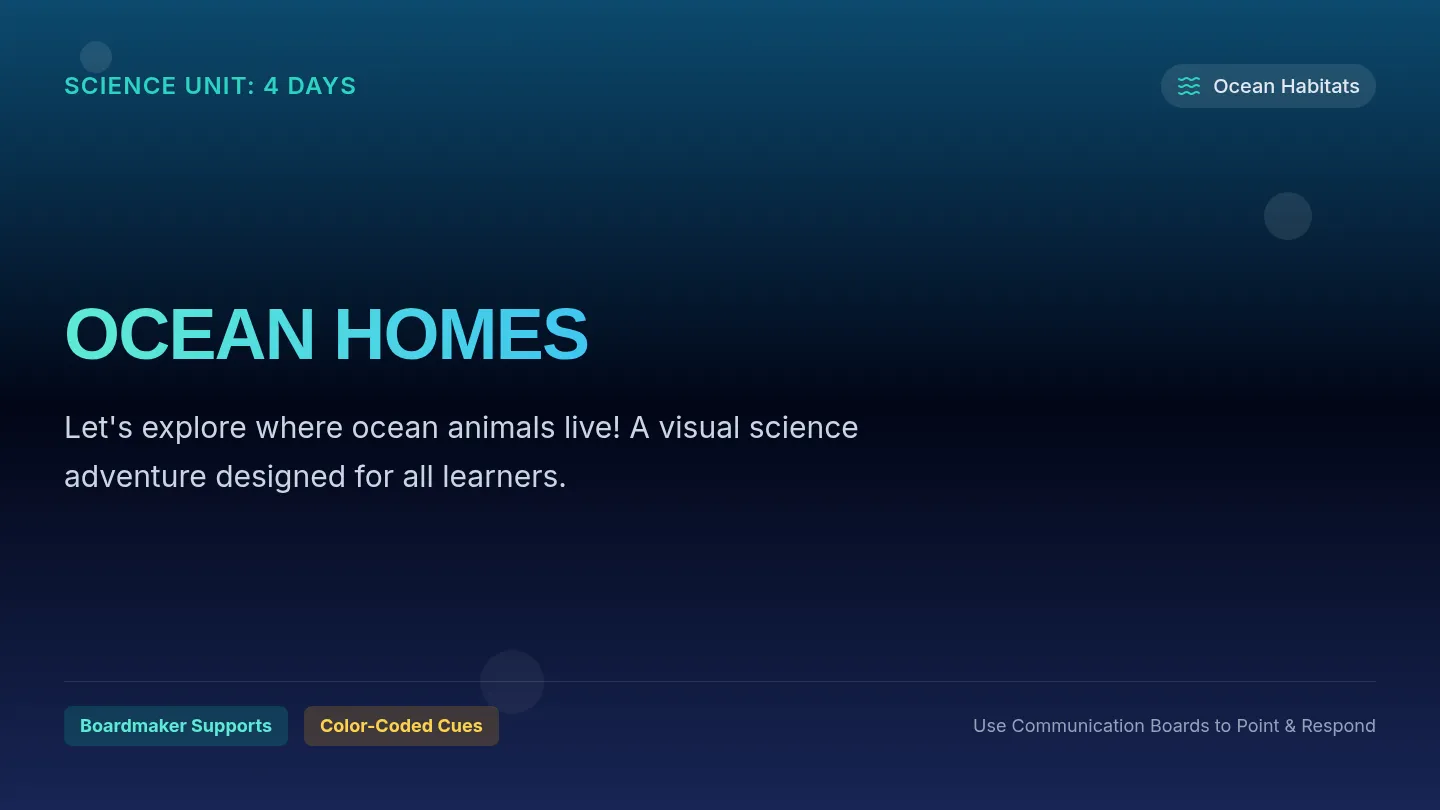
A highly visual 4-day science unit exploring ocean habitats and depth zones. Tailored for differentiated instruction for 3rd grade and nonverbal 7th grade students using Boardmaker-style symbols, color-coded matching, and visual check comprehension.
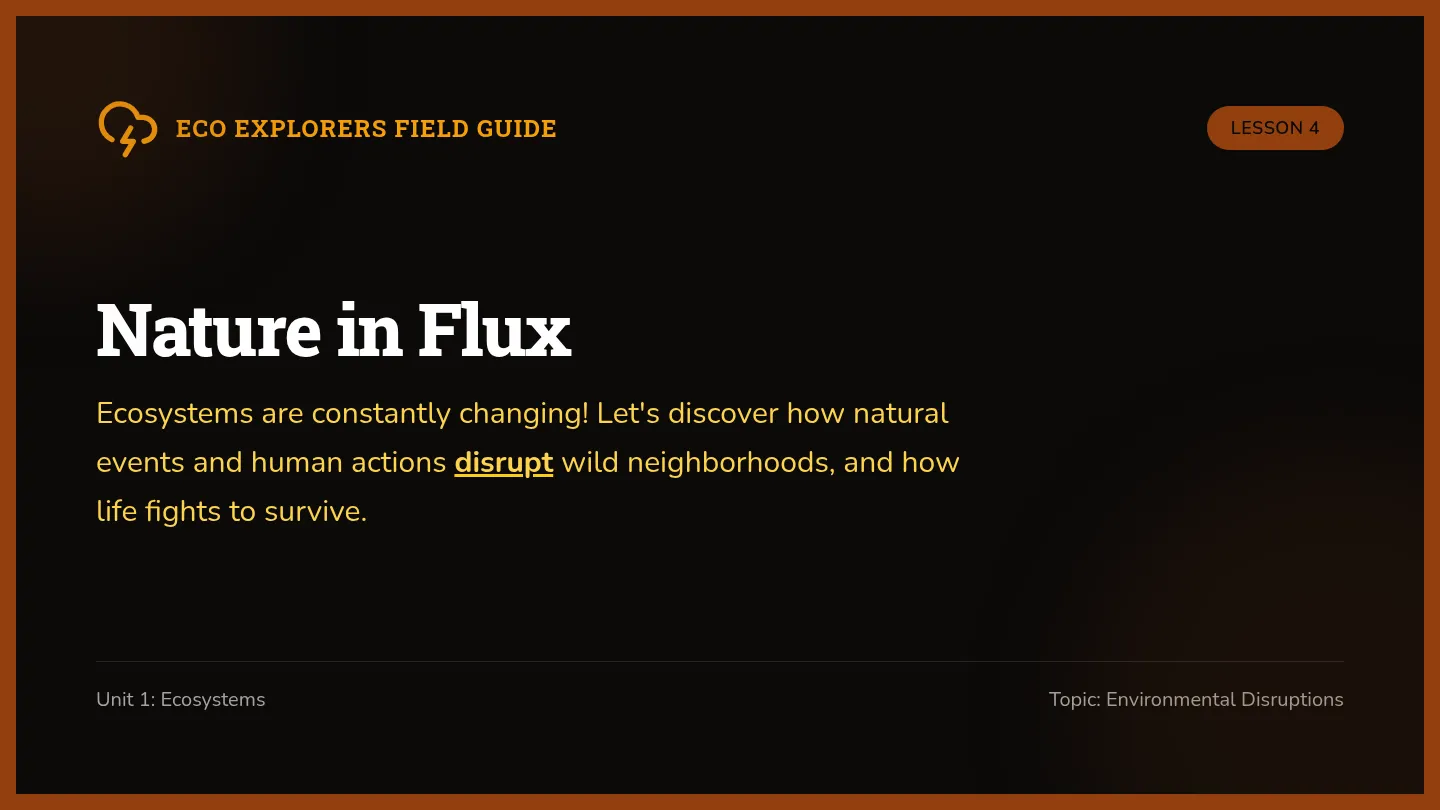
Students examine how ecosystems change over time due to natural events and human activities, and how these disruptions force living things to adapt, relocate, or face survival challenges. Includes disruption scenario cards, a checklist, and slide reviews.
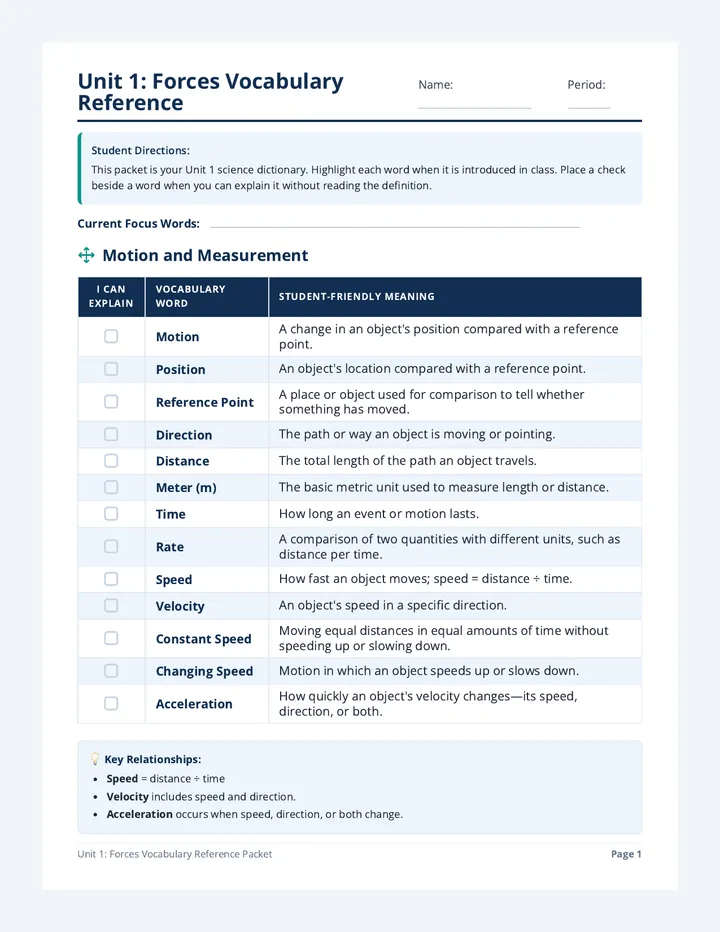
A complete, portrait-oriented 4-page student vocabulary reference packet for Unit 1: Forces. Features categorized tables for all 46 terms, check-off tracking, key scientific relationship highlights, and editable diagrams.
An intensive High School Biology sequence that dives deep into the biophysics and biochemistry of photosynthesis. Students explore the molecular machinery of the light-dependent reactions and the enzymatic steps of the Calvin cycle.
Students discover how organisms interact in a forest ecosystem, exploring predator-prey relationships, competition, and simple symbiotic alliances (mutualism, commensalism, parasitism) with kid-friendly analogies. Includes interactive task cards, adapted guides, and slide visuals.
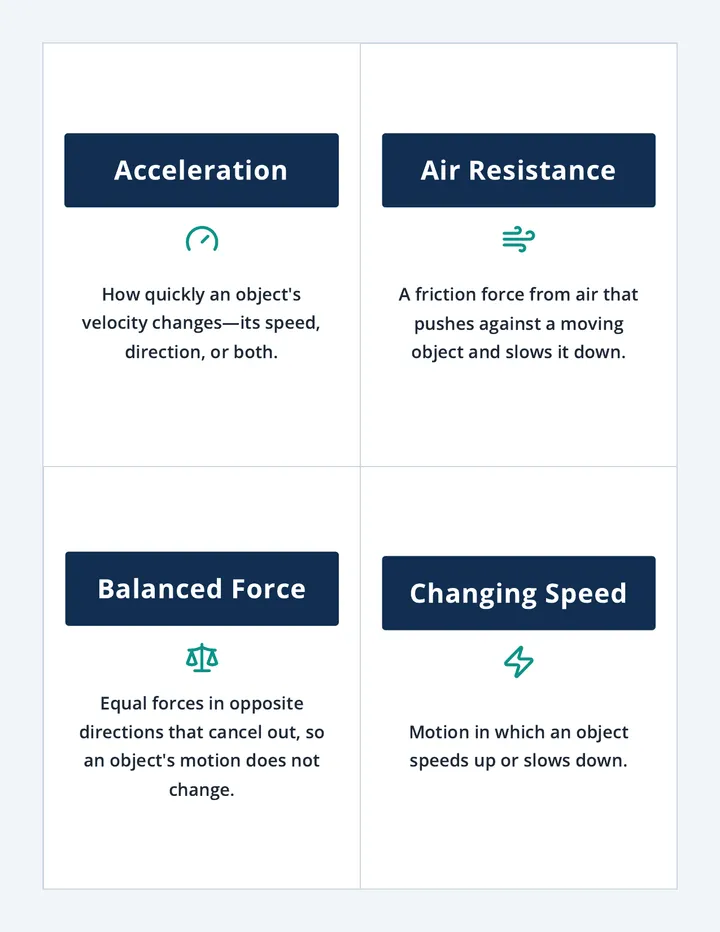
A complete, portrait-oriented printable word wall for Unit 1: Forces, featuring all 46 vocabulary terms and exact definitions arranged in a perfect 2-column by 2-row grid. Designed for easy cutting with light, visible layout lines, centered teal science icons, and clean navy-teal accents.
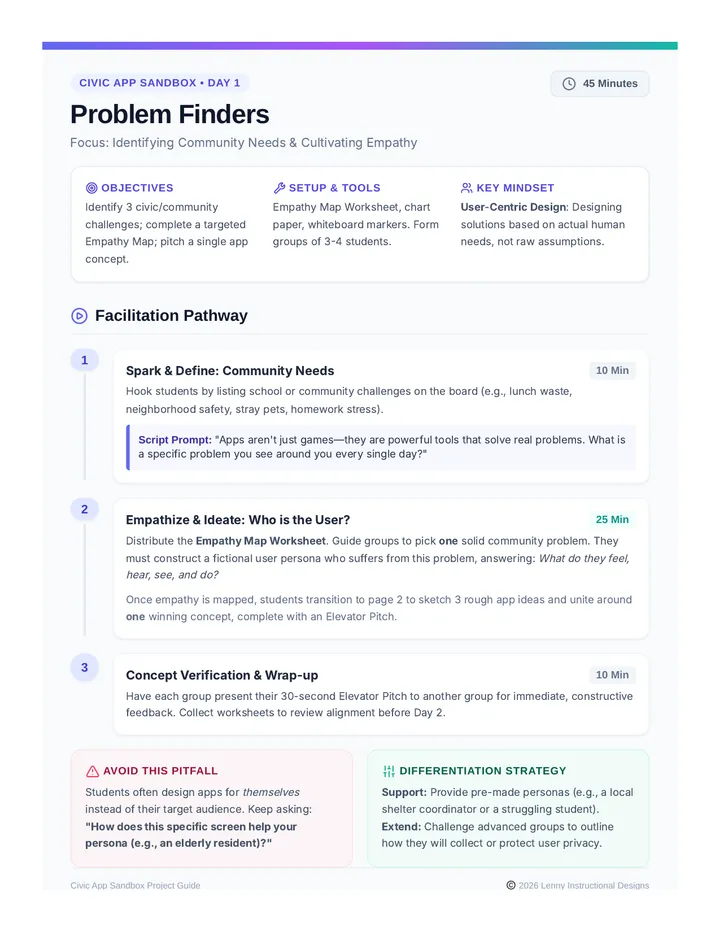
A three-day project-based learning unit where students design and pitch interactive paper prototypes of apps that address real-world community challenges.
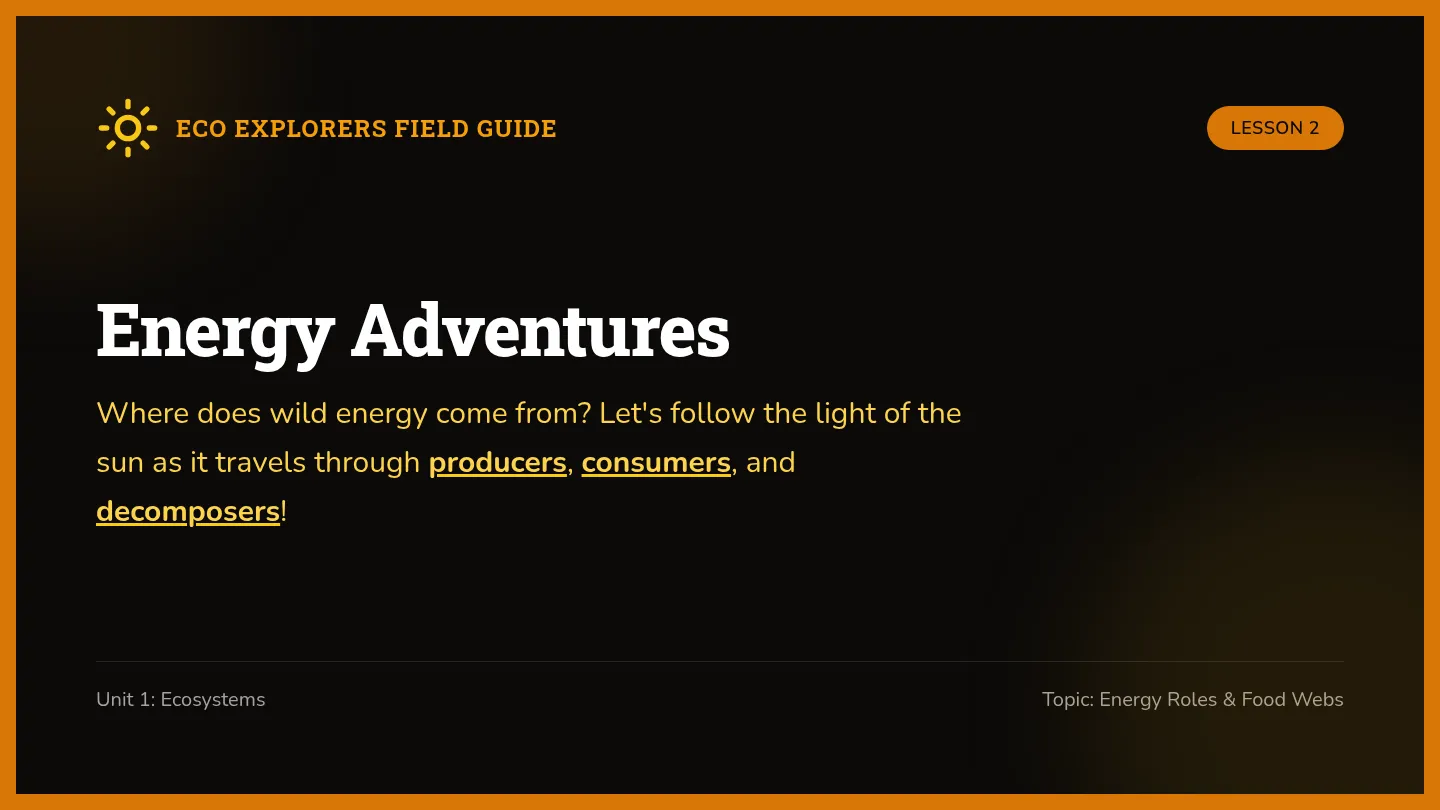
Students explore how energy flows from the sun through producers, consumers, and decomposers, and how multiple food chains link to form complex food webs. Includes modeling templates, reading guides, and instructional slides.
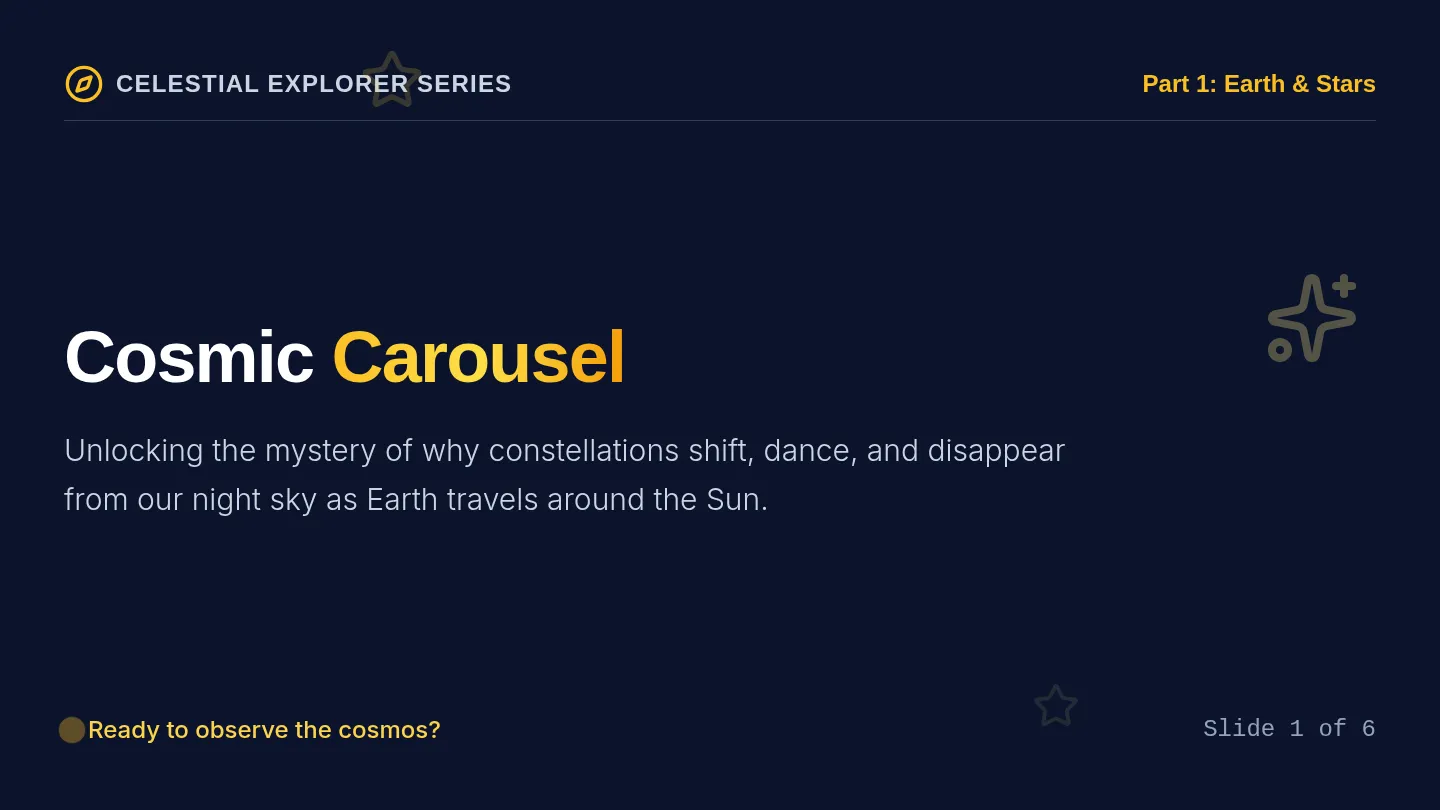
A comprehensive elementary/middle school astronomy unit exploring the predictable patterns of Earth and sky. Students investigate why constellations change seasonally and decode the predictable cycle of lunar phases through hands-on models, observations, and guided inquiry.