An introductory lesson on electromagnetic induction, covering magnetic flux, Faraday's Law, and Lenz's Law through visual demonstrations and guided practice.
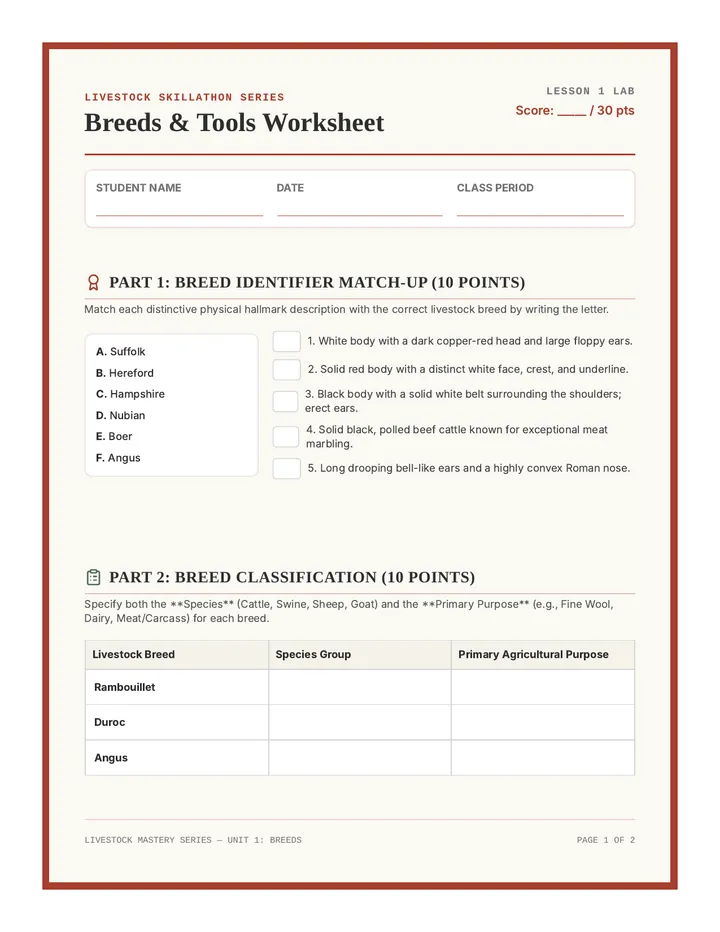
A lesson focused on identifying and understanding the specific functions of essential mechanical tools used in repair shops.
A high school biology lesson investigating the intersection of historical redlining, environmental racism, and respiratory health outcomes through data analysis and mapping.
A comprehensive introduction to the five stages of design thinking, guiding students through empathy, problem definition, ideation, prototyping, and testing.
A comprehensive lesson on Coulomb's Law designed for diverse learners, featuring visual formula supports, step-by-step checklists, and real-world static electricity scenarios.
A hands-on investigation into the dynamic predator-prey relationship between wolves and moose on Isle Royale. Students analyze real-world data, graph population trends, and explore the factors that influence ecological balance.
A comprehensive exploration of automotive computing history, the evolution of data storage, and the transition from analog media to digital podcasting. Students will analyze how hardware and storage capacities have transformed the driving and listening experience.
An in-depth look at mitosis and the 6-stage cell cycle, emphasizing DNA replication and visual identification of phases through guided observation.
A field trip exploration guide for the Anne Kolb Nature Center, featuring a scavenger hunt BINGO activity and a counselor answer key.
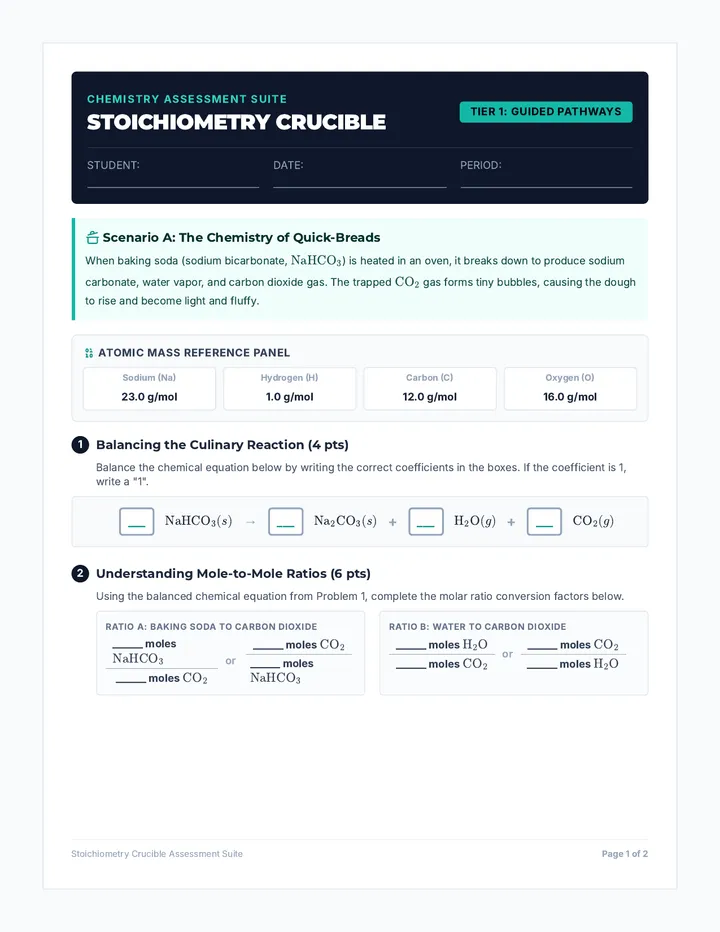
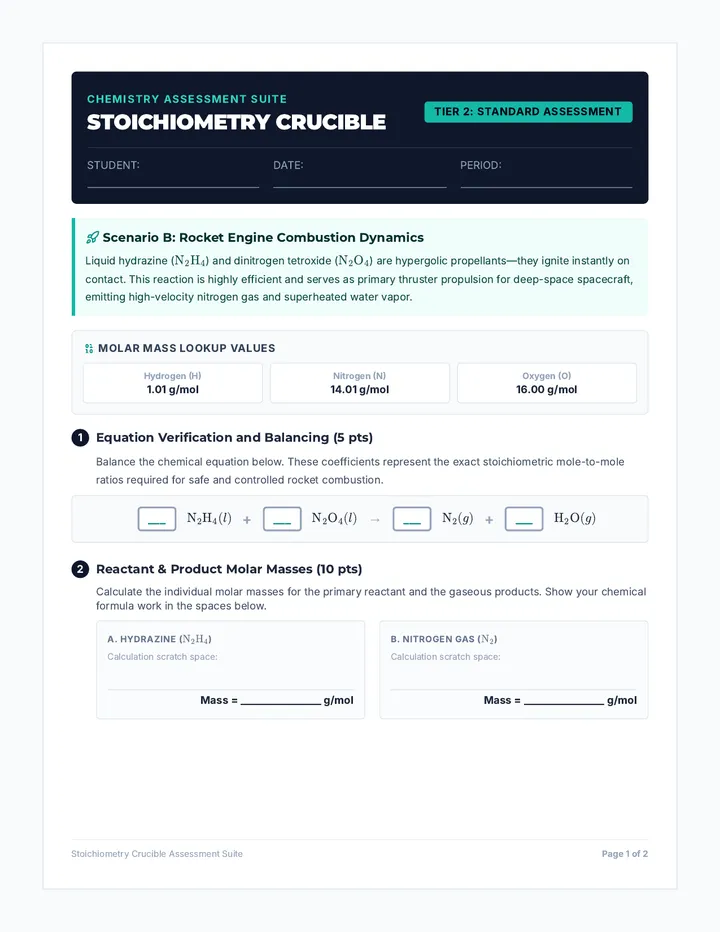
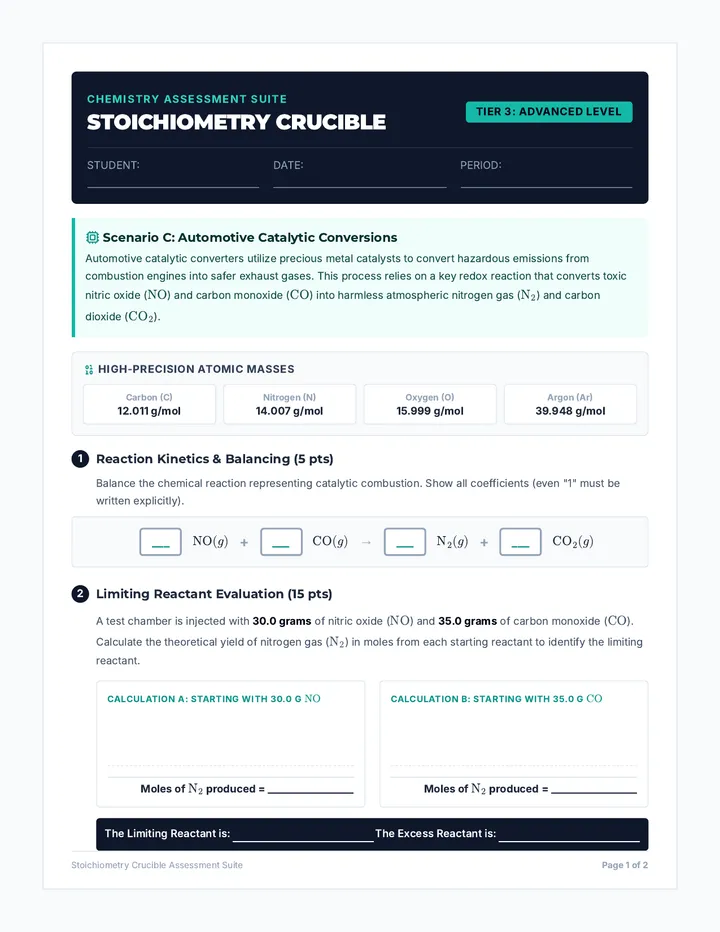
A chemistry lesson focused on the foundational skill of balancing chemical equations, designed for English Language Learners with visual supports and a progressive difficulty structure.
A quantitative investigation into latent heat. Students use calorimetry data to calculate the enthalpy of fusion for ice and model the molecular-level energy transitions that occur during phase change plateaus.
A high-energy, station-based lesson where students investigate the thermodynamics of phase changes. Students analyze intermolecular forces to explain why melting is endothermic and freezing is exothermic, using evidence from heating curves and molecular models.
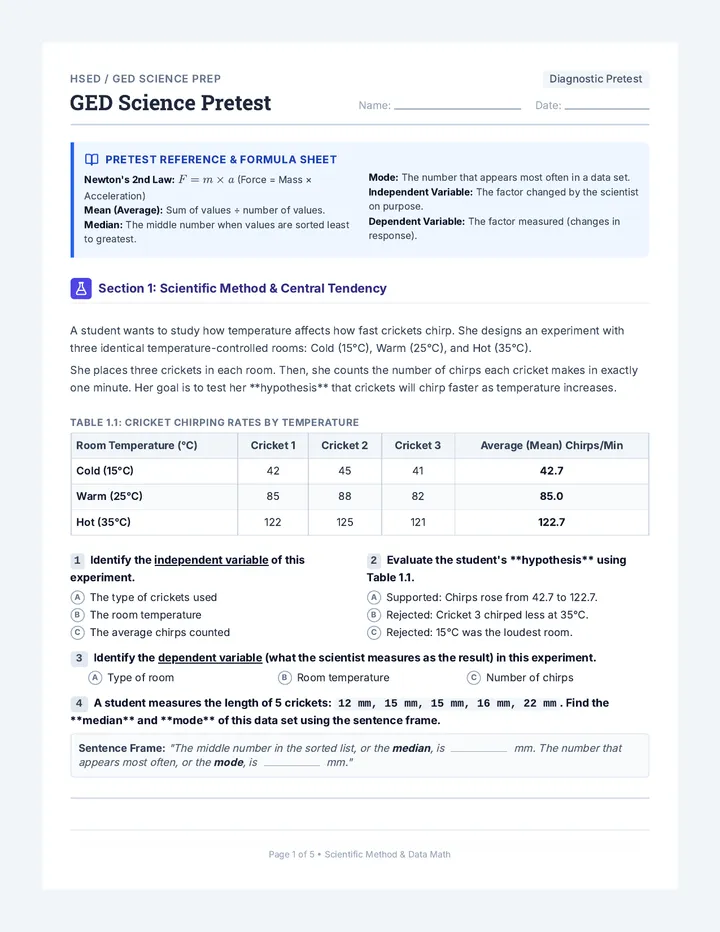
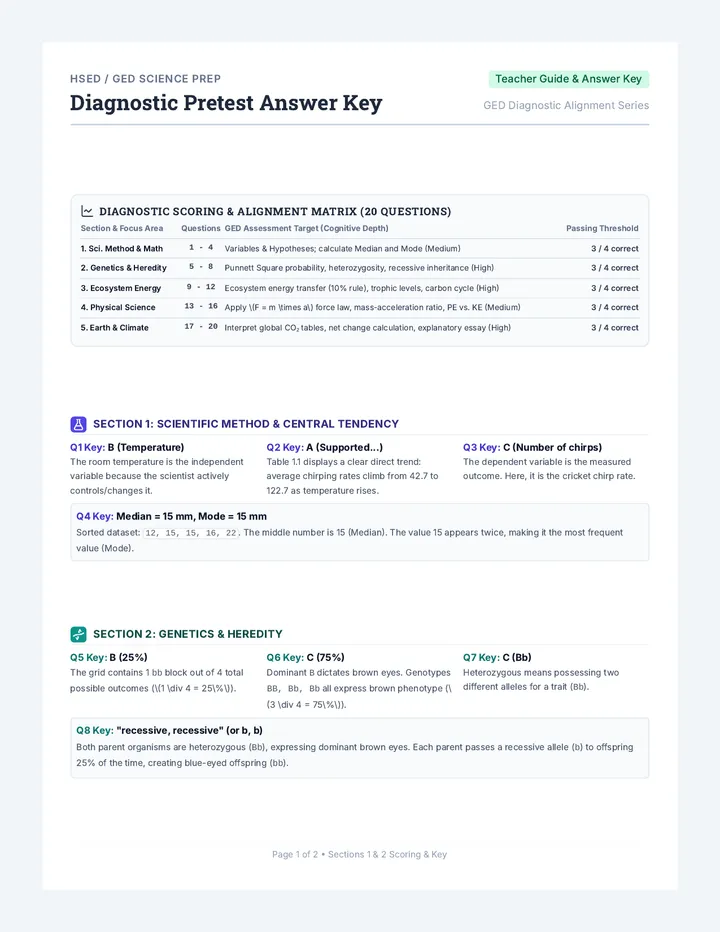
A formal summative assessment designed with accessibility in mind for students who struggle with reading, focusing on payroll calculations and concepts.
A comprehensive review session to reinforce payroll concepts and prepare students for the final unit assessment.
Students analyze the employer's side of payroll, including FUTA/SUTA taxes and the value of fringe benefits in a total compensation package.
An exploration of mandatory deductions, including FICA and income taxes, focusing on how gross pay becomes net pay for employees.
Students learn to calculate gross earnings for various pay structures including hourly, salary, and overtime while maintaining accurate payroll records.
A comprehensive lesson exploring the science, ethics, and societal impact of gene editing through the story of Zion, a 'designer baby'. Students engage in a hands-on DNA simulation and debate the future of human genetics.
A lesson exploring the genetic science, ethical implications, and societal impact of CRISPR and gene editing through a futuristic case study.
An extra credit project for CHEM 1406 students focused on applying biochemistry and health chemistry concepts to real-world scenarios through visual and written reports.
A review lesson focused on mastering chemical bonds, molecular geometry (VSEPR), and intermolecular forces (IMFs) through structured practice and visual instruction.
A comprehensive lesson connecting nuclear chemistry (isotopes) to climate science (greenhouse gases, ice cores, and carbon dating). Students explore how atomic mass influences molecular vibrations and how isotope ratios serve as ancient thermometers.
A high-energy, 10-minute Earth Day activation designed to inspire immediate student action through impactful visuals and a personal pledge.
A high-energy STEM event for kids in foster care, focusing on engineering design, collaborative building, and social connection through hands-on challenges.
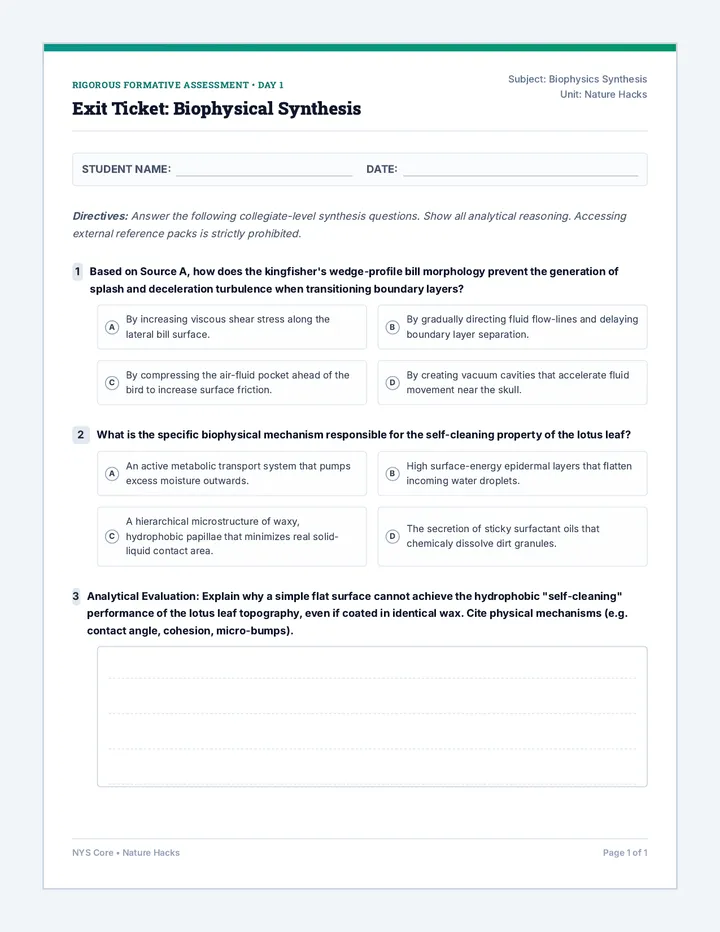
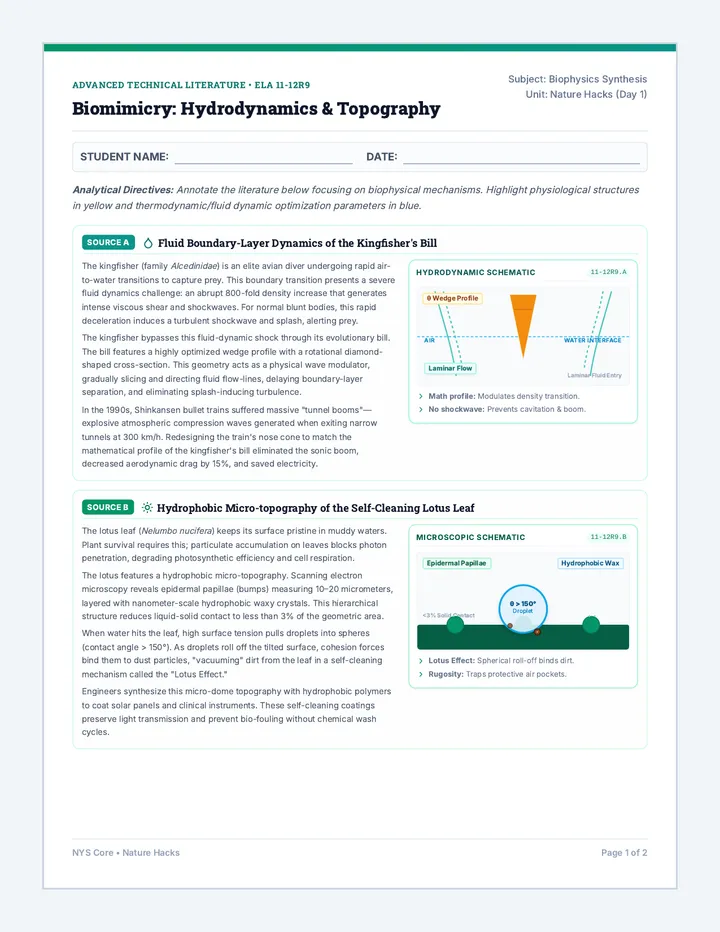
A deep dive into Bernoulli's Principle and fluid dynamics, focusing on the conservation of energy within moving fluids and its real-world applications in engineering and nature.
A comprehensive lab and role-play lesson where students analyze DNA profiles to determine paternity and then argue the case in a mock courtroom setting.
A high school chemistry lab investigating the emission spectra of metal ions through flame tests. Students explore the Bohr model of the atom and identify unknown metal salts based on their characteristic flame colors.
Students investigate genetic disorders by researching their molecular causes, inheritance patterns, and societal impacts. This project culminates in a research log, a CER summary, and a creative visual product.
A lesson exploring the dynamics of population growth, focusing on the differences between exponential and logistic growth models and the real-world limiting factors that shape them. Students will solve puzzles to identify key concepts like carrying capacity, density-dependent factors, and density-independent factors.
A high-stakes chemistry lab where students design and test modifications to a coke-can calorimeter to maximize heat transfer efficiency from a spirit lamp. Students explore thermodynamics, combustion, and experimental design.
An 11th-grade chemistry engineering challenge where students design, build, and optimize salt-water powered vehicles to master redox reactions and circuit completion.
A comprehensive introduction to electrostatic forces, covering atomic structure, triboelectric charging, Coulomb's Law, and electric fields through hands-on labs and scaffolded practice.
A gentle introduction to Adobe Photoshop, focusing on software location, basic interface, and the broad possibilities of digital creation.
Developing collaborative skills through a 32-piece mosaic coloring activity and learning about team roles in a design studio environment.
Introduction to Project-Based Learning (PBL), exploring how objectives drive design and how these skills translate to professional careers.
This lesson covers the flow of genetic information, detailing the steps of transcription and translation, the roles of key enzymes like RNA polymerase, and how the sequence of nitrogenous bases determines protein structure and function.
A 60-minute exploration of Indiana's unique biodiversity, focusing on the impacts of deforestation, climate change, and invasive species through a guided webquest.
A comprehensive lesson on magnetic forces, including a high-impact infographic summary and a practice worksheet covering Lorentz force, motors, and electromagnetic induction.