A comprehensive lesson exploring biological diversity and vertebrate classification, focusing on the staggering variety of fish compared to other animal groups through graphing and video analysis.
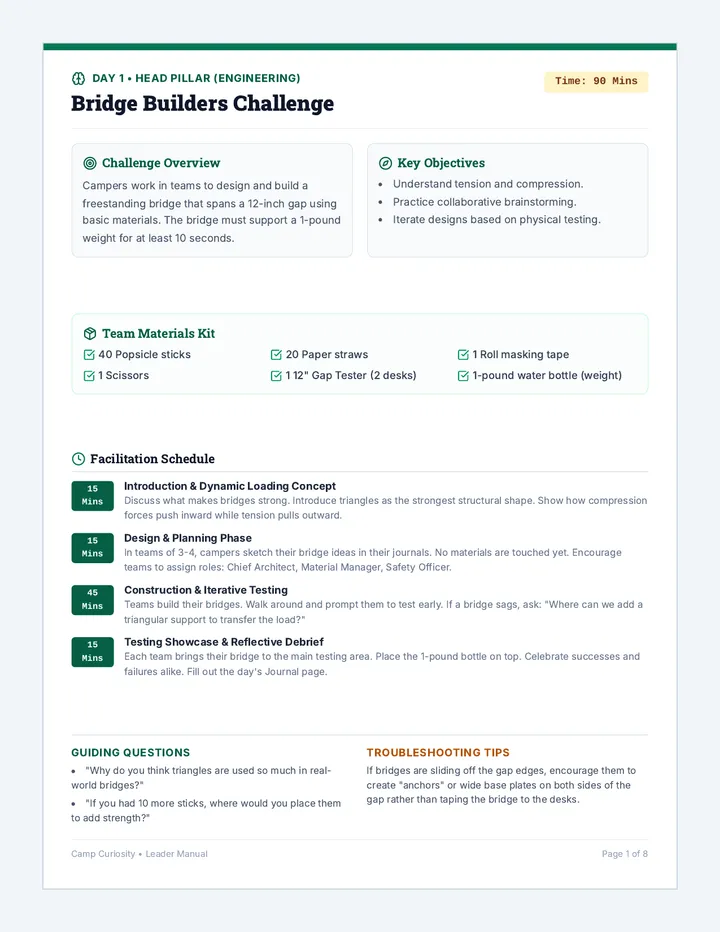
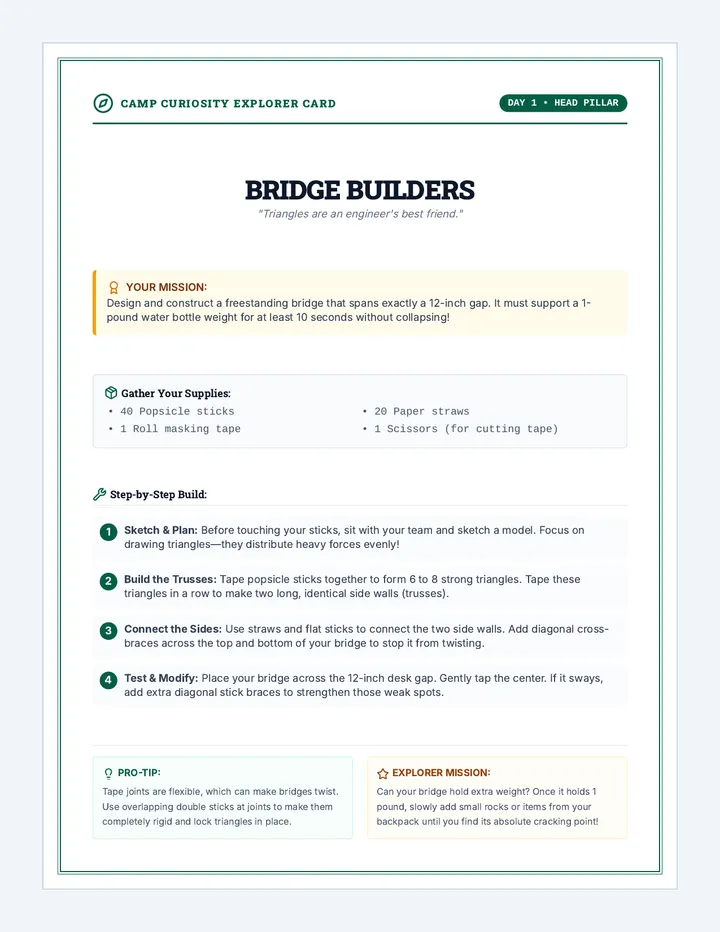
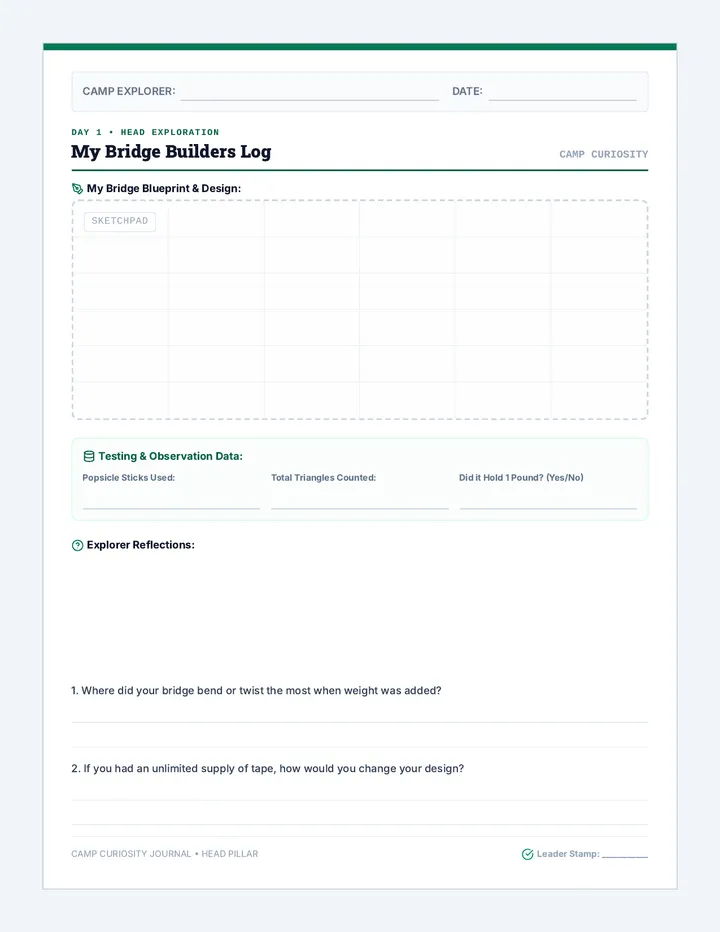
An action-packed, hands-on 8-day 4-H camp program focusing on Head, Heart, Hands, and Health. Students tackle engineering, teamwork, ecology, nutrition, and art challenges through daily active learning.
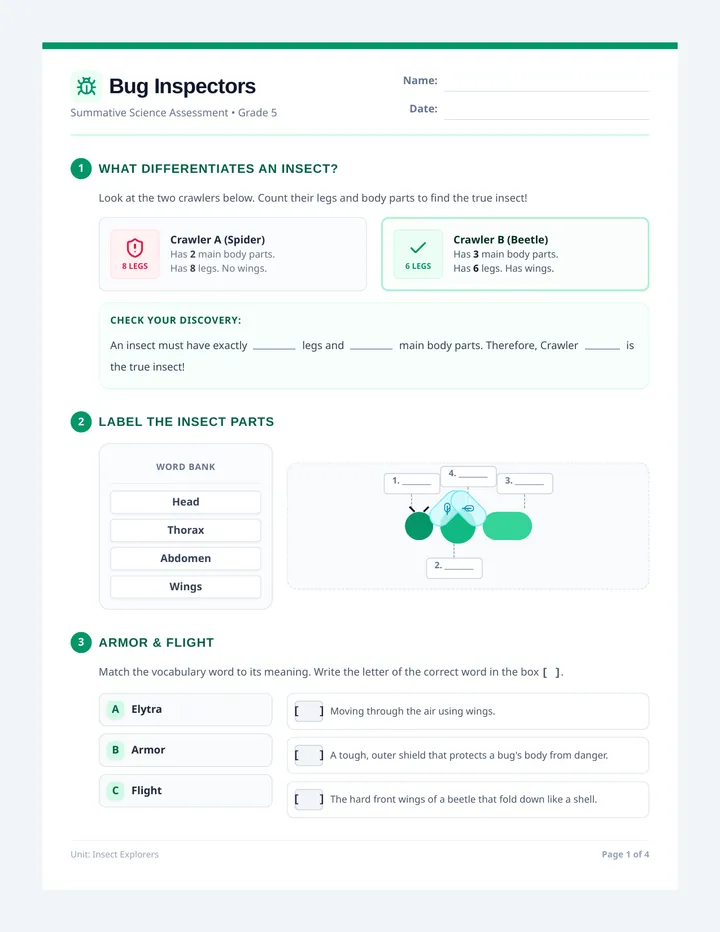
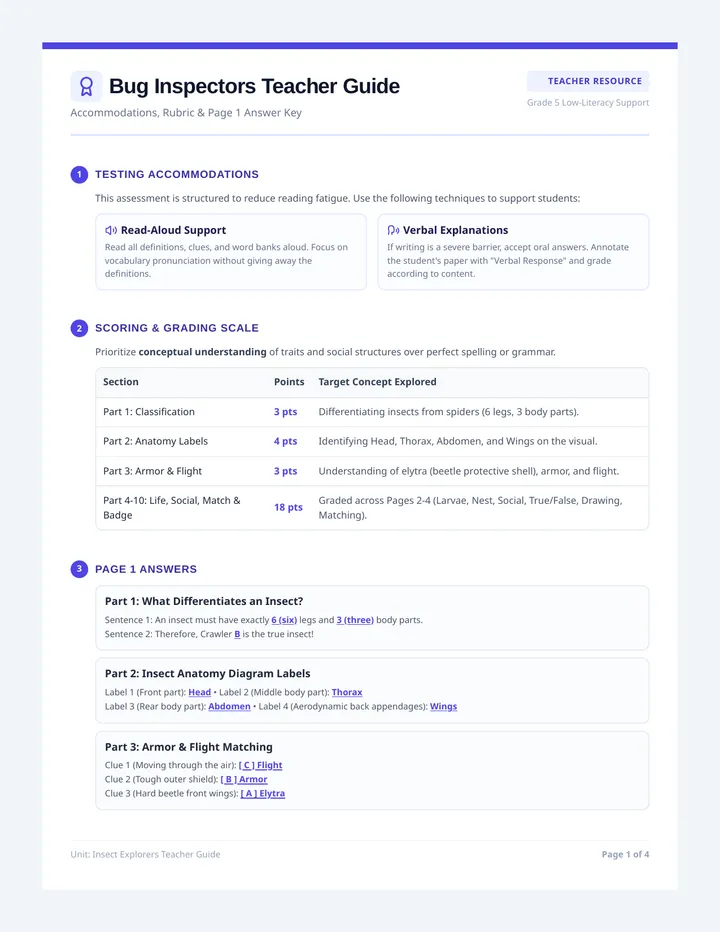
A tailored summative assessment lesson for 5th-grade students with low literacy, focused on insect anatomy, survival, and social behaviors. It includes a highly visual, scaffolded student worksheet and a comprehensive teacher answer key with accommodations.
A 4-page teacher resource featuring student accommodations, a low-literacy point rubric, a complete visual answer key, and structured verbal checkout prompts for students who struggle with written output.
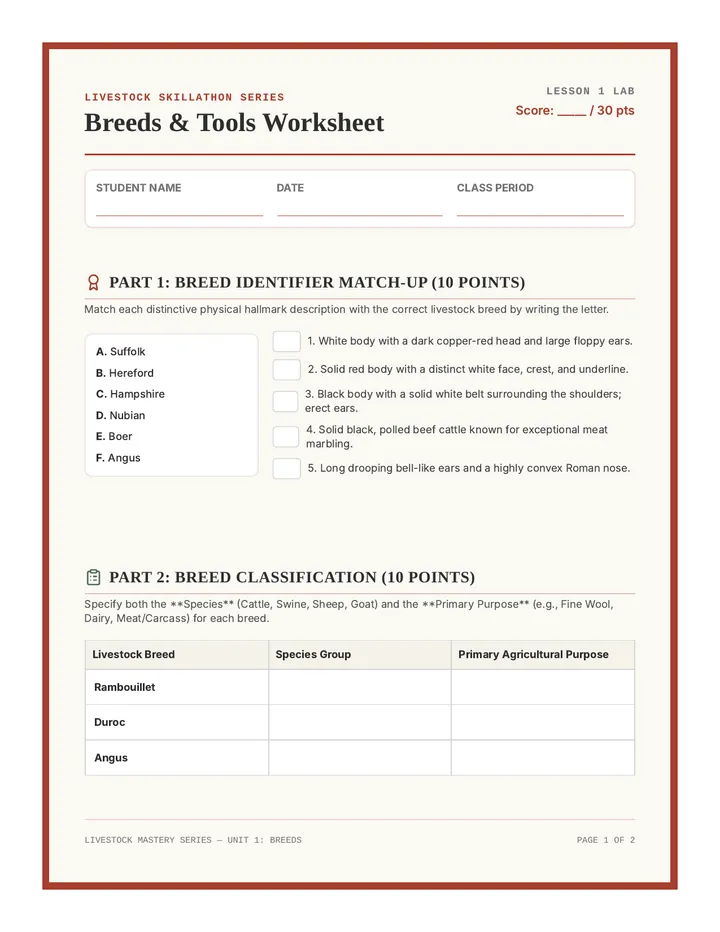
An immersive preparation program that equips agriculture students with the hands-on identification and evaluation skills needed to conquer competitive Livestock Skillathon contests.
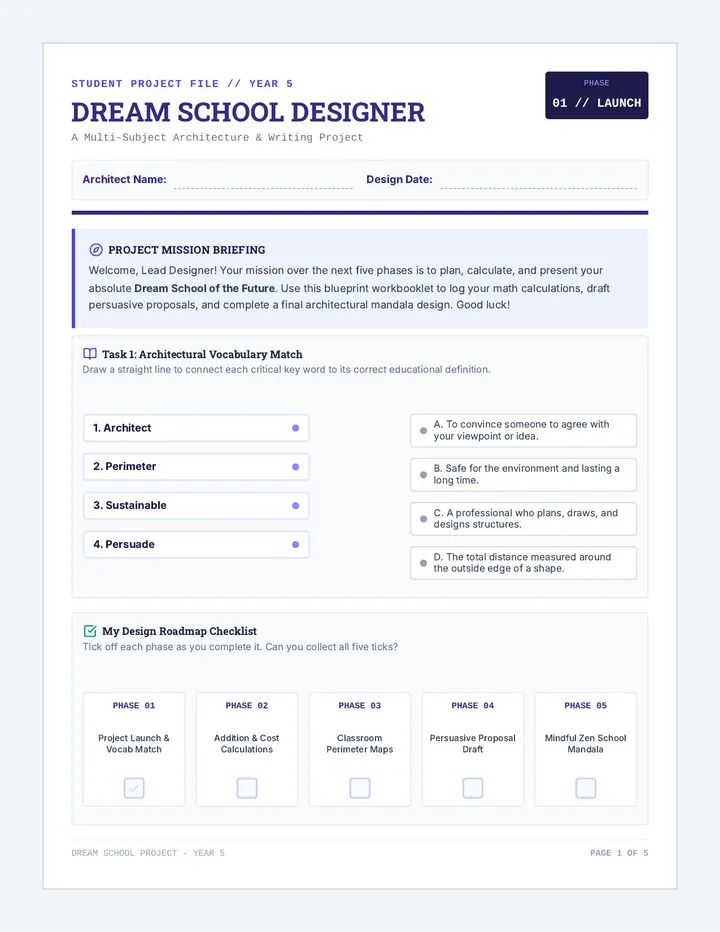
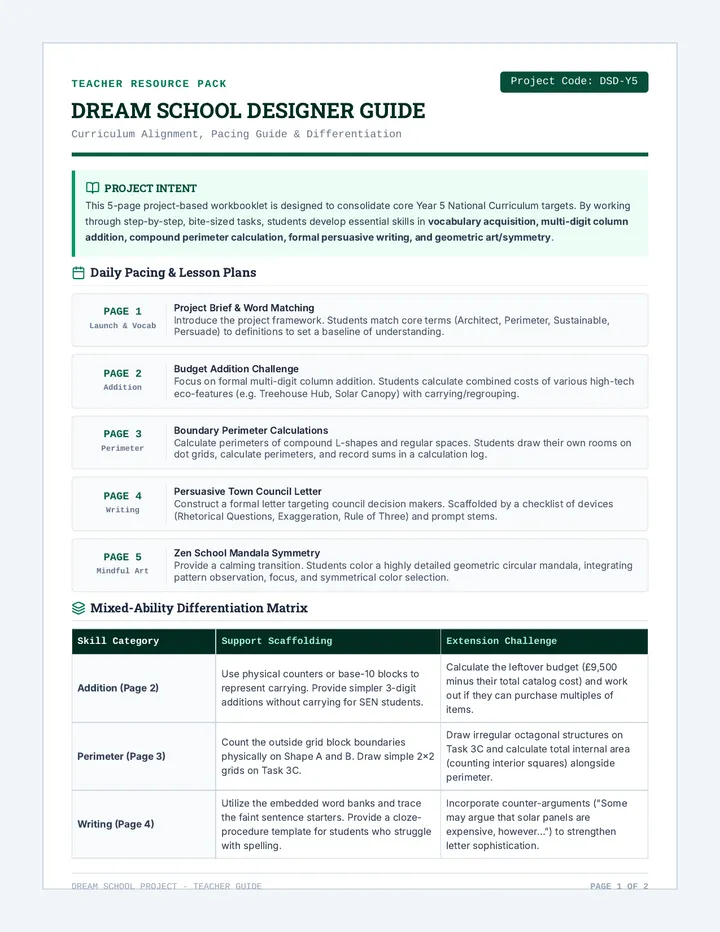
A project-based workbooklet and guide where Year 5 students design their ultimate future school. The project is broken down into structured, bite-sized daily steps integrating English, Maths, Science, Geography, and Art.
A highly visual, 4-page summative assessment for 5th-grade low-literacy students covering 14 key insect terms. Includes clear diagrams, structured word banks, letter-matching boxes, guided sentence frames, and a final Student Reflection & Detective Badge page.
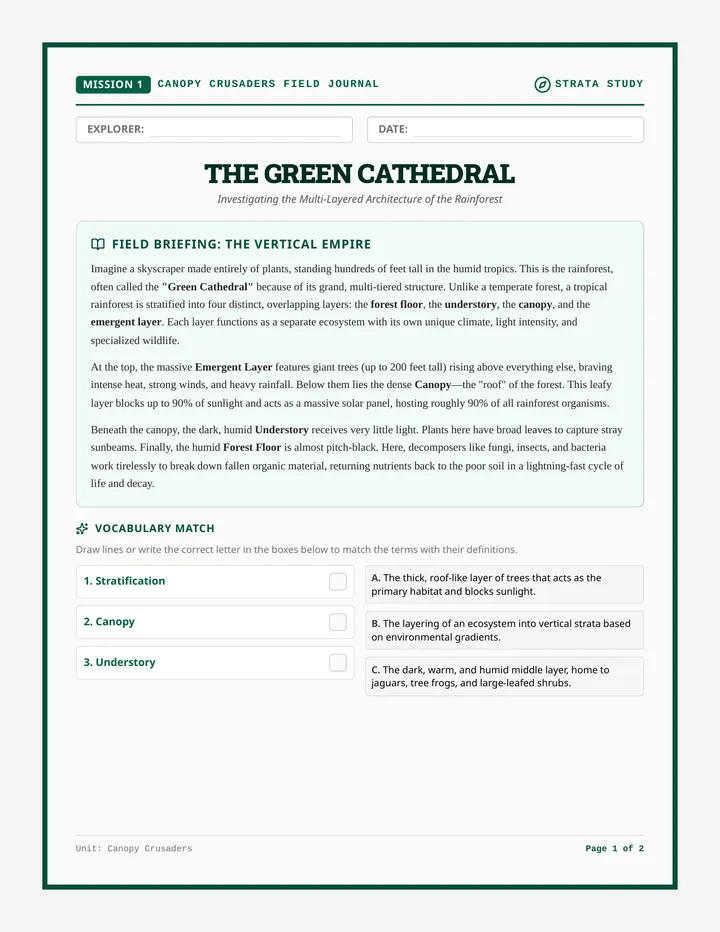
A comprehensive unit on rainforest ecology, climate regulation, and conservation. Students explore the structural layers of the rainforest, their roles as carbon sinks, the threats of deforestation, and collaborative solutions for preservation.
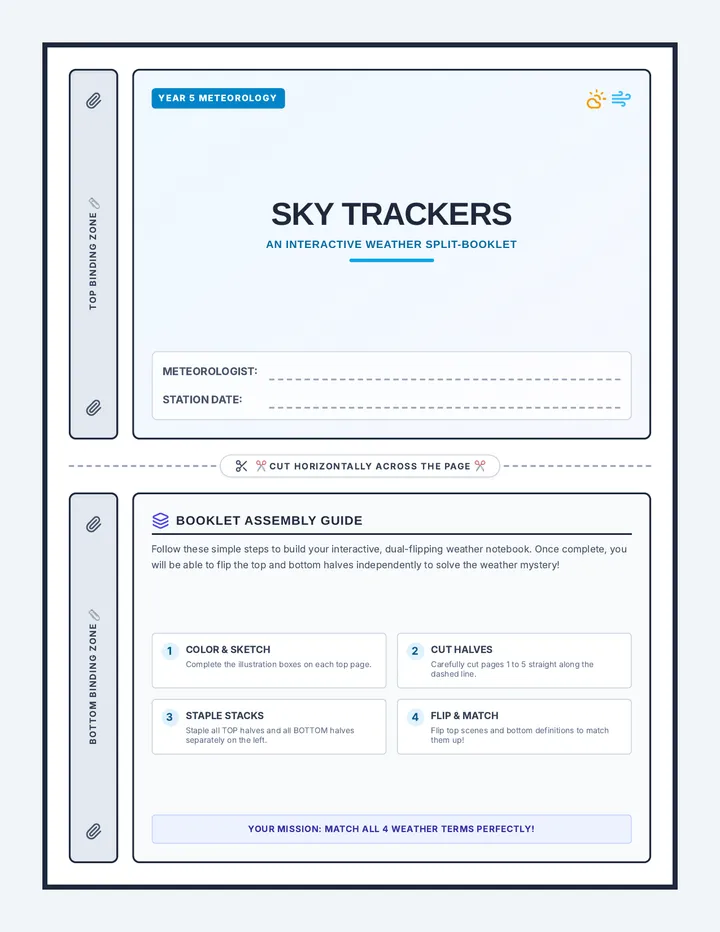
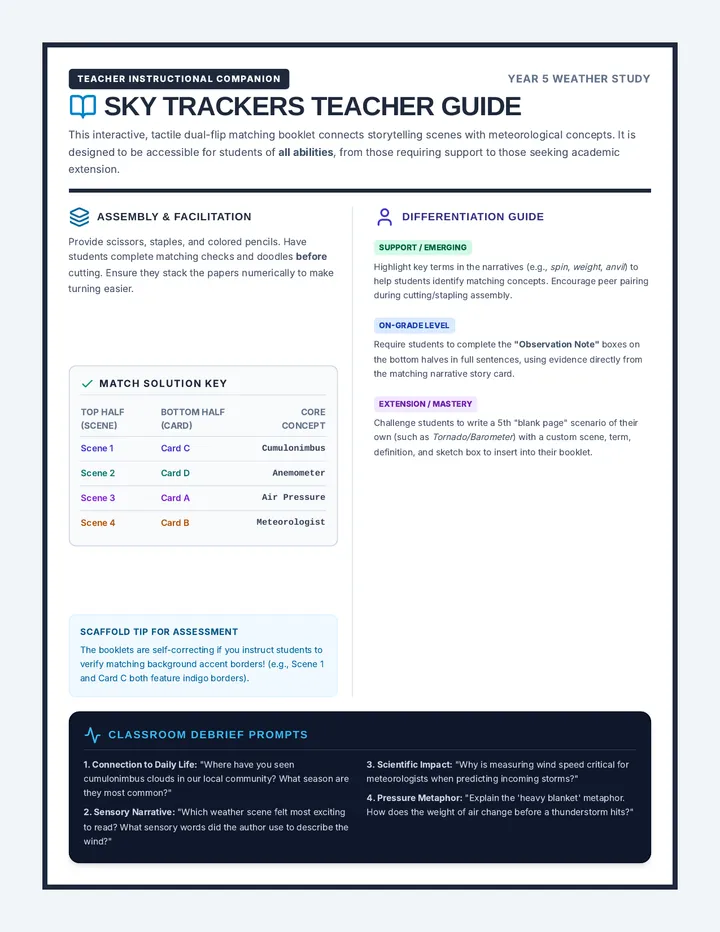
An interactive meteorological study where students construct and solve a dual-flip split booklet to match descriptive weather narratives with scientific terms and definitions.
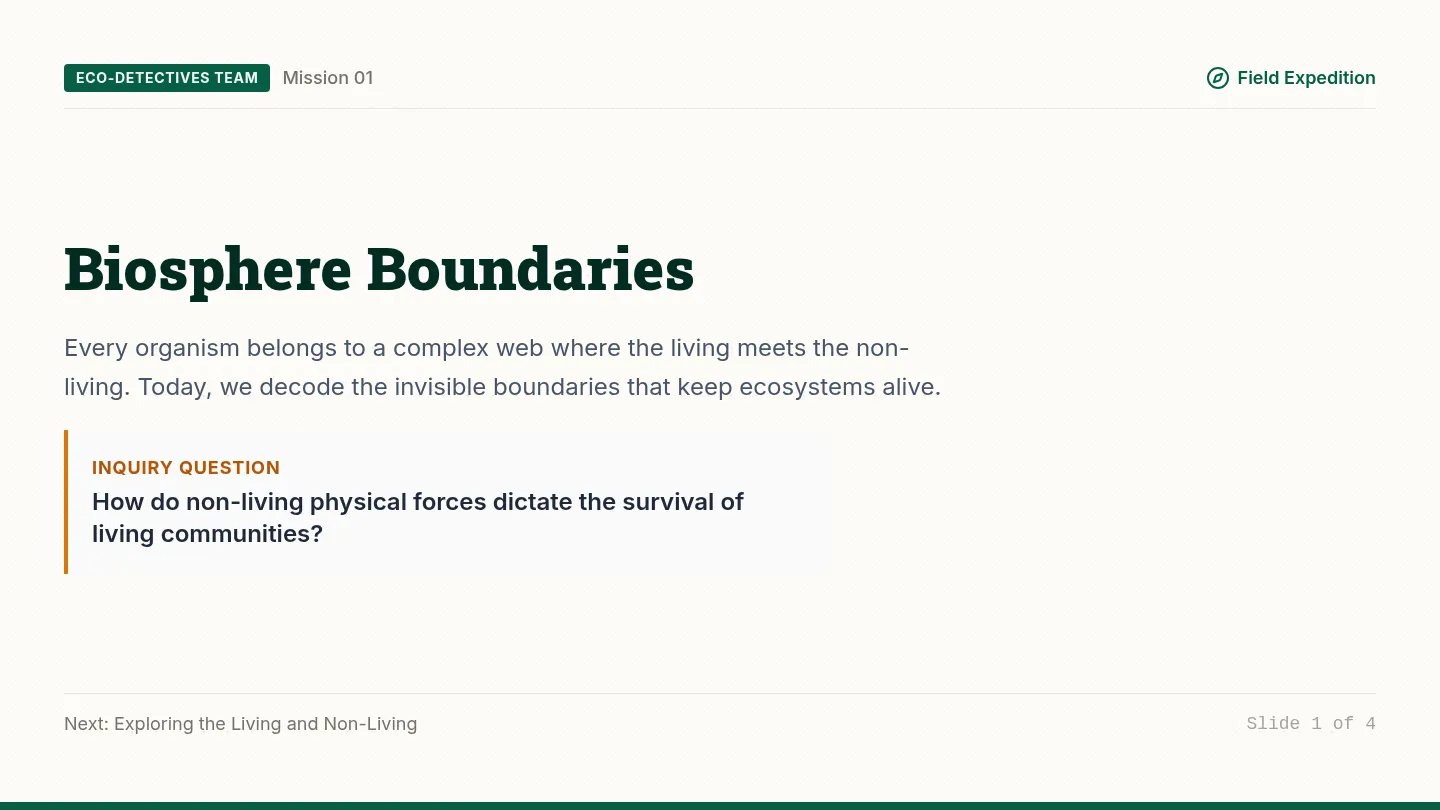
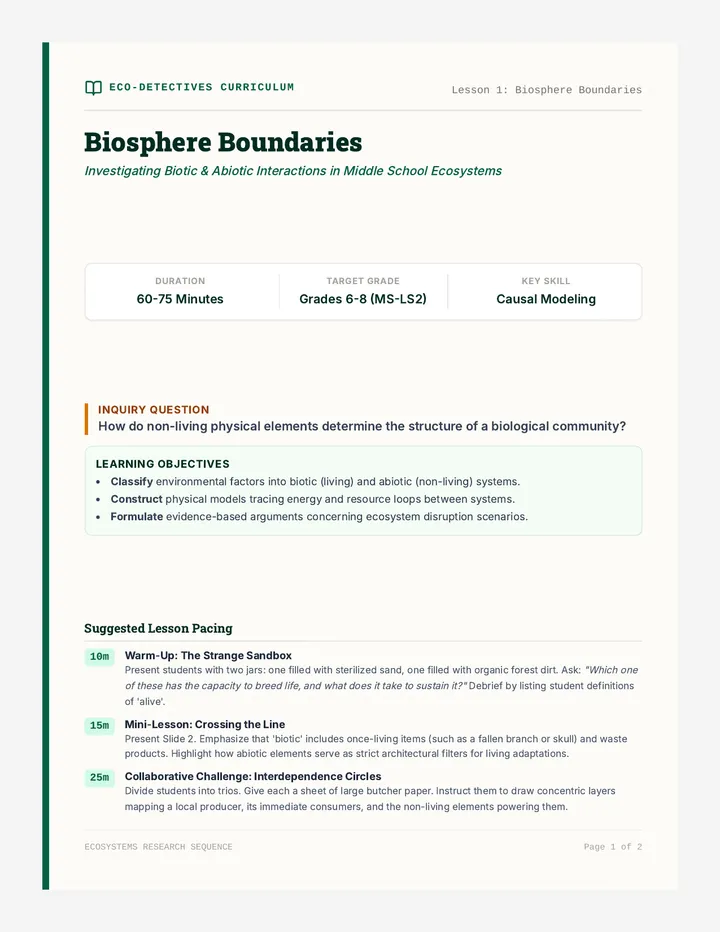
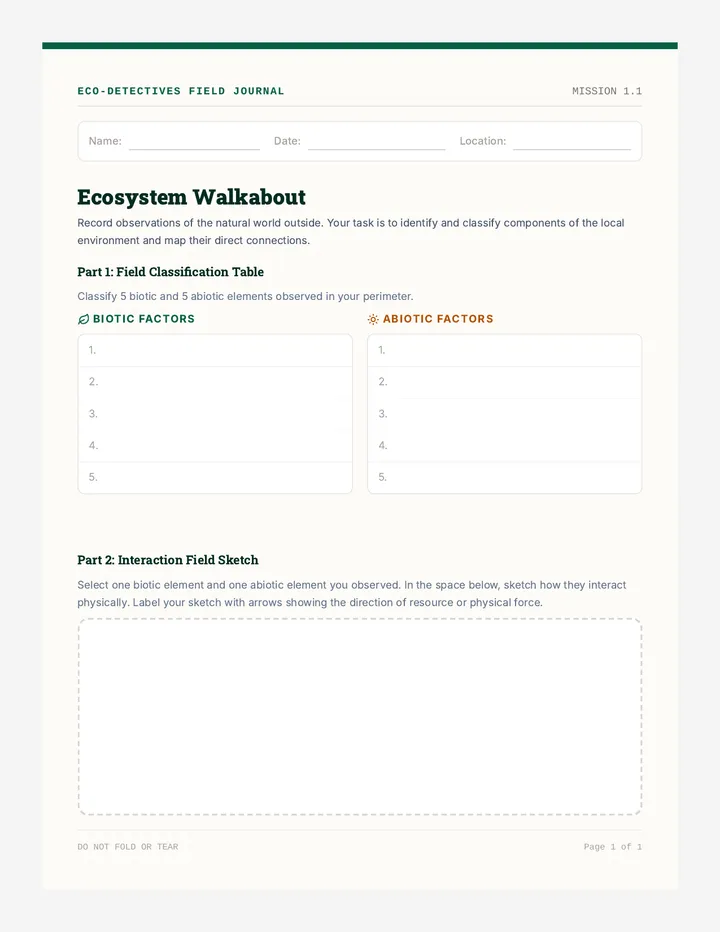
A middle school scientific inquiry sequence where students investigate abiotic and biotic components, trace trophic energy pyramids, and build critical media literacy by evaluating ecological research sources.
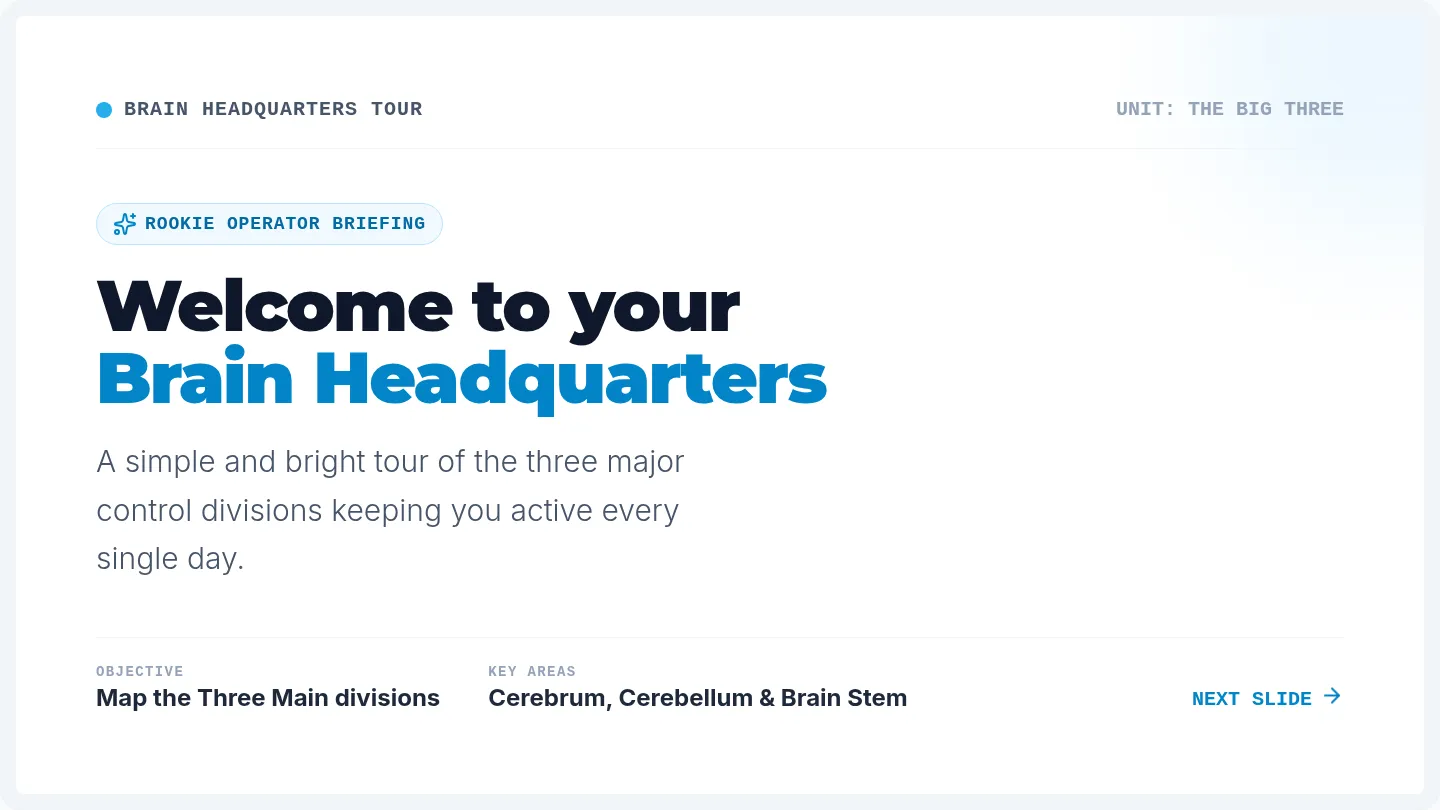
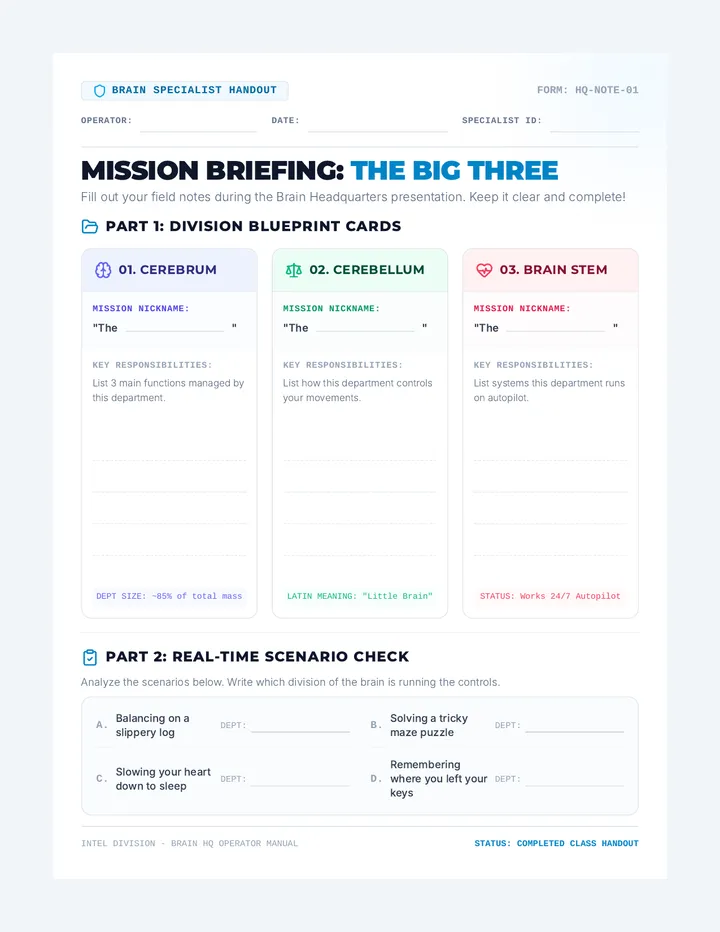
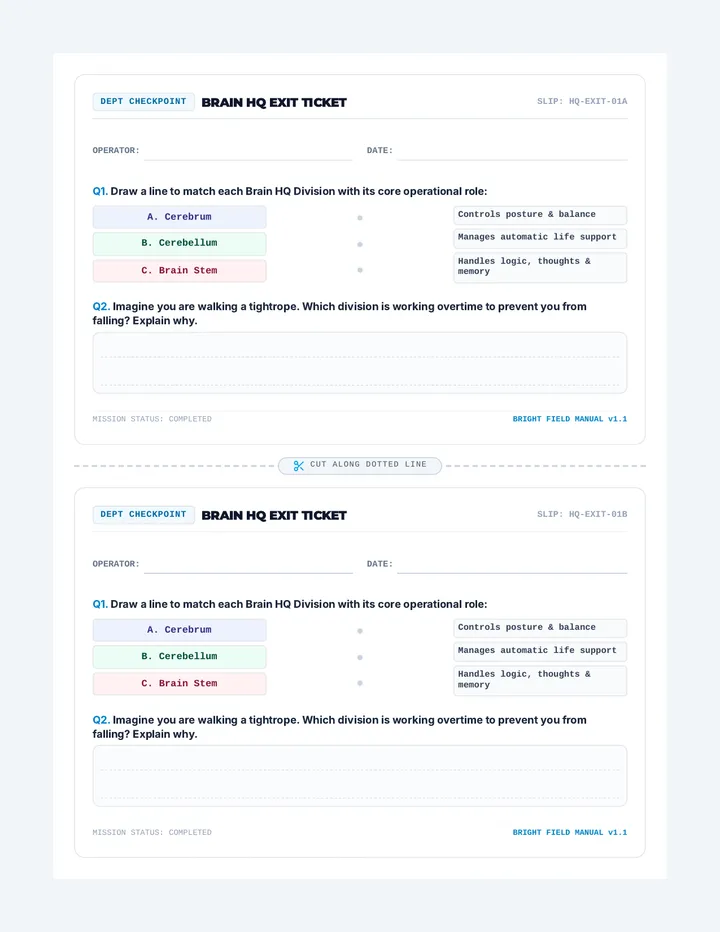
An interactive lesson introducing elementary or middle school students to the three major divisions of the brain: the Cerebrum, Cerebellum, and Brain Stem.
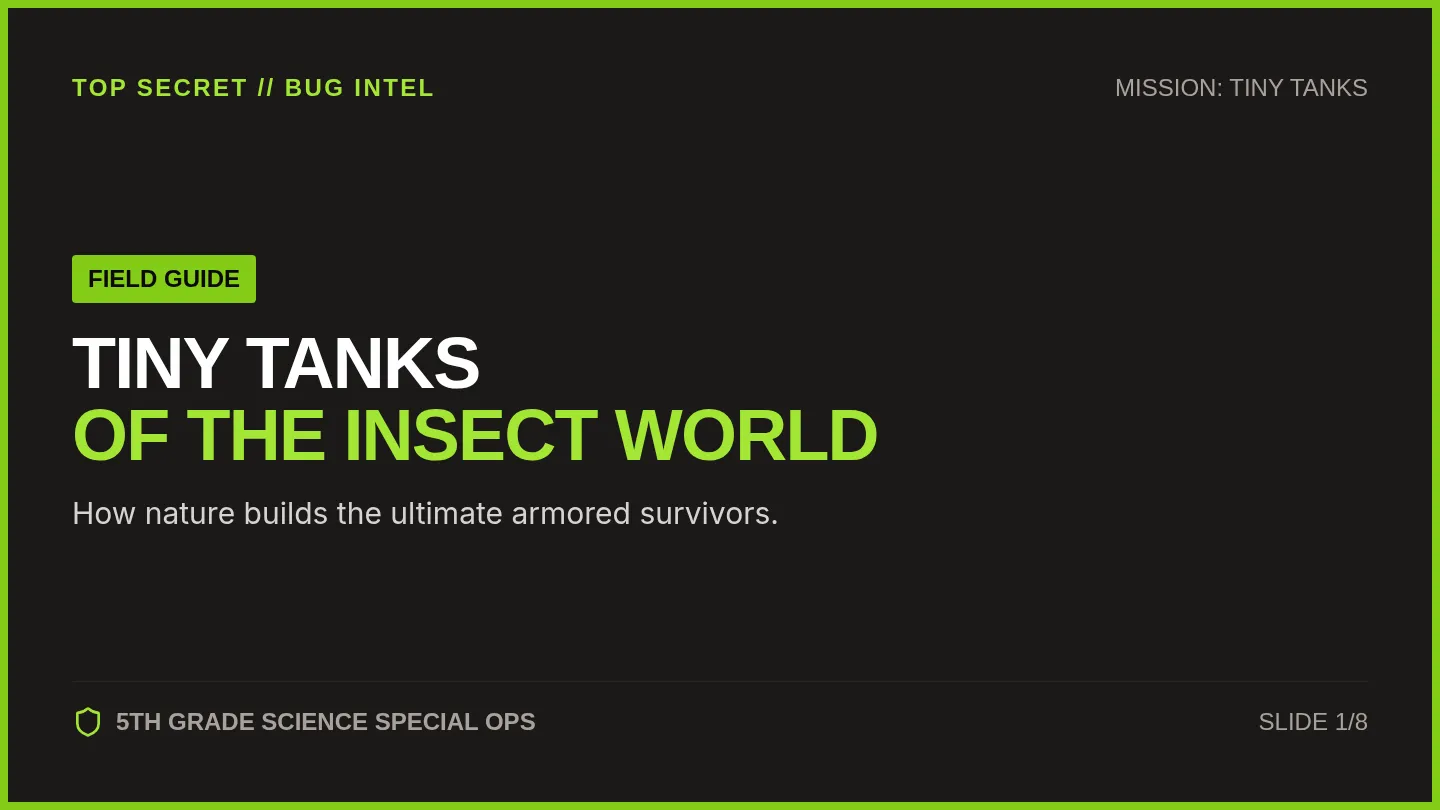
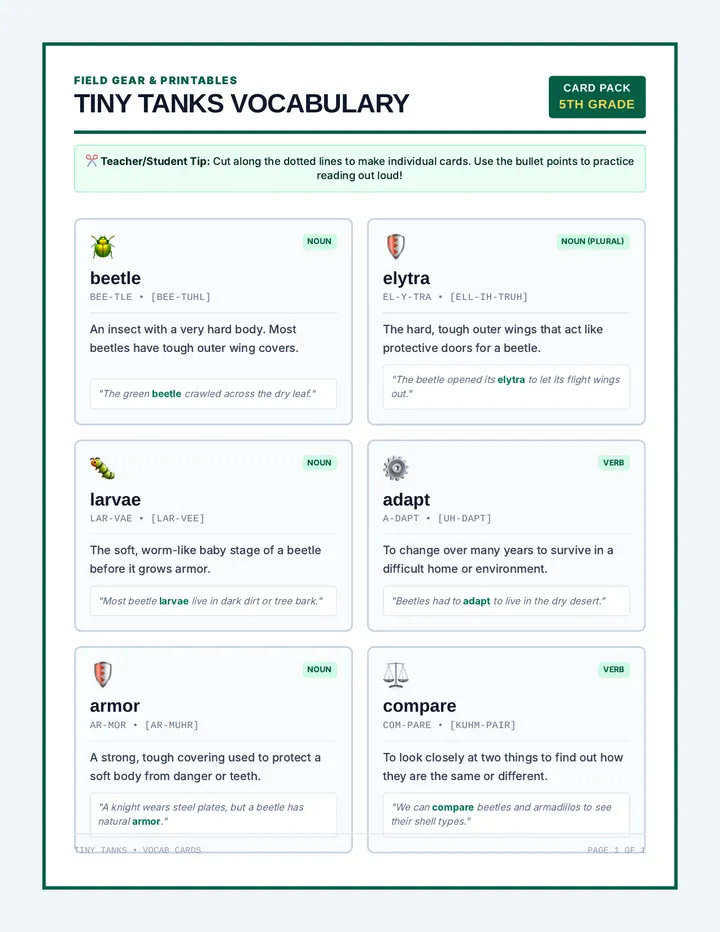
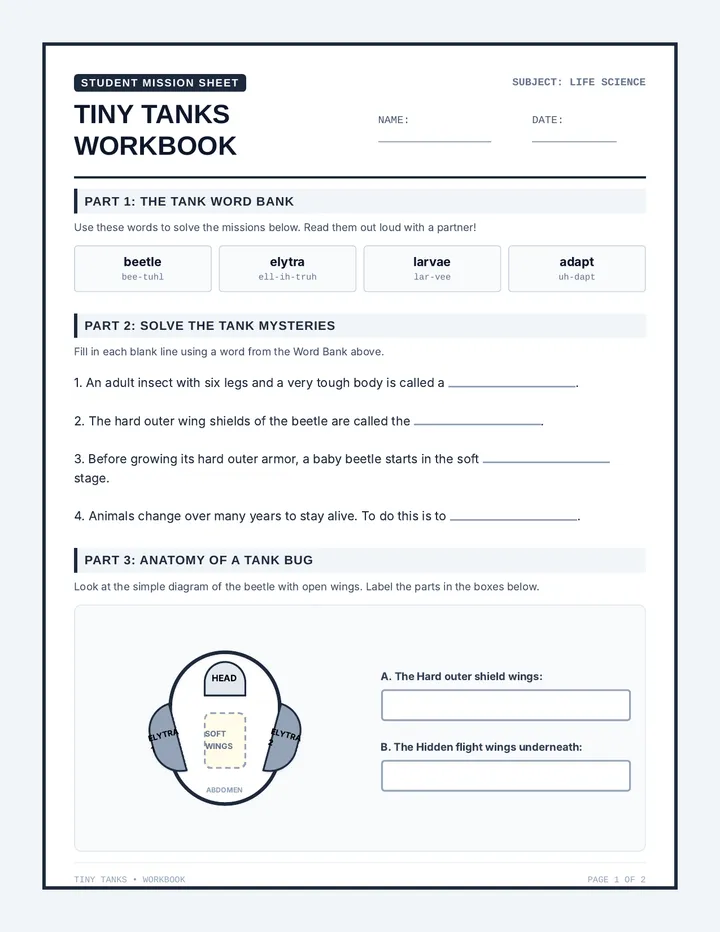
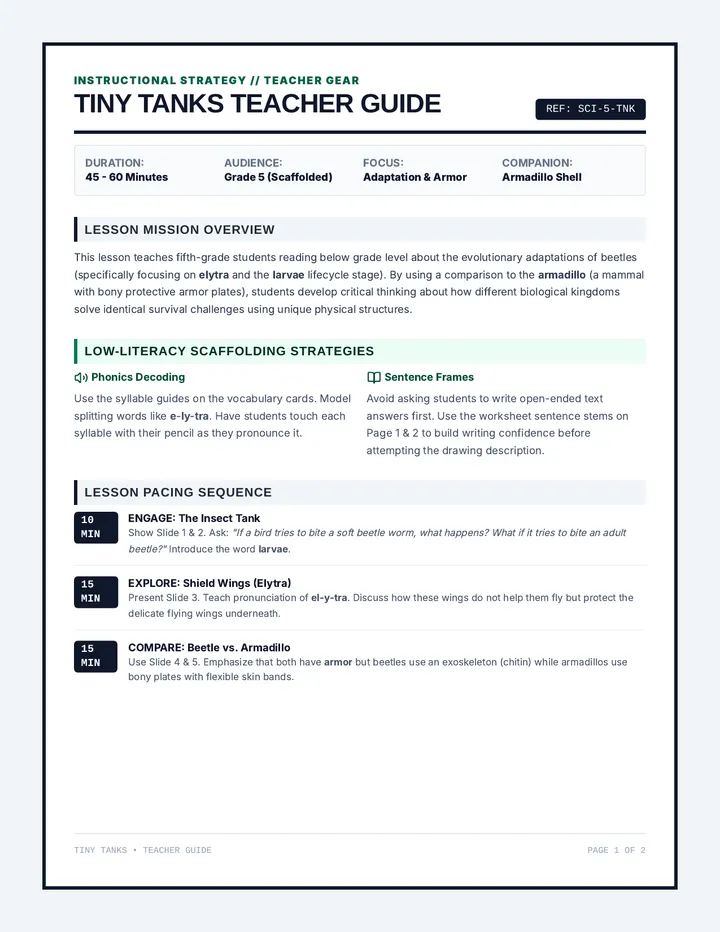
An engaging, highly visual science lesson exploring beetles as the armored tanks of the insect world, designed specifically for fifth-grade students reading below grade level. Students learn about elytra, beetle adaptation, and compare insect armor to that of the armadillo through scaffolded activities.