A comprehensive 40-minute lesson on the safe and effective operation of the Milwaukee M18 FUEL HOLE HAWG Right Angle Drill, focusing on hole saw assembly and cutting 2-inch holes in structural studs.
A lesson exploring the fundamental concepts of natural selection, evolution, and reproduction through interactive vocabulary practice and visual aids.
An introductory lesson on common electrical circuit symbols, their functions, and how they are represented in schematic diagrams.
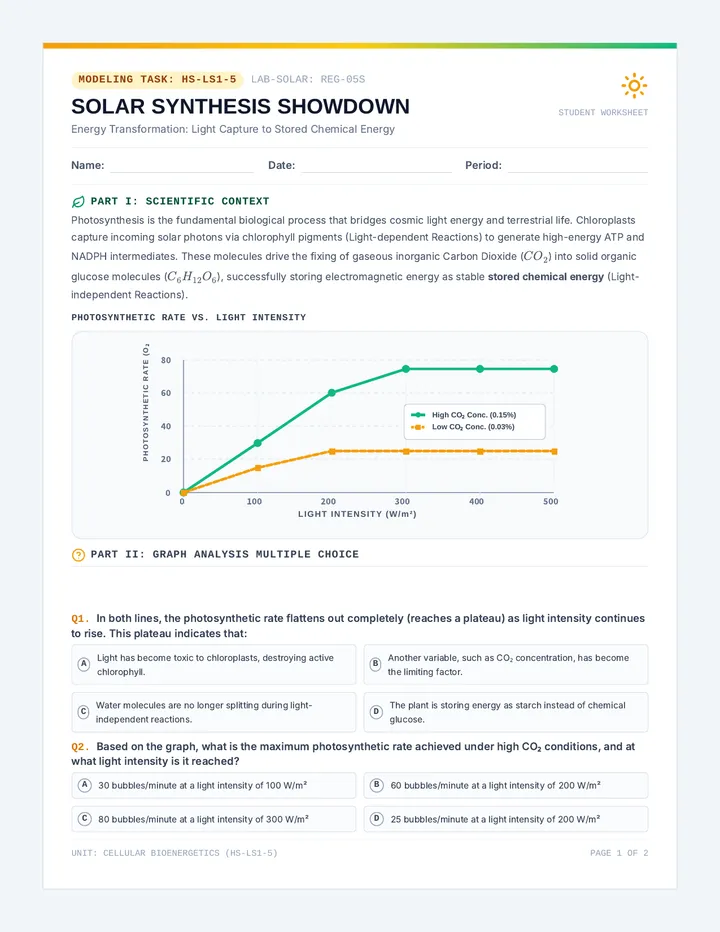
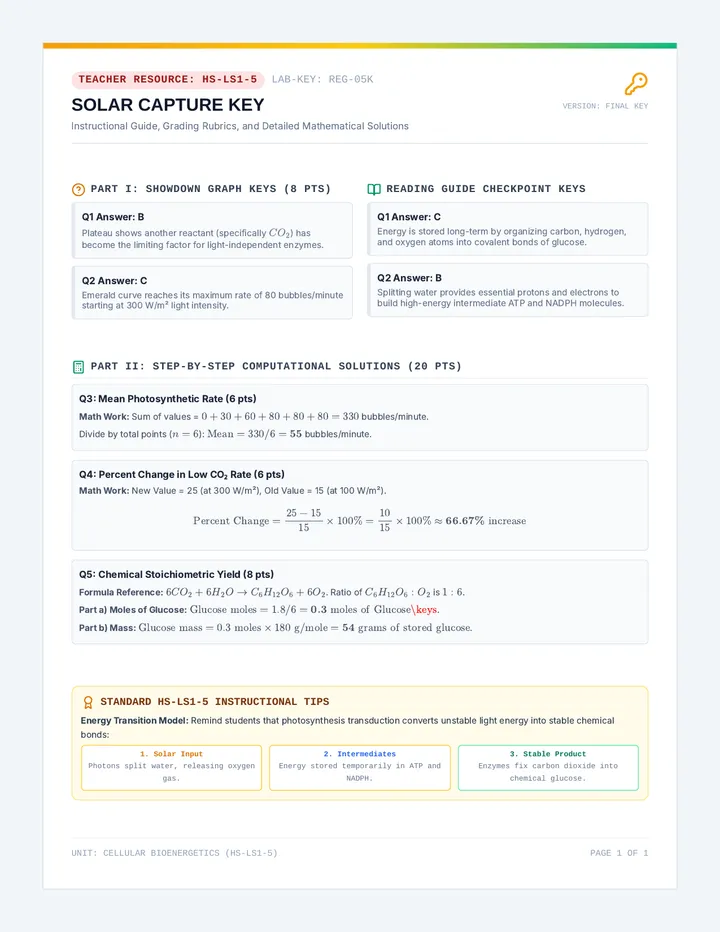
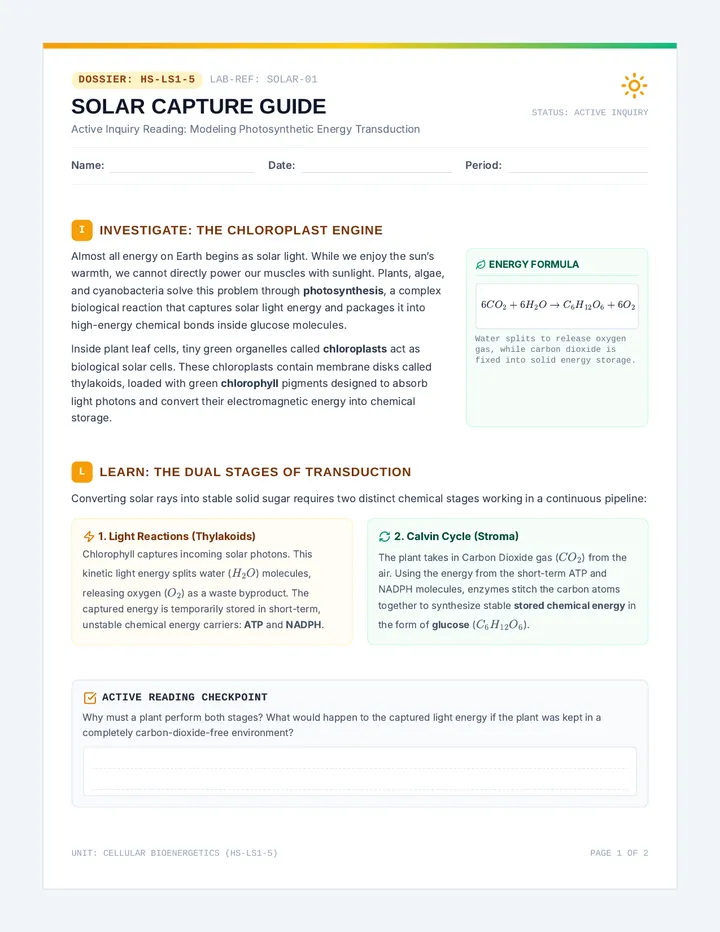
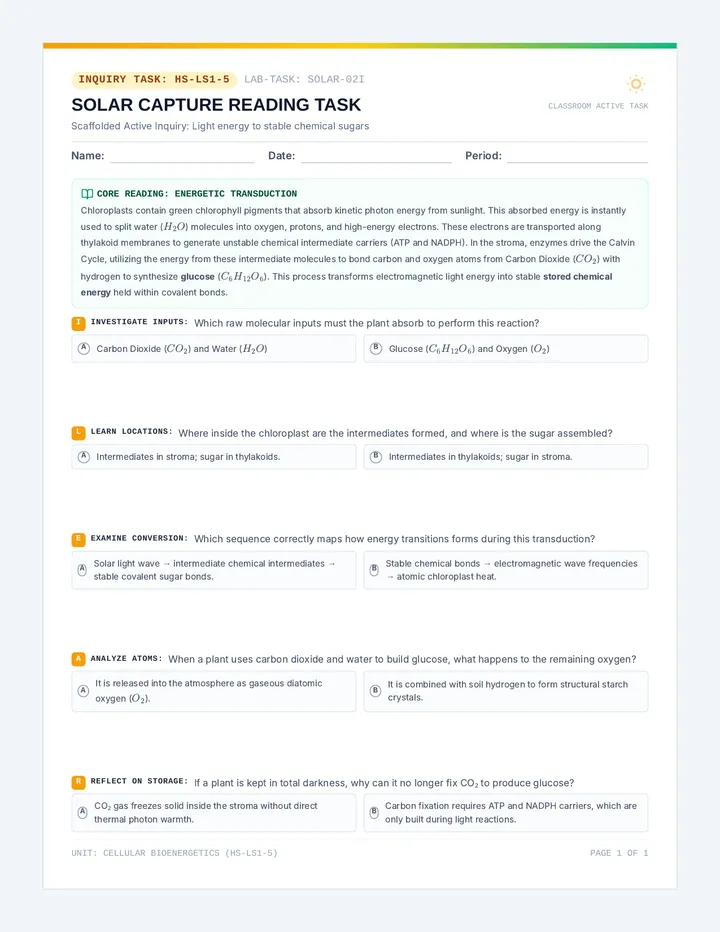
An introductory lesson on photosynthesis and cellular respiration, focusing on the flow of energy and the exchange of gases in plants. Students will identify key inputs and outputs and compare the two vital processes.
A focused practice session for calculating specific heat, heat energy, and temperature changes using the q=mc\Delta T formula.
The unit culminates in students finalizing their monster designs and creating a scientific presentation that explains the inheritance patterns of their creature.
Students explore more complex inheritance patterns, including incomplete dominance and codominance, to add unique variations and 'rare' traits to their monster designs.
Students learn to use Punnett squares as a tool for predicting the probability of traits in offspring, preparing them to calculate the genetics of their monster's lineage.
Students are introduced to the Monster Lab project and learn the fundamental concepts of genotypes, phenotypes, alleles, and traits through a 'Monster Trait' inventory.
A comprehensive lesson plan focusing on the regulatory requirements for sleeving plumbing pipes through walls, floors, and concrete as per CMR 248 Section 10.
A deep dive into DC circuit analysis, reviewing fundamental laws and practicing complex problem-solving with Ohm's Law and Kirchhoff's Rules.
Un test de connaissances rapide de 10 minutes sur la cinématique (MRU, MRUV, coordonnées polaires) pour le niveau L1, comprenant l'énoncé et son corrigé détaillé.
A tiered lesson on modeling genetic inheritance using Punnett squares, covering allele pairs, random assortment, and probability calculations for middle school students.
A 9th-grade conceptual physics lesson focusing on the relationship between mass, volume, and density, specifically applied to geological samples like basalt and granite. Students will learn to calculate density, understand its physical significance through analogies, and evaluate lab accuracy using percent error.
A lesson exploring the environmental consequences of industrialization and deforestation through the lens of 'The Lorax', focusing on ecosystem services and biodiversity loss.
A dedicated hub for educators featuring a K-12 curriculum scope, professional development guides, and quick-reference AI cheat sheets.
High school students analyze the impact of generative AI on careers and society, mastering advanced prompt engineering and debating complex ethical dilemmas.
Middle schoolers dive into the mechanics of neural networks and the ethical implications of AI in daily life, focusing on digital citizenship and algorithmic fairness.
Middle elementary students investigate how training data shapes AI behavior, identifying bias in simple systems and experimenting with basic prompt engineering.
Students in grades 1-2 explore how machines learn to recognize patterns and assist humans, introducing basic classification and the idea of helpful technology.
Introduces Kindergarteners to the concept of AI as a 'thinking' tool that follows instructions and learns from examples, focusing on the difference between robots and AI.
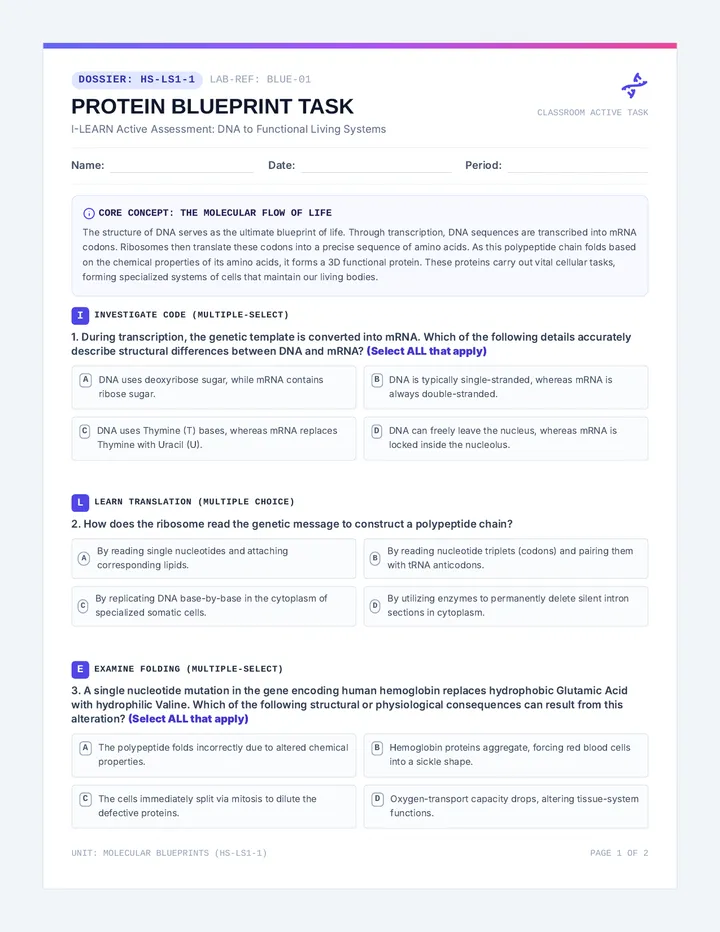
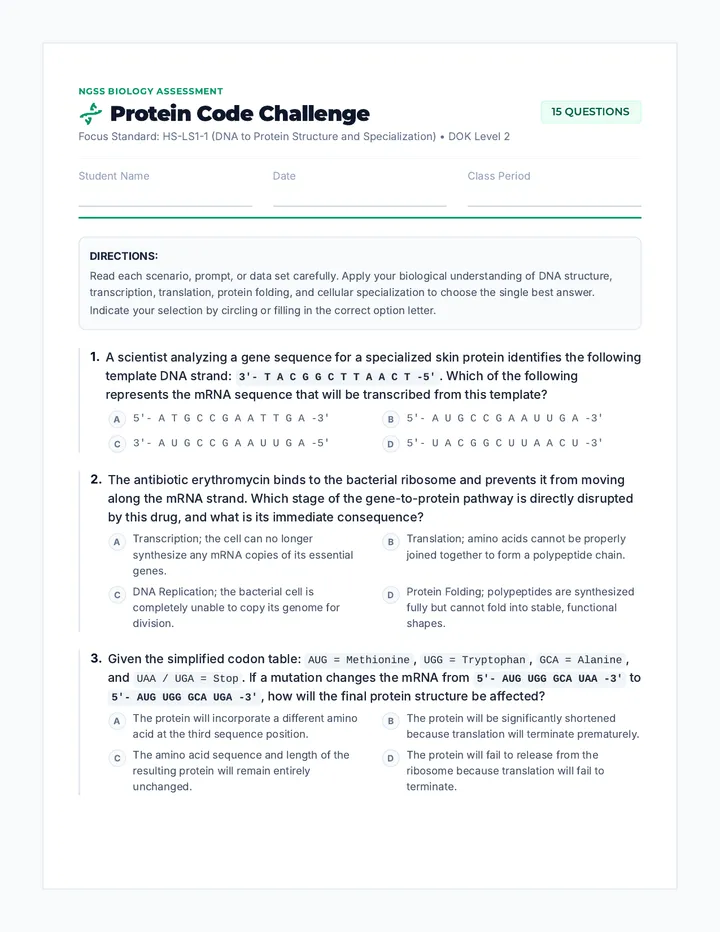
A comprehensive Biology lesson covering the cell cycle, DNA replication, protein synthesis, and Mendelian/non-Mendelian genetics, specifically designed for STAAR EOC preparation. Students explore the flow of genetic information and the patterns of inheritance through model-based reasoning and problem-solving.
A comprehensive EOC prep lesson covering evolution, natural selection, taxonomy, and ecological systems through a case-study lens. Students analyze evidence of common ancestry and model energy flow and nutrient cycling in ecosystems.
A hands-on laboratory experience where students use microscopes to observe and document biological and physical specimens at varying magnifications.
A high-school level exploration of password security, focusing on the mathematical concepts of entropy and why length often beats complexity in real-world defense.
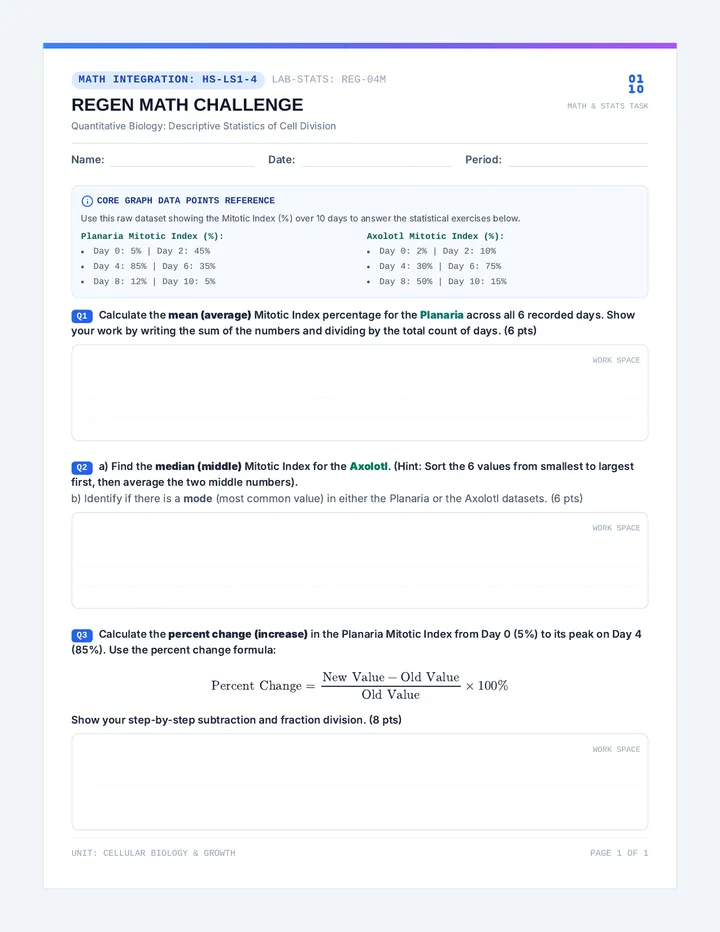
A focused lesson on the mechanics of the cell cycle and DNA replication, emphasizing timing, key stages like S-phase and mitosis, and the process of cytokinesis.
Students will trace the evolution of the atomic model through key scientists and experiments, culminating in an understanding of modern atomic structure and vocabulary.
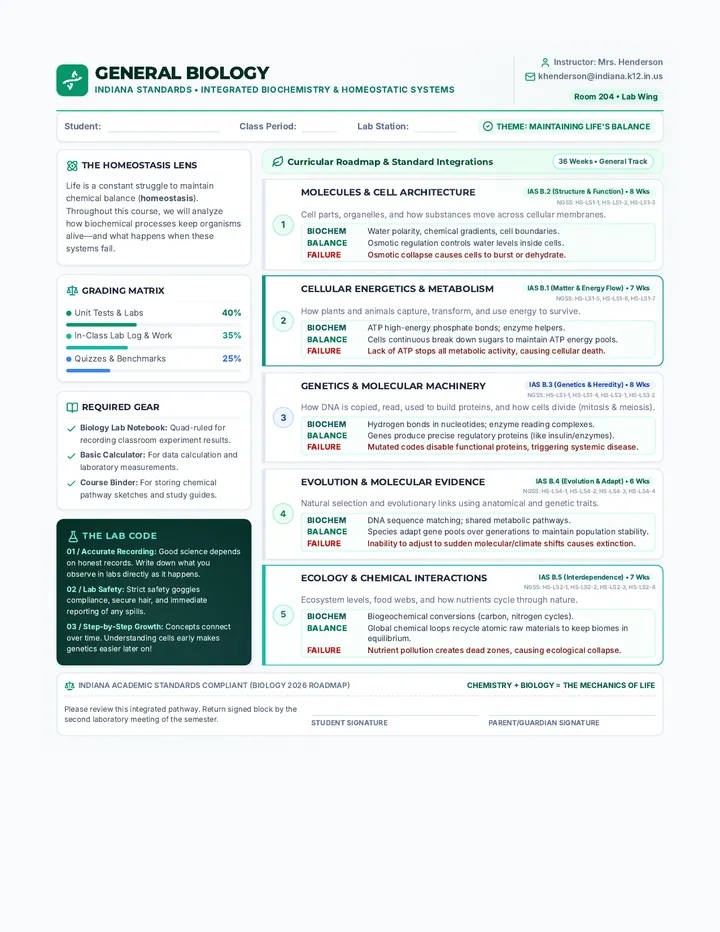
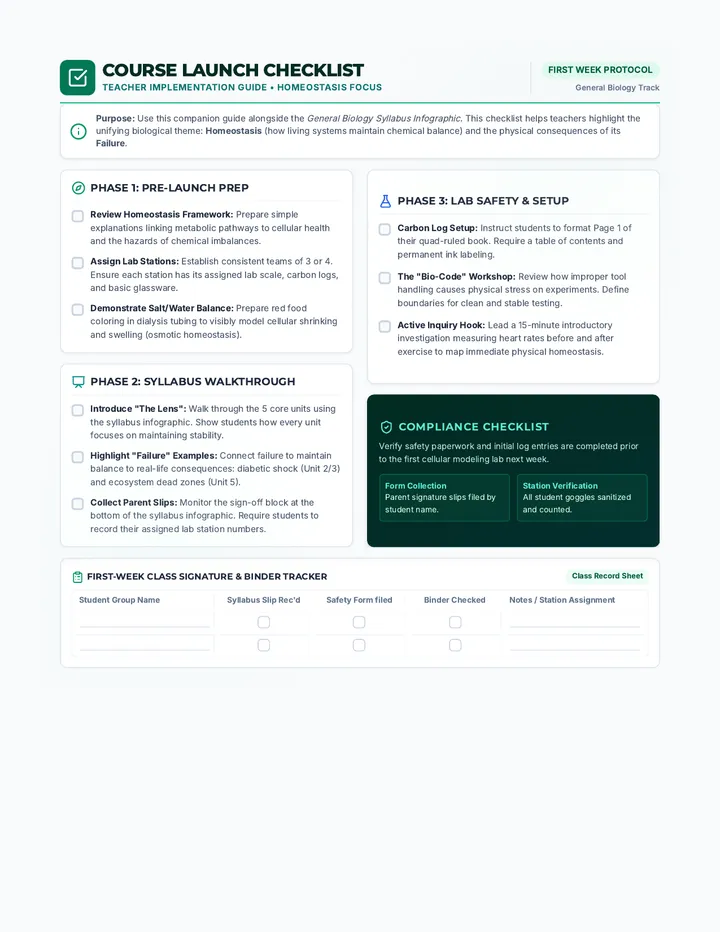
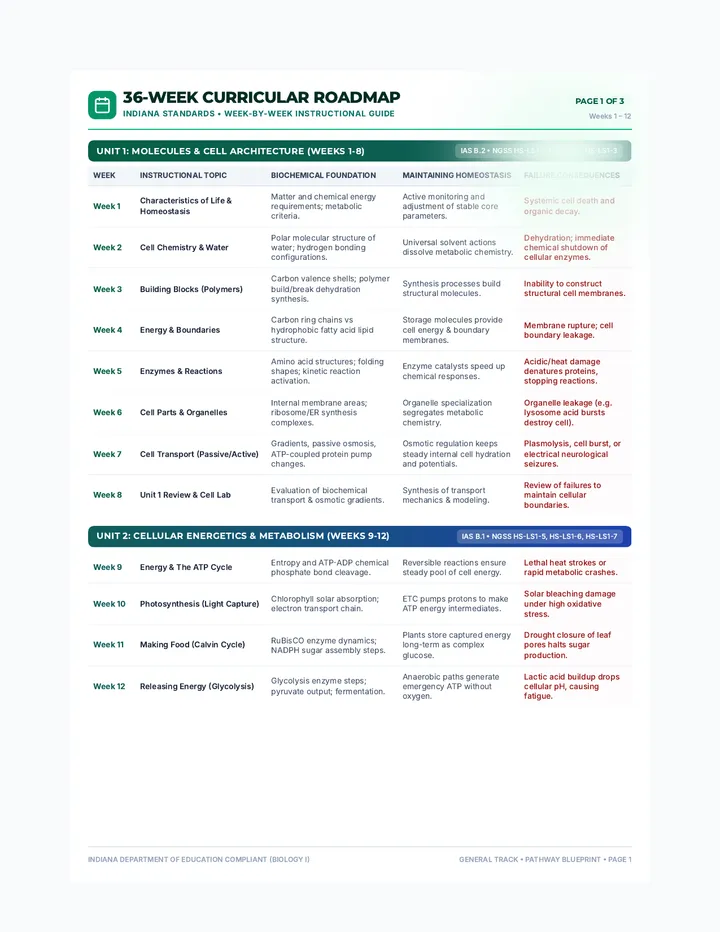
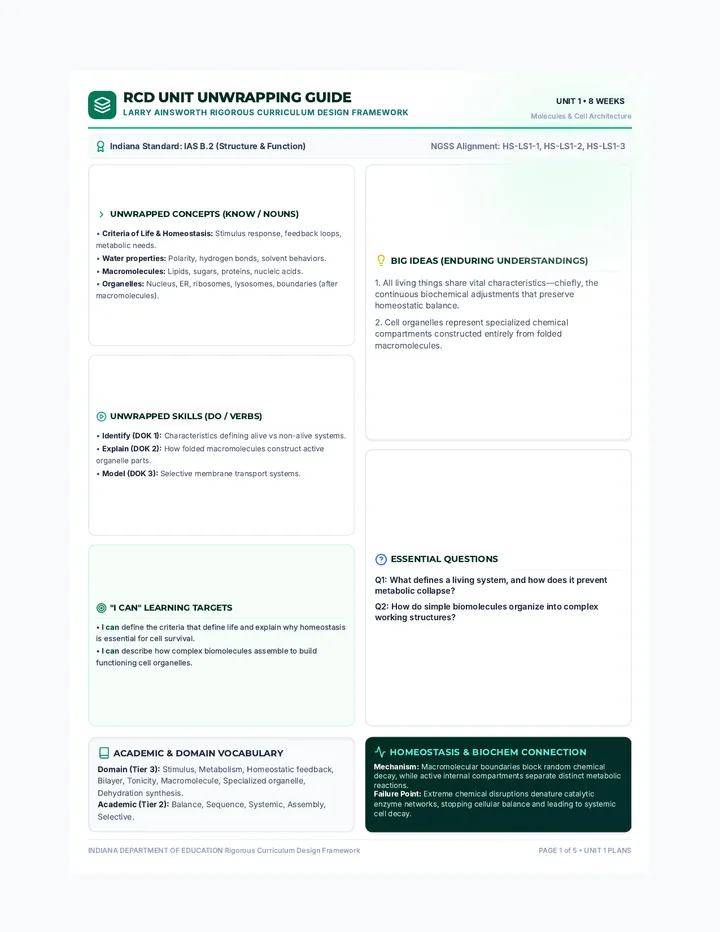
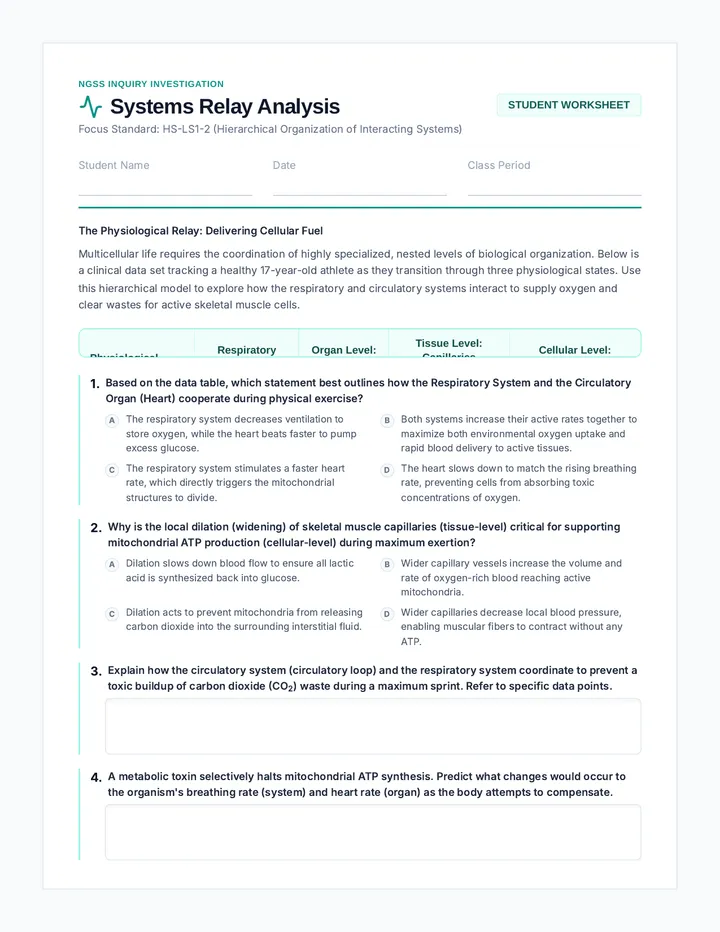
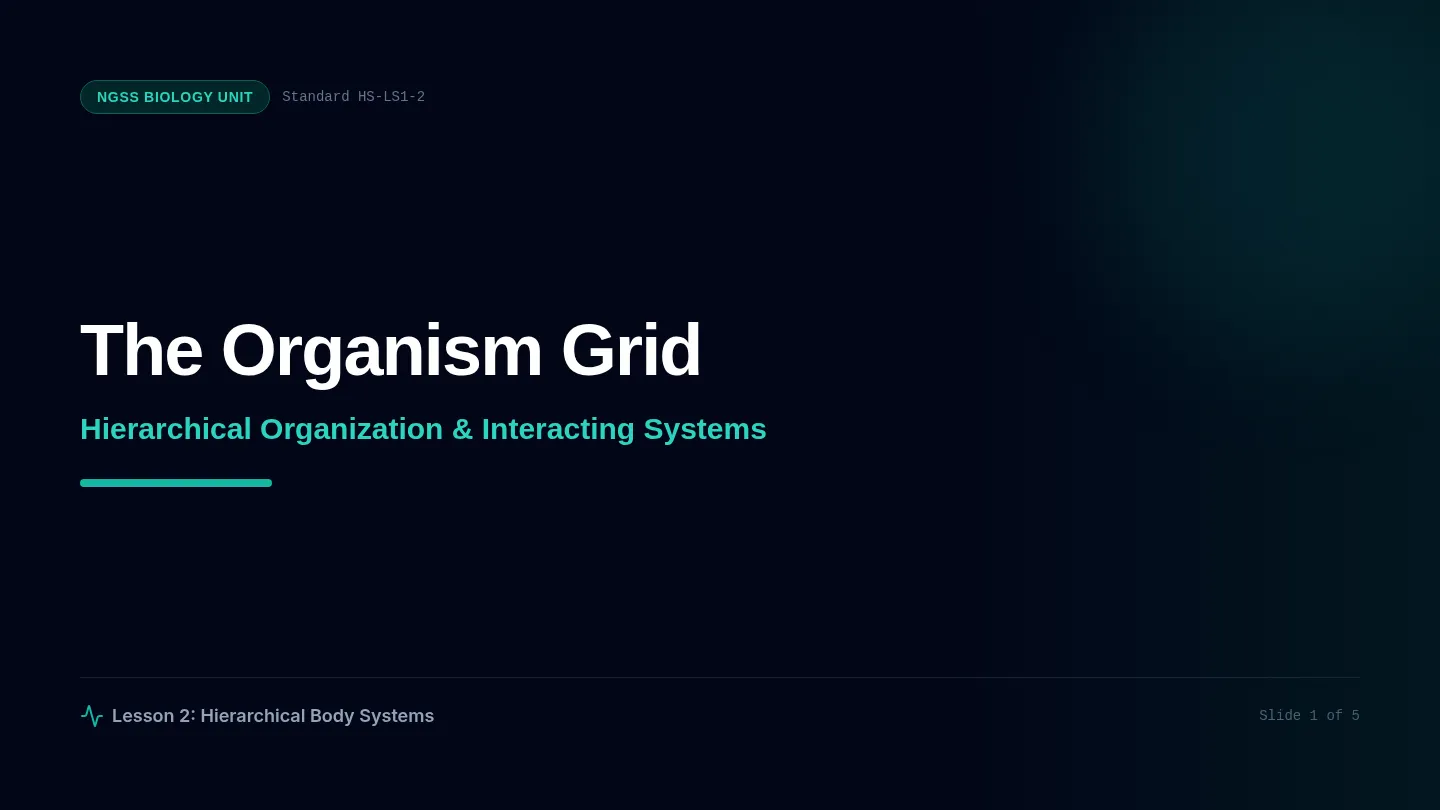
A lesson focused on the foundational building blocks of life (macromolecules) and how body systems work together to maintain a stable internal environment (homeostasis).
A lesson exploring the delicate balance of ecosystems, focusing on how biodiversity sustains life and how human activities like deforestation, pollution, and conservation efforts shape our planet's future.
A high-energy, activity-dense lesson focused on Dalton's Law of Partial Pressures, mole fractions, and collecting gas over water, utilizing the POGIL framework to transition from conceptual modeling to mathematical mastery.