Skeletal System Poster SYSTEM 01 HUMAN ANATOMY BLUEPRINTS
Skeletal System
"The Framework of Life" — Support, Protection, and Movement
SCIENTIFIC DIAGRAM // REF: SK-EL-01
CRANIUM (SKULL) CLAVICLE STERNUM RIBS (TRUE/FALSE) VERTEBRAE (SPINE) HUMERUS RADIUS / ULNA PELVIC GIRDLE FEMUR (THIGH BONE) PATELLA (KNEECAP) TIBIA / FIBULA
SCALE: 1:12 // SYSTEM PARTS Labeled // EST. COUNT: 206 BONES ANATOMICAL SPECIFICATIONS // STANDARD MEDICAL REFERENCE
Primary Functions
Structural Framework: Provides the rigid internal scaffolding that shapes and supports the entire body.Vital Protection: Shielding delicate internal organs (e.g., cranium protects brain, ribs protect heart/lungs).Movement Leverage: Works with muscles as a system of levers and pivot joints to enable mobility.Blood Cell Production: Red and white blood cells are manufactured deep inside bones within the red bone marrow.
Key Components
01
Compact & Spongy Bone
Compact bone is dense and outer-protective; spongy bone is light, porous, and houses vital marrow.
02
Cartilage
A smooth, flexible connective tissue that cushions joints and prevents bones from grinding together.
03
Ligaments & Tendons
Ligaments connect bone-to-bone (stabilizing joints). Tendons connect muscle-to-bone (driving movement).
Did You Know?
You were born with around 300 soft bones. Over time, many of these fuse together. By the time you reach adulthood, you have exactly 206 hard, permanent bones!
HUMAN BODY SYSTEMS BLUEPRINT SERIES // POSTER 01 © 2026 LAB SPECIFICATIONS
Muscular System Poster SYSTEM 02 HUMAN ANATOMY BLUEPRINTS
Muscular System
"The Engine of Motion" — Force, Posture, and Vital Heat
SCIENTIFIC DIAGRAM // REF: MS-AN-02
TEMPORALIS STERNOCLEIDOMASTOID DELTOID PECTORALIS MAJOR BICEPS BRACHII RECTUS ABDOMINIS EXTERNAL OBLIQUE QUADRICEPS FEMORIS GASTROCNEMIUS
SCALE: 1:10 // SYSTEM PARTS Labeled // EST. COUNT: >600 MUSCLES ANATOMICAL SPECIFICATIONS // STANDARD MEDICAL REFERENCE
Primary Functions
Active Movement: Contracts and pulls on bones to allow external mobility like running, writing, and speaking.Heat Generation: Shivering and normal muscle activities produce thermal energy to keep body temperature stable.Posture Maintenance: Keeps the body upright and aligned against the constant force of gravity.Internal Transport: Moves vital substances (blood, food, fluid) through internal organs and vessels.
The Three Muscle Types
01
Skeletal Muscle
Voluntary muscles attached to bones. Striated structure built for powerful, conscious movements.
02
Cardiac Muscle
Involuntary muscle found only in the heart. Highly resistant to fatigue; pumps blood continuously.
03
Smooth Muscle
Involuntary muscles lining internal organs (e.g., stomach, blood vessels) that regulate fluid/digestion.
Did You Know?
The strongest muscle in the human body relative to its size is the masseter (jaw muscle). It can close your teeth with a force of up to 200 pounds of pressure!
HUMAN BODY SYSTEMS BLUEPRINT SERIES // POSTER 02 © 2026 LAB SPECIFICATIONS
Cardiovascular System Poster SYSTEM 03 HUMAN ANATOMY BLUEPRINTS
Cardiovascular
"The Highway of Life" — Oxygenation, Circulation, and Transport
SCIENTIFIC DIAGRAM // REF: CV-HT-03
SUPERIOR VENA CAVA AORTA ARCH PULMONARY TRUNK RIGHT ATRIUM PULMONARY VEINS LEFT ATRIUM RIGHT VENTRICLE LEFT VENTRICLE CORONARY ARTERY MYOCARDIUM (MUSCLE) INFERIOR VENA CAVA APEX
SCALE: 1:1 // RED = OXYGENATED // BLUE = DEOXYGENATED ANATOMICAL SPECIFICATIONS // STANDARD MEDICAL REFERENCE
Primary Functions
Oxygen Delivery: Picks up inhaled oxygen from lungs and delivers it directly to working tissue cells.Nutrient Transport: Carries absorbed nutrients (glucose, amino acids) from digestion around the body.Waste Removal: Transports carbon dioxide to lungs and metabolic wastes to kidneys for filtration.Thermal Control: Shunts blood closer to skin to release excess heat, or internally to conserve warmth.
Key Components
01
The Heart
A dual-action muscular pump with four chambers: two atria (receive blood) and two ventricles (pump blood).
02
Arteries vs. Veins
Arteries carry pressurized oxygen-rich blood *away* from heart. Veins return deoxygenated blood *back* to heart.
03
Capillaries
Microscopic, single-cell-thick vessels where the actual exchange of gases, nutrients, and waste takes place.
Did You Know?
If you stretched out all the blood vessels in a single adult human body end-to-end, they would extend over 60,000 miles long! That is long enough to wrap around Earth twice!
HUMAN BODY SYSTEMS BLUEPRINT SERIES // POSTER 03 © 2026 LAB SPECIFICATIONS
Respiratory System Poster SYSTEM 04 HUMAN ANATOMY BLUEPRINTS
Respiratory System
"The Breath of Life" — Oxygenation and Carbon Dioxide Removal
SCIENTIFIC DIAGRAM // REF: RS-LU-04
NASAL CAVITY PHARYNX / EPIGLOTTIS LARYNX (VOICE BOX) TRACHEA (WINDPIPE) PRIMARY BRONCHUS LEFT LUNG (2 LOBES) CARDIAC NOTCH BRONCHIOLES RIGHT LUNG (3 LOBES) ALVEOLI (AIR SACS) DIAPHRAGM (SKELETAL MUSCLE)
ATMOSPHERE PRESSURE INTAKE // EXHALATION VELOCITY ANATOMICAL SPECIFICATIONS // STANDARD MEDICAL REFERENCE
Primary Functions
External Gas Exchange: Absorbs oxygen gas from the air we inhale and transfers it directly into the bloodstream.Carbon Dioxide Purging: Releases waste carbon dioxide out of the body during exhalation.Vocal Sound Waves: Passes moving air upward over the vocal cords, allowing speech, song, and sound.Acid-Base Balancing: Rapidly adjusts breathing speeds to maintain ideal pH levels in body tissues.
Key Components
01
The Trachea
The main windpipe reinforced with strong rings of cartilage to keep the airway permanently open.
02
The Alveoli
Millions of tiny, air sacs surrounded by capillaries where oxygen and CO₂ actually swap places.
03
The Diaphragm
A powerful dome-shaped muscle beneath the lungs. It contracts down to pull air in and relaxes up to push air out.
Did You Know?
Your lungs aren't equal in size! The left lung is slightly smaller than the right lung and has a small indent (the cardiac notch) to make physical room for your heart!
HUMAN BODY SYSTEMS BLUEPRINT SERIES // POSTER 04 © 2026 LAB SPECIFICATIONS
Digestive System Poster SYSTEM 05 HUMAN ANATOMY BLUEPRINTS
Digestive System
"The Energy Converter" — Fuel Processing, Absorption, and Disposal
SCIENTIFIC DIAGRAM // REF: DG-GI-05
MOUTH & TEETH SALIVARY GLANDS ESOPHAGUS LIVER (BILE SECRETION) STOMACH (J-SHAPE BAG) GALLBLADDER (BILE STORE) PANCREAS (ENZYMES) SMALL INTESTINE (ABSORPTION) LARGE INTESTINE (COLON) APPENDIX RECTUM // ANUS
PATHWAY TRANSIT TIME: ~24-72 HOURS // pH SCALE: 1.5 - 8.0 ANATOMICAL SPECIFICATIONS // STANDARD MEDICAL REFERENCE
Primary Functions
Mechanical Break-up: Physically grinds food down via chewing (mouth) and muscle churning (stomach).Chemical Breakdown: Floods food with strong acids and digestive enzymes to dissolve complex compounds.Nutrient Absorption: Pulls microscopic vitamins, minerals, water, and fats directly into the bloodstream.Solid Waste Packing: Reclaims remaining water from leftover fibers, consolidating dry material for removal.
Key Components
01
The Stomach
A muscular, expandable bag that holds food and mixes it with hydrochloric acid to form liquid 'chyme'.
02
The Small Intestine
A narrow, 20-foot-long tube. Lined with millions of microscopic, finger-like 'villi' to maximize absorption area.
03
Liver & Pancreas
Accessory organs: liver secretes bile to digest fat; pancreas releases enzymes and bicarbonate to neutralize acid.
Did You Know?
Your stomach does not digest itself because its walls are lined with a thick, protective layer of mucus. If this mucus barrier fails, stomach acid can create painful sores called ulcers!
HUMAN BODY SYSTEMS BLUEPRINT SERIES // POSTER 05 © 2026 LAB SPECIFICATIONS
Nervous System Poster SYSTEM 06 HUMAN ANATOMY BLUEPRINTS
Nervous System
"The Control Center" — Processing, Electrical Signaling, and Sensation
SCIENTIFIC DIAGRAM // REF: NV-BR-06
CEREBRUM (HEMISPHERES) CEREBELLUM (MOTOR CONTROL) BRAINSTEM (PONS/MEDULLA) SPINAL CORD (CNS TRAFFIC) SPINAL NERVES (31 PAIRS) CAUDA EQUINA (HORSETAIL) SCIATIC NERVE (PNS) PERIPHERAL BRANCHES
PROPAGATION SPEED: ~120 M/S // CENTRAL & PERIPHERAL PATHS ANATOMICAL SPECIFICATIONS // STANDARD MEDICAL REFERENCE
Primary Functions
Sensory Reception: Gathers mechanical, chemical, and thermal data from internal and external environments.Central Integration: Analyzes sensory data, compares it with memory, and decides the best biological response.Motor Control: Sends high-speed bio-electrical commands down to muscles and endocrine glands.Cognition & Emotion: Facilitates complex thinking, consciousness, personality, feelings, and memory storage.
Key Components
01
CNS (Brain & Spine)
The Central Nervous System. The brain interprets signals and issues commands, which travel down the spinal cord highway.
02
PNS (Peripheral Nerves)
The Peripheral Nervous System. Branching nerve lines that span throughout limbs and organs, transmitting data to and from the CNS.
03
Neurons (Nerve Cells)
Specialized signaling cells. They use electrical impulses and chemical transmitters to fire messages across gaps called synapses.
Did You Know?
Your brain generates enough electricity to power a low-wattage LED light bulb (around 12-25 watts) when you are fully awake! It houses roughly 86 billion neurons.
HUMAN BODY SYSTEMS BLUEPRINT SERIES // POSTER 06 © 2026 LAB SPECIFICATIONS
Endocrine System Poster SYSTEM 07 HUMAN ANATOMY BLUEPRINTS
Endocrine System
"The Chemical Regulator" — Hormonal Balancing, Growth, and Metabolism
SCIENTIFIC DIAGRAM // REF: ED-GL-07
PINEAL GLAND (MELATONIN) PITUITARY GLAND (MASTER) THYROID GLAND (METABOLISM) PARATHYROID GLANDS (CALCIUM) THYMUS GLAND (IMMUNE CELLS) ADRENAL GLANDS (CORTISOL) PANCREAS (INSULIN/GLUCAGON) OVARIES (ESTROGEN/PROG) TESTES (TESTOSTERONE)
HORMONE SPREAD: BLOOD TRANSPORT // TARGET TISSUE SPECIFIC ANATOMICAL SPECIFICATIONS // STANDARD MEDICAL REFERENCE
Primary Functions
Chemical Messaging: Secretes hormones directly into blood to trigger and coordinate biological activities.Homeostasis Maintenance: Adjusts insulin, glucagon, and thyroid hormones to balance sugar and body fluids.Growth & Maturation: Dictates skeletal growth speeds and physical development phases over time.Metabolism Throttle: Manages how quickly cells burn calories and extract chemical energy from food.
Key Components
01
The Pituitary Gland
The 'Master Gland' at brain-base that releases growth hormone and coordinates downstream glands.
02
The Thyroid
A butterfly-shaped neck gland that dictates overall body metabolism rate via thyroxine.
03
Adrenal Glands
Sit atop the kidneys; produce adrenaline (fight-or-flight trigger) and cortisol to manage emergency stresses.
Did You Know?
Hormones are extremely potent! It takes just a microscopic splash (equivalent to one single teaspoon of liquid in an entire Olympic-size swimming pool) to regulate your body's growth!
HUMAN BODY SYSTEMS BLUEPRINT SERIES // POSTER 07 © 2026 LAB SPECIFICATIONS
Lymphatic Immune System Poster SYSTEM 08 HUMAN ANATOMY BLUEPRINTS
Lymphatic & Immune
"The Defense Shield" — Pathogen Fighting, Filtration, and Fluid Balancing
SCIENTIFIC DIAGRAM // REF: LY-IM-08
TONSILS CERVICAL NODES (NECK) THYMUS GLAND AXILLARY NODES (ARMPIT) SPLEEN THORACIC DUCT LYMPH NODE STRUCTURE INGUINAL NODES (GROIN) POPLITEAL NODES (KNEE)
LYMPH RETURN RATE: ~3 L/DAY // FILTER HOUSING CAP: MILLIONS ANATOMICAL SPECIFICATIONS // STANDARD MEDICAL REFERENCE
Primary Functions
Pathogen Neutralization: Active immune cells detect, hunt down, and neutralize invading viruses and bacteria.Fluid Balance: Reclaims lost fluids leaked from blood vessels and returns it back to the cardiovascular loop.Biological Filtering: Swarms of nodes act as physical filters, trapping toxic particles and cellular wastes.Dietary Fat Transport: Absorbs heavy lipids and fat-soluble vitamins from digestive villi into special vessels.
Key Components
01
Lymph Nodes & Lymph
Vessels carry clear 'lymph' fluid. Bean-sized nodes along the routes act as combat staging centers filled with lymphocytes.
02
White Blood Cells
The cellular army: Macrophages eat debris, T-cells kill infected cells, and B-cells secrete targeted antibodies.
03
The Spleen
A fist-sized organ that filters blood, recycling expired red cells and storing a reserve force of defensive white cells.
Did You Know?
Your lymph system has no heart pump of its own! The clear fluid relies purely on your physical skeletal muscle contractions during movement to squeeze it along!
HUMAN BODY SYSTEMS BLUEPRINT SERIES // POSTER 08 © 2026 LAB SPECIFICATIONS
Urinary Excretory System Poster SYSTEM 09 HUMAN ANATOMY BLUEPRINTS
Urinary System
"The Filtration Plant" — Blood Cleansing, Osmotic Balance, and Waste Removal
SCIENTIFIC DIAGRAM // REF: UR-KD-09
LEFT KIDNEY RENAL VESSELS (AORTA/CAVA) RENAL CORTEX (OUTER) MEDULLARY PYRAMIDS RENAL PELVIS (FUNNEL) NEPHRON (BOWMAN'S CAPSULE) URETERS (DRAINAGE TUBES) URINARY BLADDER URETHRA (EXIT SPINCTER)
DAILY FILTRATION VOL: ~150 QUARTS // NORMAL EXCRETION: ~1.5 QUARTS ANATOMICAL SPECIFICATIONS // STANDARD MEDICAL REFERENCE
Primary Functions
Metabolic Cleansing: Extracts toxic nitrogenous waste (urea, uric acid) directly from circulating blood.Water Regulation: Reabsorbs vital water or disposes excess fluids based on cellular hydration needs.Electrolyte Balancing: Adjusts key minerals like sodium, potassium, calcium, and phosphate.Blood Pressure Control: Produces specialized enzymes (e.g., renin) to chemically regulate blood vessel pressure.
Key Components
01
Kidneys & Nephrons
The primary organs. Each kidney contains over one million microscopic 'nephrons' that act as individual filtration units.
02
The Ureters & Bladder
Ureters are gravity-fed tubes that transport waste. The bladder is a hollow, stretchy muscle that temporarily stores urine.
03
The Urethra
The exit tube that releases urine from the body, guarded by involuntary and voluntary muscle sphincters.
Did You Know?
If one of your kidneys is removed or damaged, the other kidney can actually grow larger (up to twice its size) to single-handedly take over the entire workload of both!
HUMAN BODY SYSTEMS BLUEPRINT SERIES // POSTER 09 © 2026 LAB SPECIFICATIONS
Integumentary System Poster SYSTEM 10 HUMAN ANATOMY BLUEPRINTS
Integumentary
"The Protective Envelope" — Barrier Shield, Sensation, and Temperature Control
SCIENTIFIC DIAGRAM // REF: IN-SK-10
HAIR SHAFT EPIDERMIS (BARRIER) TACTILE CORPUSCLE (TOUCH) ARRECTOR PILI MUSCLE SEBACEOUS (OIL) GLAND DERMIS (FUNCTIONAL LAY) SWEAT GLAND (THERMOREG) LAMELLATED CORPUSCLE (PRESSURE) HYPODERMIS (FAT STORAGE)
SURFACE AREA: ~20 SQ FT // MASS: ~16% OF TOTAL BODY WEIGHT ANATOMICAL SPECIFICATIONS // STANDARD MEDICAL REFERENCE
Primary Functions
External Defense: Serves as a vital physical armor block, blocking pathogens, chemicals, and solar UV rays.Active Cooling: Dilates blood vessels and triggers sweat glands to release water, vaporizing body heat.Sensory Interface: Houses specialized nerve endings to feel pressure, pain, vibration, cold, and warmth.Vitamins & Sebum: Absorbs solar energy to synthesize Vitamin D and secretes protective oily sebum.
The Core Layers
01
The Epidermis
The tough, waterproof outer skin layer made of dead cells. Lacks internal blood vessels entirely.
02
The Dermis
The structural core. Houses collagen, blood vessels, sensory nerves, sweat glands, and active hair follicles.
03
The Hypodermis
The deepest, fatty subcutaneous layer. Insulates the core against heat loss and anchors skin to muscle below.
Did You Know?
Your skin is constantly shedding! You lose up to 30,000 dead cells every single minute. In fact, a massive percentage of the dust in normal household air is actually made of dead skin cells!
HUMAN BODY SYSTEMS BLUEPRINT SERIES // POSTER 10 © 2026 LAB SPECIFICATIONS
Reproductive System Poster SYSTEM 11 HUMAN ANATOMY BLUEPRINTS
Reproductive
"The Continuum of Life" — Genetic Transmission, Meiosis, and Hormones
SCIENTIFIC DIAGRAM // REF: RP-FZ-11
DNA HELIX (CHROMOSOMES) CORONA RADIATA (OUTER CELLS) ZONA PELLUCIDA (COAT) OVUM CYTOPLASM HAPLOID NUCLEUS (n=23) SPERM HEAD & ACROSOME MIDPIECE (MITOCHONDRIA) FLAGELLUM (TAIL) FERTILIZATION (ZYGOTE 2n=46)
CHROMOSOME COUNT: 23 n (GAMETE) -> 46 2n (ZYGOTE) ANATOMICAL SPECIFICATIONS // STANDARD MEDICAL REFERENCE
Primary Functions
Gamete Generation: Conducts meiosis cell division to produce specialized haploid sex cells containing half (23) of parent DNA.Lineage Perpetuation: Transmits inherited genetic characteristics down across successive generations.Hormone Secretion: Manufactures key sex hormones (estrogen, progesterone, testosterone) to manage maturity.Fetal Nurturing: Provides the highly protected, nutrient-rich womb environment required for a developing embryo.
Key Components
01
The Gametes
The sex cells: egg cells (ova) produced by female ovaries; sperm cells (spermatozoa) produced by male testes.
02
The Gonads
Ovaries & Testes. These dual-purpose organs produce gametes and secrete the body's primary sex steroids.
03
Mitosis & Meiosis
Mitosis is normal cell duplication. Meiosis is specialized cell division that slashes chromosome count in half.
Did You Know?
The human egg cell (ovum) is the largest single cell in the entire human body. It is roughly 100 microns wide, making it visible to the naked eye (about the size of a tiny pencil point)!
HUMAN BODY SYSTEMS BLUEPRINT SERIES // POSTER 11 © 2026 LAB SPECIFICATIONS
Body Blueprints Worksheet STUDENT LABORATORY RECORD
Body Blueprints Worksheet
Anatomy Identification, Organ Inventory, & System Integrations
NAME: ___________________
DATE: __________
PERIOD: ______
PART A
System Nickname & Function Matching
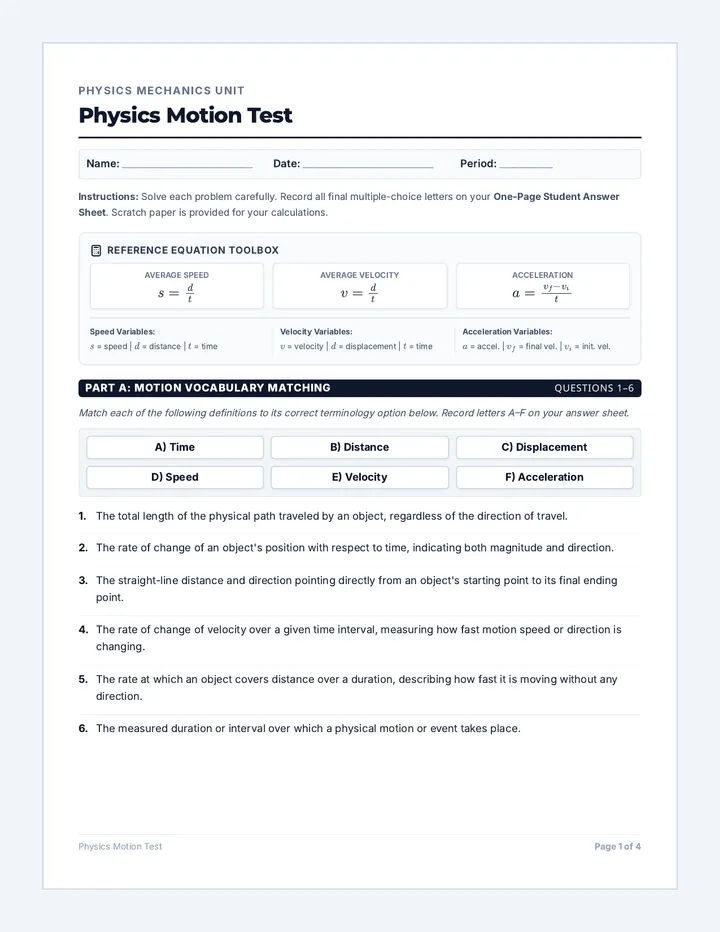
Match each of the 11 body systems listed on the left with its correct functional nickname by writing the corresponding letter (A-K) in the blank space provided.
1. _____ Skeletal System
2. _____ Muscular System
3. _____ Cardiovascular System
4. _____ Respiratory System
5. _____ Digestive System
6. _____ Nervous System
7. _____ Endocrine System
8. _____ Lymphatic & Immune
9. _____ Urinary System
10. ____ Integumentary System
11. ____ Reproductive System
A. "The Control Center" — Processing electrical cues & senses.
B. "The Continuum of Life" — Meiosis and gene transmission.
C. "The Filtration Plant" — Blood cleansing and fluid balancing.
D. "The Engine of Motion" — Voluntary force, posture, and heat.
E. "The Breath of Life" — Airway intake and CO₂ gas purging.
F. "The Chemical Regulator" — Glandular hormonal feedback loops.
G. "The Protective Envelope" — Sensory barrier skin cover.
H. "The Energy Converter" — Digestion and nutrient absorption.
I. "The Highway of Life" — Blood pumping and oxygen transport.
J. "The Framework of Life" — Protection, support, and bone marrow.
K. "The Defense Shield" — WBC antibody warfare and fluid filtration.
PART B
Anatomical Organ Inventory
Identify which body system each of the following structures belongs to. Write the system name in the space provided.
A. Alveoli
B. Spleen
C. Pituitary Gland
D. Sebaceous Gland
E. Nephron
F. Masseter
G. Villi (Intestine)
H. Sciatic Nerve
I. Aorta Arch
BODY SYSTEMS BLUEPRINTS WORKSHEET PAGE 1 OF 3
PART C
Anatomical Diagram Analysis (Blueprints 01 - 06)
For each scientific diagram slice below:
Body Blueprints Flashcards CLASSROOM STUDY KIT
Body Blueprints Flashcards
Instructions: Cut along solid black lines, fold along dashed lines, and glue to make 2-sided cards.
01
Skeletal System
NICKNAME: "The Framework of Life"
Primary Functions: Direct support, internal shielding, blood cell generation, and mineral storage.
Key Structures: Compact Bone, Spongy Bone, Cartilage, Ligaments, Tendons, Bone Marrow.
02
Muscular System
NICKNAME: "The Engine of Motion"
Primary Functions: Conscious motion, vital heart-pumping, heat generation, posture balance.
Key Structures: Skeletal Muscle, Cardiac Muscle, Smooth Muscle, Tendons, Myofibrils.
03
Cardiovascular
NICKNAME: "The Highway of Life"
Primary Functions: Internal transport of oxygen, blood sugar fuel, immune defense, and heat regulation.
Key Structures: Heart (Atria/Ventricles), Arteries, Veins, Capillaries, Red Blood Cells.
04
Respiratory System
NICKNAME: "The Breath of Life"
Primary Functions: Inhalation of oxygen gas, elimination of toxic carbon dioxide, blood pH regulation.
Key Structures: Lungs, Trachea, Larynx, Alveoli, Bronchi, Diaphragm.
HUMAN ANATOMY FLASHCARD SERIES PAGE 1 OF 3
CLASSROOM STUDY KIT
Body Blueprints Flashcards
Instructions: Cut along solid black lines, fold along dashed lines, and glue to make 2-sided cards.
05
Digestive System
NICKNAME: "The Energy Converter"
Primary Functions: Ingestion, mechanical and chemical breaking, nutrient uptake, solid waste excretion.
Key Structures: Stomach, Small Intestine, Large Intestine, Liver, Pancreas, Esophagus.
06
Nervous System
NICKNAME: "The Control Center"
Primary Functions: Sensory perception, rapid electrical coordination, decision processing, motor control.
Key Structures: Brain (Cerebrum/Cerebellum), Spinal Cord, Nerves, Neurons, Synapses.
07
Endocrine System
NICKNAME: "The Chemical Regulator"
Primary Functions: Long-term body balancing, blood sugar homeostasis, growth speed, metabolic rate.