SPOKEN SCRIPT EXCERPT:
"Welcome, leaders. Today we're establishing a collective commitment to literacy. Look at your growth walls. Every color movement on that wall represents a child unlocking access to the world. Our job isn't just to buy books; our job is to actively coach teachers on targeted interventions. We'll start by reviewing the core IRLA framework..."
Segment 2: Walkthrough Calibration (20 Minutes) Slides 5 - 7
[Facilitator Note] Direct participants to Section 2 of the ARC Leadership Playbook. Display Slide 6. Show the integrated walkthrough sample clip (or conduct a live simulation). Instruct participants to evaluate the teacher and student actions.
KEY TALKING POINTS:
"Look-fors are behavior-centric. If you walk into a room and only the teacher is speaking, the classroom is not yet optimized for ARC literacy. We must look for students practicing deliberately, pointing to their level tracking cards, and correcting their reading errors in real-time."
Activity Instructions: Table groups have 5 minutes to compare their notes. They must align on what specific "grade-level rigor" looks like for their assigned grade band.
Segment 3: Scaffolding & Supports (10 Minutes) Slides 8 - 9
[Facilitator Note] Highlight that Special Education and English Language Learners cannot be pulled out of core learning permanently. Core literacy instruction must be accessible. Contrast general scaffolds with specialized primary language cross-supports.
ARC Literacy Catalyst © 2026 PAGE 2 OF 3 Facilitator Guide
DETAILED FACILITATION
Segment 4: Coaching Feedback Role-Play (20 Minutes) Slides 10 - 11
[Facilitator Note] Introduce the ARC Feedback Scenario Cards. Each table group gets a set of cards detailing different instructional failures or successes. Emphasize that leaders must construct feedback that is constructive and focused on strategies.
FACILITATOR SCRIPT:
"Now you're the coach. Pick up Scenario Card 1 at your table. Read the scenario, analyze the classroom reality, and use Section 4 of your Playbook to design an action-oriented coaching response. Speak it aloud to your partner. Practice delivering immediate, clear expectations and actionable feedback."
Segment 5: Action Planning & Reflection (15 Minutes) Slide 12
[Facilitator Note] Direct participants to complete their action planning worksheets (located on Page 4 of the Playbook). Give administrators time to quietly outline exactly how they will implement these processes in their schools.
Closure Prompt: "Before we exit today, turn to your partner and state one thing you will look for differently in your very next classroom walk-through. Let's make this collective efficacy real."
If Administrators Drift to Logistics:
Gently redirect. "Logistics like schedule lengths and book bins are essential, but let's redirect to how the teacher is scaffolding learning for the SpEd student in front of them right now."
If There Is Resistance to Rigor:
Remind them of the d = 1.29 effect size of Collective Teacher Efficacy. "When we lower our expectations, we deny students access. Scaffolding doesn't mean watering down."
ARC Literacy Catalyst © 2026 PAGE 3 OF 3 Facilitator Guide
Instructional Coaching & Feedback Practice for Leaders
Cards Set B
CARD 05: DIAGNOSTIC RIGOR GRADE 1
The "Word Guesser" Habit
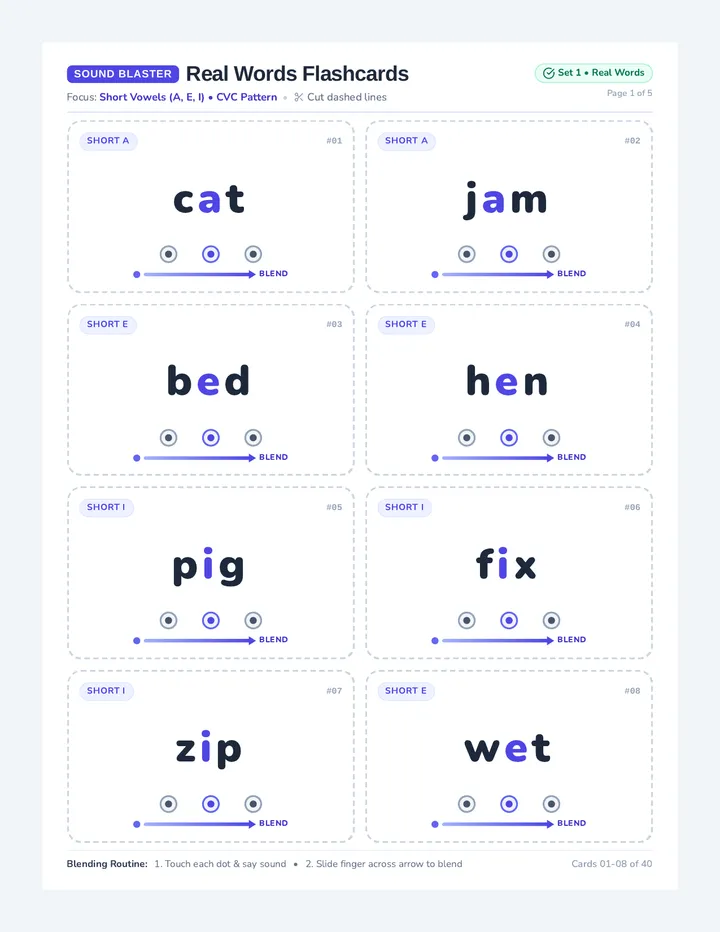
A student at the 1G (one-green) level struggles with decoding consonant-vowel-consonant (CVC) words. During a coaching session, the student guesses words based on the picture, and the teacher praises them: "Good guess, look at the picture!"
Coaching Challenge:
Refocus the teacher on phonetic decoding strategies instead of guessing. Reference the specific phonological demands of the 1G skill card.
CARD 06: COLLECTIVE EFFICACY GRADE 4
The Deficit-Mindset Barrier
During a data meeting, you notice that a 4th-grade class's IRLA growth chart has not been updated in two months. When asked, the teacher comments: "My students are so far behind, they simply aren't ready to move up. These expectations aren't realistic for our demographic."
Coaching Challenge:
Address the deficit mindset. How do you coach this teacher to leverage school growth data and co-create short-term, attainable progress goals?
CARD 07: FOUNDATIONAL CONCEPTS PRE-K
Print Concepts Misalignment
A Pre-K teacher is conducting a letter-sound matching activity with students who have not yet mastered basic print concepts (e.g., book handling, tracking directionality). Students are frustrated and off-task.
Coaching Challenge:
Formulate feedback urging the teacher to step back to basic print concepts using highly engaging, large-format shared texts and visual modeling.
CARD 08: STRATEGY FEEDBACK GRADE 2
Over-Scaffolded Decoding
During an individual IRLA conference, a 2nd-grade student pauses on the word "exploration." Before the student can apply any strategies, the teacher immediately tells them the word and says, "Go on, keep reading."
Coaching Challenge:
How do you coach this teacher to provide structured processing time and prompt the student to use word-attack strategies instead of simply giving them the answer?
ARC Literacy Catalyst © 2026 PAGE 2 OF 2 Discussion Scenario Cards
ARC Literacy Catalyst • Slide 5
Rigorous Practice
It is not passive browsing. Deliberate practice is high-focus reading of independent-level text where the student encounters and actively resolves strategic blockages (CVC phonics, sight words, syllable division).
Common Administrator Trap:
Confusing "busy" students with "learning" students. Walking into a classroom and seeing kids flipping books without target reading level alignment means stamina is broken.
ARC Literacy Catalyst • Slide 6
Comprehension Spaces
Discussion is the catalyst for advanced comprehension. Under the ARC model, teachers use **shared texts** to scaffold high-cognitive conversations before releasing students to independent work.
Look-For: Is the teacher talking more than 30% of the mini-lesson? If yes, discussion is passive.
Required Classroom Scaffolds:
ARC Literacy Catalyst • Slide 7
Inclusion Systems
Multisensory Aids
Utilizing direct tactile models (e.g., sound boxes, sand writing, letter tiles) to support students with processing challenges.
Tier 2 Integration
IEP-IRLA Alignment
IEP objectives should match the student's exact IRLA color level diagnostic cards. No duplicate workbooks.
Systemic Collaboration
Adaptive Libraries
Ensuring high-interest books are available for older SpEd students reading at lower diagnostic color bands (e.g., Yellow/Green).
Stamina Preservation
ARC Literacy Catalyst • Slide 8
Dual Language Systems
English Learners thrive when instruction leverages their **native language literacy assets**. Connect cross-language phonetics to strengthen comprehension.
Key Strategy: Coordinate cognate tables (words sharing common roots) to connect primary phonetic networks to English reading structures.
Required EL Classroom Anchors:
ARC Literacy Catalyst • Slide 9
FEEDBACK CYCLE
Provide immediate feedback after your walk-through. Do not wait for formal performance reviews; give actionable coaching comments within the learning space.
Key Target: Always focus feedback on the exact student-impact metrics observed during independent practice.
The Conversation Protocol:
ARC Literacy Catalyst • Slide 10
INTERACTIVE PRACTICE
Using your ARC Feedback Scenario Cards, analyze your assigned classroom observation at your tables. Walk through a role-play feedback conversation.
Activity Steps:
ARC Literacy Catalyst • Slide 11
Action Plan
Step 1
Conduct 3 walkthroughs next week using the ARC Leadership Playbook checklist.
Immediate Goal
Step 2
Sustain immediate 5-minute coaching conversations focused on strategies for SpEd and EL classrooms.
Weekly Cycle
Step 3
Calibrate IRLA growth walls in PLCs. Build collective teacher efficacy around progress metrics.
Monthly Target
ARC Literacy Catalyst • Slide 12
Drafting Feedback (Apply Scenario Card Practice here):
Write your praise and reflective prompt for today's selected scenario:
ARC Literacy Catalyst © 2026 PAGE 2 OF 2 Participant Guided Notes