Lenny.com
Explore
Create
ActivitiesNewMathEnglish Language ArtsScience & EngineeringSocial StudiesGlobal LanguagesHealth & Physical EducationSpecial EducationCounseling & Life SkillsArts & CreativityESL
Lenny.com
Lenny.com
Explore
Create
ActivitiesNewMathEnglish Language ArtsScience & EngineeringSocial StudiesGlobal LanguagesHealth & Physical EducationSpecial EducationCounseling & Life SkillsArts & CreativityESL
Lenny.com
Lenny.com

Solutions

Lenny for EducatorsLenny for SchoolsLenny for Districts

Product

ExploreSign inCreateSupportAbout

Resources

Getting startedMTSS Acceleration Program

© 2026 Lenny Learning Inc.

TermsPrivacyAccessibility
LinkedInInstagramX
Lenny
English Language ArtsPhonics & Reading FoundationsLetter IdentificationLearn Letters A-ZLowercase and Uppercase LettersConsonants and VowelsLetter-Sound AssociationsLetter-Sound Associations: LowercaseLetter-Sound Associations: UppercaseBeginning and Ending SoundsRhymingBlending And SegmentingShort VowelsShort Vowel SoundsConsonant BlendsConsonant DigraphsBlends, Digraphs, and TrigraphsDigraphs, Blends, and Silent LettersLong Vowel SoundsLong Vowel PatternsShort and Long VowelsShort and Long Vowel PatternsSilent EVowel SoundsVowel TeamsR-Controlled VowelsDiphthongs: Oi, Oy, Ou, OwVariant VowelsVariant, Diphthong, And R Vowel PatternsSoft G And CSight WordsIrregular WordsWord RecognitionSyllablesSyllable TypesTwo-Syllable WordsMultisyllabic WordsPhoneme ManipulationDecodable TextsVocabularyAction WordsQuestion WordsNouns and AdjectivesClassify WordsCompound WordsSynonyms and AntonymsHomophonesHomophones and HomonymsShades of MeaningContext CluesPrefixes and SuffixesGreek and Latin RootsAnalogiesIdioms and AdagesForeign Words and ExpressionsWord Choice and UsageReference SkillsReading ComprehensionRead-Along Literary TextsRead-Along Informational TextsReality vs. FictionStory ElementsCharacterSequenceMain IdeaCause And EffectCompare And ContrastReading StrategiesText StructureAuthor's PurposeAuthor's Purpose And ToneAuthor's PerspectivePoint Of ViewThemeInference And ThemeInference And AnalysisPoetry ElementsLiterary DevicesAnalyzing LiteratureAnalyzing Informational TextsComparing TextsAudience, Purpose, And ToneBusiness DocumentsNovel StudyNonfiction Book StudyGrammar & MechanicsSentencesNounsVerbsAdjectivesPronounsCapitalizationPunctuationContractionsConjunctionsPrepositionsArticlesAdjectives And AdverbsVerb TypesVerb TensePronouns And AntecedentsPronoun TypesSubject-Verb AgreementDirect And Indirect ObjectsSentences, Fragments, And Run-OnsPhrases And ClausesCommasSemicolons, Colons, And CommasDashes, Hyphens, And EllipsesSpellingAbbreviationsFormattingVerb Tense And MoodMisplaced ModifiersWritingDescriptive DetailsCreative WritingOpinion WritingTopic SentencesOrganizing WritingLinking WordsSentence VarietyIntroductions And ConclusionsPersuasive And Opinion WritingExpository WritingPersuasive StrategiesDeveloping And Supporting ArgumentsTopic Sentences And Thesis StatementsSummarizingResearch SkillsEditing And RevisingActive And Passive Voice=Writing Clearly And ConciselyDebate & Public SpeakingPublic Speaking BasicsPersuasive TechniquesClaims and EvidenceTypes of ArgumentsReasoning TypesLogical FallaciesTopic ResearchOrganizing EvidenceDebate Speech OrganizationAttacking and Defending ArgumentsClash and EngagementImpact CalculusQuestioning and Cross-ExaminationCritical ThinkingInformal LogicFormal LogicInductive Reasoning

Spooky Season Homework

A differentiated 4-day weekly ELA homework series tailored for self-contained classrooms, featuring tiered original texts and structured activities on Halloween traditions and history for kindergarten, second grade, and fourth grade.

JJJulie Johns

Spooky Season Homework

A differentiated 4-day weekly ELA homework series tailored for self-contained classrooms, featuring tiered original texts and structured activities on Halloween traditions and history for kindergarten, second grade, and fourth grade.

JJJulie Johns

Sentence Stem Helper:

"According to paragraph 1, friends dress up as..."

Self-Contained ELA • Level 2 Page 2 of 4 • Tuesday / Night 2

Level 2 • Self-Contained ELA

Spooky Secrets Homework

Name:

3

Night 3: Language & Vocabulary

Build compound words and practice action verbs from the story.

Language Skills

Part 1: Compound Words (Two words join together!)

Add the two smaller words together to create the compound word from the text:

moon + light =

side + walk =

Part 2: Action Verbs in Action

Choose the best action verb from the word box to complete each sentence:

dress carry knock

1. Friends up in creative superhero costumes.

2. Excited kids colorful treat bags from house to house.

3. Trick-or-treaters politely on the front door.

Part 3: Sentence Editor (Fix the 2 Mistakes!)

Find the missing capital letter and ending mark. Rewrite correctly:

we dress up in silly costumes on halloween night

Self-Contained ELA • Level 2 Page 3 of 4 • Wednesday / Night 3

Level 2 • Self-Contained ELA

Spooky Secrets Homework

Name:

4

Night 4: Guided Informational Writing

Write a short paragraph describing how people celebrate Halloween.

Structured Writing

Paragraph Frame & Guide:

Capital letter Story details Period .

Step 1 (Topic): Tell what special holiday happens on October thirty-first.

Step 2 (Details): Describe the fun costumes and glowing lanterns on sidewalks.

Step 3 (Ending): Tell why Halloween is a fun celebration for friends and families.

Topic Sentence: Halloween is a festive celebration that takes place on...

Detail 1: First, children dress up in creative costumes such as...

Detail 2: Next, glowing lanterns light the path as kids say...

Conclusion: In conclusion, Halloween is a magical holiday filled with...

Draw a trick-or-treat scene:

Caption Line:

Write one sentence describing your drawing:

Weekly Goal: I used neat handwriting: [ ] Yes [ ] Working on it

Self-Contained ELA • Level 2 Page 4 of 4 • Thursday / Night 4

C The end of summer vacation when children return to school.

2. Compare Traditions: Ancient Celtic Rituals vs. Modern Halloween

Write one key fact from the text under each category:

Ancient Celtic Rituals (¶ 2)

What rituals protected villagers from wandering spirits?

Modern Halloween Customs (¶ 3)

What traditions do communities celebrate today?

3. Short Constructed Response: Citing Direct Text Clues

How did the practice of "guising" lead to modern trick-or-treating?

Sentence Stem: According to paragraph 3, guising involved going door-to-door in disguise to...

Self-Contained ELA • Level 4 Page 2 of 4 • Tuesday / Night 2

Level 4 • Self-Contained ELA

Halloween Origins Homework

Name:

3

Night 3: Nouns & Adjectives

Identify naming words (nouns) and describing words (adjectives) from the story.

Grammar Focus

N Noun: A Person, Place, or Thing

Examples from text: festival, disguise, bonfire, lantern

A Adjective: A Describing Word

Examples from text: ancient, communal, festive, creative

Part 1: Sort the Words from the Passage

Write each word from the bank into the correct box:

festival ancient disguise communal lantern creative

Nouns (Things)

Adjectives (Describing Words)

Part 2: Match the Describing Word to the Noun it Describes

Draw a line connecting the adjective to the noun it describes in our story:

ancient

communal

creative

bonfires

costumes

festival

Part 3: Find Both in a Sentence

In each sentence below, circle the NOUN and draw a box around the ADJECTIVE:

1. Ancient villagers built communal bonfires for safety. [ 1 noun • 1 adjective ]

2. Children wear creative costumes on Halloween night. [ 1 noun • 1 adjective ]

Self-Contained ELA • Level 4 Page 3 of 4 • Wednesday / Night 3

Level 4 • Self-Contained ELA

Halloween Origins Homework

Name:

4

Night 4: Evidence-Based Response

Synthesize information from the text into a complete structured paragraph.

Written Response

Writing Prompt:

Explain how ancient harvest traditions evolved into the modern holiday of Halloween.

Claim 2 Details Ending

Sentence 1 (Topic/Claim): State how Halloween developed from ancient autumn harvest festivals.

Sentence 2 (Text Evidence 1): Explain how ancient villagers used bonfires and disguises for protection.

Sentence 3 (Text Evidence 2): Explain how the custom of guising and Irish immigrants created trick-or-treating.

Sentence 4 (Conclusion): Conclude with a thought on how Halloween brings people together today.

Claim / Topic Sentence:

Detail #1 (Ancient Samhain Rituals):

Detail #2 (Guising & Immigration):

Concluding Thought:

Weekly Writing Rubric:

Check each box before handing in your weekly packet:

Used text evidence Capital letters & periods Reviewed with helper

Self-Contained ELA • Level 4 Page 4 of 4 • Thursday / Night 4
You might also like

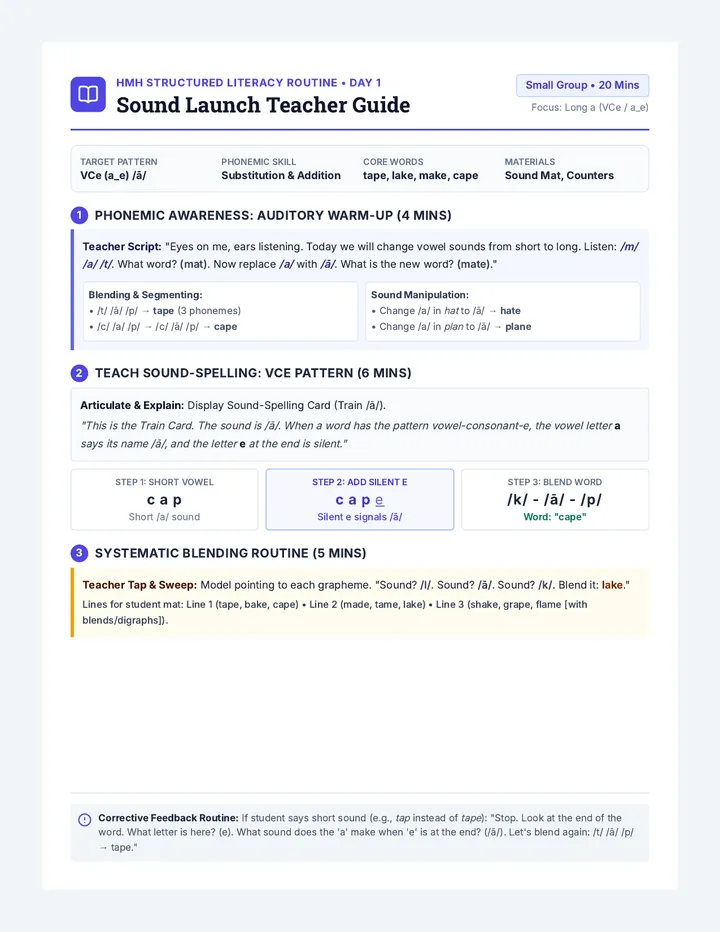
Sound Launch Teacher Guide

Sound Path Readers

A 3-day structured literacy small-group sequence grounded in HMH instructional routines and the Science of Reading. Covers phonemic awareness, phonics decoding of VCe patterns, decodable fluency, and evidence-based comprehension.

Lenny Avatar
Lenny
6
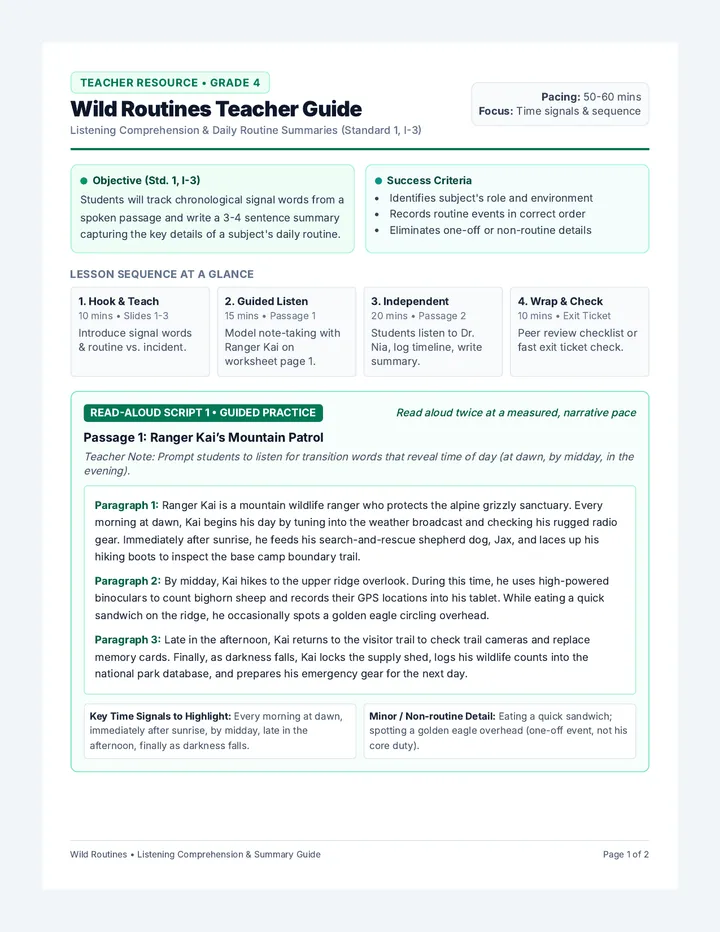
Wild Routines Teacher Guide

Wild Routines

A comprehensive 4th-grade listening comprehension lesson where students listen to informational accounts of unique careers, track time-order transition words, record key routine details, and write structured summaries.

HP

Hector Parra

4
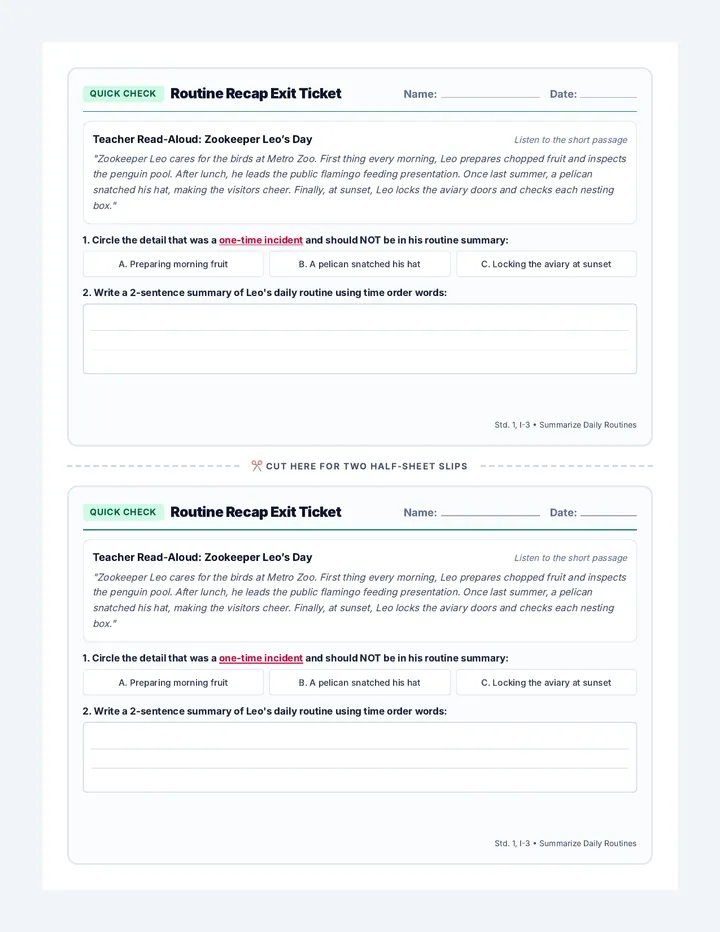
Routine Recap Exit Ticket

Routine Recap Exit Ticket

A 1-page printable exit ticket featuring two identical half-page slips for efficient printing. Students listen to a brief micro-routine about a zookeeper, identify a non-routine detail, and write a 2-sentence daily routine summary.

HP

Hector Parra

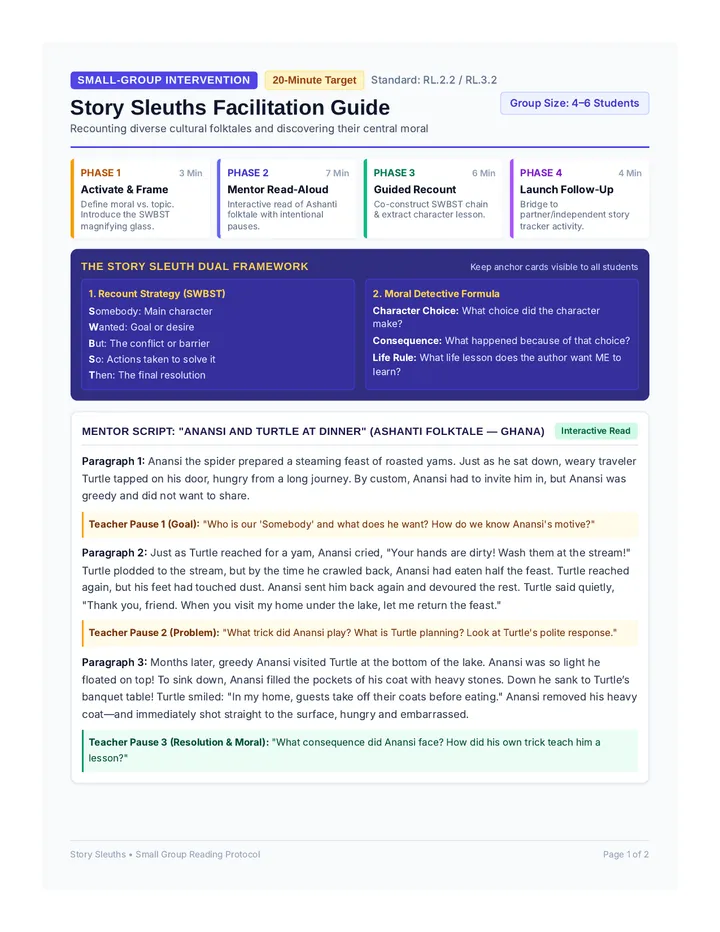
Story Sleuths Facilitation Guide

Story Explorers

An interactive, high-impact reading comprehension unit targeting core foundational literature standards. Students master recounting diverse folktales, extracting central morals, and analyzing how characters respond to major events and challenges.

S

Squiretak

8
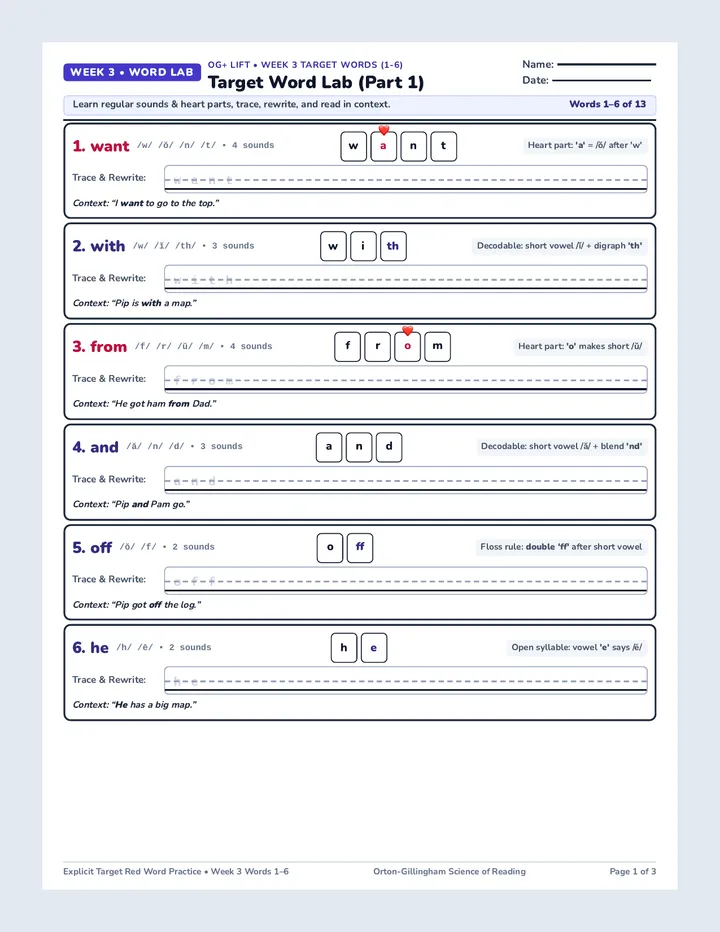
Week 3 Monday Sentences Worksheet

Week 3 Monday Launch

Week 3 Monday kickoff introducing 13 target red words through structured heart-mapping, sentence pyramids, the Tessa Barber decodable reader 'Pip and the Map', comprehension exit ticket, and fluency assessment.

S

Sara

4
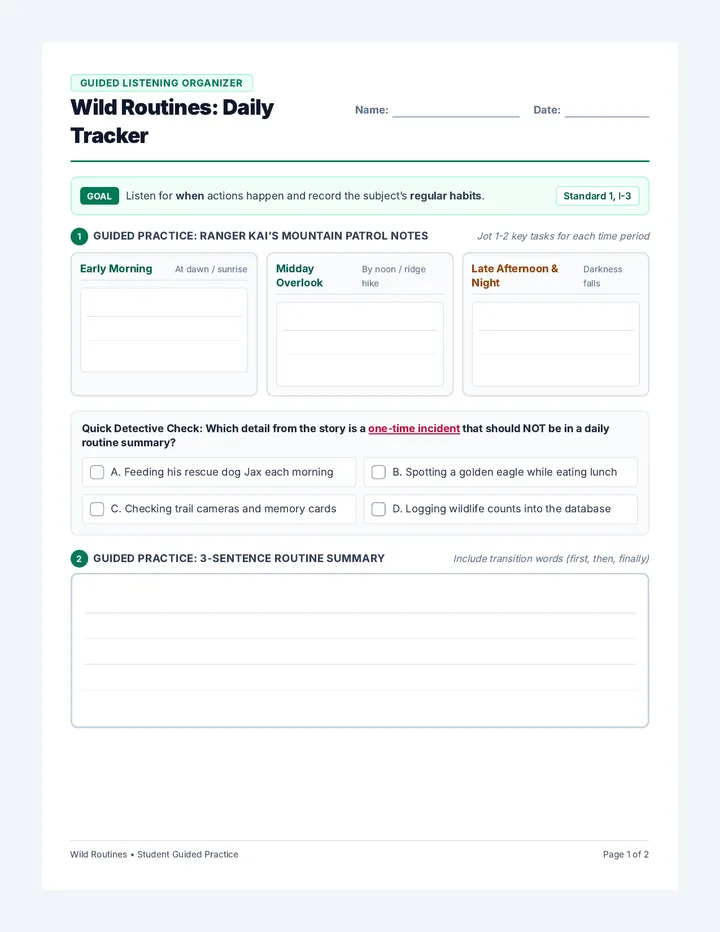
Wild Routines Worksheet

Wild Routines Worksheet

A 2-page student listening organizer and summary worksheet. Page 1 supports guided practice with Ranger Kai's routine, featuring time-signal tracking and structured summary frames. Page 2 guides independent practice with Dr. Nia's reef routine, including detail filtering, chronological note boxes, and an independent summary writing area with a self-check rubric.

HP

Hector Parra

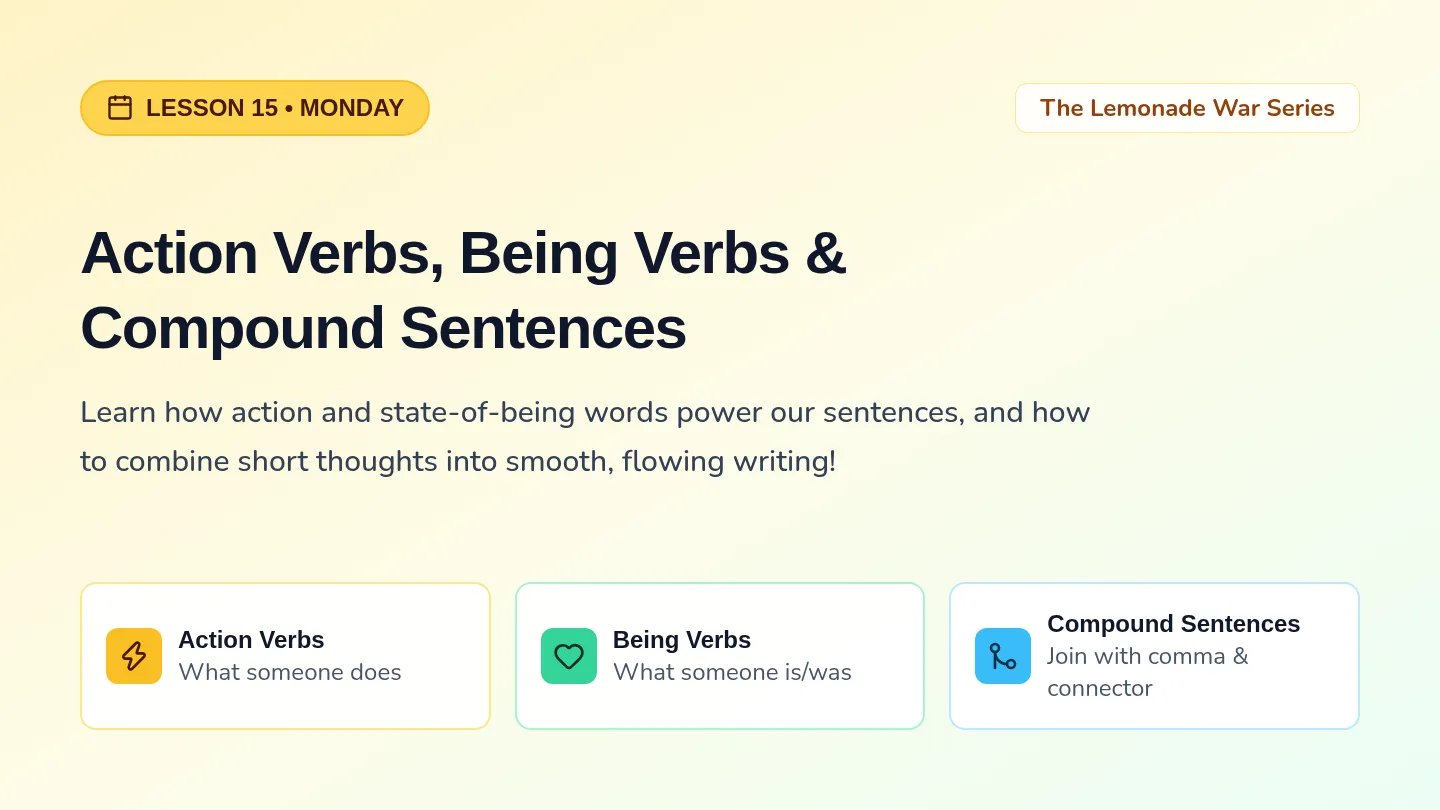
Lemonade Verbs Slides

Reading Writing Workshop

An engaging elementary English Language Arts unit connecting grammar mechanics, mentor texts, vocabulary, and sensory descriptive writing.

B

Bhoovaragavaswamym

8
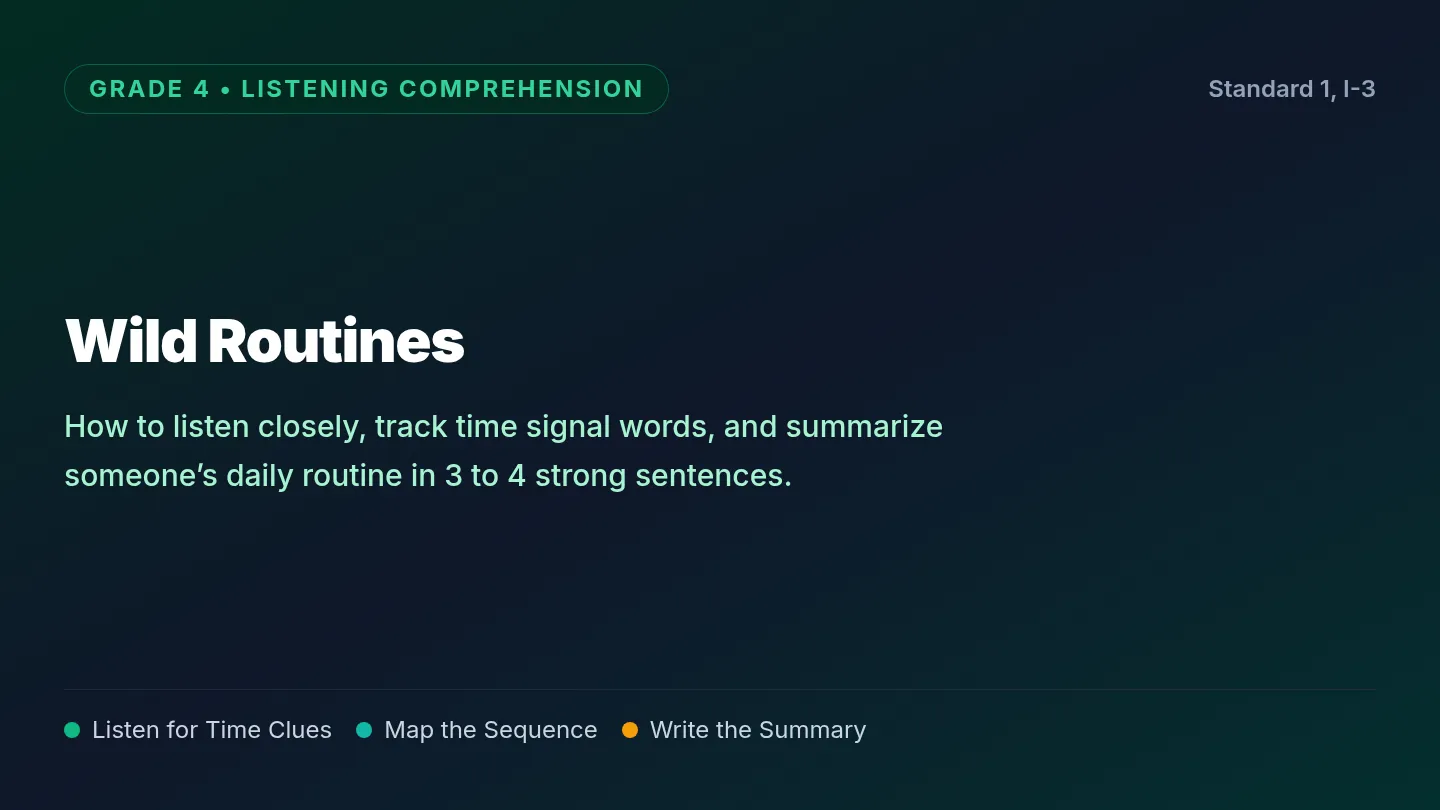
Wild Routines Slides

Wild Routines Slides

A 6-slide instructional presentation for teaching 4th graders how to track time signal words, distinguish routine habits from one-off incidents, and construct concise daily routine summaries from listening passages.

HP

Hector Parra

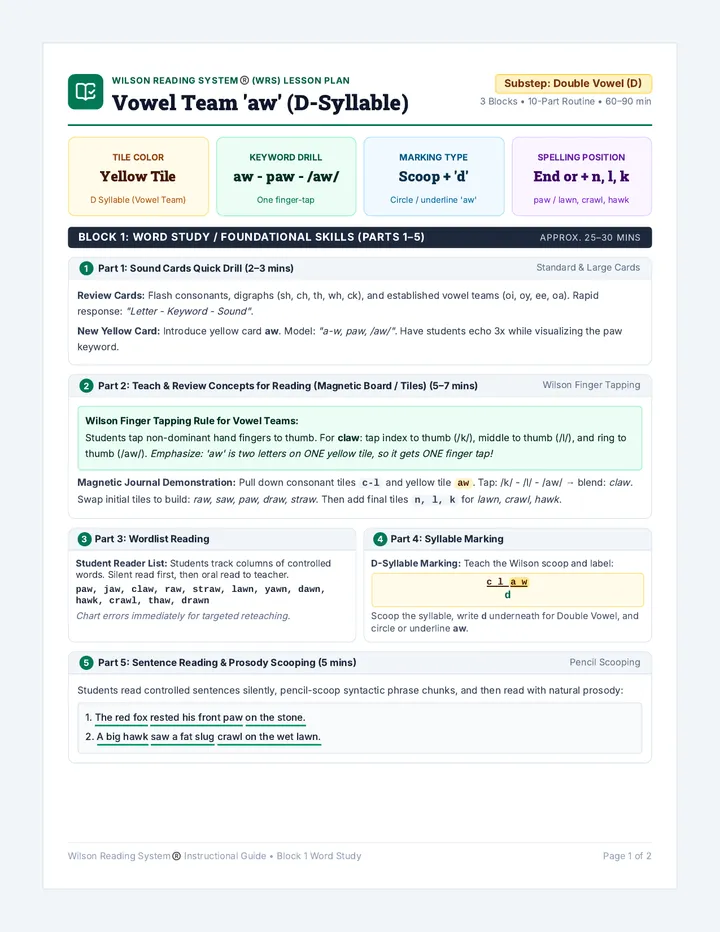
Paw Print Teacher Guide

Vowel Team Aw Pathways

A comprehensive structured literacy sequence targeting the vowel team 'aw', offering dual instructional pathways using both the Classic Orton-Gillingham 7-step routine and the 10-part Wilson Reading System (WRS) framework.

KW

Kellie Walsh

10