Lenny.com
Explore
Create
ActivitiesNewMathEnglish Language ArtsScience & EngineeringSocial StudiesGlobal LanguagesHealth & Physical EducationSpecial EducationCounseling & Life SkillsArts & CreativityESL
Lenny.com
Lenny.com
Explore
Create
ActivitiesNewMathEnglish Language ArtsScience & EngineeringSocial StudiesGlobal LanguagesHealth & Physical EducationSpecial EducationCounseling & Life SkillsArts & CreativityESL
Lenny.com
Lenny.com

Solutions

Lenny for EducatorsLenny for SchoolsLenny for Districts

Product

ExploreSign inCreateSupportAbout

Resources

Getting startedMTSS Acceleration Program

Newsletters

School Funding Newsletter

© 2026 Lenny Learning Inc.

TermsPrivacyAccessibility
LinkedInInstagramX
Lenny

Vibe Coding

Natural language programming and high-level software development using large language models. Equips developers to build functional applications by prioritizing iterative prompting and intent-based logic over manual syntax.

Science & EngineeringLife ScienceLiving ThingsAnimalsPlantsBody SystemsTraitsAdaptationsCellsEcosystemsHeredityGenes to TraitsCell DivisionPhysicsComparing MaterialsShapes and PropertiesMagnetsMagnetismLightSoundLight and SoundMatterStates of MatterChanges of StateMixturesPhysical and Chemical ChangeHeating and CoolingHeat and Thermal EnergyEnergyForce and MotionElectrical CircuitsAtoms and MoleculesPeriodic TableMotion in One DimensionMotion in Two DimensionsScalars and VectorsForces and Laws of MotionCircular Motion and GravityMomentum and ImpulseWork, Energy, and PowerWavesElectromagnetic WavesGeometric OpticsElectricity and MagnetismSimple Harmonic MotionThermodynamicsNuclear PhysicsEarth Science & AstronomyWeatherWater CycleRocks and MineralsFossilsEarth's FeaturesEarth's ResourcesEarth's StructureWeather and ClimateEarth EventsFossils and Geologic TimePlate TectonicsHuman ImpactsAstronomyChemistryUnits and MeasurementAtomic StructurePeriodic TrendsChemical BondingNomenclatureMolecular StructureIntermolecular ForcesThe MoleStoichiometryProperties of GasesSolutionsChemical ReactionsBalancing EquationsEnergy ChangesRates of ReactionsEquilibriumAcids and BasesQuantum ModelBiologyClassificationCell StructureThe Chemistry of LifeBiomoleculesCellular TransportCell EnergyCell Growth and DivisionDNAProtein SynthesisMeiosis and Sexual ReproductionPatterns of InheritanceMulticellular OrganismsEvolutionEcologyBiodiversityComputer ScienceAlgorithms and Computational ThinkingProgramming LanguagesComputing SystemsNetworks and InternetData AnalysisCybersecurityAI and Machine LearningSoftware Design and DevelopmentBlockchainEngineering & AIDesigning ExperimentsEngineering PracticesDesign ThinkingEngineering Design ProcessMechanical EngineeringElectrical EngineeringMaterials and StructuresCAD and 3D DesignRoboticsArtificial Intelligence BasicsVibe CodingMachine LearningAI Ethics and SocietySystems ThinkingEntrepreneurship & InnovationEntrepreneurial MindsetBusiness Idea DevelopmentBusiness Plan BasicsMarketing & Customer DiscoveryFinancial Management for Startups

Materials

Vibe Coding Blueprint Organizer

Vibe Coding Blueprint Organizer

A two-page design thinking graphic organizer and iterative prompt cheat sheet for middle school students learning to vibe code web projects.

HC

Holly Clark

Sequences

Project Blueprint Guide

Tech Capstone Challenge

A 5-6 week capstone project framework for Grade 10 Exploring Technology, focusing on a Minimum Viable Product (MVP) approach and weekly engineering milestones.

PR

Phillip Rustamov

3
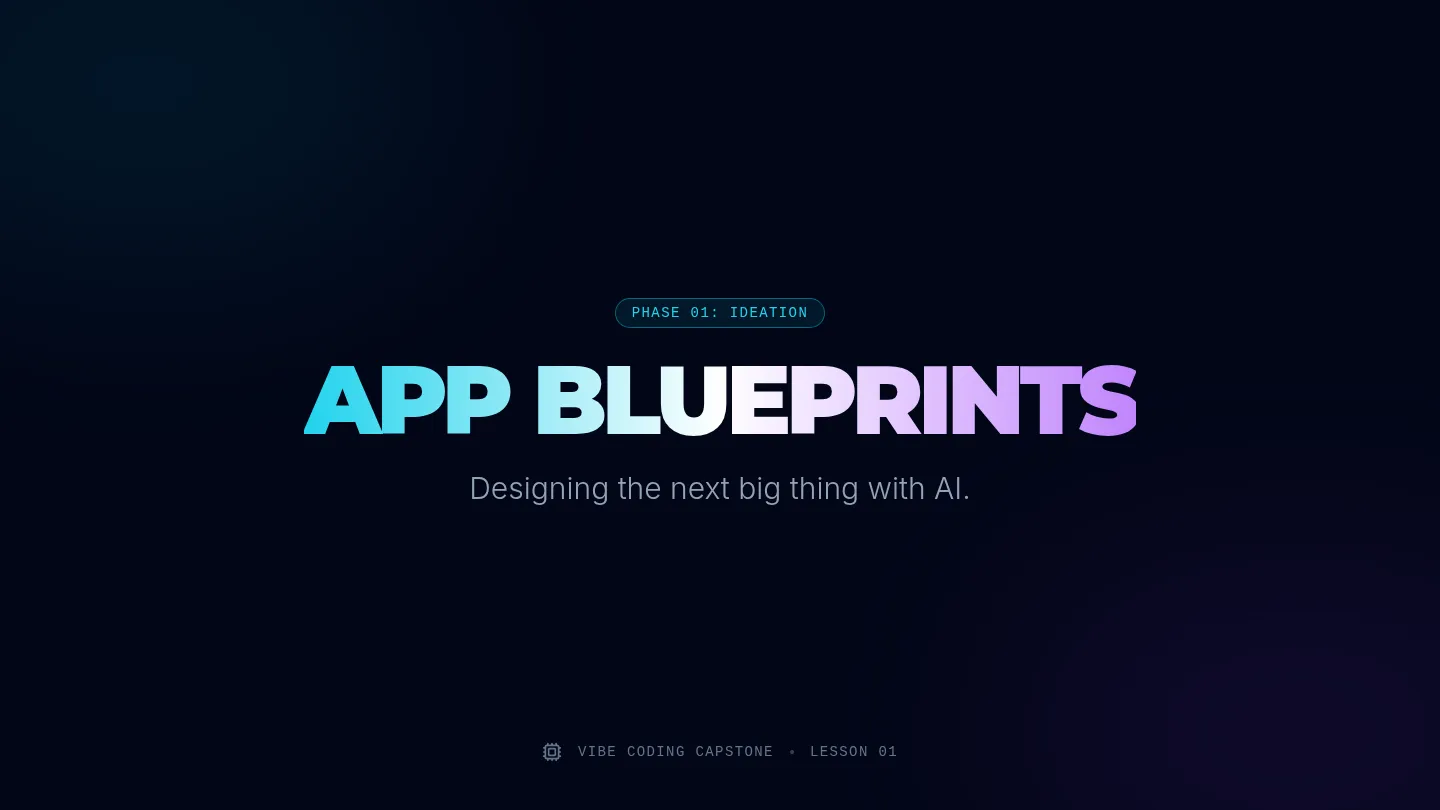
App Blueprints Slides

Vibe Coding Capstone

A project-based capstone where students build a fully functional browser app using AI tools. Students navigate the software development lifecycle from ideation to launch, focusing on the power of natural language 'vibe coding'.

11
Bias Breakdown Worksheet

Vibe Coding Guardrails

A comprehensive graduate-level exploration of the technical and ethical shifts in engineering caused by AI-assisted 'vibe coding'. This sequence focuses on automation bias, security vulnerabilities, intellectual property challenges, and the evolution of the software engineer's role from author to auditor.

10
Agent Logic Designer Worksheet

Autonomous Agent Architectures

An advanced engineering sequence for graduate students exploring the architecture, security, and implementation of autonomous AI coding agents. Students progress from tool-use theory to building self-healing, multi-agent systems.

12
Vibe Coding Intro Slides

Iterative App Dev and Testing

This sequence guides graduate students through the transition from syntax-focused coding to 'Vibe Coding,' emphasizing iterative prompting, automated testing, and self-correcting refinement loops to build functional MVPs.

15
AI Native Slides

Architecting for LLMs

A graduate-level sequence exploring how to design software architectures optimized for AI-generated code, focusing on context management, determinism, and agentic API consumption.

11

Lessons

Art du Prompt Slides

L'Art du Prompt

Cette leçon enseigne l'art de concevoir des prompts efficaces pour l'IA en utilisant 10 composantes clés, de la définition du rôle à l'itération finale.

LP

Léo PIAZZA

4
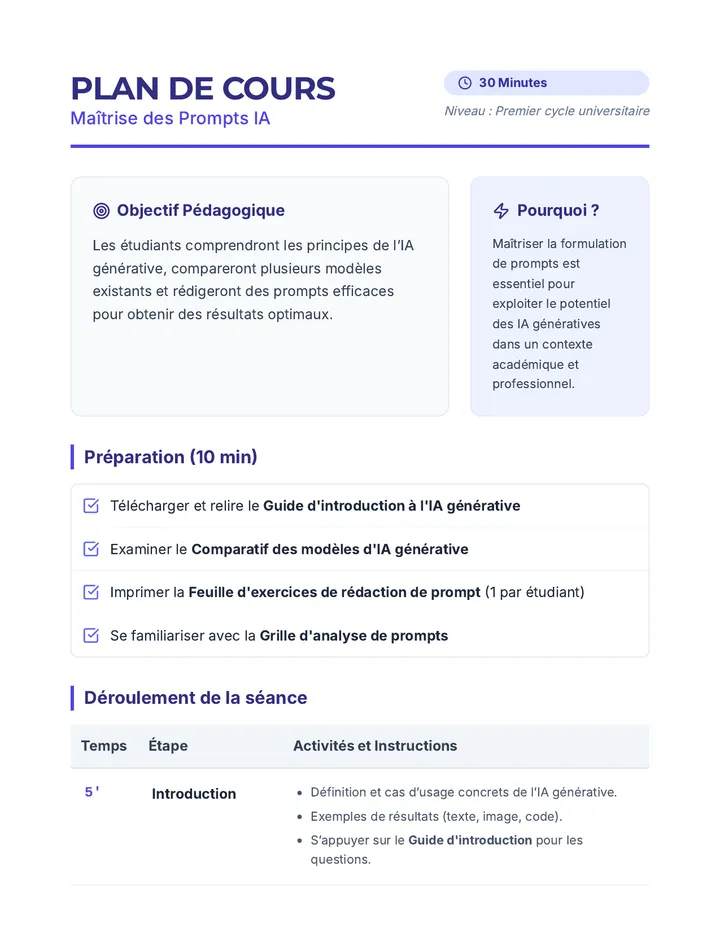
Plan de cours IA Générative

Maîtrise des Prompts IA

Une séance intensive de 30 minutes pour apprendre aux étudiants à comprendre l'IA générative, évaluer les modèles et maîtriser l'art du prompt.

NB

Nel Brtn

7