Lenny.com
Explore
Create
ActivitiesNewMathEnglish Language ArtsScience & EngineeringSocial StudiesGlobal LanguagesHealth & Physical EducationSpecial EducationCounseling & Life SkillsArts & CreativityESL
Lenny.com
Lenny.com
Explore
Create
ActivitiesNewMathEnglish Language ArtsScience & EngineeringSocial StudiesGlobal LanguagesHealth & Physical EducationSpecial EducationCounseling & Life SkillsArts & CreativityESL
Lenny.com
Lenny.com

Solutions

Lenny for EducatorsLenny for SchoolsLenny for Districts

Product

ExploreSign inCreateSupportAbout

Resources

Getting startedMTSS Acceleration Program

© 2026 Lenny Learning Inc.

TermsPrivacyAccessibility
LinkedInInstagramX
Lenny

Theme

Identification of central messages and universal truths in literature. Distinguishes between subject matter and deeper meanings while analyzing how plot and character development convey an author's purpose.

English Language ArtsPhonics & Reading FoundationsLetter IdentificationLearn Letters A-ZLowercase and Uppercase LettersConsonants and VowelsLetter-Sound AssociationsLetter-Sound Associations: LowercaseLetter-Sound Associations: UppercaseBeginning and Ending SoundsRhymingBlending And SegmentingShort VowelsShort Vowel SoundsConsonant BlendsConsonant DigraphsBlends, Digraphs, and TrigraphsDigraphs, Blends, and Silent LettersLong Vowel SoundsLong Vowel PatternsShort and Long VowelsShort and Long Vowel PatternsSilent EVowel SoundsVowel TeamsR-Controlled VowelsDiphthongs: Oi, Oy, Ou, OwVariant VowelsVariant, Diphthong, And R Vowel PatternsSoft G And CSight WordsIrregular WordsWord RecognitionSyllablesSyllable TypesTwo-Syllable WordsMultisyllabic WordsPhoneme ManipulationDecodable TextsVocabularyAction WordsQuestion WordsNouns and AdjectivesClassify WordsCompound WordsSynonyms and AntonymsHomophonesHomophones and HomonymsShades of MeaningContext CluesPrefixes and SuffixesGreek and Latin RootsAnalogiesIdioms and AdagesForeign Words and ExpressionsWord Choice and UsageReference SkillsReading ComprehensionRead-Along Literary TextsRead-Along Informational TextsReality vs. FictionStory ElementsCharacterSequenceMain IdeaCause And EffectCompare And ContrastReading StrategiesText StructureAuthor's PurposeAuthor's Purpose And ToneAuthor's PerspectivePoint Of ViewThemeInference And ThemeInference And AnalysisPoetry ElementsLiterary DevicesAnalyzing LiteratureAnalyzing Informational TextsComparing TextsAudience, Purpose, And ToneBusiness DocumentsNovel StudyNonfiction Book StudyGrammar & MechanicsSentencesNounsVerbsAdjectivesPronounsCapitalizationPunctuationContractionsConjunctionsPrepositionsArticlesAdjectives And AdverbsVerb TypesVerb TensePronouns And AntecedentsPronoun TypesSubject-Verb AgreementDirect And Indirect ObjectsSentences, Fragments, And Run-OnsPhrases And ClausesCommasSemicolons, Colons, And CommasDashes, Hyphens, And EllipsesSpellingAbbreviationsFormattingVerb Tense And MoodMisplaced ModifiersWritingDescriptive DetailsCreative WritingOpinion WritingTopic SentencesOrganizing WritingLinking WordsSentence VarietyIntroductions And ConclusionsPersuasive And Opinion WritingExpository WritingPersuasive StrategiesDeveloping And Supporting ArgumentsTopic Sentences And Thesis StatementsSummarizingResearch SkillsEditing And RevisingActive And Passive Voice=Writing Clearly And ConciselyDebate & Public SpeakingPublic Speaking BasicsPersuasive TechniquesClaims and EvidenceTypes of ArgumentsReasoning TypesLogical FallaciesTopic ResearchOrganizing EvidenceDebate Speech OrganizationAttacking and Defending ArgumentsClash and EngagementImpact CalculusQuestioning and Cross-ExaminationCritical ThinkingInformal LogicFormal LogicInductive Reasoning

Videos

Unlocking the Genre of Historical Fiction

Unlocking the Genre of Historical Fiction

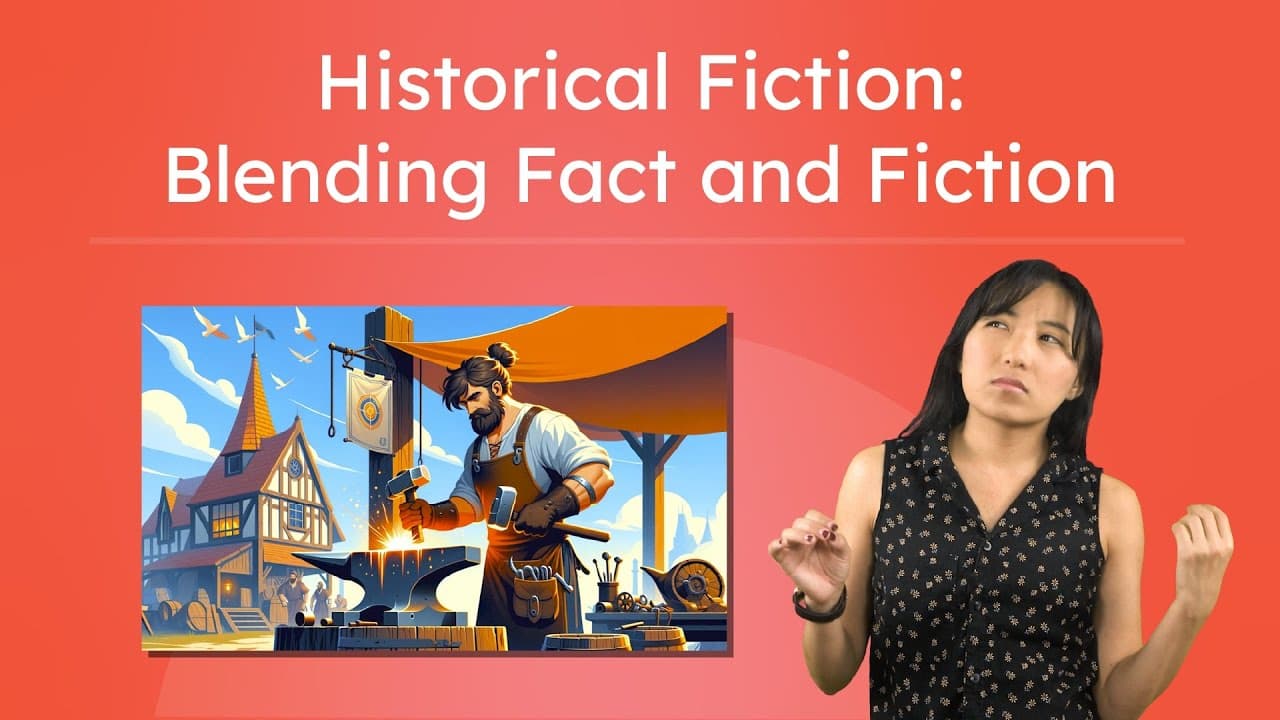
This educational video provides a comprehensive introduction to the genre of historical fiction, guiding students through the delicate balance between factual history and creative storytelling. Hosted by Caroline and featuring a humorous skit with a library curator, the lesson defines the genre, distinguishing it from fantasy by emphasizing plausibility and the absence of speculative elements like magic. It uses concrete examples, such as a Scottish blacksmith, to illustrate what counts as historical fiction and what does not. The video dives deep into the concept of "historical context," explaining how social norms, political climates, and geography shape a story's setting and plot. It emphasizes that while settings change, human themes like courage and resilience remain universal. Through interactive activities, students practice identifying factual elements versus fictional creations within a text, specifically analyzing a story about Leonardo da Vinci to understand how authors weave real historical figures into invented narratives. Finally, the content explores the purpose of reading historical fiction: to analyze history from a new perspective and to empathize with people from the past. By connecting emotionally with characters who lived through major events, students learn to view history not just as a collection of dates, but as human experiences. The video suggests practical classroom applications, such as using historical fiction to teach critical thinking by separating fact from fiction and fostering emotional intelligence through character analysis.
Miacademy & MiaPrep Learning ChannelMiacademy & MiaPrep Learning Channel

12mins 18s

How Ancient Philosophies Shape Modern Asian Literature

How Ancient Philosophies Shape Modern Asian Literature

This educational video introduces students to four major Asian philosophies—Confucianism, Taoism, Buddhism, and Hinduism—and explores how these ancient belief systems influence contemporary Asian literature. Using a narrative framing device involving a writer named Liu Hao who has lost his memory, the host guides viewers through the definitions, key texts, and core tenets of each philosophy. The video emphasizes that philosophy is the study of life's important questions and encourages students to reflect on their own guiding principles. The lesson provides a structured comparison of the four philosophies, highlighting their unique focuses—from Confucianism's emphasis on social order and respect to Taoism's connection with nature. It explains the concept of "philosophical literature" and demonstrates how to identify philosophical themes in modern texts. A specific analysis of an excerpt from Cao Wenxuan's novel *Bronze and Sunflower* serves as a model for how students can spot Taoist influences like appreciating nature and "going with the flow" in character actions. Ideally suited for middle school Language Arts or World History classes, this video bridges the gap between abstract historical concepts and concrete literary analysis. It provides clear definitions, opportunities for student interaction through pause-and-think moments, and real-world examples of authors like Linda Sue Park and Grace Lin who incorporate these traditions. Teachers can use this resource to introduce a unit on world mythology, Asian literature, or to teach the skill of analyzing theme and cultural context in fiction.

Miacademy & MiaPrep Learning ChannelMiacademy & MiaPrep Learning Channel

8mins 57s

How Politics Shaped Latin American Literature

How Politics Shaped Latin American Literature

This educational video explores the deep connection between the political history of Latin America and its literature. It guides students through two major historical periods: the colonial era and the post-independence rise of totalitarian regimes. Through the lens of specific literary movements, the video explains how writers like Simón Bolívar, José Martí, and Gabriel García Márquez used the written word to define national identities, fight for independence, and critique oppressive governments. The content breaks down complex political concepts such as colonialism, independence movements, and totalitarianism, contrasting the Latin American experience with that of Africa to highlight unique historical contexts. It introduces the genre of "political literature," splitting it into "Independence Movement Literature" (primarily persuasive nonfiction) and "Anti-Totalitarian Literature" (fiction and nonfiction). Specific works and authors are highlighted to illustrate themes of corruption, power, and resistance. Teachers can use this video to bridge Social Studies and English Language Arts curriculums. It provides a rich context for understanding World Literature, offering concrete definitions and historical examples that help students analyze how societal changes influence artistic expression. The built-in pause points and reflective questions make it an interactive tool for classroom discussion about government systems, freedom of expression, and the power of writing.

Miacademy & MiaPrep Learning ChannelMiacademy & MiaPrep Learning Channel

10mins 56s

How Ballads Tell Stories Through Song

How Ballads Tell Stories Through Song

This educational video takes students on a journey to the fictional 'Traveler's Teahouse' to explore the literary form of ballads. Guided by a host and a character named Storyweaver the Bard, viewers learn how ballads serve as a bridge between storytelling and music. The video contextualizes the history of ballads within the oral tradition, explaining how stories were preserved through song before literacy was widespread.

Miacademy & MiaPrep Learning ChannelMiacademy & MiaPrep Learning Channel

10mins 16s

How to Compare Themes in Two Stories of the Same Genre

How to Compare Themes in Two Stories of the Same Genre

This educational video from Khan Academy's "Story Kitchen" series teaches students how to compare and contrast two different stories within the same genre. Using the metaphor of cooking and tasting different "flavors" of stories, the narrator explains that genres like mystery, sci-fi, and fantasy are just different types of stories. The video focuses specifically on the Science Fiction genre to demonstrate the comparative process. The lesson presents two original short stories: one about a spaceship captain dealing with a rude alien, and another about a fearful alien learning to try new things (strawberries). Through these examples, the video walks viewers through a three-step process: analyzing how characters grow or change in response to a problem, identifying the individual themes of each story, and finally comparing those themes to see how different authors approach similar topics in unique ways. This resource is highly valuable for elementary literacy instruction as it breaks down complex analytical skills—determining theme and comparing texts—into concrete, manageable steps. The use of simple, engaging narratives allows students to focus on the analytical process without getting bogged down in complex texts. It provides a clear model for how students can move from surface-level reading to deeper interpretation and synthesis of multiple texts.

Khan AcademyKhan Academy

4mins 22s

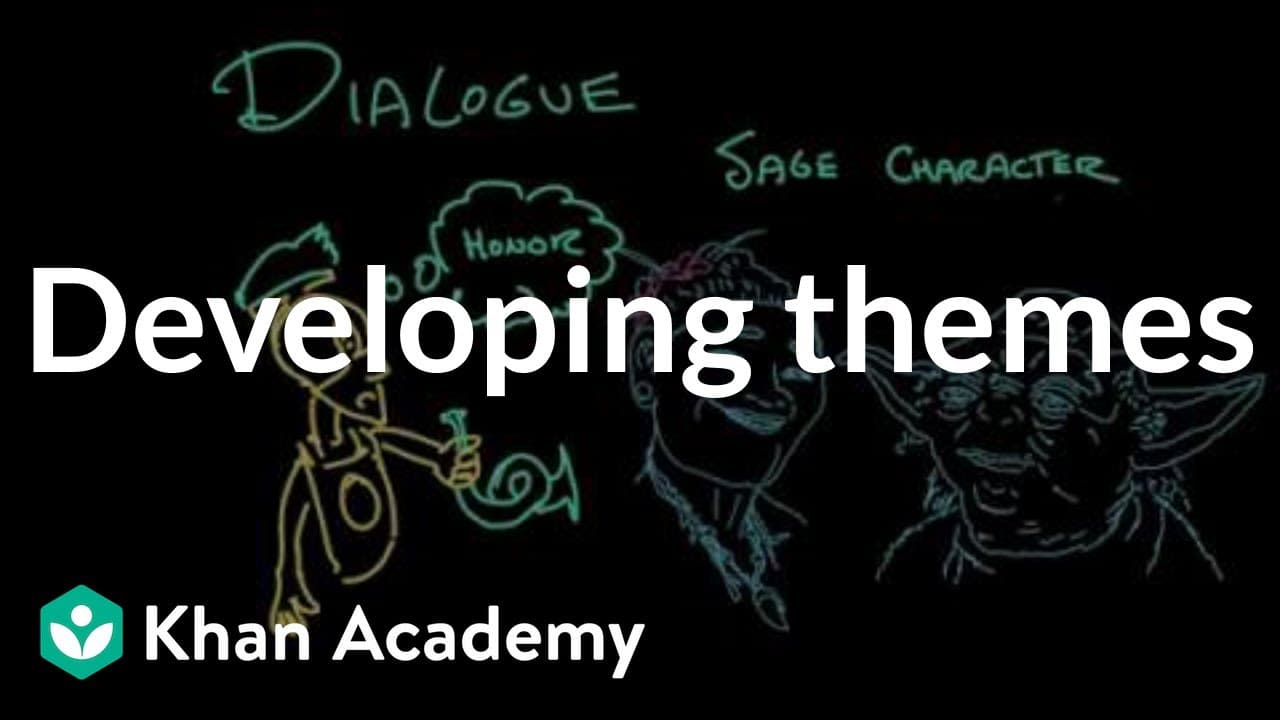
How Authors Develop Themes in Fiction

How Authors Develop Themes in Fiction

This educational video provides a clear and engaging exploration of literary themes, defining them as the link between big world ideas and the specific actions within a text. The narrator breaks down the abstract concept of "theme" into tangible elements, explaining that themes are not just simple morals but complex messages intentionally woven into fiction by authors. Using popular cultural references like *The Lord of the Rings*, *Harry Potter*, and *Moana*, the video demystifies how literary analysis works in a way that is accessible to students. The content is structured around four primary methods authors use to develop themes: the repeated use of symbols, changes in setting, specific dialogue (including "sage" characters), and character actions. Each method is illustrated with concrete examples—such as a girl who loves airplanes seeing birds everywhere to symbolize flight, or a character retreating to a mountain where the weather reflects their internal state. The video also emphasizes the value of re-reading, noting that themes often only become clear once a reader has finished the story and can look back at the complete picture. For educators, this resource serves as an excellent foundation for units on literary analysis and close reading. It moves beyond simply asking "what is the theme?" to asking "how do we know?" This approach encourages critical thinking and evidence-based argumentation. Teachers can use this video to introduce the concept of theme before starting a novel study, or as a tool to help students revise their own creative writing by consciously incorporating symbols and meaningful settings.

Khan AcademyKhan Academy

5mins 31s

Materials

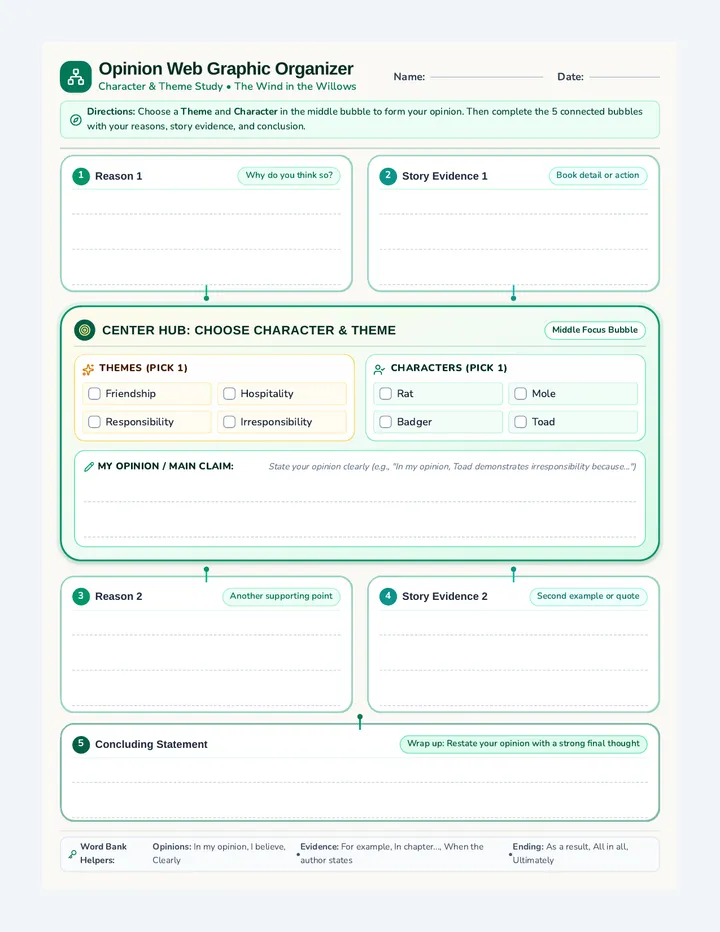
Opinion Web Graphic Organizer

Opinion Web Graphic Organizer

A simplified opinion writing web graphic organizer adapted for ESL and SPED learners. Features a central character and theme web hub directly attached via directional web arrows to four blank writing bubbles, supported by an expanded vocabulary and sentence starter word bank.

M

mkrapazzo

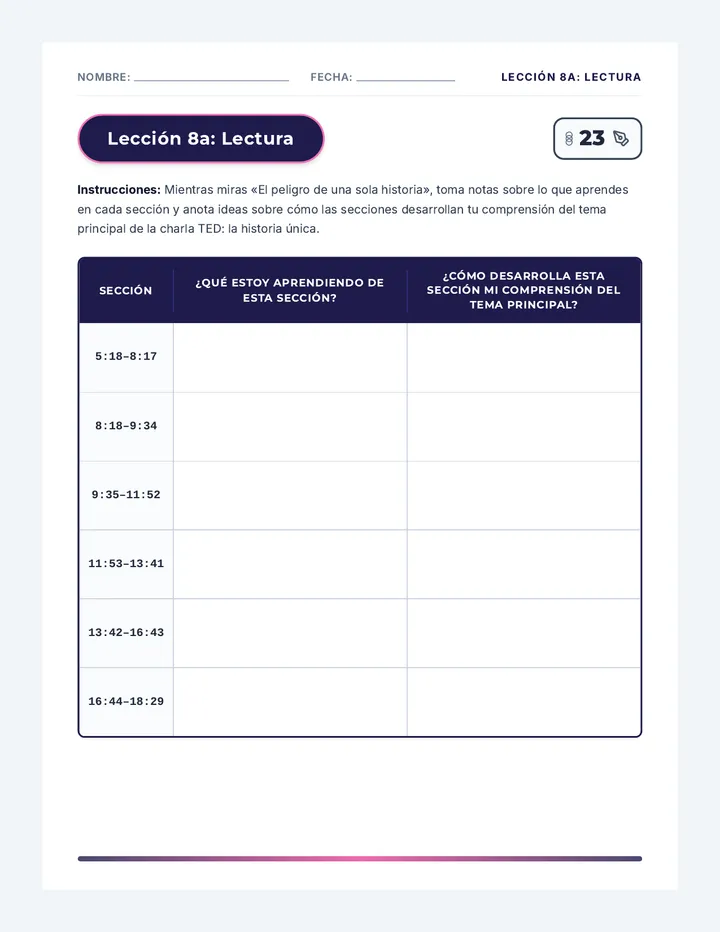
Historia Única Hoja de Trabajo

Historia Única Hoja de Trabajo

Guía y hoja de trabajo en español para el análisis de la charla TED «El peligro de una sola historia» de Chimamanda Adichie, que incluye una tabla de toma de notas por marcas de tiempo y una consigna de escritura rápida con renglones de respuesta.

N

nlewis

First Day Feelings Reading Worksheet

First Day Feelings Reading Worksheet

An adapted reading passage of Patty Hansen's 'The First Day of Middle School' with enlarged, readable text scaled to fit each page, complete with chunked passage text, comprehension check, and emoji reflection organizer.

PL

Patrick l

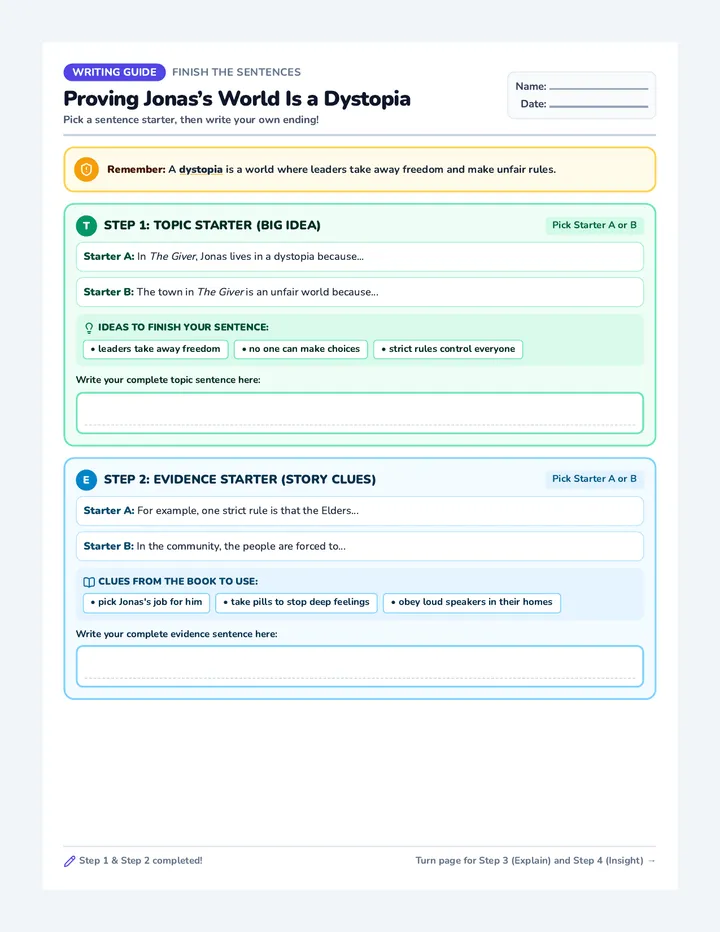
Giver Dystopia Reference Sheet

Giver Dystopia Reference Sheet

A simplified 2-page writing guide for a second-grade reading level. Features structured sentence starters with ending prompt banks and dedicated handwriting lines, allowing students to complete their own analysis to prove The Giver is a dystopian setting.

AM

Ashley McGregor

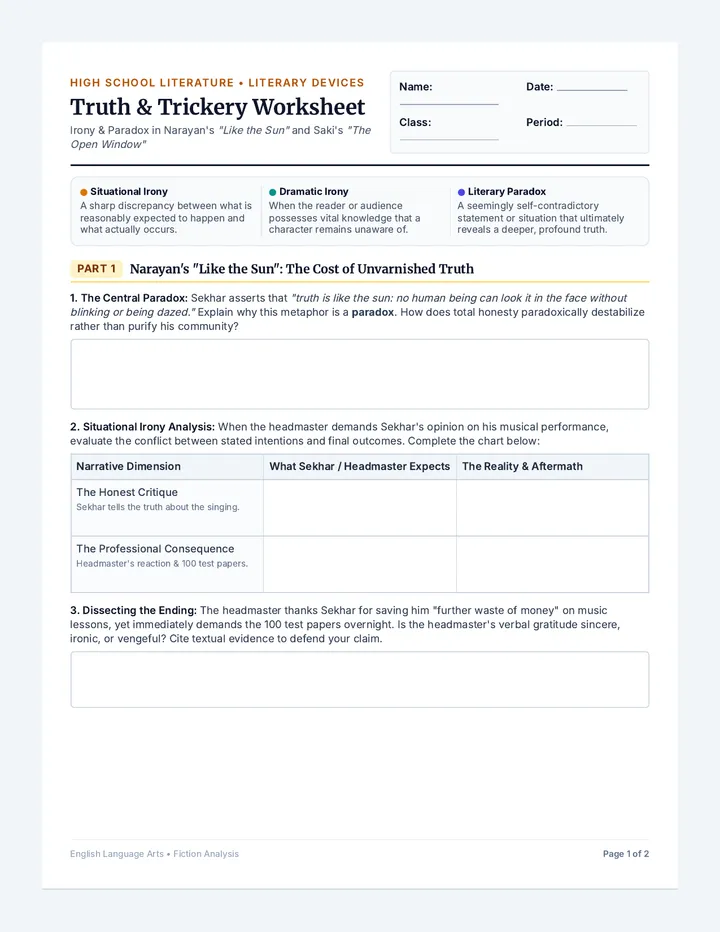
Truth and Trickery Worksheet

Truth and Trickery Worksheet

A rigorous two-page printable literary analysis worksheet exploring irony (situational, dramatic, verbal) and paradox through R.K. Narayan's 'Like the Sun' and Saki's 'The Open Window'. Includes textual analysis, comparative organizers, and synthesis response spaces for high school English students.

PR

Paula Rein

Morning Spark Student Packet

Morning Spark Student Packet

A complete 13-page student morning work packet for Week 5, beginning with an all-inclusive Cover Page and Weekly Progress Tracker, followed by 12 differentiated practice pages across four core subjects (ELA, Mathematics, Science, and US History) with scaffolded, moderate, and independent tiers.

K

kyle.hill

Sequences

Invention Quest Slides

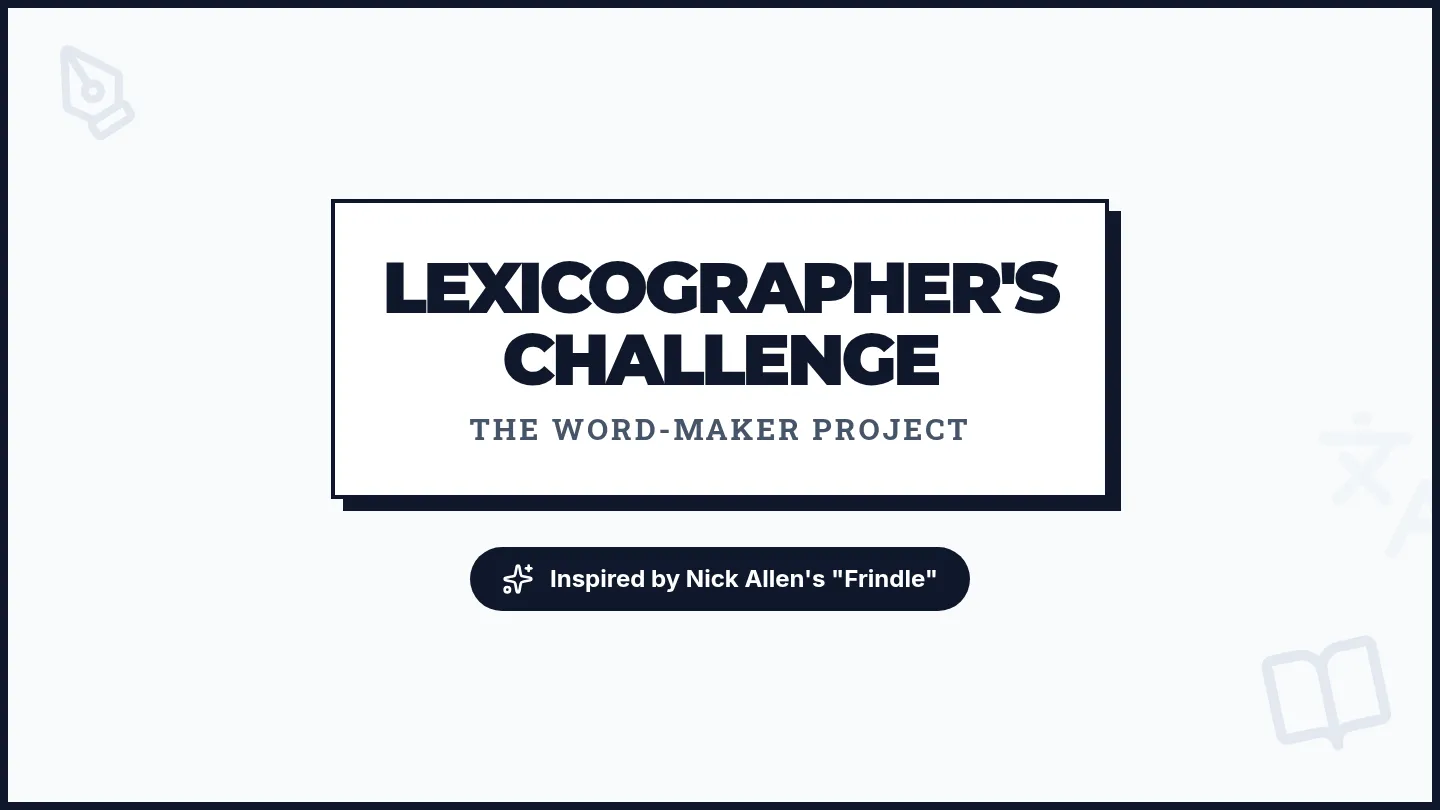
Frindle Frenzy Novel Study

A 9-day novel study for 'Frindle' by Andrew Clements, aligned to 3rd Grade ELAR TEKS, focusing on character development, vocabulary, and plot analysis.

LH

Lucy Hellerman

56
Value Vault Teacher Guide

Metamorphosis Mastery

An 8-week deep dive into Kafka's Metamorphosis for special education students, focusing on abstract thinking, social value, and the human condition through high-engagement activities and visual organizers.

C

Ceeasia.walker

58
Prophecy and Power Slides

Shadows and Crowns

A series of lessons exploring Shakespeare's Macbeth, specifically designed for 10th-grade emergent bilingual students to master complex characterization and thematic elements.

DC

Dylan Clark

30
Copenhagen Clues Slides

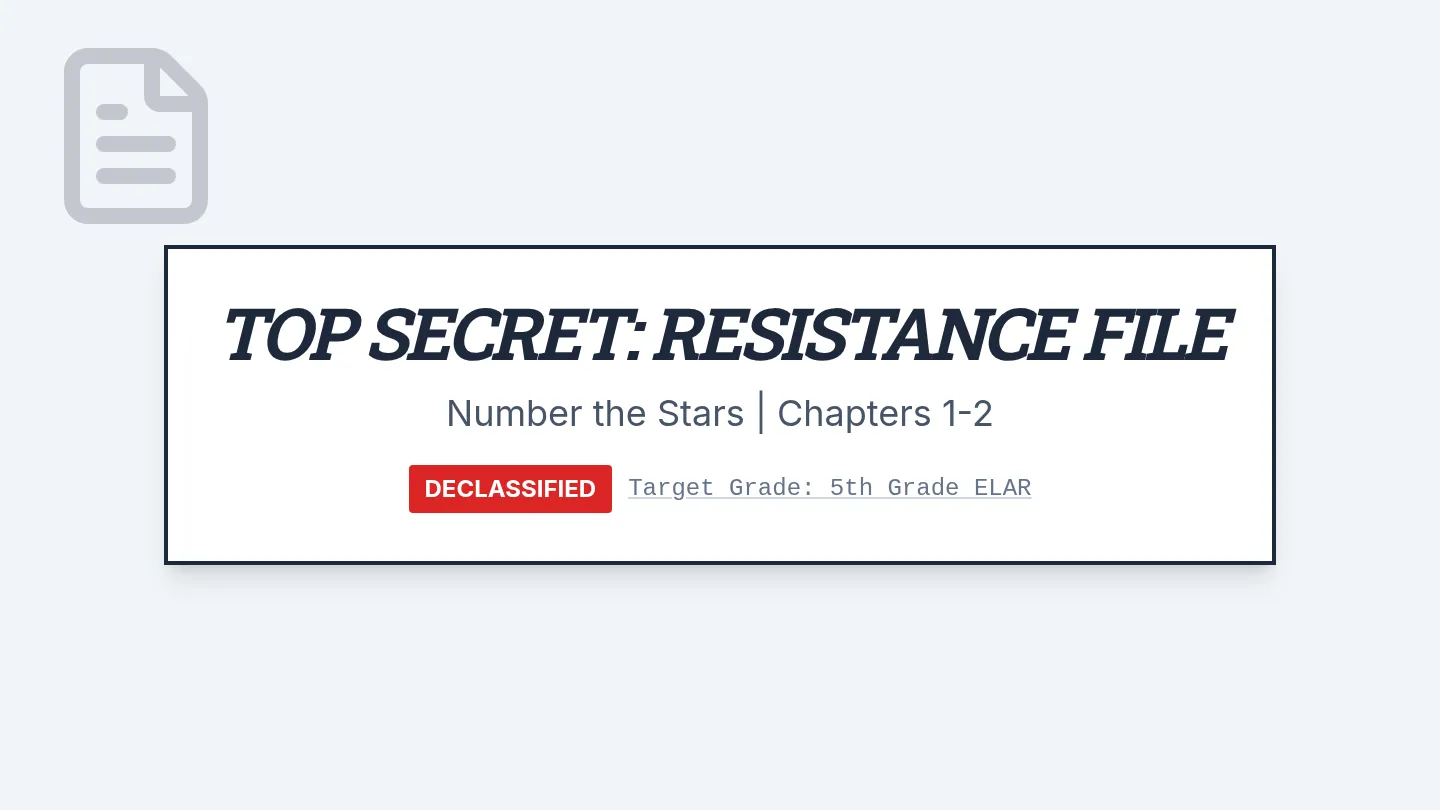
Resistance Chronicles

A 9-day novel study for Number the Stars centered on 5th Grade ELAR TEKS, focusing on character development, plot analysis, and historical context through the lens of a Resistance Secret File.

LH

Lucy Hellerman

79
Detective Nutmeg Story Document

Story Investigators

A series of lessons focused on developing reading comprehension through mystery stories, with tiered assignments for different grade levels.

JJ

Julie Johns

30
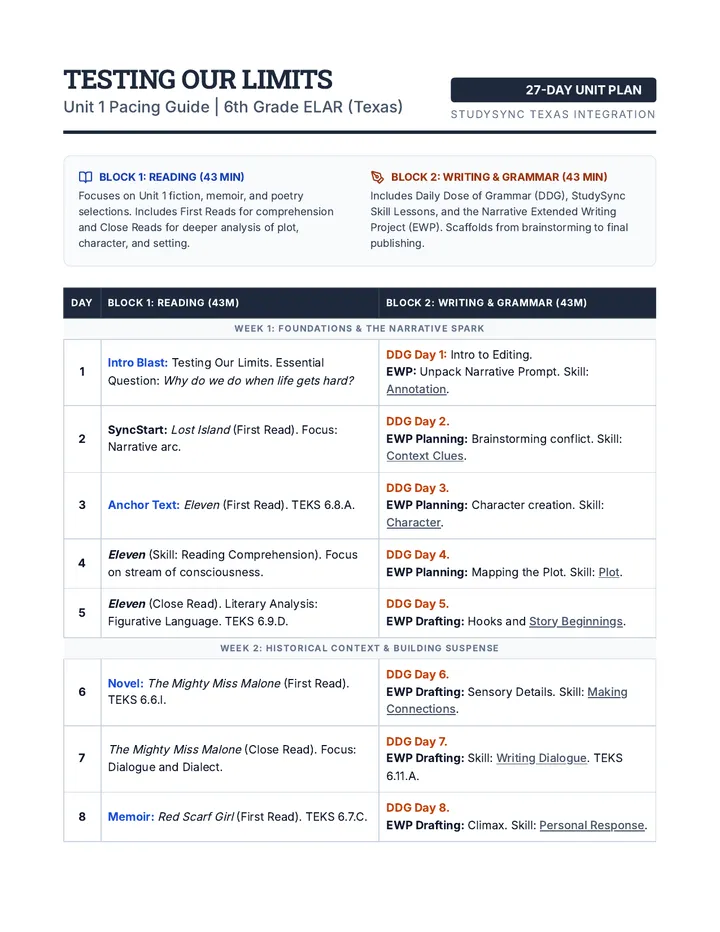
Unit 1 Pacing Guide Document

Testing Our Limits Unit Sequence

A 27-day instructional sequence for 6th Grade ELAR Unit 1: Testing Our Limits, featuring dual blocks for Reading and Writing with daily grammar and skill scaffolding.

DM

Dawn Mustian

81