Lenny.com
Explore
Create
ActivitiesNewMathEnglish Language ArtsScience & EngineeringSocial StudiesGlobal LanguagesHealth & Physical EducationSpecial EducationCounseling & Life SkillsArts & CreativityESL
Lenny.com
Lenny.com
Explore
Create
ActivitiesNewMathEnglish Language ArtsScience & EngineeringSocial StudiesGlobal LanguagesHealth & Physical EducationSpecial EducationCounseling & Life SkillsArts & CreativityESL
Lenny.com
Lenny.com

Solutions

Lenny for EducatorsLenny for SchoolsLenny for Districts

Product

ExploreSign inCreateSupportAbout

Resources

Getting startedMTSS Acceleration Program

© 2026 Lenny Learning Inc.

TermsPrivacyAccessibility
LinkedInInstagramX
Lenny

Phrases And Clauses

Distinction between independent and dependent clauses alongside various phrase types to enhance sentence variety. Targets precise punctuation and the construction of complex grammatical structures.

English Language ArtsPhonics & Reading FoundationsLetter IdentificationLearn Letters A-ZLowercase and Uppercase LettersConsonants and VowelsLetter-Sound AssociationsLetter-Sound Associations: LowercaseLetter-Sound Associations: UppercaseBeginning and Ending SoundsRhymingBlending And SegmentingShort VowelsShort Vowel SoundsConsonant BlendsConsonant DigraphsBlends, Digraphs, and TrigraphsDigraphs, Blends, and Silent LettersLong Vowel SoundsLong Vowel PatternsShort and Long VowelsShort and Long Vowel PatternsSilent EVowel SoundsVowel TeamsR-Controlled VowelsDiphthongs: Oi, Oy, Ou, OwVariant VowelsVariant, Diphthong, And R Vowel PatternsSoft G And CSight WordsIrregular WordsWord RecognitionSyllablesSyllable TypesTwo-Syllable WordsMultisyllabic WordsPhoneme ManipulationDecodable TextsVocabularyAction WordsQuestion WordsNouns and AdjectivesClassify WordsCompound WordsSynonyms and AntonymsHomophonesHomophones and HomonymsShades of MeaningContext CluesPrefixes and SuffixesGreek and Latin RootsAnalogiesIdioms and AdagesForeign Words and ExpressionsWord Choice and UsageReference SkillsReading ComprehensionRead-Along Literary TextsRead-Along Informational TextsReality vs. FictionStory ElementsCharacterSequenceMain IdeaCause And EffectCompare And ContrastReading StrategiesText StructureAuthor's PurposeAuthor's Purpose And ToneAuthor's PerspectivePoint Of ViewThemeInference And ThemeInference And AnalysisPoetry ElementsLiterary DevicesAnalyzing LiteratureAnalyzing Informational TextsComparing TextsAudience, Purpose, And ToneBusiness DocumentsNovel StudyNonfiction Book StudyGrammar & MechanicsSentencesNounsVerbsAdjectivesPronounsCapitalizationPunctuationContractionsConjunctionsPrepositionsArticlesAdjectives And AdverbsVerb TypesVerb TensePronouns And AntecedentsPronoun TypesSubject-Verb AgreementDirect And Indirect ObjectsSentences, Fragments, And Run-OnsPhrases And ClausesCommasSemicolons, Colons, And CommasDashes, Hyphens, And EllipsesSpellingAbbreviationsFormattingVerb Tense And MoodMisplaced ModifiersWritingDescriptive DetailsCreative WritingOpinion WritingTopic SentencesOrganizing WritingLinking WordsSentence VarietyIntroductions And ConclusionsPersuasive And Opinion WritingExpository WritingPersuasive StrategiesDeveloping And Supporting ArgumentsTopic Sentences And Thesis StatementsSummarizingResearch SkillsEditing And RevisingActive And Passive Voice=Writing Clearly And ConciselyDebate & Public SpeakingPublic Speaking BasicsPersuasive TechniquesClaims and EvidenceTypes of ArgumentsReasoning TypesLogical FallaciesTopic ResearchOrganizing EvidenceDebate Speech OrganizationAttacking and Defending ArgumentsClash and EngagementImpact CalculusQuestioning and Cross-ExaminationCritical ThinkingInformal LogicFormal LogicInductive Reasoning

Videos

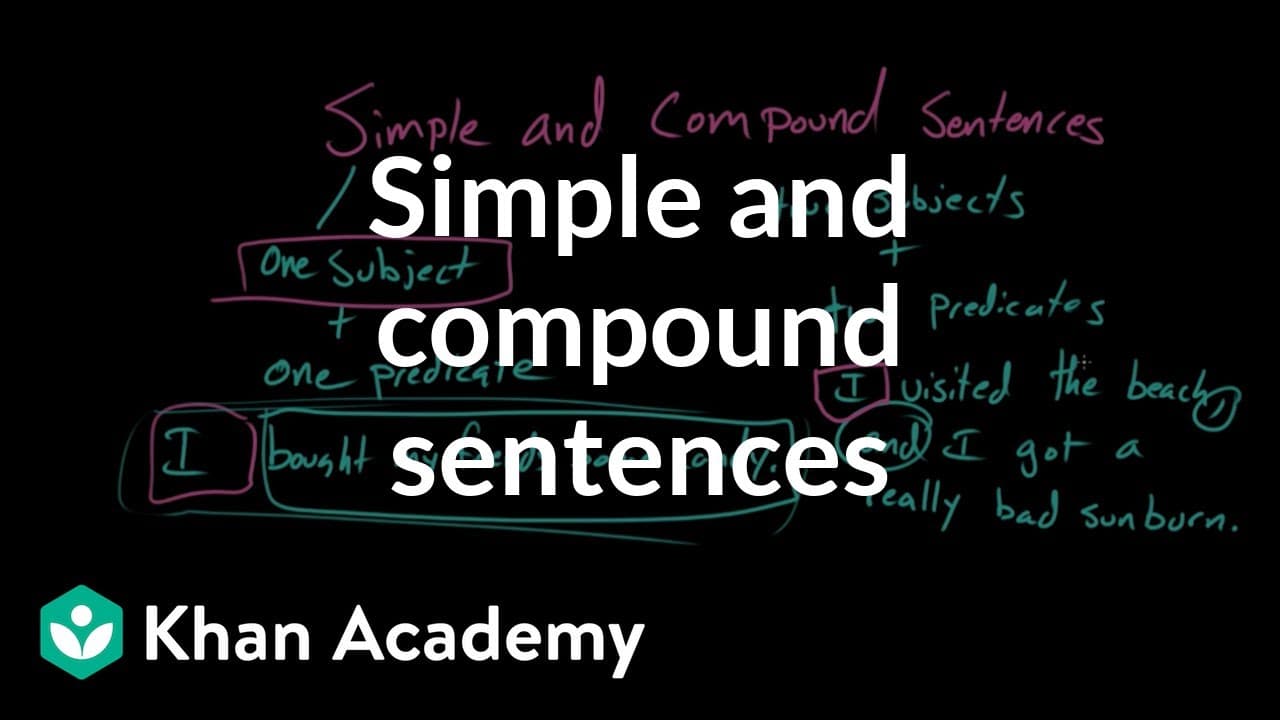
Understanding Simple and Compound Sentences

Understanding Simple and Compound Sentences

In this engaging grammar tutorial, David and Paige explain the structural differences between simple and compound sentences. Using a digital whiteboard, they break down the core components of sentence construction, defining a simple sentence as consisting of a single subject and predicate, while a compound sentence combines two or more independent clauses joined by a conjunction. The video dives into technical grammar terminology in an accessible way, introducing concepts like "independent clauses" and "predicates." A significant portion of the video is dedicated to a common point of confusion: the difference between a compound sentence (two complete thoughts joined together) and a simple sentence with a compound predicate (one subject doing two things). Through specific examples about buying candy and getting sunburned, the narrators visually diagram these differences. For educators, this resource serves as an excellent tool for improving student writing fluency. It moves beyond basic definitions to help students understand sentence variety and the mechanics of combining ideas. The visual diagramming of subjects and predicates provides a clear model for students to analyze their own writing, making it particularly useful for lessons on syntax, editing, and avoiding run-on sentences.

Khan AcademyKhan Academy

4mins 29s

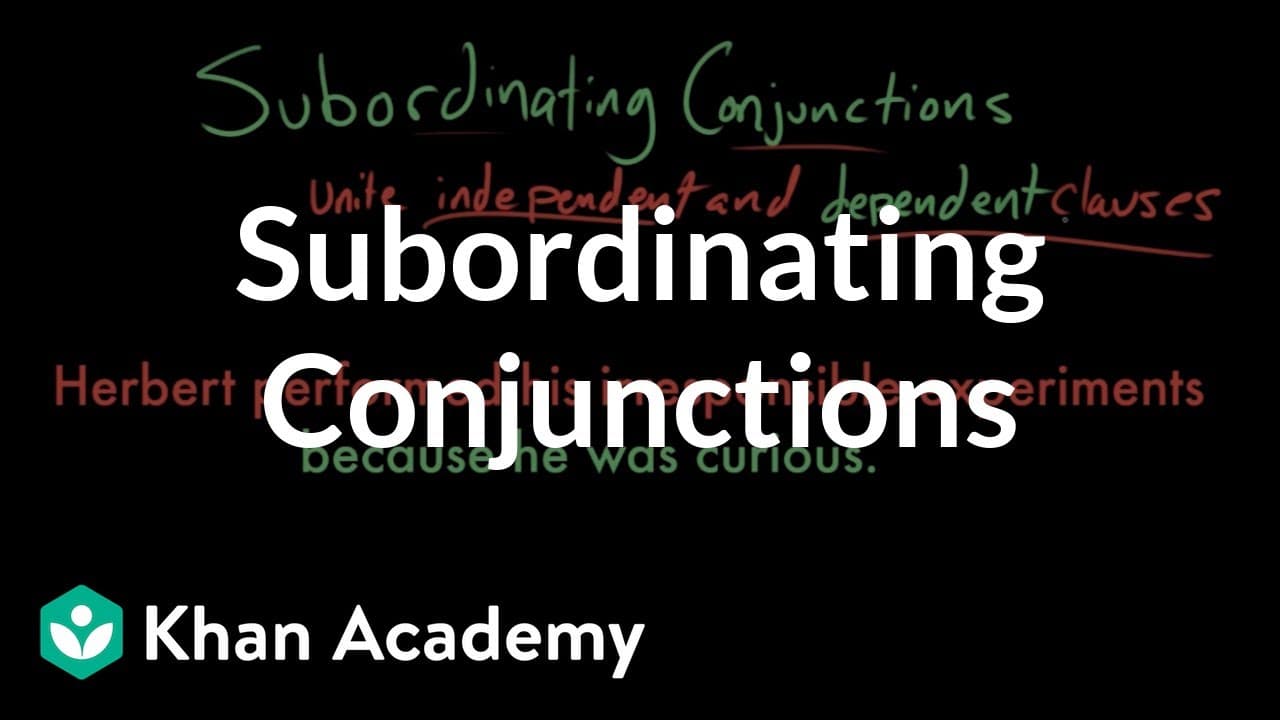
How Subordinating Conjunctions Connect Independent and Dependent Clauses

How Subordinating Conjunctions Connect Independent and Dependent Clauses

This educational video provides a clear and comprehensive introduction to subordinating conjunctions and their role in sentence structure. The narrator breaks down the fundamental difference between independent and dependent clauses, explaining that while all sentences are clauses, not all clauses are sentences. Using the helpful analogy of a tree (independent clause) and a ladder (dependent clause), the video demonstrates how subordinating conjunctions function to connect these two types of clauses to add context and detail to writing. The content covers key grammatical concepts including the definition of a clause (subject plus verb), the identifying features of sentence fragments, and the distinction between coordinating conjunctions (FANBOYS) and subordinating conjunctions. Through humorous example sentences involving characters like Herbert and Sir Reginald, viewers learn practical tests—such as the "Yeah? So what?" test—to identify dependent clauses and determine if a sentence is grammatically complete. For educators, this video is an excellent resource for teaching complex sentence structure and helping students avoid sentence fragments. It simplifies abstract grammatical terms into tangible concepts using visual aids and memorable analogies. The video concludes with a comprehensive list of common subordinating conjunctions, making it a useful reference tool for students looking to add variety and sophistication to their writing.

Khan AcademyKhan Academy

5mins 27s

How to Identify and Use Prepositional Phrases

How to Identify and Use Prepositional Phrases

This engaging educational video introduces students to the concept of prepositional phrases through a clear, memorable analogy of a bridge. The narrator explains that just as a bridge connects two pieces of land, a preposition connects a noun (the object) to the rest of a sentence. The video breaks down the specific components of a prepositional phrase—the starting preposition and the ending object—and demonstrates how to identify them within various sentence structures, including phrases at the beginning, middle, and end of sentences. The content covers key grammatical terminology, including "preposition," "noun," and "object of the preposition." It uses repetitive, step-by-step analysis of example sentences like "We went fishing with Ben" and "Outside the window, the birds are singing" to reinforce learning. Humor is woven throughout to maintain engagement, featuring interruptions from a confused cat named Mr. Whiskers and a tangent about the sounds pelicans make, ensuring the tone remains lighthearted and accessible for elementary students. For educators, this video serves as an excellent core resource for teaching parts of speech and sentence structure. It provides a visual and conceptual framework (the bridge) that helps concrete thinkers grasp abstract grammatical rules. The clear distinction between the preposition itself and the entire phrase makes it valuable for lessons on sentence diagramming, expanding sentences with details (time, place, movement), and improving writing complexity.
Homeschool PopHomeschool Pop

8mins 53s

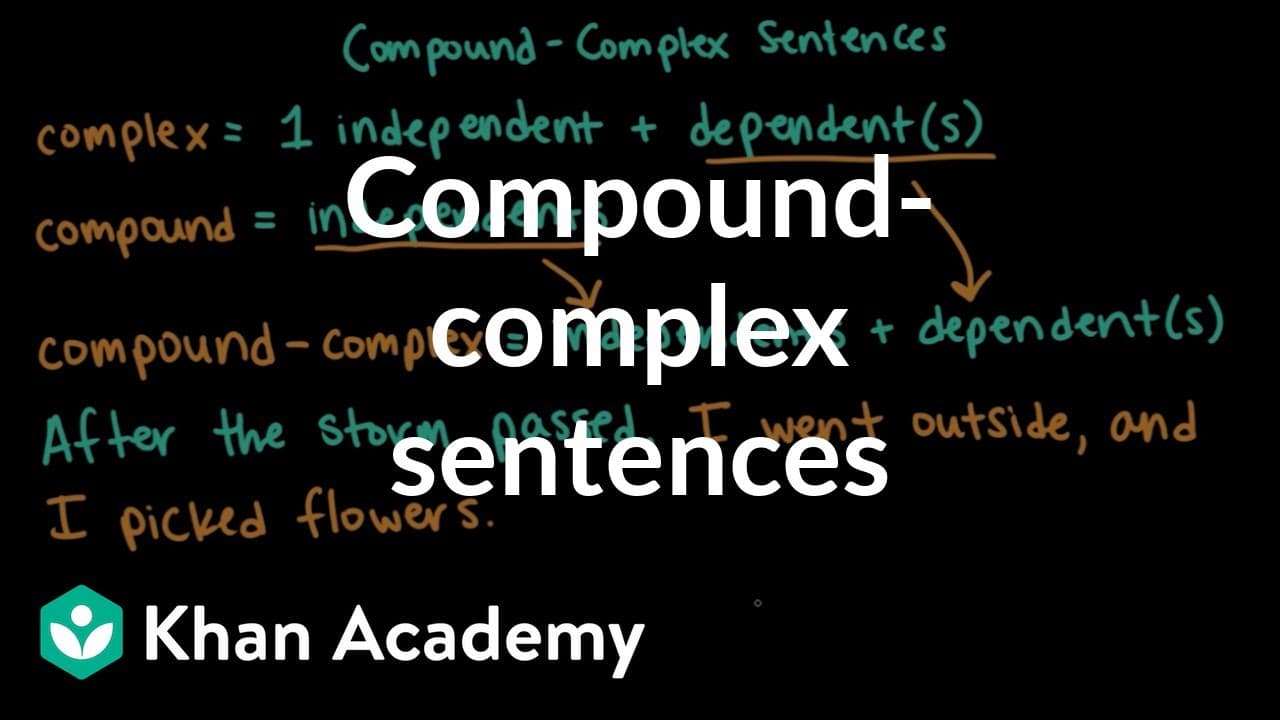
How to Build Compound-Complex Sentences

How to Build Compound-Complex Sentences

This educational video provides a clear and structured explanation of compound-complex sentences, one of the most sophisticated sentence structures in English grammar. The instructors, Paige and Rosie, break down the definition by reviewing the components of simple, compound, and complex sentences before demonstrating how these elements combine. They use a digital whiteboard to visually map out the requirements: at least two independent clauses and at least one dependent clause. The video explores key grammatical themes including clause identification (independent vs. dependent), the use of coordinating conjunctions, and sentence variety. Through two distinct examples—one about picking flowers after a storm and a humorous narrative about a character named Alberto with a walnut allergy—the instructors demonstrate how to identify and construct these sentences. They also show how sentences can be expanded with additional clauses while maintaining their classification. For educators, this resource is an excellent tool for middle school English Language Arts classrooms. It demystifies a concept that often confuses students by visually isolating the parts of speech. Teachers can use this video to transition students from writing simple sentences to more nuanced, rhythmic prose. It serves as a perfect introduction to a lesson on sentence variety or as a remediation tool for students struggling with run-on sentences or fragments.

Khan AcademyKhan Academy

4mins 14s

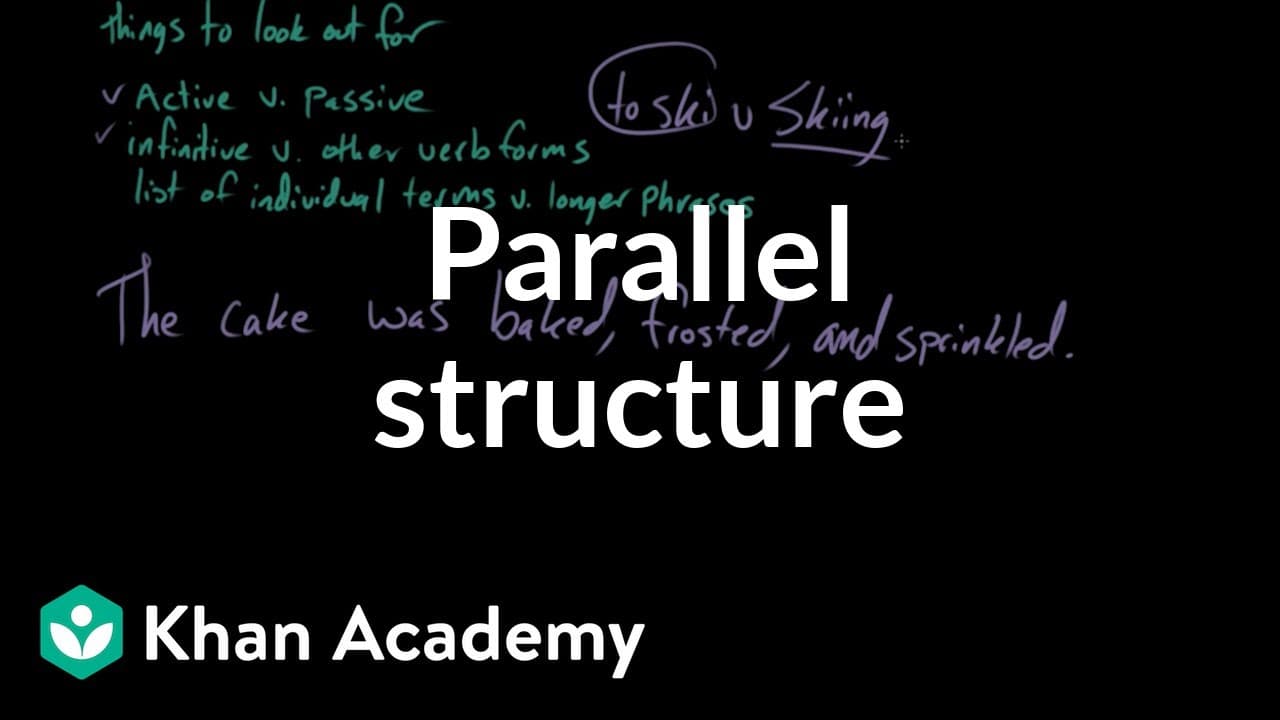
Mastering Parallel Structure in Writing

Mastering Parallel Structure in Writing

This educational video provides a clear and engaging guide to understanding parallel structure in writing. Hosted by David, Rosie, and Paige, the lesson distinguishes parallel structure as a stylistic choice rather than a strict grammatical rule, emphasizing how it creates harmony and flow in sentences. Through handwritten visual examples on a blackboard, the instructors demonstrate how to align items in a list—whether they are nouns, verbs, or phrases—to ensure they match in form.

Khan AcademyKhan Academy

5mins 5s

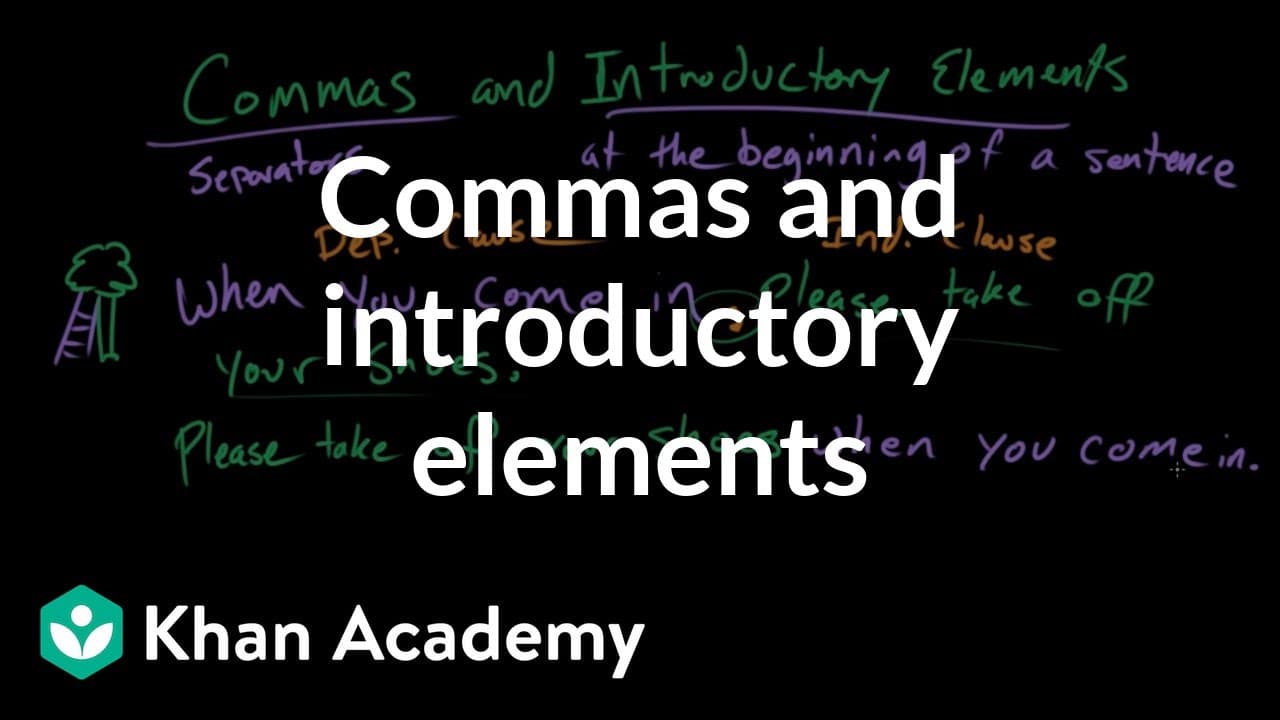
Using Commas with Introductory Elements

Using Commas with Introductory Elements

This educational video provides a clear and engaging guide to using commas with introductory elements in sentences. The narrators, David and Paige, break down complex grammatical concepts into easy-to-understand rules, specifically focusing on dependent clauses and sentence adverbs. Through handwritten examples and visual analogies, viewers learn exactly when a comma is required to separate an introduction from the main body of a sentence. The video explores three main scenarios: identifying dependent clauses at the start of sentences, understanding why commas aren't needed when the clause order is reversed, and how to punctuate sentence adverbs like "Initially" or "Basically." The narrators use color-coding to distinguish between clause types and provide memorable metaphors, such as comparing a dependent clause to a ladder leaning against a tree, helping students visualize the relationship between sentence parts. Teachers can use this video to introduce or reinforce specific punctuation rules within a writing curriculum. It is particularly valuable for helping students move beyond simple sentence structures to more complex, varied syntax. The conversational tone and clear visual aids make abstract grammar rules concrete, supporting students in editing their own writing for proper punctuation and clarity.

Khan AcademyKhan Academy

4mins 35s

Materials

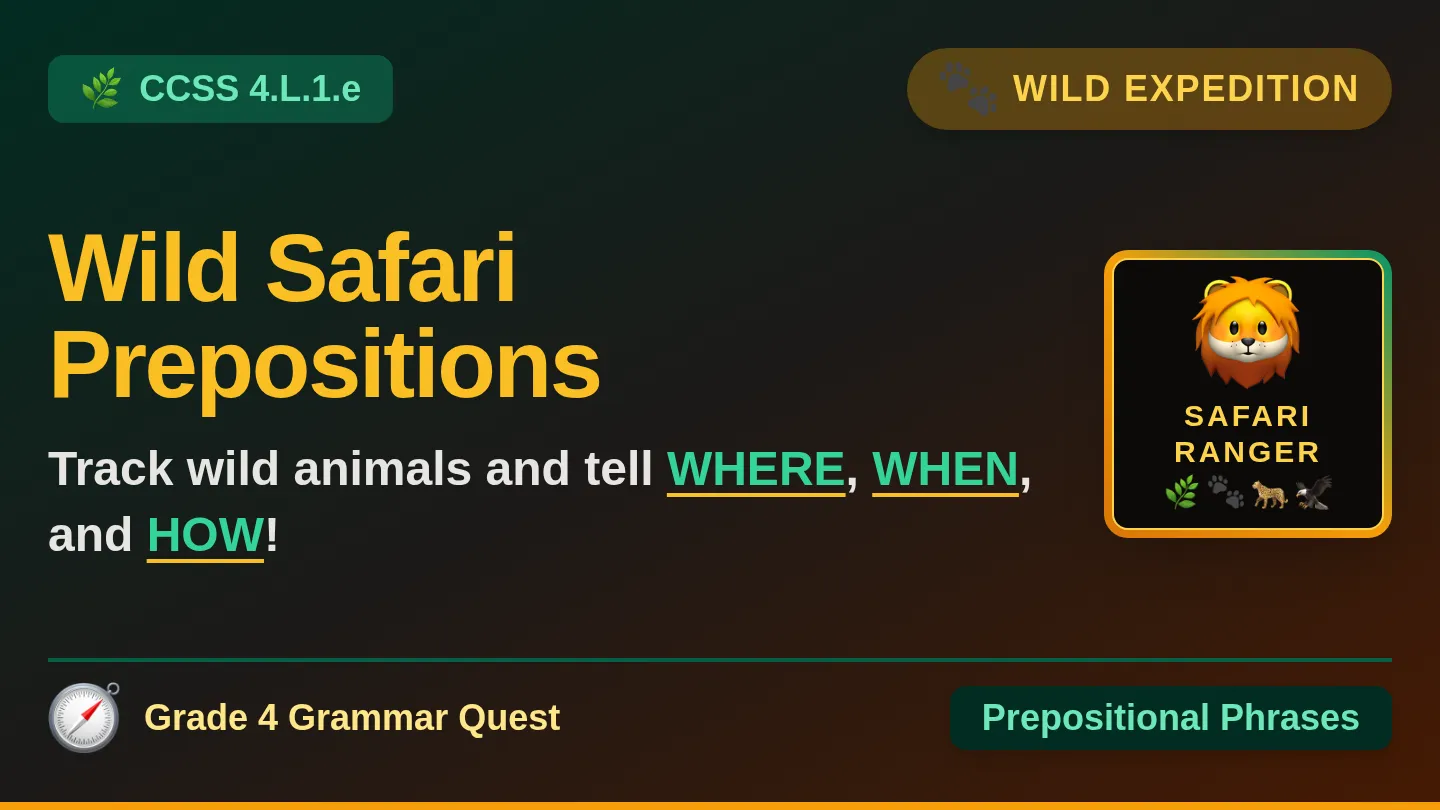
Wild Safari Preposition Slides

Wild Safari Preposition Slides

An expanded 40-slide safari presentation featuring 16 wild animal practice questions paired with 16 matching answer slides, including dedicated practice and mini-lesson on introductory prepositional phrases placed at the start of sentences.

MS

Mallory Stradley

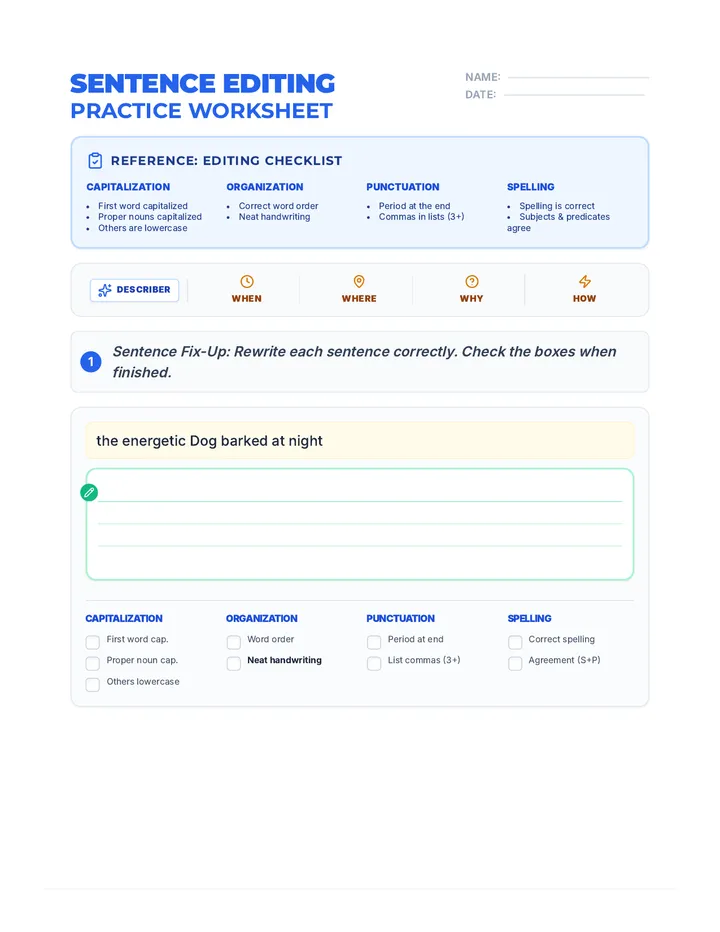
Sentence Editing Practice Worksheet

Sentence Editing Practice Worksheet

An extensive 6-page worksheet for sentence building and correction. Features an editing checklist for review at the top of Page 1, followed by four 'Sentence Fix-Up' items and six complex frames. All tasks include 4 handwriting lines and a standardized checklist with increased font sizes for better legibility. Subtitle removed and font sizes polished for classroom use.

EV

Erin Venuti

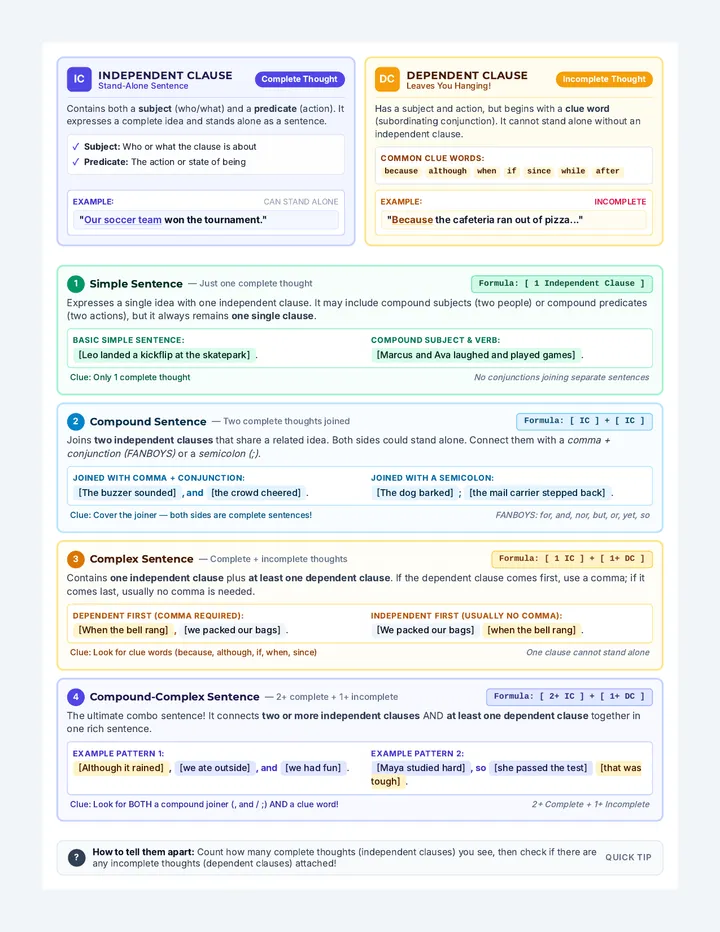
Sentence Blueprint Reference Sheet

Sentence Blueprint Reference Sheet

A one-page reference sheet with expanded, perfectly proportioned sentence type cards that fully eliminate blank space while maintaining clear visual hierarchy.

AI

Allison Ingraham

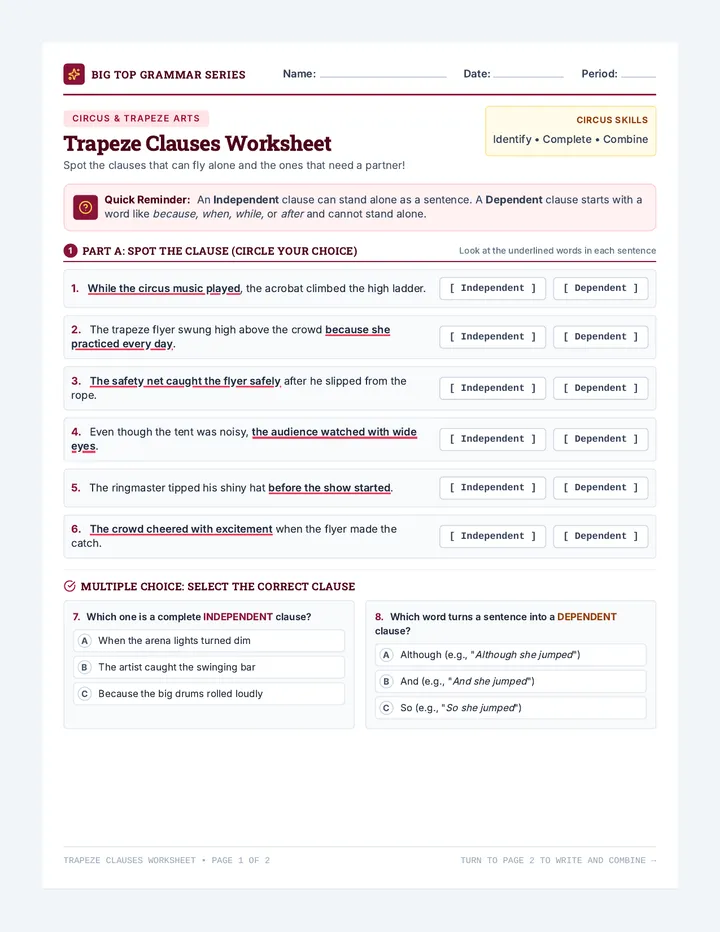
Trapeze Clauses Worksheet

Trapeze Clauses Worksheet

A high-interest, accessible two-page grammar worksheet themed around the circus and trapeze artists, tailored for high school SPED students with low reading levels. Students identify independent and dependent clauses, write clauses to finish circus sentences, and combine clauses with proper punctuation.

LD

Lolecia Day

ECR Polish Checklist Document

ECR Polish Checklist Document

A single-page, print-ready revising and editing checklist for 7th-grade Extended Constructed Responses (ECR), featuring prompt-alignment color coding, desert detection, sentence pattern crafting, evidence analysis verification, and CUPS proofreading.

K

knessa

STAAR Revising Editing Anchor Chart

STAAR Revising Editing Anchor Chart

A two-page STAAR and TEKS aligned 7th Grade RLA anchor chart and student notebook insert covering revising (structure, thesis, transitions, ARMS) and editing (sentence boundaries, FANBOYS, AAAWWUUBBIS, CUPS, and high-frequency STAAR question stems).

AS

Adrienne Synatschk

Sequences

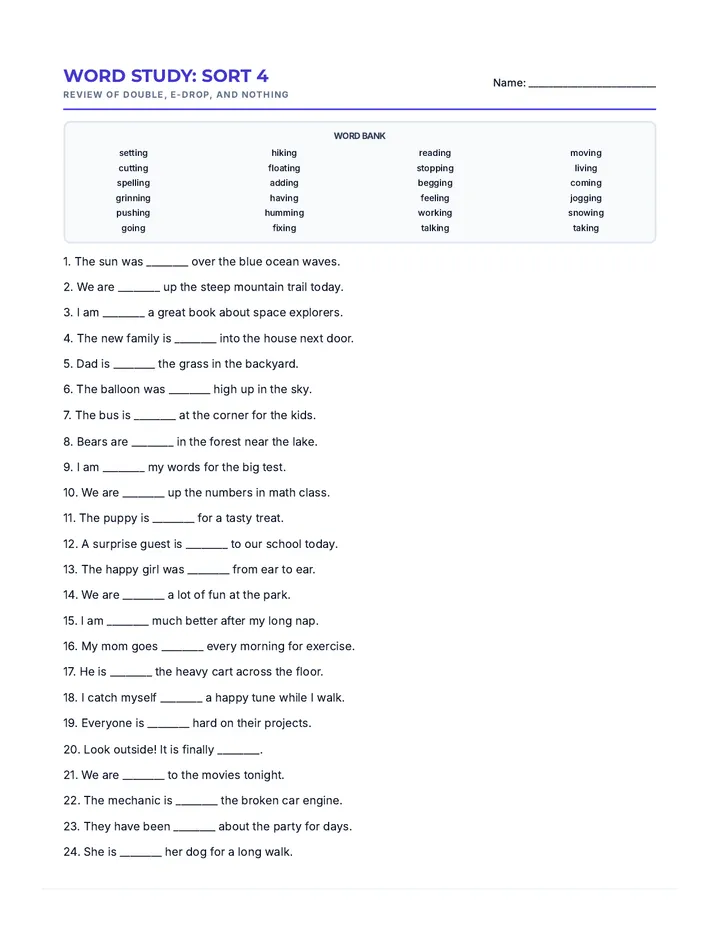
Inflections and Past Tense Worksheets 2 v2

Word Study Master Collection

A comprehensive collection of 56 word study sorts for 4th-grade students, covering everything from basic vowel patterns and inflected endings to advanced syllable junctures, prefixes, and suffixes.

N

nmack

15
Scout Sample Essay

Game Changers Research Unit

A 5-week research unit that scaffolds the process paragraph-by-paragraph. Students define significance, analyze the 'Four Days in October' case study, and turn in each paragraph separately, focusing on historical context, systemic barriers, and societal impact with a dedicated lesson on counterarguments.

W

william.whitlow

18
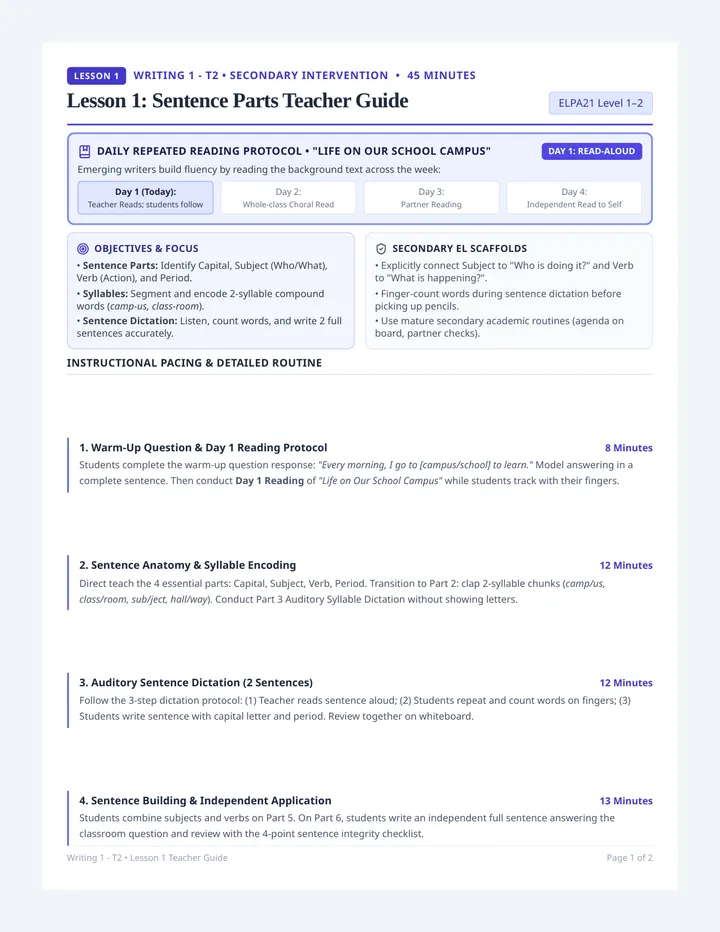
Sentence Parts Teacher Guide

Writing 1 - T2

A 5-week foundational writing intervention for secondary emerging English learners focused on school and community themes, featuring syllable and affix encoding, 2 sentence dictations per lesson, sentence parts and building, and culminating in two-sentence question responses with reasoning.

KJ

Katie Jordan

17
Raven Pacing Guide

Gothic Despair

A two-day exploration of Edgar Allan Poe's 'The Raven', analyzing poetic craft, gothic elements, and the emotional descent of the narrator through creative performance tasks and analytical writing.

LF

Lindsey Foulks

17
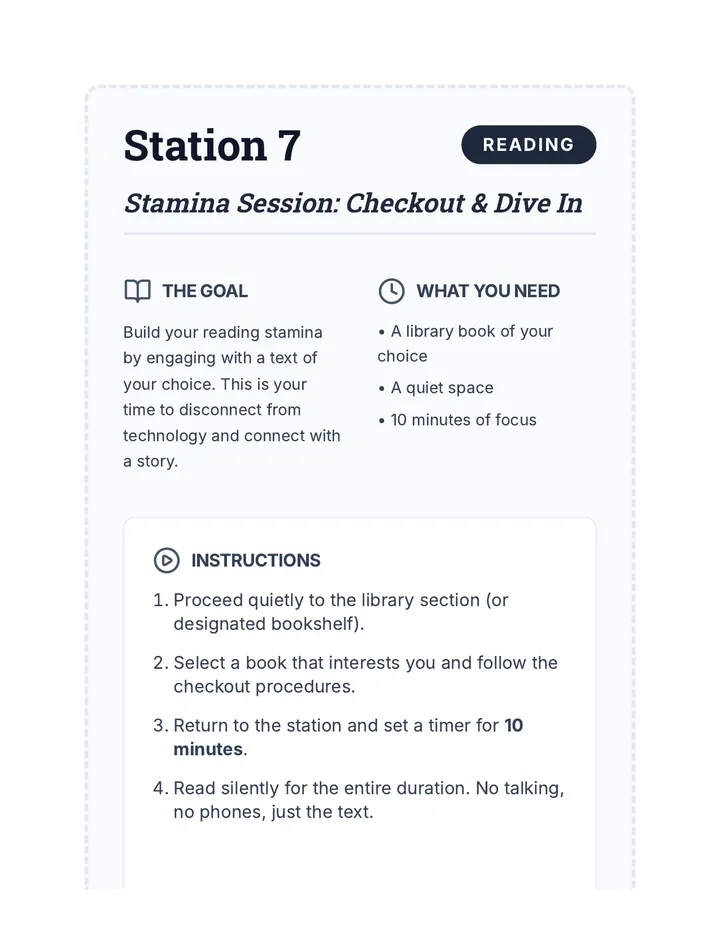
Reading Stamina Task Card

Sophomore Skills Circuit

A series of interactive stations designed to reinforce sophomore English skills through hands-on activities, physical movement, and sustained reading.

JR

Jessica Ross

15
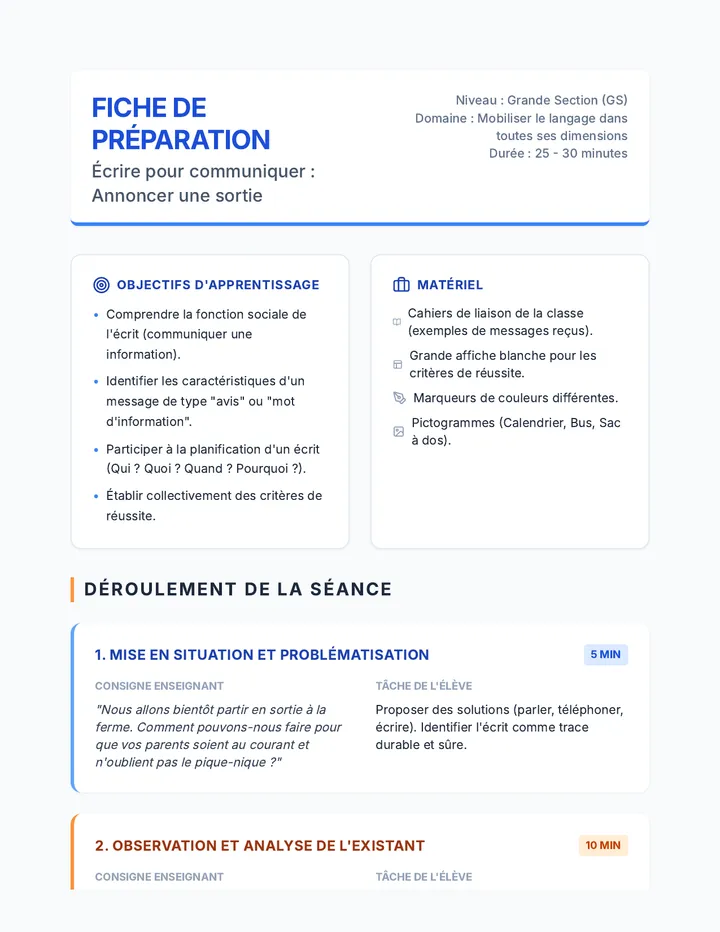
Mission Message Guide Enseignant

Expertise Formation Premier Degré

Une série de modules de formation destinés aux conseillers pédagogiques pour renforcer leur expertise en ingénierie de formation continue, spécifiquement appliquée à l'enseignement du français à l'école primaire.

VD

Val Désirée

27

Lessons

Second Proof Assessment Plus Added Question

The Editors Desk

A comprehensive lesson on advanced revising and editing for 10th grade, focusing on organizational structure, parallel construction, sentence effectiveness, and grammatical precision. Students will learn to transform drafts into polished, professional pieces of writing.

SM

Samantha Moore

6
Paragraph Mastery Slides

Paragraph Architecture

A senior secondary literacy lesson focused on advanced paragraph construction techniques including Kernel Sentences, the Seldon Method, and sentence upgrading for high-level analysis.

E

elizabeth.metzke

20
Repair Shop Slides

Sentence Repair Shop

A comprehensive lesson focused on identifying and correcting sentence fragments using the 'Three Question Test' and subordinating conjunctions. Students act as 'Sentence Mechanics' to repair incomplete thoughts.

PM

Pam Muise

9
Structure Blueprint Worksheet

Informational Architect

A comprehensive lesson on identifying and analyzing nonfiction text structures, featuring a blueprint-themed instructional guide and hands-on structural analysis.

V

vivianbelarmino

8
Paraphrase Power Lesson Plan

Paraphrase Power

This lesson empowers students to master the essential skill of paraphrasing, helping them understand, interpret, and accurately communicate information in their own words.

C

ConceptX

15
Celtics Showdown Passage

Great Word Trek

A multi-day lesson exploring morphology and syllable division through the lens of Westward Expansion. Students learn to decode complex words with prefixes and suffixes while building vocabulary related to pioneer life.

DG

Diana Gordon

9