Mapping Coordinates Slides Mapping the World
Coordinate Systems & Spatial Perspectives
Vector Geometry Masterclass • Lesson 1
How do we see?
The Mapmaker
"The city is laid out on a grid. Go 4 blocks North and 3 blocks East."
The Radar Operator
"Target identified. 5 miles out, bearing 37 degrees North-East."
Both describe the same spot. Why use different systems?
Cartesian System (x, y)
The Rectangular approach.
Based on two orthogonal (perpendicular) axes: \(x\) and \(y\).
Describes position as horizontal and vertical displacement from an origin (0,0) .
Best for: Flat terrain, architectural layouts, and linear motion.
(x, y) x distance y distance
Polar System (r, θ)
(r, θ) θ r (magnitude)
The Directional approach.
Based on distance (\(r\)) and angle (\(\theta\)) from the positive x-axis.
Describes "How far?" and "Which way?"
Best for: Navigation, rotation, and circular motion (like planets or propellers).
Building the Bridge
Polar to Cartesian
If you have \((r, \theta)\) and need \((x, y)\):
\[x = r \cdot \cos(\theta)\]
\[y = r \cdot \sin(\theta)\]
Cartesian to Polar
If you have \((x, y)\) and need \((r, \theta)\):
\[r = \sqrt{x^2 + y^2}\]
\[\theta = \tan^{-1}(y/x)\]
Why This Matters in Physics
Vectors are essentially physical quantities defined in Polar terms (Magnitude & Direction), but they are easiest to add in Cartesian terms (Components).
Forces
Pushing an object at an angle.
Velocity
A plane flying through a crosswind.
Fields
Electromagnetic strength and direction.
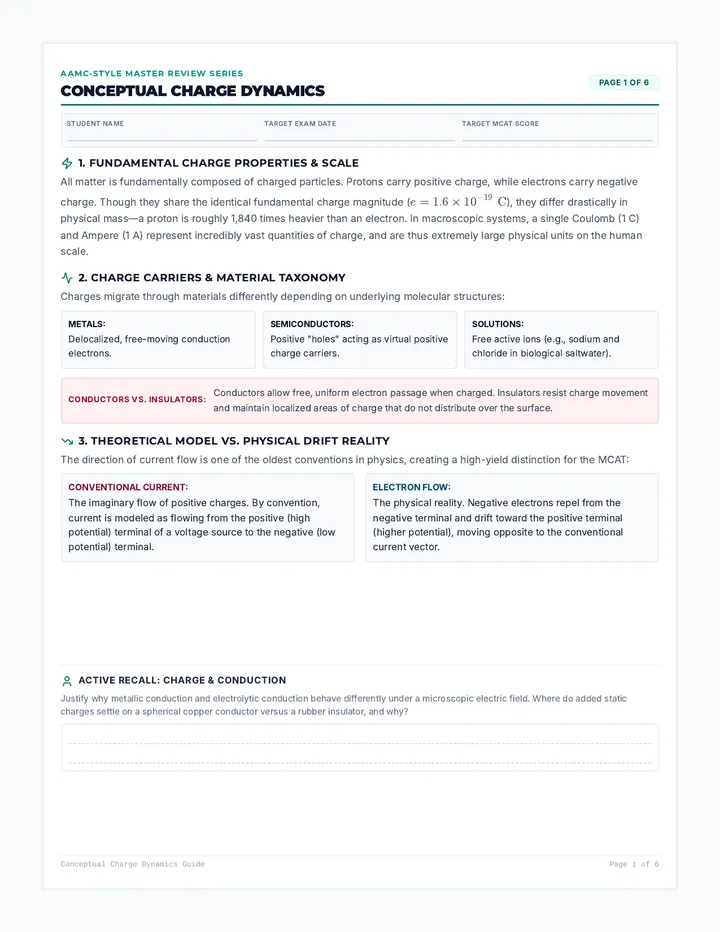
Coordinate Conversion Worksheet Coordinate Conversion
Vector Geometry Masterclass • Lesson 1
Name:
Date:
Polar to Cartesian
\(x = r \cos(\theta)\)
\(y = r \sin(\theta)\)
Cartesian to Polar
\(r = \sqrt{x^2 + y^2}\)
\(\theta = \tan^{-1}(y/x)\)
1
Mathematical Translation
A. Convert the Polar coordinate \((10, 30^\circ)\) to Cartesian \((x, y)\).
ANSWER:
B. Convert the Cartesian coordinate \((3, 4)\) to Polar \((r, \theta)\).
ANSWER:
C. An object is at \((5, -5)\). Find its Polar direction \(\theta\) in the 4th quadrant.
ANSWER:
D. A force of 20N is applied at \(135^\circ\). Find the horizontal component \(F_x\).
ANSWER:
2
Spatial Perspectives
Case Study: The Air Traffic Controller
A radar station at the origin tracks a drone. The drone is currently located at \(x = 12 \text{ km}\) East and \(y = 5 \text{ km}\) North of the station. The station needs to send a signal directly to the drone using its parabolic dish.
1. At what angle \(\theta\) relative to the East axis should the dish be pointed?
2. What is the straight-line distance \(r\) to the drone?
Critical Thinking: System Selection
Read each scenario and check which coordinate system (Cartesian or Polar) would be most efficient to use. Explain your choice.
Scenario A: Designing the floor plan for a rectangular warehouse.
Cartesian
Polar
Reasoning:
Scenario B: Calculating the tension in a rope pulling a sled at an angle.
Cartesian
Polar
Reasoning:
Coordinate Systems Teacher Guide Teacher Facilitation Guide
Lesson 1: Mapping the Physical World
Duration
50 - 60 Minutes
Key Skill
Coordinate System Conversion
Physics Focus
Vector Components
1
The Hook: Spatial Perspectives (10 min)
Start by posing the question on Slide 2. Don't reveal the answers immediately. Ask students to describe the location of the classroom clock using "steps" (Cartesian) vs "pointing and distance" (Polar).
"Why does a pirate use a compass (Polar) but a city planner uses a grid (Cartesian)?"
2
Direct Instruction: Formalizing Systems (15 min)
Use Slides 3-5 to introduce the mathematical definitions. Emphasize that \(\theta\) is always measured from the positive x-axis (counter-clockwise).
Common Misconceptions:
Calculator Mode: Students often forget to check if their calculator is in Degrees or Radians. For this lesson, stay in Degrees.
Tangent Inverse: Remind students that \(\tan^{-1}(y/x)\) only gives values in Quads I and IV. They must look at the signs of x and y to adjust for Quads II and III.
3
Skill Building: Conversion Lab (20 min)
Distribute the Coordinate Conversion Worksheet . Monitor students as they work through Part 1. For Part 2 (System Selection), encourage debate. There isn't always one "correct" answer, but rather a "most efficient" one.
Quick Answer Key
A. \(x = 8.66\), \(y = 5.00\)
B. \(r = 5\), \(\theta = 53.1^\circ\)
C. \(\theta = -45^\circ\) or \(315^\circ\)
D. \(F_x = 20 \cos(135^\circ) = -14.14N\)
Drone: \(r = 13\text{ km}\), \(\theta = 22.6^\circ\)
Vector Addition Slides Geometric Addition
Building Resultants with Spatial Logic
Vector Geometry Masterclass • Lesson 2
The Shortcut
If you walk 4 km North and then 3 km East , you haven't moved 7 km away from your start point.
5 km
That's the resultant . But why does the geometry work that way?
4 km 3 km 5 km (Resultant) START
Tip-to-Tail Rule
How to add vectors geometrically:
1
Draw the first vector from the origin.
2
Draw the tail of the second vector at the tip of the first.
3
The Resultant (\(R\)) is the arrow from the start to the final tip.
Vector A Vector B Resultant (R)
Complex Polygons
Adding 3+ Vectors
Just keep stacking! Tip-to-tail, tip-to-tail. It doesn't matter what order you add them in.
Commutative Property:
\(A + B + C = C + A + B\)
"The resultant is the distance and direction needed to get 'home' in one straight flight."
The Geometric Limit
The Resultant cannot be longer than the sum of the magnitudes of the individual vectors.
\(|A + B| \le |A| + |B|\)
Think about it: You can't reach a point further away than the total distance you walked!
Vector Polygon Lab Handout Vector Construction Lab
Geometric Addition & Polygon Analysis
Name:
Instructions
For each problem, draw the given vectors on the grid using the tip-to-tail method. Use a ruler for straight lines and an arrow for the direction. Draw the Resultant Vector (\(R\)) as a dashed line from start to finish.
1
The Right Turn
A ship travels 6 units East , then 8 units North .
1. Draw the vectors.
2. Measure the magnitude of the resultant.
3. Calculate the angle \(\theta\).
Magnitude \(|R|\):
Angle \(\theta\):
START (0,0)
2
Multi-Step Journey
Add these three displacement vectors:
\(\vec{A} = 4 \text{ units North}\)
\(\vec{B} = 10 \text{ units East}\)
\(\vec{C} = 4 \text{ units South}\)
PREDICT:
What should the resultant be before you draw it?
START
3
The Polygon Closure
Draw four vectors of your choice that form a closed polygon (the final tip ends exactly back at the start).
Analysis
What is the magnitude of the Resultant for a closed polygon?
In physics, this represents "static equilibrium" — all forces cancel out.
Vector Addition Key Answer Key
Lesson 2: Geometric Addition
1 Exercise 1: The Right Turn
Calculations:
Magnitude: \(|R| = \sqrt{6^2 + 8^2} = \sqrt{36 + 64} = 10 \text{ units}\)
Angle: \(\theta = \tan^{-1}(8/6) \approx 53.1^\circ\)
Target Visual
2 Exercise 2: Multi-Step Journey
Calculations:
Vector A (4N) and Vector C (4S) are opposite and equal magnitude. They cancel out completely in the y-direction (\(4 - 4 = 0\)).
Resultant: 10 units East (\(0^\circ\))
Target Visual (Rectangular Loop)
3 Exercise 3: Polygon Closure
For a closed polygon, the Resultant magnitude is zero .
Teaching Tip: This is a great time to introduce the concept of Equilibrium . If these were forces, the object would not accelerate. If these were displacements, the person ended up exactly where they started.
Inclined Plane Slides Decomposing Forces
Mastering the Inclined Plane
Vector Geometry Masterclass • Lesson 3
The Ramp Problem
Gravity always pulls straight down .
But on a ramp, the object moves along the slope .
How much of gravity is actually making the object slide?
θ Weight (W)
Rotate Your Perspective
x' (Parallel) y' (Perpendicular)
Instead of using horizontal/vertical axes, we rotate the grid to match the ramp.
x-axis: Parallel to the slope.
y-axis: Perpendicular to the slope.
This makes the math 10x easier!
The Gravity Split
Parallel Component (\(F_{||}\))
\(W \cdot \sin(\theta)\)
Pulls the box DOWN the ramp.
Perpendicular Component (\(F_{\perp}\))
\(W \cdot \cos(\theta)\)
Pushes the box INTO the ramp.
Decomposing a single force into two useful geometric components.
Slope Mastery Worksheet Slope Mastery
Decomposing Forces on Inclined Planes
Name:
1
The Stationary Sled
A sled with a weight of 500 N is parked on a hill with a \(20^\circ\) incline .
Calculations
Find the Parallel Force component (\(F_{||}\)):
Find the Perpendicular Force component (\(F_{\perp}\)):
Force Diagram Area
2
The Frictionless Slide
"A 10 kg box is released from the top of a frictionless ramp tilted at \(35^\circ\). Calculate the acceleration of the box down the ramp."
Step-by-Step Resolution:
1. Calculate Weight (\(W\))
2. Calculate \(F_{||}\)
3. Acceleration (\(a = F/m\))
The Geometry Challenge
If the angle of the ramp increases from \(20^\circ\) to \(60^\circ\), what happens to the ratio of \(F_{||}\) to \(F_{\perp}\)? Support your answer using the properties of sine and cosine.
Inclined Plane Teacher Guide Teacher Guide
Lesson 3: Decomposing Shapes & Forces
Core Objective
Students will learn to resolve a vertical weight vector into components parallel and perpendicular to an inclined surface by rotating the coordinate axes .
Common Misconceptions
Sine vs Cosine: Students often assume \(x = \cos\) and \(y = \sin\). On a ramp, the parallel force (down the ramp) is usually \(W \sin(\theta)\).
Normal Force: Emphasize that \(F_N\) equals \(F_{\perp}\) only when there are no other vertical forces.
Facilitation Tips
!
The Geometry Proof:
Spend 5 minutes proving that the angle of the incline is the same as the angle between the Weight vector and the Perpendicular axis. This is the most critical geometric leap in the lesson.
?
Discussion Question:
"If we make the ramp vertical (\(90^\circ\)), what happens to the normal force? What happens to the parallel force?"
(Answer: Normal force goes to zero, Parallel force becomes the full weight of the object.)
Worksheet Quick Key
1. Stationary Sled
\(F_{||} = 500 \sin(20^\circ) = 171 \text{ N}\)
\(F_{\perp} = 500 \cos(20^\circ) = 469.8 \text{ N}\)
2. Frictionless Slide
\(W = 10 \cdot 9.8 = 98 \text{ N}\)
\(F_{||} = 98 \sin(35^\circ) = 56.2 \text{ N}\)
\(a = 56.2 / 10 = 5.62 \text{ m/s}^2\)
Spatial Vectors Slides Spatial Vectors
Navigating the Third Dimension
Vector Geometry Masterclass • Lesson 4
Depth Matters
A map describes where you are on the floor.
But a drone needs to know how high it is in the air.
"How do we describe a point in space with just three numbers?"
(x, y, z)
The (x, y, z) Reality
X-Axis
Left and Right (Width)
Y-Axis
Up and Down (Height)
Z-Axis
In and Out (Depth)
The location is now an ordered triple :
P = (x, y, z)
Magnitude in 3D
To find the straight-line distance (the diagonal of the spatial box), we extend Pythagoras one more time!
\[|V| = \sqrt{x^2 + y^2 + z^2}\]
Square them all.
Add them up.
Square root the total.
Why Engineers Use 3D Vectors
Aviation
Pilots don't just track compass headings; they track altitude . Their velocity vector is 3-dimensional.
Structural Design
Bridges and skyscrapers deal with forces coming from all directions: wind (z), weight (y), and tension (x).
3D Vector Challenge Worksheet 3D Vector Challenge
Ordered Triples & Spatial Magnitudes
Name:
1
The Spatial Box
Imagine a rectangular room with a length (x) of 12 meters , a height (y) of 4 meters , and a depth (z) of 3 meters .
A. Write the coordinates of the top-far corner if the origin (0,0,0) is the bottom-near corner.
( , , )
B. Calculate the straight-line distance from the origin to that corner.
Show your work using the 3D Pythagorean Theorem.
Sketch the Room & Diagonal Vector
2
Drone Flight Path
A drone takes off from a landing pad at \((0, 0, 0)\). It flies to a point \(A\) at \((30, 40, 0)\), then changes its altitude to \(z = 120\).
1. What is the displacement vector for the entire flight?
2. What is the total magnitude of the displacement?
Critical Thinking: In a 3D coordinate system, if an object has a displacement of \(|R| = 100\), and we know \(x = 60\) and \(y = 80\), what MUST be the value of \(z\)? Explain your reasoning geometrically.
Spatial Vectors Key Answer Key
Lesson 4: 3D Spatial Vectors
Part 1: The Spatial Box
A. Coordinates:
(12, 4, 3)
B. Straight-line distance:
\(|R| = \sqrt{12^2 + 4^2 + 3^2}\)
\(|R| = \sqrt{144 + 16 + 9}\)
\(|R| = \sqrt{169} = \mathbf{13 \text{ meters}}\)
Part 2: Drone Flight
1. Displacement Vector:
(30, 40, 120)
2. Total Magnitude:
\(|R| = \sqrt{30^2 + 40^2 + 120^2}\)
\(|R| = \sqrt{900 + 1600 + 14400}\)
\(|R| = \sqrt{16900} = \mathbf{130 \text{ units}}\)
Critical Thinking Answer:
If \(|R| = 100\), \(x = 60\), and \(y = 80\):
We know \(x^2 + y^2 = 60^2 + 80^2 = 3600 + 6400 = 10000\).
Since \(100^2 = 10000\), this means \(x^2 + y^2\) already equals \(|R|^2\).
Therefore, \(z^2\) must be \(0\). The value of \(z\) is 0 . Geometrically, this means the vector lies entirely in the xy-plane.
Projectile Geometry Slides Parabolic Path
The Geometry of Flight
Vector Geometry Masterclass • Lesson 5
The Perfect Curve
Why does a basketball follow the same geometric path as a water fountain or a firework?
"Gravity is a constant architect, building the same shape every time."
VERTEX
The Power of Symmetry
AXIS OF SYMMETRY
Because a parabola is symmetrical :
Decomposing Trajectory
Horizontal (x)
Constant Velocity.
No horizontal forces (ignoring air), so the object covers the same distance every second.
Vertical (y)
Constant Acceleration.
Gravity changes the vertical velocity by \(-9.8 \text{ m/s}^2\) every second.
Finding the Vertex
The highest point occurs when the vertical velocity is exactly zero for one instantaneous moment.
\[v_y = v_{0y} - gt = 0\]
\(t_{peak} = v_{0y} / g\)
Path of the Projectile Worksheet Path of the Projectile
Symmetry, Vertices, & Trajectories
Name:
The Scenario
"A basketball player shoots a ball from a height of \(2.0 \text{ m}\) with an initial vertical velocity of \(v_{0y} = 8 \text{ m/s}\) and a horizontal velocity of \(v_x = 4 \text{ m/s}\)."
1
The Vertex (Peak Height)
A. How much time (\(t\)) does it take for the ball to reach its peak height? (Use \(g = 10 \text{ m/s}^2\) for simplicity)
B. What is the horizontal distance (\(x\)) the ball has traveled at this peak?
Geometric Property
"The vertex represents the point of zero vertical velocity. This is the turning point of the parabola."
2
The Property of Symmetry
Assume the ball lands at the same height it was shot from (\(2.0 \text{ m}\)).
Total Time of Flight:
Total Horizontal Range:
Vertical Velocity at Landing:
Sketch the Trajectory
LAUNCH (0, 2)
Projectile Geometry Exit Ticket Exit Ticket
Vector Geometry Masterclass • Lesson 5
Name
Score
1 The Geometric Bridge
Why do physicists often convert Polar coordinates (Magnitude & Angle) into Cartesian components (x, y) before solving motion problems?
2 Parabolic Reasoning
A projectile is launched with a vertical velocity of \(15 \text{ m/s}\). If the vertex of its flight occurs at \(t = 1.5 \text{ seconds}\), at what total time will it land back at its original launch height? Explain your reasoning using symmetry .
3 Spatial Visualization
In 3D space, which of the following represents the correct magnitude formula for a vector \((A, B, C)\)?
\(|V| = A + B + C\)
\(|V| = \sqrt{A^2 + B^2 + C^2}\)
\(|V| = \tan^{-1}(B/A) + C\)
"Geometry is the language with which God has written the universe." — Galileo