Starlight Secrets Slides LIGHT FINGERPRINTS
How we read the messages from the stars
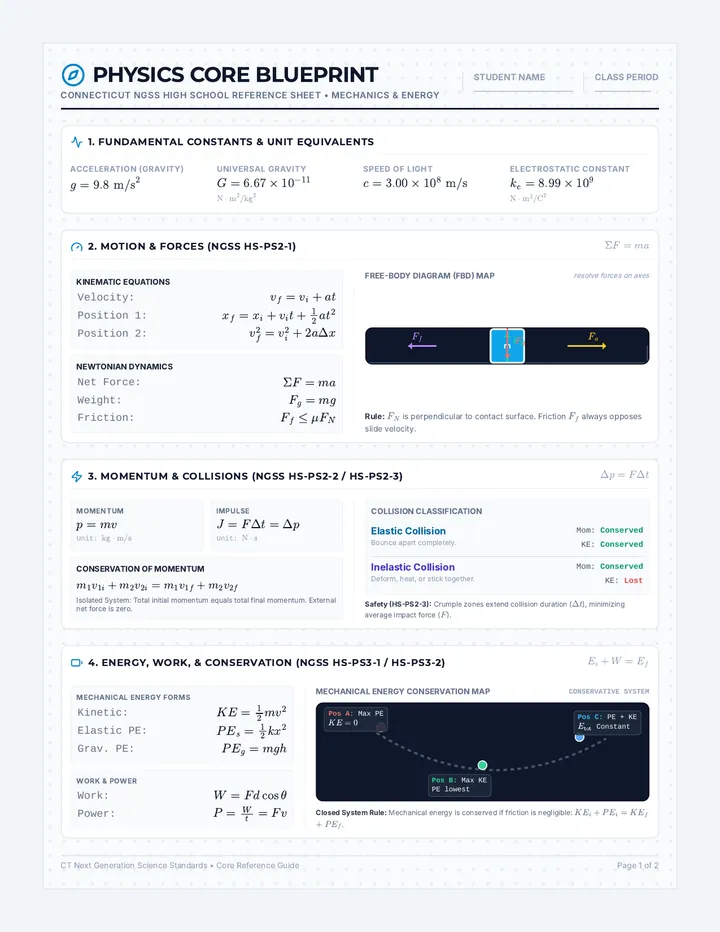
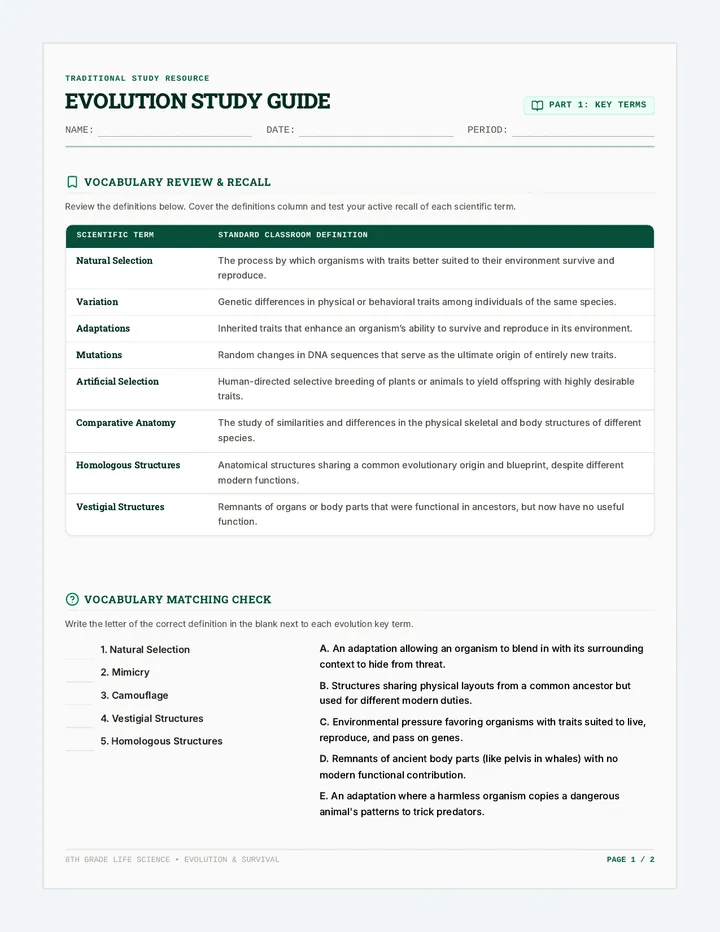
Mystery in a Tube
If you look at a glowing tube of gas with your naked eye, it looks like one solid color.
"But use a prism or diffraction grating, and the truth is revealed..."
Every element has a unique spectral signature . No two are the same.
HYDROGEN
HELIUM
What is a Spectrum?
Emission Lines
Bright lines produced when a gas is energized. These are the element's "fingerprints."
Absorption Lines
Dark lines produced when light passes through a cooler gas. Most stars show this type.
Continuous Spectrum
Absorption Spectrum (Star)
Heat and Color
Just like a piece of metal glowing in a forge, the color of a star tells us how hot it is.
COOLER ~3,000 K
~4,500 K
MEDIUM ~6,000 K (Sun)
~10,000 K
HOTTEST ~25,000 K+
Counter-intuitive: In space, Blue is Hot and Red is "Cold"!
How do we know what stars are made of?
We cannot visit stars. We cannot take samples. All we have is their light .
By breaking that light apart, we see exactly which atoms (Hydrogen, Helium, Iron) are inside the star.
Let's become Spectrum Detectives!
Spectrum Detective Worksheet Spectrum Detective
Name:
Date:
Mission: Analyze starlight to reveal the composition and temperature of distant celestial bodies.
Part 1: Laboratory Observations
Observe the gas discharge tubes through your spectroscope. Carefully draw the emission lines you see for each element. Use colored pencils to match the exact colors.
Element A: Hydrogen Observed Pattern
400nm 500nm 600nm 700nm
Element B: Helium Observed Pattern
400nm 500nm 600nm 700nm
Element C: Neon Observed Pattern
400nm 500nm 600nm 700nm
Part 2: Forensic Analysis
1. Why are spectral lines called the "fingerprints" of elements? Use your observations from Part 1 to support your answer.
2. You point your telescope at "Star X" and see the absorption spectrum below. Based on your lab data, which elements are present in Star X?
Elements Identified:
3. Compare two stars: Star A appears distinctly Blue, and Star B appears distinctly Red. Which star is likely hotter? Explain the relationship between color and temperature.
Stellar Life Cycles: Lesson 1 Subject: Astronomy / Spectroscopy
Stellar Mapping Slides STELLAR MAPPING
Navigating the Hertzsprung-Russell (H-R) Diagram
How do you sort 200 billion stars?
Imagine you have data on billions of stars. They have different:
Brightness (Luminosity)
Temperature (Color)
Size (Radius)
Astronomers needed a map to see the patterns.
Total Chaos
The Secret Grid
Luminosity (Brightness)
1,000,000 × Sun
0.0001 × Sun
Temperature (Kelvin)
30,000 K (HOT)
2,500 K (COOL)
When plotted, stars fall into predictable neighborhoods...
Main Neighborhoods
Main Sequence
90% of all stars. Burning hydrogen. From hot/bright to cool/dim.
Giants & Supergiants
Dying stars. Very bright but relatively cool. Massive in size.
White Dwarfs
Dead star cores. Extremely hot but very dim because they are tiny.
Ready to Map?
You are about to receive a list of "Neighbor Stars." Your goal is to plot them on your diagram and identify which stellar neighborhood they belong to.
Rigel
The Sun
Betelgeuse
Stellar Plotter Worksheet Stellar Plotter
Name:
Date:
Mission: Construct an H-R Diagram and identify the "neighborhoods" where different stars live.
Part 1: Star Catalog
Star Name Temp (K) Luminosity (vs Sun) Color Sun 5,800 1 Yellow Sirius A 9,900 25 Blue-White Betelgeuse 3,500 100,000 Red Rigel 12,000 120,000 Blue Proxima Centauri 3,000 0.0017 Red Sirius B 25,000 0.03 White Aldebaran 3,900 520 Orange-Red Spica 22,000 2,200 Blue
Part 2: Plotting the Stars
106 (Bright)
1 (Sun)
10-4 (Dim)
Luminosity
40,000 K (Blue)
6,000 K (Yellow)
2,500 K (Red)
Surface Temperature
3. Look at your plotted points. Circle the group of stars that form a diagonal line from top-left to bottom-right. What is this "neighborhood" called?
4. Find Sirius B. It is extremely hot but very dim. What does this tell you about its physical size compared to the Sun?
Stellar Life Cycles: Lesson 2 Subject: Astronomy / H-R Diagram
Sun Stories Slides SUN STORIES
The Life Cycle of Average-Mass Stars
Our Future Sky
Right now, the Sun is a stable, yellow star. But in 5 billion years, its fuel will change.
Imagine a sky where the Sun takes up half the horizon, glowing a deep, menacing red.
The Transformation:
The Sun will expand until it swallows Mercury and Venus, and scorched Earth will be on the edge of destruction.
Red Giant
Step 1: The Cosmic Nursery
Stellar Nebula
Giant clouds of dust and gas (mostly Hydrogen) collapse under their own gravity.
Protostar
As gravity pulls gas in, the core gets hot. When it hits 15 million degrees, Nuclear Fusion begins!
STEL-77: STAR FORMATION AREA
Step 2: The Great Balance
For billions of years, a star is in Hydrostatic Equilibrium —a tug-of-war between two forces:
GRAVITY Pulls matter INWARD
SUN
FUSION Pushes energy OUTWARD
Step 3 & 4: Retirement
Planetary Nebula
The star runs out of hydrogen. Its outer layers drift off into space like a cosmic bubble.
White Dwarf
The remaining hot core. No more fusion. It slowly cools for trillions of years.
Sun Path Worksheet Sun Path Timeline
Name:
Date:
Mission: Trace the journey of a medium-mass star from its birth in a nebula to its final state as a white dwarf.
The Solar Life Cycle
1
Nebula & Protostar
A massive cloud of gas collapses. Gravity wins.
Sketch the nebula collapsing here
2
Main Sequence (Current Sun)
The star reaches Equilibrium . Describe what forces are balancing each other:
3
Red Giant
Fuel runs low. The star expands. Why does it get so much bigger?
4
Planetary Nebula & White Dwarf
The final core remains. Describe the temperature and brightness of the White Dwarf:
Tracing the Path
On the H-R diagram below, draw an arrow showing the path our Sun will take from the Main Sequence to the Red Giant region, and finally down to the White Dwarf area.
Supergiants
Giants
White Dwarfs
Luminosity
Temperature
Sun Start
Think Like an Astronomer:
As the Sun moves from the Main Sequence to a Red Giant, does its surface temperature go up or down ? Explain why based on its color change.
Stellar Life Cycles: Lesson 3 Subject: Astronomy / Stellar Evolution
Supernova Secrets Slides SUPERNOVA SECRETS
The Violent End of High-Mass Stars
Live Fast, Die Young
High-mass stars (8x bigger than our Sun or more) don't just "fizzle out."
Because they are so heavy, their gravity is crushing . They burn through their fuel at incredible speeds.
Lifespan Comparison:
Average Star (Sun): ~10 Billion Years
Massive Star: ~10 Million Years (1,000x shorter!)
SUN
Heavier Elements
Unlike our Sun, massive stars can fuse more than just Hydrogen.
As they run out of one fuel, they crush the core even tighter to start fusing the next "heavier" element.
H → He → C → Ne → O → Si → IRON
IRON
The "Onion" Structure
The Ultimate Dead End: Iron
Fusing Iron requires energy instead of releasing it. The outward pressure stops instantly.
1. Collapse
Gravity slams the star inward at 25% the speed of light.
→
2. Rebound
The core hits a limit and "bounces" back.
→
3. Explosion
A shockwave tears the star apart. A Supernova .
What is Left Behind?
Neutron Star
If the star was big. A city-sized ball so dense that a teaspoon would weigh as much as a mountain.
Black Hole
If the star was MASSIVE. Gravity is so strong that even the bounce can't stop it. The core collapses forever.
Massive Star Lab Worksheet Massive Star Lab
Name:
Date:
Mission: Analyze the "onion-layer" structure of a massive star and model the core collapse of a supernova.
Part 1: The Onion Structure
As a massive star ages, it creates heavier and heavier elements in its core. Label the layers of the "Onion Star" with the elements below, starting with the lightest on the outside and the heaviest at the core.
Hydrogen
Helium
Carbon
Neon
Oxygen
Silicon
IRON
The Iron Dead End
Explain why the formation of Iron in the core marks the end of a star's life. (Think about energy!)
The Supernova Sequence
Phase A: Fusion
Fusion pressure pushes OUT . Gravity pulls IN .
Draw Balance Arrows
Phase B: Collapse
Iron core stops fusion. Gravity is the only force left.
Draw Core Slamming In
Phase C: Supernova
Matter bounces off the core and explodes outward.
Draw the Explosion
Final Fate Decision
You observe two star remnants. Remnant 1 is a city-sized ball of neutrons. Remnant 2 is completely invisible, but light bends around it. Identify each:
Remnant 1:
Neutron Star
Remnant 2:
Black Hole
Stellar Life Cycles: Lesson 4 Subject: Astronomy / Supernovae
Event Horizon Slides EVENT HORIZON
The Mystery of Black Holes
Seeing the Invisible
In 2019, humanity took the first direct picture of a Black Hole (M87*).
But if a black hole is a region where even light can't escape... what are we actually looking at?
The orange ring isn't the black hole itself. It's superheated gas swirling around it at nearly the speed of light.
M87*
The Parts of a Shadow
Event Horizon
The "Point of No Return." Once you cross this boundary, the exit speed needed is greater than the speed of light.
Singularity
The center point of infinite density. All the mass of a giant star crushed into zero volume.
Accretion Disk
The swirling disk of matter being "fed" into the black hole. This is what we see.
Event Horizon
Singularity
Spaghettification
What happens if you fall in?
Gravity is so much stronger at your feet than your head that you are literally stretched into a long, thin strand of atoms.
I I I I I I I
How do we find them?
Since black holes are invisible, we act like detectives looking for clues:
Star Orbits
We see stars whipping around a "nothing" center at millions of miles per hour. Only a black hole has enough gravity to do that.
X-Ray Bursts
As matter is crushed in the accretion disk, it screams out high-energy X-rays that our telescopes can detect.
Black Hole Investigator Worksheet Black Hole Investigator
Name:
Date:
Mission: Analyze the properties of black holes and evaluate evidence for their existence in our universe.
Part 1: Defining the Void
Match the term to its definition by writing the letter in the blank:
___
Singularity
___
Event Horizon
___
Accretion Disk
___
Spaghettification
A. The physical process of being stretched by extreme tidal forces near a black hole.
B. The boundary around a black hole beyond which nothing can escape.
C. A swirling disk of gas and dust orbiting a black hole at high speeds.
D. The point of infinite density at the very center of a black hole.
Part 2: Case File - Cygnus X-1
Observation Report:
"Astronomers detect a massive blue supergiant star orbiting a point in space that appears completely empty. The blue star is being whipped around this point every 5.6 days. Additionally, a powerful source of high-energy X-rays is coming from the 'empty' region."
1. Why does the high speed of the orbiting blue star suggest a black hole is present rather than just a dark cloud of dust?
2. If black holes are "black" (don't emit light), how are we detecting X-rays coming from that region? What is actually making the light?
Part 3: Final Synthesis
We have traced the life cycles of stars from nebulae to white dwarfs, neutron stars, and black holes. Summarize how Initial Mass determines the final fate of a star.
Average Mass Star
Final Fate:
Why?
High Mass Star
Final Fate:
Why?
The Question of Balance:
In your own words, describe the "struggle" that takes place inside every star between gravity and fusion. What happens when gravity finally "wins"?
Stellar Life Cycles: Lesson 5 Subject: Astronomy / Black Holes