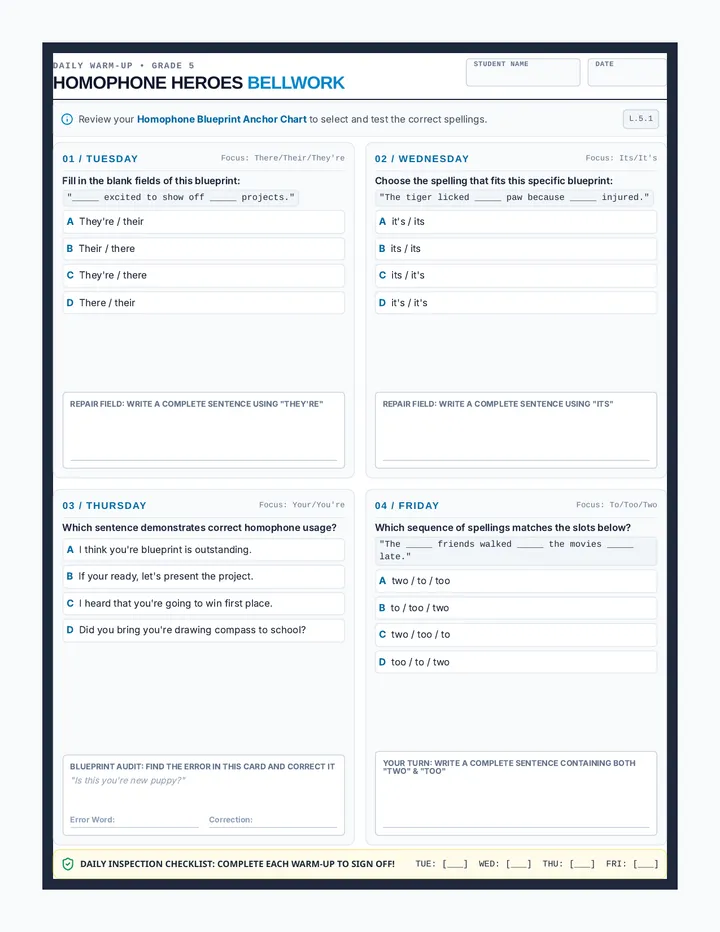
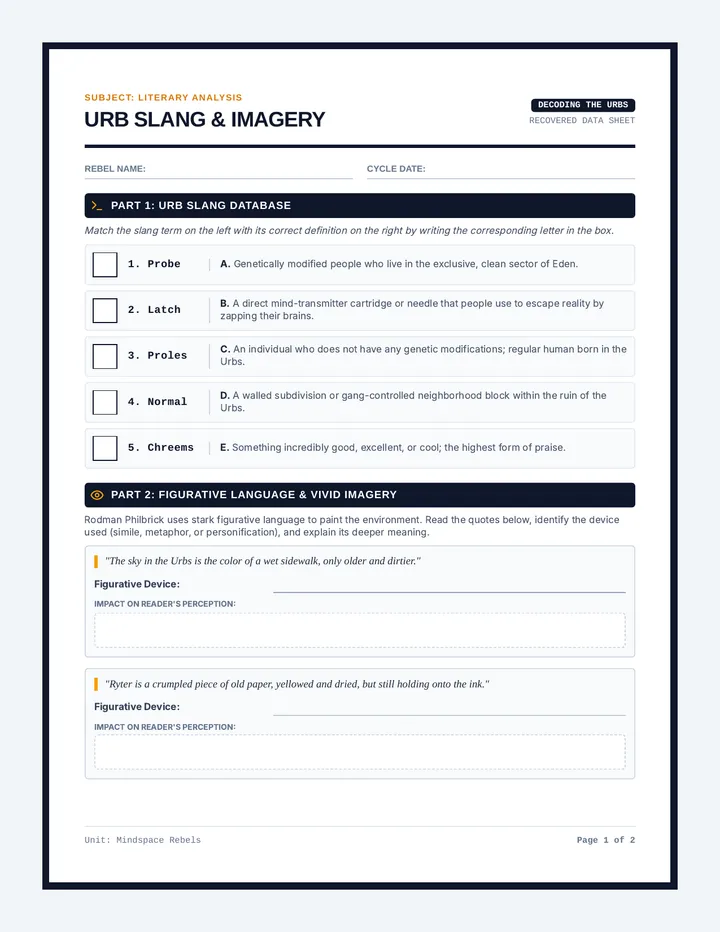
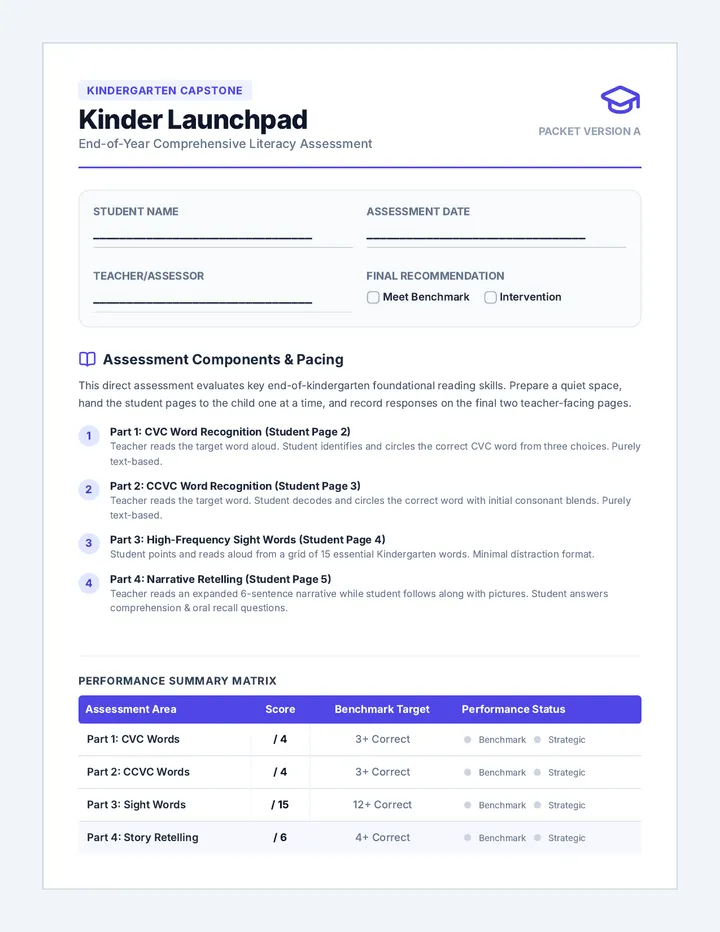
Dialogue Basics Slides Manuscript Masterclass
Quotation
Conventions
Lesson 1: The Golden Rules of Direct Speech
The Hook
Mystery Message
hey are you coming to the game later i asked and sarah looked up from her book and said i dont know yet maybe if i finish my homework first then we should go together i suggested as she nodded and went back to reading
Who is speaking? Where does the dialogue start and end?
"Without formatting, a conversation is just a wall of words."
Definitions
Speech Styles
Indirect Speech
Reporting what someone said without using their exact words.
Leo said that he was really hungry and wanted pizza.
Direct Speech
Quoting the exact words spoken by a character.
"I am really hungry and want pizza," Leo said.
Rule #1
The Frame
" "
Quotation Marks
Use quotation marks to enclose the exact words spoken. Think of them as "bookends" for the character's voice.
Rule #2
The Spark
Capitalization
The first word of a direct quote always starts with a capital letter, even if it's in the middle of a sentence.
Maya whispered, "Hello?"
A
Rule #3
The Anchor
Punctuation Stays Inside
"I can't wait for summer!" shouted Jamie.
Wrong
"Is it time to go"? asked Mom.
Right
"Is it time to go?" asked Mom.
Review
Check Your Specs
Fix this sentence in your notebook:
The coach screamed run faster!
Did you remember:
Quotations?
Capitalization?
End Marks?
Dialogue Basics Teacher Guide Teacher Facilitation Guide
LESSON 1: DIALOGUE BASICS
Unit: Dialogue Mastery
Grade: 7th Grade ELA
Instructional Objective
Students will be able to identify and apply the foundational rules of dialogue formatting: using quotation marks to enclose direct speech, capitalizing the first word of a quote, and placing end punctuation inside quotation marks.
Key Standards
L.7.2: Demonstrate command of the conventions of standard English capitalization, punctuation, and spelling.W.7.3.B: Use narrative techniques, such as dialogue, to develop experiences, events, and/or characters.
Materials Needed
Dialogue Basics Slides
Quotation Quest Worksheet
Highlighters (2 colors)
Pacing (50 Min)
05m: Hook (Mystery Message)
15m: Direct Instruction (Slides)
10m: Guided Practice
15m: Independent Practice
05m: Exit Ticket
Facilitation Steps
1. The Hook: Mystery Message 05-10 Min
Display Slide 2. Ask students to read the text block silently. Have a volunteer attempt to read it aloud, expressing the "voices" of the different characters.
Discussion Prompt: "Why was it hard to tell when the speaker changed? What visual cues were missing that we usually see in stories?"
2. Direct vs. Indirect Speech 10-15 Min
Use Slide 3 to clarify the difference. Emphasize that Direct Speech requires "the rules" because we are quoting exactly. Indirect Speech is "paraphrasing" and doesn't use quotation marks.
3. The Golden Rules 15-25 Min
Rule 1 (The Frame): Stress that quotes always come in pairs. If you open them, you must close them.Rule 2 (The Spark): This is the most common error. Remind students that even if the quote is at the end of a long sentence, the quote's first word is capitalized.Rule 3 (The Anchor): Use the visual of an anchor. Punctuation (commas, periods, question marks) doesn't "float" outside the quotes; it stays inside.
Answer Key: Quotation Quest
Part 1: Identifying the Error
"don't touch that"! screamed the guard.
The boy asked "can we go to the park now"?
"I forgot my lunch," Sarah whispered.
Part 2: Indirect to Direct
Note: Tag placement may vary; ensure punctuation follows the rules presented.
1. Indirect: Marcus told his mom that he was going to be home late.
Direct: Marcus told his mom, "I am going to be home late."
2. Indirect: The teacher told the class to open their books to page fifty.
Direct: The teacher told the class, "Open your books to page fifty."
Quotation Quest Worksheet Quotation Quest
Name:
Date:
Mastery Task
Apply the three golden rules: Quotations, Capitalization, and End Marks.
1
Spot the Errors
Each sentence below has exactly TWO formatting errors. Re-write the sentences correctly on the lines provided.
"wait for me"! yelled the little boy.
The librarian whispered "please be quiet".
"where are you going?" asked my sister
2
The Conversion Challenge
Convert these indirect reports into direct speech using quotation marks.
Coach Miller told the team that they needed to practice harder for the playoffs.
Jenna asked her friends if they wanted to get ice cream after school.
The scientist explained that the experiment would take three hours to complete.
Mastery Checklist
Quotation Marks Frame Speech
First Word is Capitalized
Punctuation is INSIDE Quotes
Speaker Tag Tactics Slides Manuscript Masterclass
Tag
Tactics
Lesson 2: Punctuating Speaker Tags
Definition
Speaker Tags
A speaker tag is the part of the sentence that tells the reader who is talking and how they are talking.
...said Sarah.
...whispered the boy.
The coach screamed...
Tag Locations:
At the Beginning
In the Middle
At the End
Placement 1
Tags at the Start
The waiter asked, "Are you ready to order?"
The Comma Bridge
Use a comma after the tag to bridge into the quotation.
Placement 2
Tags at the End
"I want the pepperoni pizza," Leo replied.
The Comma Rule
If the quote is a statement, replace the period with a comma inside the quotes.
The Question/Exclamation Exception
Keep the ? or !. Do NOT add a comma.
Spot the Shift
Standard Sentence
"The game is over."
With Speaker Tag
"The game is over," he said.
Notice the period in the first box becomes a comma in the second box.
Activity
Punctuation Puzzle
"WE ARE READY"
SAID THE CAPTAIN
. , ! ? " "
How many ways can you arrange these cards? How does the punctuation change for each version?
Speaker Tag Tactics Teacher Guide Teacher Facilitation Guide
LESSON 2: SPEAKER TAG PLACEMENT
Unit: Dialogue Mastery
Grade: 7th Grade ELA
Instructional Objective
Students will understand and apply the mechanics of punctuating speaker tags. They will learn to use commas to "bridge" tags at the beginning and end of sentences, and recognize when question marks or exclamation points negate the need for a comma.
Key Concepts
Front Tags: Tag + Comma + Quote.Back Tags: Quote + Comma/End-Mark + Tag.Comma-Period Swap: The standard period at the end of a spoken statement becomes a comma when followed by a tag.
Materials Needed
Speaker Tag Tactics Slides
Punctuation Puzzle Cards (Physical/Digital)
Scissors (if using physical cards)
Facilitation Steps
1. Review & Define (Slides 1-2)
Briefly review the rules from Lesson 1. Introduce the concept of "Speaker Tags" as the narrator's way of identifying who is speaking. Brainstorm synonyms for "said" to build vocabulary (whispered, bellowed, sighed).
2. The "Bridge" Metaphor (Slides 3-4)
Explain that a comma acts as a bridge between the narration (tag) and the spoken words (quote).
Teacher Hack: Tell students that a period is like a "wall." We don't want a wall in the middle of a sentence, so we replace it with a comma to keep the flow moving to the tag.
3. Punctuation Puzzle Activity (Slide 6)
Distribute the "Punctuation Puzzle Cards" (Material 3). Have students work in pairs to construct two versions of the same dialogue: one with the tag at the front, and one with the tag at the back. They must select the correct punctuation cards for each.
Critical Thinking Questions
Q: Why do we use a comma instead of a period when the tag is at the end?
A: Because the sentence hasn't finished yet. The tag is part of the same complete thought as the dialogue.
Q: Does the capitalization of the tag change if it's at the end?
A: Yes. Since the tag is not the start of the sentence, it starts with a lowercase letter (unless it's a proper noun like 'Sarah').
Tag Tactics Activity Worksheet Tag Tactics
The Punctuation Puzzle
Name:
Date:
1
Set One: The Morning Routine
Quote
WAKE UP OR YOU WILL BE LATE
Speaker Tag
MOM YELLED
" " , . !
A. Start with the Speaker Tag
Write the punctuated sentence here...
B. End with the Speaker Tag
Write the punctuated sentence here...
2
Set Two: The Secret
Quote
DO YOU KNOW WHERE THE KEY IS
Speaker Tag
THE SPY WHISPERED
" " , . ?
A. Start with the Speaker Tag
B. End with the Speaker Tag
The Comma Swap Reminder
When the tag is at the end , most periods inside the quotes turn into commas . But question marks and exclamation points never change!
Paragraph Power Slides Manuscript Masterclass
Shift
Space
Lesson 3: Paragraphing for Speaker Shifts
The Challenge
The Wall of Words
"Did you see that?" Mark whispered. "See what?" Sarah asked, squinting into the fog. "The shadow by the gate," Mark replied, his voice trembling. Sarah shook her head. "I don't see anything, Mark. You're just tired." "I'm telling you, it moved!" he insisted.
How many people are talking? How fast can you find where Sarah starts?
The Golden Rule
New Speaker
NEW
Every time a different character speaks, you MUST hit the "Enter" key and start a new line.
Visual Flow
The "Zig-Zag" Effect
Paragraph breaks act as visual signals for the reader. They help the reader follow the "ping-pong" match of a conversation without needing to see the names constantly.
"Are you ready?"
"Almost."
"Hurry up."
"I'm trying!"
The Narrative Pulse
Rule Detail
No Exceptions
Even if a character only says one word (or just nods silently), you still start a new paragraph.
"Do you promise?" she asked.
He paused.
"Yes."
Practice: Spot the Break
[1] "Where is the map?" asked the captain. [2] "I lost it," Timmy whispered. [3] The captain's face turned red. [4] "You what?"
Where should the paragraph breaks go? (1, 2, 3, or 4?)
Speaker Shift Teacher Guide Teacher Facilitation Guide
LESSON 3: PARAGRAPHING DIALOGUE
Unit: Dialogue Mastery
Grade: 7th Grade ELA
Instructional Objective
Students will be able to apply the "New Speaker, New Paragraph" rule to narrative writing. They will learn to identify speaker shifts within a block of text and use paragraph breaks to enhance visual clarity and narrative flow.
Visual Markers
Indentation: The traditional way to signal a new paragraph.White Space: How spacing allows the reader's eyes to "reset."Dialogue Rhythm: The ping-pong effect of short, snappy exchanges.
Materials Needed
Paragraph Power Slides
Dialogue Detective Worksheet
Script excerpt for reading
Facilitation Steps
1. The Confusion Hook (Slide 2)
Read the "Wall of Words" slide aloud with a student. Read it as if it's all one continuous thought without pausing. Then ask the class to identify every time Sarah speaks. It should feel tedious and confusing.
2. The Golden Rule (Slides 3-5)
Introduce the rule: New Speaker, New Paragraph . Emphasize that this is not optional. It applies even for a single word like "Yes" or "No."
Key Teaching Point: A paragraph in dialogue isn't about a "new idea" like in an essay; it's about a "new voice."
3. Dialogue Detective (Worksheet)
Students will use the "Dialogue Detective" worksheet to re-structure a dense scene. They should use the paragraph symbol (¶) to mark where breaks should go before re-writing the scene.
Answer Key: Dialogue Detective
Correct Formatting for "The Foggy Path" Scene:
"Did you see that?" Mark whispered.
"See what?" Sarah asked, squinting into the fog.
"The shadow by the gate," Mark replied, his voice trembling.
Sarah shook her head. "I don't see anything, Mark. You're just tired."
"I'm telling you, it moved!" he insisted.
Dialogue Detective Worksheet Dialogue Detective
Breaking the Block
Name:
Case #: 7-03-DIALOGUE
Your Mission
The narrative below is trapped in a "Wall of Words." Use the paragraph symbol (¶) to mark every place where a new paragraph should start. Then, re-write the scene correctly on the next page.
Evidence #01
"I can't believe you forgot the tickets," Jax fumed as he paced in front of the stadium. "I didn't forget them! I left them on the kitchen counter," Leo defended, searching his pockets one last time. Jax stopped pacing and stared. "That is the definition of forgetting them, Leo." A security guard walked over and looked at the two boys. "Everything okay here, fellas?" he asked. Leo looked at Jax, then at the guard. "No," Jax muttered. Leo sighed. "We just need a second to think."
Scene Reconstruction
Re-write the scene with proper paragraph breaks and indentations. Ensure your punctuation is correct!
Official Manuscript Format • Standard ELA-7
Split Quote Mastery Slides Manuscript Masterclass
Split
Quotations
Lesson 4: Punctuating Interrupted Speech
Definition
What is a Split Quote?
"I think," she whispered, "that we are being followed."
Part A
The Tag Interruption
Part B
Scenario A
Splitting ONE Sentence
If the quote is just one complete sentence interrupted by a tag:
Use a comma after the first part.
Use a comma after the tag.
Do NOT capitalize the second part.
"If it rains," Tom said, "we'll have to cancel the picnic."
Scenario B
Separating TWO Sentences
If the tag comes between two separate sentences spoken by the same person:
Use a comma after the first part.
Use a period after the tag.
Capitalize the second sentence.
"I'm really tired," Mom sighed. "We can finish this tomorrow."
The Logic Test
To decide between a comma or a period after the tag, take the tag out. Could the two parts stand alone as two separate sentences?
Interrupted Sentence
"Wait," he said, "I forgot something."
Wait... I forgot something?
Two Sentences
"Open the door," she yelled. "We are here!"
Open the door. We are here!
Final Review
Which one is correct?
1. "I love the beach," Sam said, "it is so relaxing."
2. "I love the beach," Sam said. "It is so relaxing."
Why?
Interrupted Speech Teacher Guide Teacher Facilitation Guide
LESSON 4: SPLIT QUOTATIONS
Unit: Dialogue Mastery
Grade: 7th Grade ELA
Instructional Objective
Students will master the complex punctuation of split quotations. They will differentiate between a single sentence interrupted by a tag (requiring commas and lowercase) and two separate sentences separated by a tag (requiring a period and capitalization).
The Logic Filter
"The Standing Alone Test"
Step 1: Mentally remove the speaker tag.Step 2: Look at Part A and Part B of the quote.Step 3: Are they two separate sentences? Or one sentence cut in half?
Vocabulary
Split Quote: Dialogue broken by a tag.
Action Beat: A short action that takes the place of a speaker tag.
Facilitation Steps
1. Concept Intro (Slides 1-2)
Introduce split quotes as "sandwiching" a tag. Ask students why an author might do this. (A: To emphasize certain words, to create a pause, or to show a character's hesitation.)
2. The Two Scenarios (Slides 3-4)
Spend significant time on these slides. Use physical gestures (cutting a piece of paper for Scenario A, putting two papers side-by-side for Scenario B) to make it concrete.
3. Logic Test Practice (Slide 5)
Do the "Logic Test" as a whole class. Read sentences without the tags and have students vote (thumbs up for two sentences, thumbs down for one) to determine the punctuation.
Answer Key: Beat and Break
1. "I'm going to the mall" she said "do you want to come with me?"
"I'm going to the mall," she said. "Do you want to come with me?"
2. "if you study hard" the teacher promised "you will do great on the test."
"If you study hard," the teacher promised, "you will do great on the test."
3. "don't forget your umbrella" Dad shouted "it looks like it's going to rain."
"Don't forget your umbrella," Dad shouted. "It looks like it's going to rain."
Beat and Break Worksheet Beat and Break
Split Quotation Mastery
Name:
Date:
1
The Standing Alone Test
Remove the speaker tag. Look at the two parts of the quote. If they can both stand alone as sentences, use a period after the tag. If not, use a comma and keep the second part lowercase.
"I'm so excited" the girl squealed "it's finally my birthday!"
Comma / lowercase
Period / capital
"Whatever you do" the guide warned "do not feed the bears."
Comma / lowercase
Period / capital
"Wait for me" Leo shouted "I'm almost ready."
Comma / lowercase
Period / capital
2
Split and Punctuate
Re-write the sentences below, inserting the speaker tag where indicated by the slash (/). Apply all split-quote rules.
"We have to leave now / otherwise we will miss the bus." (TAG: Mom insisted)
"Even if it rains / we are still going to the park." (TAG: the coach said)
"Close the window / the wind is blowing everything around." (TAG: Sarah yelled)
The Pro Editor Tip
When splitting a sentence, the second half should NEVER start with a capital letter unless it is a proper noun (like a name). Keep it lowercase to show the thought is continuing!
Editor Workshop Slides Manuscript Masterclass
The Editor's
Final Desk
Lesson 5: Polishing for Publication
The Mission
The Copy Editor
Today, you aren't just a student. You are a Professional Copy Editor.
Your job is to take a "rejected" manuscript—full of sloppy dialogue and poor formatting—and turn it into a publication-ready masterpiece.
REJ
Status: Urgent Fix Required
Master Checklist
The Quotes
Enclosed exact speech?
Capitalized first words?
Punctuation stays INSIDE?
The Layout
New speaker = New paragraph?
Tag bridges (commas) used?
Split quotes punctuated?
Tools
Editor's Shorthand

New Paragraph
^
Insert Mark
lc
Lowercase
A
Capitalize
The Final Boss
"is it working" ben whispered. "i don't know" sarah replied. she looked at the screen. "wait" she added "the lights just turned green." ben jumped up "we did it" he yelled. sarah shushed him "not so loud" she warned "the guards are right outside."
Find 12 Errors
Publication Day
Submit your final, formatted scene to the Editor-in-Chief. Clarity is the key to a great story!
Publication Day Teacher Guide Teacher Facilitation Guide
LESSON 5: THE EDITOR'S WORKSHOP
Unit: Dialogue Mastery
Grade: 7th Grade ELA
Instructional Objective
Students will act as copy editors to apply all formatting and punctuation rules learned throughout the unit. They will demonstrate mastery by identifying and correcting dialogue errors in a narrative scene, resulting in a publication-ready manuscript.
Mastery Criteria
Consistency: Are all tags punctuated correctly?Structure: Are paragraph breaks used at every speaker shift?Precision: Are split quotes handled with correct commas/periods?
Recommended Pacing
05m: Intro (Slides 1-2)
10m: Checklist Review (Slides 3-4)
25m: Independent Editing (Worksheet)
10m: Peer Review / Final Polish
Facilitation Steps
1. The Editor Mindset
Set the stage by telling students they have been hired by a major publishing house. Their reputation as editors is on the line. Use Slide 4 to introduce the proofreading marks—this adds a layer of professionalism to their task.
2. Collaborative "Check" (Slide 5)
Before working on their own, look at the "Final Boss" text on Slide 5. Have students come up to the board and mark it up using the editor's symbols. This builds confidence for the individual assessment.
3. Assessment Administration
Distribute the "Final Manuscript Assessment." Remind students that they are being graded on accuracy and professional presentation (neatness matters!).
Answer Key: "The Midnight Escape"
"Is it working?" Ben whispered.
"I don't know," Sarah replied. She looked at the screen.
"Wait," she added, "the lights just turned green."
Ben jumped up. "We did it!" he yelled.
Sarah shushed him. "Not so loud," she warned. "The guards are right outside."
Grading Note: Look for the split quote in Sarah's second line ("Wait," she added, "the lights...") and the separate sentences in the final line ("...not so loud," she warned. "The guards..."). These are the most likely places for errors.
Final Manuscript Assessment Worksheet Final Manuscript Assessment
Status: Editorial Review
Editor:
Date:
1
The Markup Stage
Use your proofreading marks (¶, ^, capitalization circles, lowercase marks) to identify all formatting errors in the draft below. There are 15 errors in total.
"did you hear that" whispered Maya. they stood in the middle of the dark forest. "it was probably just the wind" jake replied but he looked nervous. "the wind doesn't snap branches" maya insisted "wait" she added "there it is again." jake grabbed his flashlight "who's there" he yelled into the darkness. "shh" maya hissed "we don't want them to find us."
2
Final Manuscript Submission
Re-write the entire scene below with perfect formatting. This includes quotation marks, capitalization, correct tags, and proper paragraph breaks for every speaker shift.
Mastery Rubric (Internal Use Only)
QUOTATIONS & CAPS
TAG PUNCTUATION
PARAGRAPH SHIFTS
Total Score
/ 15