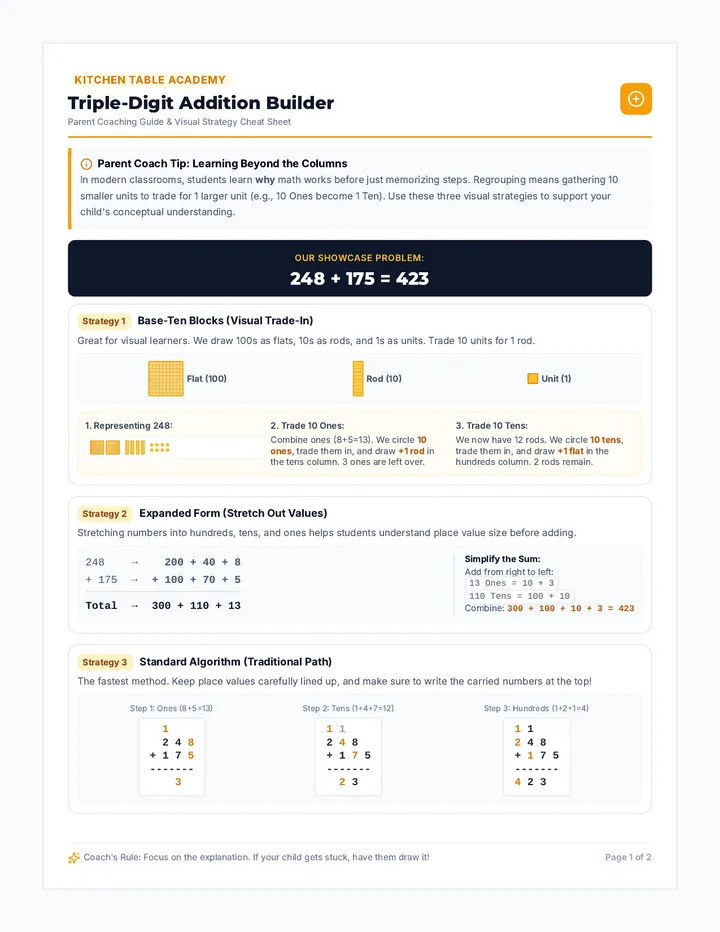
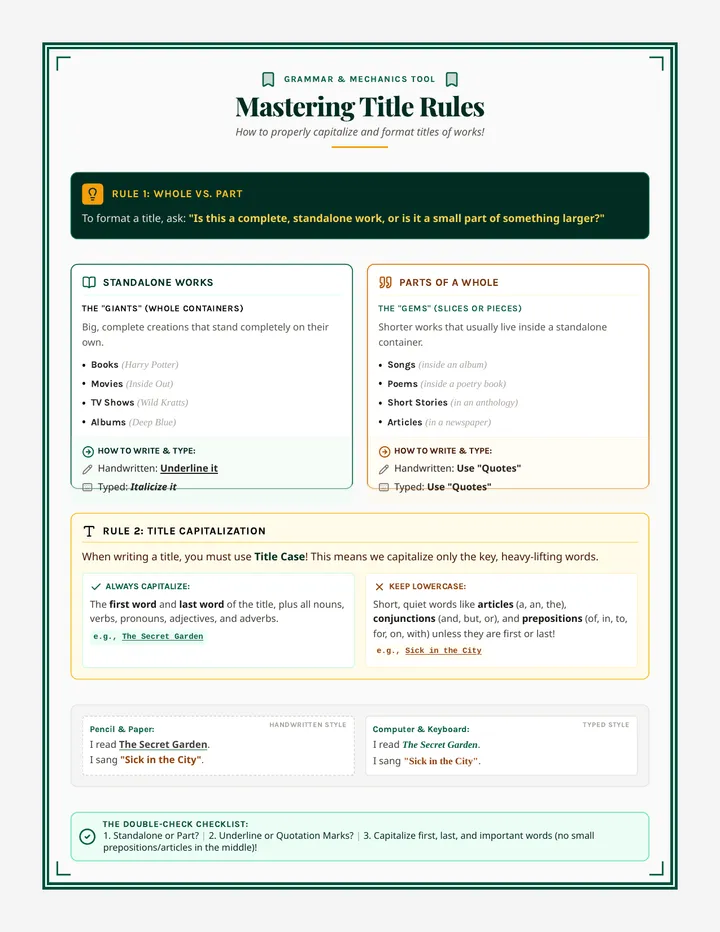
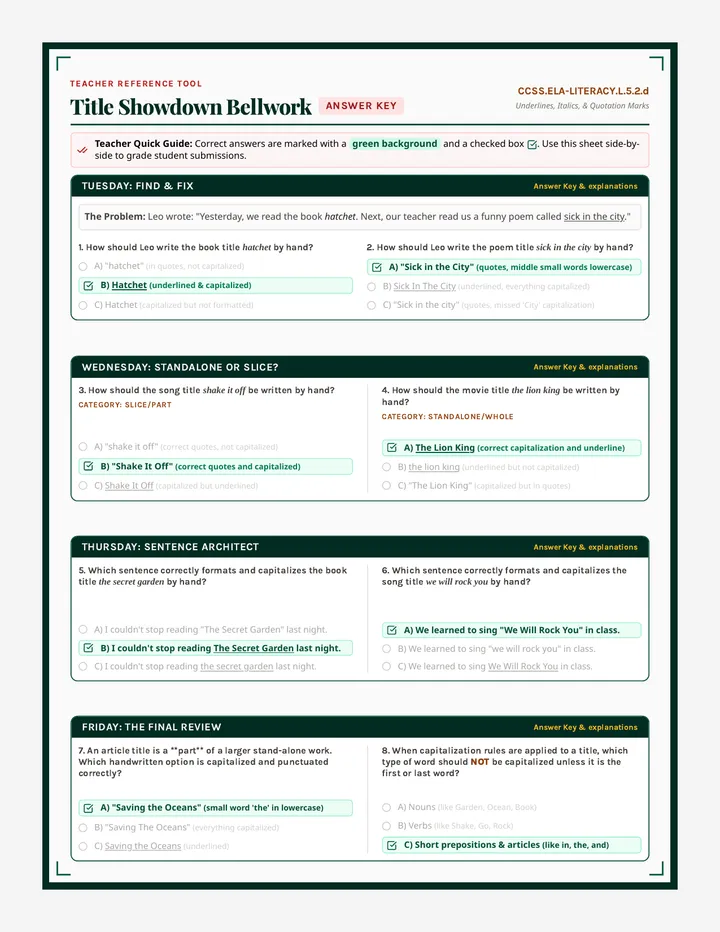
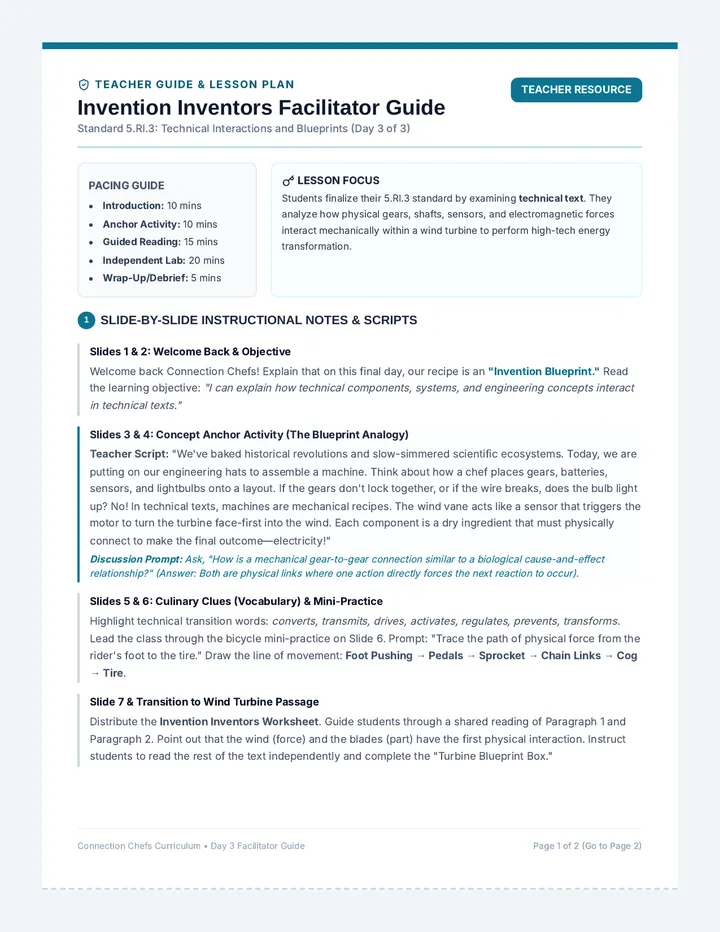
A 3-day lesson sequence for 5th-grade reading standard 5.RI.3. Using a creative culinary baking and recipe theme ('Connection Chefs'), this unit guides students to analyze interactions and relationships in historical, scientific, and technical texts. Each day features interactive presentation slides, an 8-10 paragraph passage worksheet with graphic organizers, and a detailed teacher's guide.
Paragraph 6: On the cold evening of December 16, 1773, the final day of the deadline, thousands of worried citizens gathered at the Old South Meeting House. When word arrived that Governor Hutchinson had once again refused to let the ships sail home, Samuel Adams stood up and declared, "This meeting can do nothing more to save the country!" This pre-planned signal triggered an immediate reaction. The crowd erupted into loud cheers as a group of men slipped out into the dark night.
Paragraph 7: Roughly 150 men, many dressed in blankets and paint to resemble Mohawk Indians, marched down to Griffin's Wharf. Quietly and systematically, the Sons of Liberty boarded the three ships. Over the course of three hours, they smashed open 342 wooden chests of tea with axes and dumped them directly into Boston Harbor. The cold harbor waters turned into a dark, bitter brew containing over 90,000 pounds of ruined tea, valued at nearly one million dollars today.
Paragraph 8: When news of the "Boston Tea Party" reached England, King George III and Parliament were furious. In response, they passed the Coercive Acts of 1774, which colonists called the "Intolerable Acts." This law closed Boston Harbor and stripped Massachusetts of its self-government. Rather than crushing the rebellion, however, this harsh punishment drove the other twelve colonies to unite in sympathy. This interaction of action, reaction, and punishment had baked the final, unstoppable result: the outbreak of the American Revolutionary War.
Connection Chefs Curriculum • Lesson 1: Historical Interactions Page 2 of 3 (Go to Page 3)
CONNECTION CHEFS LAB
The Revolution's Recipe Box
Activity Sheet
Part 1: Mixing the Historical Ingredients
Historical events are like recipes. Complete the "Recipe Box" below by identifying the ingredients (people, laws, and ideas) and explaining how they interacted.
Ingredient A: Key Leaders
Who organized the protest and led the colonial reaction?
Ingredient B: The Catalyst Act
What law passed by Parliament triggered this event?
Ingredient C: Opposing Leader
Which royal governor refused to let the ships sail away?
Cooking Instructions: Explain the Interaction
Using details from paragraphs 3, 4, and 5, write a detailed response explaining how the colonial leaders, the British law, and the governor interacted. How did they react to each other, and what was the outcome?
Part 2: Analyzing the Baking Process (5.RI.3 Questions)
1. Based on Paragraph 2, how did the colonists react to the Stamp Act and Townshend Acts?
A They paid the taxes immediately and willingly.
B They boycotted goods and protested in streets.
C They built their own tea ships and sailed to England.
D They declared war on Great Britain the next day.
2. Based on Paragraph 8, describe the chain reaction (interaction) triggered by the Boston Tea Party. How did Great Britain react, and what did that reaction cause the colonies to do?
Connection Chefs Curriculum • Day 1 Facilitator Guide Page 1 of 2 (Go to Page 2)
CONNECTION CHEFS LAB
Day 1 Answer Key & Exemplars
Answer Key
Part 1: The Revolution's Recipe Box (Organizer Key)
Ingredient A: Key Leaders
Samuel Adams & The Sons of Liberty
Paragraph reference: Paragraph 4
Ingredient B: The Catalyst Act
The Tea Act of 1773
Paragraph reference: Paragraph 3
Ingredient C: Opposing Leader
Governor Thomas Hutchinson
Paragraph reference: Paragraph 5
Cooking Instructions: Student Exemplar
"The Tea Act of 1773 (Ingredient B) gave the East India Company an unfair monopoly, which threatened the livelihoods of colonial merchants. This threat directly provoked Samuel Adams and the Sons of Liberty (Ingredient A) to react. They organized public protests and resolved to block the tea ships from unloading. When the ships arrived, Governor Thomas Hutchinson (Ingredient C) refused to let them leave without paying the tax, creating a tense deadlock. In response to this stubborn refusal, Samuel Adams gave a secret signal that triggered the Sons of Liberty to dump 342 chests of tea into the harbor to ensure the tax was never collected."
Scoring Note: Accept responses that clearly link the cause (the Tea Act's threat to local merchants) to the colonial response (Adams forming a secret network to protest) and the governor's counter-reaction (refusing to let ships go).
Part 2: Comprehension Questions Key (5.RI.3)
Question 1 Key: (Multiple Choice)
Correct Answer: B (They boycotted goods and protested in streets.)
Rationale: Paragraph 2 states that when Parliament passed the taxes, the colonists "responded by boycotting British goods and protesting in the streets." Options A and D are inaccurate, and option C is unsupported by the text.
Question 2 Key: (Short Answer Exemplar)
"The Boston Tea Party made King George III and Parliament furious, causing them to react by passing the Coercive Acts of 1774, which closed Boston Harbor and took away Massachusetts' self-government. However, this harsh punishment backfired. Instead of scaring the colonists into obeying, it caused the other twelve colonies to unite in sympathy, which ultimately led to the outbreak of the Revolutionary War."
Rationale: Paragraph 8 outlines this multi-step interaction: Boston Tea Party (action) → Coercive Acts passed (reaction) → other 12 colonies unite (counter-reaction) → outbreak of war (final result). Accept any response showing this logical flow.
Common Misconceptions & Pitfalls
Many students will struggle with standard 5.RI.3 because they will simply list the events chronologically ("First they taxed, then they met, then they threw tea") instead of explaining the influence or relationship. Prompt students with "Why" questions: "Why did Adams organize the group?" (Because the Tea Act threatened local business). "Why did they dump the tea?" (Because Governor Hutchinson wouldn't let the ships leave without paying).
Connection Chefs Curriculum • Day 1 Facilitator Guide Page 2 of 2
A balanced ecosystem where clean rivers flow, trees grow, and diverse animals thrive together in harmony.
💡 Key Principle: In science texts, look for cause-and-effect chains. Changing one "ingredient" has a massive ripple effect down the food chain!
Ask: How does a tree interact with a river? Let's check our signal words! Key Vocabulary →
CULINARY CLUES
VOCABULARY
How Do We Talk About Ecosystem Interactions?
Look for these scientific signal words in passages to identify connections!
TRIGGER
Cause & Disturbance
Words like: triggers, causes, alters, disrupts, prompts, shifts, removes.
Example: "Removing the wolf caused the elk population to explode."
RESPONSE
Ripple & Outcome
Words like: results in, leads to, consequently, balances, stabilizes, impacts.
Example: "This overgrazing resulted in the erosion of riverbanks."
👨🍳 Chef's Secret Scientific Weapon:
Trace the relationship like a cascade: "Species A affects Species B, which causes Species C to change, leading to Outcome D."
Every species is connected in the chain! Mini-Practice →
MINI-PRACTICE
LET'S STIR
Ecosystem Stew Mix
"Sea otters live in ocean kelp forests. They feed on spiny sea urchins, which are hungry grazers that eat giant kelp plants. When hunters removed sea otters from the coast, the urchin population grew out of control. Consequently, the urchins chewed through all the kelp, leaving barren seafloors and destroying fish nurseries."
Explain the Trophic Cascade!
1
Identify the Ingredients
What are the three core species involved in this interaction?
2
Trace the Interaction
How did the disappearance of the sea otter ruin the kelp forest?
💡 Hint: Trace it like a math equation! Otter count goes down → Urchin count goes up → Kelp forest goes down!
Discuss as a class before starting your individual work! Worksheet Mission →
YOUR MISSION
INDEPENDENT
Time to Master Yellowstone's Ecosystem!
Open your Science Mixers Passage & Worksheet. You will be reading a detailed account of how grey wolves saved the Yellowstone rivers.
Time Limit: 25 Minutes
Read, track relationships in the chart, and answer standard 5.RI.3 questions.
Chef's Checklist
Read the 8-paragraph science text.
Track species and physical changes.
Complete the "Ecosystem Stew Box".
Write in complete sentences!
Think critically. In science, everything is connected! Chef Out! 👨🍳
Paragraph 6: With the elk avoiding the valleys, the young plant life began to recover at a shocking rate. In some valleys, willow and cottonwood trees grew to five times their previous height in just six years. Entire mountainsides and valleys that had been dry and bare were soon covered in lush green forests. These new forests did more than just beautify the park; they triggered another remarkable chain reaction by attracting other key species back to the park.
Paragraph 7: The newly grown willow trees immediately attracted the attention of beavers. Beavers rely on willow wood to build their lodges and dams, and they feed on the bark. As the willows returned, so did the beavers. Beavers are ecosystem engineers; their dams slow down river waters and create large, deep ponds. These new ponds became critical habitats, attracting fish, ducks, frogs, otters, and birds, which greatly increased the park's overall biodiversity.
Paragraph 8: The final and most surprising interaction occurred between the biological recovery and the physical landscape. The roots of the newly grown willows and cottonwoods bound the soil firmly together, stabilizing the riverbanks and stopping erosion. Furthermore, the beaver dams slowed down the rushing rivers. Consequently, the rivers stopped sweeping dirt away, and their channels narrowed and stabilized into beautiful, deep pools. The return of the gray wolf had literally reshaped the geography of Yellowstone!
Connection Chefs Curriculum • Lesson 2: Scientific Interactions Page 2 of 3 (Go to Page 3)
CONNECTION CHEFS LAB
The Ecosystem Stew Chart
Activity Sheet
Part 1: Stirring Yellowstone's Species
Complete the scientific reaction chain below. For the left cards, write the name of the scientific "ingredient" and a one-sentence role. On the right, explain the full ripple effect of their interactions.
Apex Predator
Which species was reintroduced to start the cascade?
The Vegetation
Which plants grew to five times their height in the valleys?
Nature's Engineer
Which animal returned because of the recovery of woody trees?
Scientific Explanation: The Ripple Effect
Using details from paragraphs 5, 6, and 7, write a detailed paragraph explaining how the wolves, elk, trees, and beavers interacted to change the ecosystem. How did a change in one animal's behavior lead to the return of completely different species?
Part 2: Analyzing the Scientific Process (5.RI.3 Questions)
1. Based on Paragraph 3, what was the physical effect of the elk overpopulation on Yellowstone's rivers?
A The river water became cleaner and flowed faster.
B Riverbanks collapsed and soil eroded into dirty water.
C Beavers built giant dams that dried up the rivers.
D Elk built houses along the river and blocked the current.
2. Based on Paragraph 8, explain the final interaction between the biological recovery (restored plants and animal behaviors) and the physical rivers of Yellowstone. How did the wolves physically reshape the rivers?
Connection Chefs Curriculum • Day 2 Facilitator Guide Page 1 of 2 (Go to Page 2)
CONNECTION CHEFS LAB
Day 2 Answer Key & Exemplars
Answer Key
Part 1: Yellowstone's Ecosystem Stew Chart (Organizer Key)
Apex Predator
The Gray Wolf
Paragraph reference: Paragraphs 4 & 5
The Vegetation
Willow & Cottonwood Trees
Paragraph reference: Paragraph 6
Nature's Engineer
The Beaver
Paragraph reference: Paragraph 7
Scientific Explanation: Student Exemplar
"The reintroduction of gray wolves (Apex Predator) in 1995 started a scientific chain reaction. By hunting the elk, the wolves reduced their overpopulated numbers. More importantly, the presence of the wolves caused the elk to change their grazing behavior; they avoided open valleys where they could easily be cornered. Consequently, with the elk gone, the young woody plants like willow trees and cottonwoods were finally able to recover and grew up to five times their height. The return of the willow trees attracted beavers (Ecosystem Engineers), who used the wood to build dams, slowing the river flow, creating deep ponds, and bringing back massive biodiversity."
Scoring Note: Accept responses that clearly link the wolf reintroduction to the elk's behavioral shift, the plant regrowth, and the subsequent return of the beavers.
Part 2: Comprehension Questions Key (5.RI.3)
Question 1 Key: (Multiple Choice)
Correct Answer: B (Riverbanks collapsed and soil eroded into dirty water.)
Rationale: Paragraph 3 states that overgrazing left riverbeds bare of young trees. Because there were no tree root systems to bind the soil together, "the riverbanks began to collapse. Soil washed away, which resulted in heavy erosion and dirtier water."
Question 2 Key: (Short Answer Exemplar)
"The wolves physically reshaped the rivers by triggering vegetation regrowth. The roots of the newly grown willows and cottonwoods bound the soil firmly together, stabilizing the riverbanks and stopping erosion. Additionally, the return of the beavers led to dams that slowed down the rushing river water, slowing the current. As a result, the rivers stopped washing dirt away, and their channels narrowed and stabilized into beautiful, deep pools."
Rationale: Paragraph 8 outlines the biological-physical interaction: plant roots stabilize riverbanks + beaver dams slow water → rivers stop eroding, narrow, and form stabilized deep pools.
Common Misconceptions & Pitfalls
In scientific texts, students often fail to understand how a biological factor (an animal) can interact with an abiotic factor (a physical river). They may assume the wolves physically built things or jumped into the river. Emphasize that the interaction is a chain reaction of cause and effect: Wolf behavior change → Elk graze less → Tree roots grow → Roots hold mud in place → Rivers stabilize. Draw this chain on the board!
Connection Chefs Curriculum • Day 2 Facilitator Guide Page 2 of 2
3. The Baked Outcome
Useful Work:
Harvesting wind power, lighting up neighborhoods, running schools, and saving energy. The final dessert!
💡 Key Principle: To explain technical interactions, trace how force or information travels from one part to the next!
Ask: How does a spinning wheel make a bulb light up? Let's check our signal words! Key Vocabulary →
CULINARY CLUES
VOCABULARY
How Do We Talk About Technical Interactions?
Look for these functional and mechanical signal words in technical passages!
FORCE
Action & Transmission
Words like: converts, turns, connects, rotates, multiplies, spins, drives.
Example: "The gearbox multiplies the rotations to drive the generator."
CONTROL
Regulation & Output
Words like: activates, regulates, sends, triggers, signals, prevents, transforms.
Example: "The wind sensor signals the controller to pitch the blades."
👨🍳 Chef's Secret Technical Weapon:
Trace mechanical flow like a chain: "When Component X moves/signals, it causes Component Y to react by _____, which results in Z."
Trace the mechanical flow from inputs to outputs! Mini-Practice →
MINI-PRACTICE
BLUEPRINT LAB
Technical Mix
"When a rider pushes down on the bicycle pedals, this rotates the front sprocket chainring. The chain links pull the teeth of the rear cog wheel, transmitting the physical force to the back tire. This interaction causes the tire to grip the asphalt and propel the entire bicycle forward."
How Does Force Flow?
1
Identify the Parts
What are the key hardware pieces that link the pedals to the ground?
2
Trace the Transmission
How does rotating the pedal chainring end up moving the whole bike?
Discuss as a class before starting your individual work! Worksheet Mission →
YOUR MISSION
INDEPENDENT
Time to Decipher the Wind Turbine Blueprint!
Open your Invention Inventors Passage & Worksheet. You will be reading a detailed explanation of how wind turbines turn wind into electricity.
Time Limit: 25 Minutes
Read carefully, highlight structural flow words, and sketch your mental blueprint.
Chef's Checklist
Read the 8-paragraph technical text.
Trace energy flow step-by-step.
Complete the "Blueprint Box".
Write in complete sentences!
Pay attention to details. Engineering is built on precision! Chef Out! 👨🍳
Paragraph 6: To operate efficiently, the turbine must also interact with its changing environment. High on top of the nacelle sit two critical sensors: the anemometer and the wind vane. The anemometer measures wind speed, while the wind vane tracks wind direction. These sensors constantly send electronic data to a computer controller. If the wind changes direction, the controller immediately activates a yaw motor. This motor physically rotates the entire nacelle so that the blades face directly into the wind.
Paragraph 7: The computer controller also regulates the turbine's safety when interacting with dangerous weather. If the anemometer detects wind speeds exceeding fifty-five miles per hour, the controller triggers the pitch mechanism. This mechanism rotates the fiberglass blades slightly so that their edges cut through the wind rather than catching it. This process, called "feathering," stops the blades from spinning. Consequently, this prevents the gears and generator from spinning too fast and burning out.
Paragraph 8: Finally, the newly generated electricity must make its way to the public. The electrical current travels down heavy copper cables inside the tower to the ground, where it enters a step-up transformer. This transformer interacts with the electrical current, boosting its voltage to a high level. This boost is critical because high-voltage electricity can travel hundreds of miles through regional power lines without losing power. The turbine's technical blueprint has successfully turned a simple gust of wind into the light in your room!
Connection Chefs Curriculum • Lesson 3: Technical Interactions Page 2 of 3 (Go to Page 3)
CONNECTION CHEFS LAB
The Turbine Blueprint Box
Activity Sheet
Part 1: Assembling the Turbine Components
Wind turbines rely on exact technical steps. Complete the "Blueprint Box" by identifying the hardware components on the left, then explaining how they mechanically interact to create electricity on the right.
Component A: Wind Catcher
What aerodynamic parts catch the wind and spin?
Component B: Speed Multiplier
What part rotates the high-speed shaft at 1,500+ rpm?
Component C: Current Creator
Which part uses magnets to generate raw electrical current?
Blueprint Flow: Explain the Interaction
Using details from paragraphs 2, 3, 4, and 5, write a detailed paragraph explaining how these mechanical components interact. Trace how wind energy is passed from the blades to the gearbox and finally converted into electrical current in the generator.
Part 2: Analyzing the Technical Blueprint (5.RI.3 Questions)
1. Based on Paragraph 6, how do the sensor components (anemometer and wind vane) interact with the yaw motor?
A They block the wind from hitting the yaw motor.
B They send wind speed data that signals the motor to rotate the turbine.
C They generate electricity directly and bypass the motor entirely.
D They turn off the yaw motor to save copper battery power.
2. Based on Paragraph 7, describe the interaction that occurs when wind speeds exceed 55 mph. How does the pitch controller interact with the blades, and why is this reaction necessary?
Connection Chefs Curriculum • Day 3 Facilitator Guide Page 1 of 2 (Go to Page 2)
CONNECTION CHEFS LAB
Day 3 Answer Key & Exemplars
Answer Key
Part 1: The Turbine Blueprint Box (Organizer Key)
Component A: Wind Catcher
Fiberglass Blades & Rotor
Paragraph reference: Paragraphs 2 & 3
Component B: Speed Multiplier
The Gearbox
Paragraph reference: Paragraph 4
Component C: Current Creator
The Generator (Magnets & Coil)
Paragraph reference: Paragraph 5
Blueprint Flow: Student Exemplar
"First, moving wind interacts aerodynamically with the fiberglass blades (Component A), creating lift and spinning the rotor. This spin turns the low-speed shaft at a slow 15-20 rotations per minute. This shaft connects directly to the gearbox (Component B), which acts as a mechanical speed multiplier. Through interlocking gears, it increases the speed of rotation by a factor of 100, spinning the high-speed shaft at 1,500+ rpm. Finally, this rapid spinning shaft rotates massive magnets inside the copper coils of the generator (Component C), creating an electromagnetic interaction that forces electrons to flow, generating raw electrical current."
Scoring Note: Accept responses that trace the logical transfer of mechanical energy: Blades (aerodynamic force) → Shaft → Gearbox (speed multiplication) → Generator (electromagnetic conversion).
Part 2: Comprehension Questions Key (5.RI.3)
Question 1 Key: (Multiple Choice)
Correct Answer: B (They send wind speed data that signals the motor to rotate the turbine.)
Rationale: Paragraph 6 explains that the anemometer and wind vane constantly send wind data to a computer controller, which "immediately activates a yaw motor" to rotate the entire nacelle face-first into the wind.
Question 2 Key: (Short Answer Exemplar)
"When wind speeds exceed 55 mph, the anemometer signals the controller, which activates the pitch mechanism. This mechanism interacts with the fiberglass blades by rotating them slightly so their edges slice through the wind (called 'feathering'). This stops the blades from spinning. This safety reaction is necessary because it prevents the generator and heavy gears from spinning too fast and burning out or breaking."
Rationale: Paragraph 7 describes this cybernetic safety interaction: speed detection → controller signals pitch mechanism → blades feather/stop spinning → generator is saved from overload.
Common Misconceptions & Pitfalls
In technical texts, students often fail to understand how mechanical transitions function. They might see a wind turbine as a single box that makes power, failing to notice the discrete stages of force transmission. Scafold this by using a physical pencil-sharpener or a hand-crank flashlight to show how turning a crank rotates a gear, which activates a motor inside. Hands-on manipulatives bring this standard to life!
Connection Chefs Curriculum • Day 3 Facilitator Guide Page 2 of 2