Color Ratios Slides Color Ratios
Qualitative vs. Quantitative Concentration
The Sweetness Test
Look at these three glasses of red drink. Which one will taste the sweetest?
A
B
C
Why did you pick that one? What visual evidence are you using?
Vocabulary Check
Solute: The substance being dissolved (the powder).
Solvent: The substance doing the dissolving (the water).
Solution: The uniform mixture of both.
The Language Barrier
Qualitative
"This coffee is too strong."
"The pool water is a bit weak."
Based on description and qualities.
Quantitative
"0.5 moles per Liter."
"5% sugar by mass."
Based on numbers and measurement.
Why isn't "it's dark red" good enough for a chemist making medicine?
Bridging the Gap: Ratios
Concentration is a ratio of Solute to Total Solution .
1 : 10
1 drop dye in 10 mL water
5 : 10
5 drops dye in 10 mL water
Which ratio describes a "stronger" or more "concentrated" solution?
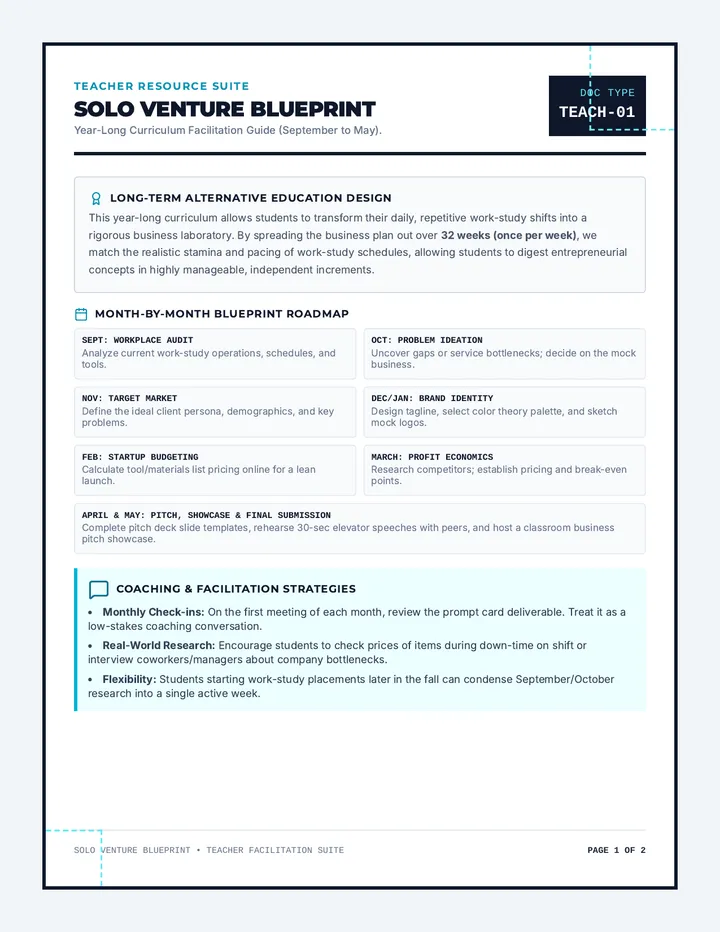
The Rainbow Gradient Lab
Equipment
6 Test Tubes + Rack
Food Dye (Blue)
Deionized Water
Lab Sheet
The Mission
Create 6 solutions with a visible gradient of color from lightest to darkest.
1
Keep the solvent volume (water) the same in all tubes (10 mL).
2
Vary the solute (dye) from 1 drop to 6 drops.
3
Observe: As the ratio of dye increases, what happens to the intensity?
Color Gradient Lab Sheet Rainbow Gradient Lab
Lesson 1: Qualitative vs. Quantitative Ratios
Name:
Date:
Mission Objective
In this investigation, you will create a visual scale of concentration. You will explore how changing the amount of solute (food dye) while keeping the solvent (water) constant affects the intensity of the solution's color.
Procedure
1
Add exactly 10 mL of water to each of your 6 test tubes.
2
Follow the table below to add the correct number of dye drops to each tube.
3
Swirl gently to mix. Hold the tubes up to the light to compare.
4
Complete the data table and analysis questions.
Tube # Solvent (mL Water) Solute (Drops Dye) Ratio (Dye : Water) Qualitative Observation (Color Intensity) 1 10 mL 1 1 : 10 2 10 mL 2 2 : 10 3 10 mL 3 3 : 10 4 10 mL 4 4 : 10 5 10 mL 5 5 : 10 6 10 mL 6 6 : 10
Investigation Analysis
1. As the number of drops increased, what happened to the visual appearance of the solution?
2. Which tube would you describe as "concentrated"? Which would you describe as "dilute"? Why are these terms subjective (based on opinion)?
3. If you added 10 more mL of water to Tube 6, what would happen to the ratio? How would that change the color intensity?
Critical Thinking
If a scientist needed to reproduce your darkest solution exactly, why is the ratio (6:10) more useful than saying "it looks very dark blue"?
Mass Percent Slides Mass Percent
Concentration by Weight
Chemistry in the Aisles
Have you ever noticed these numbers on common household products?
Rubbing Alcohol
70%
Vinegar
5%
Bleach
6%
H2O2
3%
The Challenge:
If you have a 100g bottle of rubbing alcohol labeled 70%, exactly how many grams of that bottle are actually alcohol?
The rest is usually just water!
The Mass Percent Formula
Equation
Mass % =
Mass of Solute
Mass of Total Solution
× 100
SOLUTE
The stuff you add (grams)
SOLUTION
Solute + Solvent combined!
100
Turns decimal to percent
Step-by-Step Mix
Problem:
You dissolve 15g of salt into 85g of water. What is the mass percent of the salt solution?
1
Identify Solute: 15g
2
Calculate Total: 15g + 85g = 100g Solution
3
Divide & Multiply: 15 / 100 = 0.15
15%
Concentration
Wait! Did you remember to add the water weight to the solute weight for the denominator?
Mass Percent Worksheet Mass Percent Mastery
Lesson 2: Concentration by Mass
Student Name:
Section ID:
The Formula
mass solute
mass solution
× 100 = %
Important Note
Remember: Mass Solution = Mass Solute + Mass Solvent. If you have 10g of salt and 90g of water, your solution mass is 100g. Never use just the water weight in the bottom of your fraction!
01 Fundamental Calculations
Problem A
5g of sugar is dissolved in 45g of water. What is the mass percent of the sugar solution?
Problem B
A chemist mixes 25g of sodium chloride with 175g of water. Calculate the concentration.
02 Household Analysis
Product Labeled % Total Mass (g) Mass of Solute (g)? Hydrogen Peroxide 3% 200g Vinegar 5% 500g Rubbing Alcohol 91% 150g
03 Reverse Engineering
A biologist needs to make exactly 250g of a 10% glucose solution for a cell culture experiment.
Grams of Glucose needed:
Grams of Water needed:
Hint: If you know the total is 250g and the solute is X, then the water must be (250 - X).
Molarity Slides Mole Power
Introduction to Molarity (M)
The Counting Challenge
How do you count 100,000 grains of rice in a jar without spending all day counting one-by-one?
The Chemists' Secret
Chemists don't count individual atoms. They are too small! Instead, we group them into giant "packets" called...
THE MOLE
One "mole" is just a specific number of items (like a dozen is 12, a mole is \(6.02 \times 10^{23}\)).
What is Molarity?
Molarity (M) measures the "crowdedness" of solute particles in a solution.
M
=
moles of solute
Liters of solution
Think: Population Density
Think: Solution Strength
Visualizing Concentration
Low Molarity (0.1 M)
"Spacious" particles
High Molarity (2.0 M)
"Crowded" particles
Quick Check
If you put 2 moles of salt into a jar and add enough water to make 1 Liter of solution...
2 moles / 1 Liter = ?
Answer
2.0 M
Pronounced: "Two Molar"
Molarity Worksheet Mole Power
Lesson 3: Molarity Calculations
Researcher:
Lab Station:
The Core Metric
M
mol / L
"Molarity describes how many moles (packets of particles) are present in every one Liter of the total solution. A 2.0 M solution is twice as 'crowded' as a 1.0 M solution."
1 L = 1000 mL M = Moles ÷ Volume
Case 01
You have 0.5 moles of salt dissolved in 2.0 Liters of water. Calculate the molarity.
Calculations:
Answer:
M
Case 02
A student adds 1.2 moles of sugar to 3.0 Liters of solution. What is the concentration?
Calculations:
Answer:
M
Case 03 (Alert!)
Calculate the molarity of 0.8 moles of KOH in 500 mL of solution.
*Hint: Convert mL to Liters first!
Calculations:
Answer:
M
Case 04
How many moles of solute are present in 2.0 Liters of a 0.5 M solution?
Calculations:
Answer:
moles
Visual Simulation
Draw a 1.0 M solution
Each dot represents 1 mole of solute. Use a total volume of 1 Liter.
1 Liter Water
Draw a 4.0 M solution
Each dot represents 1 mole of solute. Use a total volume of 1 Liter.
1 Liter Water
Dilution Slides Dilution Decisions
Lessening the Strength
The Dilution Rule
When you add more solvent (water) to a solution, what happens to the solute (particles)?
"The amount of solute stays the same. It's just spread out in more space."
Analogy: Adding more water to a glass of salty water doesn't remove the salt, it just makes the water taste less salty.
Initial Volume
Added Solvent
The Master Equation
M1V1
=
M2V2
Stock (Before)
M1: Starting Molarity
V1: Volume used
Diluted (After)
M2: Final Molarity
V2: Final Total Volume
The "Half-Strength" Challenge
If you have 100 mL of a 2.0 M solution and you want to make it 1.0 M...
(2.0 M) (100 mL) = (1.0 M) (V2)
Target Volume
200 mL
This means you need to add enough water to reach 200 mL total!
Serial Dilution Lab Sheet The Vanishing Color
Lesson 4: Serial Dilution Investigation
Technician:
Date:
Mission
The 10-Fold Challenge
"Your goal is to perform a **serial dilution**. You will start with a high-concentration Stock Solution and systematically dilute it by a factor of 10 in each step. How long can you still 'see' the solute?"
M1V1 = M2V2
The Chemist's Secret Key
Investigation Procedure
1
Label 5 test tubes S, 1, 2, 3, 4 . Tube S is your "Stock" (pure food dye).
2
Add exactly 9 mL of water to tubes 1, 2, 3, and 4. Leave Tube S empty for now.
3
Transfer 1 mL of Stock from S into Tube 1. Swirl to mix.
4
The Chain Reaction:
Transfer 1 mL from Tube 1 to Tube 2. Mix.
Transfer 1 mL from Tube 2 to Tube 3. Mix.
Transfer 1 mL from Tube 3 to Tube 4. Mix.
5
Calculate the concentration of each tube assuming Tube S is 100% dye.
Tube Dilution Ratio Concentration (%) Visual Observation S (Stock) 1 : 1 100 % Deep color... Tube 1 1 : 10 10 % Tube 2 1 : 100 1 % Tube 3 1 : 1,000 Tube 4 1 : 10,000
Analysis Questions
1. Solute Tracking
In Tube 4, the color might be invisible. Does this mean there are NO dye molecules in the tube? Explain using the concept of dilution.
2. Formula Practice
If you took 2 mL from Tube 1 (10%) and added 18 mL of water, what would the new concentration be? (Use M1V1 = M2V2)
Mix Master Challenge Sheet Mix Master Challenge
Pharmacy Simulation: Saline Preparation
Pharmacist:
Station #:
Critical Scenario
"A patient requires a specific concentration of intravenous (IV) saline solution. If the concentration is too low, it won't be effective. If it's too high, it could cause serious harm. As the lead pharmacist, your task is to prepare exactly the requested volume and concentration."
Precision Required: ± 0.05g
Your Target Specifications
Concentration
0.9 %
(Mass Percent)
Total Mass
200 g
(Final Solution Weight)
Pre-Mix Calculations
1. Mass of Sodium Chloride (NaCl) needed:
Show your work: (Total Mass × Mass Percent as decimal)
Calculation Result:
Grams NaCl
2. Mass of Water needed:
Show your work: (Total Mass - Mass Solute)
Calculation Result:
Grams Water
Standard Operating Procedure
1
Place beaker on scale and TARE (Zero out) the mass.
2
Add NaCl until scale reads your Target Solute Mass .
3
Add water until Total Mass (200g) is reached on scale.
4
Stir thoroughly until all solute is fully dissolved .
Quality Control Check
Have your instructor verify the mass on the scale and the visual clarity of your solution.
Instructor Initial
Pass / Fail
Mix Master Rubric Mix Master Rubric
Teacher Assessment Guide: Saline Preparation
Assessment Goal
Students are evaluated on their ability to translate a target concentration (0.9% saline) into measurable quantities of salt and water, and their technical precision in preparing the solution using lab scales.
Criteria Exceeds Standards (4) Meets Standards (3) Needs Improvement (1-2) Mathematical Calculation Identifies correct masses for both solute (1.8g) and solvent (198.2g) with clear work. Identifies correct masses but work may be disorganized or missing units. Calculation errors result in incorrect mass targets for salt or water. Lab Technique (Precision) Measured mass is within ± 0.05g of the calculated target. Measured mass is within ± 0.2g of the calculated target. Measurement is off by more than 0.5g; failed to tare scale. Solution Quality Solution is perfectly clear with no visible solute particles; stirred thoroughly. Solute is mostly dissolved; small amount of stirring still required. Significant amount of undissolved salt remains at the bottom of beaker. Lab Safety & Protocol Follows all SOP steps perfectly; station is left clean and dry. Follows safety rules; station is reasonably clean. Unsafe behavior or station left messy/wet.
Grading Summary
Calculation (4) ___ / 4
Precision (4) ___ / 4
Clarity (4) ___ / 4
Safety (4) ___ / 4
Total Score ___ / 16
Observational Notes