Atomic Evolution Slides Physics Unit: Atomic Structure
Atomic Evolution
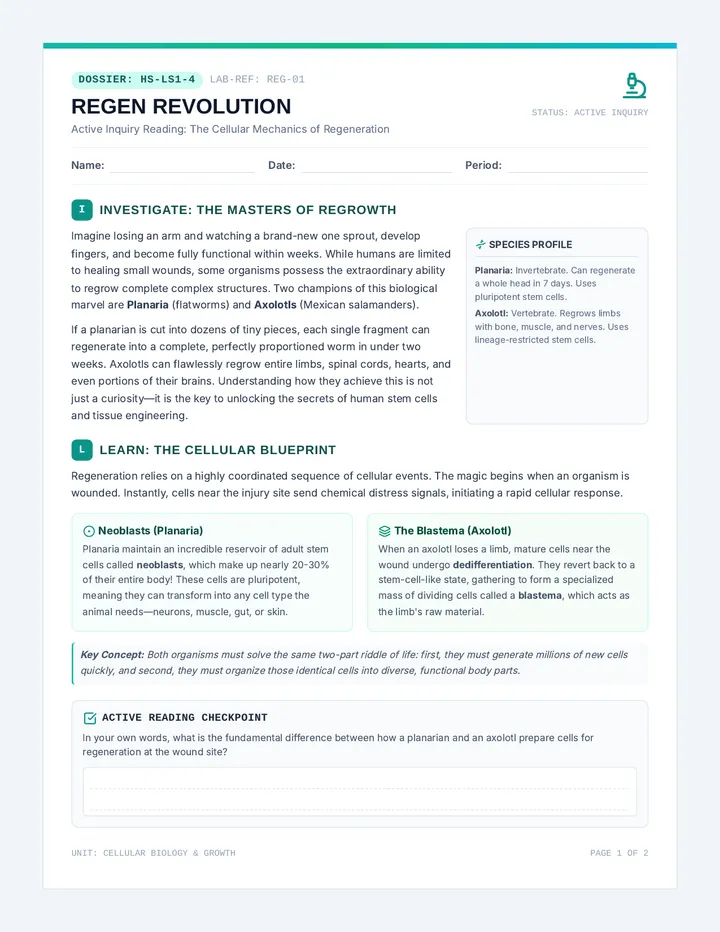
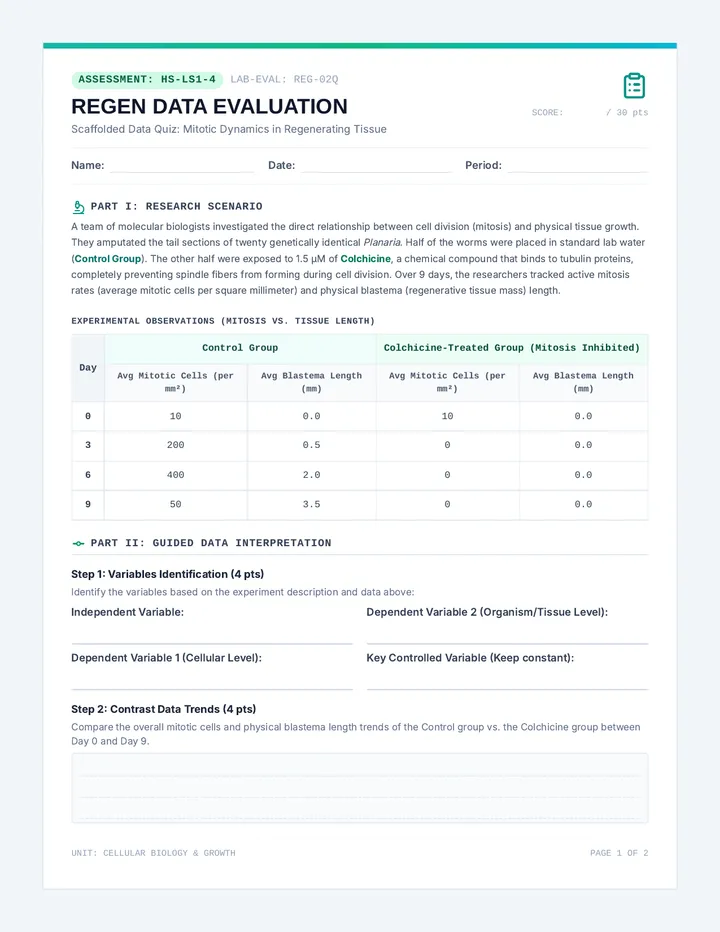
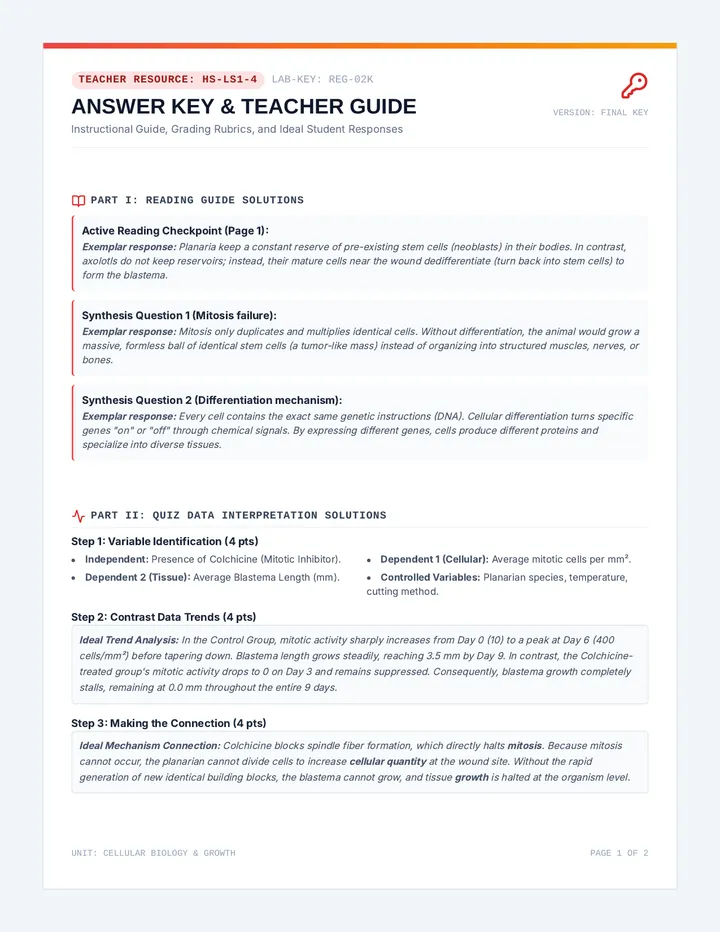
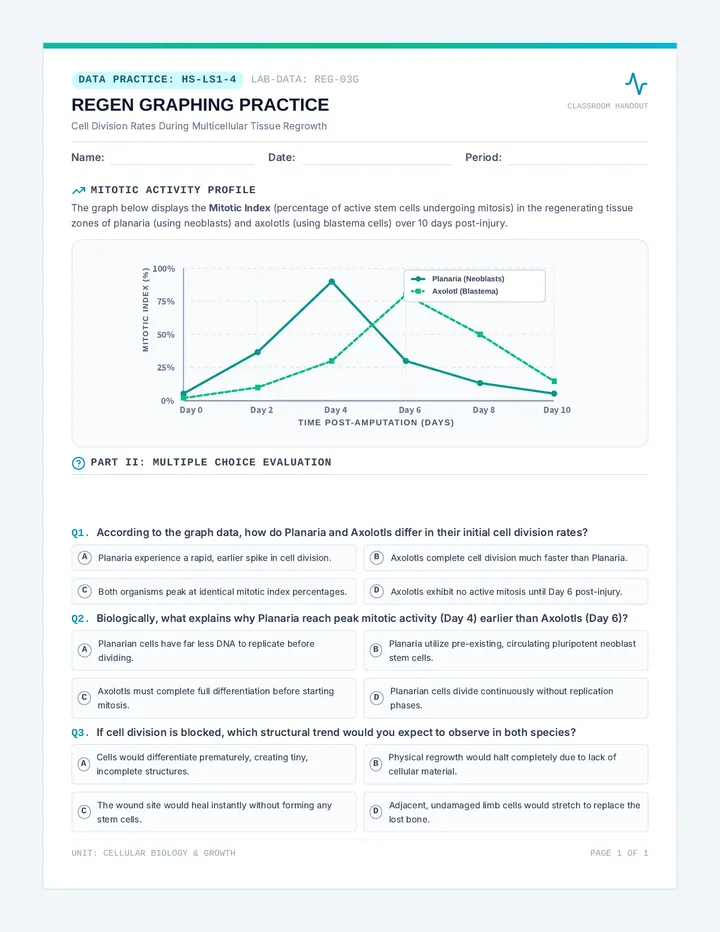
From Solid Spheres to Quantum Clouds: Mapping the History of the Atom
Project Ref: Quantum Architect // Lesson 01
The Double-Slit Dilemma
In 1801, Thomas Young performed an experiment that shattered our understanding of matter.
"If light is a particle, it should make two lines. If it is a wave, it should make an interference pattern."
But electrons... they do both.
Interference Pattern Detected
01. Early Structural Concepts
Dalton
1803
The "Billiard Ball" Model
Atoms are indivisible, solid spheres
Thomson
1897
-
-
-
The "Plum Pudding" Model
Discovery of the electron (negative charges)
Rutherford: The Great Surprise
"It was quite the most incredible event that has ever happened to me in my life. It was almost as incredible as if you fired a 15-inch shell at a piece of tissue paper and it came back and hit you."
Finding 1
Most of the atom is empty space .
Finding 2
The mass is concentrated in a tiny nucleus .
02. Fixed Orbits to Probability Clouds
The Bohr Model
Electrons move in fixed circular orbits (energy levels).
Problem: Only worked for Hydrogen.
Quantum Mechanical Model
Electrons exist as wave-particles in "probability clouds".
Schrödinger Wave Equation
Heisenberg Uncertainty Principle
Summary of Atomic Progress
1
Matter
Dalton: Indivisible atoms
2
Charge
Thomson: Electrons found
3
Space
Rutherford: Tiny nucleus
4
Energy
Bohr: Energy levels
5
Waves
Quantum: Cloud orbitals
"Next Stop: The 4 Quantum Numbers..."
Atomic Evolution Worksheet Atomic Blueprint
ARCHIVE 01: EVOLUTION OF ATOMIC MODELS
SUBJECT ID:
DATE:
Historical Context
The model of the atom has changed drastically as experimental technology improved. Use the table below to track the progression of these models, noting the key features and the evidence that forced us to revise our thinking.
Model Name Core Concept & Key Features Why was it replaced? Dalton's Solid Sphere
Early 1800s
|
|
|
|
Thomson's Plum Pudding
Late 1800s
|
|
|
|
Rutherford's Nuclear Model
Early 1900s
|
|
|
|
Bohr's Planetary Model
1913
|
|
|
|
Quantum Mechanical Model
Modern
|
|
|
Analysis: Wave-Particle Duality
1. Describe the results of the Double-Slit Experiment. How did electrons behave differently than solid "marbles"?
2. How does the concept of a "probability cloud" in the Quantum Model solve the limitations of Bohr's fixed orbits?
3. Synthesize: Why do you think scientific models are updated rather than completely discarded when new data appears?
CLASSIFICATION: EDUCATIONAL RESOURCE // LEVEL: 11-PHYS PROJECT: QUANTUM ARCHITECT 01.02-WS
Atomic Evolution Teacher Guide Teacher Guide
LESSON 01: EVOLUTION OF ATOMIC MODELS
EST. DURATION: 55 MIN
Learning Objectives
Compare and contrast the structural features of major atomic models.
Explain how experimental evidence led to the revision of the atom's structure.
Define wave-particle duality and its necessity in quantum mechanics.
Key Vocabulary
- Cathode Ray
- Nucleus
- Wave-Particle Duality
- Probability Cloud
- Uncertainty Principle
Instructional Pacing
10 MIN
The Double-Slit Hook
Open with a simulation or video of the double-slit experiment. Ask students to predict the pattern for particles vs waves. When the interference pattern appears for electrons, pause.
Discussion Prompt: "How can one object be in two places at once? This is the central mystery that broke the classical model of the atom."
25 MIN
Direct Instruction: The Timeline
Navigate through the slide deck. Students should fill in the "Atomic Evolution Worksheet" concurrently.
Focus on Evidence: Don't just teach the model; teach the experiment (e.g., Gold Foil, Cathode Ray).
Revision Logic: Emphasize that models were replaced because they couldn't explain new data.
15 MIN
Analysis & Synthesis
Students work on the back of the worksheet. Move around the room to discuss the conceptual difficulty of "probability clouds."
05 MIN
Debrief
Ask: "If Bohr's model is 'wrong', why do we still see it on TV and in textbooks?" (It’s simpler for basic chemical reactions).
Common Misconceptions
Orbits vs Orbitals: Students often think orbitals are paths (like a track). Clarify that they are areas of 3D space where finding an electron is likely.
Nucleus Size: Students overestimate how big the nucleus is relative to the atom. Use the "Marble in a Stadium" analogy.
Quantum Numbers Slides Physics Unit: Atomic Structure
The Quantum Address
Defining the position and behavior of electrons through Quantum Numbers and Orbital Shapes.
Locating an Electron
n
City
The energy level (shell). Larger n = farther from nucleus.
l
Street
The shape of the orbital (subshell): s, p, d, or f.
ml
House
The orientation in 3D space (x, y, or z axis).
ms
Person
The spin of the electron: Up or Down (+1/2 or -1/2).
01
Principal: \( n \)
Values: \( n = 1, 2, 3, 4, ... \)
Describes the size and energy of the orbital.
Commonly called Energy Levels .
As \( n \) increases, the electron is more likely to be found further from the nucleus.
NUCLEUS AT ORIGIN
02
Orbital Shape: \( l \)
s
\( l = 0 \)
Spherical
p
\( l = 1 \)
Dumbbell
d
\( l = 2 \)
Cloverleaf (mostly)
f
\( l = 3 \)
Complex
03
Orientation: \( m_l \)
pz
px
Total Orbitals per Type:
s subshell: 1 orbital
p subshell: 3 orbitals
d subshell: 5 orbitals
f subshell: 7 orbitals
Each orbital can hold exactly 2 electrons .
04
Electron Spin: \( m_s \)
+\( \frac{1}{2} \)
Spin Up
-\( \frac{1}{2} \)
Spin Down
"No two electrons in the same atom can have the same four quantum numbers."
— Pauli Exclusion Principle
Orbital Shapes Worksheet Quantum Architect
DATA SHEET 02: ORBITAL SHAPES & PROBABILITY
NAME:
Part 1: The Quantum Address
Match the quantum number to its physical meaning by writing the correct letter in the box.
\( n \) (Principal)
\( l \) (Angular Momentum)
\( m_l \) (Magnetic)
\( m_s \) (Spin)
A. The orientation of the orbital in space (x, y, or z axis).
B. The energy level or size of the orbital.
C. The direction of the electron's rotation (\( \uparrow \) or \( \downarrow \)).
D. The shape of the orbital (s, p, d, or f).
Part 2: Visualization Lab
Sketch the probability density for the following orbitals. Remember: Electrons are not on lines, they are in clouds.
\( l = 0 \) (s-orbital)
\( l = 1 \) (pz orbital)
\( l = 2 \) (d-orbital)
Part 3: Quantum Calculation
1. Complete the table defining the total number of electrons each subshell can hold:
Subshell (\( l \)) Number of Orbitals Max Electrons s p d f
2. Heisenberg's Uncertainty Principle states we cannot know both the velocity and position of an electron. How does this principle relate to why we use "shapes" (probability maps) instead of circular "tracks"?
3. Critique: A student claims that the \( n=3 \) energy level contains only s and p orbitals. Prove them wrong using the rules of quantum numbers.
CLASSIFICATION: EDUCATIONAL RESOURCE // LEVEL: 11-PHYS PROJECT: QUANTUM ARCHITECT 02.02-WS
Quantum Numbers Teacher Guide Teacher Guide
LESSON 02: QUANTUM NUMBERS & ORBITAL SHAPES
EST. DURATION: 50 MIN
The Balloon Modeling Hook
Instead of just drawing on the board, use long "animal-sculpting" balloons to physically build orbital shapes in 3D. This helps students visualize the probability lobes that occupy the x, y, and z axes.
s orbital
Inflate one round balloon. It represents a sphere. Simple.
p orbital
Twist two long balloons in the center. Show how they point along axes.
Implementation Notes
1. The Address Analogy (15m)
Use the slides to introduce \( n, l, m_l, m_s \). Spend extra time on the "City-Street-House" analogy. It is the most effective way students have found to differentiate between the four numbers.
2. Visualizing Probability (20m)
While students complete Part 2 of the worksheet, circulate with the balloons. Ask students to point to where an electron is "most likely" to be (in the centers of the lobes).
The Math Logic
Students often struggle with the permitted values of quantum numbers. Reinforce these constraints:
\( n \) must be > 0
\( l \) can be 0 to (\( n - 1 \))
\( m_l \) ranges from \( -l \) to \( +l \)
\( m_s \) is only \( \pm 1/2 \)
Deep-Dive Questions
"If an electron is in the top lobe of a p-orbital, can it ever get to the bottom lobe without crossing the nucleus?"
Teaching Note: This leads to the concept of "nodes" (zero probability areas). Electrons "tunnel" or exist as waves through the nucleus.
"Why do we need spin if two electrons are already in the same orbital?"
Teaching Note: Magnetism. Opposite spins allow two negatively charged particles to coexist in the same small space by generating opposing magnetic fields.
Writing Electron Configurations Slides Physics Unit: Atomic Structure
The Rules of Filling
Mastering Electron Configurations: Aufbau, Pauli, and Hund's Rule.
The "Hotel Electron" Analogy
1. Aufbau Principle
"The Lazy Guest"
Electrons must occupy the lowest energy orbital available first.
2. Pauli Principle
"No Sharing Beds"
Only 2 electrons per orbital, and they must have opposite spins .
3. Hund's Rule
"Roommate Etiquette"
In a subshell (like 2p), electrons fill empty orbitals singly before pairing up.
The Order of Operations
Energy levels overlap! Use the Diagonal Rule to find the sequence of filling.
1s → 2s → 2p → 3s → 3p → 4s → 3d...
Wait! 4s fills before 3d because it is lower energy.
1s
2s 2p
3s 3p 3d
4s 4p 4d 4f
5s 5p 5d 5f
Visualizing Nitrogen (Z=7)
1s
2s
2px
2py
2pz
Configuration: 1s2 2s2 2p3
Efficiency: Noble Gas Shorthand
Don't write the whole history; just the latest chapter.
Standard (Long)
Sodium (Na):
1s2 2s2 2p6 3s1
Shorthand
Sodium (Na):
[Ne] 3s1
Where [Ne] represents the full configuration of Neon (10e-).
Mastery Check
Iron (Fe)
Atomic Number: 26
? ? ? ? ?
Chlorine (Cl)
Atomic Number: 17
? ? ? ? ?
"Now, let's open the Hotel Electron Guest Log..."
Hotel Electron Practice Worksheet Hotel Electron
GUEST LOG 03: FILLING PROTOCOLS
NAME:
Hotel Map Key
Floor Level: Energy Level (n)
Room Type (Suite): Subshell (l)
Specific Room: Orbital (ml)
Guests: Electrons
The Strict Rules:
Guests always take the cheapest room available (Lowest Floor/Energy).
Max 2 guests per room; they must sleep head-to-toe (Opposite Spin).
In multi-room suites, guests get their own room before sharing.
1
Oxygen (Z=8) Guest Log
1s
2s
2p
2p
2p
FULL CONFIGURATION:
WHICH RULE PREVENTS TWO \( \uparrow \) IN 1s?
2
Phosphorus (Z=15) Guest Log
1s
2s
3s
Noble Gas Shorthand:
The "Unstable" Audit
A hotel inspector finds this guest arrangement in the 3p subshell. Explain which rule it violates and how to fix it.
CLASSIFICATION: SKILL-BUILDING // LEVEL: 11-PHYS PROJECT: QUANTUM ARCHITECT 03.02-WS
Electron Configuration Mastery Sheet Configuration Lab
ARCHIVE 03: MASTERY TRACKER
REFERENCE: AUFBAU ORDER
1s → 2s → 2p → 3s → 3p → 4s → 3d → 4p → 5s → 4d → 5p → 6s
Standard Filling Order
Element & (Z) Full Electron Configuration Noble Gas Shorthand Lithium (3)
|
| Carbon (6) |
|
|
| Neon (10) |
|
|
| Magnesium (12) |
|
|
| Sulfur (16) |
|
|
| Potassium (19) |
|
|
| Titanium (22) |
|
|
| Arsenic (33) |
|
|
| Krypton (36) |
|
|
Mastery Synthesis
1. Why do we bother with Noble Gas shorthand? Beyond saving time, what does it tell us about the "core" vs "outer" electrons?
2. Identify the error: 1s2 2s2 2p6 3s2 3d10 3p6. What is wrong with this sequence?
CLASSIFICATION: SKILL-BUILDING // LEVEL: 11-PHYS PROJECT: QUANTUM ARCHITECT 03.03-WS
Valence & Lewis Slides Physics Unit: Atomic Structure
The Outer Limit
Understanding Valence Electrons and Lewis Dot Structures: The key to chemical reactivity.
The Valence Shell
Definition
The outermost energy level (\( n \)) of an atom.
Significance
Valence electrons are the ones involved in bonding and chemical reactions . The core electrons are effectively "buried" and inactive.
Active Shell
Extracting the Count
Look for the highest principal quantum number (\( n \)).
Magnesium (Mg)
1s2 2s2 2p6 3s2
→ 2 Valence
Bromine (Br)
[Ar] 4s2 3d10 4p5
→ 7 Valence
Lewis Dot Notation
C
The Rules
Find the number of valence electrons.
Write the element symbol.
Place dots around the four sides (top, bottom, left, right).
Do not pair dots until all four sides have at least one.
Periodic Consistency
Grp 1
1
Grp 2
2
Grp 13
3
Grp 14
4
Grp 15
5
Grp 16
6
Grp 17
7
Grp 18
8
Main Group Valence Trends
The Magic Number: 8
Atoms "want" to have a full valence shell (8 electrons) to achieve maximum stability.
"Coming Up: Mapping these counts to Periodic Blocks..."
Lewis Structure Workshop Lewis Workshop
DESIGN LOG 04: VALENCE MAPPING
NAME:
Part 1: The Extraction
Element Full Configuration Valence Electrons Beryllium (Be) 1s2 2s2 Nitrogen (N) 1s2 2s2 2p3 Silicon (Si) 1s2 2s2 2p6 3s2 3p2 Sulfur (S) 1s2 2s2 2p6 3s2 3p4 Calcium (Ca) [Ar] 4s2
Part 2: Diagramming Stability
Draw the Lewis Dot Diagram for each of the following elements based on their valence electron count.
Li
Al
P
Cl
K
O
Ar
Mg
Mastery Analysis
1. Why do noble gases (Group 18) rarely participate in chemical reactions? Answer using the concept of a "full shell."
2. Prediction: Sodium has 1 valence electron. Chlorine has 7. Based on their Lewis diagrams, how could they work together to make both of their outer shells "happy" (reach 8)?
CLASSIFICATION: SKILL-BUILDING // LEVEL: 11-PHYS PROJECT: QUANTUM ARCHITECT 04.02-WS
Valence Teacher Guide Teacher Guide
LESSON 04: VALENCE ELECTRONS & LEWIS STRUCTURES
EST. DURATION: 50 MIN
The Hook: Metal vs. Salt
Show a video of sodium metal reacting with water (violent explosion) and chlorine gas (toxic green death). Then show a shaker of table salt.
Key Question: "Sodium and Chlorine are deadly on their own. Why is salt safe to eat? The answer lies in the movement of exactly ONE valence electron."
Delivery Strategy
Identifying the Shell
Students often struggle to find valence electrons in configurations like \( [Ar] 4s^2 3d^{10} 4p^5 \).
GOLDEN RULE:
Only count electrons in the HIGHEST level (\( n \)). In the example above, \( n=4 \). We ignore the 3d electrons entirely for valence count.
The "Four Sides" Method
Think of the element symbol as a square with four slots.
Hund's Rule in Lewis: Emphasize that you don't double-up dots until you have to. One dot on each side first!
This prevents students from drawing Oxygen as 3 pairs (wrong) instead of 2 pairs and 2 singles (correct).
Common Student Errors
Counting d-block electrons
Students see 3d after 4s and think it's the "outermost" because it was written last. Remind them that \( n=4 \) is physically larger and further out than \( n=3 \).
Helium (He) Exception
Helium is in Group 18 but only has 2 valence electrons. Students often give it 8. Remind them that the \( n=1 \) shell can only hold 2.
Periodic Blocks Slides Physics Unit: Atomic Structure
The Quantum Map
Mapping Electron Configurations to the Structural Blocks of the Periodic Table.
The Periodic Grid
s-block
d-block
p-block
The last orbital to be filled determines the element's position.
Block Demographics
The s-block
Groups 1 and 2 (plus Helium).
→ Ends in \( ns^1 \) or \( ns^2 \)
→ Contains the most reactive metals
The p-block
Groups 13 to 18.
→ Ends in \( np^1 \) to \( np^6 \)
→ Mix of metals, metalloids, and non-metals
The d-block
Transition Metals.
→ Ends in \( (n-1)d^1 \) to \( (n-1)d^{10} \)
→ High melting points and conductivity
The f-block
Lanthanides and Actinides.
→ Ends in \( (n-2)f^1 \) to \( (n-2)f^{14} \)
→ "Inner Transition" elements
Quantum GPS
[Kr] 5s2 4d10 5p3
→
p In the p-block
5 In the 5th row (Period)
3 3rd column of that block
Element Found: Antimony (Sb)
The Energy "Lag"
Notice that the d-block starts in Row 4, but it fills the 3d level.
K → 4s1
Ca → 4s2
Sc → 4s2 3d1
The d-block Rule:
Level = Row Number - 1
The f-block Rule:
Level = Row Number - 2
Battle Stations!
We are about to play Configuration Battleship. Your mission is to find and identify elements using only their termination coordinates.
Ready for Assessment?
"Architect Sequence: Completed."
Periodic Block Battleship Block Battleship
STRATEGY LOG 05: COUPLING CONFIGURATIONS
MISSION: QUANTUM NAVIGATION
Game Protocol
Locate your opponent's hidden "Atomic Ships" by calling out their Termination Coordinates . Example: To target the element in Row 4, d-block, 6th column, call out: "4s² 3d⁶" (Iron).
My Fleet Deployment (Draw 5 Ships)
S-BLOCK (ns) D-BLOCK ((n-1)d) P-BLOCK (np)
My Attacks
Callout Hit/Miss [Ar] 4s² 3d¹ [Ne] 3s² 3p⁵ [Xe] 6s¹ 1s² 2s² 2p⁶ [Kr] 5s² 4d¹⁰ 5p⁴
Target Identification
Convert these hits into element names:
3s² 3p¹
4s² 3d⁸
6s²
CLASSIFICATION: GAME-BASED LEARNING // LEVEL: 11-PHYS PROJECT: QUANTUM ARCHITECT 05.02-ACT
Atomic Architecture Assessment Final Assessment
UNIT: MODELING ATOMIC STRUCTURE
POINTS TOTAL: 50
NAME: __________________________ DATE: __________________________
Section 1: The Quantum Foundation
1. Which experiment proved that the majority of an atom's mass is concentrated in a tiny, positive nucleus?
Thomson's Cathode Ray
Dalton's Pressure Test
Rutherford's Gold Foil
Bohr's Spectrum Analysis
2. Explain the difference between an "orbit" (Bohr) and an "orbital" (Quantum Mechanical Model).
Section 2: Configuration Mastery
3. Write the full electron configuration for Germanium (Z=32):
4. Draw the Orbital Diagram for Phosphorus (Z=15) using arrows:
1s
2s
2p
5. Draw the Lewis Dot Diagram for Sulfur (S):
S
Section 3: Structural Mapping
Identify the element and its Periodic Block based on the following coordinate:
[Ar] 4s2 3d5
Element Name
Block (s, p, d, or f)
6. Why does the d-block have 10 columns? Relate this to the number of d-orbitals and the Pauli Exclusion Principle.
END OF ASSESSMENT // PROJECT: QUANTUM ARCHITECT 05.03-EX