A comprehensive slide deck for 4th-grade students explaining wildfires, their impact on ecosystems, and the science of natural recovery, featuring an embedded educational video.
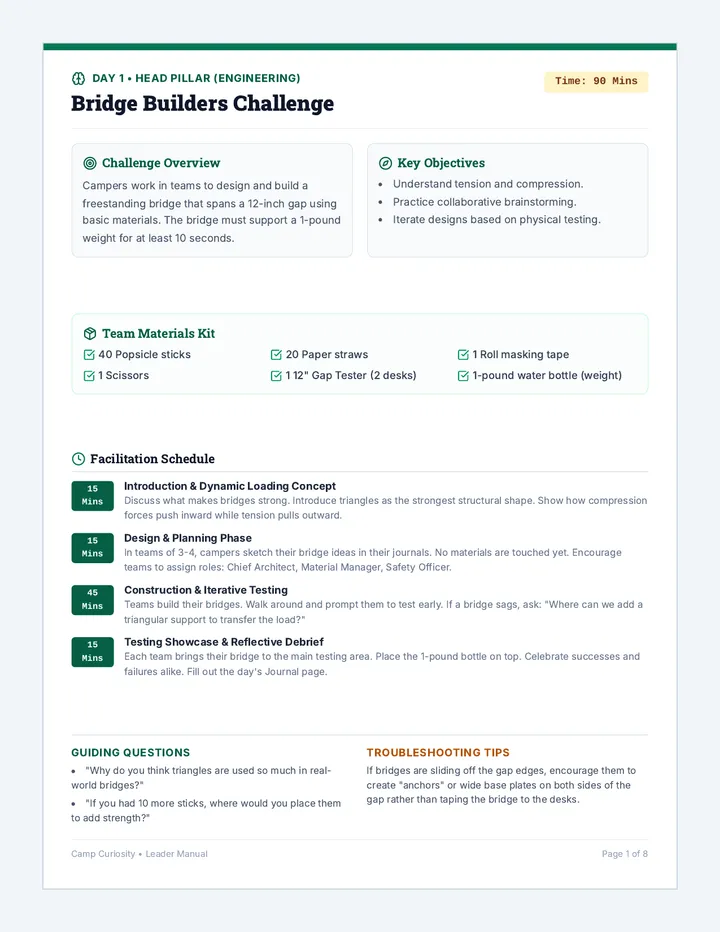
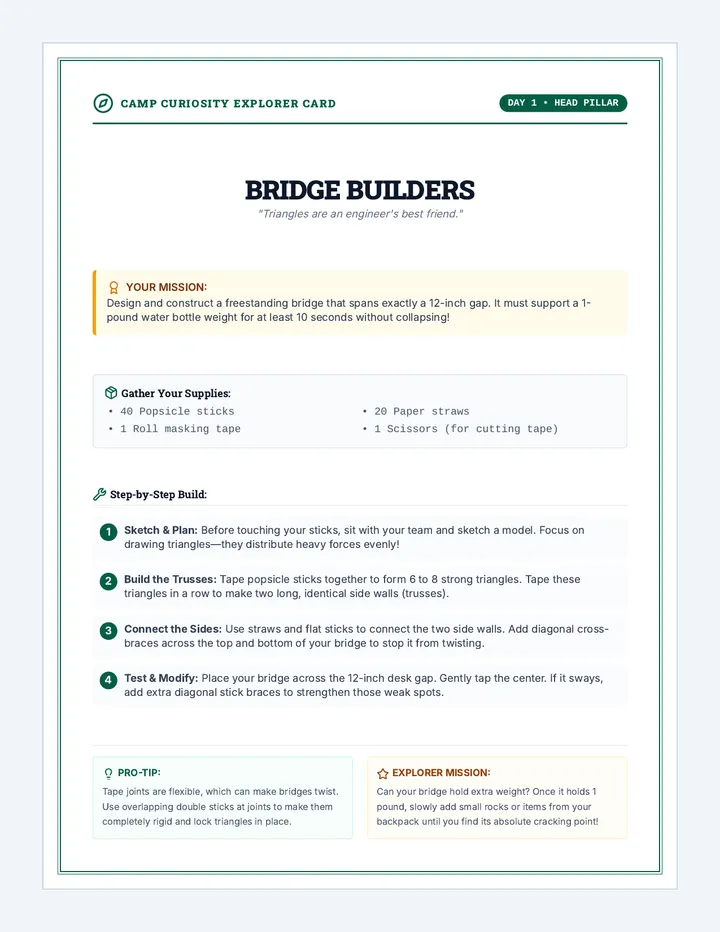
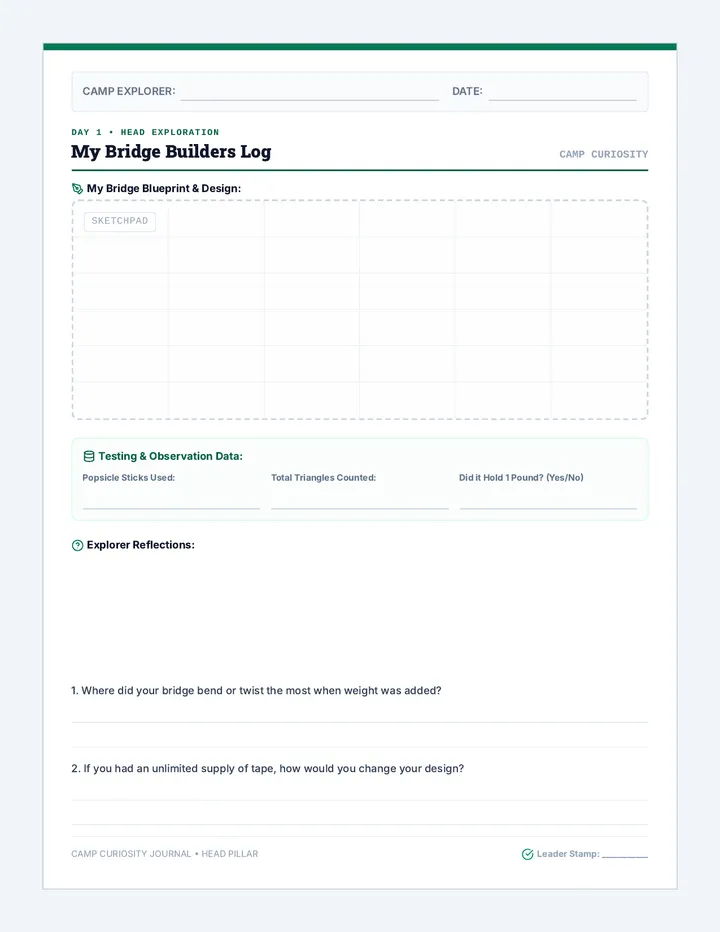
An action-packed, hands-on 8-day 4-H camp program focusing on Head, Heart, Hands, and Health. Students tackle engineering, teamwork, ecology, nutrition, and art challenges through daily active learning.
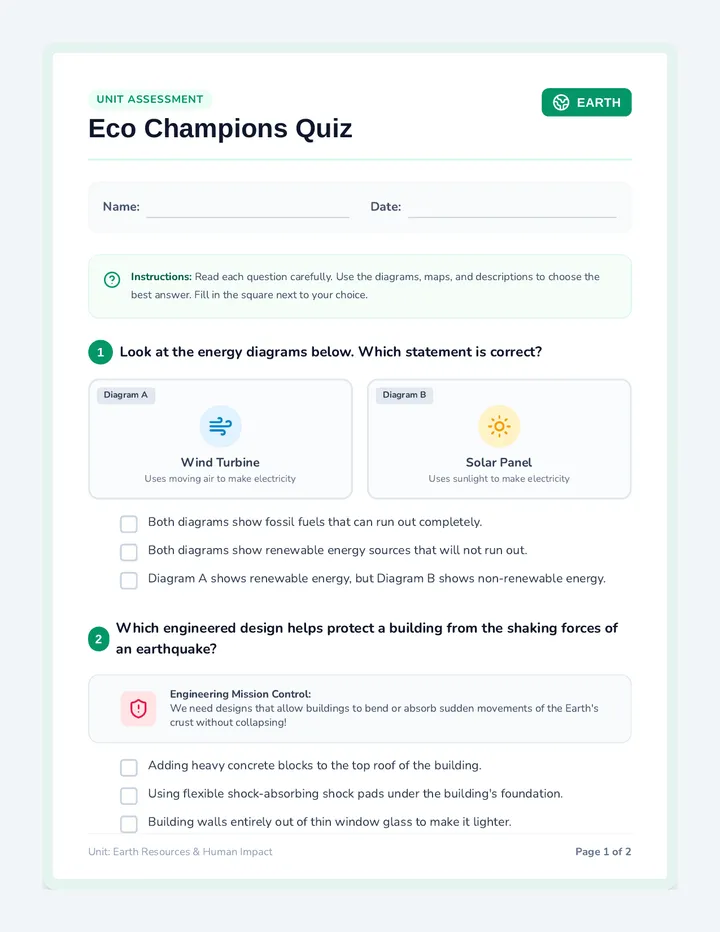
An elementary Earth Science lesson focusing on renewable energy, natural hazards, conservation, and human impact. Includes a highly visual student quiz and a corresponding teacher answer key.
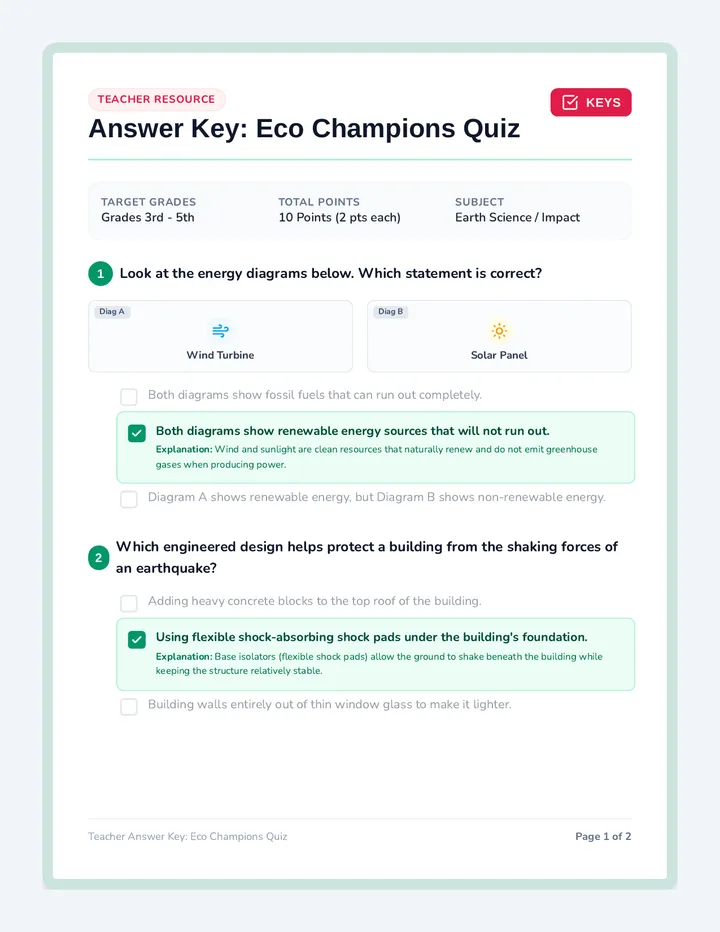
A teacher-facing 2-page Answer Key for the Eco Champions Quiz, providing highlighted correct answers, explanations, and grading criteria for the open-ended action plan question.
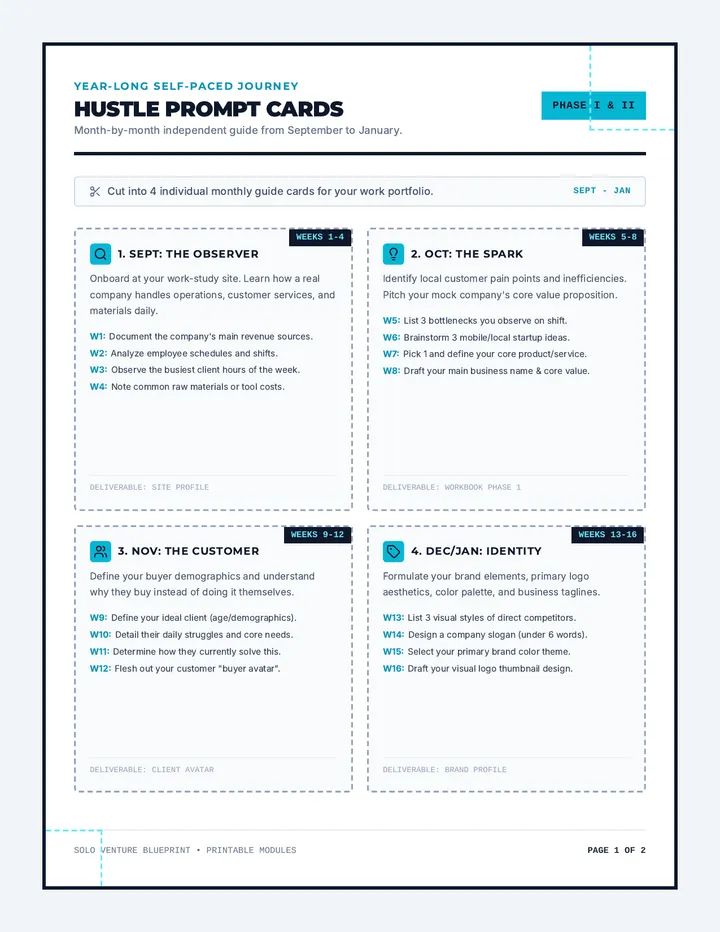
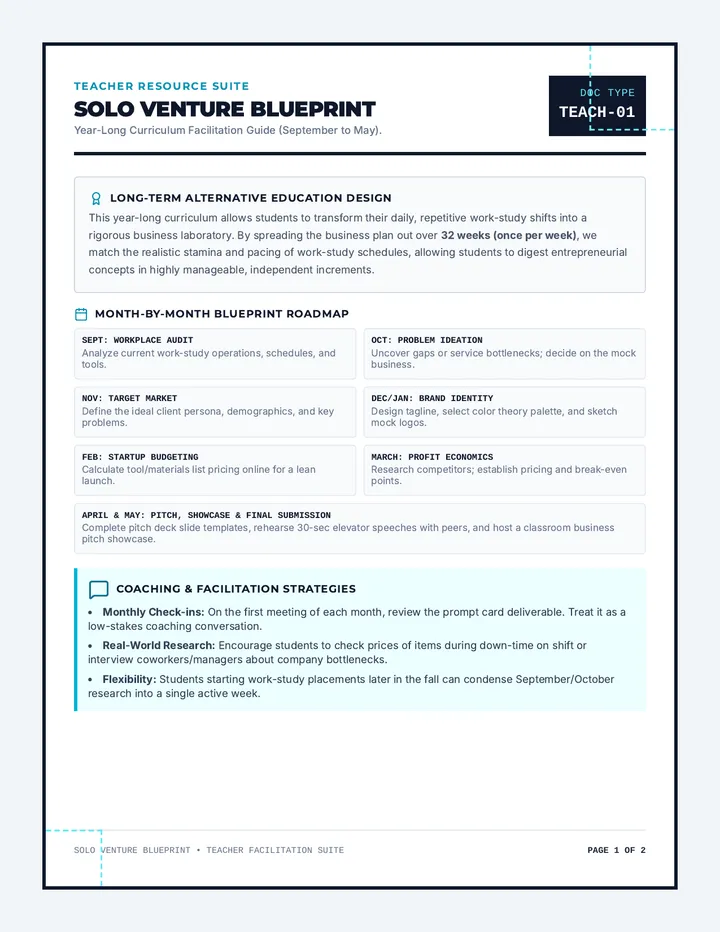
A year-long, self-paced entrepreneurship curriculum spanning September to May for alternative education students in work-study placements. Students transform real-world work experience into a modular business plan and slide presentation.
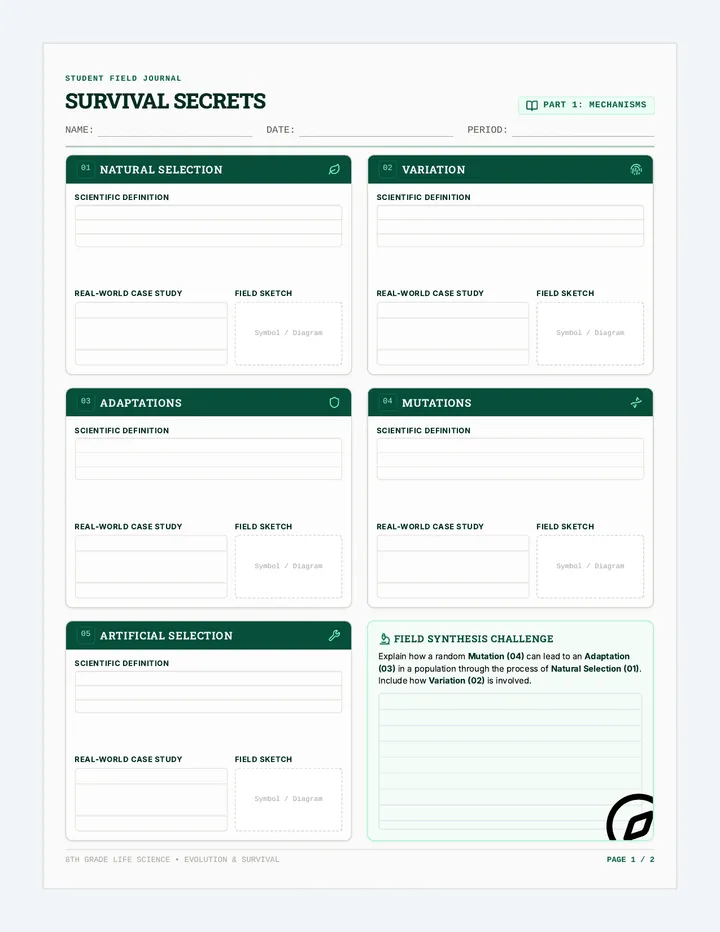
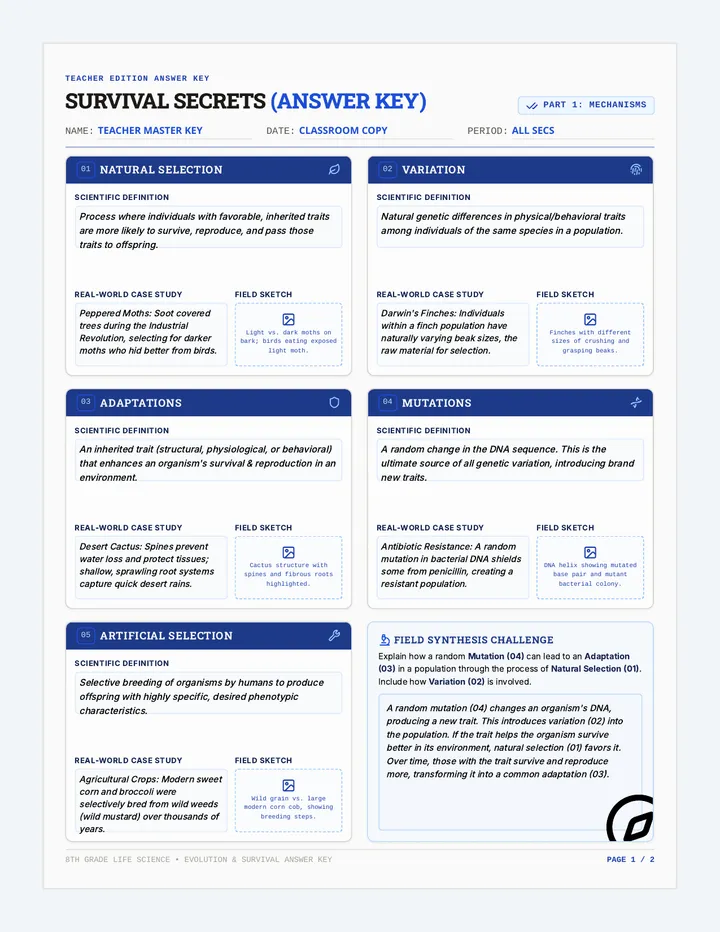
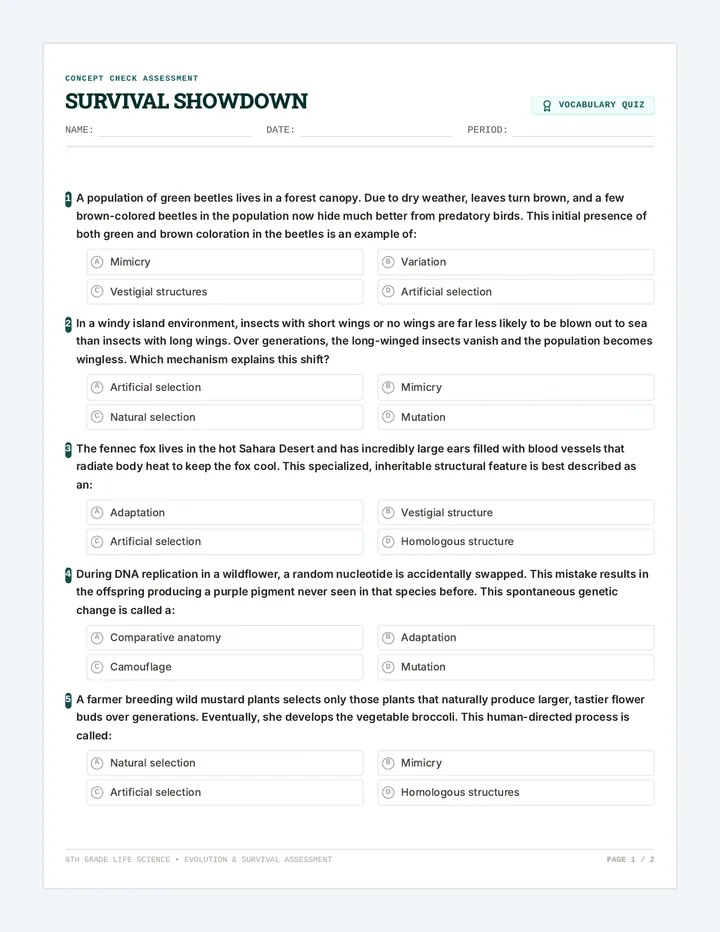
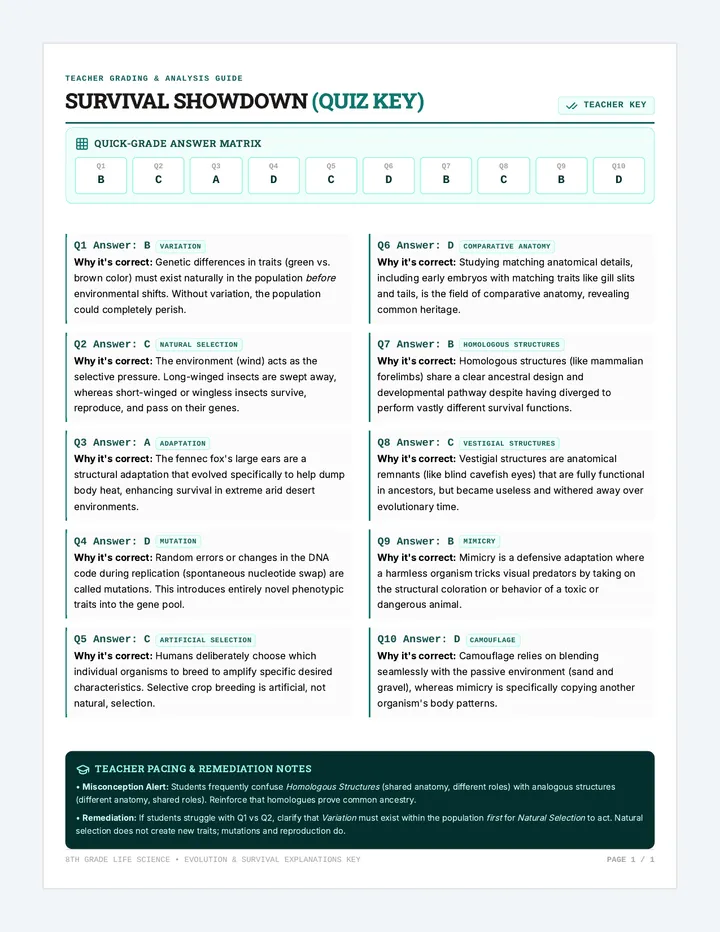
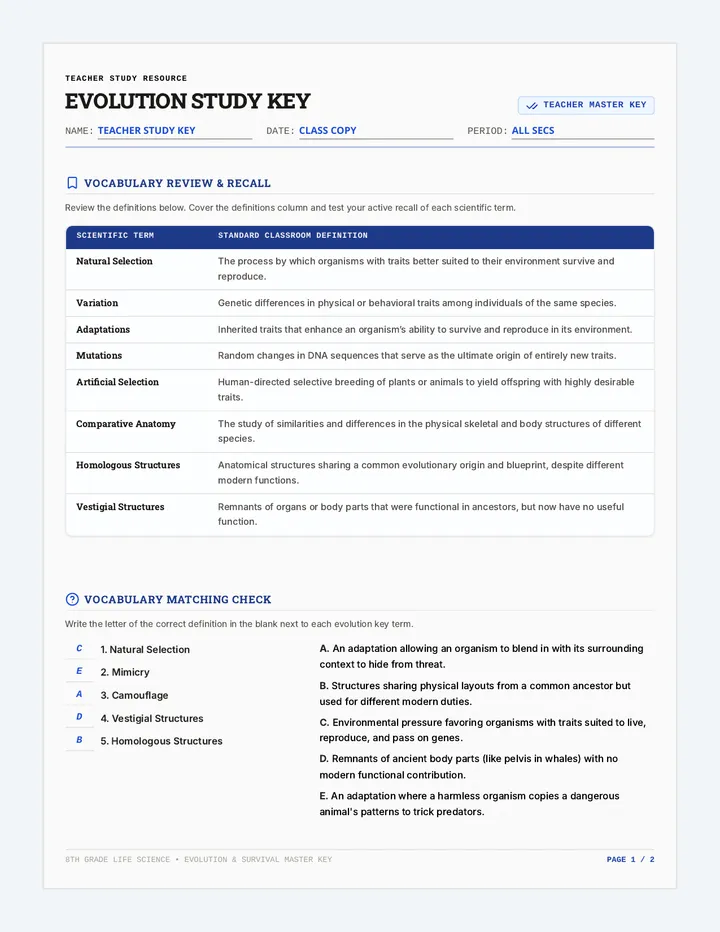
An active-recall study unit on natural selection and evolutionary evidence, featuring graphic organizers, application activities, and a practice quiz.
A visually engaging, 2-page Earth Science quiz designed for grades 3-5, focusing on renewable energy, natural hazards, conservation, and climate change with clean diagram boxes and student writing space.
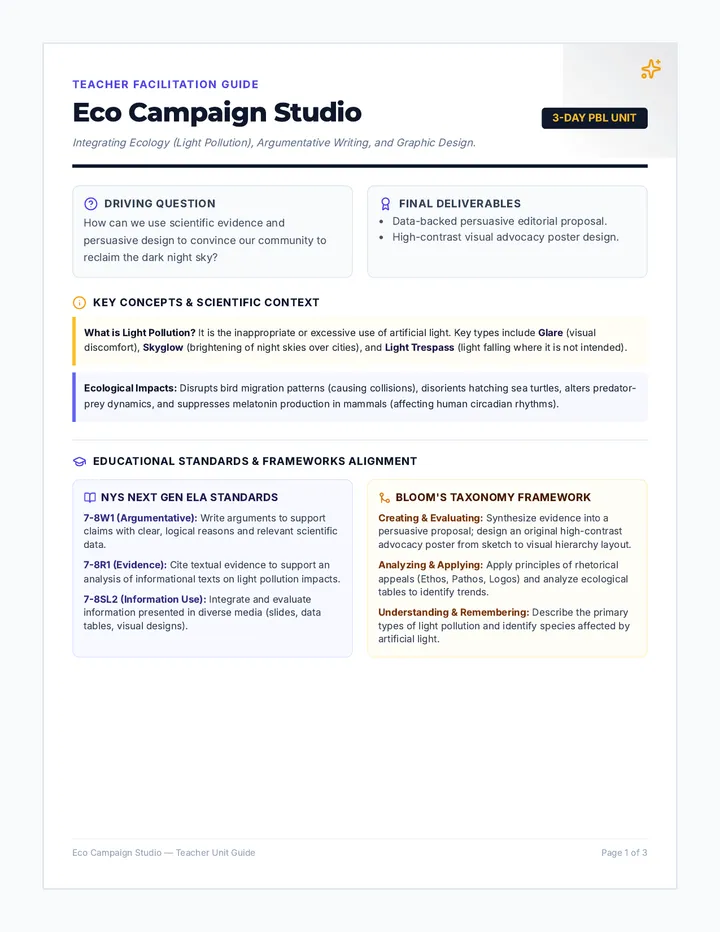
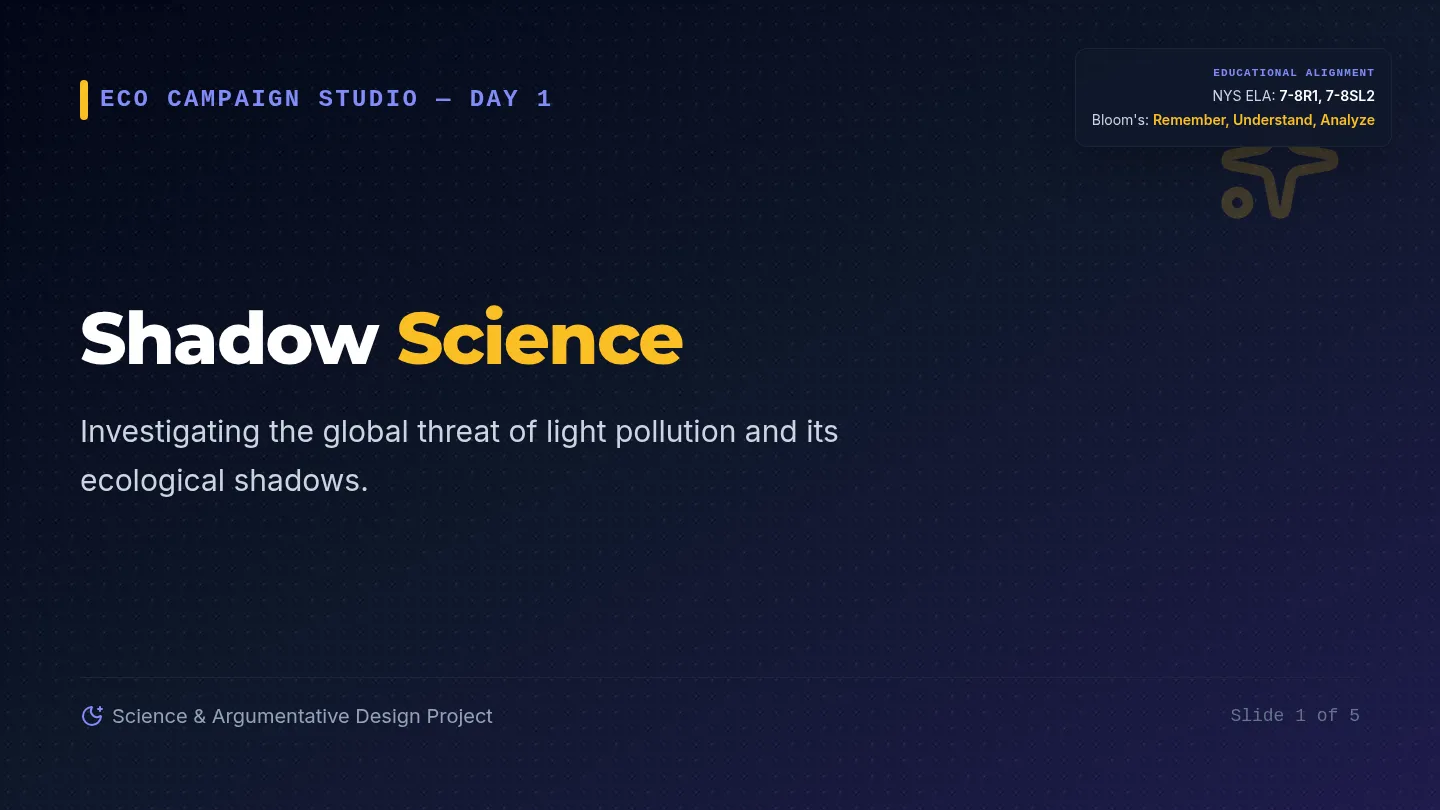
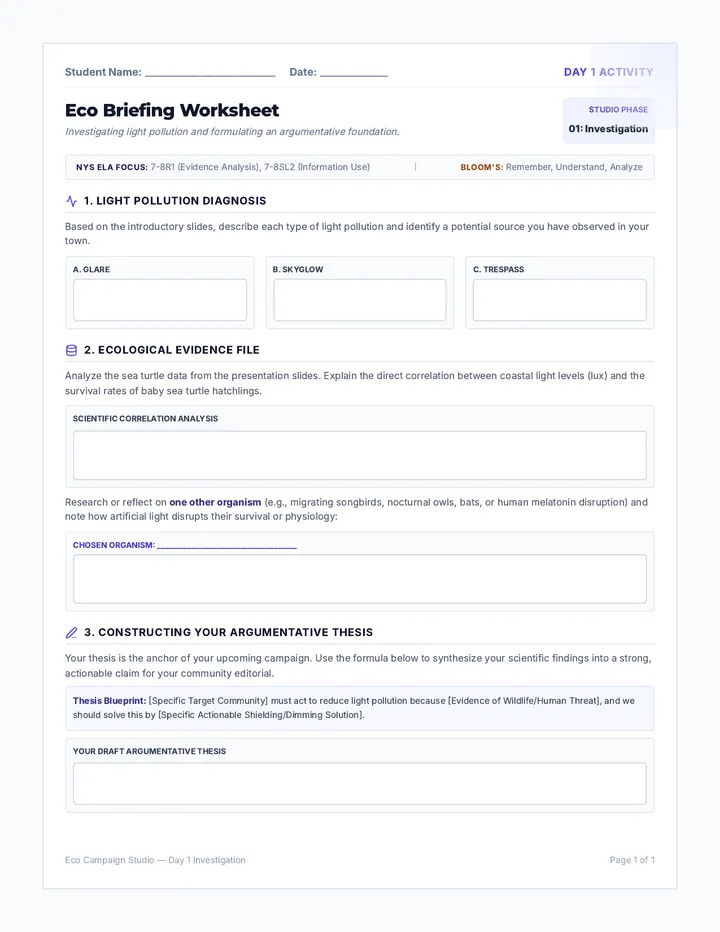
A cross-curricular, 3-day project-based unit combining science, argumentative writing, and graphic design. Students investigate the ecological impacts of light pollution, write a data-driven persuasive proposal, and design a community awareness campaign poster.
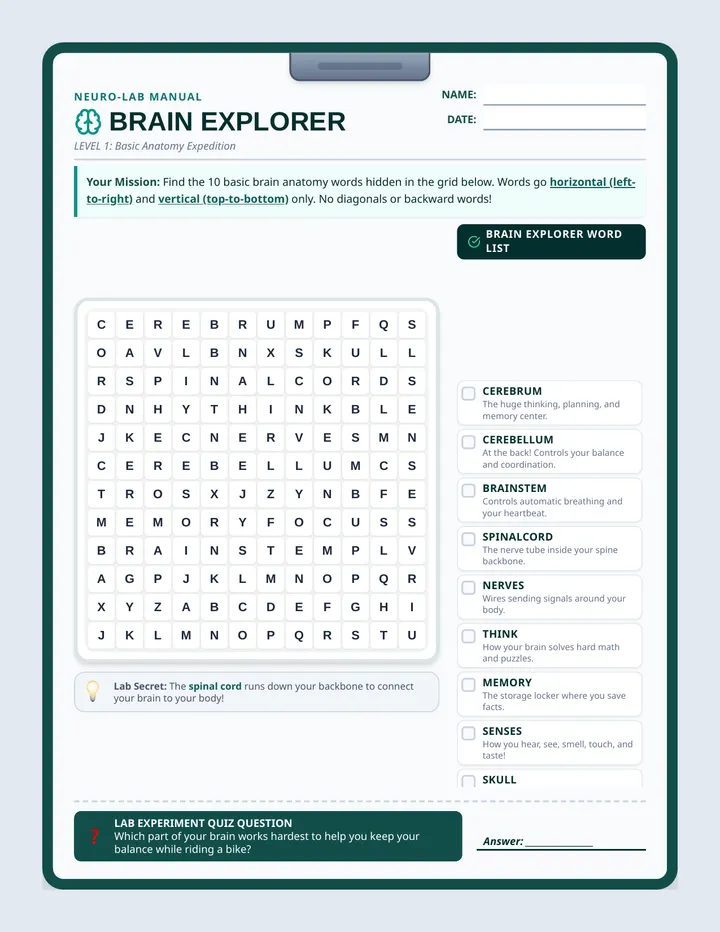
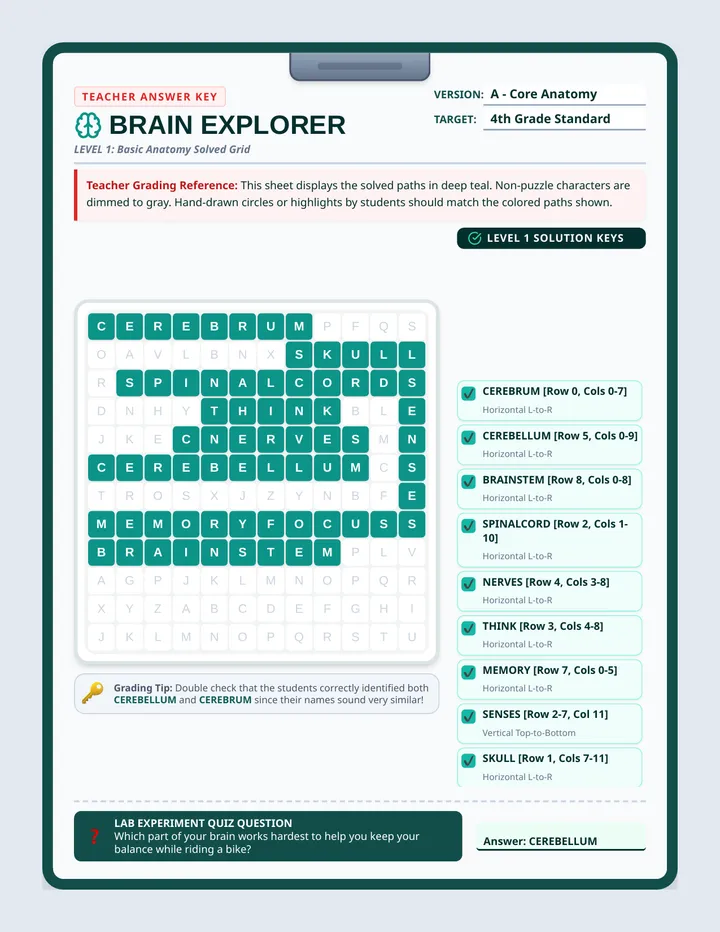
A collection of differentiated word search puzzles focusing on basic brain anatomy, vocabulary, and functions for fourth-grade students. Includes beginner and advanced levels with matching answer keys.
Complete teacher answer key for the Evolution Study Guide, containing completed vocabulary matching and high-quality exemplar written responses styled in blue ink.
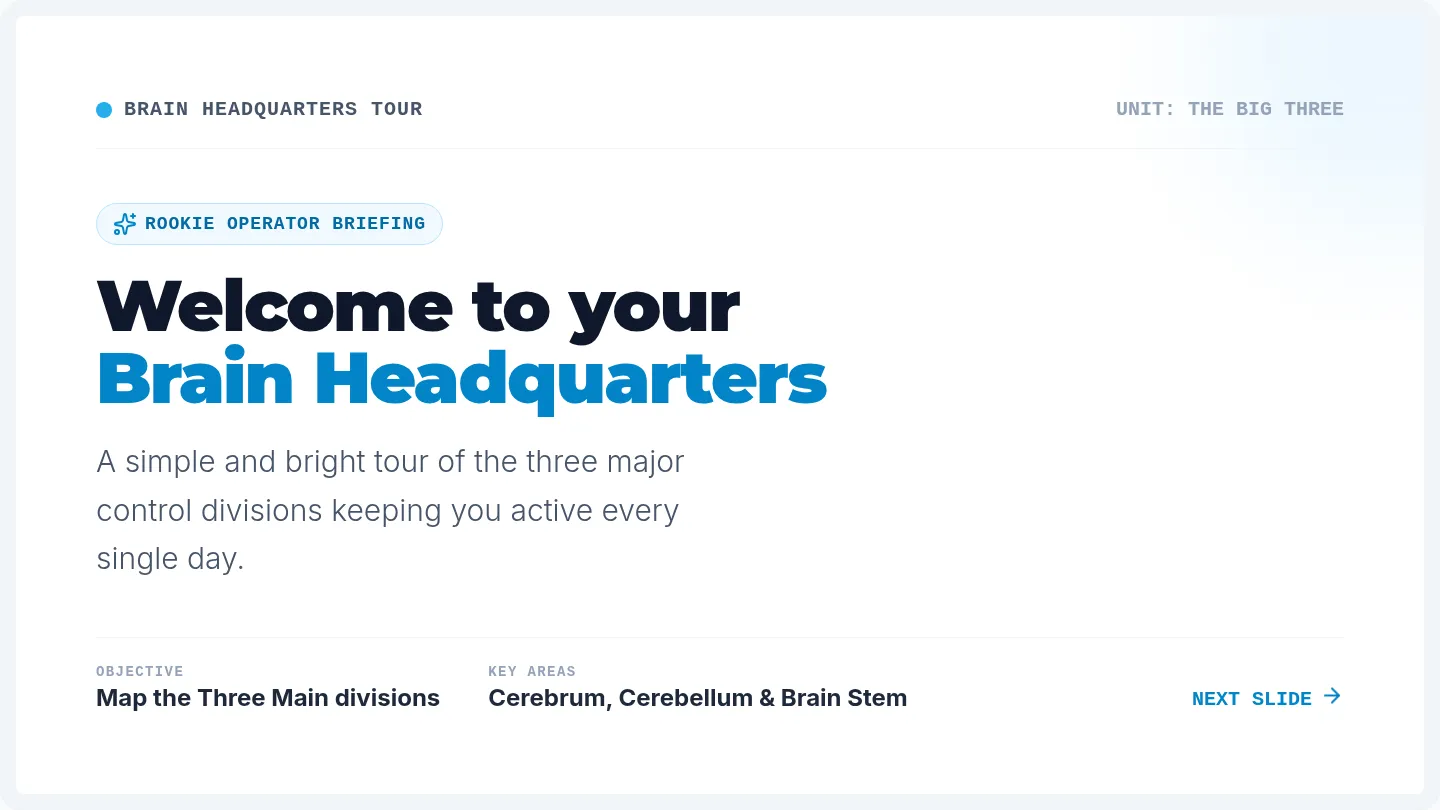
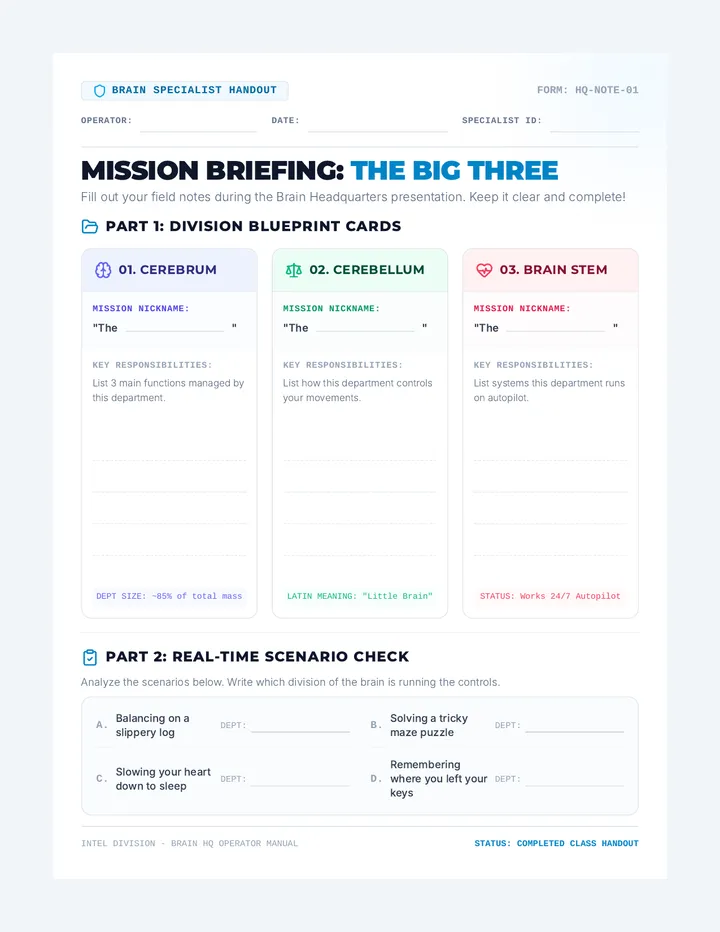
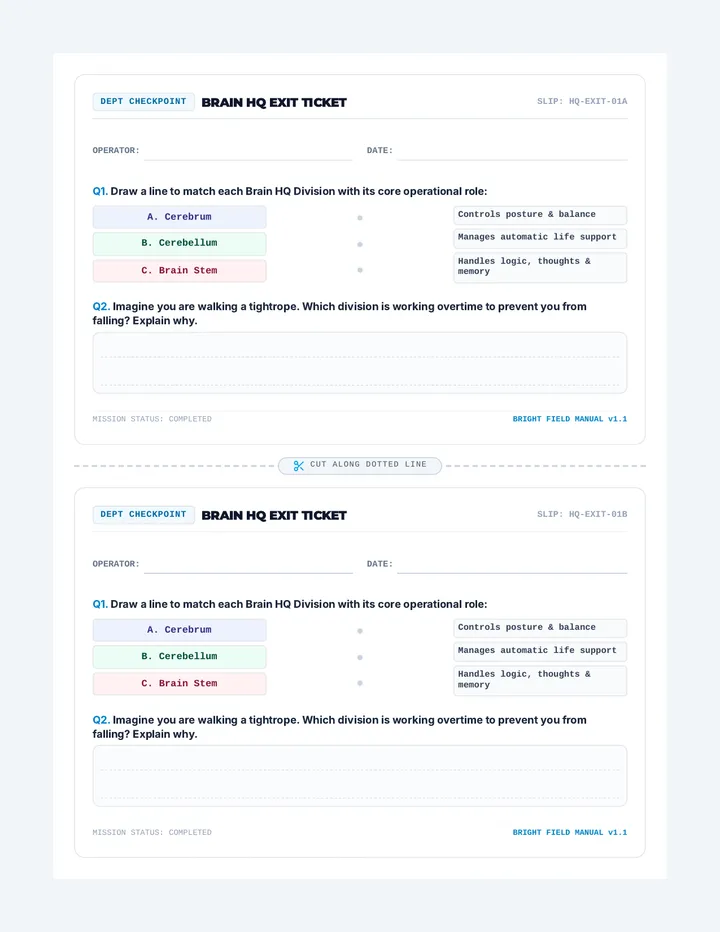
An interactive lesson introducing elementary or middle school students to the three major divisions of the brain: the Cerebrum, Cerebellum, and Brain Stem.
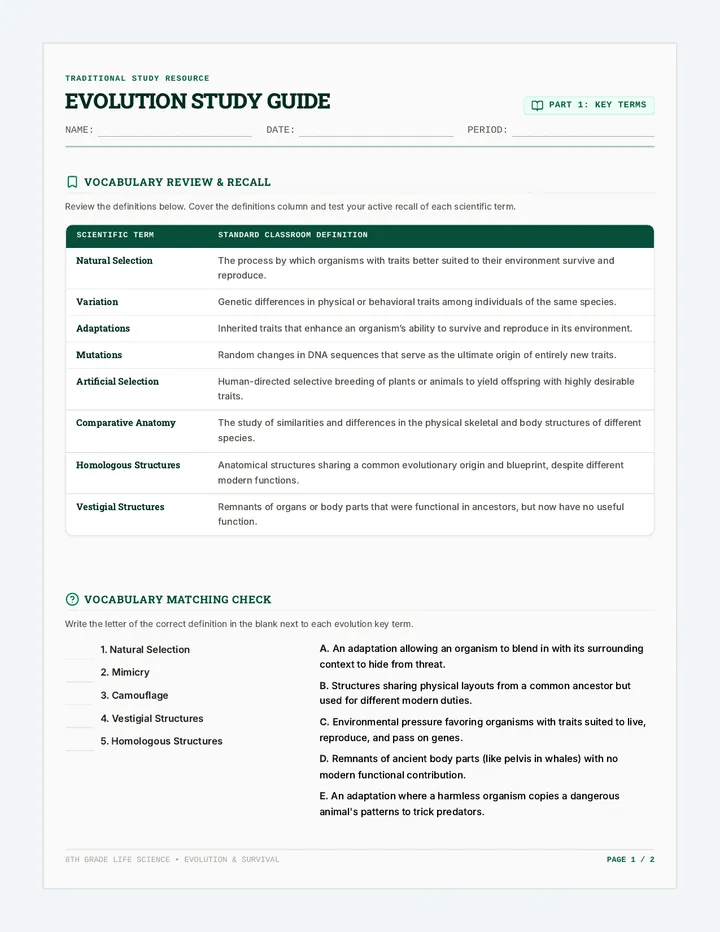
A traditional 2-page print-ready study guide for 8th-grade science, featuring direct definitions, structured vocabulary matching, and four scenario-based short-answer practice questions.
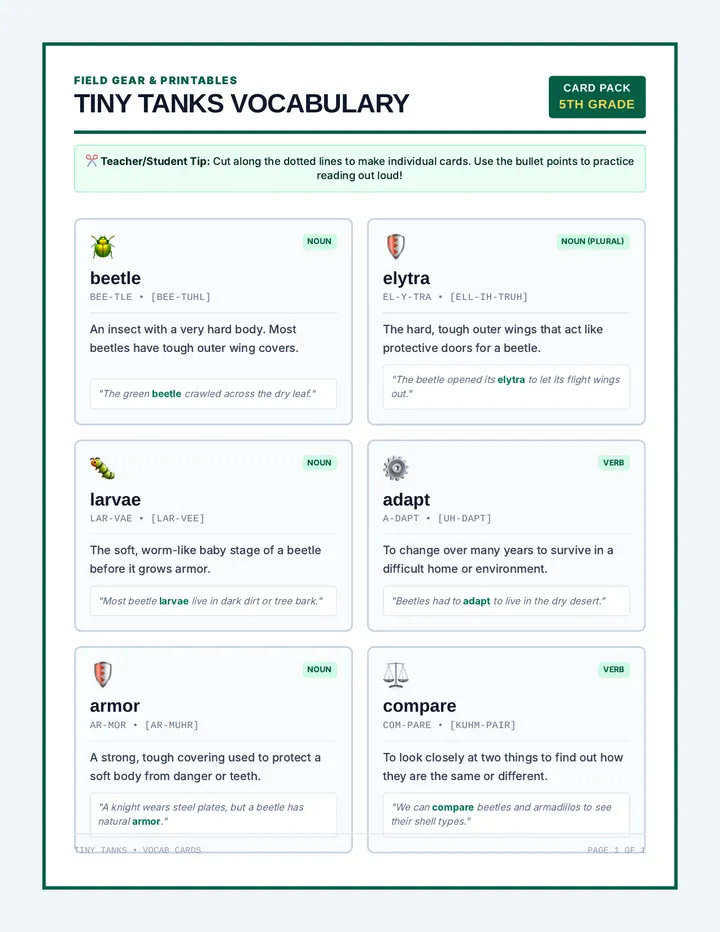
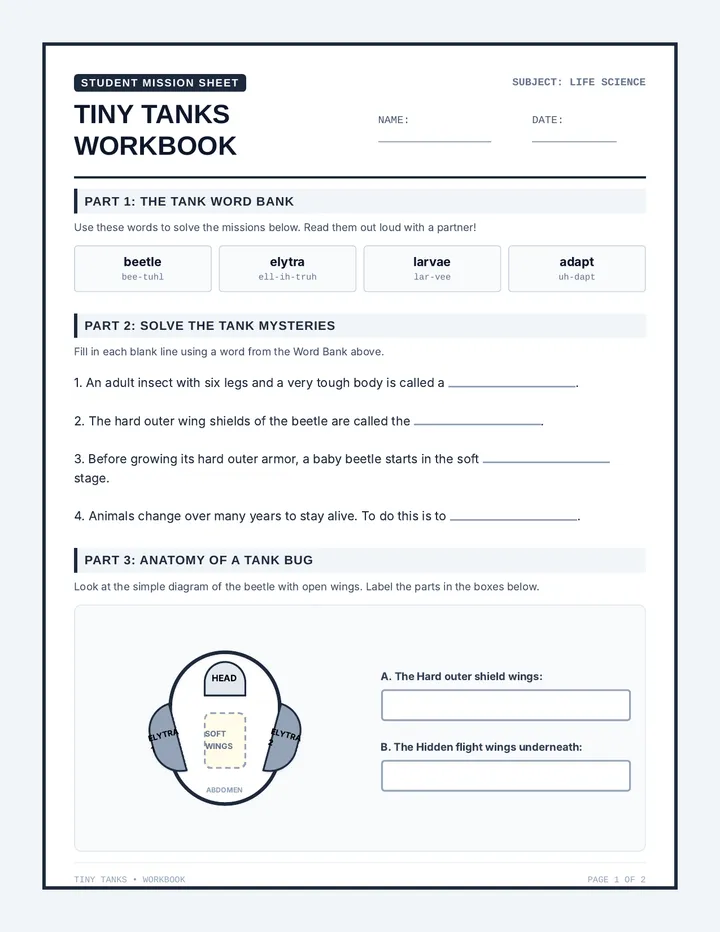
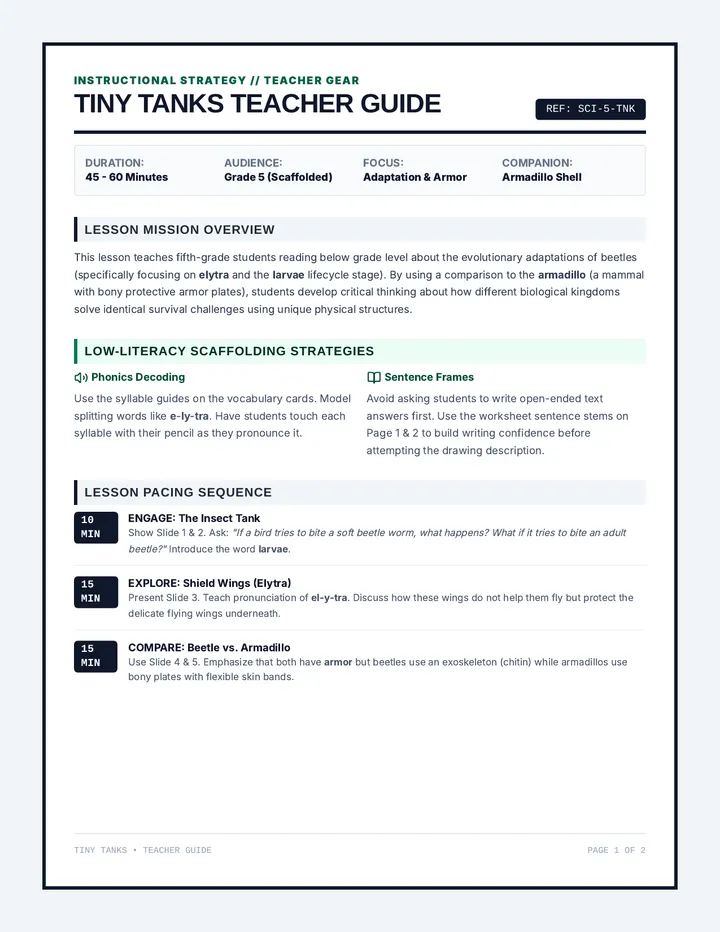
An engaging, highly visual science lesson exploring beetles as the armored tanks of the insect world, designed specifically for fifth-grade students reading below grade level. Students learn about elytra, beetle adaptation, and compare insect armor to that of the armadillo through scaffolded activities.